Article Contents:
- Philosophy of natural material in architecture
- Psychology of perception of wooden facades
- Ecological advantages of natural wood
- Wood species: the individuality of each fiber
- Coniferous species: accessibility and practicality
- Broadleaf Species: The Aristocracy of Wood
- Exotic species: luxury in every fiber
- Modern wood processing technologies
- Drying: The Basis of Longevity
- Protective treatment: shield against time and elements
- Mechanical processing: precision down to the micron
- Stylistic diversity of wooden decoration
- Russian wooden architecture: the soul of the people in ornament
- Scandinavian minimalism: restrained elegance
- Alpine style: mountain romance
- Modernism: natural forms in architecture
- Installation technologies: the art of connection
- Traditional joinery
- Modern fastening systems
- New-generation adhesive connections
- Protection and maintenance: guarantee of longevity
- Finishing Systems
- Preventive maintenance
- Seasonal work
- Design solutions and stylistic techniques
- Color solutions in wooden decoration
- Play of textures and finishes
- Scaling and proportions
- Comparison with alternative materials
- Polyurethane decoration: technologies against nature
- Composite materials: seeking compromise
- Metallic imitations: cold beauty
- Economic aspects of selection
- Life cycle cost
- Impact on property value
- Regional pricing characteristics
- Frequently Asked Questions
- What is the service life of wooden facade decoration?

Wood is a material that breathes history and radiates the warmth of nature. When we talk aboutwooden facade decorationwe are not simply talking about a building material, but about a living substance capable of transforming an ordinary house into a work of architectural art. Each wood grain tells its own story, and every carved element carries centuries of craftsmanship traditions.
In the era of synthetic materialswooden facade decorationis experiencing a true rebirth. Modern wood processing and protection technologies have allowed us to solve the main problem of this material — its short lifespan in aggressive external environments. Today, properly treatedSolid wood productsserve for decades, preserving their original beauty and functionality.


Philosophy of natural material in architecture




Psychology of Perception of Wooden Facades
It affects a person simultaneously on several levels. The tactile sensation from touching a smooth sanded surface, the visual pleasure from admiring the unique grain pattern, even the scent of freshly processed wood — all of this creates an incomparable atmosphere of comfort and naturalness.
Carved wooden decorationModern neuropsychology explains this attachment through evolutionary mechanisms. For millennia, our ancestors lived in wooden dwellings, and genetic memory still associates wood with home, protection, and stability. That is why
wooden architectural decorationnever goes out of fashion, despite the emergence of numerous alternative materials.never goes out of style, despite the emergence of numerous alternative materials.
Our factory also produces:


Ecological advantages of natural wood
In the era of ecological awareness, wood becomes a symbol of responsible attitude towards nature. Unlike synthetic materials, wood is a renewable resource. With proper forest management, felled trees are replaced by new plantings, creating a sustainable production cycle.
The carbon footprint of producing wooden decor is orders of magnitude less than that of plastic or metal analogs. Wood absorbs carbon dioxide from the atmosphere during growth and continues to hold it even after processing. Thus,Facade decoration made of woodit contributes to reducing the concentration of greenhouse gases in the atmosphere.
The biodegradability of wood ensures environmentally friendly disposal at the end of its life cycle. Old wooden elements can be composted, used as biomass fuel, or recycled into secondary materials. This is fundamentally different from plastic products, which take hundreds of years to degrade, polluting the environment.
Get Consultation
Wood Species: The Individuality of Each Fiber
Coniferous species: accessibility and practicality
Common Spruce — a classic material forcarved facade elementsIts wood has a uniform structure, minimal knots in selected grades, and is easy to process. The density of spruce ranges from 400-600 kg/m³, providing an optimal balance of strength and weight. High resin content (up to 3%) provides natural protection against moisture and insects.
Modern technologies allow to fully unleash the potential of spruce wood. Thermal treatment at 160-220°C alters the structure of cell walls, increasing dimensional stability and reducing moisture absorption. Thermally treated spruce approaches the characteristics of more expensive hardwoods.
Norwegian Spruce is valued for its uniform structure and minimal resin content. Its wood has a light tone with a subtle golden hue, which looks especially striking under lacquer finish. Spruce is ideal for manufacturingwooden architravescomplex shapes due to the absence of prominent resin pockets.
Siberian Larch — an elite coniferous species with unique properties. Its density reaches 800 kg/m³, comparable to hard hardwoods. High content of gum provides natural biostability — larch does not rot even under high humidity. Color varies from light yellow to reddish-brown, creating an unmatched play of tones.
Broadleaf species: the aristocracy of wood
Oak — the king among species forarchitectural decorationIts density of 700-900 kg/m³ ensures exceptional strength and durability. Tannins, whose content reaches 8-20%, protect the wood from rot, mold, and insect pests. Oak's texture with clearly defined annual rings creates a unique decorative effect.
Different types of oak have their own characteristics. European Oak has uniform density and beautiful texture. Rocky Oak is denser and harder, ideal for carved elements with fine details. American Red Oak is valued for its rich color and striking texture with large pores.
European Ash combines high strength with excellent workability. Its wood has a light color with a distinct ring-porous structure, creating a beautiful striped pattern. Ash does not crack upon drying, holds fasteners well, and easily withstands all types of mechanical processing.
European Beech — material for the most refined projects. Its uniform dense structure without pronounced texture allows for delicate carving with intricate details. Color ranging from light rose to reddish-brown gives products a noble appearance. The only drawback — high hygroscopicity, requiring quality protective treatment.
Exotic Species: Luxury in Every Fiber
Teak — an elite tropical species with unique properties. High content of latex and essential oils provides absolute water resistance — teakfacade decorcan remain under rain for decades without any signs of deterioration. Golden-brown color with dark veins creates a luxurious appearance.
Ipe (Brazilian Walnut) — the hardest wood in the world with density up to 1200 kg/m³. Its wood is so dense that it sinks in water. Color ranging from olive-brown to dark chocolate with artistic veins makes each product a unique work of art. The service life of ipe is measured in centuries.
Kumaru (Brazilian Chestnut) is distinguished by exceptional dimensional stability. Its wood practically does not deform under changes in humidity, which is critically important forfacade elementsIts reddish-brown color gradually acquires a noble silver tone over time.
Modern wood processing technologies
Drying: the foundation of durability
Quality drying is the foundation of longevitywooden decorTraditional atmospheric drying takes months or even years, but ensures natural moisture removal without damaging the cellular structure. Timber is stacked with spacers to ensure air circulation.
Controlled drying allows precise regulation of the process down to the degree and percentage of humidity. Modern drying chambers are equipped with automatic systems for temperature, humidity, and air circulation speed control. Programmable modes take into account the specific characteristics of wood species, material thickness, and required final moisture content.
Vacuum drying is a revolutionary technology that allows drying wood at reduced temperatures. Lowering pressure reduces the boiling point of moisture, enabling water removal at 40-60°C instead of traditional 80-120°C. This eliminates internal stresses and cracking.
High-frequency drying uses electromagnetic wave energy to heat moisture inside wood. Even heating throughout the cross-section ensures uniform moisture content without gradients. The process takes hours instead of weeks, but requires expensive equipment.
Protective treatment: shield against time and elements
Antiseptic treatment — first line of defenseof wooden facade decorationagainst biological damage. Modern treatments contain complex active ingredients that suppress the growth of fungi, mold, and bacteria. Water-soluble formulations penetrate deeply into wood, creating long-lasting protection.
Pressure impregnation in autoclaves ensures maximum penetration depth — up to 15-20 mm in coniferous species. The vacuum-pressurized process includes several stages: preliminary vacuum to remove air from pores, injection of antiseptic under pressure up to 15 atmospheres, and final vacuum to remove excess.
Fire-retardant treatment increases the fire safety class of wood. Fire retardants form a protective film on the surface that expands upon heating, creating an insulating barrier. Deep penetration slows the combustion process, reduces smoke formation, and prevents flame spread.
Water-repellent treatment creates a hydrophobic barrier without clogging pores. Silicone or wax-based formulations do not hinder wood from 'breathing', but prevent moisture penetration. This is especially important for elements exposed to direct precipitation.
Mechanical processing: precision to the micron
Modern CNC routers allow creatingCarved Elementswith incredible complexity and precision. Multi-spindle machining centers can simultaneously perform various operations — milling, drilling, sanding. Positioning accuracy is ±0.05 mm.
3D milling opens up limitless possibilities for creating volumetric compositions. Five-axis machines process the workpiece at any angle, creating complex spatial forms. Special software automatically calculates tool movement trajectories and optimizes cutting modes.
Laser cutting provides perfectly clean cuts without chips or burrs. Modern CO2 lasers with up to 6 kW power easily cut wood up to 100 mm thick. Computer control enables cutting of any complexity with precision down to 0.1 mm.
Waterjet cutting uses a water stream under pressure up to 4000 atmospheres with abrasive particles. This technology does not create thermal stresses, which is especially important for valuable wood species. The cut thickness is only 1-2 mm with ideal surface quality.
Stylistic diversity of wooden decoration
Russian wooden architecture: the soul of the people in ornament
Russian traditioncarved decor elementstraces back to pagan times, when carved elements carried not only decorative but also protective functions. Each symbol had a sacred meaning — solar signs protected against evil spirits, plant ornaments invoked fertility, zoomorphic motifs symbolized strength and courage.
Lintels are the hallmark of Russian wooden architecture. Their forms are astonishing in variety — from simple geometric shapes to complex multi-tiered compositions with kokoshniks, pilasters, and finials. Each region developed its own traditions: ornate Vologda lintels with baroque scrolls, austere Arkhangelsk ones with northern restraint, elegant Kostroma ones with delicate detailing.
Cornices adorned gable ends of houses, creating a majestic finish to the facade. These elements were often decorated with solar symbolism — stylized sun images symbolizing life energy and home protection. Complex interweavings of geometric ornaments created a meditative rhythm, soothing to the psyche.
The roof ridge — the crowning element of the roof — was often executed in the form of a stylized horse, bird, or mythical creature. These figures not only adorned the house but also served as lightning rods, protecting the structure from lightning. Modern interpretations of these elements allow creatingunique facade decorationwith deep cultural undertones.
Scandinavian minimalism: restrained elegance
Scandinavian wood processing tradition is based on principles of functionality and natural beauty of the material. Here, ornate decoration is not valued, but perfection of proportions, quality of surface finish, and harmony with the natural environment.Wooden facade elementsin Scandinavian style are characterized by simplicity of form and flawless execution.
Horizontal cladding is a characteristic feature of Scandinavian architecture. Boards are laid with slight overlap, creating tonal transitions and protecting walls from slanted rain. Different board widths — from narrow 100 mm to wide 200 mm — create a dynamic facade rhythm.
Vertical louvers are used to create light and shadow effects and to provide natural facade ventilation. Adjusting the angle of the louvers allows regulating solar exposure, creating a comfortable microclimate without using air conditioning.
Natural staining highlights the natural beauty of wood. Transparent and semi-transparent finishes, preserving the visibility of the texture, are popular. Traditional Scandinavian colors — white, gray, red-brown — harmoniously blend into the northern landscape.
Alpine style: mountain romance
Alpine architectural tradition developed under harsh mountain climate conditions, where wood had to withstand extreme loads. Massive beams, thick planks, reinforced joints — all of this creates an impression of solidity and reliability.Carved decoration in alpine styledistinguished by large scale and expressive forms.
Balconies with carved railings are a characteristic feature of alpine architecture. Complex geometric patterns intertwine with floral motifs, creating delicate compositions of remarkable beauty. Each balcony becomes a work of art, individually patterned yet harmoniously integrated into the overall architectural ensemble.
Bay windows with carved sills add volume and expressiveness to the facade. Protruding parts of the building are especially richly decorated — here craftsmen could demonstrate their ability to create complex spatial compositions. The play of light and shadow on carved surfaces creates a constantly changing picture.
Roof ridges and gutters are adorned with carved elements, transforming utilitarian details into decorative accents. Stylized depictions of edelweiss, mountain goats, and eagles link architecture to the local nature, creating a sense of organic belonging to the landscape.
Modern: natural forms in architecture
Modern style revolutionized the use ofwood in architectural decoration. Abandoning historical stylizations led to the search for new forms inspired by natural motifs. Smooth lines, asymmetrical compositions, organic shapes — all of this required new wood processing technologies.
Modern floral ornaments differ from traditional ones in greater naturalism and freedom of interpretation. Stylized depictions of irises, lilies, and grapevines create a sense of natural growth. Each element is unique, as each leaf in nature is unique.
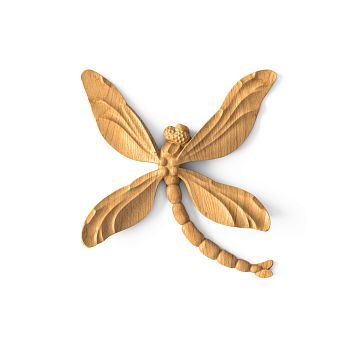
Zoomorphic motifs — birds, insects, marine creatures — transform into decorative elements while preserving recognizability and symbolic meaning. Dragonflies with carved wings, owls with expressive eyes, fish with elegant fins create a fantastical world on building facades.
Asymmetrical compositions require special craftsmanship from the carver. Unlike classical symmetrical patterns, modernist compositions are built on the principle of dynamic equilibrium. Each element must find a response in another element, creating harmony not through repetition, but through counterpoint.
Assembly technologies: the art of joining
Traditional joinery
Dowel joint — the main connection in wooden construction, proven by centuries of use. A rectangular or trapezoidal protrusion (dowel) on one part fits into the corresponding groove (slot) on another. Manufacturing accuracy must ensure tight fitting without gaps, but without excessive assembly force.
Tongue-and-groove joint — a high-strength connection for elements subjected to tension. The trapezoidal shape of the dowel prevents parts from being pulled out under load. This connection is especially popular in furniture manufacturing, but is also used inarchitectural decoration.
Half-lap joint is used for joining boards along their length or creating corner joints. Half the thickness of each part is removed, ensuring a flat connection without increasing overall thickness. The joint is additionally reinforced with glue or screws.
Shank joints use wooden cylindrical rods (shanks) to fix parts. Holes for shanks are drilled with high precision, ensuring accurate positioning of elements. Glue applied to the shank creates a strong, non-disassemblable connection.
Modern fastening systems
Conformers — special screws with hexagonal heads, designed for joining wooden parts. Conical thread ensures secure fixation without pre-drilling. The concealed head does not disrupt the aestheticswooden decor.
Eccentric clamps allow creating high-strength disassemblable connections. An eccentric built into one part grips a pin in another part, creating a powerful clamping force. Such connections are indispensable for large elements requiring periodic disassembly.
Lamellar joints use flat wooden inserts (laminates) installed into special grooves. Laminates are made from hardwood and ensure connection strength through increased bonding surface area. Special milling cutters create precise grooves, guaranteeing tight fitting.
Hidden brackets provide discreet mounting of decorative elements. One part of the bracket is attached to the wall, the other to the decorative element. Engagement occurs by simple hanging, and the self-leveling system compensates for minor mounting inaccuracies.
Modern structural adhesives
Polyurethane adhesives form elastic joints that compensate for wood's thermal deformation. They are resistant to moisture, frost, and ultraviolet radiation, which is critically important forfacade elements. Setting time is 10–30 minutes, full strength is achieved within 24 hours.
Epoxy compounds provide maximum connection strength, often exceeding the strength of the wood itself. Two-component systems allow adjusting setting time from several minutes to several hours. Transparent epoxy adhesives do not alter the natural wood color.
Reactive polyurethane adhesive melts are applied in hot state and cure upon cooling. They contain no solvents, provide instant setting strength, and create waterproof joints. Such adhesives are ideal for outdoor use.
Structural acrylic adhesives combine high strength with elasticity. They are not sensitive to moisture, withstand significant dynamic loads, and exhibit excellent adhesion to various materials. The transparency of the adhesive joint makes it virtually invisible, even with imperfect part alignment.
Protection and care: guarantee of longevity
Finishing systems
Varnish coatings create a transparent protective film on the wood surface, preserving the visibility of the texture. Alkyd-urethane varnishes have high hardness and wear resistance, but are less elastic. Acrylic varnishes are more elastic but less wear-resistant. Polyurethane varnishes combine the advantages of both types.
Oil-based coatings penetrate into the wood pores, strengthening its structure from within. They do not form a surface film, preserving natural tactile sensations. Natural oils — linseed, tung — leave the wood "breathable". Modified oils with polymer additives enhance wear resistance and water-repellent properties.
Wax coatings give wood a soft, silky sheen and accentuate the beauty of the texture. Wax is easy to apply, dries quickly, and can be locally repaired. Modern wax formulations contain UV filters and antiseptic additives, enhancing protective properties.
Oil-wax systems combine deep oil penetration with wax protective properties. The first oil layer nourishes and strengthens the wood, while the wax finish creates a water-repellent barrier. Such coatings are especially popular forfacade decoration elementsin natural styles.
Preventive Maintenance
Regular inspection allows identifying problems at an early stage and taking timely measures. Key signs requiring attention: color change of the wood, appearance of cracks, coating delamination, traces of insect or fungal damage.
Surface cleaning should be performed using soft, non-abrasive agents. Hard brushes and aggressive chemicals may damage the protective coating. For removing dirt, specialized wood cleaners or mild soapy solutions are used.
Coating renewal is recommended every 3-5 years depending on the intensity of external factors. Varnish coatings require complete removal of the old layer and application of a new one. Oil-based coatings can be partially renewed by applying a new layer over the old one after light sanding.
Local repair allows eliminating minor damage without full restoration. Scratches and scuffs are removed by light sanding and application of a repair compound. More serious damage requires replacement of individual components.
Seasonal work
Spring preparation includes a general inspection of all elementswooden decorafter the winter period. It is necessary to check the condition of fasteners, absence of cracks and deformations, integrity of protective coatings. Identified defects are corrected before the start of the active construction season.
Summer work focuses on protection against ultraviolet radiation and high temperatures. Additional UV-protective coatings may be applied as needed. In regions with intense sunlight, special reflective coatings are recommended.
Autumn preparation for winter includes treating all elements with water-repellent compounds. Special attention is paid to ends of boards and connection points — the most vulnerable areas for moisture penetration. All gaps and seams are sealed with elastic compounds.
The winter period requires minimal intervention. The main task is protecting the decor from mechanical damage caused by snow and ice. Ice should not be broken with hard objects — this may damage the wood and protective coatings.
Design solutions and stylistic approaches
Color solutions in wooden decor
Natural wood tones possess universal appeal, harmonizing with any architectural styles. Light-colored species — pine, spruce, birch — create a sense of freshness and purity. Dark-colored species — oak, walnut, wenge — impart solidity and elegance to the facade.
Staining allows changing the natural color of wood while preserving texture visibility. Water-based stains provide even color without blocking pores. Oil-based stains penetrate deeper into wood, creating a richer color. Alcohol-based stains dry quickly but require even application.
Patina creates an aged effect, givingnew decoran antique appearance. The technique involves applying a base dark color followed by partial removal with light compounds. The result — a noble play of tones, mimicking natural aging.
Contrasting combinations create dynamic compositions. Dark elements on a light background or vice versa draw attention to architectural details. It is important to maintain balance — excessive contrast may create a sense of chaos.
Texture and surface play
Smooth surfaces emphasize the purity of lines and perfection of form. Perfectly sanded and varnished wood creates mirror-like reflections, visually expanding space. Such surfaces are especially effective in modern minimalist interiors.
Brushed surfaces are created by removing soft fibers with special brushes. The result — a textured surface that highlights the natural wood structure. Brushing is especially effective on species with contrasting textures — oak, beech, larch.
Sanded surfaces retain tool marks, creating a distinctive texture. Hand sanding produces a slightly wavy surface with lively light play. Machine sanding creates a regular texture with evenly spaced tool marks.
Sawed surfaces have a rough texture with saw marks. This treatment emphasizes naturalness and closeness to nature. Particularly popular in country, rustic, and eco styles.
Large-scale decorative elements create a sense of monumentality and solidity. Wide planks, massive beams, and large carved details are suitable for large buildings with expressive architecture. However, it is important not to overdo it — excessively large elements may overwhelm the space.
Small-scale decoration creates a sense of elegance and refinement. Thin slats, delicate carving, and ornate elements suit small buildings and intimate spaces. Small-scale decoration requires more meticulous detailing and high-quality execution.
Proportionality of elements is critically important for creating a harmonious appearance. Classical proportions based on the golden ratio (1:1.618) create a sense of natural beauty. Modular systems based on repeating base dimensions ensure compositional unity.
The rhythm of repeating elements organizes the perception of the facade, creating dynamism or, conversely, calm. Uniform rhythm soothes, while variable rhythm creates tension and interest. Disrupting the rhythm draws attention to individual elements.
Polyurethane decoration: technology versus nature
Comparison with alternative materials
has become a serious competitor to traditional wood. Its advantages are obvious: low weight, resistance to moisture and temperature fluctuations, ability to create complex shapes unattainable in wood. Polyurethane does not rot, crack, or attract insects.
Modernpolyurethane decorHowever, there are drawbacks. Polyurethane is a petrochemical product, its production pollutes the environment. Synthetic material lacks the living warmth of natural wood, its texture, no matter how perfect, remains an imitation. In case of fire, polyurethane releases toxic gases.
The cost of quality polyurethane decoration is comparable to wood, and sometimes exceeds it. Complex carved polyurethane elements require expensive precision molds, increasing the cost of small batches. Repairing polyurethane decoration is more difficult — damaged elements usually require complete replacement.
Psychological perception also plays a role. Many people instinctively prefer natural materials, associating them with quality, prestige, and care for the environment.
creates a sense of warmth and coziness that even the most perfect imitation cannot provide.Facade decoration made of woodcreates a sense of warmth and coziness that even the most perfect imitation cannot provide.
Composite materials: seeking a compromise
Wood-polymer composites (WPC) attempt to combine the advantages of wood and plastic. Their composition includes 60-80% wood flour and 20-40% polymer binder. The result is a material that retains the appearance of wood but lacks its main drawbacks.
WPC does not rot, crack, or require regular protective treatments. It is lighter than natural wood but stronger than pure plastic. Color can be any, from imitation of various wood species to bright decorative shades. Surface can imitate various textures.
Drawbacks of WPC — limited workability, inability to create fine carving, artificial appearance upon close inspection. The material poorly holds fasteners, is more prone to temperature deformation than natural wood. Upon heating, it may emit unpleasant odors.
The cost of quality WPC is comparable to coniferous wood, but significantly lower than premium hardwoods. However, limited workability makes it unsuitable for creating complexarchitectural decoration.
Metallic imitations: cold beauty
Modern technologies allow creating metallic elements that precisely imitate wood grain. Laser cutting, 3D printing, and special coatings open up wide possibilities. Aluminum and steel panels with 'wood-grain' finish are becoming increasingly popular in commercial architecture.
Advantages of metal — absolute non-combustibility, resistance to any weather conditions, longevity measured in decades, ability to create large elements without joints. Metallic elements can be painted in any color and decorated with any patterns.
Drawbacks — high thermal conductivity (metal burns in summer and freezes in winter), condensation, corrosion at coating damage sites, high cost of custom items. Mainly — metal will never look like real wood upon close inspection.
natural wooden decorationremains the preferred choice.remains the preferred choice.
Economic aspects of selection
Life cycle cost
When assessing economic efficiencyfacade decoration from woodit is necessary to consider not only initial costs but also expenses throughout the entire operational period. Quality wooden decoration, with proper care, lasts 30-50 years, significantly exceeding the service life of budget alternatives.
Initial costs include material cost, processing, installation, and finishing. Premium wood species are expensive, but their longevity and prestige offset the investment. Coniferous species are more affordable, but require more careful protective treatment.
Operational expenses include regular cleaning, updating protective coatings, local repair of damage. With quality materials and proper technology, these expenses are minimal — 2-3% of initial cost per year.
The residual value of quality wooden decoration after 20-30 years of operation may be 30-50% of the original cost, assuming good condition. The antique value of hand-carved elements may even increase over time.
Impact on property value
Qualitywooden facade decorationsignificantly increases the market value of real estate. Experts estimate this increase at 15-30% depending on region, type of property, and quality of execution. Premium carved decoration may increase the value by 50% or more.
Psychological perception plays an important role. Buyers associate wooden decor with quality, prestige, care for the environment, and closeness to nature. These associations are especially strong in the suburban real estate segment, where naturalness is particularly valued.
Uniqueness is an important pricing factor. Mass-produced plastic or polyurethane decor may embellish a building but will not make it unique. Wooden decor, especially custom-made, creates an irreplaceable architectural image.
The durability of wooden decor also affects its cost. Buyers are willing to pay more for solutions that do not require replacement over several years. High-quality wooden decor is considered a long-term investment.
Regional pricing features
Pricewooden decorPrices vary significantly by region. In forestry regions, prices are lower due to proximity to raw material sources and a developed wood processing industry. In megacities, prices are higher due to transportation costs and higher service costs.
Climate conditions influence the choice of wood species and processing technologies, which affects the cost. In northern regions, frost-resistant species with quality protective treatment are preferred. In southern regions, emphasis is placed on UV protection and heat resistance.
Cultural traditions also influence demand and prices. In regions with rich traditions of wooden architecture, demand for quality decor is higher, supporting the development of craft centers and competition.
Logistical factors determine the availability of different wood species. Regional species are cheaper than imported ones but may lack necessary characteristics. Transporting heavy wooden items over long distances significantly increases their cost.
Frequently asked questions
What is the service life of wooden facade decor?
Service lifefacade decoration from woodService life depends on many factors: wood species, quality of treatment, climatic conditions, and regular maintenance. Coniferous species with quality protection last 15-25 years, hardwoods — 30-50 years, exotic species — up to 100 years.
The key factor of durability — quality protective treatment with antiseptic