Article Contents:
- Evolution of door moldings: from functionality to art
- From antiquity to modernity
- Modern revival
- Variety of door moldings: shapes, styles, materials
- Main types of door moldings
- Materials of Manufacture
- Stylistic directions
- Functional advantages of door moldings
- Protective function
- Masking structural flaws
- Acoustic insulation
- Cable system organization
- Improved thermal insulation
- Design possibilities of door moldings
- Creating architectural accents
- Space zoning
- Proportion correction
- Stylistic unity
- Playing with color and texture
- How to choose the perfect moldings for your door
- Style Compatibility with Interior
- Proportionality
- Material and craftsmanship quality
- Functional Requirements
- Ease of installation and maintenance
- Where to buy door moldings: criteria for selecting a supplier
- Product Range and Quality
- Professional consultation
- Delivery and Return Conditions
- Additional services
- Price-to-Quality Ratio
- Technology of installing door moldings
- Preparatory work
- Molding Cutting
- Molding Installation
- Joint Processing and Finishing
- Door moldings in various interior styles
- Classic style
- Neoclassicism
- Modern style
- Minimalism
- Provence and Country Style
- Art Deco
- Innovative solutions in the world of door moldings
- Integrated lighting
- 3D printing and digital modeling
- Eco-Friendly Materials
- Smart moldings
- Economic aspects of using door moldings
- Price-to-Quality Ratio
- Factors affecting the cost of moldings

In the world of interior design, there are elements capable of radically changing the perception of space, giving it completeness and a unique charm. Door moldings are exactly such details that, despite their seemingly secondary role, play a key role in creating a harmonious and stylish interior. These architectural elements not only serve a decorative function but also solve practical problems, protecting surfaces from damage and concealing structural flaws. If you are considering, where to buy door moldingsto transform your interior, this article will be your reliable guide in the world of decorative profiles.


Evolution of door moldings: from functionality to art
The history of door moldings spans more than a century. Initially, these elements served exclusively practical purposes - protecting door openings from damage and concealing structural joints. However, over time, their role in interior design has significantly transformed.




From antiquity to modernity
In ancient architecture, door casings already played an important decorative role. Greeks and Romans adorned entrance portals with intricately carved stone profiles that not only emphasized the significance of the entrance but also demonstrated the status of the home's owner. During the Renaissance, moldings became even more refined—craftsmen of that time created true works of art from marble and precious woods.
Baroque and Rococo brought opulence and theatricality to door casing design. Moldings of this period featured complex forms, abundant decorative elements, and gilding. In contrast, Classicism returned moldings to restraint and elegance, based on ancient proportions and motifs.
Modernism of the early 20th century proposed a new interpretation of door moldings—smooth, flowing lines, botanical motifs, and asymmetrical compositions. Mid-century minimalism almost entirely abandoned decorative profiles, favoring clean lines and open spaces.
Our factory also produces:

Modern Revival
Today we observe a true renaissance of door moldings. Designers are once again turning to these elements, but now in a new context—as a tool for creating unique, personalized interiors. Modern moldings combine traditional forms with innovative materials, classical motifs, and current trends.
Technological progress has significantly expanded the range of door moldings. Today, the market offers products made from various materials—from traditional wood to modern polyurethane, from classic plaster to innovative composite materials. This gives designers and homeowners unprecedented freedom of choice and the opportunity to realize the boldest ideas.
Get Consultation
Variety of door moldings: shapes, styles, materials
The modern market offers an impressive variety of door moldings, differing in shape, style, material, and functional purpose. Understanding this variety will help make an informed choice and find the perfect solution for your interior.
Main types of door moldings
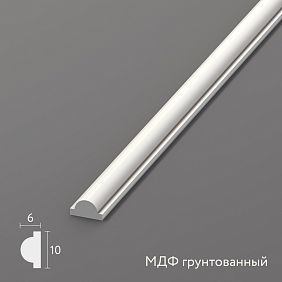
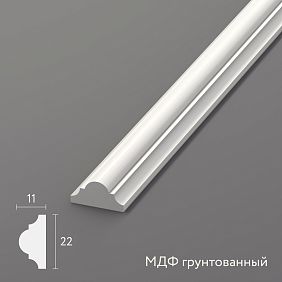
Moldings—classic option for framing a door opening. They are installed around the door and serve both decorative and practical functions, concealing the gap between the door frame and the wall. Moldings can be simple and minimalist or richly decorated, with carved elements and complex profiles.
Portals—larger and more expressive framing of a door opening. They include not only side posts but also a top lintel (architrave), and sometimes decorative elements above it—a pediment, cornice, or frieze. Portals create the effect of a grand entrance and are often used to accentuate main doors in a room.
Rosettes—decorative elements installed in the corners of a door frame or in the center of the top lintel. They may have the shape of a flower, leaf, geometric figure, or abstract ornament and serve as a striking accent in the overall composition.
Pilasters—vertical elements imitating columns, installed on either side of a door opening. They give the structure monumentality and are often used in classical interiors to create a grand effect.
Capitals—decorative finishes for pilasters or columns, installed at the top of vertical elements of a door frame. They can be executed in various orders—Doric, Ionic, Corinthian—or have an original design.
Materials for manufacturing
Polyurethane—one of the most popular modern materials for manufacturing door moldings. It has several undeniable advantages: lightweight, high strength, resistance to moisture and temperature fluctuations, ease of installation and maintenance. Polyurethane moldings feature high relief detail and precise reproduction of even the most complex ornaments. Such items can be purchased from specialized suppliers, where a wide range of quality decorative elements is presented.
Wood—classic material for manufacturing door moldings. Wooden profiles possess natural beauty, eco-friendliness, and warmth. They can be made from various species—from affordable pine to premium oak or exotic woods. However, wooden moldings require more careful maintenance and protection from moisture.
Plaster—traditional material for manufacturing decorative architectural elements. Plaster moldings are characterized by high plasticity, allowing the creation of items with fine detailing. However, they are more fragile and heavier compared to modern alternatives.
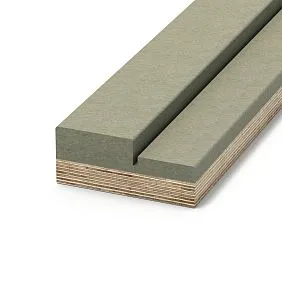
MDF—affordable and practical material for manufacturing door moldings. MDF products are easy to process, paint, and install. They are resistant to deformation and have a smooth surface, ideal for applying finishing coatings.
Polystyrene foam—lightweight and inexpensive material often used for manufacturing simple profiles. Polystyrene foam moldings are easy to install but less durable and strong compared to other materials.
Stylistic directions
Classic—timeless style that never goes out of fashion. Classic door moldings feature balanced proportions, symmetry, and restrained decoration. They may include elements of ancient orders, botanical motifs, or geometric patterns.
Baroque and Rococo—styles characterized by opulence and theatricality. Door moldings in these styles are richly decorated, have complex forms, and are often enhanced with gilding or patina. They create an effect of luxury and grandeur.
Art Deco—style combining elegance and extravagance. Art Deco moldings feature geometric forms, contrasting color combinations, and use of expensive materials or their imitations.
Minimalism—style based on the principle 'less is more'. Minimalist door moldings have simple forms, clean lines, and minimalist design. They create an effect of restrained elegance and fit well into modern interiors.
Eclecticism—style combining elements of various stylistic directions. Eclectic door moldings may combine classical forms with modern materials or traditional motifs with unconventional color solutions.
Functional advantages of door moldings
Door moldings are not just decorative elements. They perform a number of important functions that make them an indispensable part of quality interior design. Understanding these functions will help appreciate the true value of these architectural details.
Protective function
One of the original and still relevant functions of door moldings is protection of surfaces from damage. Door openings are zones of high traffic, where walls are most susceptible to mechanical damage. Moldings take the main impact, protecting walls from scratches, scuffs, and wear.
This function is especially important in areas with high traffic - corridors, halls, public buildings. Here, moldings made from durable materials such as polyurethane or MDF become not just a decorative element, but a practical solution for extending the lifespan of finishes.
Masking structural flaws
Door moldings effectively conceal various structural imperfections - wall irregularities, gaps between the door frame and wall, joints between finishing materials. This is especially relevant when renovating old buildings, where achieving perfectly flat surfaces is practically impossible.
Properly selected moldings can visually correct the geometry of the door opening, making it more proportionate and aesthetically appealing. This allows creating the impression of perfectly executed finishing even in the presence of certain structural limitations.
Acoustic insulation
Some types of door moldings, especially heavy wooden or polyurethane profiles, contribute to improving room acoustic insulation. They partially absorb sound waves and reduce noise penetration through door openings.
This feature is especially valuable in residential spaces, where it is important to create a comfortable acoustic environment. Moldings installed around the door create an additional sound barrier, enhancing privacy and comfort.
Cable system organization
Modern door moldings may include special channels for cable routing - electrical wires, telephone lines, internet cables. This allows organizing concealed wiring without compromising interior aesthetics.
Such a solution is especially relevant when installing "smart home" systems, where numerous communications need to be laid while maintaining the room's elegant appearance. Moldings with cable channels combine functionality and aesthetics, solving two tasks at once.
Improved thermal insulation
Door moldings, especially made from materials with low thermal conductivity (wood, polyurethane), contribute to improving room thermal insulation. They create an additional barrier against cold air penetrating through gaps around the door frame.
This feature is especially important in cold-climate regions, where energy efficiency is particularly critical. Quality moldings help retain heat in the room and reduce heating costs.
Design possibilities of door moldings
Door moldings are a powerful tool in the designer's hands, enabling the resolution of various tasks related to organizing and transforming space. Let us consider the main design techniques in which these elements play a key role.
Creating architectural accents
Door openings are natural focal points in interior design, and moldings allow enhancing this effect, transforming an ordinary door into an expressive architectural element. A richly decorated portal can become the central accent of a room, drawing attention and setting the tone for the entire interior.
Moldings framing main doors - entrance, leading to the living room or dining room - look especially effective. Here, more grand and decorative solutions are appropriate, emphasizing the significance of these spaces. For secondary doors - to bedrooms, bathrooms, or storage rooms - more restrained options can be chosen, while maintaining stylistic unity.
Space Zoning
In modern interiors with open floor plans, door moldings become an important tool for zoning. Even without physical doors, decorative portals help visually divide space into functional zones while preserving the sense of openness and unity.
Moldings of different styles or colors can mark transitions between zones - from hallway to living room, from kitchen to dining room. This creates a structured, logically organized space where orientation is easy.
Proportional correction
Door moldings allow visually correcting the proportions of door openings and the rooms as a whole. Vertical elements, such as pilasters or elongated moldings, visually increase ceiling height. Horizontal details, on the contrary, can visually expand narrow spaces.
In rooms with non-standard geometry, moldings help create an illusion of proper proportions. For example, in a room with asymmetrically placed doors, identical moldings create a sense of order and balance.
Stylistic unity
Door moldings play an important role in creating a stylistically cohesive interior. They must harmonize with other architectural elements - ceiling cornices, baseboards, columns - as well as with furniture and decor.
In classical interiors, moldings are typically maintained in a unified style, creating a sense of harmony and completeness. In modern eclectic spaces, bolder solutions are possible - contrasting combinations, unexpected color accents, mixing various styles.
Playing with color and texture
Traditionally, door moldings are painted white or in the natural wood tone, but modern designers increasingly experiment with the color and texture of these elements. Moldings can be painted in a contrasting color relative to walls, creating a striking graphic effect.
An interesting approach is using metallic finishes (gold, silver, bronze) or imitating expensive materials (marble, malachite). Such solutions add luxury and individuality to the interior.
How to choose the ideal moldings for your door
Choosing door moldings is a responsible stage in interior design, requiring consideration of multiple factors. Properly selected profiles will become an organic part of the space, highlighting its strengths and concealing its weaknesses. Let us consider the main criteria to follow when choosing moldings.
Style compatibility with interior design
The first and, perhaps, most important criterion is the moldings' conformity to the overall interior style. In classical interiors, profiles with traditional relief - acanthus leaves, egg-and-dart ornament, meander - are appropriate. For modern minimalist spaces, simple moldings with clear lines and minimal decoration are suitable.
In eclectic interiors, bolder solutions are possible - combining classical forms with unconventional color schemes or modern profiles with traditional decoration. The key is that moldings should harmonize with other interior elements and create a cohesive image.
Proportionality
The size and scale of moldings should correspond to the proportions of the room and the door itself. In spacious rooms with high ceilings, bold profiles with pronounced relief are appropriate. In smaller spaces, it is better to use more restrained and compact moldings to avoid overloading the interior.
It is also important to consider the proportions of the door itself - its height, width, and door leaf thickness. Mouldings should be proportionate to the door, emphasizing its shape and structural features.
Material and Execution Quality
The choice of material depends on several factors - budget, operating conditions, stylistic preferences. Polyurethane mouldings, which can be purchased from specialized suppliersoffer an optimal price-to-quality ratio. They are durable, moisture-resistant, easy to install and maintain.
Wooden mouldings are suitable for classic interiors where naturalness and tradition are valued. MDF is a practical and affordable option for modern interiors.石膏 profiles - the choice for those who appreciate fine detailing and are prepared for more complex installation.
Regardless of the material, attention should be paid to the quality of execution - clarity of relief, surface smoothness, absence of defects and damage.
Functional Requirements
When selecting mouldings, it is necessary to consider not only aesthetic but also functional requirements. In rooms with high humidity (bathroom, kitchen), moisture-resistant materials - polyurethane or specially treated wood - are required. In areas with heavy traffic, resistance to mechanical damage is important.
If cable installation is planned in the room, consider mouldings with built-in cable channels. For rooms with high acoustic or thermal insulation requirements, profiles with corresponding characteristics are suitable.
Ease of Installation and Maintenance
This factor is especially important if you plan to install the mouldings yourself. Polyurethane and polystyrene profiles are easier to install than wooden or gypsum ones. They are attached using special adhesive and do not require additional fasteners.
It is also important to consider the maintenance characteristics of the mouldings. Polyurethane and MDF profiles are easily cleaned from dust and dirt using common household cleaning agents. Wooden mouldings require more careful maintenance and periodic treatment with protective compounds.
Where to Buy Door Mouldings: Criteria for Choosing a Supplier
Choosing a reliable supplier of door mouldings is an important step that affects not only the quality of the purchased products but also the convenience of the purchasing, installation, and subsequent use process. What should be considered when choosing a company where you plan to purchase door mouldings?
Product assortment and quality
A reliable supplier offers a wide range of moldings in various shapes, sizes, and styles. This allows you to select the optimal solution for any interior, whether it’s a classical palace style or a minimalist modern design.
The quality of the product must be confirmed by certificates of conformity, warranty obligations, and positive customer reviews. The supplier's reputation in the market is an important indicator of reliability and quality of the products offered.
Professional Consultation
Choosing door mouldings is a process requiring certain knowledge and experience. A reliable supplier offers professional consultation on selecting profiles that match the interior style and functional requirements.
Consultants should help calculate the required amount of materials, select mounting accessories, and provide recommendations on installation and maintenance of mouldings. Such support is especially valuable for those encountering the selection and installation of decorative profiles for the first time.
Delivery and return conditions
Convenient delivery conditions are an important factor when choosing a supplier, especially for large or fragile items. Reliable companies offer various delivery options, including express delivery, regional delivery, and elevator delivery.
It is also important to pay attention to return or exchange conditions in case of defects or non-conformity with stated characteristics. Transparent return policy is a sign of customer-oriented approach and the supplier's confidence in the quality of their products.
Additional Services
Some suppliers offer additional services that can significantly simplify the interior design process:
- Design project development using mouldings
- Professional installation of decorative elements
- Painting mouldings in the chosen color
- Manufacture of non-standard profiles to individual orders
- Restoration and repair of antique mouldings
The presence of such services indicates a comprehensive approach by the supplier to working with clients and a high level of professionalism.
Price-to-quality ratio
The cost of door mouldings can vary significantly depending on the material, profile complexity, and manufacturer brand. However, it is important to understand that an excessively low price may indicate low quality or the use of inferior materials.
Reliable suppliers, such as those presented on specialized resourcesoffer products at fair prices corresponding to the quality and durability of the items. They may also offer various promotions, discounts for bulk orders, or loyalty programs for regular customers.
Installation Technology for Door Mouldings
Proper installation of door moldings is the key to their longevity and aesthetic appeal. Even the highest-quality profiles can look sloppy if installed incorrectly. Let's consider the main stages of installation and technical nuances to keep in mind during the process.
Preparation Work
Before beginning installation, surfaces where the moldings will be mounted must be carefully prepared. The walls around the door frame should be flat, clean, and dry. All old finishing materials that may interfere with secure profile fixation should be removed.
An important preparation step is marking. Using a level, plumb bob, and pencil, draw lines on the walls along which the moldings will be installed. This ensures even and symmetrical placement of decorative elements.
Also, at this stage, prepare all necessary tools and materials:
- Miter saw with fine teeth or electric miter saw
- Molding adhesive
- Finish nails or screws (if necessary)
- Spackle for filling joints and holes
- Sandpaper of various grits
- Primer and finish paint
- Painter's tape, level, tape measure, pencil
Cutting moldings
Moldings must be cut into pieces of the required length, taking into account the door frame's configuration. A miter box — a special tool — is used to make precise cuts at various angles.
Special attention should be paid to corner joints. For external corners, a 45-degree cut is typically used, and for internal corners, a 135-degree cut. It is important that the cuts are straight and precise, ensuring tight fitting between elements.
When cutting moldings, it is recommended to follow the rule: 'Measure seven times, cut once.' Incorrectly cut profiles may lead to additional costs and delays in work.
Molding installation
The method of mounting moldings depends on their material and weight, as well as the type of surface they are installed on. Lightweight polyurethane profiles are usually mounted using special mounting adhesive. Heavier elements may require additional fastening with finish nails or screws.
The installation process typically begins with mounting the top rail, followed by the side stiles. If the set includes additional decorative elements (rosettes, capitals), they are installed last.
When applying adhesive, it is important to follow the manufacturer's recommendations regarding the amount and method of application. Any excess adhesive protruding from under the profile should be immediately wiped away with a damp cloth to avoid contaminating the molding surfaces.
Joint treatment and finishing
After installing all elements, it is necessary to treat the joints between individual molding segments. For this, putty is used, which is sanded with fine-grit sandpaper after drying to achieve a smooth surface.
If nails or screws were used for mounting, the holes left by them should also be filled with spackle. After drying and sanding, the surface should be perfectly smooth, with no visible seams or defects.
Finishing moldings includes priming and painting. Primer ensures better paint adhesion to the surface and uniform coloring. Acrylic or alkyd paints are typically used for molding, applied in several layers with intermediate sanding.
Paint color is chosen according to the overall color scheme of the interior. Traditionally, moldings are painted white or in the natural wood tone, but modern designers increasingly experiment with color, using contrasting or accent shades.
Door moldings in various interior styles
Door moldings are remarkably versatile — they fit seamlessly into interiors of various stylistic directions, from classic to modern minimalism. Let's examine how moldings are interpreted in different styles and what specific features characterize their use.
Classic style
In classic interiors, door moldings play a key role, creating an atmosphere of luxury and elegance. Here, ornate profiles with floral motifs, acanthus leaves, meanders, and other traditional elements are appropriate.
Classic style is characterized by symmetrical compositions, where the door frame is framed by a portal with pilasters and a decorative entablature or sash. The color scheme is usually restrained — white, cream, light gray, sometimes with gold accents on individual elements.
Materials for classic moldings — hardwoods, plaster, high-quality polyurethane with detailed relief work. Careful finishing is essential to create the impression of expensive, high-quality craftsmanship.
Neoclassicism
Neoclassical style offers a more restrained interpretation of classical motifs. Door moldings here have a simpler profile but retain elegance and refinement. They are used more selectively, creating clear spatial geometry without excessive ornamentation.
In neoclassical interiors, moldings often become part of color accents — they can be painted in a contrasting color relative to the walls or, conversely, blend with them, creating a refined monochromatic image.
Materials for neoclassical moldings — polyurethane, MDF, wood. Clear lines and quality execution are important, creating the impression of a modern reinterpretation of classical forms.
Modern style
In modern interiors, door moldings take on a new sound. Here, profiles with clear, minimalist lines and no complex decoration are used. They can create geometric compositions, playing with proportions and rhythm.
The color solution for moldings in modern interiors can be the most diverse — from traditional white to bright accent colors or deep dark shades. An interesting effect is achieved by painting moldings in the same tone as the walls, where the decorative effect is achieved solely through the play of light and shadow on relief surfaces.
Materials for modern moldings — polyurethane, MDF, composite materials. Clean execution, geometric precision, and surface quality are important.
Minimalism
In minimalist interiors, door moldings are used very sparingly or are absent altogether. If they are present, they have the simplest form — straight lines, minimal relief, no decorative elements.
Color scheme is usually monochromatic — moldings are painted to match wall or door tones, creating a unified surface effect. Sometimes contrasting colors are used to create a graphic effect, but without excessive ornamentation.
Materials for minimalist moldings — MDF, smooth-surfaced polyurethane, metal. Geometric precision and quality finishing are important.
Provence and country
In interiors in the Provence or country style, door moldings create an atmosphere of coziness and home warmth. Here, profiles with simple but expressive relief are used, often with elements of floral ornament or geometric pattern.
Color scheme — pastel tones (white, cream, light blue, lavender) or natural wood color with an aged effect. Patina technique is popular, creating an effect of noble antiquity.
Materials for moldings in the Provence style — wood, MDF, polyurethane. Surface texture is important, creating the impression of handcrafted naturalness.
Art Deco
Art Deco style, with its love for geometry and luxurious materials, offers a special interpretation of door moldings. Here, profiles with clear, graphic lines are used, creating expressive geometric compositions.
The color scheme can be contrasting and striking - black-and-white combinations, use of gold or silver to accentuate individual elements. Deep, saturated colors - emerald, sapphire, ruby - are also popular.
Materials for Art Deco moldings - polyurethane, MDF, metal, mirrored elements. The quality of finishing is crucial, creating the effect of expensive, luxurious materials.
Innovative solutions in the world of door moldings
Modern technologies have not overlooked such a traditional area as door molding production. Innovative materials and manufacturing methods open new possibilities for designers and architects, enabling the creation of unique interior solutions.
Integrated lighting
One of the most interesting innovations - moldings with built-in LED backlighting. Such profiles not only serve a decorative function but also become a source of soft, diffused light, creating a special atmosphere in the room.
Glowing moldings can be used to accentuate a door frame, create a "floating" door effect, or form light paths guiding movement at night. They look especially striking in modern interiors with minimalist design.
The manufacturing technology of such moldings involves using translucent materials that evenly diffuse light and special channels for placing LED strips. Lighting control can be managed via a remote, smartphone, or "smart home" system.
3D Printing and Digital Modeling
3D printing technology opens new horizons in the production of door moldings. It allows creating profiles of any complexity and configuration, with unique relief and texture, which cannot be achieved by traditional manufacturing methods.
This technology is especially valuable in restoring historical buildings, where it is necessary to recreate lost decorative elements with maximum accuracy. 3D scanning of preserved fragments allows creating an exact digital model, from which new moldings are printed, indistinguishable from originals.
For private interiors, 3D printing opens the possibility of creating absolutely unique, personalized moldings - with family crests, monograms, favorite ornaments, or custom designs.
Eco-friendly materials
In response to growing demand for eco-friendly materials, molding manufacturers offer profiles made from recycled or renewable resources. Such moldings not only minimize environmental impact but also ensure a healthy microclimate in the room.
Among eco-friendly materials for manufacturing door moldings, we can highlight:
- Biodegradable polymers based on corn or potato starch
- Composites of wood fibers and natural binders
- Recycled plastic with addition of natural fillers
- Innovative materials based on agricultural waste
These materials possess all necessary characteristics for manufacturing quality moldings - strength, durability, moisture resistance, while not emitting harmful substances and can be recycled after the end of their service life.
Smart moldings
The concept of "smart home" is reflected in the design of door moldings. Modern profiles can be integrated into home automation systems, performing various functions:
- Built-in motion sensors for automatic lighting activation
- Touch panels for controlling various home systems
- RFID tags for controlling access to rooms
- Built-in video surveillance cameras disguised as decorative elements
- Alarm systems for intrusion or smoke detection
Such moldings combine aesthetic appeal with high functionality, becoming an important part of a modern, technologically advanced interior.
Economic aspects of using door moldings
Investments in door moldings are not only aesthetic investments in space, but also in its functionality and longevity. Let's consider the economic aspects of using moldings and factors influencing their cost.
Price-to-quality ratio
The manufacturing material is one of the key factors determining the cost of door moldings. Polyurethane profiles usually occupy a mid-range price category, offering an optimal balance of quality and cost. Moldings made of precious wood or handcrafted plaster profiles may be significantly more expensive.
Quality moldings, purchased from reliable supplierspossess high strength, resistance to mechanical damage and environmental exposure. They maintain an attractive appearance for many years, requiring no replacement or complex maintenance.
Factors influencing the cost of moldings
The material of manufacture is one of the key factors determining the cost of door moldings. Polyurethane profiles usually occupy the mid-price category, offering an optimal balance of quality and cost. Moldings made of precious wood or handcrafted gypsum profiles may be significantly more expensive.
Profile complexity - the more complex and detailed the molding's relief, the higher its cost. Simple smooth profiles are usually more affordable than elaborately decorated elements with floral ornamentation or other complex motifs.
Dimensions - the width and height of the profile also affect its cost. Large moldings with impressive dimensions usually cost more than their more modest counterparts.
Brand and country of manufacture - products from well-known brands with a long history and reputation usually have a higher cost. However, such manufacturers typically guarantee consistently high quality and compliance with stated characteristics.