










































































Article Contents:
- What is a Baseboard Board and When is it Needed
- How a Baseboard Board Differs from a Regular Construction Board
- Board, Batten, or Ready-Made Baseboard: What to Choose
- Board for Self-Making
- Batten as a Narrow Blank
- Solid wood ready-made profile
- What Wood is Baseboard Board Made From
- Oak Baseboard Board
- Beech skirting board
- Pine skirting board
- Comparative Table of Wood Species
- Skirting board dimensions
- Skirting board thickness
- Board width for skirting height
- Length
- Choosing a board for different skirting types
- For straight skirting
- For flat (thin) skirting
- For tall wooden skirting
- For paintable skirting
- For a classic profile with relief
- Skirting board or MDF: an honest comparative analysis
- What natural wood (solid wood) wins
- What MDF wins at
- Final selection logic
- How to prepare the board for skirting board manufacturing
- Step 1: Drying
- Step 2: Calibration
- Step 3: Geometry check
- Step 4: Profile milling
- Step 5: Sanding
- Step 6: Priming and Finishing
- Step 7: End Protection
- Where Skirting Board is Used: Application Scenarios
- Apartment with Parquet
- Private House with Wooden Interior
- Classic Interior
- Modern Interior with Natural Wood Accent
- Interior with slatted panels
- How to Buy Skirting Board Without Mistakes: Checklist
- What STAVROS Offers: Ready Solutions Instead of Raw Board
- FAQ: Questions About Skirting Board
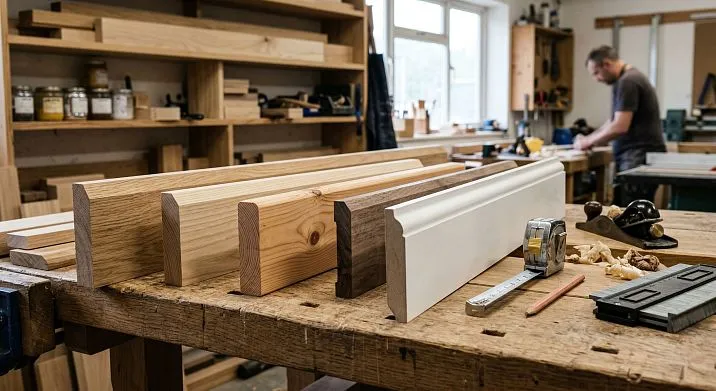
There are questions that are rarely asked, but which determine a great deal. 'Skirting board plank' is one of them. Who asks it? A carpenter who wants to mill the profile themselves for a specific interior. A finishing craftsman who needs the material, not a store-bought product. A designer creating a furniture set and wanting a skirting board of the same species and grain as the cabinet fronts. The owner of a country house who is building it themselves and wants to control every element.
But among all those who enter this query, there are also those who are simply looking for a wooden skirting board—a solid wood profile, ready for installation. And this is quite logical: the word 'plank' here is synonymous with 'wooden' or 'made of natural wood'. Not synthetic, not MDF, not plastic. Plank means wood means real.
This article covers both intents: for those looking for a blank for DIY, and for those wanting to buy a ready-made solid wood skirting board. Let's break it down — in detail, specifically, and honestly.
Choose the right solution in the STAVROS catalog:
-
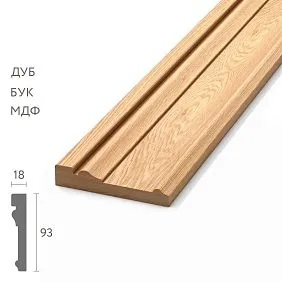
Skirting made of solid wood— ready-made wooden skirting board for varnish, oil, or painting
-
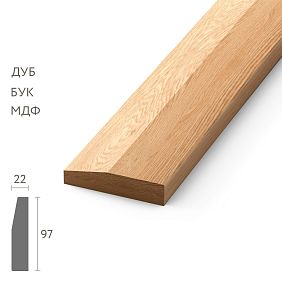
Pogonazh iz massiva— battens and profiles for DIY manufacturing
-
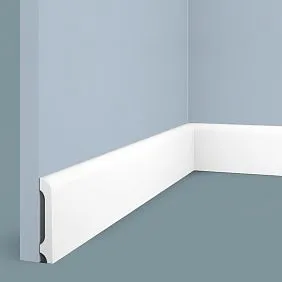
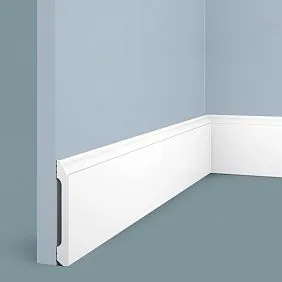
floor skirting boards— the full range for flooring



What is a skirting board plank and when is it needed
Strictly speaking, 'skirting board plank' is not a standard construction term. It is a descriptive concept behind which lies a specific need: a wooden material is needed from which the floor skirting board will be made.
Such a need arises in several completely different situations.
Situation one: carpentry task. A master or carpenter wants to independently mill a baseboard with a non-standard profile — for a specific interior, for a specific height, for a custom design. They need a calibrated blank of the required cross-section, made from the correct wood species, with the required moisture content.
Situation two: production task. A small carpentry enterprise or furniture workshop manufactures custom baseboards. The source material is a solid wood board or batten, which is milled according to the client's template.
Situation three: search for a ready-made profile. A user is looking for a wooden baseboard made from natural board, using the word 'board' as a synonym for 'wood'. They do not need a semi-finished product — they need a ready-madeWooden baseboardsolid wood product for varnish or paint.
In all three cases, the conversation is about one thing: natural wood as a material for creating a floor baseboard. And here begin the nuances worth knowing before making a purchase decision.




How a baseboard board differs from a regular construction board
Construction edged board is raw material for frames, floors, subfloor decking. It is not intended for profile manufacturing of decorative elements. It lacks the necessary geometric precision, moisture content can be high, and the surface may have large knots, blue stain, cracks.
A board for baseboards is a completely different class of material:
-
Moisture content — no higher than 8–10%. With higher moisture content, after milling and installation, the baseboard will warp and break the joints.
-
Grade — A or AB. Minimum knots (only healthy, tight, small ones), absence of blue stain, rot, through cracks.
-
Geometry — flatness of all faces, absence of 'twist'. Otherwise, the baseboard will not fit snugly against the wall or lie flat on the floor.
-
Surface — sanded or calibrated, ready for finishing.
This is precisely what distinguishes a professional baseboard blank from what is sold at a construction market as 'sawn board'.Pogonazh iz massiva— this is exactly that format: calibrated slats and blanks made from selected wood, ready for milling or finishing.
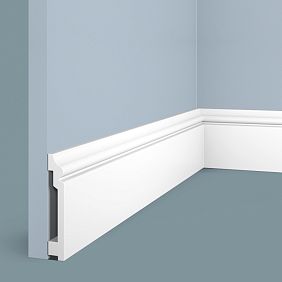
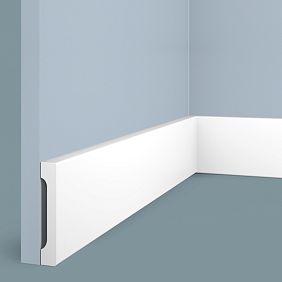
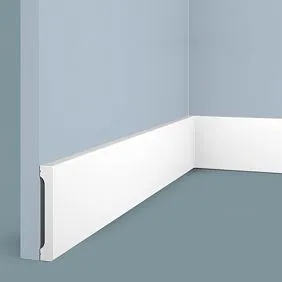
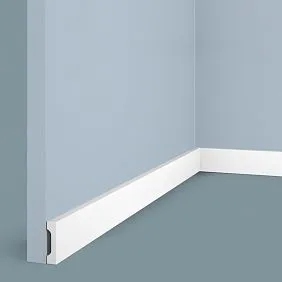
Our factory also produces:

Board, slat, or finished baseboard: what to choose
This is the central question. Three paths — three different results.
Get Consultation
Board for self-manufacturing
A wide blank 100–200 mm in width, 20–30 mm in thickness. From it, you can mill a baseboard of any profile and any height. Suitable for non-standard tasks: unusual profile, large height of 120–200 mm, special wood species for a custom interior.
Pros: full control over the profile, the ability to create anything.
Cons: requires a milling machine or rental of production equipment, knowledge of profiles, time, risk of defects due to setup errors.
Batten as a narrow blank
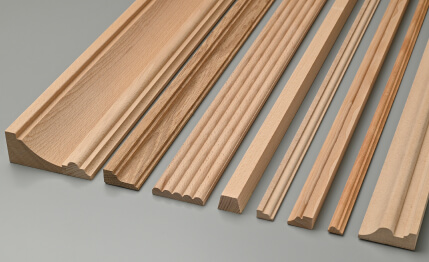
Batten is closer to a finished skirting board. A narrow-section blank 15–25 mm thick, 50–120 mm wide, calibrated on all faces. It can be sanded, the top edge rounded, and a finish applied to obtain a ready-made skirting board without milling.
Pogonazh iz massivaincludes exactly this format: oak, beech, and pine battens in calibrated sections, ready for use both as a base for profiling and as a standalone element—a straight, flat skirting board without relief.
Pros: no milling machine needed for a straight flat profile, material savings.
Cons: limited profile selection.
Ready-made solid wood profile
Skirting made of solid woodis a fully finished product: milled profile, sanded, selected for geometry, ready for installation and finishing (varnish, oil, enamel).
to buy wooden baseboardin ready-made form is the right choice for 95% of tasks. Here's why:
-
The profile already has the correct cross-section: a groove for the mounting cable channel, the correct base angle, and a precise rear groove for pressing against the wall.
-
The surface is ready for finishing: sanded, without fuzz, and free of contaminants.
-
Geometry verified: straight, without "twist", with precise angles.
-
Standard length of 2.5 m ensures minimal losses during installation.
Working with the board yourself is justified for specific tasks. For standard ones —Buy solid wood skirting boardready-made is faster, more precise, and, when labor costs are recalculated, more cost-effective.
What wood is used to make skirting board planks
Wood species is not just about aesthetics. It's about mechanical properties, behavior during processing, reaction to varnish and paint, and durability in use. Let's examine the three main species used in the production of wooden skirting boards.
Skirting board plank made of oak
Oak is the gold standard for wooden skirting boards. Why?
Oak's hardness on the Brinell scale is 3.7–4.0, which is twice as high as pine. This means resistance to dents, scratches, and mechanical impacts. A skirting board made from an oak plank won't get dented from a chair or door hitting it.
Oak texture is expressive, with a characteristic large grain pattern. Under transparent varnish, it works as a decorative element in itself. 'Oak' tinting is an entire design language: from light honey to dark tobacco.
Oak takes milling well: the chips come out clean, the edges of the profile are smooth without fuzz or chips. For complex relief profiles, it is the optimal species.
Solid oak skirting board— a choice for interiors with oak parquet flooring, classic and neoclassical spaces, studies and living rooms with a claim to solidity.
What oak board is suitable for:
-
Transparent tinting to look like natural wood
-
Classic and neoclassical interior
-
High skirting board 80–150 mm
-
Parquet made from the same species
-
High-traffic areas (entryway, hallway, living room)
Beech skirting board
Beech is a species with a fine-pored, uniform structure. It is precisely this feature that makes it attractive for manufacturing skirting boards: the surface of a beech board accepts paint exceptionally evenly, without spots or variations. It is the best solid wood material for skirting boards under enamel or painting in RAL.
Beech hardness is 3.2–3.5 on the Brinell scale. Slightly lower than oak, but still significantly higher than coniferous species. Mechanical resistance is high.
Beech texture is neutral: a fine, uniform pattern without pronounced grain. Under clear varnish, it looks less impressive than oak. However, under white enamel, it is flawless.
with a classic profile creates a sense of solidity, reliability.Beech in white enamel is a classic of the 'white interior' with natural material. Not MDF, not plastic—real wood painted white.
What beech board is suitable for:
-
Skirting board for painting in any color
-
White skirting board made from natural wood
-
Classical profile with relief
-
Rooms with wooden floors made of beech or light-colored species
-
Projects where the combination of naturalness and texture neutrality is important
Pine skirting board
Pine is the most affordable of the three species. It is soft (hardness 1.6–2.0 on the Brinell scale), resinous, with a pronounced grain and a warm reddish color. It is easy to work with — it can be cut, milled, and sanded without special equipment.
The downside of pine: softness. In high-traffic areas, a pine board skirting quickly acquires dents — from a heel strike, from the side of a chair, from a sofa leg. This is acceptable for living rooms. For hallways and entryways — it's a risk.
However, pine is the perfect material for a country house in rustic, Scandinavian, or rural style. Live knots in a pine skirting board are not a defect here, but a decorative feature.
What pine board is suitable for:
-
Country house, dacha, sauna
-
Rustic, Scandinavian, rustic style
-
Budget option with warm wooden character
-
Premises without high mechanical loads
Comparative table of wood species
| Parameter | Oak | Beech | Pine |
|---|---|---|---|
| Hardness | High | Medium | Low |
| Under clear lacquer | Excellent | Good | Good |
| For painting | Good | Excellent | Good |
| Milling | Excellent | Excellent | Easy |
| Durability | High | High | Medium |
| Blank price | High | Medium | Low |
Board dimensions for skirting board manufacturing
Correct blank dimensions mean material savings and result accuracy. Here's what you need to know.
Board thickness for skirting board
Finished skirting board thickness is 12–20 mm. The blank should be 3–5 mm thicker for milling and sanding: that is 16–25 mm. For a straight flat skirting board, 14–18 mm is enough. For a profile with a roundover and relief — 20–25 mm.
Too thin a blank is a risk: it may crack or lose geometry during milling. Too thick — unnecessary material consumption and increased projection from the wall.
Practical rule: for a skirting board with a finished thickness of 12–14 mm, take a blank of 18–20 mm. A 5–6 mm allowance for processing.
Board width for skirting board height
Blank width = finished skirting board height + allowance for milling and sanding (5–10 mm).
-
60 mm skirting board → 65–70 mm blank
-
80 mm skirting board → 85–90 mm blank
-
100 mm skirting board → 110–115 mm blank
-
120–150 mm (tall) skirting board → 130–160 mm blank
For a blank for a tall wooden skirting board, a wider board is needed — this automatically increases the grade requirements: the wider the board, the higher the likelihood of hidden defects (internal cracks, grain warping).
Length
Standard length — 3–4 m. For installation in a room, the optimal finished length of the piece is 2.5 m (standard for finished profiles) or 3 m (for long runs with a minimal number of joints). The allowance when ordering blanks is 15–20% of the calculated linear length.
Which board to choose for different types of skirting boards
The task determines the material. Here are specific recommendations.
For a straight skirting board
A straight rectangular profile without relief is the simplest to manufacture. Here, a calibrated batten is sufficient:Pogonazh iz massivain the required cross-section, sanded and ready for painting or varnishing. Milling is not needed. It is enough to chamfer the top edge and treat the surface.
For flat (thin) skirting board
Flat skirting board — minimal thickness at standard height. Perfect workpiece geometry is crucial here: the slightest 'twist' in a thin board becomes critical. Choose only dry, calibrated slats made of hardwoods (oak, beech) — they are more stable at small thickness.
Alternative:buy wooden baseboard for floorready-made — with small cross-sections, self-manufacturing carries a risk of deformation.
For tall wooden skirting board
A workpiece for a tall skirting board 100–150 mm is already a serious carpentry task. A wide board of premium-grade oak, thoroughly checked for geometry. Milling on a stationary machine with a template. Final sanding in three passes (80–120–180).
If the goal is to get a beautiful tall skirting board without production facilities, it is more rational toBuy solid wood skirting boardpurchase a tall profile ready-made. The profile accuracy in production is incomparably higher than manual work.
For skirting board for painting
For painting, beech is best suited: fine-pored structure + absence of resin + uniform density = ideal base for enamel. If you need a board for a skirting board to be painted white or in a pastel shade — beech or MDF fromMDF skirting boards for painting.
Oak for painting — possible, but requires primer to seal the pores. Pine — also possible, but under bright lighting, resin spots are visible through the paint.
For a classic profile with relief
Bead, cove, shaped section — complex profiles require hard, dense wood without voids and loose fibers. Oak is the first choice. Blank thickness — 22–28 mm (with allowance for relief depth). Grade — only A.
Skirting board: solid wood or MDF — an honest comparative breakdown
This question comes up constantly. We answer without marketing bias.
What solid wood (solid timber) wins at
Living texture. No artificial material can reproduce the play of wood fibers under oblique light. This is not an aesthetic whim — it's physics: wood reflects light organically, uniquely.Wooden baseboardunder clear varnish — is a decorative element in itself.
Restoration. A solid wood skirting board can be sanded and repainted after 10–15 years without replacement. MDF with a damaged surface layer — only replacement.
Durability. With proper carewooden skirting board purchaseand install — means doing it once for 25–30 years.
Milling. Solid wood can be shaped into any profile — straight, flat, with deep cove, with double ogee. MDF mills worse: edges chip on small radii.
What MDF wins at
Geometric stability. MDF does not warp with humidity fluctuations. In apartments with air conditioning and heating systems, wooden baseboards without proper acclimatization can develop gaps at joints. MDF does not.
Painting.— is a horizontal element that frames the room at the bottom of the walls where the wall meets the floor. Skirting boards perform several functions: they hide the technological gap between the wall and floor covering (necessary for thermal expansion), protect the lower part of the wall from mechanical damage, create visual completion, and may conceal wiring.— an ideal surface without pores. Paint applies in one or two coats without preliminary grain filling.
Price. MDF is 1.5–3 times cheaper than solid wood depending on the wood species. For large volumes — a significant difference.
Installation speed. MDF does not require acclimatization — it can be installed immediately after delivery.
Final selection logic
| Task | What to choose |
|---|---|
| Oak parquet, natural texture | Board / ready-made oak solid wood baseboard |
| Laminate, quartz vinyl, painting | MDF for painting |
| Classic interior with high skirting board | Solid wood with relief profile |
| Modern minimalist interior | MDF straight for enamel |
| Moist areas | MDF with closed coating or polyurethane |
| Designer non-standard profile | Board for custom milling |
How to prepare a board for skirting board manufacturing
This is a practical block for those who have chosen the path of self-manufacturing.
Step 1: Drying
Board moisture should be 8–10%. Check with a moisture meter. If you bought freshly sawn lumber with 15–20% moisture — kiln drying or prolonged natural drying in a ventilated room is required (6–12 months depending on thickness).
Never work with wet boards: after milling and installation, they will dry out, warp, and tear the joints.
Step 2: Calibration
A thickness planer (planer) aligns all faces of the board to a uniform size in thickness and width. After planing, the workpiece has a precise rectangular cross-section — without warping, without 'cupping'.
Without calibration, a straight baseboard against the wall will have an uneven gap.
Step 3: Geometry Check
Place the workpiece on a flat table. Check for 'twist' (lengthwise twisting): if the board has a gap at the fourth point when placed on three points — there is 'twist'. Such a workpiece cannot be used for baseboard without additional processing.
Step 4: Profile Milling
On a router table or milling machine with a vertical spindle — using a template or CNC. For a straight flat profile, simply chamfer 2–3 mm on the top edge with a handheld router. For a complex relief profile — a stationary machine is mandatory.
Step 5: Sanding
Three passes: grit 80 (primary treatment), 120 (leveling), 180 (finish before coating). Along the grain, not across. After each pass — dust removal.
Step 6: Priming and finishing coating
-
For clear varnish: primer-varnish in 1–2 coats, then finishing varnish 2–3 coats.
-
For enamel: acrylic primer, drying, light sanding 220, finishing enamel 2 coats.
-
For oil: thermal or hard oil in 2–3 coats with drying between coats.
Step 7: End protection
Skirting board ends are the most vulnerable spot for moisture absorption. Ends must be coated with varnish or oil in 2–3 coats before installation.
Where skirting board is used: application scenarios
Apartment with parquet
Oak parquet +with a classic profile creates a sense of solidity, reliability.Oak in a unified finish — a professional design solution. A single material environment from floor covering to the lower wall line. Properly selected oak boards produce a skirting board indistinguishable in texture from the parquet board.
Private house with wooden interior
In a country house with wooden floors, beams, stairs, solid wood furniture — the skirting board should also be wooden. Herebuy wooden skirting boardin the same style as the other wooden elements — part of a systematic approach to interior design.
Or make it yourself from a blank of the same wood species used in the stairs or furniture. This is already a custom interior.
Classic interior
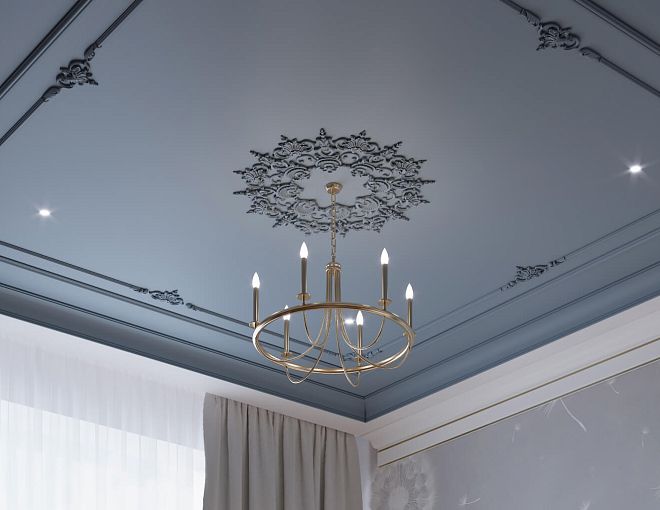
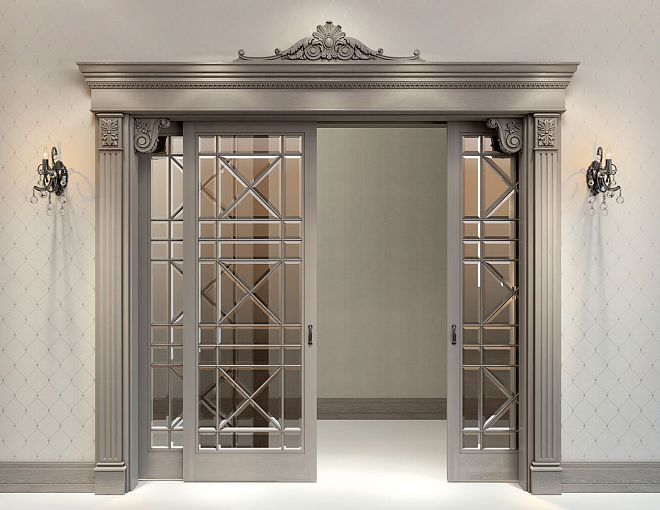
In a classic space with stucco, wall moldings andwooden corniceat the ceiling — a 100–150 mm wooden skirting board with a classic profile (ogee + fillet + bevel) completes the lower zone.
Modern interior with a natural wooden note
In a minimalist white space — a thin straight wooden skirting board made of oak or beech under clear varnish as the only 'natural' accent in the lower zone. This is a subtle design solution: almost everything is white, but the skirting board is living wood.
Interior with slatted panels
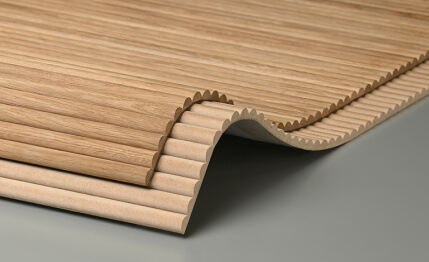
When the walls are finishedplank panelsFrom solid wood or veneer — the baseboard at the bottom must be of the same species. This is the principle of material unity: the battens on the wall and the baseboard on the floor — one material, one tint.
How to buy baseboard lumber without mistakes: a checklist
Before buying, go through this list — and avoid typical mistakes.
-
Species — choose according to the specific task: oak for parquet and relief profiles, beech for painting, pine for rustic style
-
Moisture content — not higher than 10%. Check with a moisture meter or request the material's certificate
-
Grade — A or AB. Grade B and below — only for hidden elements
-
Absence of 'twist' — check visually: lay it on a flat surface
-
End geometry — ends must be even, without cracks
-
Cross-section with allowance — thickness 5–6 mm greater than the finished profile, width 8–10 mm greater than the finished height
-
Log length — 3 m is preferable for long runs
-
No blue stain - blue stain (fungal discoloration) reduces grade and spoils appearance
-
No resin pockets - especially important for coniferous species under painting
What STAVROS offers: ready-made solutions instead of raw boards
Making baseboards from boards yourself is an interesting and correct approach when the task is truly non-standard. But in most cases, the customer faces a practical task: they need a beautiful, precise, durable wooden baseboard. And here the most rational choice is a ready-made profile from the manufacturer.
STAVROS Company offers:
Skirting made of solid wood— ready-made profiles from oak and beech. Milled, sanded, geometry checked. For varnish, oil, or enamel. Straight, flat, shaped profiles for modern and classic interiors. Height from 50 to 150 mm.
Pogonazh iz massiva— calibrated slats and blanks for those who want to work independently or order a custom profile. Selected wood, proper moisture content, precise geometry.
MDF Skirting Board— for tasks where stability and a perfect surface for painting are important.— is a horizontal element that frames the room at the bottom of the walls where the wall meets the floor. Skirting boards perform several functions: they hide the technological gap between the wall and floor covering (necessary for thermal expansion), protect the lower part of the wall from mechanical damage, create visual completion, and may conceal wiring.in any RAL color.
When to choose a ready-made profile instead of a board for self-processing:
-
No access to milling equipment
-
Standard profile needed (straight, flat, with classic bevel)
-
Precise geometry and predictable result required
-
Deadlines are tight
-
Guaranteed moisture content and material grade are important
FAQ: questions about skirting board material
What kind of board is used for skirting?
From selected, calibrated hardwood boards — oak, beech, birch. Moisture content 8–10%, grade A or AB. From softwood (pine) — for country and rustic interiors.
Which board is best for wooden skirting?
Oak — for transparent tinting, relief profile, high loads. Beech — for painting in white or pastel tones. Pine — for dachas and country style.
Can skirting be made from ordinary construction board?
Technically, yes. Practically, no. Construction-grade sawn timber has high moisture content, irregular geometry, and allows for major defects. After installation, such a skirting board will warp and create gaps.
What thickness is needed for the blank?
For a finished skirting board thickness of 12–14 mm — a blank of 18–20 mm. For a relief profile — 22–26 mm.
What is better — batten or board for skirting?
Batten — for straight or flat skirting without complex relief. Board — for tall or relief profile.Pogonazh iz massivacombines both formats.
What is better for skirting — solid wood or MDF?
Solid wood — for parquet, natural finishes, long-term use with restoration. MDF — for laminate, quartz vinyl, painting to an exact color, areas with variable humidity. Detailed comparison above.
Can you paint a solid wood skirting board?
Yes. Beech paints best — its fine-pored structure does not require pore sealing. Oak — after priming with pore filling. Pine — with a covering primer to prevent resin stains.
Which material is better for parquet?
with a classic profile creates a sense of solidity, reliability.from the same wood species as the parquet, in the same tint. A unified material environment is the best solution for a parquet interior.
Which wood species to choose for a baseboard in an apartment?
In an apartment with parquet — oak to match the parquet. In an apartment with laminate — MDF or beech for painting. In a white modern interior — beech in white enamel orWhite MDF Skirting Board.
Is it worth making a baseboard yourself from a board?
It is worth it if you have equipment, experience, and a non-standard task. In other cases —to buy wooden baseboardready-made is faster, more precise, and, considering labor costs, more cost-effective.
How much does a board for a baseboard cost?
The price of the blank depends on the species, grade, and volume. Current prices for ready-madeSolid wood skirting boardsandPogonazh iz massiva— in the STAVROS catalog.
How to store a board for a baseboard before installation?
In a horizontal position on level supports, in a ventilated room with temperature and humidity close to the conditions of the installation room. 3–5 days before installation, move to the room where the skirting board will be installed — acclimatization is mandatory.
The question 'which board to choose for a skirting board' starts with the material but ends with the space. A well-chosen blank or a correctly selected ready-made profile is a detail that either completes the interior or remains unnoticed in a good sense. That is exactly the result needed.
STAVROS company offersSkirting made of solid woodmade from selected oak and beech wood — ready-made profiles for installation, as well asPogonazh iz massivafor those who work independently.buy wooden baseboard for floor, Buy solid wood skirting boardor selectfloor skirting boardsfor a specific interior — all this is in the STAVROS catalog. Production in Russia, natural materials, real samples for accurate selection.