Article Contents:
- Why a home photo corner is not a whim but a conscious necessity
- Large mirror as the centerpiece: size, shape, frame
- Mirror size: minimum and optimum
- Mirror shape: classic or experimental
- Mirror frame: material, style, detailing
- Accent baseboard: why height and profile decide everything
- Standard baseboard and its shortcomings in the frame
- High accent baseboard: visual power
- Baseboard height for photo corner: recommendations
- Baseboard profile: from simple to complex
- Baseboard color: matching the wall or contrasting
- Decorative wall behind the mirror: moldings, panels, color, texture
- Smooth painted wall: base for minimalism
- Wall with moldings: classic structure
- Wooden panel behind the mirror: warmth and texture
- Wallpaper or decorative plaster: pattern and texture
- Wall color: psychology and aesthetics
- Photo corner lighting: why local light is a must-have
- Natural light: the ideal that isn't always available
- Local mirror lighting: soft even light
- Spotlights: accent from above or from the side
- Sconce or floor lamp: decorative and functional light
- Console, stool or shelf: functional area by the mirror
- Console: elegance and functionality
- Small shelf: minimalism and compactness
- Stool or pouf: mobility and comfort
- Plants and decor: final touches of the composition
- Plants: greenery that brings to life
- Decorative items: vases, candles, books, figurines
- Textiles: a rug or runner by the mirror
- Best places for a photo corner: hallway, bedroom, walk-in closet
- Hallway: the first and last thing you see
- Bedroom: a personal beauty zone
- Walk-in closet: the holy of holies of style
- Common mistakes when creating a photo corner
- How to match the photo corner with the overall interior style
- Frequently asked questions about a home photo corner
- Conclusion: an investment in beauty and comfort for every day

Modern life dictates new interior design rules. It's no longer enough for a home to be simply beautiful and comfortable — it must be photogenic. A place to take a stunning photo for social media, check your outfit before heading out, capture an important moment — such a home photo corner has become a must-have in modern living. An accenthigh wooden baseboard, a largeframed mirrorand a thoughtfully composed decorative arrangement on the wall behind it — that's the formula that turns an ordinary corner into an Instagrammable zone where every shot turns out perfect.


Why a home photo corner is not a whim but a conscious necessity
Let's be honest: in the era of visual content, we've all become characters in our own media. Instagram Stories, VKontakte posts, TikTok videos, selfies for a Telegram channel — all of this requires a high-quality, well-thought-out background. You could, of course, take photos against a random wall or in the bathroom. Or you can create a special place where the background is always flawless, the lighting is precise, and the composition is considered. Where you don't have to search long for an angle or worry about something unwanted creeping into the frame.
But a photo corner isn't just about social media. It's about daily comfort and psychology. A large mirror in a beautiful frame against a stylish wall — it's a pleasant place to pause, fix your hair, evaluate your outfit, gather your thoughts before an important meeting. It's an island of beauty in everyday life that works on your mood and self-esteem.
Modern clients of designers are increasingly formulating their request exactly like this: 'I want a place at home where I can take beautiful photos.' And that's absolutely normal. Design should respond to real needs, not abstract ideals from last century's magazines. If you need a place for photos — then the interior should provide it. Beautifully, functionally, with attention to detail.




A large mirror as the centerpiece: size, shape, frame
The heart of any photo corner is the mirror. Not a small wall mirror at face level, but a large full-length mirror that shows the entire figure or at least from the waist up. Size matters: the larger the mirror, the more framing possibilities, the more freely a person feels in front of it.
Our factory also produces:


Mirror size: minimum and optimum
The minimum size for a photo corner is sixty by one hundred twenty centimeters. This allows seeing the figure from the waist to the head, which is sufficient for most selfies and portrait shots. But bigger is better.
The optimum size is seventy to ninety centimeters in width and one hundred fifty to one hundred eighty in height. Such a mirror shows the figure almost in full length (if standing one to one and a half meters away), provides creative freedom, allows photographing not only yourself but also with a partner, child, or pet.
Full-length mirrors (height from one hundred eighty to two hundred twenty centimeters) — the ideal choice for those who take their image seriously. Models, stylists, bloggers working with visual content — for them, this is not a luxury but a work tool. But even for an ordinary person who wants to see themselves fully before heading out, a large mirror provides a sense of control and confidence.
Get Consultation
Mirror shape: classic or experimental
A vertical rectangular mirror — a universal choice. It fits any style, from classic to minimalism, elongates the space vertically, and is suitable for full-length shots.
A square mirror (eighty by eighty, one hundred by one hundred centimeters) — a modern alternative. It's more compact, suitable for small spaces, creates a graphic, balanced composition. A square is good for portraits and waist-up shots.
An oval or round mirror — a romantic, soft option. Such shapes soften the room's geometry, add femininity, and are good for classic and vintage interiors. A round mirror with a diameter of seventy to ninety centimeters works wonderfully as an accent in a bedroom or walk-in closet.
An arched mirror (rectangular with a rounded top) — a trend of recent years. The arch adds architectural quality, references classic door and window openings, creates a sense of a portal. An arched mirror one hundred eighty to two hundred centimeters high, seventy to ninety centimeters wide — an impressive centerpiece for a photo corner.
Mirror frame: material, style, detailing
A frame is not just a border for the mirror glass. It is an element that sets the style of the entire corner, connects the mirror to the wall and the rest of the decor. Frame quality is critical: a cheap plastic or thin MDF frame will ruin the entire effect, even if the mirror is large and the wall is beautiful.
Solid wood frame
Carved frames and mirrorsmade of solid oak or beech is high-level classic. Wood is noble, tactile, durable. Carving adds volume, visual complexity, creates a play of light and shadow. A classic carved frame with floral ornaments, scrolls, and cartouches suits neoclassical, Art Deco, and Provence interiors.
A simple wooden frame without carving, with a clean profile — for modern interiors, Scandinavian style, minimalism. The wood can be tinted (walnut, wenge, natural oak) or painted in matte white, gray, black.
Frame with patination or gilding
Mirror in a gold frame— for those who are not afraid of luxury and want to create a bright, memorable photo backdrop. Gilding (real gold leaf or high-quality imitation) adds drama, shine, and status. A gold frame is good in spacious rooms with high ceilings, where it does not overwhelm the space.
A patinated frame (aged, with a worn effect, with contrasting dark accents in the recesses of the carving) — vintage charm. Such a frame is good for interiors in Provence, shabby chic, eclectic styles. It creates a sense of history, coziness, and individuality.
Frame in neutral tones
Mirror in a white frame— a universal solution for light interiors. A white frame does not clash with the surroundings, creates a sense of purity, freshness, and airiness. It suits Scandinavian style, minimalism, and modern classic. Matte white enamel on a wooden frame looks noble and restrained.
A gray or beige frame — neutral, elegant, non-aggressive. It fits into most interiors, does not draw attention to itself, allowing focus on the reflection.
Important: frame execution quality
Frame corners must be perfectly fitted (mitered at forty-five degrees without gaps). The surface is smooth, without chips, paint drips, or unevenness. Carving is clear, with detailed work. Mirror mounting in the frame is reliable (the mirror glass is fixed in the frame with holders or glued in). A cheap frame with sloppy execution will spoil the impression even of an expensive mirror.
The company STAVROS manufacturesMirrors with decorative framingmade of solid oak and beech. Each frame is handmade, the carving is worked on by master carvers, and the finishing (painting, patination, gilding) is done using classic techniques. This guarantees that the frame will not just be beautiful in photos, but flawless in person.
Accent baseboard: why height and profile decide everything
At first glance, a baseboard is a secondary detail. But in a photo corner, it plays a critical role. It is the baseboard that forms the lower border of the frame, creates a visual support, separates the floor from the wall, and sets the horizontal line that structures the composition.
Standard baseboard and its shortcomings in the frame
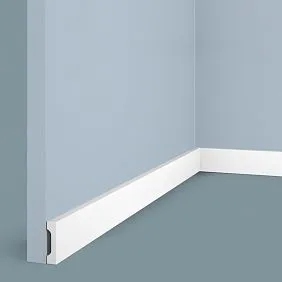
A regular baseboard five to seven centimeters high is almost unnoticeable in photographs. It blends in, gets lost, and plays no compositional role. If you take a full-length photo, the lower edge of the frame will look unfinished and unexpressive. This is not critical, but it doesn't add aesthetics either.
High accent baseboard: visual power
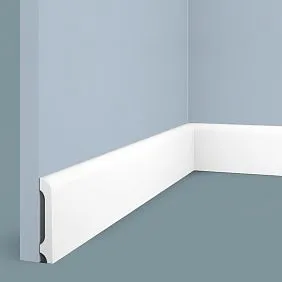
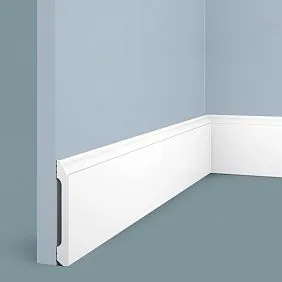
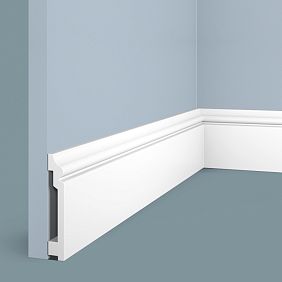
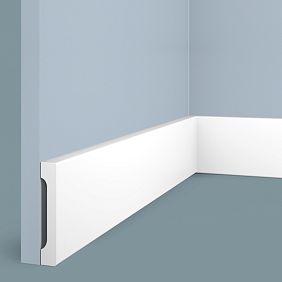
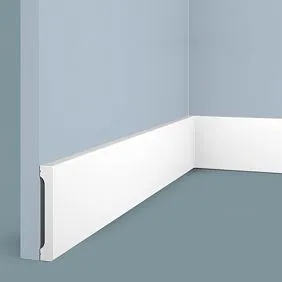
Wide wooden floor skirting boardten to fifteen centimeters high — that's a different story. It is noticeable, it forms a clear horizontal line, it adds architectural quality, weight, and completeness. In a photograph, such a baseboard works as a frame from below, framing the figure and creating a sense of thoughtful composition.
A high baseboard is especially important if the photo corner is in an entrance hall or corridor, where the floor is often dark (dark porcelain stoneware, wenge parquet, laminate under dark oak). The contrast between the dark floor and the light wall can be sharp and unpleasant to the eye. A high baseboard — matching the wall or contrasting — softens this transition, creates a buffer, and makes the composition more harmonious.
Baseboard height for a photo corner: recommendations
For small rooms (entrance hall four to six square meters, dressing room three to four square meters), the optimal baseboard height is ten to twelve centimeters. This is enough for the baseboard to be expressive but not overwhelming.
For spacious rooms (living room twenty to thirty square meters, bedroom fifteen to twenty square meters), you can use a baseboard fifteen to twenty centimeters high. Such a baseboard creates monumentality, respectability, and works as an architectural element.
Baseboard profile: from simple to complex
A simple rectangular baseboard with a bevel — laconic, modern, minimalist. Suitable for Scandinavian interiors, loft, minimalism. Looks strict and graphic in photos.
A profiled baseboard with curves, beads, and shelves — classic, traditional, expressive. The relief creates a play of light and shadow, adds volume, and makes the baseboard more noticeable. Suitable for neoclassicism, Art Deco, and modern classic.
A carved baseboard with ornamentation — the most luxurious option. Floral motifs, geometric patterns, classic designs. Such a baseboard becomes an independent decorative element that attracts attention and creates a wow effect. Looks expensive and status-worthy in photos.
Baseboard color: matching the wall or contrasting
A baseboard matching the wall color is a classic solution. If the wall is white, the baseboard is white. If the wall is gray, the baseboard is gray. This creates unity, visually elongates the wall height, and makes the room appear taller. In photos, such a baseboard doesn't distract attention and works as part of the background.
A contrasting baseboard is a bolder solution. A dark baseboard on a light wall (black, graphite, wenge) creates a clear boundary, graphic quality, and structures the composition. It looks expressive and modern in photos, adding character. However, the contrast must be appropriate: in a small room, a dark baseboard can visually reduce the height. In a spacious room, it works excellently.
STAVROS produceswooden and MDF baseboardswith heights from sixty to two hundred millimeters, with dozens of profiles—from simple to carved. Factory painting in any color from RAL and NCS catalogs, tinting, and patination are possible. This allows selecting a baseboard that will perfectly fit into the photo corner concept.
Decorative wall behind the mirror: moldings, panels, color, texture
The mirror and baseboard are accents. But they need the right background. The decorative wall behind the mirror is the canvas on which the entire composition unfolds. It should be expressive enough to create interest but not overloaded to avoid competing with the main elements.
Smooth painted wall: a base for minimalism
The simplest solution is a smooth wall painted in one color. White, light gray, beige, pastel (soft pink, mint, lavender)—all are universal backgrounds that don't distract attention from the person in the frame.
But simplicity can be boring. For a smooth wall to work interestingly, the texture of the coating is important. Matte paint with a velour effect (paint with a velvety surface) creates softness and nobility. Paint with a slight pearl or metallic particles gives a delicate shine that enlivens the surface. Textured plaster (fine-grained, with a marble or silk effect) adds depth and tactility.
Wall with moldings: classic structure
Moldingson the wall is a proven technique that instantly adds elegance and architectural quality to the interior. Moldings form frames—rectangular or square sections on the wall, inside which there can be solid-color paint, wallpaper, or a contrasting color.
For a photo corner, a scheme with one large frame behind the mirror works well. For example, a mirror one hundred eighty centimeters high and ninety centimeters wide is placed in the center of the wall. Around it (with a ten to fifteen centimeter offset from the mirror frame), a frame made of moldings is mounted. This creates the effect of a mirror built into a panel. It gives completeness and integrates the mirror into the wall architecture.
Moldings are painted the same color as the wall (monochrome) or in a contrasting color (e.g., white moldings on a gray wall, or gray moldings on a white wall). Contrast enhances graphic quality and makes the composition more expressive.
The profile of the moldings should be proportionate to the room's scale. For a small hallway—moldings three to five centimeters wide. For a spacious living room—six to ten centimeters. Too thin moldings will get lost, too massive ones will overload.
Wooden panel behind the mirror: warmth and texture
A wooden panel—vertical or horizontal slats, boiserie, wide boards—creates a warm, tactile, natural background. Wood adds nobility, coziness, and individuality.
Vertical slats (each slat five to eight centimeters wide, spacing between slats three to five centimeters) create rhythm and elongate the space in height. In photos, such a background looks modern and dynamic. The slats can be painted in natural wood tones (light oak, walnut, wenge) or neutral colors (white, gray, beige).
Horizontal boards (like cladding or tongue-and-groove) create a more intimate, Scandinavian atmosphere. Boards ten to fifteen centimeters wide, laid horizontally, form a structural background that is good for Provence, country, and Scandinavian styles.
Boiserie—paneled walls with moldings—is the most luxurious option. The wall is divided by moldings into sections, inside which there can be wooden paneling, a painted surface, or a mirror insert (as discussed in the previous article). The mirror is placed in the central section or occupies several sections. Boiserie creates a sense of palatial grandeur, classicism, and high style.
Wallpaper or decorative plaster: pattern and texture
Wallpaper with a pattern (floral ornament, geometry, abstraction) is a risky choice for a photo corner. A too active pattern will compete with the person in the frame, distract attention, and create visual noise. But if the pattern is delicate, small-scale, and in neutral tones—wallpaper can work well.
Decorative plaster with relief (Venetian plaster, Moroccan tadelakt, microcement) creates a deep, complex surface with play of light and shadow. It is a noble, expensive background that looks good in photos, adding texture without overloading details.
Wall color: psychology and aesthetics
The background color affects the perception of the person in the frame, the mood of the shot, and the overall atmosphere.
White—universal, neutral, space-expanding. On a white background, any outfit looks brighter, the silhouette sharper. White is good for minimalism, Scandinavian style, and light, airy looks.
Gray—elegant, modern, calm. Light gray provides a soft neutral background. Medium gray adds depth. Dark gray (graphite)—dramatic, but requires good lighting, otherwise it can be gloomy.
Beige, cream, warm neutrals—cozy, soft, universal. Good for classic interiors, for creating a warm, friendly atmosphere.
Pastel colors (soft pink, peach, mint, lavender)—romantic, feminine, fashionable. Such backgrounds are good for bedrooms, dressing rooms, and for creating light, delicate looks. But they can quickly become tiresome or go out of fashion.
Dark saturated colors (dark blue, emerald, burgundy, black)—bold, dramatic, luxurious. They require perfect lighting, a spacious room, and high ceilings. On a dark background, light outfits look contrasty and effective, but dark ones may blend in.
For a photo corner, the best choice is neutral light or medium tones (white, light gray, beige, light blue, soft pink). They are universal, timeless, and suitable for any looks and shooting styles.
Photo Corner Lighting: Why Local Light is a Must-Have
Good lighting is half the success of any photograph. You can have a perfect background, a flawless mirror, a stylish outfit—but if the lighting is poor, the shot will be dull, unexpressive, with harsh shadows or loss of detail in dark areas.
Natural Light: The Ideal That Isn't Always Available
The perfect light for photos is natural daylight from a window. It's soft, even, renders colors truthfully, and creates beautiful catchlights in the eyes. If your photo corner is opposite a window or next to one—you're in luck. In the morning and afternoon on a clear day, you'll get excellent lighting without any extra devices.
But natural light is fickle. It depends on the time of day (soft in the morning and evening, harsh at noon), the weather (cloudy—diffused light, sunny—contrasty), and the window orientation (north—stable soft light, south—bright and changeable). And most importantly—it's not available in the evening and at night, which is exactly when many people want to take a photo before heading out.
Therefore, a photo corner needs artificial local lighting that works independently of the time of day or weather.
Local Mirror Lighting: Soft, Even Light
The ideal solution is LED lighting around the perimeter of the mirror or on both sides of it. LED strips or light bars (LED panels) are mounted around the mirror, directing light onto the person's face and figure.
Advantages of such lighting: evenness (no harsh shadows on the face), softness (LED light is diffused, not blinding), the ability to adjust brightness and color temperature (if dimmable or RGB strips are used).
The color temperature of the light is important. For photos, neutral white light (four to four and a half thousand Kelvin) is best. It's close to daylight, truthfully renders skin tones, clothing, and makeup. Warm light (three thousand Kelvin) can make skin look yellow, while cool light (five to six thousand) can make it look pale and bluish.
LED strips are mounted in special aluminum profiles with a diffuser, which are attached to the wall around the mirror. Alternatively, ready-made mirrors with built-in lighting are used—a convenient but more expensive option.
Spotlights: Accent Lighting from Above or the Side
In addition to the mirror lighting, you can install spotlights (spots) on the ceiling or wall. Two or three spots aimed at the photo corner area create additional light flux, enhance brightness, and add depth.
The spots should be aimed so that the light falls on the person from the front or side, but not from above (overhead light creates unflattering shadows under the eyes, nose, and chin). The optimal setup is spots on the ceiling, but slightly in front of the photo corner area, so the light falls at a forty-five to sixty-degree angle.
Sconces or Floor Lamps: Decorative and Functional Light
A wall sconce next to the mirror or a floor lamp is not only a light source but also a decorative element that complements the composition. A sconce with a fabric or frosted glass shade provides soft, diffused light and creates a cozy atmosphere. A floor lamp with directional light can work as additional face lighting.
Important: decorative light fixtures should not be too bright or stylistically contrasting. If the photo corner is in a modern minimalist interior, the sconce should be sleek, made of metal or glass. If it's in a classic style—a sconce with a fabric shade, bronze elements, or crystal pendants.
Console, Stool, or Shelf: The Functional Zone by the Mirror
A photo corner is not just a mirror on the wall. It's a zone where it's convenient to pause, where you can put down a bag, phone, keys, touch up makeup, or put on jewelry. Therefore, it's desirable to have a small horizontal surface next to the mirror.
Console: Elegance and Functionality
Classic console made of solid oak and beech—is the perfect solution for a photo corner in an entryway or living room. A console is a narrow table (thirty to forty-five centimeters deep) placed against the wall under the mirror. On the console, you can place decorative items (a vase with flowers, candles, books), put small items (keys, phone), or set down a bag.
The console can be carved, with elegant legs and decorative elements (classic style), or sleek, with clean lines (modern style). It's important that the console height is comfortable—seventy-five to ninety centimeters from the floor. This is a convenient height to place or pick up something without bending too low.
STAVROS producesconsoles and frames made of wood, which perfectly complement mirrors in carved frames, creating a harmonious ensemble. A console and mirror frame from the same collection, in a unified style and color—is a winning combination.
Small Shelf: Minimalism and Compactness
If there's no space for a console (narrow hallway, small dressing room), you can use a narrow shelf (fifteen to twenty-five centimeters deep) mounted on the wall under the mirror. Such a shelf doesn't take up much space but provides a horizontal surface for small items, decor, or cosmetics.
The shelf can be wooden (matching the baseboard and mirror frame), glass (lightweight, almost invisible), or metal (modern, graphic). The shelf brackets should be elegant, not bulky, so as not to overwhelm the composition.
Stool or Pouf: Mobility and Comfort
A stool or low pouf (forty to fifty centimeters high) is a mobile element that can be moved close to the mirror when you need to sit (to put on shoes, touch up makeup) and put away when not needed. A stool is great in a bedroom or dressing room where there's space to maneuver.
The upholstery of a stool or pouf should harmonize with the overall color scheme. Neutral fabrics (linen, velour, burlap) in beige, gray, and pastel tones are a universal choice.
Plants and decor: the final touches of the composition
A photo corner is not only a functional zone but also a visual composition that should be complete, harmonious, and interesting. Plants and small decorative items add life, color, and individuality.
Plants: greenery that brings life
A live potted plant on a console or on the floor next to a mirror is a simple and effective technique. Greenery adds freshness, a natural touch, and creates a sense of coziness. In photos, the plant works as a decorative element that softens the geometry of the mirror and furniture.
Which plants are suitable? Those that do not require bright sunlight (if the photo corner is not by a window): monstera, ficus, sansevieria, zamioculcas, spathiphyllum. The height of the plant depends on the scale of the zone: for a small hallway, a plant forty to sixty centimeters tall is sufficient; for a spacious living room, a large floor plant one hundred to one hundred fifty centimeters tall can be used.
The pot should be stylish, harmonizing with the interior. Ceramics in neutral tones (white, gray, terracotta), woven baskets, concrete planters—all of these are relevant.
Decorative items: vases, candles, books, figurines
One to three decorative items can be placed on a console or shelf. The principle: less is more, but quality matters. One beautiful vase with fresh or dried flowers, a pair of candles in elegant holders, a stack of books with beautiful covers, a small sculpture—this is enough.
Avoid chaos: a dozen small, disparate items will create visual noise and distract from the main focus—the mirror and the person in it. The composition should be concise and balanced.
Textiles: a rug or runner by the mirror
A small rug by the mirror (size seventy by one hundred twenty, eighty by one hundred fifty centimeters) defines the zone, adds texture, and creates coziness. The rug should be neutral (solid-colored or with a delicate pattern), not too bright, so as not to compete with the composition.
If the photo corner is in the hallway, the rug should be practical: short pile, non-marking color, easy to clean. If in a bedroom or dressing room—it can be more decorative, with long pile, in pastel tones.
Best places for a photo corner: hallway, bedroom, dressing room
Where in the house to create a photo corner? Theoretically—in any room. Practically—there are three locations where it is most appropriate and functional.
Hallway: the first and last thing you see
The hallway is a logical place for a photo corner. Here you always stop before leaving, check your appearance, and evaluate your outfit. A large mirror in a beautiful frame, a stylish wall behind it, a console for keys and bags, good lighting—all of this makes the hallway not only functional but also an aesthetic zone.
In the hallway, the photo corner also works as the home's calling card. It's the first thing guests see when they enter. A beautiful composition creates a strong first impression, speaking to taste and attention to detail.
Features of the hallway: usually it's a narrow, not very bright room. Therefore, the wall behind the mirror should be light, the lighting—bright, and the mirror—large (to visually expand the space).A console in a classic style and hallway interior decorcreate a harmonious ensemble that transforms a modest hallway into an elegant space.
Bedroom: a personal territory of beauty
The bedroom is an intimate space where the photo corner works for you, not for guests. Here you can take your time, try on several outfits, take a series of photos, and choose the best one. A large mirror in the bedroom is not only for photos but also for the daily ritual of dressing, checking your look, and self-care.
The photo corner in the bedroom can be more decorative, with soft tones and romantic details. A pastel wall, a mirror in a white or patinated frame, a small console with flowers and candles, soft warm light—all of this creates a cozy, feminine atmosphere.
If there is a dressing area in the bedroom (a sliding wardrobe, an open clothes rack), it's logical to place the photo corner next to it. It's convenient: take out an outfit, try it on, evaluate it in the mirror, take a photo.
Dressing room: the holy of holies of style
The dressing room is the perfect place for a photo corner, if you have one. All clothing, shoes, and accessories are concentrated here. Here you put together looks, experiment, and create outfits. A full-length mirror, good lighting (preferably daylight spectrum), a convenient nearby area—all of this turns the dressing room into a professional style studio.
In the dressing room, the photo corner can be maximally functional: a floor mirror (mobile, which can be turned), good bright lighting (a ring light or LED panels), a pouf or stool, a shelf for accessories.
The wall behind the mirror can be neutral (white, gray) or with open shelves/hangers where clothing is visible. This creates an atmosphere of a fashion boutique, showroom, or backstage.
Common mistakes when creating a photo corner
Even with good ideas, you can make mistakes that will ruin the result. Here are the top five blunders.
Mistake 1: too small a mirror
A forty by sixty centimeter mirror is not a photo corner, it's just a hallway mirror. For photos, you need at least sixty by one hundred twenty centimeters, and preferably more. Otherwise, even a waist-up figure won't fit in the frame.
Mistake 2: poor lighting
A single light bulb on the ceiling in the middle of the room won't provide good light for a mirror. You need local lighting—around the mirror, from the sides, directed spotlights. Without light, even the most beautiful composition will look dull.
Mistake 3: cluttered background
A wall behind the mirror with a bright, active pattern (large floral wallpaper, contrasting geometry, landscape photo wallpaper) will compete with the person in the frame. The background should be neutral or delicately decorated.
Mistake 4: cheap frame
A plastic frame or a thin MDF frame with poor-quality paint kills the entire effect. The frame should be substantial, noble, well-crafted. It's better to buy a ready-made mirror from a trusted manufacturer than to save money and get low quality.
Mistake 5: lack of a functional zone
A mirror on a bare wall, without a console, shelf, or stool—is inconvenient. There's nowhere to put your phone, bag, nowhere to sit. A photo corner should be not only beautiful but also functional.
How to combine a photo corner with the overall interior style
A photo corner is not a separate, isolated element, but part of the interior. It should harmonize with the rest of the finishes, furniture, and decor.
Minimalism: a large mirror in a thin metal frame (or frameless), a smooth white or gray wall, a simple baseboard, minimal decor. A console with straight lines or just a shelf. Lighting is built-in, inconspicuous.
Scandinavian style: a mirror in a light wooden frame (white, natural beech), a white or light gray wall, possibly with vertical slats. Baseboard in white or light wood. A console made of light wood, a plant in a woven basket. Warm, soft light.
Neoclassical: a mirror in a carved frame (white, with patina, with gilding), a wall with moldings, painted in a neutral color. A tall, profiled baseboard.A classic console made of solid oakwith carved legs. A wall sconce with a fabric lampshade. Decor: a vase with flowers, candlesticks.
Loft: a large mirror in a rough metal or wooden frame, a brick (or imitation) or concrete wall. A simple baseboard or none at all. A console made of metal and wood, minimalist. Industrial lighting (track spotlights, Edison bulbs).
Provence: a mirror in a white or patinated frame with carving, a light wall (white, cream, soft blue), possibly with moldings. A white baseboard with an aged effect. A white or light wood console, with carved details. Decor: lavender in a vase, vintage candlesticks, a basket with textiles.
Frequently asked questions about a home photo corner
Can I use a floor mirror instead of a wall-mounted one?
Yes, a floor mirror (with a support leg at the back) is an excellent option, especially if you don't want to drill into the wall or if you plan to rearrange. A floor mirror is mobile, you can move it, turn it at the desired angle. But it takes up floor space, which can be inconvenient in a narrow hallway.
What is the minimum budget for creating a photo corner?
Minimum budget (ready-made mirror in a simple frame, smooth painted wall, standard baseboard, LED strip for lighting): twenty to thirty thousand rubles. Medium budget (mirror in a quality wooden frame, wall with moldings, tall baseboard, console, good lighting): eighty to one hundred fifty thousand. Premium (mirror in a carved frame with gilding, boiserie or wooden panels, solid wood console, professional lighting): two hundred fifty to five hundred thousand rubles.
Do I need to hire a designer to create a photo corner?
Not necessarily, if you have a clear vision and understanding of proportions. But a designer will help you avoid mistakes, select the correct sizes for the mirror and furniture, create a harmonious composition, and recommend manufacturers. A designer consultation costs five to fifteen thousand rubles, a full project with visualization—thirty to eighty thousand.
How to care for the mirror and frame?
Wipe the mirror with glass cleaner or a solution of water and vinegar, using a soft, lint-free cloth. Wipe a wooden frame with a slightly damp cloth; once a year you can treat it with wood polish (if the frame is varnished) or refresh the oil (if the frame is oiled). Clean a carved frame with a soft brush to remove dust from the recesses of the carving.
Can I create a photo corner in a rental apartment?
Yes, using mobile solutions: a floor mirror, a portable console, LED strips on double-sided tape (removable without damaging the wall), removable moldings on an adhesive base. When moving, all of this can be taken with you.
What mirror distortion is acceptable?
None. A quality mirror should not distort the image: straight lines should remain straight, body proportions should not change. Cheap mirrors made of thin glass (two to three millimeters) can produce waviness and curvature. The thickness of the mirror panel should be at least four millimeters, preferably five to six.
Where to order a quality framed mirror?
From manufacturers of furniture and interior decor, such as STAVROS. The company produces mirrors in wooden frames made of solid oak and beech, with hand carving and various finishing options. Custom sizes and sketches are possible.
Conclusion: an investment in daily beauty and comfort
A home photo corner is not a whim, not a tribute to fashion, not a superficial story for social networks. It is an investment in your daily comfort, in your mood, in your self-confidence. It is a place where you start and end your day, where you check yourself before going out, where you capture important moments. A place that works for your self-esteem, for your visual self-presentation, for your enjoyment of your own home.
An accent high skirting board, a large mirror in a quality frame, a well-thought-out decorative wall, good lighting, a functional zone — all this creates not just a photo backdrop, but a full-fledged space of beauty and comfort. It is pleasant to stop here, slow down, and pay attention to yourself. Here, not only good photos for Instagram are created, but also a good mood for real life.
When creating a photo corner, choose quality materials. A cheap mirror in a plastic frame will last a year and disappoint. A mirror in a wooden frame from STAVROS, made of solid oak or beech, with hand carving and professional finishing — this is an investment for decades. Such a mirror is not just functional; it becomes an interior decoration, a family heirloom, an item that will outlive furniture changes and renovations.
The company STAVROS has been creating interior decor and furniture from natural wood for over twenty years.Mirrors with decorative framing, Classic consoles, wooden high skirting boards, Moldings for walls— the entire assortment for creating a photo corner that will work flawlessly and look luxurious.
STAVROS understands: a modern interior should be not only beautiful but also functional, not only classic but also relevant, not only expensive but also justifying every ruble invested. A photo corner created using STAVROS products is a space where quality is felt in every detail, where beauty serves comfort, where the interior works for your life, and does not just exist as a decoration.
Create places at home that inspire you. Invest in beauty that surrounds you every day. Choose quality that serves for decades. And may your home photo corner become not just a fashionable corner for photos, but a space where you feel confident, beautiful, happy — every day, every morning, every time you stop in front of the mirror.