Article Contents:
- What is Ceiling Skirting and Why is it Needed
- Which Ceiling Skirting Boards Are Most Often Chosen
- Solid Wood Ceiling Skirting
- Beech Ceiling Skirting for Painting
- Wooden Skirting with Decorative Profile
- Polyurethane Ceiling Profiles
- Wooden Ceiling Skirting: When It's the Best Choice
- Interior with natural materials
- Classical and Neoclassical Interior
- Premium Renovation
- Wooden House
- Interior Designed for 30 Years or More
- Wooden Ceiling Skirting or Polyurethane Molding: An Honest Comparison
- How to Choose a Ceiling Skirting by Width, Profile, and Style
- Narrow or Wide: How to Understand What You Need
- Smooth or Decorative Profile
- For High Ceilings: A Special Case
- Where Ceiling Skirting is Used: By Room
- Ceiling Skirting for the Living Room
- Ceiling Skirting for the Bedroom
- Ceiling Skirting for the Kitchen
- Ceiling Skirting for the Hallway and Corridor
- Ceiling skirting for a wooden house
- Wooden ceiling skirting in the interior system
- Installation of wooden ceiling trim
- Acclimatization
- Mounting methods
- Cuts
- Finishing
- How not to make a mistake when choosing ceiling skirting
- Too small profile
- Too heavy decor for a simple interior
- Conflict with door trims and cornices
- Error of choosing only by price
- Wrong color
- Ignoring the wooden interior system
- Where to buy ceiling skirting
- About the Company STAVROS
- FAQ: answers to common questions

A ceiling skirting board is a detail that either elegantly conceals the boundary between wall and ceiling, or exposes all the carelessness of interior thinking. The wall-ceiling joint is one of the most problematic junctions in any room: plaster cracks, wallpaper separates, paint applies unevenly. And this is precisely where the ceiling skirting board works—calmly, unobtrusively, but with architectural precision.
A wooden ceiling skirting board is not just a strip near the ceiling. It is an element of a system, part of the room's architectural language, tangible evidence that the interior was thoughtfully crafted. WhenCeiling baseboard woodenit is made of oak or beech, lacquered or stained in accordance with the overall color logic of the interior, it becomes part of the architectural frame of the space. Without it, everything feels unfinished. With it, it is complete.


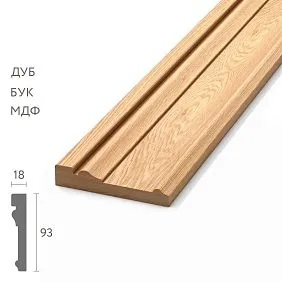

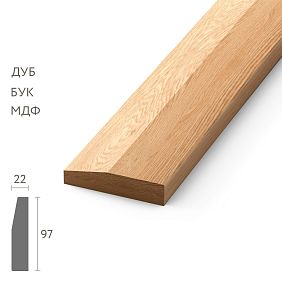


What is a ceiling skirting board and why is it needed
A ceiling skirting board is a linear profile mounted in the corner between the wall and ceiling. In architectural terminology, it is called a cornice, torus, or frieze, depending on the profile and style. But essentially, it is always one thing: a decorative skirting board for the ceiling that conceals the joint, hides imperfections, and creates a visual frame for the entire room.
Why is it needed? There are several reasons.
First, technological. During wall and ceiling finishing, the joint is always problematic. Even with careful work, gaps, cracks, and transitions between different materials appear here. A ceiling skirting board conceals all of this once and for all.
Second, aesthetic. A room without a ceiling skirting board looks like an unfinished project. Architectural proportions 'work' only when the horizontal boundaries—at the floor and ceiling—are clearly defined. A decorative ceiling skirting board creates this upper horizontal line, without which the entire verticality of the walls seems to hang in the air.
Third, systemic. The ceiling skirting board is part of a unified wooden interior system: it echoes floor skirting boards, door architraves, moldings, and cornices. In a full-fledged classical or neoclassical interior, all these elements should be made from the same wood species, have the same finish, and belong to the same stylistic family.




Which ceiling skirting boards are most often chosen
The market for decorative linear profiles for ceilings is diverse. However, consumer demand consistently concentrates around several categories, each with its own niche.
Our factory also produces:
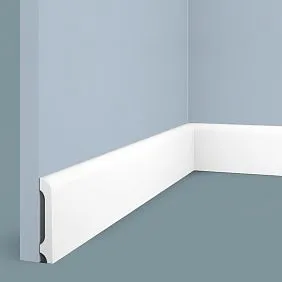
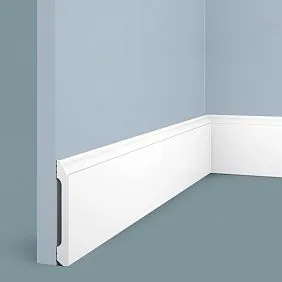
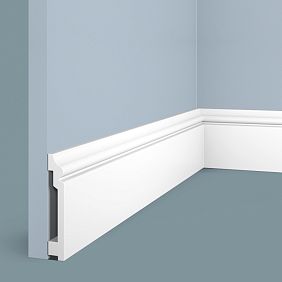
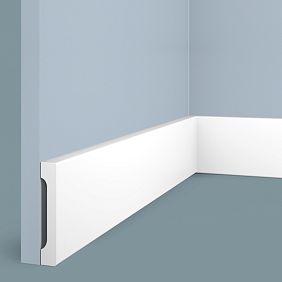
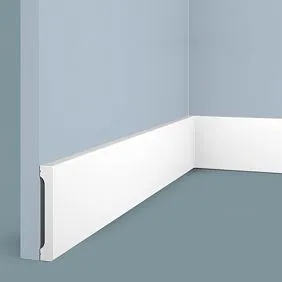
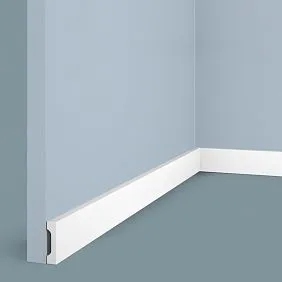
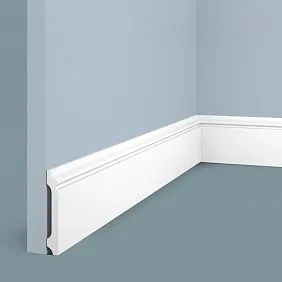

Solid wood ceiling skirting board
This is the primary segment in terms of significance and quality.wooden ceiling moldingMade from oak or beech — the choice of those who create an interior with a long-term perspective. Solid wood with a density of 650–750 kg/m³ withstands decades without losing its geometry or appearance. The living texture, rich color, and the possibility of varnishing, tinting, or painting in any shade — all this makes a wooden ceiling skirting board the absolute choice for a serious interior.
Get Consultation
Beech ceiling skirting board for painting
Beech is a neutral, fine-pored species with a uniform structure. A wooden ceiling skirting board made of beech perfectly accepts acrylic enamels, providing an even surface without spots or transitions. White beech ceiling skirting board is the most common option for modern apartments, Scandinavian interiors, and rooms with white ceilings and light walls.
Wooden skirting board with decorative profile
For classic and neoclassical interiors, profiles with pronounced plasticity are chosen: beads, roundings, several levels of relief. Such a wide oak ceiling skirting board creates a rich play of shadows, especially with side lighting. It doesn't just cover the joint — it is an architectural element, an equivalent of a classic cornice.
Polyurethane ceiling profiles
A more affordable segment that deserves a separate discussion.polyurethane moldingsHas its own strengths and its own application scenarios. But wooden and polyurethane ceiling skirting boards are fundamentally different solutions, and it is important to build an honest comparison between them.
Wooden Ceiling Skirting: When It's the Best Choice
There are situations where the material question is decided in advance—even before you browse the catalog.
Interior with natural materials
If the room has wooden parquet, solid wood panels, wooden doors with lacquered architraves—a wooden ceiling skirting is the only organic finishing touch. Only natural wood creates that visual unity where the interior is perceived as a whole, not a collection of unrelated elements.
Classic and neoclassical interior
Classic demands naturalness. Decorative profiles with rich plasticity, made of oak—this is what distinguishes a true classic interior from its imitation.Wooden ceiling baseboardIn a classic space—it is part of an architectural system that includes ceiling cornices, wall moldings, architraves, and floor skirting. All these elements should be made of the same material.
Premium Renovation
In interiors where natural stone, forged elements, expensive fabrics, professional lighting are used—a wooden ceiling skirting is mandatory. Installing polyurethane here would devalue all other investments.
Wooden house
In country houses made of timber, glued laminated timber, in houses with log walls—a wooden ceiling skirting is a logical continuation of the structure itself. Wood in the interior of a wooden house is not a stylistic choice, but an architectural necessity.
Interior Designed for 30 Years or More
A wooden ceiling skirting made of oak or beech does not require replacement. If the surface loses its freshness over time—it is sanded and repainted. This is impossible with polyurethane, plastic, or budget MDF.
Wooden Ceiling Skirting or Polyurethane Molding: An Honest Comparison
One of the most common questions when choosing ceiling decor is: what's better, wooden skirting or polyurethane? The answer depends on several specific parameters.
| Parameter | Wooden skirting board | Polyurethane molding |
|---|---|---|
| Material | Solid oak or beech | Two-component polyurethane |
| Service life | 30–50 years | 15–25 years |
| Restoration possibility | Sanding, repainting | Limited |
| Moisture resistance | Medium (requires processing) | High |
| Decorative potential | Vibrant texture, depth | Reproduces any profile |
| Price | Higher | More affordable |
| Ecological | Natural wood | Polymer |
When wooden skirting is better:
Classical and neoclassical interiors, wooden parquet and panels, premium renovation, wooden house, interiors with natural materials, emphasis on durability.
When polyurethane is preferable:
High-humidity areas (kitchen, bathroom, basement floors), budget projects with pronounced molded decor, interiors requiring large amounts of complex profiles for reasonable money.
STAVROS offers both directions — andsolid wood millwork, andPolyurethane trimThis allows selecting a solution precisely tailored to the task, without sacrificing either quality or budget.
It's important to understand: a wooden ceiling skirting board and a polyurethane cornice serve different purposes. The first is an element of a natural interior, the second is a decorative architectural imitation. Both are good when applied where appropriate.
How to choose a ceiling skirting board by width, profile, and style
Choosing the width and profile is not just a matter of taste. It's based on architectural logic that cannot be ignored.
Narrow or wide: how to understand what you need
The key parameter is ceiling height.
| Ceiling Height | Recommended skirting board width |
|---|---|
| up to 2.6 m | 40–60 mm |
| 2.6–2.8 m | 60–80 mm |
| 2.8–3.2 m | 80–120 mm |
| More than 3.2 m | from 120 mm |
A wide ceiling skirting board in a room with 2.4-meter ceilings will visually 'lower' the ceiling and create a feeling of tightness. A narrow skirting board in a high hall will simply get lost—it won't be visible from eye level. Proportion is always primary.
Smooth or decorative profile
Everything here is determined by the interior style.
Smooth straight profile — for modern, Scandinavian, minimalist spaces. No decor, pure geometry. The gaze glides over the interior without stumbling.
Profile with a chamfer — a universal option. Adds light relief without active decor. Works in both modern and transitional styles.
Shaped profile with fillets and roundings — for classic, neoclassical, Empire, Baroque styles. Rich plasticity, deep shadow, a sense of architectural elaboration.
When choosing which ceiling skirting board to select for a specific interior, start with the question: what predominates in this space — straight lines or curves, minimalism or decor?
For high ceilings: a special case
Ceiling skirting board for high ceilings is a separate task. In rooms with ceilings from 3.5 meters and above, complex multi-level cornice systems are used, which can reach 20–30 centimeters in height. This is no longer just a skirting board, but a full-fledged architectural cornice with several relief zones.
In such spaces, a wooden ceiling skirting board can be combined withwith wooden cornices into a unified system of upper horizontal decor, creating a powerful architectural frame.
Where ceiling skirting is used: by room type
Ceiling skirting for the living room
The living room is the main space where an expressive profile is always appropriate. For a classic or neoclassical living room with parquet flooring — a wooden oak ceiling skirting with varnish or tinting to match the parquet. In a modern living room with white walls — a smooth beech profile under enamel, matching the ceiling color.
A living room with ceilings from 3 meters requires a wide ceiling skirting — 100 mm and above. Only then will the upper horizontal line be visible from eye level.
Ceiling skirting for the bedroom
The bedroom is a place of rest, and the decor here should be delicate. Average width — 60–80 mm. For a bedroom in a classic style — a decorative profile with light coving. For a Scandinavian or modern bedroom — a smooth profile in the color of the wall or ceiling.
A decorative wooden ceiling skirting in a bedroom with wooden parquet and wooden door trims is the solution that gives the room the calm nobility of natural materials.
Ceiling skirting for the kitchen
The kitchen is a space with high humidity, grease vapors, and temperature fluctuations. Here, wooden skirting requires proper treatment: a varnish or oil coating that creates a barrier against moisture. Wooden skirting for the kitchen must be thoroughly primed and coated with varnish twice. With proper treatment — it lasts a long time. If conditions are very aggressive — consider polyurethane ceiling moldings, which is completely insensitive to moisture.
Ceiling skirting board for hallway and corridor
The hallway is the first thing a guest sees. A decorative ceiling skirting board in the hallway creates the first impression of the quality of the entire interior. In narrow hallways with low ceilings — narrow, smooth, matching the wall color. In formal hallways of country houses or large apartments — an expressive profile as part of a system with door architraves and floor skirting boards.
Ceiling skirting board for a wooden house
Buying a wooden ceiling skirting board for a wooden country house is not just a choice, but an architectural logic. In a house made of timber or logs, all wooden elements should be natural. An oak skirting board with oak beams, pine walls, and wooden floors is an organic system that turns the house into a single living organism.
Wooden ceiling skirting board in the interior system
An experienced designer never designs a ceiling skirting board in isolation from other wooden elements. This is one of the key principles of working with a wooden interior: all wooden details must form a system, unified in wood species, toning, and stylistic character of the profiles.
The ceiling skirting board is the upper horizontal frame. The floor skirting board is the lower one. Between them: wall moldings, door architraves, decorative battens. Above — the ceiling cornice. This is a full-fledged architectural shell of the room, where each element is connected to the others.
That is why in the STAVROS catalog, wooden ceiling skirting boards,wooden cornice, moldings, andWooden trim are produced with a unified stylistic logic. You can assemble the entire wooden contour of the room from products of the same manufacturer, same wood species, same quality — and achieve a truly cohesive result.
In a modern interior with wooden slats on the walls, the ceiling skirting board echoes them rhythmically: the horizontal profile responds to the vertical lines, creating an orderly architectural fabric. This is precisely that 'done with intelligence' feeling that distinguishes a well-thought-out interior from one assembled haphazardly.
Installing wooden ceiling molding
Wooden ceiling skirting is installed differently than polyurethane or polystyrene foam skirting — and one must be prepared for this.
Acclimatization
Wooden molding profiles must absolutely acclimate in the room for 24–48 hours before installation. Wood reacts to temperature and humidity — if installation begins immediately after delivery, the skirting will start to change shape right on the wall. Gaps and deformations are inevitable in this case.
Methods of mounting
Wooden ceiling skirting is fastened with finishing nails, with the nail heads set using a nail set and subsequent puttying of the fastening points. Mounting adhesive is also used — applied in a zigzag pattern on both surfaces, with a 3–5 minute wait after application. When using adhesive, additional mechanical fastenings are not mandatory but are advisable in the corners.
Cuts
Corner joints require precise 45° miter cuts. Wooden profile is denser than polyurethane, so a sharp miter saw is needed for it. Internal corners are typically mitered at 45° or finished with corner inserts.
Final finishing
After installation, the fastening points are puttied, sanded, and painted to match the skirting color. If the skirting is for painting — the final coating is applied after installation, which allows for complete concealment of all joints and fastening points.
How to avoid mistakes when choosing a ceiling skirting board
Mistakes when choosing a ceiling skirting board are a common occurrence, and most of them could have been foreseen.
Too small a profile
Choosing a narrow, unexpressive profile for a room with high ceilings means the skirting simply won't be visible. Decorative wooden ceiling skirting works only when its scale matches the scale of the room. The rule: the higher the ceiling, the wider and richer the profile should be.
Too heavy decor for a simple interior
The opposite mistake: placing a wide, rich molded profile in a minimalist space. A classic ceiling skirting board with fillets in a white apartment without decor will look like an element that accidentally wandered in from another interior.
Conflict with door architraves and cornices
A ceiling skirting board does not exist in an interior alone. It interacts with door architraves, cornices, wall moldings. If the architraves are dark walnut and the ceiling skirting board is white, this will be a conflict. A proper system implies a single logic: one wood species, one tint, one character of profiles.
Mistake of choosing based only on price
A ceiling skirting board is an element that is installed once and for a long time. Choosing the cheapest option means dooming yourself to reinstallation in a few years when the cheap material delaminates or loses its geometry. A wooden skirting board, a wooden ceiling skirting board made of solid wood — that's once and for a long time.
Wrong color
How to choose a ceiling skirting board by color? Here are three working strategies:
-
To match the ceiling — the skirting board visually dissolves, no accent is placed, the space seems higher. A classic solution for white ceilings and white walls.
-
To match the walls — neutral, creates a smooth transition from vertical to horizontal.
-
Matching the color of doors and trims is the most stylistically precise solution, unifying all wooden elements into a cohesive system.
Avoid 'almost matching' colors—a baseboard that is almost white but not quite creates constant visual irritation. Either an exact match or a deliberate contrast.
Ignoring the wooden interior system
A ceiling baseboard purchased separately, outside the context of all the room's wooden elements, is almost always a mistake. Start your selection by answering the question: what type of wood are my floors, doors, and trims made of? Only then choose the ceiling profile.
Where to buy ceiling baseboard
You can buy ceiling baseboard everywhere—in a construction hypermarket, from a wholesaler, or in an online store. The question isn't where, but what exactly you are buying.
Если вам нужен плинтус потолочный деревянный из натурального массива с гарантией качества, с выбором породы и профиля, с возможностью подобрать под уже существующий деревянный контур интерьера — правильный выбор это специализированное производство.
Buy wooden ceiling baseboardBuying from the manufacturer means getting exactly what you selected, with clear material specifications, proper acclimatization, and no risk of encountering mixed-grade stock.
For those looking for a catalog of ceiling baseboards with a full range of species, heights, and profiles—STAVROS section of moldings, cornices and skirting boardsoffers exactly this choice: from laconic smooth profiles to complex decorative cornice systems.
Delivery — throughout Russia, Moscow and St. Petersburg — with the possibility of self-pickup.
About the company STAVROS
STAVROS — Russian production of wooden architectural millwork and decorative elements made of solid oak and beech. The company's history began in 2002, when two artists created a workshop for carved wooden products. Within a year, the company participated in the reconstruction of the Konstantinovsky Palace in Strelna, and then — in the restoration of the interiors of the Hermitage, the Alexander Palace, the Trinity-Izmailovsky Cathedral and other cultural heritage sites.
Today STAVROS produces skirting boards, moldings, cornices, architraves, balustrades, decorative millwork made of oak and beech, as well as products made of European-made polyurethane. The production is equipped with European woodworking equipment, chamber drying of raw materials to 8–12% humidity and multi-stage quality control are used.
STAVROS showrooms operate in St. Petersburg and Moscow. Orders are shipped throughout Russia and to CIS countries by transport companies SDEK and DPD. For designers and construction companies — partnership programs and special conditions for volume orders.
FAQ: answers to frequently asked questions
Which ceiling skirting board is better to choose?
The best ceiling skirting board for a quality residential interior is wooden, made of solid oak or beech. Durable, can be restored, creates a natural texture. For rooms with high humidity or on a limited budget — polyurethane profile.
What is better: wooden ceiling skirting board or polyurethane?
Depends on the task. Wood — for classic, neoclassical, natural interiors, wooden houses, premium renovation. Polyurethane — for wet rooms, budget projects with large footage, interiors where complex stucco is needed without overpaying. Both materials are of high quality in their place.
Where to buy wooden ceiling skirting?
From a specialized manufacturer. STAVROS produces wooden moldings from oak and beech with delivery across Russia. Catalog and order placement — on the website stavros.ru.
Which ceiling skirting to choose for high ceilings?
For ceilings from 3 meters — wide profile from 100 mm, in classic style — multi-level cornice system. Narrow skirting in a high room visually 'gets lost'.
Is wooden ceiling skirting suitable for modern classic?
Yes, it is one of the best options. Modern classic combines clean lines with natural materials — oak ceiling skirting with a moderate profile and lacquer finish fits perfectly into this style.
Can ceiling skirting be used with a stretch ceiling?
Yes. With a stretch ceiling, the skirting is mounted to the wall to cover the joint of the stretch fabric with the wall. Important: the skirting is attached to the wall, not to the ceiling fabric. In this case, wooden skirting works both as a decorative element and as a masking profile for the stretch ceiling mounting system.
How to choose the width of ceiling skirting?
Focus on ceiling height: up to 2.6 m — 40–60 mm, 2.6–2.8 m — 60–80 mm, 2.8–3.2 m — 80–120 mm, above 3.2 m — from 120 mm. Interior style also matters: classic requires wider profiles, minimalism — narrow ones.
How much does a wooden ceiling skirting board cost?
The cost depends on the wood species, profile width, and complexity of the decor. In the STAVROS catalog, the PLT-001 wooden ceiling skirting board made of solid oak or beech is available from 6,490 rubles per piece. This is an investment in an element that will last 30–50 years without replacement.