












































































Article Contents:
- Soviet wooden baseboard: which profiles were produced according to USSR GOST
- Soviet era standards: what was regulated
- Size range of Soviet baseboards
- Wood species of Soviet baseboards
- Why Soviet baseboard was considered high quality: wood species, moisture content, processing
- State quality system: strict but effective
- Chamber and air drying: what existed in the USSR
- Surface treatment of Soviet baseboard
- What made Soviet baseboard durable: summary
- Modern classic wooden baseboard: what changed in production
- Production today: what's better, what's worse
- Modern classic profile: direct descendants of Soviet baseboard
- New profiles: Euro, loft, Scandinavian, minimalist
- How interiors changed — and how manufacturers responded
- Euro-profile: straight lines with chamfer
- Loft-profile: rectangle without decorations
- Scandinavian profile: minimalism with character
- Minimalist: maximum height with zero profile
- Table: Soviet baseboard vs. modern styles
- Finger-jointed baseboard: modern technology vs. solid board of the Soviet era
- Why solid board disappeared
- Solid board vs. finger-jointed: honest comparison
- Soviet solid board: where to find it today
- How to find an analog of Soviet baseboard today
- Exact formula of "Soviet" baseboard
- Restoration of Soviet baseboard: when to replace, when to preserve
- Stalinist classic: analogs of wide baseboard
- Modern baseboard for wooden houses of Soviet construction
- Comparison table: Soviet baseboard vs. modern wooden
- FAQ: answers to popular questions about Soviet baseboards and their analogues
- About the Company STAVROS

There are things the Soviet era did right. Not everything, not always — but some things. The Soviet-style wooden baseboard belongs on that list. That very one — wide, made of solid pine, with a pronounced radius profile, nailed to the wall with rusting nails, and standing in a Khrushchyovka for forty years without a single crack. It's still removed during renovations — and often they discover that the wood under layers of paint is alive, strong, untouched by rot.
Today, when someone starts a renovation in an old housing stock or restores an apartment inherited from their grandmother, they face a logical question: where to find an analogue ofthe Soviet wooden baseboard— or what from the modern range comes closest to it? And another person — with a modern interior in a new building — wants to understand what has changed in production and what new profiles have appeared over the past decades. Both need this article.


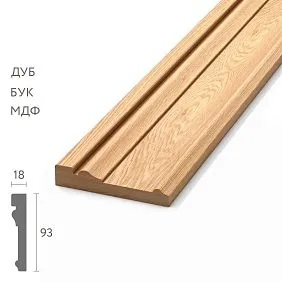

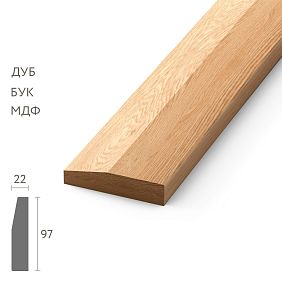


Soviet wooden baseboard: what profiles were produced according to USSR GOST




Soviet era standards: what was regulated
SovietWooden baseboardwas produced according to GOST 8242–75 'Profile wood parts for construction' — the predecessor of the current GOST 8242–88. The standard regulated not just 'something made of wood,' but a strict set of standard profiles, each of which had a number, precise cross-sectional dimensions, and quality requirements.
The Soviet standardization system was built on the principle: a strictly limited assortment, but — guaranteed quality within that assortment. It was not freedom of choice, but production discipline.
Main profiles that were mass-produced for USSR housing construction:
Profile 1 (simple cove). Height 30–35 mm, simple radius profile. Used in standard housing, dormitories, institutions.
Profile 3 (baseboard with a cavetto). Height 55–60 mm, the front face — one smooth arc with a cavetto at the base. The most mass-produced baseboard of the Soviet era — it's the one installed in most Khrushchyovkas and 'Brezhnevkas'.
Profile 5 (wide with a shelf). Height 65–70 mm, a more complex profile with a horizontal 'shelf' at the top. Used in houses with improved layouts, in late-period Stalinist buildings.
Profile 7 (classical double radius). Height 70–80 mm, two radii in the upper part of the profile. Used in houses of increased quality — houses of the Central Committee, houses for scientific workers, nomenklatura cooperatives.
Furthermore, during the Stalinist era (1930s–1950s), for high-category residential buildings, wide profile baseboards with a height of 100–120 mm with a classical multi-step profile were used — direct heirs of the pre-revolutionary tradition of wooden decor.
Our factory also produces:


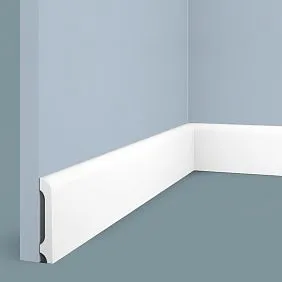
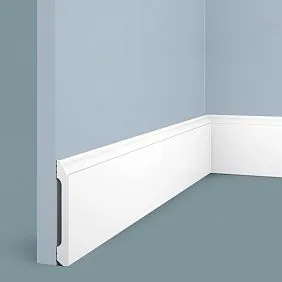
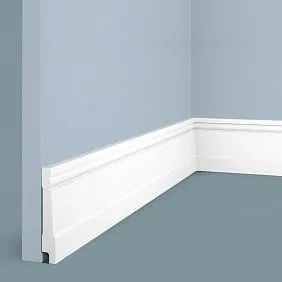
Size range of Soviet baseboards
| Profile according to GOST 8242–75 | Height (mm) | Thickness (mm) | Application |
|---|---|---|---|
| Simple cove | 30–35 | 12–15 | Standard housing, utility buildings |
| Baseboard with a cavetto | 55–60 | 18–20 | Mass housing construction |
| Baseboard with a shelf | 65–70 | 20–22 | Improved layout |
| Wide Classic | 70–80 | 22–25 | Houses of increased quality |
| Stalinist high | 100–120 | 25–30 | Stalinist buildings, nomenklatura housing |
The length of the Soviet baseboard was predominantly 3 meters (not 2.2 m, as today). This is due to a feature of Soviet production: a long plank — fewer joints along the room perimeter, a better visual result. The 3 m plank was the norm for the USSR's lumber production, oriented towards construction needs.
Get Consultation
Wood species of Soviet baseboards
Soviet wooden baseboards were predominantly made from:
Pine (Pinus sylvestris) — the primary species for standard housing. The pine forests of the USSR provided an inexhaustible supply of raw material. Pine is softer than oak, but with proper drying — sufficiently stable.
Spruce (Picea abies) — in a number of regions, it replaced pine. Slightly softer than pine, whiter, less resinous.
Oak (Quercus robur) — for top-category houses: Stalin-era buildings, houses for government members and scientists. Oak baseboards in a standard Khrushchyovka are a rarity; they are found in houses built in the 1930s–50s.
Larch (Larix sibirica) — in Siberia and the Far East, where larch is more accessible than pine. One of the most durable materials for baseboards: density 650–700 kg/m³, natural resinousness ensures resistance to rot.
Why Soviet baseboards were considered high quality: species, moisture content, processing
State quality system: rigid, but functional
It's customary to criticize Soviet production for a lack of choice. But what was produced underwent controls that a modern small-scale producer couldn't even dream of. The state system of QCD (Quality Control Department) at every production site — this wasn't voluntary certification, but a mandatory pass to the warehouse.
Soviet wooden baseboardwith defects in moisture content or geometry — didn't count towards the plan and didn't reach the consumer. A simple, rigid system without market temptations to 'sell faster'.
Kiln and air drying: what existed in the USSR
The drying of Soviet baseboards is a topic for a separate discussion. In large timber industry complexes of the USSR, industrial drying kilns operated: steam drying for 12–18% loads. Baseboards that underwent kiln drying at a Soviet woodworking plant (DOK) had a moisture content of 10–14%.
This is not the 8–10% of the modern standard — but significantly better than air drying (15–18%), which was used at the same time by small forestry enterprises and local plants.
Why don't Soviet baseboards crack after 40 years? Because they long ago reached equilibrium moisture content with the apartment (8–10%) — and stabilized. Those Soviet baseboards that were under-dried and installed in apartments with central heating in winter cracked: the first winters caused drying cracks, and then — stabilization for decades.
Surface treatment of Soviet baseboards
Soviet baseboards were produced unfinished: without coating. At the factory — profile milling, rough sanding (P80–P100). Final sanding and painting — on the construction site, by painters.
The Soviet painter painted baseboards with oil-based paint (PF-115, colloquially 'pentaphthalic' or NC-132 — nitro enamel). The oil-based paint PF-115 is not what is called 'oil paint' today in the Western sense. It's an alkyd enamel on a synthetic base, very thick, with a strong odor. It created a hard, but brittle-upon-impact coating.
Often, baseboards were painted 3–5 layers over many years of renovations: each new resident added a layer. This is precisely why, when removing a Soviet baseboard, up to a centimeter of paint is discovered on top of the living wood.
What made Soviet baseboards durable: summary
Three factors:
-
Solid wood without glue. Soviet baseboard — a solid board, turned from a single blank. No glue, no composite elements. One tree — one plank.
-
Sufficient drying. Perhaps not the ideal 8–10%, but kiln drying to 12–14% ensured reasonable stability.
-
Thickness. Soviet baseboard — thick: 18–25 mm. Modern thin baseboard (12–15 mm) with the same height is less resistant to mechanical loads.
Modern classic wooden baseboard: what has changed in production
Production today: what's better, what's worse
Modernwooden baseboard of classic profile— this is a different level of technology in a more complex market.
What has improved:
-
Drying. Modern computer-controlled kiln drying — to 8–10% moisture content, which is more precise than the Soviet 12–14%. This is better for stability in modern apartments with central heating.
-
Milling. CNC milling machines (computer numerical control) ensure profile accuracy of ±0.2–0.3 mm — compared to ±0.5–1.0 mm on Soviet copy machines.
-
Sanding. Final sanding with P180 in modern production is the standard for baseboards under varnish and oil. Soviet baseboards were not finished smooth.
-
Profile selection. While the Soviet GOST fixed 5–7 standard profiles, today's manufacturer offers 30–100 options.
What has worsened or become more difficult:
-
Quality control. The market economy has spawned thousands of small producers, many of whom lack proper drying chambers or quality control departments. Buying a damp baseboard with a warped profile on the modern market is easy.
-
Plank length. The Soviet standard length of 3 m is a thing of the past. The modern standard is 2.2 m. More joints per perimeter. Reason: optimization of production and logistics.
-
Wood species. The cheap market segment is finger-jointed pine, sometimes with violations of the jointing technology. Soviet pine was solid wood.
Modern classic profile: direct descendants of the Soviet baseboard
Modern wooden baseboardwith a classic profile is a direct descendant of Soviet profiles No. 3, 5, and 7. A profile with one or two radii, height 55–80 mm, solid wood or finger-jointed — is produced today and widely used in the restoration of old housing stock and in classic interiors.
The main difference from the Soviet counterpart: better drying, cleaner final sanding, choice of finish. The Soviet baseboard went to the painter with P80. The modern classic baseboard STAVROS comes with P180 — ready for applying varnish, oil, or paint without additional preparation.
New profiles: Euro, loft, Scandinavian, minimalist
How interiors have changed — and how manufacturers have responded
The Soviet apartment was identical. This is not an exaggeration: a standard project, a standard baseboard, standard paint. Individuality — in the space between the standards.
The modern interior is fundamentally different. Style is the owner's choice: Scandinavian minimalism, Japanese 'wabi-sabi', harsh loft, pompous neoclassicism, warm Mediterranean. And each style dictates its own type of baseboard.
Euro-profile: straight lines with a chamfer
Euro-profile (in Russia sometimes called 'Austrian' or 'European') is a baseboard with an almost rectangular cross-section, where the top and bottom edges have small chamfers (bevels) of 5–15 mm. No arcs, no curves.
Difference from Soviet: the Soviet baseboard always had a radius profile. The Euro-profile is fundamentally rectilinear. If the Soviet baseboard 'softens' the transition from wall to floor, the Euro-profile 'draws' it — a hard line, an architectural boundary.
Style: modern classic, neoclassical, apartments with large windows and light walls. Pairs well with oak parquet under oil and Bauhaus-style furniture.
Loft-profile: rectangle without decorations
Loft is about rigidity and honesty of material. The baseboard for loft: rectangular in cross-section, without chamfers, without bevels, without any ornament. Height — 40–60 mm, thickness — 20–25 mm. The wood species is visible: pronounced wood grain or a specially accentuated surface (brushing, artificial aging).
Finish for loft baseboard: dark stain, black enamel, oil with 'espresso' or 'swamp' pigment. No white — only dark, textured, industrial tones.
Difference from Soviet: in the USSR, such a profile did not exist. A rectangular baseboard without decoration is not a lack of imagination, but a conscious aesthetic position, made possible only in post-Soviet design.
Scandinavian profile: minimalism with character
Scandinavian profile is something between Euro and rectangle. Height 40–55 mm, thin (15 mm), top edge — a small soft radius or one elegant chamfer. The main characteristic is lightness: the baseboard is almost invisible against the wall, does not overload the space.
Finish: white enamel or natural oil without pigment. Installed with a minimal gap to the wall (sealant to match). The goal is to create the feeling that there is no baseboard at all, only a transition from wall to floor.
Difference from Soviet: the Soviet baseboard was always a 'noticeable' element. The Scandinavian one strives for invisibility.
Minimalist: maximum height with zero profile
A paradox of modern design: a minimalist baseboard with a height of 80–100 mm looks more elegant and less 'bulky' than a 60 mm Soviet baseboard with a figured profile. Because it has straight edges, no protrusions, matte enamel matching the wall color.
A tall baseboard matching the wall color 'disappears' in the interior, creating an architectural effect without visual noise.
Table: Soviet baseboard vs. modern styles
| Style | Height | Profile | Finish | Soviet analog |
|---|---|---|---|---|
| Soviet classic | 55–80 mm | Radius with cove | Oil paint | Base |
| Modern Classic | 80–100 mm | Figurative multi-radius | White enamel, varnish | Approximate |
| Euro | 60–80 mm | Rectangle with bevel | Varnish, enamel | No analog |
| Loft | 40–60 mm | Rectangle | Dark enamel, oil | No analog |
| Scandinavian | 40–55 mm | Thin with single bevel | White enamel | No analog |
| Minimalist | 80–120 mm | Tall rectangular | Wall color | No analog |
| Monumental | 140–200+ mm | Complex classic | Varnish, oil | Partially — Stalin-era buildings |
Finger-jointed skirting: modern technology vs. solid board of the Soviet era
Why the solid board disappeared
Soviet skirting — solid board. This means: one blank without adhesive seams for the entire 3-meter length. Why have manufacturers switched to finger-jointing today?
The answer lies in raw material economics. A high-quality knot-free board 3 meters long with a 25×80 mm cross-section made of pine or spruce is today a scarce and expensive resource. The Soviet timber industry had access to the giant forest tracts of Siberia with centuries-old pines. Modern forestry is different: less 'mature' forest, more young growth with knots.
Finger joint technology allows splicing short knot-free lamellas (30–50 cm) into a long plank of the required length. The result is a product without knots or defects on the face side — but with visible adhesive seams across the grain.
Solid board vs. finger-jointed: an honest comparison
| Parameter | Solid board | Finger-jointed |
|---|---|---|
| Texture | Continuous, solid wood | Interrupted by joints |
| Under transparent coating | Ideally | Visible joints — undesirable |
| Under paint | Good | Good (joints not visible under paint) |
| Stability | Good with kiln drying | Very high (adhesive compensates for stresses) |
| Cracking resistance | Medium | High |
| Price | Higher | 20–30% lower |
| Ecological | No adhesive | E1 class adhesive |
The conclusion is: for interiors with transparent finish (varnish, oil) —Solid wood skirting boardis preferable. For interiors with white paint — finger-jointed performs no worse, while being more stable and cheaper.
Soviet-era solid wood board: where to find it today
Solid wood without finger-jointing is produced today — but costs more and is widely available from manufacturers specializing in high-quality millwork. STAVROS produces K-series baseboards in solid oak and beech: specifically oak and beech, as hardwoods, provide high-quality knot-free blanks without the need for finger-jointing across the entire 2.2 m length.
Solid pine 2.2 m long is possible, but with a higher likelihood of face defects (knots, resin pockets). Therefore, pine millwork is more often finger-jointed — and this is technologically sound.
How to find an analog of Soviet-era baseboard today
The exact formula of the 'Soviet' baseboard
If the goal is to reproduce a Soviet-era baseboard in a modern renovation (restoration of a Stalin-era apartment, restoration of a historical interior, personal aesthetic stance — 'I love Soviet classic'), four parameters are needed:
-
Profile: radius, height 55–80 mm. In modern assortment — profiles K-006 (60 mm), K-016 (70 mm), K-011 (75 mm). These profiles are the closest to Soviet standard baseboards.
-
Wood species: pine or oak. For perfect reproduction of a Soviet Khrushchev-era baseboard — solid pine. For Stalin-era — oak.
-
Finish: white or cream opaque enamel. Soviet baseboards were always painted — not varnished. Alkyd semi-gloss enamel — the most authentic option.
-
Plank length: 2.2 m (modern standard) vs. Soviet 3 m. To minimize joints — the maximum possible length.
Restoration of Soviet-era baseboard: when to replace, when to preserve
Restorers of apartments in historical buildings often face a choice: preserve the Soviet-era baseboard or replace it with a modern analog. Three scenarios:
Scenario 1: Soviet-era baseboard in good condition. The wood is solid, the profile is preserved under layers of paint, geometry is intact. Solution: remove paint layers (chemical stripper or heat gun + scraper), sand, refinish. This is the best option: a 40-year-old baseboard made of solid pine is more stable material than fresh finger-jointed pine.
Scenario 2: Soviet-era baseboard partially damaged. Several planks are broken, the rest are fine. Solution: find a modern baseboard as close as possible in profile (K-006 or K-016), restore and paint the old ones, insert new ones. Combine under a uniform finish (paint will even out differences in tone and texture).
Scenario 3: Soviet-era baseboard removed, a full analog is needed.Wide wooden baseboard STAVROSK-016 (70 mm) or K-011 (75 mm) — closest in proportions to Soviet profiles No. 5 and 7. Under white enamel — practically indistinguishable from the Soviet original.
Stalin-era classic: analogs of wide baseboard
For apartments in Stalin-era buildings (1930s–1950s), where ceiling height is 3.2–3.8 m, the standard Soviet baseboard was wider — 80–120 mm. Modern analog for such an interior:
-
K-009 (90 mm) — close to the Soviet baseboard of the upper category
-
K-018 (100 mm) — for ceilings 3.2–3.5 m
-
K-066 (140 mm) — for ceilings above 3.5 m (Stalin-era mansions, nomenklatura houses)
K-009 and K-018 profiles — multi-radius classics, visually similar to late-Soviet and pre-revolutionary wooden decor.
Modern baseboard for a Soviet-era wooden house
Thousands of Soviet-era wooden houses (1940s–1980s) remain in Russia: timber and log dachas, rural houses, villages in the Moscow region. A baseboard in such a house is not just an interior element, but part of material memory. Typically, Soviet wooden houses had a simple pine baseboard with a radius profile, 55–65 mm high.
Modern equivalent for a wooden house:K-006 STAVROS baseboardmade of pine (60 mm) or K-016 (70 mm). For white paint — it fits organically into the context of a Soviet wooden house. If the house is being restored while preserving the spirit of the era — you won't find a better equivalent.
Comparison table: Soviet baseboard vs. modern wooden
| Parameter | Soviet baseboard (1960s–90s) | Modern STAVROS K-series |
|---|---|---|
| Species | Pine, spruce, rarely oak | Oak, beech, pine |
| Moisture content at production | 12–14% (kiln-dried) | 8–10% (modern kiln-dried) |
| Board type | Solid | Solid (oak/beech) or finger-jointed (pine) |
| Plank length | 3 м | 2.2 m |
| Sanding | P80–P100 (rough) | P180 (finish) |
| Profile selection | 5–7 standard types | 30+ profiles |
| Factory finish | Unfinished | Unfinished or oil/enamel on request |
| Profile precision | ±0.5–1.0 mm | ±0.2–0.3 mm (CNC) |
| Documents | Quality Control Department at the enterprise | Declaration of Conformity |
FAQ: Answers to Common Questions About Soviet Baseboards and Their Alternatives
Where to buy a skirting board identical to the Soviet one for a Khrushchyovka?
Profile K-006 STAVROS (60 mm, rounded) made of pine or beech under white enamel — the closest modern analogue of the Soviet skirting board from the Khrushchev era. The height of 60 mm matches the Soviet standard profile No. 3.
Soviet skirting board in good condition — is it worth restoring or easier to replace?
Restore — if the wood is alive and the profile is preserved. Soviet solid pine is a material that has already stood the test of time. It is stable, will not shrink or crack. Removing layers of paint, sanding, repainting — this is faster and cheaper than a full replacement.
Was Soviet skirting board made of oak or pine?
In standard housing (Khrushchyovkas, Brezhnevkas) — pine and spruce. In high-category Stalinist houses — oak and sometimes larch. Oak Soviet skirting board is rare and worth preserving during restoration.
Why didn't Soviet skirting boards crack, while modern ones sometimes do?
Soviet skirting boards also cracked — in the first 1–2 years. You just don't remember (or didn't see) it. Those that remain today have already undergone stabilization. Modern skirting boards crack when humidity is violated (humidity above 12% at purchase) — this is a problem not of time, but of a specific manufacturer.
Can a modern loft-style skirting board be installed in a Soviet-era apartment?
Yes — and this is often done during modern renovation of Soviet housing. A rectangular dark skirting board K-034 with dark enamel in a Khrushchyovka with white walls and wooden parquet — an interesting design solution. Soviet layout does not dictate Soviet aesthetics.
About the company STAVROS
Half a century of Soviet construction gave us standards that still live in the country's apartments.Modern wooden skirting board STAVROS— is respect for tradition with complete superiority of modern technologies: chamber drying to 8–10%, CNC milling with an accuracy of ±0.2 mm, P180 sanding instead of the rough P80 of Soviet woodworking plants.
Over 30 profiles of the K-series — from the laconic K-034 for modern minimalism to the monumental K-104 for a Stalinist mansion. For those restoring a Soviet apartment and looking for an analogue of the Soviet skirting board, and for those building a new interior according to modern canons —wooden skirting board STAVROSwill be found in the right profile.
In a unified system of wooden decor:Carved Mouldings, KZ-series cornices, Wooden sockets— one wood species, one batch, one source. Samples: 180 rub./set. Consultation: 8 (800) 555-46-75.
STAVROS — a wooden skirting board that remembers tradition and knows what it's doing today.


