












































































Article Contents:
- Can Wooden Skirting Board Be Used in Wet Rooms?
- Classification of Wet Rooms: Different Tasks
- Mechanism of Wood Degradation from Moisture: What Happens
- Larch and Coniferous Wood: Why These Species Are Suitable for Kitchen and Bathhouse
- Resin as Natural Protection
- Larch: The Champion Among Domestic Wood Species
- Coniferous Skirting Board: Pine and Spruce
- Aspen: Tradition of Bathhouse Construction
- Abachi: Exotic Wood for Professional Saunas
- Protective Impregnation and Varnish: How to Create a Moisture Barrier
- Systematic Approach to Protection: Three Layers
- Polyurethane Varnish for Kitchen and Bathroom
- Oil-Wax for Changing Room and Kitchen in 'Natural Wood' Style
- Flexible Wooden Skirting Board for Rounded Walls in the Bathroom
- Task: Skirting Board on Curved Walls
- What Is Flexible Wooden Skirting Board
- When Real Flexible Wooden Skirting Board Is Appropriate
- Installation of Flexible Skirting Board in the Bathroom
- Cove Molding in Bathhouse and Sauna: Traditional Solution
- What Is Cove Molding and Why It Is Traditional for Bathhouses
- Wood Species for Bathhouse Cove Molding
- Coating for Bathhouse Cove Molding
- Dimensions of Bathhouse Cove Molding
- Installation in Rooms with Temperature Fluctuations: Fasteners and Gaps
- Main Problem: Wood Movement During Temperature Fluctuations
- Gaps During Installation in Bathhouse
- Fasteners for Wet Rooms: Only Stainless Steel
- Adhesive in Wet Rooms: What Holds and What Doesn't
- Skirting board installation algorithm for the bathroom: step by step
- Care for wooden skirting boards in wet areas
- What to clean with and what is strictly prohibited
- Periodic care and coating renewal
- FAQ: answers to popular questions about wooden skirting boards for wet areas
- About the Company STAVROS

Water and wood — a contradiction humanity learned to resolve thousands of years ago. Wooden ships sailed the seas for centuries. Oak barrels hold wine and whiskey for decades. Larch piles under Venice have stood for eight hundred years — in water. Properly prepared wood and moisture are not enemies.
When people say wooden skirting boards cannot be installed in bathrooms or kitchens — that's half the truth. The full truth: unprepared wood without protective coating cannot be placed in areas of constant water contact. Properly selected wood species with proper coating — withstands years of use in high humidity conditions.
Wooden skirting board for sauna, kitchen, bathroom — this is a separate topic with its own rules: wood species selection, coating technology, installation accounting for deformations, fasteners made of stainless materials. Knowing these rules transforms 'problematic' wood in wet areas into a durable and aesthetically superior solution to any plastic.
This article is a complete professional breakdown of the topic. From the question 'is it even possible' to a step-by-step installation algorithm accounting for temperature fluctuations.


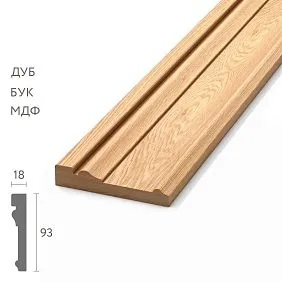

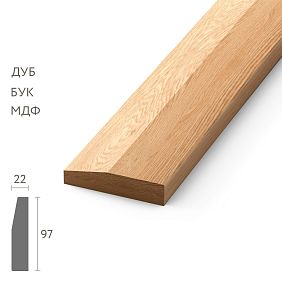


Can wooden skirting boards be used in wet areas




Classification of wet areas: different tasks
Before answering 'yes' or 'no', we need to understand what exactly constitutes a 'wet area'. These are fundamentally different conditions:
Residential apartment kitchen: humidity 45–65% during working hours, steam during cooking, splashes near the sink. Temperature stable — 18–25°C. Short-term exposures, not constant soaking.
Bathroom: humidity 70–95% during shower/bath, temperature 20–28°C. Drying within 1–2 hours with ventilation. Direct water contact — near shower cabin and bathtub.
Combined bathroom: similar to bathroom, plus toilet — additional moisture sources.
Sauna anteroom: humidity 50–70%, temperature 20–30°C. Closer to a living space.
Bathhouse washing area: humidity 80–100%, temperature 40–60°C. Direct water contact on floor and lower wall sections.
Steam room: temperature 80–100°C, humidity varies from 5–15% (dry sauna) to 50–80% (steam bath). Extreme thermal cycles.
Conclusion: each room is a separate scenario.solid wood baseboard in kitchen and anteroom — a quite realistic durable solution. In steam room — only special wood species without coating or with sauna oil. In washing area — choice between wood and polyurethane analog depends on usage intensity.
Our factory also produces:
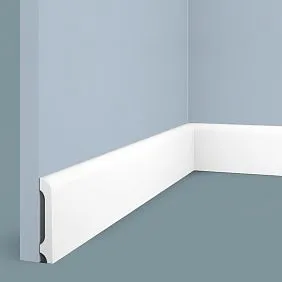
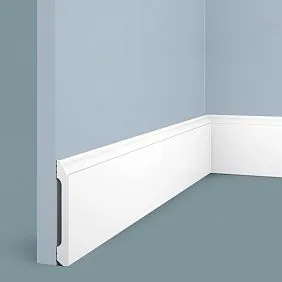
Mechanism of wood destruction from moisture: what happens
Wood is destroyed by moisture not from the water itself — but from three processes that moisture triggers:
Swelling and drying. Wood absorbs moisture and expands, releases — contracts. Multiple 'swell-dry' cycles create internal stresses that tear fibers: cracks, warping, delamination.
Biological destruction. Wet wooden surface — nutrient medium for mold, fungi, bacteria. They gradually destroy fiber structure — wood blackens, loses strength.
Oxidative reactions. Wood tannins (especially in oak) react upon contact with water and metal fasteners: black spots near nails, blue-gray coating.
Proper coating interrupts all three processes: creates barrier against water penetration into fibers (no swelling), prevents fungal spores from germinating into wood structure (no biodestruction), isolates wood from contact with metal fasteners (no oxidation).
Get Consultation
Larch and coniferous wood: why these species suit kitchen and sauna
Resin as natural protection
Wooden skirting board made of larchand coniferous species — this is a fundamentally different protective strategy compared to oak or beech. Coniferous species contain natural resins — terpenes, rosin, resin acids. These substances:
-
Hydrophobic: repel water, preventing it from penetrating the fiber
-
Antiseptic: suppress the growth of mold and fungi (this is why coniferous forests 'purify the air')
-
Preservative: protect the fiber from biological degradation
This is why log cabins made of larch and pine stand for centuries without being destroyed by moisture. This is why piers, the lower crowns of wooden houses, and bridges have historically been made of larch — it could work 'in water'.
Larch: the champion among domestic species
Wooden skirting board made of larch— the optimal choice for kitchens, anterooms, damp corridors, and any areas with high humidity. The parameters that justify this:
| Parameter | Larch | Pine | Oak | Beech |
|---|---|---|---|---|
| Hardness (HB) | 490–580 | 200–300 | 700–900 | 1200–1300 |
| Moisture resistance | Very High | Medium | Medium | Low |
| Resin content | High | Average | No | No |
| Rot resistance | Very High | Medium | High | Low |
| Biostability | High | Medium | High | Low |
| Thermal stability | High | Medium | High | Low |
Larch surpasses pine in moisture resistance and hardness. It is inferior to oak in hardness but significantly surpasses it in natural moisture resistance (due to resins). At the same time, it costs less than oak.
Visual characteristics of larch: warm amber-orange tone, pronounced texture with growth rings and knots, a characteristic 'lively' pattern. Under oil — a rich golden-brown color. Under white enamel — neutrally hides the texture.
Coniferous skirting board: pine and spruce
Wooden skirting board made of coniferous wood— pine or spruce — a more affordable alternative to larch with lower hardness and moisture resistance indicators, but still significantly surpassing deciduous species (oak, beech) in natural protection against moisture.
Pine skirting board in the kitchen with proper coating (2–3 layers of polyurethane varnish) — works without problems. Its limitations:
-
Softness: dents from furniture legs, heels
-
Resininess: a fresh coniferous skirting board in a warm room may 'ooze' resin for the first few months — preliminary deresination or coating with an insulating primer is needed
For a sauna steam room: coniferous skirting board made of pine — not allowed. When heated, resin is actively released and can burn the skin. Only larch, aspen, or abachi.
Aspen: the tradition of bathhouse construction
Aspen is a special species for bathhouse premises. Resin-free (unlike coniferous species), low thermal conductivity (does not burn when touching a heated surface), high resistance to rot in humid conditions, ease of processing.
Aspenskirting board-cove for the bathhouse— a traditional solution for the steam room. Aspen 'grays' from steam and high temperatures — this silvery-gray tone over time is considered a natural patina of bathhouse wood, not a defect.
Abachi: exotic for professional saunas
Abachi (Triplochiton scleroxylon) — an African species for Finnish and commercial saunas. Exceptionally low thermal conductivity (does not heat up in a hot steam room), no resin, resistance to humidity. Abachi does not feel hot to the touch even at 90°C. But this is a specialized product, available from a limited number of manufacturers.
Protective impregnation and varnish: how to create a moisture barrier
Systematic approach to protection: three layers
Proper protection of wooden baseboards in a humid environment isn't just one coat of varnish, but a system of multiple layers with different purposes:
Layer 1: Antiseptic primer (primer-antiseptic)
Applied to raw wood (before any decorative coating). Penetrates fibers 1–3 mm deep, destroys fungal and mold spores, establishes bioprotection. For humid areas — a mandatory step. Without it, any varnish coating will eventually peel due to mold developing underneath.
Composition: water-soluble antiseptic (Neomid, Pinotex Base) or solvent-based (Tikkurila Valtti Extra). Applied with a brush to all surfaces — including the back and ends. Drying time: 24 hours.
Layer 2: Sealing primer
For coniferous wood — shellac-based primer: prevents resin from bleeding through the varnish coating. For hardwood — acrylic or alkyd primer: evens out surface porosity before varnish application.
Without primer: on pine baseboards, yellow resin stains will appear through the varnish after 2–3 weeks. On oak — varnish will apply unevenly due to varying porosity.
Layer 3: Protective finish coating
Choice depends on the room:
| Room | Recommended coating | Number of coats |
|---|---|---|
| Kitchen (work area) | Polyurethane varnish (PU) | 3 coats |
| Bathroom | Yacht varnish or PU | 3–4 coats |
| Changing room | Oil-wax (Osmo) | 2 coats |
| Washroom | Sauna oil | 2–3 coats |
| Steam room | No coating or sauna oil | 1 coat |
Polyurethane varnish for kitchen and bathroom
Polyurethane (PU) varnish — the best choice for wooden baseboards in kitchens and bathrooms. Forms a durable film with hardness comparable to nitrocellulose lacquer, but with significantly better elasticity and chemical resistance.
Key Features:
-
Water resistance: the film is practically impermeable to water
-
Chemical resistance: not damaged by household cleaners, vinegar, oil
-
Mechanical strength: doesn't scratch with fingernails, resistant to furniture
-
Gloss level: from full matte (5 GU) to glossy (90 GU) — selected to match the interior
Recommended systems: two-component PU varnish (2K PU) — professional grade, more durable film than single-component. For DIY application — single-component water-based PU varnish (Tikkurila Unica Aqua, Dulux Aquatech).
Application technology for PU varnish on skirting board:
-
Antiseptic impregnation → drying 24 h
-
Isolating primer → drying 12 h
-
Sanding P320 (raised grain)
-
1st coat of PU varnish (diluted 10% — better penetration)
-
Drying 8–12 h → sanding P400
-
2nd coat of PU varnish
-
Drying 12 h → sanding P500
-
3rd coat of PU varnish — final, no sanding
Oil-wax for mudroom and kitchen in 'natural wood' style
Oil-wax (Osmo Polyx-Oil, BioFa) — an alternative to varnish for those who value a 'living' surface: tactilely warm, without plastic gloss, with visible wood texture.
Oil-wax does not form a film — it penetrates the fibers and polymerizes inside, creating a water-repellent barrier at the molecular level. The surface remains matte, 'breathes', and feels like natural wood to the touch.
For kitchen and mudroom — 2 coats of Osmo Polyx-Oil 3062 (natural). For bathroom and washing area — only with good ventilation: oil requires periodic renewal (every 3–5 years), while varnish is 'self-sufficient' longer.
Advantage of oil over varnish in humid conditions: if the varnish film is damaged (scratch, chip) — water penetrates under the film, and the varnish starts peeling in 'bubbles'. If the oil coating is damaged — the local damage does not spread: simply treat the affected area with fresh oil.
Flexible wooden skirting board for curved walls in bathroom
Task: skirting board on curved walls
Flexible wooden skirting board— specialized product for walls with curvature: rounded corners in designer bathrooms, arched niches, walls with radius rounding, columns. Standard solid wood skirting does not bend — it is rigid. For radius walls, you need either many short segments with cuts (inaccurate, visible joints) or a flexible profile.
What is flexible wooden skirting board
Fundamentally — flexible 'wooden' skirting comes in two types:
Type 1: Thin solid wood with kerf cuts on the back side. Cross cuts 2/3 deep are made on the back surface of solid wood skirting (pine, birch) with 5–10 mm spacing. This creates flexibility: the skirting bends into a radius. Minimum bending radius ~200–300 mm (depends on profile height and wood species).
Limitation: the back side with cuts is structurally weakened. Moisture protection is mandatory.
Type 2: Flexible polyurethane skirting with wood decor. Polyurethane base (completely flexible, moisture-resistant) with a finish layer — imitation wood texture or ready for painting. Bends to any radius from 50 mm. This is —KPU-series STAVROSin flexible version: functionally the best choice for bathroom with radius walls.
When real flexible wooden skirting is appropriate
In a bathroom with designer rounded corners and natural wood finishing — skirting made of thin solid wood with cuts, coated with yacht varnish in 3 coats, is a working solution. For radii from 300 mm — larch or pine. Result: natural texture, warmth of wood, unique appearance.
For radii less than 200–250 mm (tight rounding) — polyurethane analogue. This is not a compromise, it's a sensible choice.
Installation of flexible skirting board in the bathroom
Flexible skirting board is attached to the wall using adhesive method. Rigid fasteners (screws) do not provide the necessary pressure against curved surfaces: screw heads pull back, and between fasteners the skirting board pulls away from the wall.
Mounting adhesive is applied in a zigzag pattern across the entire back surface. The skirting board is pressed against the wall along its entire length — painter's tape every 200 mm until the adhesive sets (2–3 hours). After removing the tape — seal the bottom and top seams with acrylic sealant.
Cove in the bathhouse and sauna: traditional solution
What is a cove and why it is traditional for the bathhouse
Wooden crown molding— a triangular profile with a concave or rounded front face, covering the internal corner between two planes. In the bathhouse and sauna, the cove is used to cover the corner between the floor and wall, as well as the corner between the wall and ceiling (ceiling cove-skirting).
Why specifically a cove, and not a standard skirting board?
Firstly: hygiene. In the bathhouse, the ability to fully wash walls and floors is important. A standard rectangular skirting board with flat faces creates a 'sharp' angle between its lower edge and the floor — a dirt trap that is difficult to clean. A cove with a concave front surface — a smooth transition without sharp angles, easy to clean.
Secondly: thermal deformation. In the steam room, the skirting board experiences sharp temperature fluctuations — from 20°C (after ventilation) to 80–100°C (operating temperature). At the same time, wood expands significantly. The thin profile of the cove deforms less than a wide skirting board.
Thirdly: tradition. Russian bathhouse tradition — minimalism in finishing. No extra profiles, no decorative moldings. A concise cove at the floor and ceiling — an 'honest' bathhouse solution.
Wood species for bathhouse cove
| Species | Steam room | Washing area | Changing room | Features |
|---|---|---|---|---|
| Aspen | Ideally | Good | Good | No resin, doesn't burn |
| Larch | Possible* | Ideally | Ideally | *Releases resin for the first few seasons |
| Abachi | Ideally | Ideally | Good | Doesn't heat up |
| Spruce | Not allowed | No | Allowed | Resin burns |
| Oak | No | No | Good | Unstable under fluctuations |
Coating for bathhouse cove
Steam room: without coating or bath oil (Sauna Oil — wax-paraffin). Regular varnishes and enamels in the steam room — strictly prohibited: at 80–100°C, solvent-based coatings soften and can stick to skin, water-based varnishes — peel under humidity fluctuations.
Washing area: bath oil or oil-wax for wet rooms. Not varnish: in the washing area frequent wetting + high temperature = varnish will peel off within 1–2 seasons.
Changing room: polyurethane varnish is acceptable. Changing room — normal living conditions without extreme temperatures.
Dimensions of bathhouse cove
Optimal dimensions for bathhouse cove:
-
Leg 25×25 mm — minimalist, for small baths and saunas
-
Leg 30×30 mm — standard for most projects
-
Leg 40×40 mm — for tall steam rooms (3+ m), creates visual 'weight' at the base of the wall
Cove thickness: 8–12 mm. Thin cove cracks faster under sharp thermal fluctuations — optimum is 10–12 mm.
Installation in rooms with temperature fluctuations: fasteners and gaps
Main problem: wood movement due to fluctuations
Wooden baseboard in a humid room or bath operates under constant deformation. Wood swells (moisture + heat) and shrinks (dryness + cooling). The magnitude of movement in a bath baseboard is an order of magnitude higher than in a living room baseboard:
Example: aspen cove in a steam room, length 2.5 m. When heated from 20°C to 90°C and humidity increase from 30% to 80% — linear expansion along the grain: 1–1.5 mm (insignificant). Across the grain (change in profile 'width'): 0.5–1.2 mm per 25 mm leg width. This creates significant stress at rigid fixation points.
Solution: installation with expansion gaps and non-rigid fasteners.
Gaps during installation in a bath
End gap at the wall: a 5–8 mm gap is left at each end of the cove or baseboard strip up to the wall (corner, jamb). This gap compensates for linear expansion. The gap is sealed with sealant (sanitary silicone) — it is elastic and does not hinder movement.
Gap from the floor: the lower end of the baseboard/cove should not press tightly against the floor. A 2–3 mm gap at the floor ensures water drainage and compensates for vertical deformations. In the washing area — mandatory: water drains through this gap.
Gap between strips (joint on a straight wall): in a bath, joints on a straight wall — only at 45° with a 1 mm gap in the joint, filled with silicone. A straight joint without a gap in a bath will 'bulge' at the joint point within a year.
Fasteners for wet rooms: only stainless steel
This rule has no exceptions: in wet rooms and baths — only stainless steel fasteners.
Why:
-
Regular black screw: rusts within one bath season. Rust stains the wood around the head — dark reddish stains, impossible to wash off
-
Galvanized fastener: lasts longer (2–4 years), but zinc coating degrades at high bath temperatures — after 3–5 years, same rust
Correct choice: stainless steel screw made of AISI 304 (standard stainless steel) or AISI 316 (marine-grade stainless steel—for wash compartments and bathrooms with saline solutions). Finish stainless steel nails—for securing the cove in the steam room.
Adhesive in wet rooms: what holds and what doesn't
| Glue type | Wet room | Bath | Bathroom |
|---|---|---|---|
| Construction PVA | No — washes out | No | No |
| Carpenter's PVA D3 | Allowed | No | Limited |
| Liquid nails (MS-polymer) | Yes | No | Yes |
| Bath adhesive (siloxane) | Yes | Yes | Yes |
| Epoxy adhesive | Yes | No | Yes |
| Mounting silicone | Yes (+ sealing) | Yes | Yes |
For sauna — stone and sauna adhesive (siloxane, heat-resistant up to 120–200°C): withstands sudden temperature changes, does not degrade under high humidity.
Algorithm for installing baseboard in bathroom: step by step
-
Surface preparation: walls must be dry, tile/plaster — fully cured. Tile laying → 7 days → baseboard installation.
-
Baseboard acclimatization: 72 hours in room with ventilation on. Wood adapts to humidity.
-
Applying coating to back side and ends: BEFORE installation. Back side and both ends — antiseptic and varnish. They will not be accessible after installation.
-
Marking: pencil along lower edge of baseboard on wall.
-
Applying adhesive: zigzag on back surface.
-
Installation: press, align with marking, secure with tape for 2–3 hours. Stainless steel screws — additionally every 600 mm.
-
Sealing joints: lower seam (baseboard—tile/floor) and upper seam (baseboard—wall) — sanitary silicone in matching color or paintable acrylic sealant.
-
Final coating: 2nd and 3rd coat of varnish (if 1st was applied before installation) — over entire front surface, including sealant-filled seams. Creates single protective film without exposed ends.
Caring for wooden baseboard in wet rooms
What to clean with and what is strictly prohibited
Allowed:
-
Damp cloth with neutral soap solution — daily cleaning
-
Floor cleaning products (Mr. Proper, Domestos without chlorine) in highly diluted form
-
Special products for caring for varnished wood (Osmo Spray-Cleaner)
Prohibited:
-
Chlorine-containing products (Bleach, original Domestos): destroy varnish film, discolor wood
-
Abrasive cleaning powders: scratch varnish to matte finish
-
Steam (steam cleaner): under high-temperature steam varnish bubbles
-
Hard metal brushes: scratches down to wood = starting points for degradation
Periodic care and coating renewal
Wooden baseboard with varnish coating in bathroom requires inspection every 1–2 years: check for cracks in varnish, whether coating is peeling at sealant seams.
If damage is found — local repair: sanding with P320 at damage site, applying varnish with brush. Do not wait for damage to spread.
Baseboard with oil coating in anteroom or kitchen — oil renewal every 3–5 years. Procedure: light sanding with P400, applying 1 coat of fresh oil, drying.
FAQ: answers to popular questions about wooden baseboard for wet rooms
Can oak baseboard be installed in bathroom?
Yes, but it's not the optimal choice. Oak — dense wood without natural resins, requires maximum moisture protection: 3–4 coats of PU-varnish, sealing all ends and seams with silicone. With proper coating — lasts for years. Larch is more reliable for bathroom with same coating: natural resin content provides additional durability margin.
Which wooden baseboard to install in sauna?
Aspen without coating or with 1 coat of sauna oil — for steam room. Larch with sauna oil — for washing area. Both options — stainless steel fasteners, end gaps 5–8 mm, silicone sealing.
How long will a wooden baseboard last in a bathroom with proper coating?
With high-quality PU varnish (3 coats), stainless fasteners, and proper sealing — 10–15 years before replacement is needed. With regular maintenance and timely repair of damaged areas — longer.
Is it necessary to treat the back side of the baseboard?
Absolutely — in bathrooms and saunas. The back side in contact with tiles or walls in humid conditions is the first place for rot if untreated. Antiseptic + varnish or oil on the back side before installation — 10 minutes of work, 10 years of guarantee.
Flexible wooden baseboard — where to buy for a bathroom?
Profile with kerf cuts (thin solid wood) — from millwork manufacturers to order. Flexible polyurethane alternative — standard catalog product from STAVROS in the KPU series.
About the company STAVROS
Wet rooms are a test for any material.Wooden skirting board K-series STAVROSmade from chamber-dried oak and beech solid wood (moisture content 8–10%) — perfectly prepared for working with moisture-protective coatings: even fiber structure without internal stresses, P180 sanding for maximum adhesion to varnish, geometric accuracy ±0.2 mm — all joints are tight, without gaps under the coating.
For kitchens, bathrooms, and all rooms with high humidity —STAVROS KPU series polyurethane millwork: the same classic K-series profiles in absolutely moisture-resistant polyurethane for painting in any RAL. Does not swell, does not crack, withstands constant contact with water. For saunas — specialized profiles made of aspen and larch.
Coordinated assortment for wooden interiors:KZ-series cornices, Casings, Furniture legs, staircase components. Samples: 180 rub./set. Warehouse in Moscow and St. Petersburg, same-day shipping. Consultation: 8 (800) 555-46-75.
STAVROS — because wood lives long in a wet environment if it knows how to protect itself.


