












































































Article Contents:
- Baseboard height: the mathematics of visual harmony
- Adjusting height to interior style
- Practical test: visual fitting
- Profile: geometry of style
- Profile matching style
- Color: visual alchemy of space
- Natural color or staining: what to choose
- Mounting methods: technology of flawless installation
- Mounting with screws: tradition and reliability
- Mounting with adhesive: aesthetics without compromise
- Combined mounting: reliability plus aesthetics
- Hidden mounting: technology of invisibility
- Joint filling: masking the inevitable
- Color matching: integrating baseboard into interior
- Practical installation tips
- Care for installed baseboard
- Conclusion: systematic approach to details

Installation of flooring is complete, walls are leveled and painted, but the interior looks unfinished. The eye is drawn to this technological gap between the floor and the wall — necessary, yet aesthetically unacceptable. It iswith a classic profile creates a sense of solidity, reliability.that transforms a technical necessity into an architectural element, completing the space. But choosing a baseboard is not an intuitive process. Height, profile, color, mounting method — each parameter affects the final result, the visual perception of the room, the durability of installation. Incorrectly chosen height may visually lower the ceiling or create a sense of incompleteness. Mismatched profile will ruin the interior’s style. Color error will disrupt spatial harmony. Wrong mounting method will lead to peeling, gaps, and the need for redoing. This material is a systematic guide to selecting and installing wooden baseboards, where every decision is justified by understanding proportions, stylistic rules, technological requirements, and practical experience.






Baseboard height: the mathematics of visual harmony
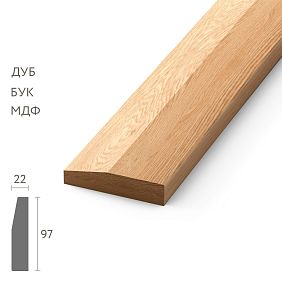
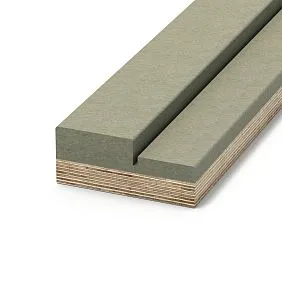
heightwooden baseboard for floor— not an arbitrary value and not a matter of personal taste. It is the result of a balance between ceiling height, room area, interior style, and functional requirements. There is a classic design rule: baseboard height should be approximately 3–4% of ceiling height. For a 2.7-meter ceiling, this gives 81–108 millimeters — a range corresponding to standard sizes of 80–100 millimeters.
Low baseboards (40–60 mm) are suitable for small rooms with ceilings 2.4–2.6 meters, where preserving the sense of space is important. They visually do not steal height, creating lightness and airiness. Low baseboards are a choice for minimalist and modern interiors, where decoration is reduced to a minimum. But they have a drawback: they offer less protection for walls against mechanical damage, are harder to cover floor-wall joint irregularities, and do not allow placing a cable channel of sufficient width.
Medium baseboards (70–90 mm) — a universal solution for most residential rooms with ceilings 2.5–2.8 meters. This is the golden middle ground, where functionality combines with aesthetics. An 80 mm baseboard — the most popular size on the Russian market — provides sufficient wall protection, covers standard expansion gaps (10–15 mm), allows placing wires, and looks proportionate in typical apartments.Wooden baseboardAn 80 mm height baseboard suits 80% of interiors without specific requirements.
High baseboards (100–150 mm) are intended for rooms with ceilings 2.9 meters and above. They emphasize the height of the space, creating a sense of grandeur, typical for classical interiors, country houses, rooms with architectural moldings. A high baseboard visually raises the ceiling, making the room more proportionate, but in rooms with low ceilings (less than 2.7 meters) it creates the opposite effect — visually 'pressing down,' reducing height.
Very high baseboards (over 150 mm) are used in historical interiors, mansions, rooms with ceilings above 3.5 meters. They become architectural elements, often complemented with carving, moldings, pilasters. In modern standard apartments, such baseboards are inappropriate — they disrupt proportions, create a sense of overloading.




Adjusting height to interior style
The classic 3–4% of ceiling height rule is adjusted depending on style. Minimalism, Scandinavian style, high-tech tend toward lower baseboards: you can reduce the calculated height by 20–30%. For a 2.7-meter ceiling, instead of 80–100 mm, use 60–70 mm. This creates a sense of lightness and unclutteredness, characteristic of these styles.
Classic, neoclassic, and art deco allow height increase of 20–40%. For a ceiling of 2.7 meters, a skirting board 100–120 millimeters high can be used. This creates solidity, a sense of substance, and emphasizes architectural structure. In classic interiors, skirting boards are often combined with door casings of the same height and profile, creating a unified molding system.
Loft, industrial style use medium skirting boards (70–90 millimeters) with minimalist profiles, often painted in contrasting colors (black, graphite) or left in natural form with rough texture.
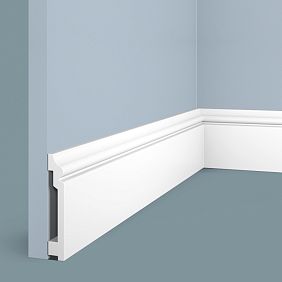
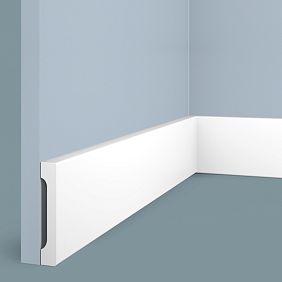
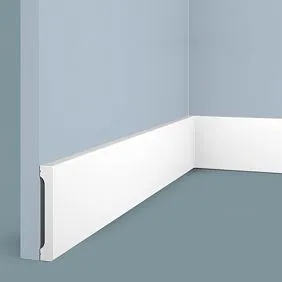
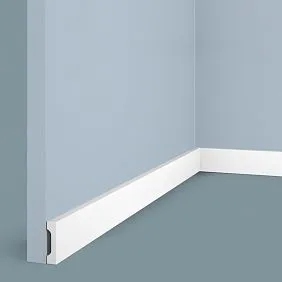
Our factory also produces:
Practical test: visual fitting
Before purchasing, conduct a visual test. Cut a strip of cardboard or plywood to the desired height (e.g., 80 millimeters), attach it to the wall with painter’s tape in several places in the room. Step back and assess proportions. Try several options: 70, 80, 100 millimeters. The one that looks most harmonious is your size. This simple test takes 15 minutes but avoids costly mistakes, correction of which would cost thousands of rubles and days of work.
Get Consultation
Profile: geometry of style
The profile of the skirting board — its cross-section, determining the shape of the front surface. Choosing a profile affects not only aesthetics but also functionality: ability to fit uneven walls, visual perception of height, complexity of installation and maintenance.
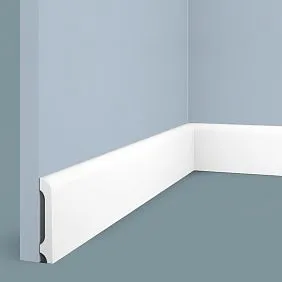
Straight profile — flat or slightly rounded front surface without decorative protrusions or recesses. This is a manifesto of modernity: clean lines, minimal decoration, maximum functionality. Straightwith a classic profile creates a sense of solidity, reliability.fits perfectly into Scandinavian interiors, minimalism, contemporary style. It is simple to manufacture (does not require complex milling), easy to install, simple to maintain (dust does not accumulate on flat surfaces).
The drawback of a straight profile is that on uneven walls, gaps form between the flat back surface of the skirting board and the wall, requiring sealing. Modern straight skirting boards often have rounded back edges, compensating for minor irregularities (up to 3 millimeters).
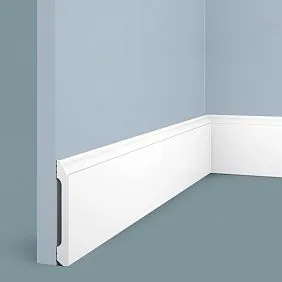
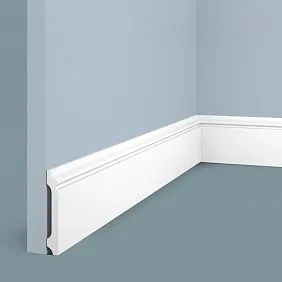
Classic (ornamental) profile — complex shape with protrusions, recesses, smooth transitions. The upper part usually has a rounded or beveled edge, the central part — convexity (sometimes multiple), the lower part — base with an additional protrusion. This geometry creates play of light and shadow, adds volume, and is associated with tradition and quality. Classic profile is characteristic of English classicism, French Provence, American colonial style.
Ornamental profile is more complex to manufacture (requires multi-pass milling), more complex to install (corner fitting requires precision), more complex to maintain (dust accumulates in recesses). But the result is impressive: such a skirting board becomes a decorative element, drawing attention, emphasizing the interior’s respectability.
Rounded profile — intermediate option between straight and classic. The front surface has a smooth rounded transition from base to top edge, without sharp edges. Such a profile is visually softer, safer (absence of sharp corners is important in children’s rooms), better fits uneven walls. Rounded profile is universal, suitable for most styles — from modern to transitional.
Profile with cable channel — practical solution for modern interiors. The back part of the skirting board has a cavity for cable routing, the front panel is removable or non-removable. The profile can be straight or ornamental. Cable channel allows hiding internet, TV, charging device, smart home cables without wall drilling.wooden baseboardWith cable channel — choice for those who value functionality and are ready for changes (easy to add or remove cables).
Profile matching style
For minimalism and Scandinavian style — choose straight or slightly rounded profile, 60–80 millimeters high. Color — white, light gray, natural light wood (oak, white oak). No decoration, only clean lines.
For classic and neoclassic — ornamental profile, 80–120 millimeters high, made of oak, walnut, stained beech. Smooth transitions, pronounced relief, noble finish (semi-gloss lacquer or oil).
For Provence and country style — classic profile of medium height (70–90 millimeters) with aged effect: patina, brushing, matte finish. Warm colors: natural oak, stained beige or gray-green.
For loft and industrial style — straight profile, 70–90 millimeters high, painted in dark colors (black, graphite, dark gray) or natural wood with rough texture, knots, minimal processing.
Color: visual alchemy of space
Colorwooden baseboard for floor— powerful tool for visual correction. Correct choice increases room size, raises ceiling, creates coziness. Incorrect choice visually reduces space, disrupts harmony, cuts the eye.
In floor tone — classic solution, creating visual continuity of horizontal plane. Skirting board blends with floor, visually increasing its area. This approach is ideal for small rooms where preserving a sense of space is important. If the floor is oak parquet, the skirting board is also oak of the same shade. If the floor is laminate 'oak', the skirting board is stained to match. Effect of monolithic unity, calmness, harmony.
Complexity: exact shade match. Even oak skirting boards from different batches may differ in tone. For perfect result, purchase skirting boards and flooring from the same collection of one manufacturer, or stain skirting boards after laying the floor, visually matching the shade.
In wall tone — modern solution, popular in minimalist and Scandinavian interiors. Skirting board is painted to match wall color (usually white, light gray, beige), creating an effect of elongated vertical plane. This technique visually raises the ceiling, especially effective in rooms with low ceilings (2.4–2.7 meters). Important nuance: skirting board must be sufficiently high (80–120 millimeters) for the effect to be noticeable.
Painting in wall tone — performed after installing skirting board with the same paint used for walls. This guarantees identical shade, creating visual unity. Before painting, skirting board is primed (if made of solid wood without factory finish), two to three coats of paint are applied with light sanding in between using fine abrasive (320–400). Result — monochromatic surface, where skirting board blends into the wall, not drawing attention.
Contrasting color — bold solution, emphasizing room geometry. Dark skirting board on light background (dark oak or wenge on white walls and light floor) creates graphic effect, clear lines, modern sound. Light skirting board on dark background (white or white oak on dark walls) softens space, adds light. Contrast requires precision: skirting board must match other interior elements (doors, casings, furniture), otherwise it will look foreign.
Nuanced combinations — when skirting board color is close to floor or walls but not identical. For example, light oak floor, medium-toned oak skirting board, cream walls. Or dark floor, skirting board two tones lighter, light walls. Such combinations create soft transitions, visually unite space, suitable for classic and traditional interiors.
Natural wood color or paint: which to choose
Natural wood color is beautiful: expressive oak texture, warm beech tone, amber larch glow. NaturalWooden baseboardemphasizes eco-friendliness, creates connection with nature, brings warmth to the interior. But natural color limits design possibilities: you are bound to wood tones (from light yellow to dark brown).
Painting with enamels completely hides the texture, creating a dense colored layer of any shade from the RAL or NCS palette. This allows the skirting board to be precisely matched to the interior color scheme: white for Scandinavian style, gray for minimalism, black for loft, colored (mint, pastel, terracotta) for eclectic. Painted skirting board is universal, but loses the main advantage of wood — live texture.
Compromise — staining with oils or stains. They change the shade while preserving the texture. Oak can be stained from whitewashed to wenge, ash from silver to brown. Stained skirting board combines the naturalness of wood with color flexibility.
Mounting methods: technology of flawless installation
The mounting method determines the reliability of installation, the aesthetics of the final result, and the possibility of disassembly without damage. There are four main methods: screw mounting, adhesive mounting, combined, and hidden mounting.
Screw mounting: tradition and reliability
Screws with anchors — universal method for any walls (concrete, brick, drywall). Process: holes are drilled into the wall at 50–70 cm intervals, plastic anchors are inserted, and the skirting board is screwed in with concealed-head screws. The drill bit diameter must match the anchor (usually 6 mm for 6×30 or 6×40 anchors). Screws — 3.5–4 mm in diameter, 35–50 mm long (depending on skirting board thickness).
Before screwing into wooden skirting board, drill pilot holes 2–3 mm in diameter (mandatory for hardwoods, recommended for softwoods). This prevents wood splitting. Screws are tightened so that the heads are recessed 1–2 mm below the surface. The resulting indentations are filled with wood-colored putty or covered with decorative plugs.
Advantages: maximum reliability, suitable for any walls, skirting board is tightly pressed along the entire length, disassembly is possible (though with damage to the putty at mounting points).
Disadvantages: visible mounting (screw heads or plugs), labor-intensive (requires drilling wall and skirting board), not suitable for very uneven walls (gaps form between skirting board and wall at mounting points).
Adhesive mounting: aesthetics without compromise
Adhesive (liquid nails, wood adhesive) is used for flat walls and skirting boards without significant deformation. Adhesive is applied to the back of the skirting board in a zigzag line or dots spaced 10–15 cm apart. The skirting board is pressed against the wall and secured with painter’s tape or wedges (blocks pressed against the opposite wall) until the adhesive sets (12–24 hours, depending on adhesive type).
Advantages: complete absence of visible mounting, speed (no need to drill), suitable for lightweight skirting boards (up to 80 mm height, softwoods).
Disadvantages: requires perfectly flat walls (deviation no more than 1–2 mm per meter), impossible to disassemble without damaging the skirting board and wall, adhesive may not withstand the weight of heavy skirting boards (oak skirting board 120 mm high weighs 2–3 kg per linear meter).
Combined mounting: reliability plus aesthetics
Combining adhesive and screws gives the best result. Adhesive is applied to the back of the skirting board, the skirting board is pressed against the wall, then additionally secured with screws spaced 60–80 cm apart (less frequently than with purely mechanical mounting). Screws prevent detachment until the adhesive sets and ensure tight contact. After the adhesive sets, the main load is borne by the adhesive joint, and screws play a secondary role.
The number of screws is halved compared to purely mechanical mounting, respectively, fewer putty points. Reliability is higher than with adhesive-only mounting. This is the optimal method forwooden baseboard for floorheights of 80–120 mm on walls with minor unevenness.
Hidden mounting: technology of invisibility
Hidden mounting — a system where mounting is completely invisible from the front. Several options exist:
Clips (clamps): metal or plastic elements are mounted to the wall with screws spaced 40–50 cm apart. The skirting board has a special groove on its back surface, which is slipped over the clip’s protrusion and clicked into place. Advantages: no visible mounting, fast installation, easy disassembly (skirting board is removed with light effort). Disadvantages: requires skirting boards with special construction (groove), less reliable on uneven walls, clips are more expensive than screws.
Diagonal screw mounting: screws are screwed in at a 45-degree angle through the upper rear edge of the skirting board into the wall. Screw heads end up on the back surface adjacent to the wall and are invisible from the front. The method requires precision (easy to miss, screw may protrude on the front surface), suitable for experienced installers.
Mounting strip: a wooden strip 10×20 mm in cross-section is mounted to the wall with screws or adhesive. The skirting board is then attached to this strip with adhesive or small nails. The strip is invisible as it is completely covered by the skirting board. This method is rare, used during the Soviet era, and is now almost obsolete.
Hidden mounting is preferable for interiors where visual cleanliness is important: minimalism, high-tech, premium classic. For most residential interiors, standard screw mounting with neat puttying is sufficient — the difference is barely noticeable, and reliability and cost are better.
Joint filling: masking the inevitable
Even perfectly cut and installed skirting boards have joints: at corners, at plank joints on long walls, at junctions with door casings. These joints are rarely perfectly tight — micro-gaps of 0.1–0.5 mm are practically unavoidable. Joint filling eliminates these defects, creating a visually monolithic surface.
Putty selection: for wooden skirting boards, use wood putty. It is elastic (does not crack with wood micro-movements), easily sandable, and easily paintable. Putty color is matched to the wood tone: light oak — light beige, walnut — dark brown. Many manufacturers offer sets of putties in different shades, which can be mixed to achieve the exact color.
Puttying technology: dust is removed from screw holes and joints (brush or vacuum cleaner), surfaces are degreased (alcohol or white spirit wipe). Putty is applied with a rubber or metal putty knife, filling the joint with slight excess. After drying (usually 2–4 hours), the putty is sanded with fine sandpaper (grit 220–320) flush with the skirting board surface. Dust is removed, and the putty is coated with the same finish as the entire skirting board (varnish, oil, wax).
Note: acrylic putty slightly shrinks upon drying (5–10%). Wide joints (over 1 mm) require re-puttying after initial shrinkage. Apply the first layer, let it dry, assess: if a depression forms, apply a second layer, let it dry again, then sand.
Corner filling: internal and external corners are the most difficult areas. Planks are cut at 45 degrees and joined. Perfect alignment is practically unattainable (cutting error, wall angle imperfection). The corner gap is filled with putty carefully, using a small putty knife, excess is immediately wiped away with a damp cloth. After drying, it is sanded with fine abrasive. On stained or natural skirting boards, putty in corners may be visible up close — this is normal, and it is difficult to fully mask.
Alternative to puttying: use ready-made corner elements (internal and external) from the same skirting board collection. Corner elements have a profile exactly matching the skirting board profile and are installed at the junction of two planks. This eliminates the need for 45-degree cutting and puttying, but corner elements visually stand out, breaking the monolithic line. This is acceptable in classic interiors, but undesirable in modern ones.
Color matching: integrating skirting board into the interior
Color matching with walls or ceiling is a common practice in modern interiors, where the skirting board should blend in and not draw attention. Both unfinished skirting boards (ready for painting) and already installed skirting boards that need to be integrated into the updated interior are painted.
Preparation for painting: the skirting board is sanded with fine sandpaper (grit 180–220) to remove burrs, dirt, and to create a rough surface for better paint adhesion. Dust is removed with a vacuum cleaner and a damp cloth. All defects (knotty holes, chips, dents, seams, screw indentations) are filled with putty. After the putty dries, a second sanding is performed.
The skirting board is primed with an acrylic primer for wood. The primer seals the pores, prevents uneven paint absorption, and improves adhesion. The primer is applied with a brush or roller (a mini-roller 50–70 mm wide is convenient for long straight skirting boards), and it dries in 2–4 hours. After drying, a light sanding with fine abrasive (320–400) is performed to remove raised fibers.
Painting: interior water-based paint (acrylic or latex) of the same brand and shade as used for walls is used. The paint is applied in two to three coats with intermediate drying (usually 4–6 hours between coats). The first coat is a base coat, establishing the color foundation. The second coat is a covering coat, ensuring density and uniformity. The third (optional) coat is a finishing coat, for perfect smoothness and evenness.
For painting skirting boards, use a quality brush (synthetic or natural bristle) 40–60 mm wide or a mini-roller. A brush allows painting of detailed, profiled sections, while a roller provides a smoother finish on flat surfaces. Painting is done along the grain of the wood (for straight skirting boards — along the length), with even strokes, avoiding drips and missed areas.
Protecting adjacent surfaces: before painting, the floor along the skirting board is protected with painter’s tape or plastic sheeting. If walls are already painted, the top edge of the skirting board is also covered with painter’s tape (applied tightly to the wall adjacent to the skirting board). After painting and drying, the tape is removed, revealing a clean line between the skirting board and wall/floor.
Painting an installed skirting board: if the skirting board is already installed, painting is done on-site. This is more difficult (harder to protect the floor and walls, awkward working position), but allows precise color matching with the newly painted walls. Protecting surfaces with painter’s tape is mandatory. Painting is done carefully with a thin layer to prevent paint from seeping under the tape.
Practical installation tips
Must acclimate in the room for 48–72 hours before installation. Bring the skirting boards and leave them in their packaging in the room where installation will occur. The wood will reach equilibrium moisture content matching the microclimate, minimizing deformation after installation.with a classic profile creates a sense of solidity, reliability.The baseboards must acclimate in the room for 48–72 hours before installation. Bring the baseboards and leave them in their packaging in the room where installation will take place. The wood will reach equilibrium moisture content matching the microclimate, minimizing deformation after installation.
Marking: start installation from the corner farthest from the entrance. If the room has bay windows, niches, or protrusions — start with the most complex section. Mark the installation line: measure the skirting board height, mark a horizontal line on the wall at level (a laser level is ideal, but a standard water or bubble level can be used). The line must be strictly horizontal; otherwise, the skirting board will sag.
Cutting angles: use a miter box (for manual cutting) or a miter saw (for precise and fast work). Inside corners: both boards are cut at 45 degrees and meet at the corner. Outside corners: similarly, but in the opposite direction. If walls are not perfectly perpendicular (angle not 90 degrees), measure the actual angle with a protractor, divide it in half — this is the cutting angle for each board.
Installation sequence: start with inside corners, then straight sections, then outside corners, and finally end caps at door openings. On long walls (longer than one board), place joints in the least visible areas, behind furniture or in recesses.
Checking fit: after installation, check for gaps between the skirting board and the wall. Gaps up to 2 mm are normal and can be covered with putty or sealant. Gaps over 3 mm indicate uneven walls or a deformed skirting board, requiring additional fastening or leveling.
Care for installed skirting board
After installation and final finishingWooden baseboardRequires minimal but regular care. Wipe with a dry or slightly damp soft cloth once a week during cleaning. Avoid abrasive materials, aggressive chemicals, and excessive moisture.
For lacquered skirting boards, apply furniture polish every 3–6 months — this refreshes the gloss and creates a protective layer. For oil-finished skirting boards, refresh annually: light sanding with fine abrasive (320–400), applying fresh oil, and polishing. Painted skirting boards with scratches are locally repainted with the same paint.
Conclusion: systematic approach to details
Selection and installationwooden baseboard for floorIs not an intuitive process, but a system of decisions where each parameter affects the result. Height is determined by room proportions and interior style. Profile corresponds to architectural concept and practical requirements. Color creates visual effects, correcting spatial perception. Mounting method ensures reliability and aesthetics. Filling seams masks inevitable joints. Color matching integrates the skirting board into the color scheme.
STAVROS company offers a wide range of solid wood skirting boards in oak, ash, and beech, from 60 to 150 mm high, with various profiles (straight, classic, decorative), in natural color and paint-ready. All STAVROS skirting boards are made from high-quality dried wood (moisture 8–10%), undergo geometric control (tolerance ±0.3 mm), and come with corner pieces and connectors.
STAVROS specialists will help calculate the required material amount, select the optimal height and profile for your interior, and recommend the mounting method.Wooden skirting boards for floorsSTAVROS — a combination of joinery traditions, modern technologies, and honest commitment to quality.
STAVROS also offersFurniture legs, Furniture Handles, balusters for staircases, wooden planks on the wall, MoldingsAll elements for creating a harmonious interior from natural wood. Choose thoughtfully, install professionally, and enjoy quality for decades.


