
































































Article Contents:
- Why wooden floor skirting board remains one of the best solutions
- Naturalness of the material as an argument
- Visual depth and tactility
- Status and appropriateness in expensive interiors
- Appropriateness even in modern interpretation
- Long-Term Economics
- Which wooden floor skirting board to choose: selection parameters
- By height: from 40 to 150 mm and above
- By width (thickness of the plank)
- By Profile
- By color and finish
- Wooden floor skirting or MDF: which is better
- Comparison table
- Wooden skirting or plastic
- How to choose wooden skirting for different floor coverings
- Wooden skirting for parquet
- Wooden skirting for engineered board
- Wooden skirting for solid board
- Wooden skirting for laminate
- Wooden skirting for quartz vinyl
- Wooden skirting for tile
- How to choose a wooden skirting board by color and style
- White wooden floor skirting board
- Under the floor level
- To match the doors
- Contrasting skirting board
- For classic interiors
- For Modern Interiors
- Tall, wide, or narrow: which format is best for the floor
- Tall wooden skirting board for spacious rooms
- Wide profile as decorative accent
- Narrow format for calm geometry
- How not to make mistakes with proportions
- Where wooden floor skirting board looks best
- Living Room
- Bedroom
- Office
- Entry Hall
- Apartment
- Country house
- What to combine wooden floor skirting with in interior design
- Skirting boards and moldings
- Baseboard and door casings
- Skirting and wall slat panels
- Skirting and solid wood wall solutions
- Skirting for panels
- Where to buy wooden floor skirting: supplier selection criteria
- Geometry and dimensional stability
- Coating quality
- Assortment and systematic approach
- Why buying from the manufacturer is better
- Mistakes when choosing wooden floor skirting
- Error 1: Choosing only by color
- Error 2: Ignoring height
- Error 3: Conflict with doors
- Error 4: Overly complex profile in minimalism
- Error 5: Mismatch with room style
- Error 6: Lack of connection with other finishing elements
- Error 7: Purchase without checking geometry
- Conclusion: how to make the final decision
- About the Company STAVROS
- Frequently asked questions about wooden floor skirting boards

There are details in the finish that you don't notice as long as they are correct. And which immediately catch your eye as soon as something goes wrong.with a classic profile creates a sense of solidity, reliability.— is exactly such a detail. Choosing it well means the interior will be perceived as cohesive, calm, and professionally done. Make a mistake — and it's precisely at this spot that the eye will stumble every time you pass by.
What is a wooden floor skirting board in essence? It's not just a decorative strip at the base of the wall. It's a functional element that:
-
closes the technological gap between the floor covering and the wall — inevitable with any installation;
-
protects the lower zone of the wall from mechanical damage and moisture;
-
visually 'completes' the room — creates a clear horizontal line that connects the floor and wall into a single whole;
-
emphasizes the quality and status of the entire finish;
-
allows assembling different interior elements into a unified stylistic system.
Wood here is not a random choice or a tribute to tradition. Solid wood is a living material with texture, warmth, and character that no substitute can imitate. That is why, if the task is to make an interior genuine, not just 'good-looking,' the conversation about baseboards starts with wood.
➡️ View wooden floor baseboards in the STAVROS catalog



Why wooden floor baseboards remain one of the best solutions
The market offers many alternatives today: plastic, MDF, aluminum, polyurethane. And yetthe wooden floor baseboarddoes not lose its position. Why?




Naturalness of the material as an argument
Wood is the only material for skirting boards that "breathes," ages with dignity, and gains character with each passing year rather than losing it. Solid wood does not yellow, delaminate, or become "plastic-like" under light exposure. With proper treatment with varnish or enamel, the surface maintains its shape for decades—while preserving that living texture impossible to replicate on artificial materials.
Solid wood skirting board for floors— is a product made from solid wood: no gluing, no pressing, no imitation. Each plank is unique in its grain pattern. This cannot be mass-produced—it can only be made from real wood.
Our factory also produces:
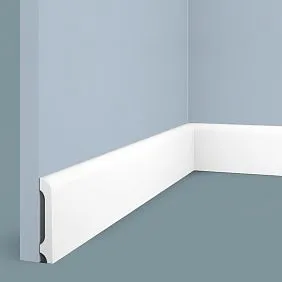
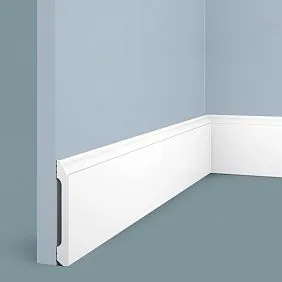
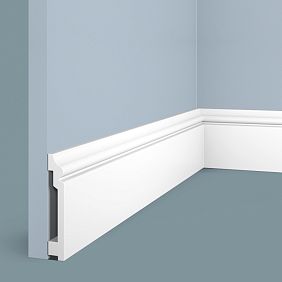
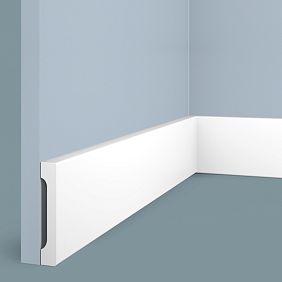
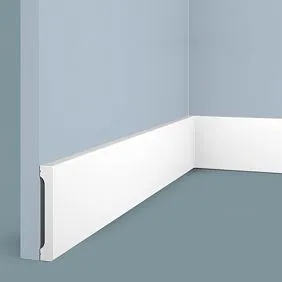
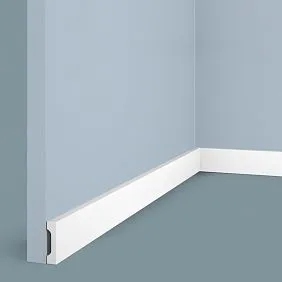
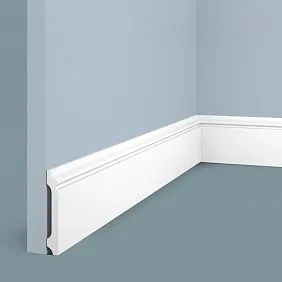

Visual depth and tactility
When your hand touches a wooden skirting board—it feels the density, warmth, and organic vitality of the material. This fundamentally distinguishes it from everything else. The eye also perceives this difference: the texture of solid wood creates a visual depth absent in MDF and especially in plastic.
Get Consultation
Prestige and appropriateness in high-end interiors
Oak parquet, expensive solid wood doors, handmade wooden furniture—all of these "speak" the same language as wooden skirting boards.Wooden skirting boards for floorsin such interiors—is not an option, but a necessity. Any other material next to parquet will be perceived as a downgrade in quality.
Appropriateness even in modern interpretation
What's interesting is that wooden baseboards work well not only in classic settings. In a modern interior with whitewashed parquet, concrete walls, and minimalist furniture—wooden skirting board for painting—in white, it is one of the best solutions. Here, wood is not a 'historical style'; it is a material with the right mechanical properties and the right visual reaction to light.
Long-term economy
Wooden baseboards are more expensive than MDF and more expensive than plastic when purchasing. But they can be sanded, repainted, and restored—this is important when changing the interior or after damage. Properly treated—Floor wooden skirting—it lasts 20–30 years or more without needing replacement. A cheap plastic baseboard is replaced 2–3 times over the same 10 years.
Which wooden floor baseboard to choose: selection parameters
The task is not an easy one—especially if you're looking at the catalog for the first time and see dozens of options. Let's go through all the key parameters sequentially.
By height: from 40 to 150 mm and above
Baseboard height is the first and most important dimensional parameter. It determines the visual proportions of the lower zone of the room and the correspondence to the scale of the space.
Reference point—ceiling height:
| Ceiling Height | Recommended skirting board height |
|---|---|
| Up to 2.5 m | 40–60 mm |
| 2.5–2.7 m | 60–80 mm |
| 2.7–3.0 m | 80–100 mm |
| Above 3.0 m | 100–150 mm and above |
Rule 1/30 – another reliable guideline: the height of the baseboard should be about 1/30 of the ceiling height. For 2.7 m ceilings, this gives ~90 mm; for 3 m – about 100 mm. This is a classic architectural proportion that worked back in the Baroque era and still works today.
High wooden floor baseboard– from 100 mm – in spacious living rooms, corridors, and halls with ceilings 3 m and higher creates a sense of architectural solidity. The lower zone of the wall 'weighs' correctly, the proportions work.
By width (thickness of the strip)
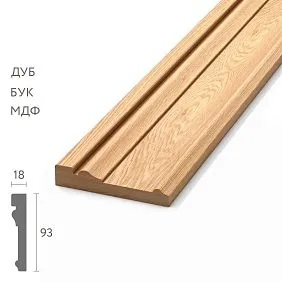
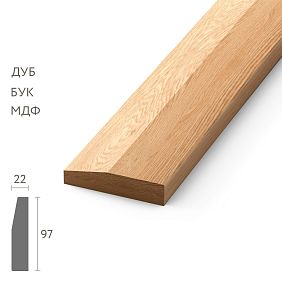
The width of a wooden baseboard is its profile projection from the wall. Standard values: 14–22 mm. A wider baseboard offers more possibilities for a relief profile and better conceals gaps near walls with irregularities. A narrow one is visually more delicate and works in modern interiors with smooth walls.
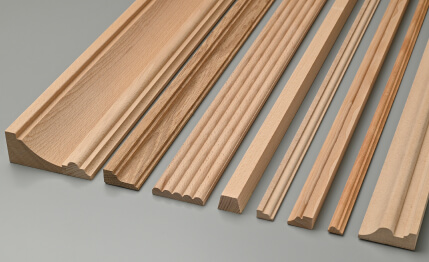
By profile
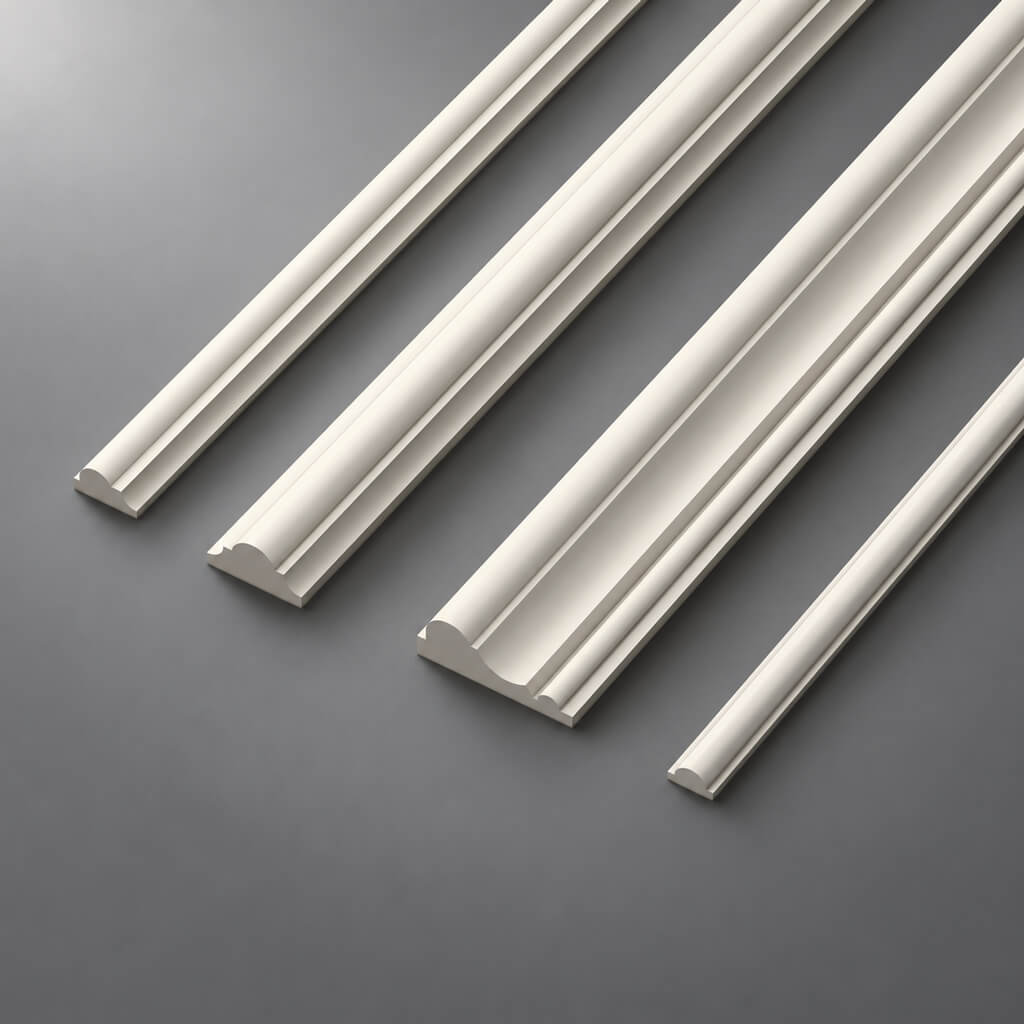
Profile – this is the cross-section of the baseboard, its 'face'. It is the profile that determines whether the baseboard will be classic or modern, laconic or decorative.
-
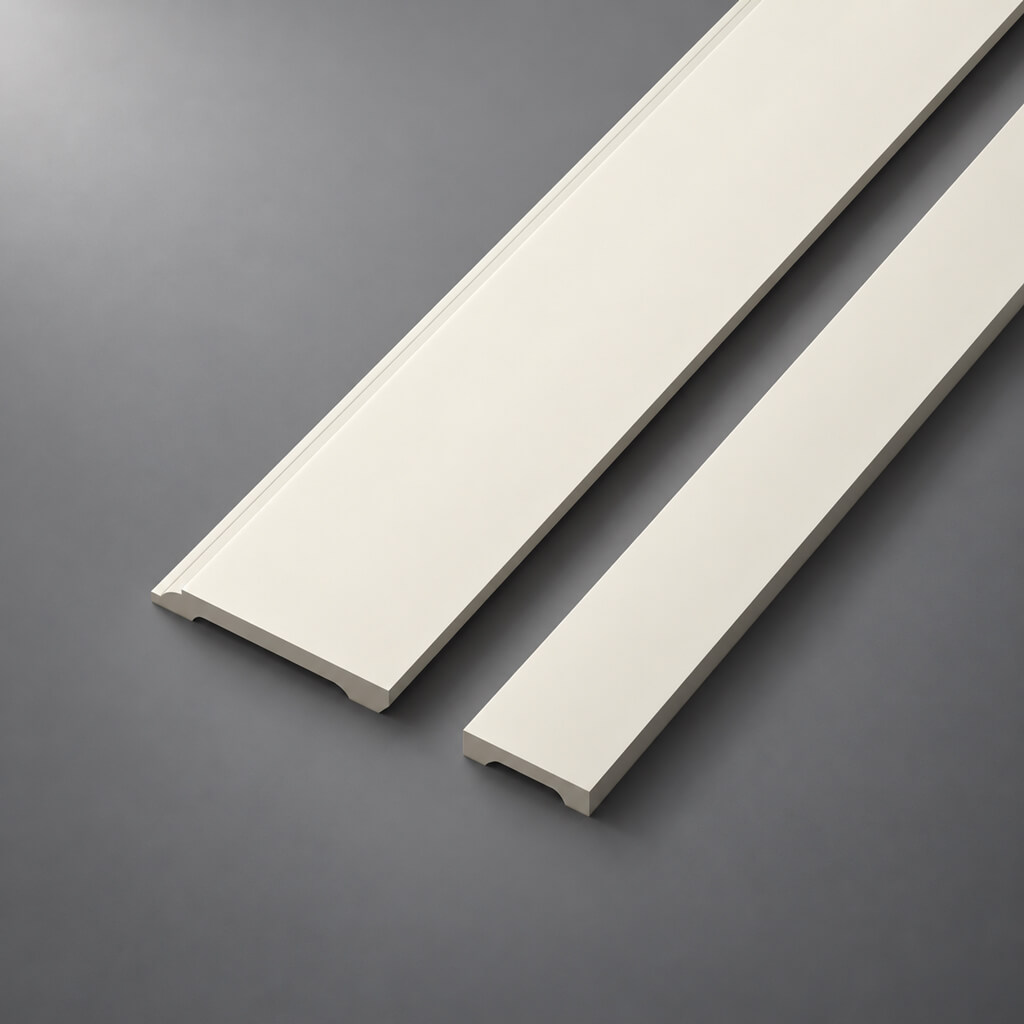
Straight (Euro baseboard) – rectangular section with rounded or faceted edges. Laconic, modern, universal. Works well with laminate, quartz vinyl, and parquet in a modern interpretation.
-
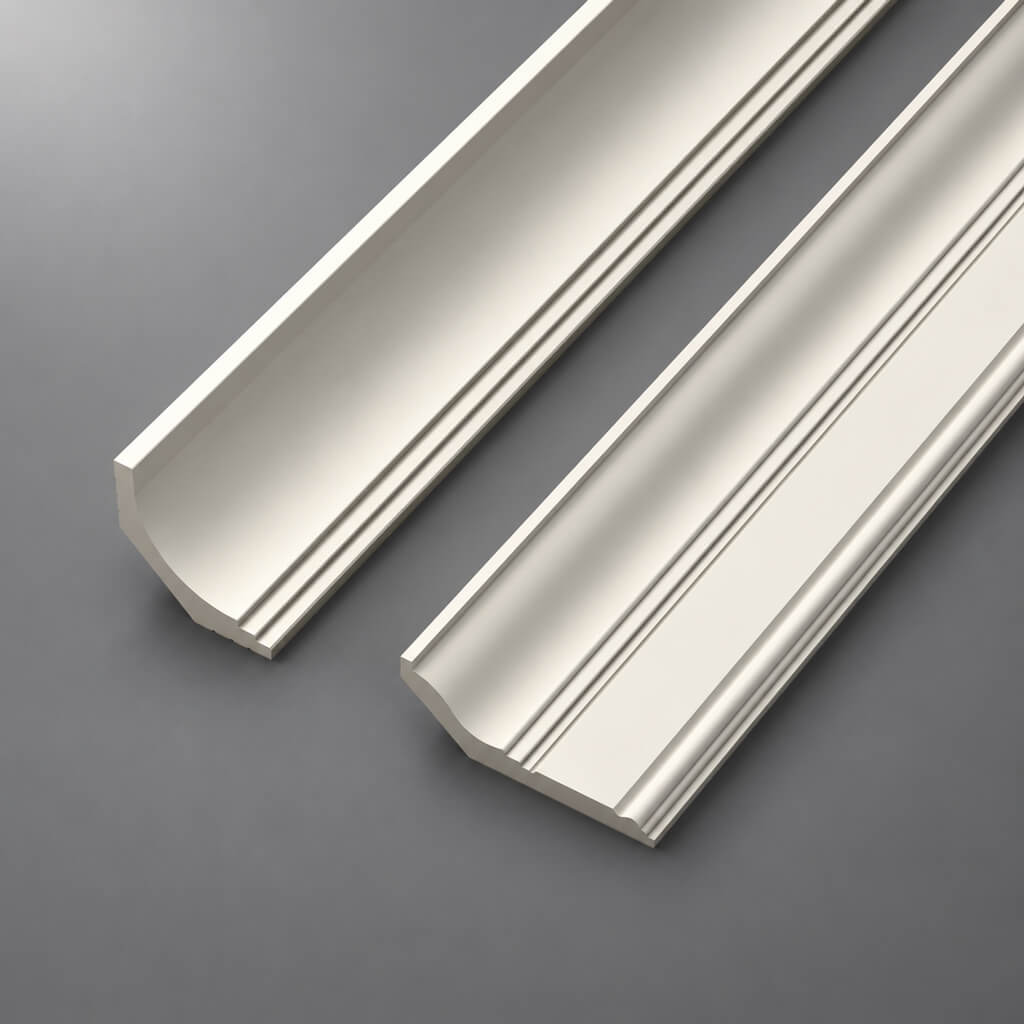
Figurative classic – with a curved front edge, rounded top, stepped profile. Suitable for classic interiors, alongside profiled architraves and moldings.
-
'Boot' – a profile with a sharp transition from a wide base to a narrow top. One of the most popular in mid-price range interiors, it effectively masks wall irregularities.
-
Wide with relief – for classic and neoclassical design.wide wooden baseboardwith rich molding becomes an independent decorative accent.
By color and finish
Three main options:
-
Tinted to resemble wood species — stain, oil, or varnish with a color tint emphasize the wood grain. Works in interiors where wood is the leading material.
-
Painted white — white wooden floor skirting board— the most popular solution for modern and neutral interiors. White enamel hides the texture, leaving only the profile shape.
-
Unfinished, ready for painting — unfinished wooden skirting boardallows you to independently choose the color and type of finish. This is a solution for those building an interior according to an exact color system.
Wooden floor skirting board or MDF: which is better
Honest answer: depends on the task. But let's break it down objectively — without marketing clichés.
Comparison table
| Parameter | Wooden skirting board (solid wood) | MDF skirting board |
|---|---|---|
| Texture | Live, natural | Uniform, for painting |
| Tactile | Warm, dense | Neutral |
| Strength | High | Medium |
| Moisture resistance | During processing — high | Standard — weak |
| Restoration | Sanding + repainting | Limitedly possible |
| Service life | 20–30+ years | 5–15 years |
| Entry price | Higher | Below |
| A sense of class | Premium | Good |
| Best style | Classic, eco, natural | Minimalism, Scandinavian |
Conclusion:Wooden baseboard— is a long-term investment.MDF Skirting Board— is a good solution for a limited budget and modern interior. Where the interior is built around natural materials, wood is the only option.
Wooden skirting board or plastic
Plastic is the cheapest and least durable option. After 5–7 years, it loses color, becomes brittle, and joints separate. In a room with a wooden floor, a plastic skirting board is a contrast that never looks intentional. It simply looks like a mistake. If you have to choose between wood and plastic, the answer is clear.
How to choose a wooden skirting board for different floor coverings
The type of floor is not a secondary detail when choosing a skirting board. It is the starting point.
Wooden skirting board for parquet
Parquet is the most 'demanding' floor when it comes to skirting boards. The main rule here: the wood species of the skirting board must match the species of the parquet. Oak parquet —Oak wooden baseboardBeech —wooden beech skirting boardThis is not a whim — it's the logic of organicity: only when the wood species matches will the texture of the skirting board and floor 'speak' the same language.
The shade of the skirting board doesn't have to match the floor literally: it can be 1–2 tones darker or lighter — this is acceptable and even desirable for visual depth. But the wood species and texture should be of the same character. More about choosingwooden skirting board for an apartment— in a separate STAVROS article.
Wooden skirting board for engineered board
Engineered board — a combination of natural veneer with a multi-layer base. In terms of visual result, it's close to parquet, and the principle of choosing a skirting board is the same: matching the top veneer layer in wood species and tone.Wooden skirting board for engineered board flooringmade of solid wood — the correct and systematic solution.
Wooden skirting board for solid wood board
Solid wood flooring is the most prestigious natural wood floor. HereSolid wood skirting board for floors— it's not a matter of taste, but a matter of consistency. Solid wood to solid wood. Combining it with MDF or plastic means deliberately lowering the level of the entire finish.
Wooden skirting board for laminate flooring
Laminate offers more freedom.Wooden skirting board for laminate flooring— the optimal option if you want to enhance the perceived quality of the interior. An important technical nuance: the skirting board is attached exclusively to the wall, not to the laminate — the flooring must be able to freely expand and contract with temperature and humidity fluctuations.
White wooden skirting board for laminate flooring with a neutral shade — a winning combination in most modern apartments.
Wooden skirting board for quartz vinyl
Quartz vinyl is a practical flooring in a neutral or warm color palette.Wooden skirting board for quartz vinyl flooringIt is selected using the same logic as for laminate flooring: to match the floor covering or in white. A wooden skirting board here adds 'life'—quartz vinyl, for all its practicality, is neutral, and the natural wood of the skirting creates the necessary warm accent.
Wooden skirting board for tile flooring
It might seem like an unconventional combination. But a wooden skirting board for tile flooring works excellently in rooms where a tiled floor is combined with natural wall materials. White enamel or light varnish is the optimal finish for such a scenario. The skirting should have a moisture-resistant coating, since an entrance hall or kitchen with tiles are areas with periodic moisture.
How to choose a wooden skirting board by color and style
The color of the skirting board is one of the most underrated parameters. It is chosen 'by eye'—and this is where mistakes are most often made.
White wooden floor skirting board
white wooden floor skirting board—is not a compromise, it is a full-fledged design solution. A white skirting board:
-
works with practically any wall color;
-
creates a clear horizontal boundary that visually 'raises' the ceiling;
-
coordinates with white door trims—the most common configuration in modern apartments;
-
In Scandinavian, minimalist, and modern interiors, it looks precise and appropriate.
The only limitation: a white baseboard on a very dark floor creates a contrast that acts as a dividing line—the room is visually 'cut' horizontally. If you don't want that, choose a baseboard that matches the floor color.
To match the floor
A classic and safe strategy.wooden floor baseboardMatching the floor color 'hides' the lower boundary of the room—the space appears wider, and the floor and lower wall area are perceived as a single horizontal layer. This works especially well in small rooms and where you want to maximize the sense of openness.
Matching the door color
Consistency with the door casing is a fundamentally important point. The baseboard and casing should be from the same 'language': the same wood species, the same finish shade, and a coordinated profile. If the doors are dark walnut—Wooden baseboard—it is tinted to the same shade. White doors—white baseboard with enamel.
Contrasting baseboard
Intentional contrast—dark wood on a light field or white on dark—is a design technique that requires confidence. It can be very expressive, but only if implemented consistently: the contrast must be supported in other interior elements; otherwise, it looks like a mistake, not a solution.
For a classic interior
Wooden floor baseboard for a classic interior—a high-profile with figured relief, made of solid oak or walnut, stained in a natural tone or finished to resemble dark walnut. The richer the profile, the more classic the feel. A height of 100 mm or more with ceilings of 2.8 m and above is a mandatory condition.
For a modern interior
Here, conciseness wins.Wooden floor skirting for a modern interior— straight profile (Euro skirting), white enamel or natural tone without relief. Height — from 60 to 90 mm depending on the ceilings. No complex profiles: modern interiors speak the language of geometry, not ornament.
Tall, wide, or narrow: which format is best for the floor
Tall wooden skirting for spacious rooms
High wooden floor baseboard— from 100 mm — this is an architectural element. In a spacious living room with a ceiling of 3 m or higher, it sets the scale of the lower wall zone, creating a sense of weight and dignity. A 40 mm skirting in the same room looks lost — the lower zone is 'empty,' the interior is unfinished.
Rule: in a room with a 3 m ceiling, the minimum comfortable skirting height is 100–120 mm. For representative spaces — 150 mm and above.
Wide profile as a decorative accent
Wide wooden skirting board for the floorwith a rich figured profile — this is already a full-fledged decorative element. It 'converses' with the wall moldings and the cornice at the ceiling, creating an architectural trim for the entire room. In classic and neoclassical living rooms, dining rooms, and studies — this is a precise and strong solution.
Narrow format for calm geometry
Narrow wooden floor skirting board— 40–50 mm — works in rooms with low ceilings and in interiors where the goal is to create as little visual 'noise' as possible. A child's room, a compact bedroom, a minimalist home office — here, a narrow skirting board delicately finishes the perimeter without claiming expressiveness.
How to avoid mistakes with proportions
The main mistake is choosing a skirting board 'by sight' in the store without considering the actual scale of the room. What looks 'normal' on a sample will become invisible in a tall living room. Always calculate based on ceiling height: use the 1/30 rule and apply it to the actual dimensions.
Where wooden floor skirting board looks best
Living Room
The main space of the apartment. Herewooden floor skirting board in the living roomshould be tall, with an expressive profile. If the living room is classic: solid wood with relief, a dark tone to match the parquet or doors. If the living room is modern: a straight white profile, from 80 mm. In the living room, the skirting board is constantly visible and actively participates in shaping the overall impression of the room.
Bedroom
In the bedroomwooden floor skirting board in the bedroomshould be delicate. Medium height, neutral or warm shade. If the bedroom interior usesRack panelbehind the headboard — the skirting board is selected to match the same color system. This creates a unified vertical rhythm from the floor to the middle of the wall.
Office
Wooden floor skirting board for the study— a space of concentration and authority. Here, dark wood with deep lacquer is the perfect choice. The skirting board in the study coordinates with the bookshelves, wooden desk, and the overall 'serious' atmosphere of the space. Height from 80 to 100 mm.
Entryway
Hallway — a high-traffic zone.Wooden floor skirting board for the hallwaymust have a durable, moisture-resistant coating: lacquer or enamel. Installation — with maximum adhesion to the floor. Height from 60 to 80 mm — sufficient for reliable protection of the lower wall zone.
Apartment
For the apartment as a whole, the best strategy is a unifiedwooden floor skirting board for the apartmentaround the entire perimeter with one profile, one material, and one shade. This creates a sense of spatial cohesion — all rooms are perceived as parts of a single whole. Changing the profile or color in different rooms is only permissible with a deliberate stylistic difference between the spaces.
Country house
In a house, wooden baseboards are one of the most organic materials. Especially in interiors where natural finishing materials are used: logs, timber, natural stone. Herenatural wood floor baseboard— part of the overall concept, not just a technical element. In a country house, larger profiles, dark tones, and untreated textures are also acceptable.
What to pair wooden floor baseboards with in interior design
This is perhaps the most important section for those thinking not about a single element, but about a finishing system.
Baseboard and Molding
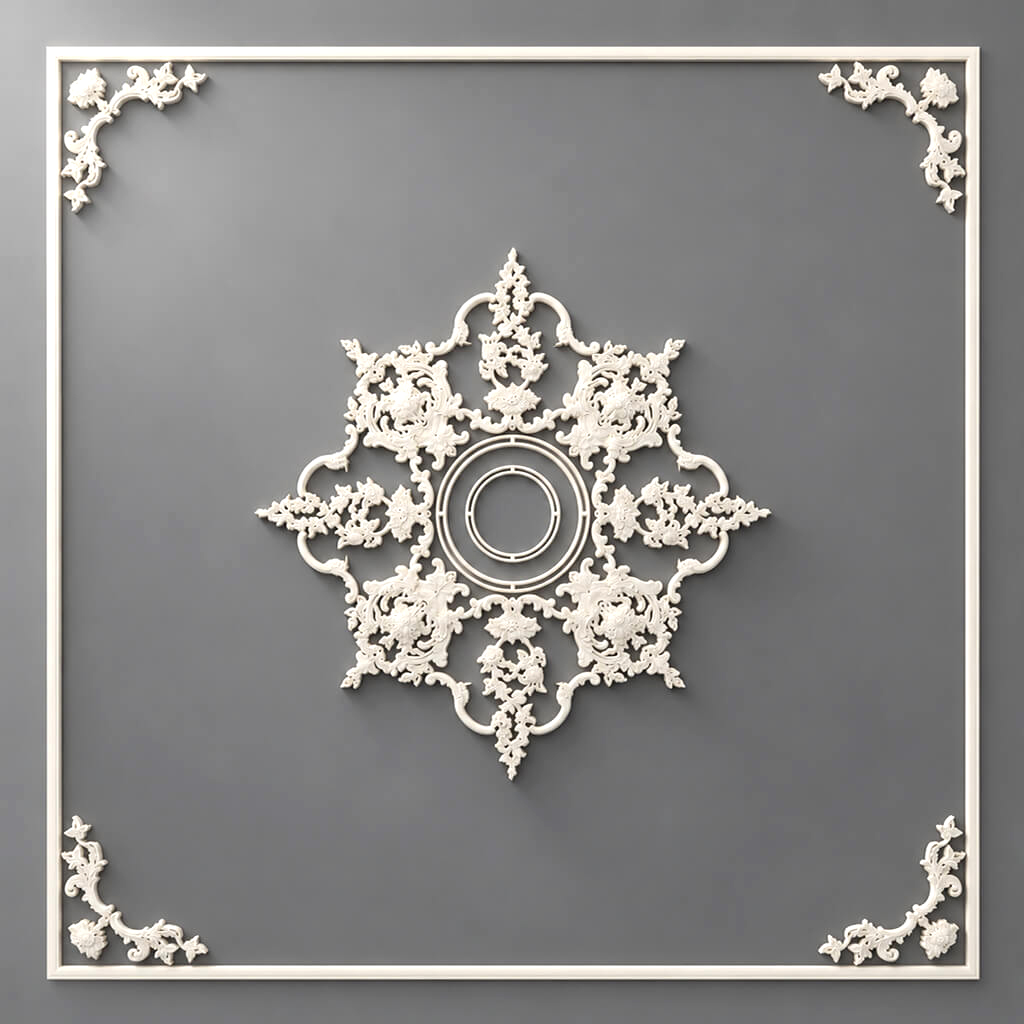
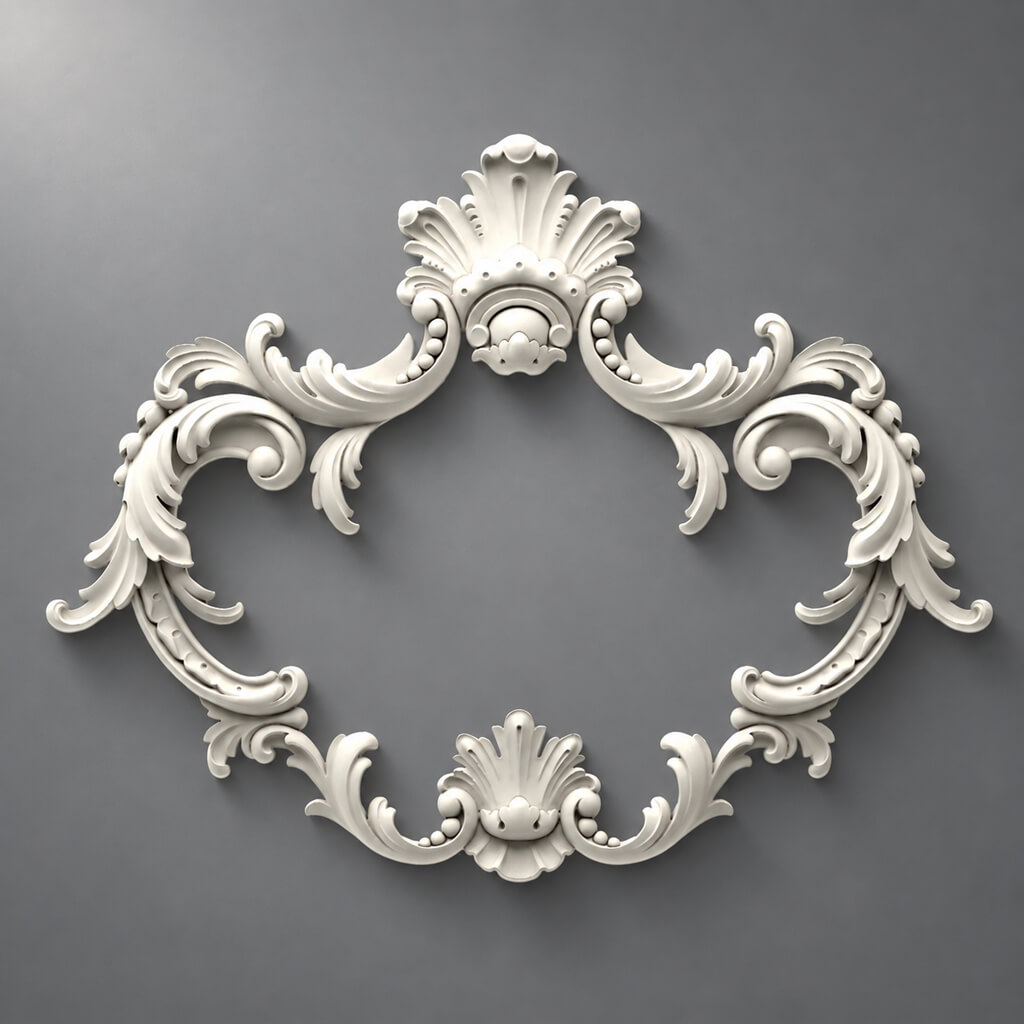
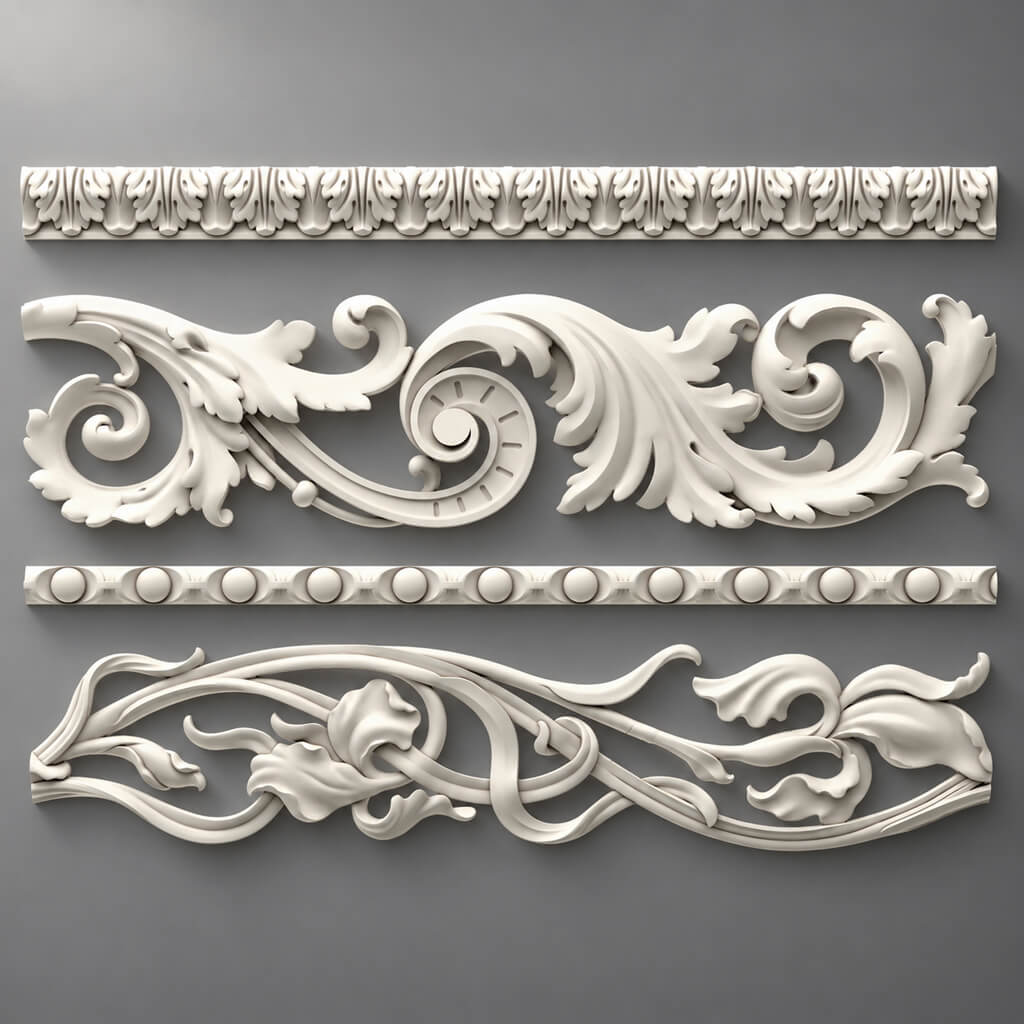
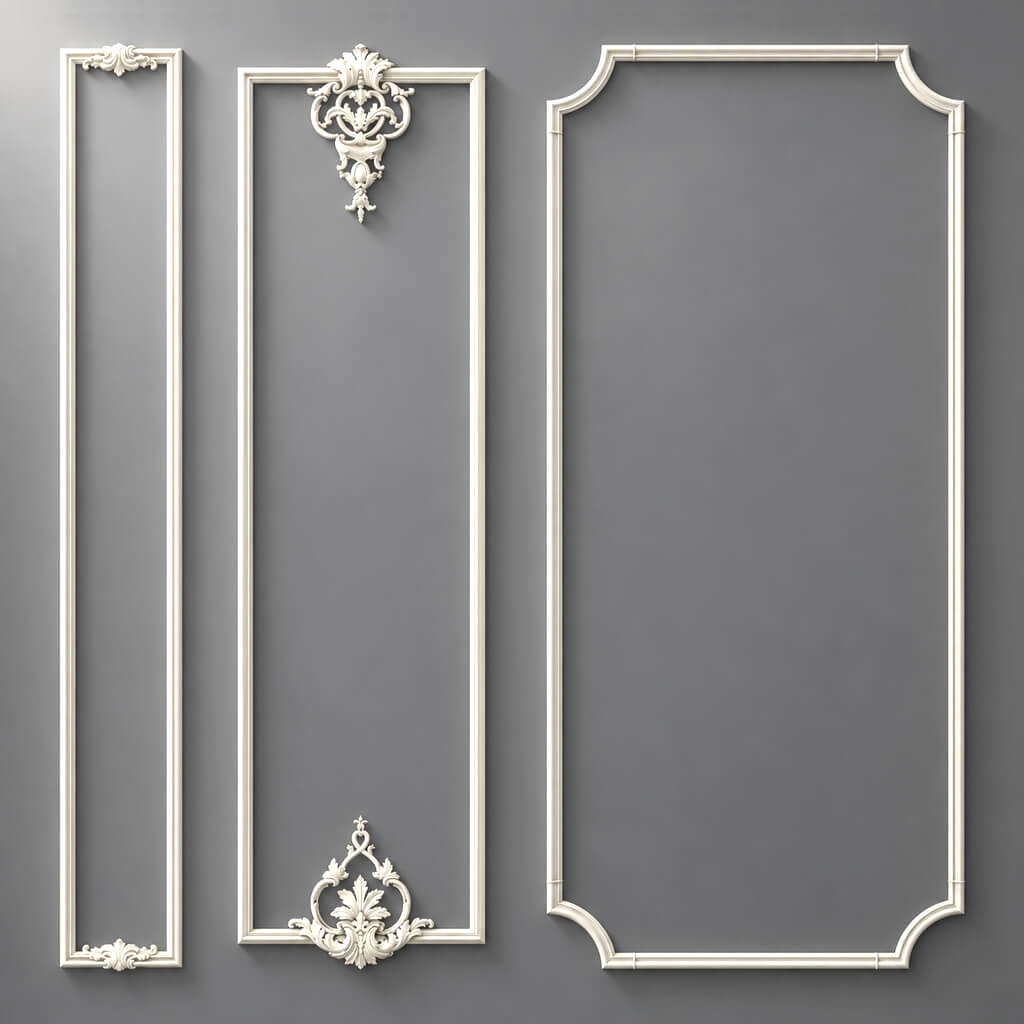
Moldings for walls— these are horizontal and frame decorative profiles mounted on walls. In classic interiors, moldings create 'paneled' wall decoration — panels within frames. In this system, the baseboard serves as the lower horizontal element of the entire architectural trim.
When baseboards andMoldings for walls to buyare from the same manufacturer in the same line — their profiles, material, and shade are coordinated. This eliminates accidental mismatches and delivers a stylistically cohesive result.
Skirting and door casings
We've already mentioned this — but it's worth repeating: door casings and baseboards should speak the same 'language'. This doesn't mean 'identical', it means 'coordinated'. The profile of the casing and the profile of the baseboard should belong to the same stylistic family: both minimalist or both with relief. Both from the same wood species or both in white enamel.
Baseboard and wall paneling
with a classic profile creates a sense of solidity, reliability.looks especially expressive in interiors whereRafter panelsare used on the walls: this combination helps create a cohesive architectural rhythm for the room — the vertical lines of the paneling above the horizontal baseboard form a structured, sophisticated look for the space.
If the goal is not just to cover the joint between the floor and wall, but to design the interior comprehensively, it's worth considering in advance not onlybuy wooden skirting board, but alsobuy slatted panelsin a similar style — then the floor, the lower wall zone, and the wall surface itself form a unified system.
In the living room, bedroom, and hallwayRack panelcomplements the wood of the baseboard and makes the entire finish look more expensive — without extra effort. This works in both classic and contemporary scenarios — it all depends on the wood species, shade, and width of the panels.
Solid wood baseboard and wall solutions
Wide assortmentof solid wood— baseboards, cornices, balusters, moldings, panels — allows you to build a cohesive system of natural wood throughout the entire interior. This isn't just beautiful — it speaks to the level of finish. When all elements are made from the same material, the same system, with coordinated profiles — the interior is perceived as designed, not assembled from random sources.
Baseboard for panels
Special attention deservesskirting board for slatted panels— a special profile designed specifically for finishing wall panel systems from below. If the interior useswooden lath panelsorslatted wall panels— this profile ensures a clean, technically correct transition from the panel to the floor.
Where to buy wooden floor skirting board: supplier selection criteria
The correct answer to this question is not a store address, but a set of criteria that determine the quality of the purchase.
Geometry and dimensional stability
A good wooden skirting board is straight, without warping, with a consistent profile along the entire length of the strip. Unstable geometry leads to gaps in corners, difficult installation, and visible gaps at walls. Check the strips before purchase: place them on a flat surface — they should lie without any 'play'.
Coating quality
Varnish or enamel should be applied evenly, without bubbles, drips, or bare spots. This determines not only the appearance but also the service life: a poorly coated wooden skirting board will begin to darken and deform after 1–2 years.
Assortment and systematicity
The ideal supplier is one who has not only wooden baseboards for floor, but also moldings, cornices, slatted panels, architraves — all from one line, with coordinated profiles and shades. This allows to buy wooden baseboard to fit into the system with the rest of the finishing elements, rather than assembling a puzzle from incompatible parts.
Why buying from the manufacturer is better
With the manufacturer — stable availability, the ability to select rare profiles, technical consultations on installation and combinations. Intermediaries often cannot guarantee batch and profile consistency. Wooden skirting board from the manufacturer — is a direct guarantee of quality without the 'broken telephone' effect.
This is precisely where it's important buy wooden floor skirting where you can simultaneously select for it decorative slatted panelsandslatted panels for walls — and achieve a cohesive interior result.
Mistakes when choosing wooden floor skirting boards
Even experienced builders make these mistakes. Knowing them in advance helps you avoid them.
Mistake 1: Choosing based only on color
"Picked a similar shade" is the most common mistake. Two close but mismatched shades in one space look like a mismatch, not a solution. Either an exact match in tone or a deliberate contrast—the in-between option doesn't work.
Mistake 2: Ignoring height
A 50 mm skirting board in a room with 3 m ceilings is a skirting board that 'isn't there.' The lower wall zone remains visually empty. Skirting board height is always calculated based on ceiling height, not chosen 'at random.'
Mistake 3: Conflict with doors
Light doors and dark skirting without systematic justification is randomness, not design. Always view the skirting next to a sample of the door casing. If there's no harmony—either change the skirting or the casing.
Mistake 4: Too complex a profile in minimalism
Baroque relief in a Scandinavian apartment is not an 'interesting accent.' It's a stylistic conflict. The skirting profile should belong to the same aesthetic vocabulary as everything else.
Error 5: Mismatch with room style
A modern minimalist skirting board in a classic interior with moldings is an insufficient 'foundation' for the space. An ornate profile in a minimalist apartment is visual noise. The skirting board should support the style, not contradict it.
Error 6: Lack of connection with other finishing elements
A skirting board chosen separately from wall moldings, architraves, and panels is a detail without context. Such an interior feels 'assembled' rather than designed. Always select the skirting board as part of a system with the other finishing elements.
Error 7: Purchase without checking geometry
A crooked skirting board with an unstable profile inevitably leads to gaps in corners and difficult installation. Check the planks physically before purchase or demand a quality certificate from the manufacturer.
Conclusion: how to make the final decision
Let's summarize everything into specific conclusions. Three main questions, the answers to which determine the choice:
What is the interior style? Classic, neoclassical, eco, natural style — definitely Wooden baseboardfrom an array with a profile matching the style. Minimalism, Scandinavian, contemporary — a white or neutral wooden skirting board with a straight profile.
What type of floor? Parquet, solid wood board, engineered board —wooden skirting board for the floorof the corresponding wood species. Laminate, quartz vinyl — wooden skirting board in a matching tone or white.
Is a system needed? If the interior plans to include moldings, slatted panels, and other solid wood elements —buy wooden baseboard for floorit's worth getting in one place with the other products.Buy slatted panelsandand paint it to the desired shade — standard practice in modern design. It is important to use special wood finishes that allow the material to breathe.together — it's a systemic solution that guarantees an interior result.
About the company STAVROS
STAVROS — a Russian manufacturer of products from natural solid wood with a wide range for residential and commercial interiors. Wooden skirting boards, moldings, cornices, slatted panels, balusters, and decorative profiles — all are made from natural wood with strict quality control at every stage.
The working principle of STAVROS — systematicity. All elements in the catalog are coordinated with each other in profile, material, and shade. This means you can purchasewith a classic profile creates a sense of solidity, reliability., moldings, slatted panels, and cornices in one place — and get a unified, professional interior solution.
STAVROS works with both private clients and market professionals: designers, architects, construction companies. A stable warehouse assortment, the possibility of consultation on profile and material selection, experience in implementing large-scale interior projects — all this makes the company a reliable partner in any endeavor where the quality of natural wood is important.
Frequently asked questions about wooden floor skirting boards
Why is a wooden skirting board better than MDF?
Solid wood skirting boards are more durable, stronger, more pleasant to the touch, and repairable — they can be sanded and repainted. MDF is cheaper and holds its geometry better with humidity fluctuations, but is not as easily restored and lacks the living texture of natural wood. In interiors with parquet and natural materials, wood is irreplaceable.
Wooden skirting board or plastic — which to choose?
For any interior where appearance and durability are important — wooden. Plastic skirting boards lose their shape and color after a few years and do not match any natural floor covering. It is a temporary solution, not a long-term investment.
What height of wooden floor skirting board to choose?
Calculate from the ceiling height: the 1/30 rule. For ceilings 2.7 m — about 90 mm. Up to 2.5 m — 50–60 mm. Above 3 m — from 100 mm. A high skirting board in a large room is not a luxury, but a mandatory proportional norm.
Can a wooden skirting board be used with parquet?
Not just can — should. For parquet, a skirting board made from the same wood species is chosen: oak for oak, beech for beech. This ensures textural and tonal unity between the floor and the skirting board.
How to choose the color of a wooden skirting board?
Three strategies: matching the floor (hides the lower boundary), matching the walls (visually raises the ceiling), in white (universal for modern interiors). Intentional contrast — only with consistent implementation throughout the entire space.
What is a wooden skirting board for painting?
This is a skirting board without a finish coating, with a smooth surface, ready for the application of any paint or enamel. Used when an exact color is needed to match a specific interior color system.
Where to buy a wooden floor skirting board from the manufacturer?
From a manufacturer with its own range and systematic catalog — where skirting boards are coordinated with moldings, panels, and cornices. STAVROS produces a full range of solid wood products, including wooden floor skirting boards in various profiles, wood species, and coating options.
Is it necessary to match the skirting board with slatted panels?
Not necessarily — but the effect with proper matching is significant. Slatted panels on the wall plus a wooden skirting board at the floor in the same wood species and shade create a vertical rhythmic system that makes the interior visually more expensive and structured.