












































































Article Contents:
- Why Wooden Window Decorations Are Needed: Function and Aesthetics
- Aesthetic Function: Creating the Image of the House
- Architectural Function: Proportion Correction
- Technical Function: Joint Protection
- Cultural Function: Connection with Traditions
- Carved Trims: The Heart of House Carving
- Trim Construction: What the Framing Consists Of
- Types of Carving on Trims: Techniques and Styles
- Ornaments and Motifs: Symbolism of Patterns
- Materials for Wooden Window Decorations: Wood Selection
- Spruce: Accessibility and Practicality
- Larch: Moisture Resistance
- Oak: Nobility and Eternity
- Other Species: Ash, Beech, Cedar
- Additional Window Decor Elements: Creating a Comprehensive Composition
- Corbels: Functional Beauty
- Rosettes and Central Overlays: Accent Elements
- Shutters: Tradition and Functionality
- Pediments and Awnings: Protection and Decoration
- Window Design Styles: From Tradition to Modernity
- Russian Traditional: Returning to Roots
- Classical European: Restrained Elegance
- Alpine (Chalet): Harmony with Nature
- Modern Minimalism: Concise Forms
- Scandinavian: Simplicity and Functionality
- Process of Making Wooden Window Decorations: From Sketch to Installation
- Design: Creating a Concept
- Material Preparation: Drying and Selection
- Carving: The Birth of Ornament
- Sanding and Treatment: Preparing for Finish
- Finishing: Color and Protection
- Installation: Mounting on the Facade
- Care for Wooden Window Decorations: Preserving Beauty
- Regular Inspection: Identifying Problems
- Cleaning: Removing Contaminants
- Coverage Update: Protection Extension
- Damage Repair: Defect Elimination
- Frequently asked questions: answering doubts
- How Long Do Wooden Trims Last?
- Do Wooden Trims Need to Be Painted?
- Can wooden window trims be installed on plastic windows?
- What thickness of window trims is optimal?
- How to choose the width of window trims?
- Are shutters needed or are trims sufficient?
- Can window trims be made by yourself?
- How to protect window trims from sun fading?
- What to do if window trims have started to rot?
- How much do wooden window trims cost?
- Conclusion: create a unique look for your home with STAVROS
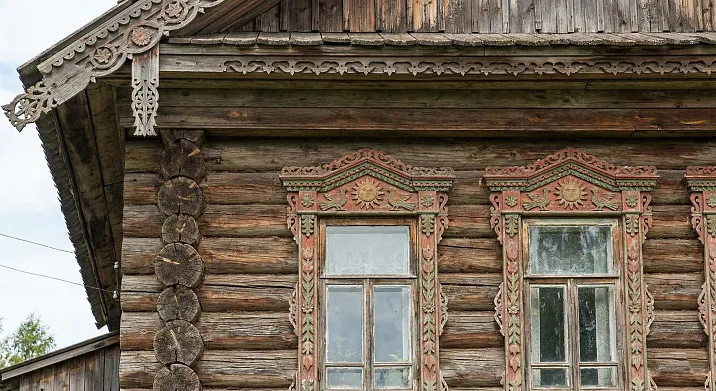
Windows are not just a technical element that lets light into a room. They are the eyes of the house, its face, the first thing that catches the eye of passersby and guests. Remember old Russian estates, merchant mansions, wooden huts — what made them so memorable, so alive? Carved window trims, intricate patterns, wooden lace around the windows turned a simple structure into a work of art.decorations for windows in a wooden house— is the language in which the house tells about itself, its owners, traditions, and tastes.
Today, when standard solutions have flooded the architectural landscape, when cottage villages resemble collections of identical boxes, the desire to stand out, to create a unique dwelling, is becoming increasingly relevant. And it is precisely wooden window decorations that allow this to be done without breaking the budget, without rebuilding the house, but simply by adding those details that change everything.


Why wooden window decorations are needed: function and aesthetics
One might ask: why decorate windows at all? Isn't it an excess, a waste of money on unnecessary elements? Let's figure it out.




Aesthetic function: creating the image of the house
The first and most obvious is beauty. Wooden window trims, carved elements, decorative overlays transform the facade, making it expressive, individual, memorable. The house ceases to be just a building and becomes a home with character, soul, and history.
A bare window in a wall looks orphaned, like a pulled tooth. A window framed by a carved trim becomes a compositional center, an accent around which the entire facade is built. It attracts the eye, creates rhythm, sets the style for the entire building.
Our factory also produces:


Architectural function: correcting proportions
Wooden window decorations allow you to visually change the proportions of the facade. Too small windows can be visually enlarged by framing them with wide trims. Too large ones can be reduced by using narrower elements and creating horizontal or vertical divisions.
If the windows are placed asymmetrically, which often happens in individual projects, decorative framing helps hide this flaw, creating an illusion of order and harmony. Properly selected elements can stretch the facade upward or, conversely, make it more squat, depending on the desired effect.
Get Consultation
Technical function: protecting joints
But wooden window decorations are not just about beauty. They perform an important technical function: they protect the joints between the window frame and the wall from moisture, wind, and dust. The trim covers gaps through which cold air can penetrate in winter and hot air in summer, increasing the energy efficiency of the house.
The wood around the window is exposed to precipitation and temperature fluctuations. A properly installed trim with a drip edge diverts water, preventing rot, deformation, and material destruction. This significantly extends the service life of both the window itself and the house walls.
Cultural Function: Connection with Traditions
In Russian wooden architecture, window decoration had deep meaning. Carved patterns were not just decoration — they served a protective function, protecting the house from evil forces, attracting luck and prosperity. Solar symbols, plant motifs, images of birds and animals — all had their own symbolism.
By bringing wooden window decorations back into modern architecture, we are not just copying old models — we are reviving a cultural tradition, creating a connection between generations, demonstrating respect for the heritage of our ancestors. This is especially important for those who value Russian culture and want to raise children with an understanding and love for native traditions.
Carved window trims: the heart of house carving
A window trim is the main element of decorative window framing. The word itself speaks to its purpose: it is located 'on the face' of the house, on its facade.Carved MouldingsWindow trims vary in design, style, and complexity of execution.
Window trim construction: what the framing consists of
A classic window trim consists of several elements, each with its own name and function.
The pediment (ochel'ye) is the upper part of the window surround, often shaped like a triangular or semi-circular gable. It is the most noticeable and decorative part, which can be adorned with intricate carving, applied elements, or openwork patterns. The pediment creates the image and sets the style for the entire window surround.
Side planks are the vertical elements framing the window on the left and right. They can be simple and smooth or decorated with carved ornamentation. The side planks create a vertical rhythm, elongating the window upward.
The windowsill board (lower part) is the bottom section of the window surround, often protruding forward and featuring a slope for water drainage. The windowsill board protects the wall beneath the window from moisture and serves as the foundation of the composition.
Shutters are an additional element that can be functional (to close the window) or purely decorative. Carved shutters with openwork patterns create an additional layer of decoration, enhancing the expressiveness of the facade.
All these elements must harmonize with each other, creating a unified composition. Proportions, the scale of the ornament, color—all of this is carefully considered during the design stage.
Types of Carving on Window Surrounds: Techniques and Styles
Carving on wooden window surrounds can be executed using various methods, each creating its own visual effect.
Pierced (openwork) carving is a technique where the pattern is cut all the way through, creating an effect of wooden lace. There is no background; the ornament works with backlighting. Such carving is especially effective when set against a contrasting background—a dark wall or the sky. Sunlight passes through the openings, creating a play of light and shadow.
Pierced carving is performed with an electric jigsaw or laser cutting. This allows for the creation of very complex, openwork patterns with thin bridges and fine details. However, such carving is less durable than relief carving and requires careful handling and regular maintenance.
Relief (blind) carving is a technique where the pattern is carved into the surface of the board without cutting all the way through. The background remains intact, and the ornament either protrudes above it or, conversely, is recessed. This type of carving is more durable, long-lasting, and holds up well under variable weather conditions.
Relief carving can be low-relief (bas-relief), where the ornament protrudes slightly, or high-relief (alto-relievo), where elements protrude significantly, creating an almost three-dimensional sculpture. High-relief carving is particularly expressive, creates strong shadows, and adds monumentality to the facade.
Contour carving is the simplest technique, where lines are incised into the surface to create the outlines of a drawing. This type of carving is quick to execute but less expressive. It is suitable for creating concise, geometric patterns in a modern style.
Combined carving is a combination of several techniques in one piece. For example, the base may be executed in pierced carving, with elements of relief carving applied on top. This creates layering, depth, and richness in the composition.
Ornaments and Motifs: Symbolism of Patterns
Carved patterns on window surrounds are not a random collection of lines and swirls. Each element had its own meaning, its own symbolism in traditional culture.
Solar symbols—circles, rosettes, diamonds with rays—symbolized the sun, light, warmth, and life. It was believed that such signs protected the home from dark forces and attracted well-being.
Floral motifs—flowers, leaves, grapevines, hops—are symbols of fertility, abundance, and prosperity. Acanthus leaves, roses, poppies, and sunflowers are especially common.
Zoomorphic elements—birds, horses, lions, dragons. Birds symbolize freedom and the connection between heaven and earth. The horse is a solar symbol, representing strength and speed. The lion represents power, might, and protection.
Geometric patterns—triangles, diamonds, meanders, braids. These are universal ornaments found in the cultures of all peoples. They create rhythm, structure, and order.
Modern craftsmen are not limited to traditional motifs. Original ornaments are created that combine classical elements with new forms, adapting ancient art to contemporary aesthetics.
Materials for Wooden Window Decorations: Choosing Wood
The choice of material determines the durability, appearance, and cost of the decorations. What type of wood should be chosen for window surrounds and decor?
Spruce: Accessibility and Practicality
Pine is the most popular species for making window surrounds. It is affordable, easy to work with, and has a beautiful grain. Pine contains resin, which is a natural antiseptic that protects the wood from rot and insects.
However, ordinary pine has drawbacks: knots and resin pockets, which can release resin over time, especially under sunlight. To eliminate these shortcomings, a laminated panel is used—a material from which high-quality window surrounds are made.
A laminated panel consists of several boards glued together after removing knots and defects. Such material does not warp, crack, or release resin. It is precisely from laminated pine panels that STAVROS window surrounds are made—ensuring their durability and dimensional stability.
Larch: Resistance to Moisture
Larch is a unique species that is not afraid of moisture. Moreover, it becomes even stronger when exposed to water. Larch contains gum—a natural substance that repels water and prevents rot.
This species is ideal for facade elements that are constantly exposed to rain, snow, and temperature fluctuations. Larch has a beautiful golden-brown color and an expressive grain. It is heavier and denser than pine, making it more durable.
The drawback of larch is its higher price and difficulty in processing. The dense wood requires more powerful tools and more time for carving. But the result is worth it—window surrounds made of larch last for decades without losing quality.
Oak: nobility and eternity
Oak is the king among trees. Its dense, hard wood is practically eternal. Oak window surrounds can last for centuries, becoming only more beautiful—oak darkens over time, acquiring a noble hue.
Oak is resistant to moisture, insects, and mechanical damage. Its expressive grain with large pores creates an impressive visual effect. Oak window surrounds represent prestige, solidity, and respectability.
But oak is very expensive and difficult to work with. Carving oak requires high skill and special tools. Not every workshop will undertake such work. Therefore, oak window trims are usually made to order for exclusive projects.
Other species: ash, beech, cedar
Ash is similar to oak in strength but slightly lighter with contrasting grain. Beech is dense, pinkish in hue, and well-suited for fine carving. Cedar is aromatic, containing essential oils that repel insects.
The choice of wood species depends on budget, climatic conditions, house style, and personal preferences. It's important to remember that any wood requires protective treatment—impregnation with antiseptics, coating with varnish, paint, or oil.
Additional window decoration elements: creating a comprehensive composition
Window trims are the foundation but not the only element of window decoration. There are many additional details that enrich the composition.
Corbels: functional beauty
Wooden Brackets— these are carved supporting elements that hold up the windowsill board, the canopy over the window, or a balcony. They serve a real function while also being full-fledged decorative objects.
A corbel can be simple, triangular, or complex, with plant motifs, scrolls, and shaped elements. A carved corbel under a window creates the impression that the window is not just cut into the wall but installed on a beautiful pedestal.
Corbels are made from solid wood—oak, beech, ash. They must be strong to bear the load. At the same time, the carving makes them visually light and elegant, despite their actual solidity.
Rosettes and central overlays: accent elements
Carved rosettes—round or polygonal elements with ornamentation—are placed at the corners of the trim, at the intersection of slats, or in the center of the lintel. They serve as connecting parts, hide joints, but most importantly—create accents and draw the eye.
A central overlay on the lintel can be an independent composition—a flower, a solar symbol, a coat of arms, or the owners' initials. This makes the window unique and personalized.
Rosettes and overlays are executed in the same carving technique as the main trim but are often more expressive and detailed. They become the culmination of the composition, its semantic center.
Shutters: tradition and functionality
Wooden shutters—an element that has almost disappeared from modern architecture but is gradually returning. Shutters serve several functions: they protect windows from sun, cold, prying eyes, and provide additional security.
Carved shutters turn a window into a true work of art. Openwork carving on shutters creates a lace effect, allowing light to pass through even when they are closed. Relief carving makes shutters solid, substantial, speaking to the strength of the house.
Shutters can be functional (opening and closing) or decorative (permanently fixed on the sides of the window). Even decorative shutters significantly change the appearance of the facade, creating a traditional, cozy image.
Pediments and canopies: protection and decoration
A pediment is a small canopy over a window that protects the trim and wall from rain. It can be simple, sloped, or complex, with carved consoles, a gable, and decorative elements.
A carved pediment becomes the crown of the window, its completion. It creates shadow, plays with light, and adds volume to the facade. Pediments are especially important for upper-floor windows, where there is no protection from the roof overhang.
Window decoration styles: from tradition to modernity
The choice of style is a matter of personal taste, house architecture, and surrounding landscape. Wooden window decorations exist in various stylistic directions.
Russian traditional: returning to roots
The Russian style features recognizable carved window trims with fretwork, bright colors, and abundant decoration. A kokoshnik-shaped lintel, solar symbols, plant motifs, shutters with openwork patterns—all this creates the image of an old Russian cottage.
The Russian style suits wooden houses made of timber or logs, especially if the house is built outside the city, surrounded by nature. Such decoration creates a connection with traditions and an atmosphere of coziness and hospitality.
The color palette of the Russian style is bright: white, blue, green, red trims against light or dark walls. Color contrast enhances the expressiveness of the carving and makes the decoration noticeable from afar.
Classical European: restrained elegance
European classicism implies symmetry, proportionality, and noble restraint. Trims have clear geometry, decorated with moldings, cornices, and simple rosettes. Carving is used sparingly, only to create accents.
The lintel may be in the shape of a triangular or semicircular pediment, resting on carved consoles or pilasters. Colors are calm: white, cream, gray, natural wood. This style is universal and suitable for houses of any architecture.
Alpine (Chalet): Harmony with Nature
The chalet style originates from the Alps, where houses were built from massive timber and stone. Window decoration in this style is concise but expressive. Wide carved wooden trims made of dark wood, massive window sills, simple geometric ornaments.
The Alpine style emphasizes the naturalness of the material, its texture and color. Wood is coated with oil or varnish, preserving its natural shade. This style is ideal for houses in the mountains, in the forest, by the lake — wherever harmony with the surrounding nature is important.
Contemporary minimalism: conciseness of forms
The modern approach to window decoration involves minimal decor, clear lines, simple shapes. Trims can be smooth, without carving, or decorated with concise geometric patterns.
Colors are neutral: white, gray, black, natural light wood. Such decoration suits modern houses with large panoramic windows, flat roofs, minimalist architecture.
Minimalism does not mean a lack of beauty — it is the beauty of pure forms, material quality, and precise proportions. Even a simple wooden trim, properly designed and quality-made, becomes a facade decoration.
Scandinavian: Simplicity and Functionality
The Scandinavian style is close to minimalism but warmer and cozier. Trims are simple but made of natural wood, often painted white or in pastel tones. Decor is minimal, with emphasis on material quality and execution.
The Scandinavian style creates an atmosphere of calm, cleanliness, and connection with nature. It is ideal for small country houses, cottages, guest houses.
The process of making wooden window decorations: from sketch to installation
How are these amazing products created? What journey does a piece of wood take before becoming a carved trim on your window?
Design: creating a concept
Everything starts with a project. An architect or designer studies the house facade, window sizes, and the building's overall style. Then sketches of the trims are created — drawings showing the shape, proportions, and ornaments.
The sketch is agreed upon with the client, and adjustments are made. Once the concept is approved, detailed drawings with precise dimensions of all elements are created. These drawings become the basis for production.
In modern practice, computer 3D modeling programs are used. A three-dimensional model of the trim is created, allowing visualization of how it will look on the facade, how light and shadow will play, and how elements will combine with each other.
Material preparation: drying and selection
Wood must be properly dried — to a moisture content of 8-12%. Only at this moisture level is wood stable, not deforming or cracking. Natural drying takes months, kiln drying — several weeks.
From the dried wood, boards without defects and with beautiful texture are selected. If a glued panel is used, boards are sawn, knots and resin pockets are cut out, then the blanks are glued under a press.
The resulting panel is calibrated — leveled in thickness and sanded. Now it is a perfect blank for creating trims.
Carving: the birth of ornament
If the carving is simple and geometric, it can be done on CNC machines. A program based on the 3D model is loaded into the machine, and a milling cutter cuts the pattern with an accuracy of tenths of a millimeter. This ensures perfect repeatability if several identical trims need to be made.
Complex, artistic carving is done manually by a master carver. They transfer the drawing onto the blank, then use chisels, gouges, and knives to carve the ornament. Hand carving is unique — even when repeating the same pattern, the master introduces slight variations each time.
Openwork carving is done with an electric jigsaw or laser. Laser cutting allows creating incredibly thin, delicate patterns that cannot be achieved by hand.
Sanding and processing: preparation for finishing
After carving, the product is thoroughly sanded. Burrs, tool marks, and unevenness are removed. Sanding can be coarse (with coarse-grit sandpaper) and finishing (with fine-grit). The goal is to achieve a perfectly smooth surface, pleasant to the touch.
Special attention is paid to internal corners, cutouts, and complex carving elements. Special attachments, sanding sleeves, and manual finishing are used here.
After sanding, the product is ready for applying a protective coating — impregnation, primer, paint, varnish, or oil.
Finishing: Color and Protection
The choice of finishing coating depends on the desired result and operating conditions. For facade elements exposed to weather, reliable protection is necessary.
Antiseptic impregnation — the first mandatory step. The antiseptic penetrates deep into the wood, protecting it from rot, mold, and insects. There are colorless impregnations and tinting ones that change the wood's color.
Primer — creates a base layer for better paint or varnish adhesion. The primer evens out surface absorbency and prevents stains.
Painting — if a colored trim is required. Weather-resistant paints are used — alkyd, acrylic, oil-based. Paint is applied in several layers with intermediate sanding.
Varnishing — if you want to preserve the natural color and texture of the wood. Varnish creates a transparent protective film, prevents moisture penetration, and protects against ultraviolet rays. There are matte, semi-matte, and glossy varnishes.
Oil or wax — a natural coating that does not create a film but penetrates the wood. Oil highlights the texture and provides a soft, silky sheen. It requires periodic renewal but is easy to apply and repair.
Installation: mounting on the facade
Installation of wooden window decorations is a crucial stage that determines durability and appearance. Casing is attached to the wall or window frame in several ways.
Through fastening with self-tapping screws — the most reliable method. Self-tapping screws pass through the casing and enter the wall or frame. The screw heads are countersunk, and the holes are covered with wooden plugs or filled with putty and painted.
Fastening with clips — special hidden fasteners that allow installation of the casing without visible holes. Clips are screwed to the wall, and the casing is placed over them.
Adhesive fastening — used for lightweight decorative elements. Special exterior adhesives resistant to moisture and temperature are used.
It is important to provide a gap between the casing and the wall for ventilation and to prevent moisture accumulation. After installation, all joints are treated with sealant to prevent water penetration.
Care for wooden window decorations: preserving beauty
Wood is a living material that requires attention. How to care for casing so that it lasts for decades?
Regular inspection: identifying problems
Once a year, in spring after the snow melts, inspect the casing. Check the condition of the coating — look for cracks, peeling, or darkening. Examine the wood itself — check for deformations, cracks, or signs of rot.
Pay special attention to the lower parts of the casing, which are most exposed to moisture. Check if the drip edge is working properly and if there is any water accumulation.
Cleaning: removing contaminants
Dust, cobwebs, and deposits are removed with a soft brush or cloth. You can use a vacuum cleaner with a soft attachment. Heavy soiling is washed off with water from a hose under low pressure.
If the coating is durable, you can use mild detergents diluted in water. After washing, the casing should be wiped dry or allowed to air dry naturally.
Do not use abrasive cleaners, stiff brushes, or high-pressure washers — they can damage the coating and wood.
Coating renewal: extending protection
Varnish or oil coating requires periodic renewal. The frequency depends on operating conditions: on the sunny side, the coating fades faster; in humid climates, it deteriorates from water.
Signs that renewal is needed: dullness, a grayish tint, surface roughness, or peeling coating. In this case, the old coating should be removed (by sanding or stripping), the surface sanded, and a new coating applied.
Oil coating is easier to renew — simply clean the surface and apply a new layer of oil. It will soak into the wood, restoring protection.
Repairing damage: eliminating defects
Small cracks, chips, and dents can be repaired independently. Cracks are filled with special wood putty, sanded after drying, and painted to match the casing color.
If the damage is serious — a carved element is broken, or a section of wood is rotten — a professional's help will be needed. It may be necessary to replace the damaged part of the casing by making and installing a new element.
Frequently Asked Questions: Answering Doubts
How long do wooden casings last?
With proper manufacturing, quality protective treatment, and regular care, wooden casings last 30-50 years or more. Casings made of larch or oak can last for centuries. The key factors are protection from moisture and timely renewal of the coating.
Is it necessary to paint wooden casings?
Painting is not mandatory but is recommended for better protection. You can leave the natural wood color by covering the casings with clear varnish or oil. Paint provides additional protection against ultraviolet rays and moisture but hides the wood grain.
Can wooden casings be installed on plastic windows?
Yes, wooden casings combine perfectly with plastic windows. They hide the unattractive plastic frame and give the window a traditional look. Fastening is done to the wall or in a special way to the window frame.
What is the optimal thickness for casings?
The standard thickness for casings is 18-25 mm. This is sufficient for strength and the ability to perform relief carving. For openwork carving, the thickness can be less — 12-15 mm. Very thick casings (30-40 mm) are used to create a monumental appearance.
How to choose the width of casings?
The width of casings depends on the size of the window and the scale of the house. For small windows (60x80 cm), casings 80-100 mm wide are suitable. For standard windows (120x150 cm) — 100-150 mm. For large windows — 150-200 mm or more. The casing should be proportional to the window.
Are shutters necessary or are window trims enough?
Shutters are not mandatory; they are an additional element. If you want a traditional look, shutters are highly desirable. Functional shutters protect windows, while decorative ones simply adorn them. The decision depends on your budget and stylistic preferences.
Can window trims be made by oneself?
Simple window trims with geometric carving can be made independently if you have the tools and woodworking skills. Complex carved trims with artistic carving require professional craftsmanship. It is better to entrust the installation of trims on the facade to specialists.
How to protect window trims from sun fading?
Use varnishes and paints with UV filters that protect against ultraviolet rays. Choose light tones—they heat up less and fade slower. Dark trims on the sunny side require more frequent coating renewal.
What to do if window trims have started to rot?
If the rot is localized, the affected area is cut out and replaced with a new piece of wood. If the rot is extensive, the trim will need to be replaced entirely. The cause of rot is moisture penetration. It is necessary to eliminate the cause (improve the drip edge, restore the coating), otherwise the problem will recur.
How much do wooden window trims cost?
The cost depends on the type of wood, complexity of carving, size, and number of elements. Simple pine trims cost from 2000-3000 rubles per set for one window. Complex carved trims with handcrafted work—from 10,000-20,000 rubles and above. Trims made of oak or with exclusive designs can cost significantly more.
Conclusion: Create a unique look for your home with STAVROS
Wooden window decorations are not just decor; they are a way to make your home unique, recognizable, filled with character and meaning. Carved trims, brackets, and rosettes transform a standard facade into a work of architectural art, create a connection with traditions, and demonstrate the taste and respectability of the owners.
By investing in high-quality wooden window decorations, you are investing in the beauty, durability, and cultural value of your home. Properly made and installed trims last for decades, becoming part of the home's history and being passed down to future generations.
STAVROS is a recognized leader in the production of natural wood products. For over twenty years, STAVROS has been creating carved elements for interiors and facades, combining craftsmanship traditions with modern technologies. The STAVROS catalog features over 40 models of carved trims, executed in various styles—from traditional Russian carving to modern minimalism.
STAVROS trims are made from laminated pine panels, which guarantees their stability, absence of deformations and cracks. Removed knots and resin pockets prevent resin leakage under sun exposure. Carving is performed on modern CNC machines, ensuring perfect geometric accuracy and repeatability of elements. After carving, the products are meticulously hand-sanded and prepared for the application of the final coating.
All STAVROS trims have a standard length of 2000 mm and a thickness of 18 mm, which corresponds to optimal proportions for most windows. Products are supplied ready-made, without coating, allowing the customer to independently choose the color and type of finish. Some models are part of the stock program and are available for immediate shipment. All products come with a 1-year warranty, subject to proper use.
In addition to trims, STAVROS offers a wide range of additional house carving elements: carved connecting elements for covering joints, rosettes for decorating corners and central parts, wooden brackets for supporting canopies and window sills, flat balusters for verandas and balconies. All elements harmoniously combine with each other, allowing for the creation of comprehensive compositions for facade decoration.
STAVROS designers have developed over 40 ideas for using carved trims in various architectural styles and situations. You can choose a ready-made solution or create your own unique composition by combining different elements. STAVROS specialists are ready to consult with you, assist with selection, calculate the required amount of material, and offer optimal solutions for your project.
STAVROS products can be ordered through the online store or by phone. The company delivers throughout Russia. Self-pickup from warehouses in Moscow and St. Petersburg is possible. Special terms of cooperation are provided for wholesale buyers, construction companies, and design bureaus.
Make your home unique. Adorn your windows with carved trims from STAVROS. Let every window tell its own story, let the facade of your home inspire admiration from passersby and bring you joy every day. With STAVROS, your home will become a work of art where tradition meets modernity, craftsmanship meets technology, and beauty meets functionality!


