




























Article Contents:
- Why wood and molding do not contradict but complement each other
- In which styles the combination of wood and molding is especially harmonious
- Neoclassicism
- Modern classicism
- Scandinavian style with 'architectural details'
- Tuscan and Mediterranean style
- Country and Rustic Style
- Art Deco
- Wooden slats: species, texture, finish — three selection parameters
- Wood species
- Surface texture
- Finish
- Solid wood slat panels: technical parameters that determine the result
- Wood moisture
- Geometric tolerance
- Standard dimensions of solid wood battens
- Floating mounting
- How decorative molding brings a wooden interior together as a unified whole
- How molding 'reads' alongside wood
- Principles for selecting molding decor to complement wooden battens
- Principle 1: Molding tone relative to wood
- Principle 2: Molding ornament proportional to wood texture complexity
- Principle 3: Cornice size corresponds to batten width
- Combinations for living rooms, studies, bedrooms, and halls
- Living room: wood as an accent wall
- Study: Wood as a Concentration of Space
- Bedroom: Wood at the Headboard
- Hall and Entryway: The First Encounter with Wood
- Complete Interior Set: Wood + Molding for a Country House
- Country House Hall: Height 3.2–4.0 m
- Country House Living Room: Accent Wall and Wooden 'Walk'
- How Not to Spoil Expensive Material with Excessive Decor
- Mistake 1: Ornamental Molding Over Saturated Wood Texture
- Mistake 2: Too Many Types of Wood in One Room
- Mistake 3: White Molding 'Out of the Box' Without Final Painting
- Error 4: Load-bearing system made of wooden beams in the hallway
- Error 5: Too frequent slats ('closed' appearance)
- Error 6: Wooden slats in the bathroom without special coating
- Combination table: wood species + style + molding
- Lighting design: how light reveals the natural texture
- Accent lighting on a slatted wall
- Indirect lighting behind molding
- Built-in lighting in a slatted structure
- Care for wooden slatted panels: simple rules for longevity
- Annual maintenance (for oil coating):
- For UV varnish coating:
- Acclimatization during seasonal change:
- FAQ: questions about wooden slat panels and decorative molding
- About the Company STAVROS
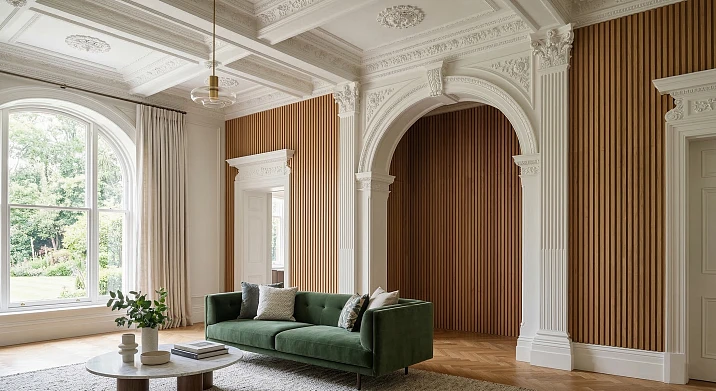
There is a conversation that designers have been having for decades: what is more important in an interior — natural materiality or architectural form? Proponents of the former say: living wood, the texture of stone, raw linen — that's what creates a space where a person feels like a living being, not an office dweller. Proponents of the latter argue: geometry, proportions, architectural rhythm — that's what distinguishes an interior from a random collection of things.
Both sides are right. And it is precisely this reconciliation — wooden slat panels for walls in alliance with decorative molding — that creates an interior that works on all levels of perception simultaneously. Wood speaks bodily: you want to touch it, it carries scent, warmth, the history of growth rings. Molding speaks architecturally: relief, rhythm, classical framing. Together — they create what in professional language is called 'inhabited architecture': a space that is both precise and alive.
This article is a complete breakdown of this union. With specific numbers, rules, examples, and honest warnings about where mistakes can be made.
Why wood and molding do not contradict each other — but complement each other
The first question that arises for someone encountering this concept for the first time: isn't this a conflict? Wood is a natural, 'soft,' organic material. Molding is architectural decor, 'strict,' classical, geometrically precise. Isn't this a clash of two different worlds?
No. And here's why.
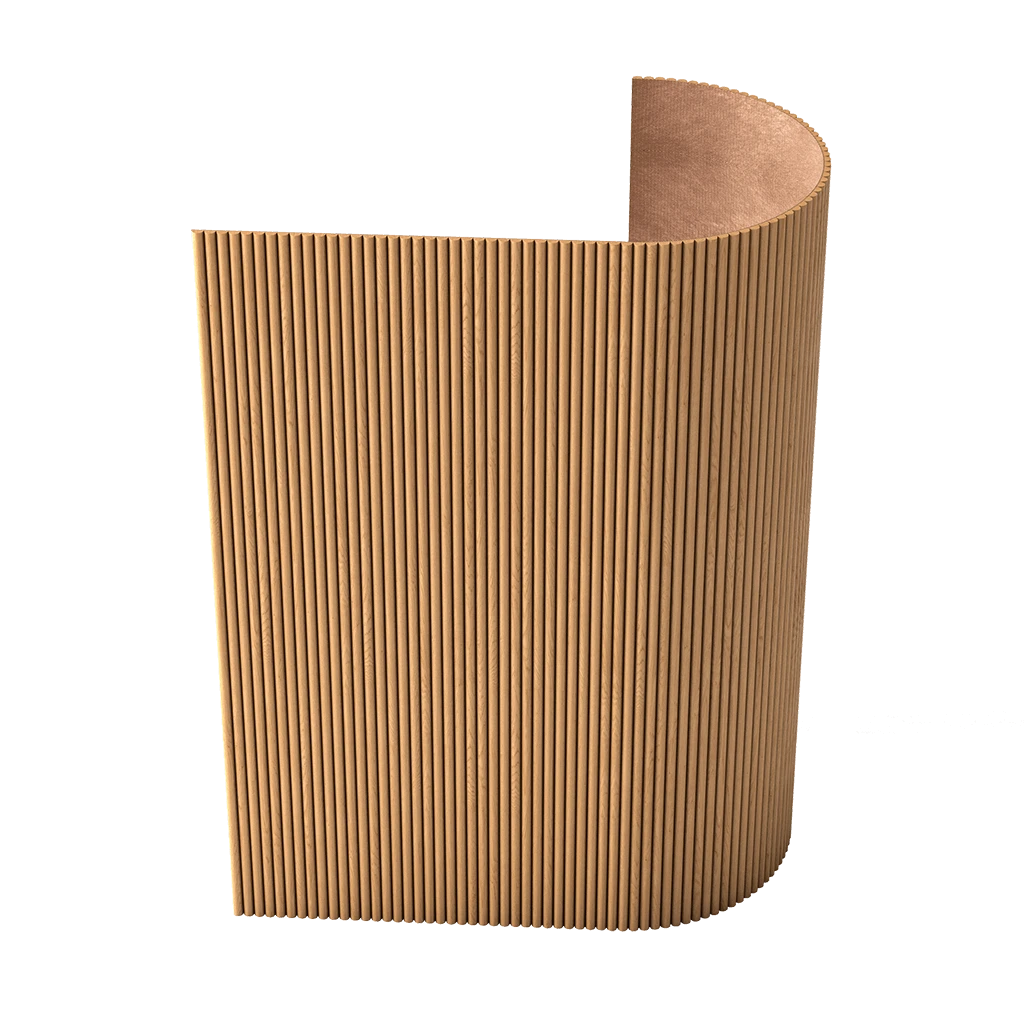
Wood in an interior works primarily as texture: the grain pattern, depth of color, tactile surface quality. It is the vertical rhythm of the slat construction — geometrically precise, yet materially 'warm'.
Molding works as a form: a horizontal boundary, framing, a relief accent. It does not compete with wood for 'naturalness'—it has a different role.
These two elements operate on different levels: one in the vertical rhythm of the walls, the other in horizontal boundaries and ceiling planes. They do not overlap—they structure the space differently and complementarily.
Historically, this union has always existed. In classical interiors of the 17th–19th centuries, wooden wall panels in the lower part ('wainscoting' in the English tradition, 'lambris' in the French) were combined with a plaster ceiling cornice and molding frames in the upper zone. This is not a fashion coincidence—it is an architectural system refined over centuries of practice.
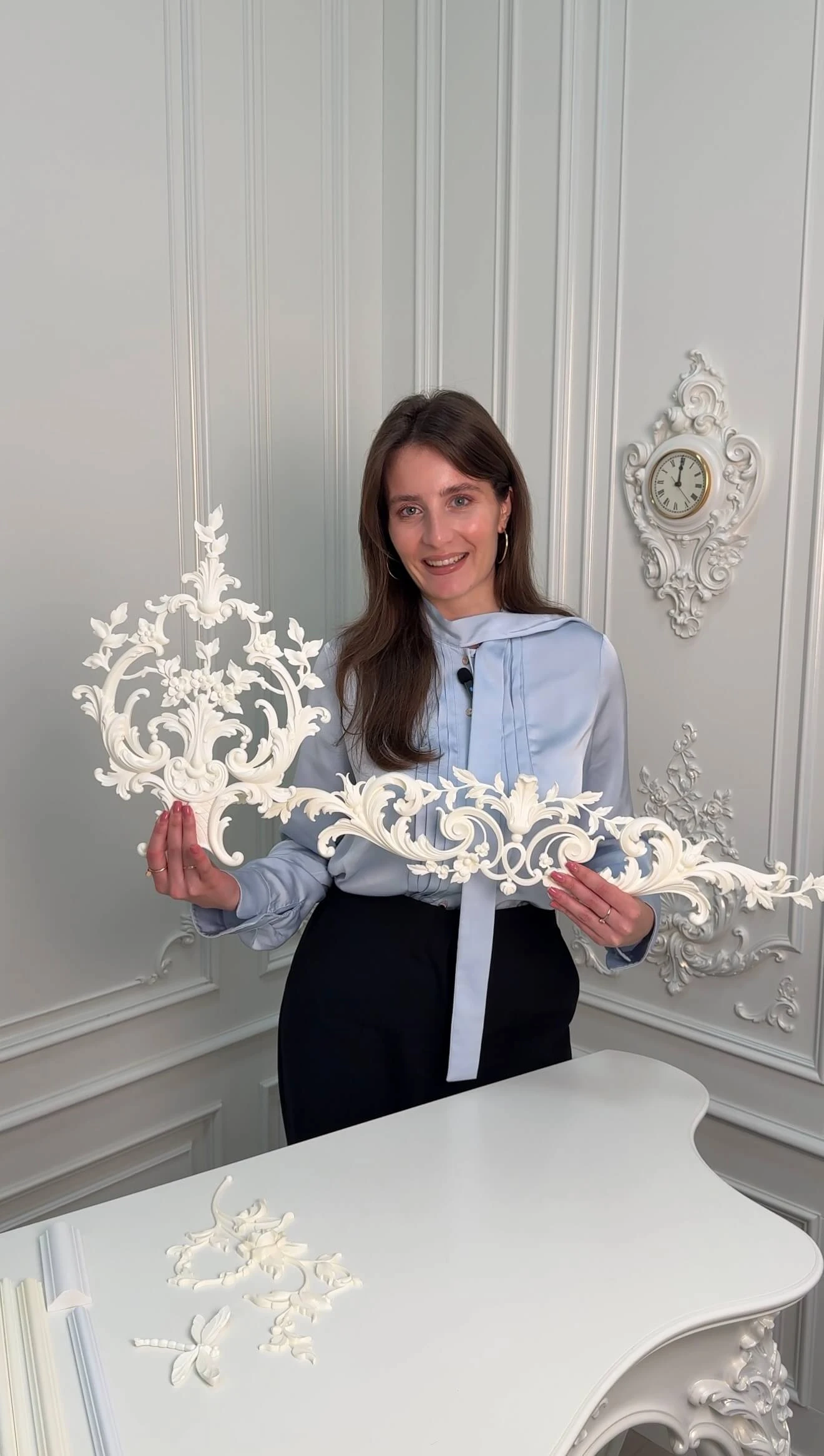
The modern interior has simply reinterpreted this system: instead of a cabinetmaker's handwork—precisesolid wood slat panels on CNC equipment, instead of hand-formed plaster molding—lightweight and moisture-resistant elements made of polyurethane.
In which styles is the combination of wood and molding especially organic
This question is important: not every style 'accepts' the combination of wooden slats and decorative molding equally well. Let's examine those where the union works most convincingly.
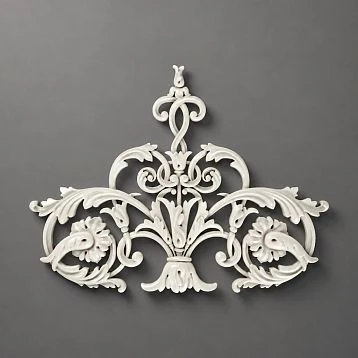
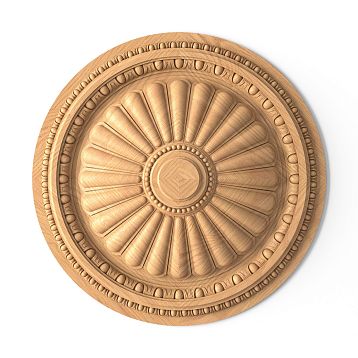
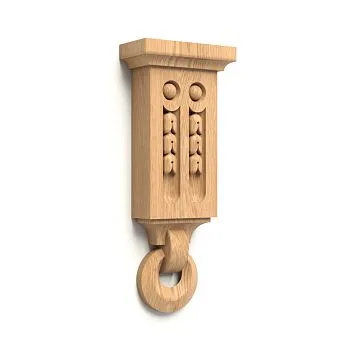
Our factory also produces:


Neoclassicism
The most obvious and, perhaps, the most rewarding style. Neoclassicism is the reproduction of classical proportions and architectural techniques using modern materials. Oak slats in a natural oil tone, molding frames made ofdecorative molding in white, a cornice with a classical profile—this is neoclassicism at its best: precise, warm, not trying to imitate 'antiquity,' but paying respect to it.
Get Consultation
Modern classic
The closest relative of neoclassicism, but with a greater degree of neutrality. Slats made of tinted oak—not natural golden, but smoky gray-brown. Molding—a smooth cornice without ornament. A small-diameter rosette. Moldings with a rectangular profile without complex ovolos. This is modern classicism: architectural enough to look expensive, and restrained enough not to become outdated.
Scandinavian style with 'architectural details'
Scandinavian minimalism plus one architectural element is a trend that has been actively developing in interior design in recent years. Light ash slats with transparent oil, a smooth white cornice 50–60 mm — the only molded element in the interior. No rosettes, no molding frames. The cornice as a finishing touch — and nothing more. Scandinavian purity with one architectural detail that makes the space complete.
Tuscan and Mediterranean style
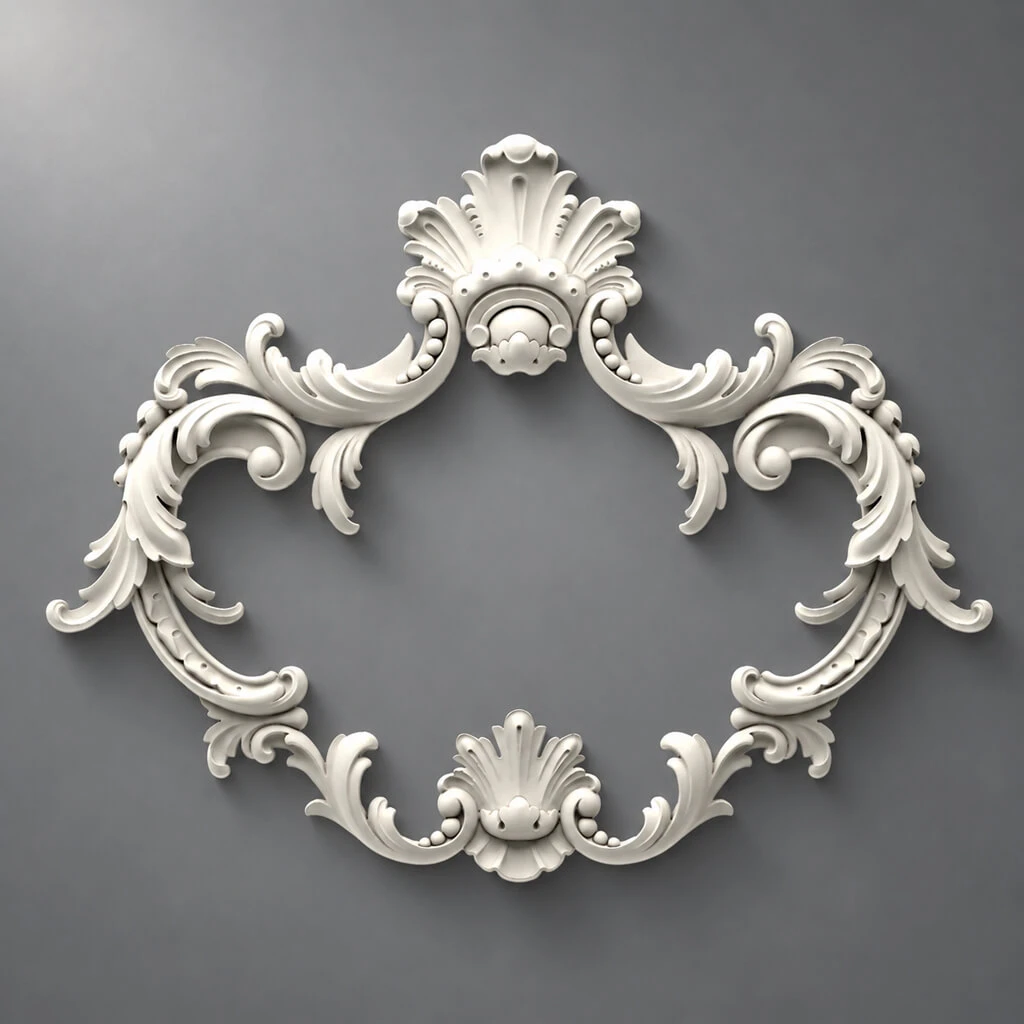
Aged oak or olive wood, rough texture, warm ochre tones.Decorative stuccowith ornamentation in the spirit of Tuscan architecture: acanthus leaf, a profile with a cove, a ceiling rosette with a floral motif. Everything in warm tones — ivory, ochre, warm beige. This is a style where wood and moldings 'speak' the same language: organic, warm, with a sense of history.
Country and Rustic Style
Brushed oak, larch or pine with a pronounced texture —wooden slat wall panelswith a 'live' surface, deliberately uneven and characteristic. Moldings — a modest ceiling cornice without ornamentation or a simple molding. Here, the moldings should not 'outshout' the wood texture: their role is to quietly mark architectural boundaries without claiming the main voice.
Art Deco
Geometrically precise slats of tinted oak in a deep dark tone, moldings with a straight-line Art Deco profile, symmetrical arrangement of frames, a rosette with geometric ornamentation. Art Deco loves contrast: dark wood and white moldings create exactly the contrast that makes this style recognizable.
Wooden slats: species, texture, finish — three selection parameters
Before discussing combinations with molding, it's necessary to understand the wood itself: what makes qualitywooden slat wall panelsand what determines their visual and technical result.
Tree species
Oak is the most popular option. Density 650–900 kg/m³. Pronounced grain pattern with characteristic 'rays' in radial cut. Color in natural oil — golden-amber, when stained — from light beige-gray to dark tobacco-brown. Janka hardness: 1290 lbf — resistant to dents and scratches.
oak slat panel— a classic choice for living rooms, studies, dining rooms, and halls. Oak ages beautifully: over time it gains depth of tone without losing structural integrity.
Ash — similar density to oak, but with a more pronounced straight-line grain texture. Lighter than oak in its natural state. When stained, it accepts a wide range of tones from almost white to dark gray. Well-suited for Scandinavian and modern styles — a more 'neutral' pattern.
Pine and larch — softer, with a pronounced resinous pattern. Density 400–600 kg/m³. Suitable for rustic and country styles. Require more thorough coating: softness increases vulnerability to mechanical damage.
Thermowood — wood that has undergone thermal treatment at 160–220°C without chemicals. Result: stability close to MDF, plus a natural grain pattern. Color — dark, chocolate. Zero water absorption. Ideal for rooms with unstable humidity. The only natural wood material for hallways and kitchen areas.
Surface texture
Natural wood offers several options for finish texture:
-
Planed surface — smooth, 'mirror-like'. Maximally expresses the grain pattern. Elegant in neoclassical and modern interiors.
-
Brushed — surface treated with brushes to remove soft fibers. The texture relief comes to the forefront. Suitable for rustic, Tuscan, country styles.
-
Patinated — special treatment that creates an 'aged' appearance in wood. Dark veins, uneven tone. Suitable for antique, Provence, Tuscan styles.
-
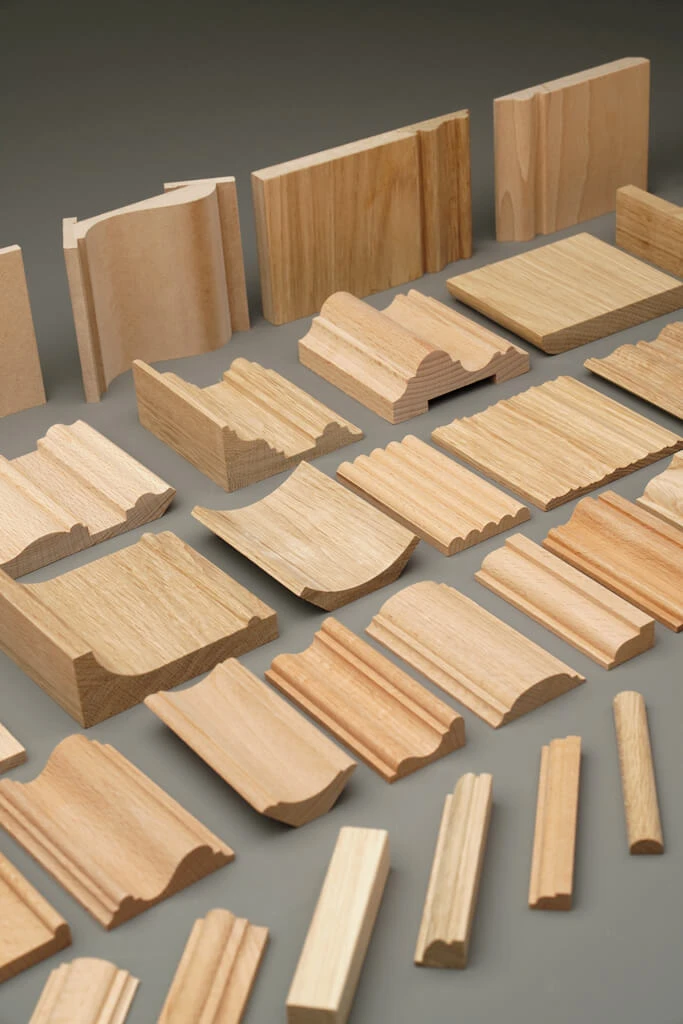
With milling — slats with fluting, chamfers, or grooves. Architectural play of light and shadow.
Finish
This is the most critical parameter for the durability of wooden slat panels.
Hard Wax Oil: penetrates wood pores, does not form a film. The wood 'breathes,' retaining maximum naturalness. Renewed without sanding — by applying a new coat every 3–5 years. Tactile feel: warm, matte, 'alive.' Not suitable for wet areas.
UV varnish: cured by ultraviolet light in a fraction of a second. Forms a hard, transparent film on the surface. Hardness 3H–4H. Protection against moisture, scratches, household chemicals. Suitable for hallways, living rooms with high traffic.
Oil-wax: an intermediate option between oil and varnish. More protective than oil, but retains the tactile feel of natural wood.
Solid wood slat panels: technical parameters that determine the outcome
solid wood slat panels— is not just 'cut wood.' It is a systematic product with precise parameters that determine installation quality and structural durability.
Wood Moisture
The most important and least buyer-controlled parameter. Solid wood for interior work: 8–10% moisture content (kiln-dried). With moisture content above 12% — risk of deformation due to changes in room microclimate.
How to check: a wood moisture meter is a household appliance costing 1,000–3,000 rubles. An investment that protects against potential losses.
Geometric tolerance
CNC milling: ±0.1–0.2 mm. Manual machine: ±1.0–2.0 mm. With a long slat wall (3–4 m), the error in slat width accumulates: at ±1 mm and 30 slats — 30 mm total deviation.
Standard dimensions of solid wood slats
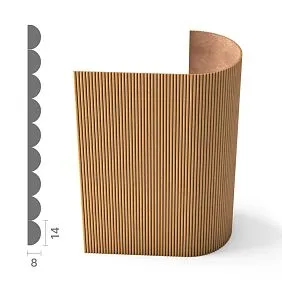
Width: 40–100 mm (most in demand: 50, 60, 70 mm). Thickness: 14–22 mm. Length: multiples of 600 mm (standard module) or 2400 mm / 2700 mm / 3000 mm to match room height.
Floating fastening
Natural wood changes linear dimensions with humidity changes. Rigid fastening across the grain is a sure path to deformation. Floating fastening (clips with a small gap or slotted holes for screws) allows the slat to "move" without destroying the structure.
How decorative molding brings a wooden interior together as a unified whole
Imagine a wooden slat wall without molded framing. It's beautiful — a living texture, a vertical rhythm. But there's a feeling of "incompleteness": the top edge of the structure seems cut off, the ceiling "floats" above the walls without a clear connection to them.
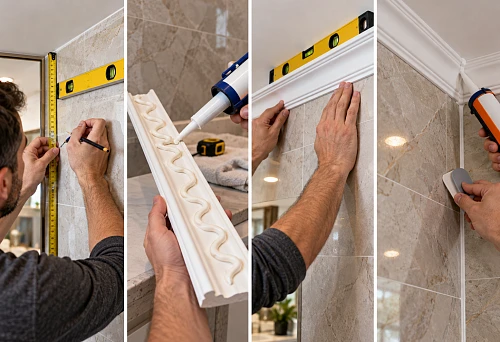
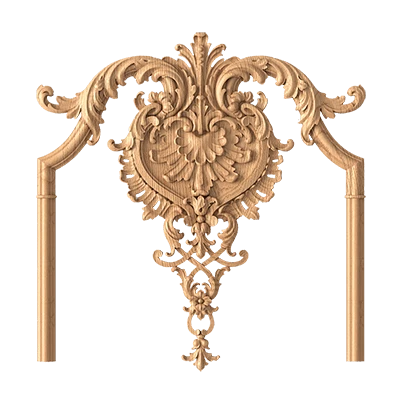
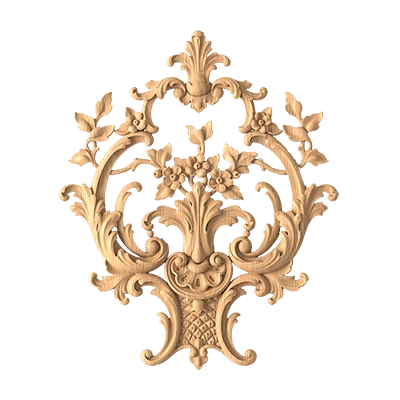
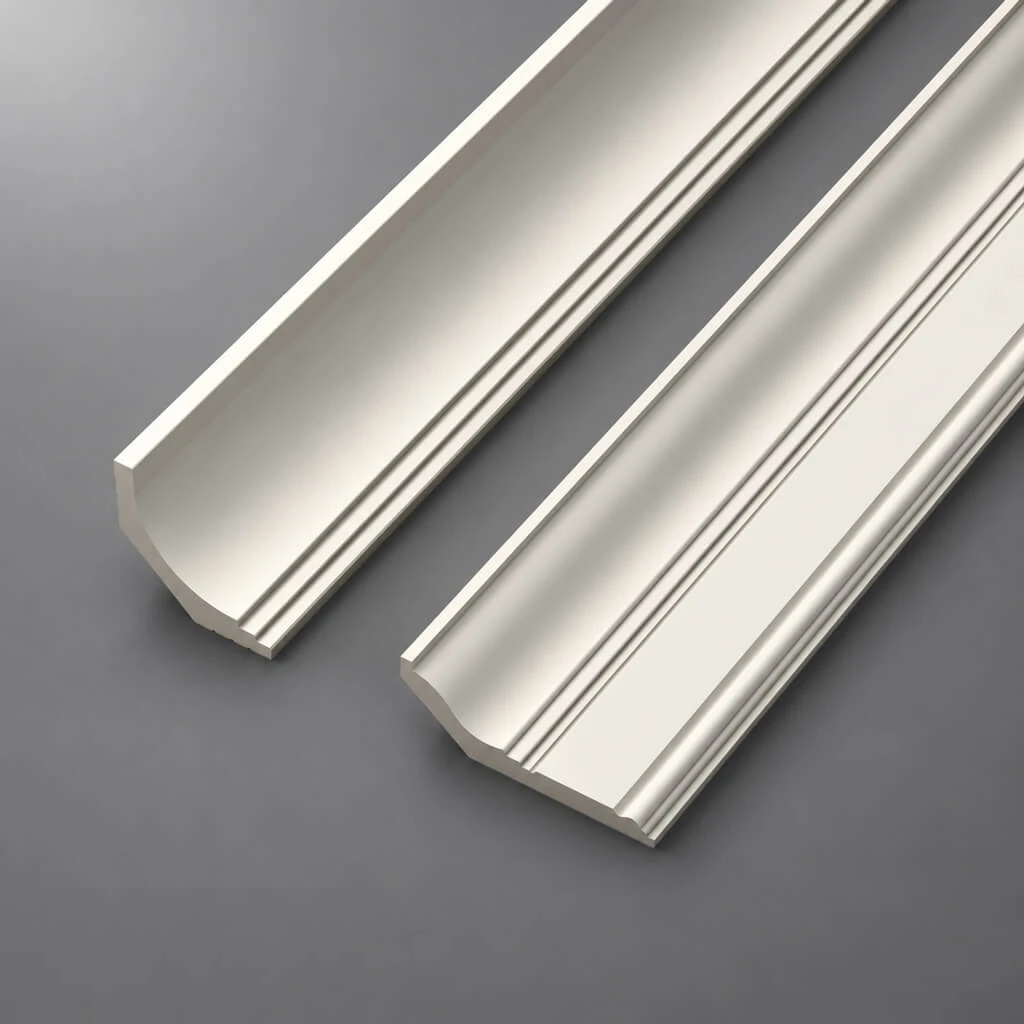
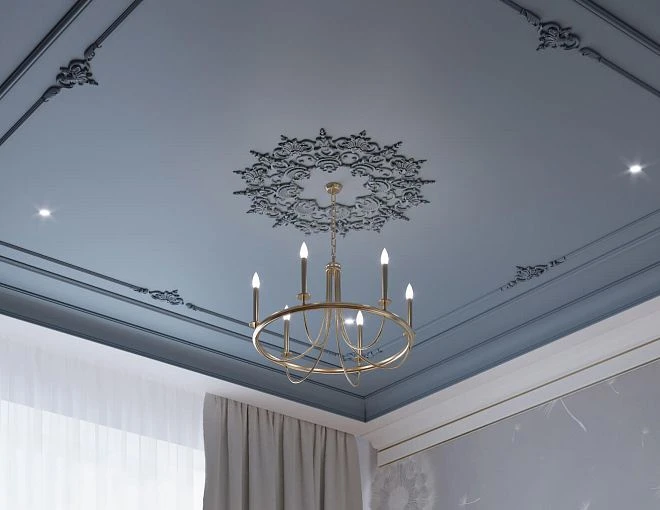
This is exactly whatDecorative stuccoIt establishes architectural boundaries that 'complete' the visual narrative. The cornice finishes the slatted wall with a horizontal frame. Molding along the edges of the structure creates side boundaries. The baseboard below forms the bottom line. The ceiling rosette indicates the center.
Molding does not compete with wood—it serves a fundamentally different role: not texture, but form; not naturalness, but geometry. Two different registers that together form a complete architectural phrase.
How molding 'reads' alongside wood
On live wood, the gaze glides: it follows the grain pattern, the play of shadow in the gaps between slats, the changing tone. This is a horizontal, 'flowing' movement of the gaze.
The plaster cornice is a horizontal stop. The gaze 'bumps' into the cornice and turns. It is an architectural punctuation mark: a period at the end of the wooden phrase.
The ceiling rosette is the center of attraction, the focal point to which the gaze returns. It 'organizes' the ceiling around itself.
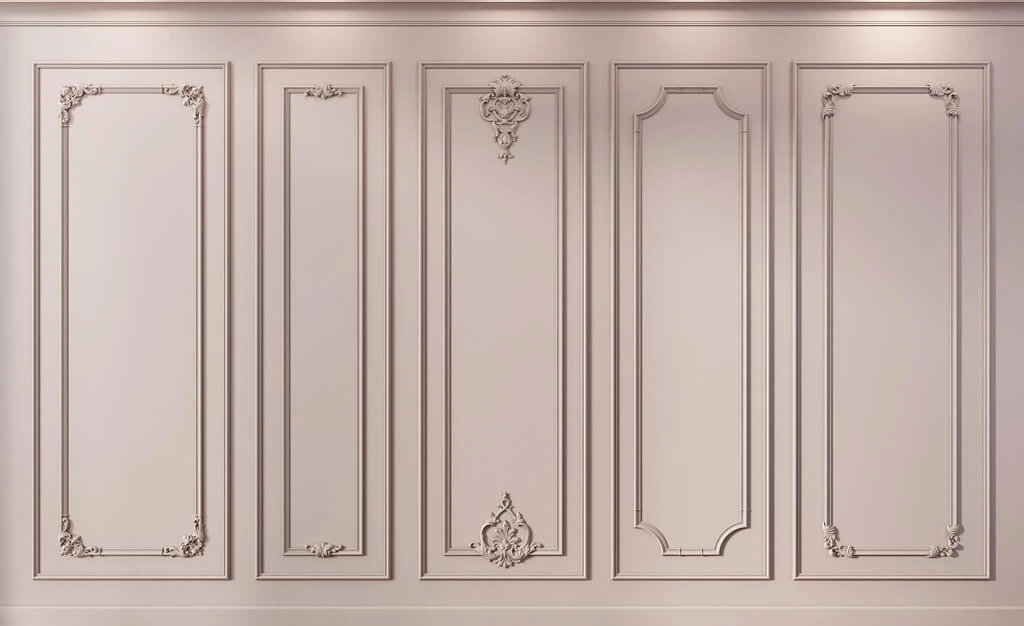
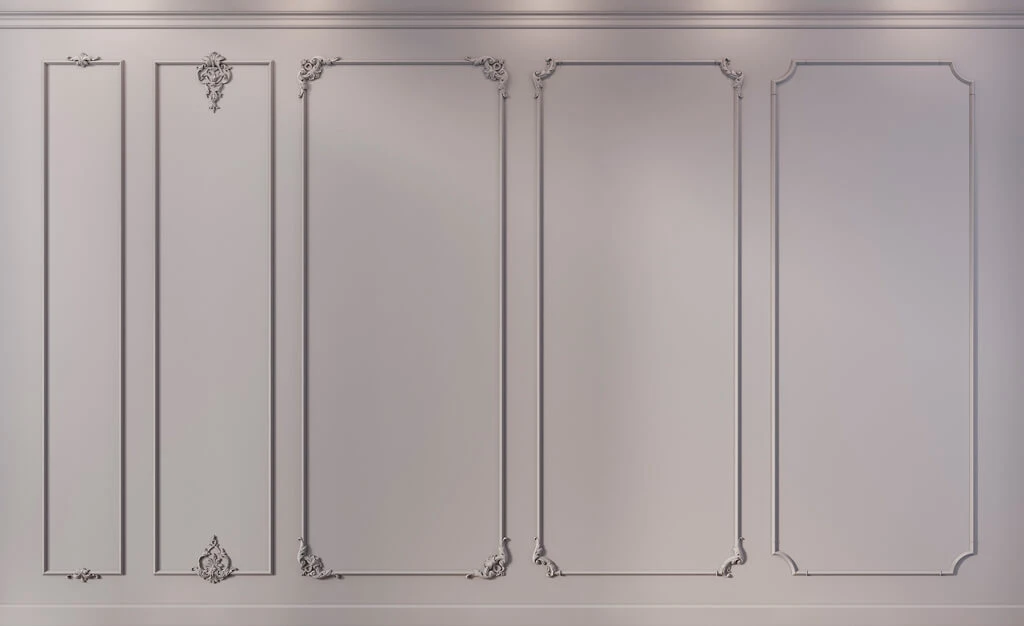
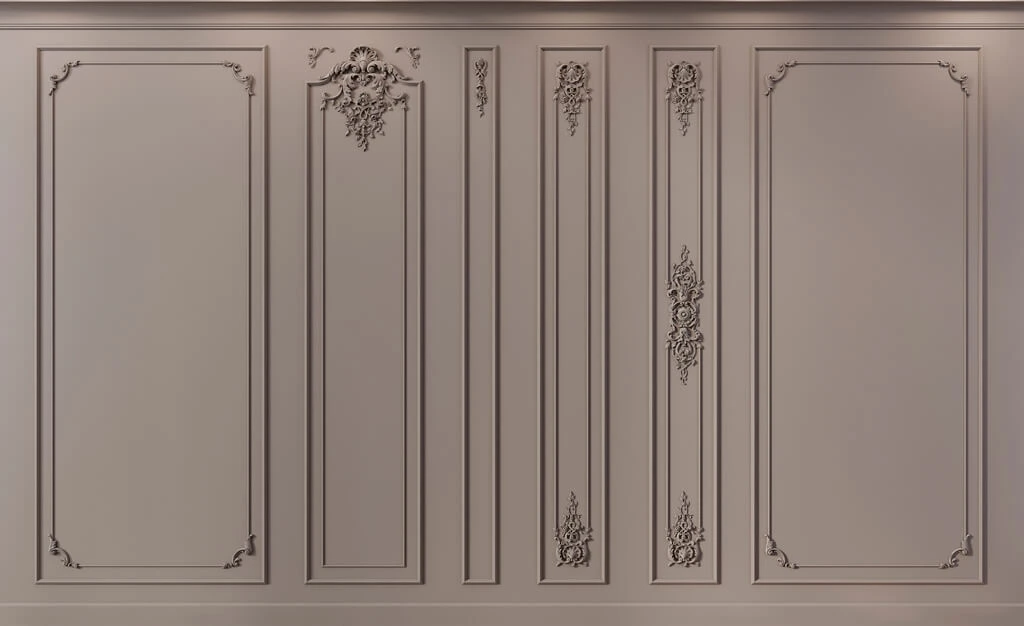
Molding frames on walls above the slatted structure are 'architectural windows' that make a uniform wall varied without cluttering decoration.
Principles for selecting molding decor for wooden slats
Not all molding is organic next to natural wood. Several principles that will help you choose correctly.
Principle 1: The tone of the molding relative to the wood
Three options that work:
White/cream cornice + warm wood. Classic, timeless. A pure white cornice on warm oak is like a white collar on a dark coat: a clear accent without conflict.
Molding in wall tone + wood as accent. The cornice is painted the same tone as the walls (white, light gray, cream). It 'disappears' — marks the boundary but doesn't attract attention. The wood remains the sole accent. For Scandinavian and minimalist styles.
Molding in wood tone. A complex solution requiring precision. Cornice and slats in the same tonal family — warm beige + ivory molding. A monochrome ensemble where the decor is read through the relief.
Principle 2: The ornament of the molding is proportional to the complexity of the wood texture
Wood with a live, brushed texture is already a 'speaking' surface. Ornamental molding next to it is two 'voices' at once: the interior becomes noisy.
Rule: the richer the wood texture — the more laconic the molding. And vice versa.
-
Brushed oak with pronounced texture → smooth cornice without ornament
-
Smooth planed oak with a subtle grain → cornice with a profile shelf, rosette with moderate relief
-
Tinted ash with almost no grain → ornamental cornice is appropriate
Principle 3: The cornice size corresponds to the slat width
The visual 'weight' of the cornice and slats should be balanced:
| Slat width (mm) | Recommended cornice height (mm) |
|---|---|
| 40–50 | 55–75 |
| 50–65 | 70–90 |
| 65–80 | 85–110 |
| 80–100 | 100–130 |
A cornice below the lower range limit 'sinks' next to a wide slat. A cornice above the upper limit 'overpowers' a narrow slat.
Combinations for living rooms, studies, bedrooms, and halls
Moving on to specific rooms — where theory becomes practice.
Living room: wood as an accent wall
The living room is the main arena for wooden slat panels. An accent wall behind the TV, an accent wall behind the sofa, or a panel scheme on all vertical surfaces — three fundamentally different solutions.
Accent wall behind the TV made of oak:
Slats:oak slat panel60 mm with UV varnish, 'tobacco' tone (dark, warm). 14 mm gap. Height: from floor to ceiling.
Support system: metal profile, 25 mm gap behind the structure, LED strip on the support profile at the top — indirect light behind the slats creates a 'halo' effect.
Cornice: white smooth, 80 mm. A single horizontal frame runs along the entire perimeter of the ceiling.
Socket: 300 mm white, above the center of the living room. For the chandelier.
Moldings: white rectangular frames on adjacent walls (not on the wooden accent wall). White molding on dark wood — only along the edges of the structure, as side borders.
Accent wall behind the sofa: light ash:
Ash slats with clear oil. Natural tone — milky beige. Slats 50 mm, gap 12 mm.
Cornice: the same milky or white, 65–75 mm, smooth.
Above the sofa: two sconces with directional light on the slatted wall — shadows in the gaps create depth.
Effect: the wall 'embraces', envelops. The sofa against its background becomes part of the architecture.
Study: wood as a concentration of space
A study with wooden slats is a space that 'holds' attention. Dark wood, subdued lighting, heavy furniture.
Concept: 'library study'
Wooden slat panels for wallsmade of thermo-oak or oak stained 'moccasin' on three walls, from floor to the top edge of built-in bookshelves (1.6–1.8 m). Above — a molding as a 'shelf line'. Above the molding — walls painted in a deep shade (dark blue, anthracite, dark green).
Ceiling: white cornice 90–100 mm with a profile section. Ceiling — cream or warm white. 300 mm rosette for a classic chandelier.
Lighting: floor lamp with a cone over the work surface, plus library lighting with built-in LED strip under the lower edge of bookshelves.
Result: a study where work and thinking happen. Wood concentrates the space, molding organizes it vertically.
Concept: 'modern study'
Slats of ash stained gray-brown (silver oak). On one wall. The rest — solid paint matching the slats (the same gray-brown). Cornice 60–70 mm smooth, white.
No ornaments, no molding frames. Pure architecture.
Bedroom: wood at the headboard
A wooden slatted wall behind the bed headboard is one of the most intimate and cozy interior solutions. Here, wood works completely differently than in the living room: not as an accent, but as an 'enveloping' element.
Concept: 'warm headboard':
Oak slats with oil in 'honey' or 'natural' tone covering the entire wall behind the bed, from floor to ceiling. Slat width 45–50 mm — a narrow, delicate rhythm. Gap 10–12 mm.
Cornice: 55–65 mm, smooth, white. Along the entire ceiling perimeter.
Outlet: 180–220 mm for a pendant light above the center of the bed. Delicate, without ornament.
Sconces on the sides of the bed: lighting creates warm shadows in the gaps of the slatted wall.
Effect: a bedroom you want to return to.
Concept: 'monochrome forest':
Ash battens with white oil (bleached wood effect). White cornice. White walls. Everything is white — yet alive: ash battens with a subtly discernible wood grain pattern.
This is a meditative bedroom: a space without color, only texture and form.
Hall and entryway: the first encounter with wood
wooden slat wall panelsIn the entryway — a strong architectural statement. The first thing a visitor sees. The first thing that shapes the impression of the entire house.
Thermowood in the entryway: the only natural wood material fully suitable for an area with an entrance door. Dark tone, stable geometry, zero water absorption.
Vertical battens 40–50 mm from floor to ceiling or up to the cornice level. The end wall of the entryway is battened, the side walls are painted a solid color matching the wood.
interior moldingsIn the entryway: a 50–60 mm cornice, smooth. Around the perimeter. A molding frame around the mirror.
Mirror: integrated into the batten structure or framed with molding — not just 'leaned' against the wall.
Complete interior set: wood + molding for a country house
A country house is a space where the union of wooden batten panels and decorative molding unfolds to its full potential. No ceiling height restrictions, no neighbor considerations, there is real scope for architectural thinking.
Hall of a country house: height 3.2–4.0 m
solid wood slat panelsOak 70–80 mm from the floor to a height of 2.0–2.2 m (lower panel zone). Above it — a horizontal molding, 50–60 mm. Above, up to the ceiling — walls in a tone that contrasts or harmonizes with the wood.
Ceiling cornice: 120–150 mm, classic profile with ornament. Ceiling: white, with coffered division by moldings 30–40 mm.
Ceiling rosette: 450–500 mm, for a chandelier in a classic style.
Staircase: oak handrails matching the slats — a unified wooden 'field'.
Living room of a country house: accent wall and wooden 'walkway'
Wooden slats on the accent wall and partially on the adjacent one.molded decoration made of polyurethaneOn the ceiling: cornice 100–120 mm around the perimeter, a coffered molding in the center of the ceiling, rosette 400–450 mm.
Fireplace: framed with polyurethane molding in white. Side pilasters. Wooden mantelpiece matching the slats.
This is an interior you want to live in. Not a 'designer object for photos' — but a space with soul.
How not to ruin expensive material with excessive decor
Natural wood is an expensive material.oak slat panel— these are significant investments in interior design. They can be surprisingly easy to ruin: with excessive decor, inappropriate molding, or incorrect lighting.
Mistake 1: Ornamental molding over rich wood texture
Brushed oak with pronounced relief + ornamental cornice with acanthus = two surfaces "screaming" simultaneously. Result — visual noise. Rule: rich texture → laconic molding.
Mistake 2: Too many types of wood in one room
Oak slat panels + walnut veneer parquet + pine furniture + birch wood moldings = "warehouse" effect, not natural. Maximum: two wood species in one room, provided they are close in tone.
Mistake 3: White molding "out of the box" without final painting
Polyurethane elements in factory white next to natural wood are "blobs," not architectural decor.interior moldings— must be primed and painted in the final color. Only then — a monolithic surface, part of the architecture.
Error 4: Wooden beam load-bearing system in the hallway
Wooden beams used as battens for a slatted wall system in a hallway with an entrance door create a zone for condensation and mold behind the structure. Use only metal profiles.
Error 5: Slats placed too close together ('closed' appearance)
A gap of less than 8–10% of the slat width makes the structure look like a solid wooden wall, not a slatted system. The rhythm, depth, and play of shadows are lost. Minimum working gap: 10 mm for a 40 mm wide slat.
Error 6: Wooden slats in the bathroom without special coating
Beautiful photos of wooden slats in bathrooms feature thermally modified wood with 3–4 layers of UV varnish + forced ventilation + heating from a towel warmer. Without these conditions, mold and deterioration occur within 1–2 years.
Combination table: wood species + style + molding
| Wood species | Tone | Style | Molding | Molding color |
|---|---|---|---|---|
| Natural oak | Golden amber | Neoclassical, Tuscan | Cornice with ornament 80–100 mm, rosette | White / cream |
| Toned oak | Smoky gray-brown | Modern classic, art deco | Profile cornice 70–85 mm | White |
| Thermo oak | Dark chocolate | Dark neoclassical, study | Cornice 80–100 mm, moldings | White (contrast) |
| Natural Ash | Milky Beige | Scandinavian, minimalism | Smooth Cornice 50–65 mm | White |
| Tinted Ash | Silver, Gray | Modern, Art Deco | Geometric Cornice 60–80 mm | White / Light Gray |
| Brushed Oak | Warm, Aged | Rustic, country | Smooth cornice without ornament | Matching the walls |
| Larch | Reddish-gold | Country, Scandinavian loft | Smooth cornice 50–60 mm | White |
Lighting design: how light reveals natural texture
Wooden slats and molding under incorrect lighting — a dull surface. Under correct lighting — a living sculpture. Light is not the final touch, but part of the concept.
Accent lighting on a slatted wall
Directional light at a 30–40° angle to the slat surface. Shadows in the gaps gain depth — slats 'separate' from one another. The wood texture becomes three-dimensional.
Sources: spotlights or track lights with adjustable angle. Color temperature: 2700–3000 K for warm wood tones (oak, ash). 3000–3500 K — for wood toned in cool shades.
Indirect lighting behind molding
LED strip on the back side of the cornice — light directed at the ceiling. Creates a 'light halo' without a visible source. The ceiling glows — the room feels taller.
For wooden interiors: warm light 2700 K. Brightness: 400–600 lm/m for ambient presence, 800–1200 lm/m for functional lighting.
Recessed lighting in slatted construction
LED strip on the load-bearing profile at the top edge of the slatted construction. Light directed bottom-up or top-down. When directed upward: wooden slats glow from within — an immaterial, almost magical effect.
slatted wall panels in the interiorwith built-in lighting — a separate direction requiring electrical planning before construction installation.
Care for wooden slatted panels: simple rules for longevity
Natural wood requires care. This is not a burden — it's a condition for preserving beauty.
Annual maintenance (for oil finish):
-
Light sanding with a matte sponge (abrasive P400–P600)
-
Applying a thin layer of renewing oil
-
Exposure for 15–20 minutes, removing excess with a polishing motion
For UV varnish coating:
-
Annual inspection for chips and scratches
-
Spot restoration with varnish from the same system
-
Wet cleaning — only with neutral agents without solvents
Acclimatization during seasonal changes:
-
During the heating season (humidity drops): air humidifier 40–60% RH
-
In the off-season: room ventilation, avoid sudden humidity changes of more than 20% per day
Wooden slat panelsWith proper care, they last 25–30 years, acquiring a noble patina over time — something that cannot be created artificially.
FAQ: Questions about wooden slat panels and decorative molding
Can wooden slats and molding be combined in a modern minimalist interior?
Yes. Ash with white oil + smooth 50 mm cornice in the ceiling tone. This is minimalism with a natural detail — concise and expressive.
Which wood species is the most durable for a slat wall in a living room?
Oak is the optimal choice in terms of overall characteristics: hardness, scratch resistance, rich grain, wide range of tinting options.
Is primer needed for molding before installation near wooden battens?
Absolutely. Acrylic or special PU primer. Without primer, the paint 'doesn't hold' and peels off.
How to choose the tone of molding to match dark oak?
White is a fail-safe contrast. Milk or ivory is a softer tone. Avoid pure cold white (bluish) next to warm wood.
Can wooden slats be used in a children's room?
Yes, when choosing a finish: hard oil or water-based lacquer without solvents. No two-component PU lacquers with solvents in a children's room.
How to installsolid wood slat panels by yourself?
Load-bearing system (metal profile), floating fastening of slats with clips or countersunk self-tapping screws with oblong holes, acclimatization of slats for 48 hours before installation, sealing of ends. Details are in the installation guide at stavros.ru.
Can IBuy Polyurethane Molded Decoration for a custom RAL color?
Yes. Polyurethane is primed with PU primer and painted with acrylic paint in any RAL or NCS color.
What is better — molding at the edges of a wooden slat construction or without it?
With molding — the construction is 'framed,' finished. Without molding — the slats 'dissolve' into the wall. Exception: a monochrome interior where slats and walls are in the same tone — the transition is intentionally blurred.
About the company STAVROS
Wood and architectural relief — this is a union that works under one condition: both materials must be made correctly. Beautiful wood with unstable moisture content is future warping. Molding without primer is peeling after a year. Quality begins in production, not at the installation stage.
STAVROS is a Russian manufacturer of architectural elements made from solid wood and polyurethane, offering a full production cycle. In-house production includes: chamber drying of wood to 8–10% moisture content, CNC milling with a tolerance of ±0.1 mm, application of UV varnish and hard oil in factory chambers, casting of polyurethane elements in silicone molds with micron-level relief precision. Emission class E1, a declaration of conformity is included with every order.
In the STAVROS catalog for projects with natural wood and molded decor:solid wood slat panels— oak, ash, thermowood;oak slat panel— available in a wide range of tints;Wooden slat panels— a detailed guide for selection and application;Decorative stucco— made from non-yellowing polyurethane — rosettes, overlays, pilasters;molded decoration made of polyurethane— a full assortment for any style;interior moldings— overlay elements for creating architectural accents;Moldings made of polyurethane— cornices, moldings, baseboards for framing systems;slatted wall panels in the interior— architectural logic of application.
Material samples — upon request. Free consultation on selecting wood species, finishes, and moldings for your specific project. STAVROS — because wood and architecture deserve each other.