






























































Article Contents:
- What Are Wooden Furniture Legs and Why Are They Needed
- What Wooden Furniture Legs Can Be Bought in Moscow
- Straight Furniture Legs: Laconic and Universal
- Tapered and Turned Legs: Transitional Form
- Figurative and Decorative Legs
- Carved Wooden Legs: Maximum Decoration
- Low Supports for Cabinets and Sofas
- High Legs for Dressers, Wardrobes, and Consoles
- For which furniture wooden legs are suitable
- For cabinets: delicate precision
- For dressers: balance of load and appearance
- For wardrobes: reliability above all
- For sofas and armchairs: load balance
- For tables: load and stability
- For beds: stability as the foundation
- For classic furniture and restoration
- How to choose wooden furniture legs: 8 main criteria
- By height: the first and most important question
- By shape: silhouette defines style
- By furniture style
- By purpose
- By load: strength determines cross-section
- By cross-section and thickness: proportion to body
- By material: oak or beech, for enamel or for tinting
- By combination with other decor
- What height of furniture legs is suitable for different tasks
- Which materials are better for wooden furniture legs
- Why wood is the only truly correct choice
- How to choose wooden legs to match furniture style
- For classic furniture
- For neoclassical style
- For calm modern interior
- For restoration and decorative projects
- Common mistakes when choosing furniture legs
- Choosing only by photo, without measurement
- Weak legs for heavy furniture
- Too decorative a shape for simple furniture
- Mismatch with seating height
- Different legs on one item
- Purchase without considering the overall decorative system
- Where to buy wooden furniture legs in Moscow
- STAVROS catalog: selection by parameters
- Pickup and delivery
- Showroom in Moscow: see in person
- Order and consultation
- Who wooden furniture legs are especially suitable for
- For private buyers
- For interior designers
- For furniture workshops and manufacturers
- For restorers
- For custom furniture manufacturers
- FAQ: answers to common questions
- Which wooden furniture legs are the most popular in Moscow?
- How do furniture legs differ from supports?
- Which legs are suitable for a chest of drawers and a cabinet?
- Which wooden legs to choose for a sofa?
- How to select the height of furniture legs?
- Which legs are best for classic furniture?
- When should you choose carved wooden legs?
- Are wooden legs suitable for heavy furniture?
- Where to buy wooden furniture legs in Moscow?
- How to avoid mistakes when choosing legs for furniture?
- Conclusion
Furniture legs are not just a structural detail. They are the point from which the perception of an object begins. Properly chosen wooden supports lift the body, set proportions, define style, and make furniture complete. Incorrect ones visually ruin even an expensive facade.
Buying wooden furniture legs in Moscow is a task with several correct and many incorrect solutions. The right height, the right shape, the right load, the right style. This is exactly what the detailed article is about.


What are wooden furniture legs and why are they needed
Wooden furniture legs are support elements for case goods and upholstered furniture, made from solid wood. They are attached to the bottom of the case or frame and simultaneously perform two functions: structural (evenly distributing the load and ensuring stability) and decorative (defining the visual image, style, and proportions of the entire piece).
This distinction is important to understand from the very beginning. A furniture leg is not hardware in the general sense, not a metal blank under the case. A turned cabriole wooden leg on a Baroque-style chest of drawers is as much a decorative element as a carved overlay on the facade. It speaks of style, intention, quality.
Why does wood remain a sought-after material for furniture supports? Because it ensures material unity: the leg and the case are the same wood, the same species, the same finish. No plastic or metal analogue creates the same organic integrity.
Wooden furniture supports perform another function in the interior that is often underestimated: they create space under the furniture. This makes cleaning easier, visually lightens the piece, makes it 'floating'—not standing on the floor, but hovering above it.




What wooden furniture legs can you buy in Moscow
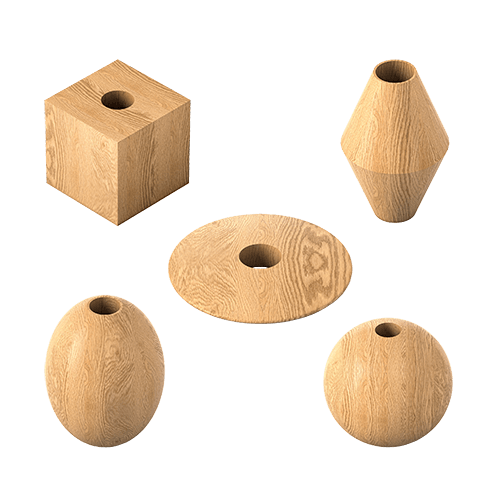
Our factory also produces:


Straight furniture legs: laconicism and versatility
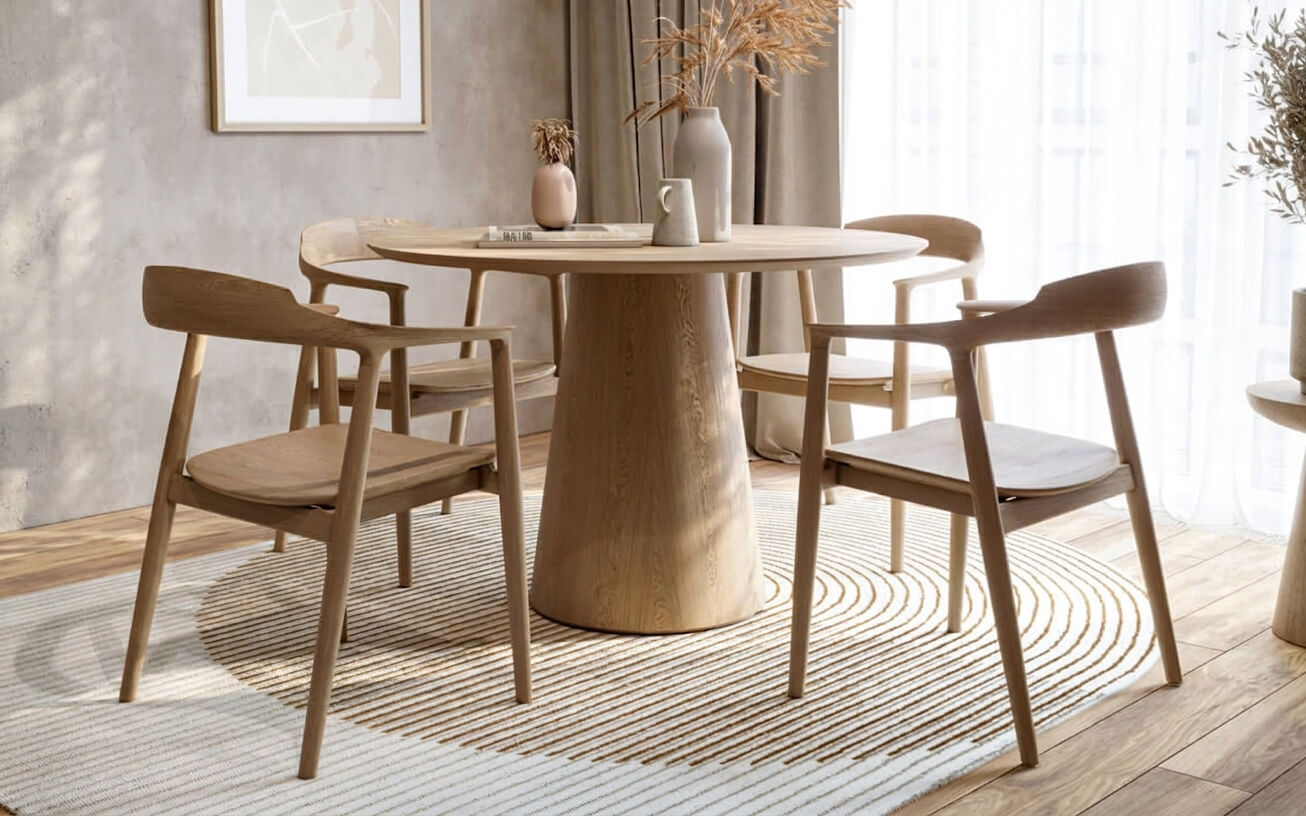
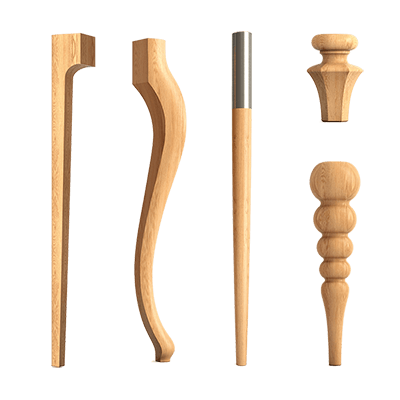
Straight legs are vertical, without curvature, with a simple profile. They can be strictly cylindrical, square in cross-section, or slightly tapered towards the bottom. This is the most neutral type—suitable for a wide range of styles: from Scandinavian classics to modern interiors with classical elements.
Straight wooden legs work well where the facade is already rich in decoration—carved overlays, moldings, cornices. In this case, the leg should not compete with the facade for attention. It is a quiet, precise foundation.
Get Consultation
Conical and turned legs: transitional form
Conical leg — straight but tapering towards the bottom. This is a classic type for neoclassical and modern classic furniture. Creates a sense of lightness: the narrower towards the bottom, the more airy the piece.
Turned legs with profile transitions — cylindrical with decorative grooves, 'steps', rounded bands — a more decorative option. They are distinguished by lathe work: the relief is created not by carving, but by profiling the shape.
Shaped and decorative legs
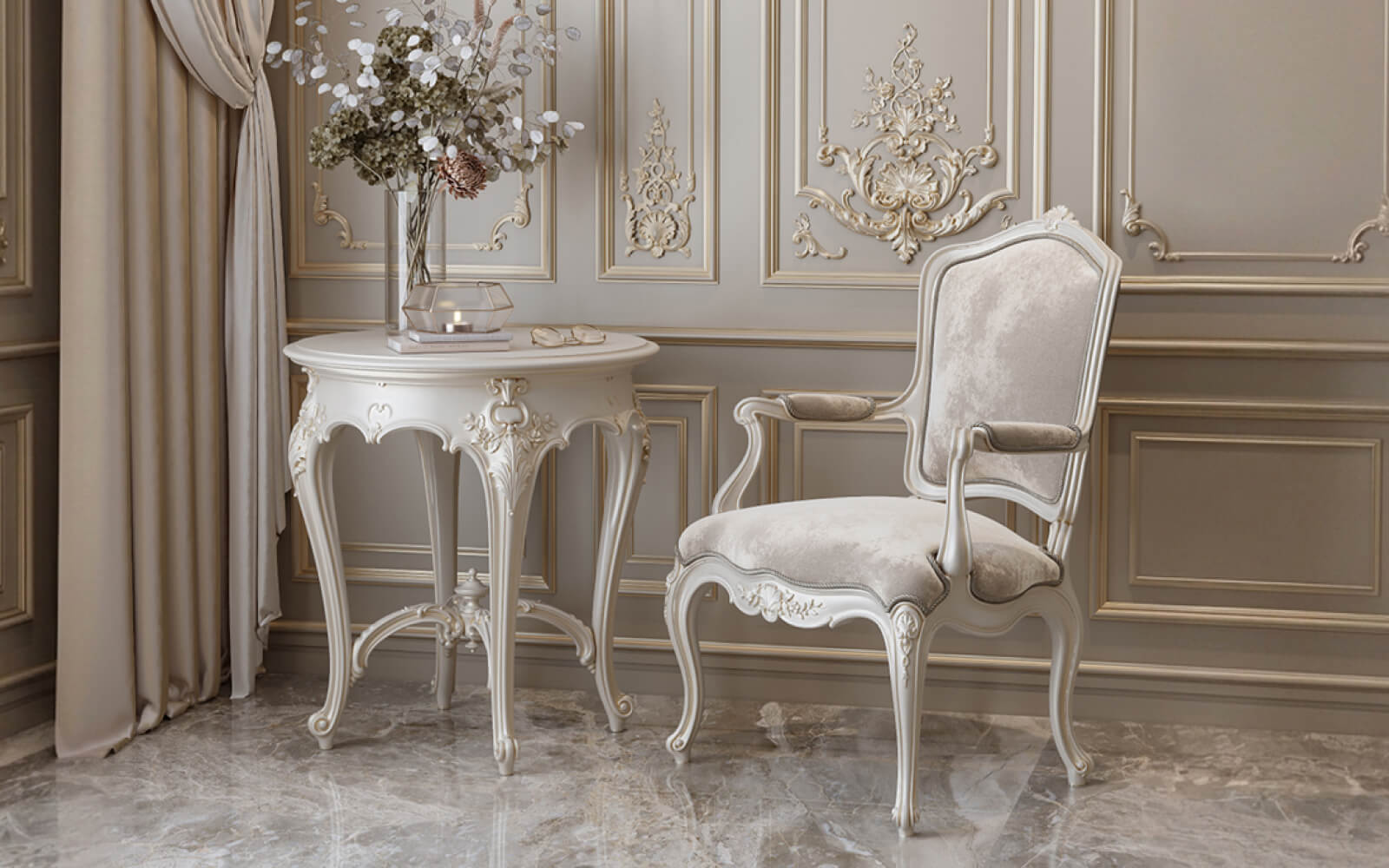
Shaped legs — with a curve, variable cross-section, curvilinear silhouette. A classic example: cabriole leg — curved, with a widening at the top and a tapered base. Used in Baroque, Rococo and classic furniture.
inSTAVROS furniture legs catalogfeatures a wide range of shaped and turned wooden supports for solid oak and beech furniture. Height range — from compact 5–7 cm to tall 20 cm and more. Diameter and cross-section — from miniature to large load-bearing supports.
Carved wooden legs: decorative maximum
Carved furniture legs — supports with ornamental relief, carved by hand or CNC. Acanthus leaves, floral motifs, geometric patterns — depending on the furniture style.
These are elements of the 'Prestige' category: hand finishing, sharp edges of the ornament, maximum detail. Used in representative classic furniture, sideboards, office cabinets, antique restorations.
Low supports for cabinets and sofas
Low wooden legs 5–10 cm high — for bedside tables, TV stands, sofas, and armchairs. They lift the item minimally — enough for cleaning underneath and a visual 'lift' from the floor, but without a feeling of instability.
For sofas and upholstered furniture, stability and mounting reliability are especially important. Solid wood supports handle this load when the cross-section is chosen correctly.
Tall legs for dressers, wardrobes, and consoles
Tall wooden legs 15–25 cm and more — for consoles, tall cabinets, Louis XVI-style dressers, stylish Scandinavian solutions. They fundamentally change the item's appearance: the body gains lightness, and the space underneath becomes part of the room's visual rhythm.
What furniture wooden legs are suitable for
For cabinets: delicate precision
A bedside table is a small item with a small load. Here, decorativeness and proportion come first. Legs 5–12 cm high, tapered or shaped. They should match the style of the bed and other bedroom furniture.
Identical legs on cabinets and the bed — a principle that works flawlessly. This creates a suite connection without needing to buy furniture from the same brand.
For dressers: balance of load and appearance
A chest of drawers is a medium-weight item with contents. Wooden legs must support a load of 60–150 kg depending on the size of the body.
For a classic chest of drawers — carved or turned legs 8–15 cm high. For a lighter look in neoclassical style — tapered high legs 12–18 cm. Four supports with even load distribution are a mandatory requirement for stability.
For wardrobes: reliability first
A wardrobe is the most heavily loaded item. Wooden supports for a wardrobe must have sufficient cross-section and reliable fastening.
Typically, for a low decorative plinth of a wardrobe, not separate legs are used, but wooden support blocks or plinth profiles. However, for individual wardrobe sections on legs — such as consoles, bookcases, open shelving — wooden legs 10–20 cm high work well.
For sofas and armchairs: load balance
A sofa is an item with high load and constant dynamic impact. Wooden legs for a sofa must have sufficient cross-section (at least 5–7 cm) and reliable fastening to the frame — bolted with deep threading or on a metal plate.
The height of sofa legs affects the seating height. The standard sofa seat height is 42–48 cm from the floor. If legs are replaced, the total height must be taken into account.
For sofas in a classic interior — carved turned wooden legs with acanthus ornament or cabriole. For modern classic — tapered or straight.
For tables: load and stability
A dining or coffee table on wooden legs is a special structural challenge. The load can reach 100–200 kg, plus dynamic impact when working at the table.
For dining tables, massive turned legs with a diameter of 6–10 cm and a height of 70–75 cm are used. For coffee tables — more delicate conical or shaped supports with a height of 35–45 cm.
For beds: stability as the foundation
Bed legs are supports that bear the load 24/7. Here, cross-section and fastening reliability are critical. For beds, turned or straight wooden legs with a wide base and a height of 10–25 cm are used.
For classic furniture and restoration
Restoring antique furniture is a special scenario. A lost leg must be reproduced in exact accordance with the original in shape, ornament, wood species, and behavior under finish.
Only solid natural wood ensures compatibility with the original wood under varnish, paint, and patina. The STAVROS range features historical leg shapes characteristic of furniture from classical styles of the 18th–19th centuries.
How to choose wooden furniture legs: 8 main criteria
By height: the first and most important question
Leg height determines everything: seating, proportion, cleaning convenience, and the visual lightness of the item.
| Leg height | Application | Effect |
|---|---|---|
| 5–8 cm | Cabinets, sofas, armchairs | Minimal clearance from the floor, stability |
| 10–15 cm | Chests of drawers, cabinets, consoles | Balance of lightness and stability |
| 15–20 cm | Consoles, tall cabinets, lightweight wardrobes | Pronounced airiness |
| 20 cm and above | Scandinavian-style consoles, bar cabinets | Maximum visual lightness |
Rule: changing the leg height by 3–5 cm drastically alters the item's appearance. Not just the height—but its character as well.
By shape: the silhouette defines the style.
The leg shape is discernible from a distance of 3–5 meters—as the first silhouette of a furniture piece.
-
Straight—neutral, universal.
-
Tapered—lightness, neoclassical, modern classic.
-
Cabriole—Baroque, Rococo, classic.
-
Turned with a profile—classic in a broad range.
-
Carved figurative—rich classic, representative interior.
By furniture style
The leg should not 'clash' with the body style. A Baroque facade with rich carving + a straight square leg—conflict. A Baroque facade + a cabriole leg with acanthus decor—a cohesive look.
By purpose
A decorative leg for a lightweight console—and a load-bearing support for a dining table—are different technical tasks. Do not choose a leg based solely on appearance without considering the actual load.
Regarding load: strength determines cross-section
A key parameter often overlooked when ordering online.
-
Light furniture (cabinet, console) — load 20–50 kg → leg diameter 3–5 cm
-
Medium furniture (chest of drawers, coffee table) — 50–120 kg → 5–7 cm
-
Heavy furniture (sofa, dining table) — 120–250 kg → 7–10 cm and above
Wood is a durable material. Solid oak with the proper cross-section can withstand significant loads. But a 'decorative' thin leg under a heavy sofa is a risk.
Regarding cross-section and thickness: proportion to the body
The leg should be proportionate to the body. Thin legs under a massive body appear visually unstable—the piece looks 'ready to fall.' Too thick legs under a light console overpower the lower part of the piece.
Guideline: leg cross-section ≈ 1/8 – 1/10 of the furniture body width.
Regarding material: oak or beech, under enamel or under tinting
STAVROS wooden furniture legs are exclusively made of kiln-dried solid oak and beech, with a moisture content of 8 ± 2%. Details are on the page.Materials and Quality.
Oak is hard, dense, with a pronounced coarse texture. Suitable for tinting while preserving the grain. For dark and rich interiors.
Beech is fine-textured, uniform. Ideal for dense enamel painting. For neoclassical, Provence, and white classic styles.
Two levels of processing: 'Standard' (machine sanding, for primer and dense paint) and 'Prestige' (machine + manual, for premium finishing).
In combination with the rest of the decor
Legs are part of the item's decorative system. They should coordinate in ornament, style, and material with front overlays, cornices, rosettes, and handles.
In the STAVROS catalog, legs are developed as part of series compatible with other decorative elements. Choosing legs from the same series as overlays and cornices ensures the integrity of the look.
What height of furniture legs is suitable for different tasks
Height is the most influential parameter. It determines not only the physical characteristics of the furniture but also its character.
Low legs (5–8 cm) create a sense of groundedness and stability. The furniture 'holds' the space, doesn't float above it. Suitable for sofas, armchairs, low cabinets in a calm classic interior.
Medium legs (10–15 cm) are the optimal balance. The furniture visually 'lifts' slightly off the floor, the space underneath is noticeable, and cleaning is comfortable. This is the most universal range: chests of drawers, consoles, most cabinets.
Tall legs (15–20 cm and above) create lightness, airiness, and a sense of floating volume. Used in Scandinavian and neoclassical solutions, high consoles, and bar cabinets. Visually 'lift' the interior.
Practical question: will the seat height of upholstered furniture change? If a sofa changes from 8 cm legs to 15 cm legs, the seating height increases by 7 cm. This is significant for comfort.
What materials are best for wooden furniture legs
Why wood is the only truly correct choice
Plastic and metal legs are cheaper. But natural wood has fundamental advantages that are worth the price difference.
Material unity. A wooden leg on a wooden body is one material, one finish, one visual solution. A metal leg on a wooden body is always a compromise. This can be an intentional design decision, but not a basic choice.
Restorability. A wooden leg can be sanded and repainted along with the body when updating furniture. A metal or plastic one requires replacement.
Tensile strength. Solid oak, with the correct cross-section and proper fastening, can withstand loads comparable to metal—with an incomparably warmer visual appearance.
Living texture. The wood grain is an irreproducible natural pattern. It is precisely this that makes a wooden item a valuable object, not a product made from a structural material.
How to choose wooden legs to match the furniture style
For classic furniture
Classic requires classic. For furniture in a classic style — turned legs with profiling, cabriole, carved legs with acanthus ornament. The depth of decoration is coordinated with the richness of the facade decoration: if the facade is rich — the legs are moderate. If the facade is restrained — the legs can be more decorative.
Material: solid oak for staining or beech for enamel — depending on the furniture color.
For neoclassical style
Neoclassicism prefers restraint. Cone-shaped turned legs with minimal profile are the ideal solution. Height 12–18 cm. Slim silhouette. Simultaneously lightweight and classic.
For a calm contemporary interior
Straight or slightly tapered wooden legs of medium cross-section. Minimal decoration. Emphasis is on material and proportion, not ornament.
For restoration and decorative projects
Restoration requires precise reproduction: shape, ornament, wood species, behavior under finish. Refer to historical forms in the catalog — cabriole, turned supports with classic profiles, carved legs with acanthus relief.
Common mistakes when choosing furniture legs
Choosing only by photo, without taking measurements
A leg that looks appropriate on screen may be disproportionate to the actual piece. Always measure the cabinet before ordering: width, height, side thickness — to assess the proportion of the leg to the cabinet.
Weak legs for heavy furniture
Decorative thin legs under a heavy sofa or dresser are a structural error. Thin cross-section under high load leads to cracks, deformation, loss of stability. Choose a cross-section with a margin.
Too decorative a shape for simple furniture
A carved cabriole leg under a laminated chipboard cabinet with a wood-look laminate is an absurd contrast. The leg should enhance the furniture's style, not create an illusion.
Mismatch with seating height
Replacing sofa legs without considering the change in seating height is a common mistake. Check: new leg height + seat cushion thickness = comfortable height for specific people.
Different legs on one item
One leg broke, a similar one from another series was purchased. A slight difference in profile or height of 5 mm and the item stands unevenly. Keep information about the leg model from the first purchase.
Purchase without considering the overall decorative system
Legs bought separately from the facade solution — and do not match the ornament with overlays and cornices. Buy decorative furniture elements systematically, from one series.
Where to buy wooden furniture legs in Moscow
STAVROS Catalog: Filter by Parameters
STAVROS Wooden Furniture Legs Catalog— full range of solid oak and beech support elements with filtering by:
-
Shape (straight, tapered, shaped, turned, carved)
-
Height
-
Collection
-
Availability in Moscow
Alongside legs in the catalog — compatible caps, rosettes, moldings, and cornices from the same series. This allows for immediate selection of a complete decorative system for the item.
Pickup and delivery
If available at the Moscow warehouse — pickup. Ordering conditions, payment, and delivery — on the page "Payment and Delivery". Delivery across all of Russia.
Showroom in Moscow: see in person
Wooden legs need to be held in your hands: examine the cross-section, check the quality of sanding, compare 'Standard' and 'Prestige' categories in person. At the STAVROS showroom in Moscow (Volokolamskoye Shosse, 3), you can place a leg against a sample of your furniture and receive a consultation on selection.
Showroom contacts and working hours — on the page"Contacts. Moscow".
Order and Consultation
Order — through the online store or via the free phone number 8-800-555-46-75. From a single item. A specialist will help you select wooden supports by height, shape, load capacity, and style for a specific piece of furniture.
Who wooden furniture legs are especially suitable for
For private buyers
Want to update a sofa, chest of drawers, or cabinet without buying new furniture? Replacing the legs is one of the most budget-friendly and quickest ways to change the look of an item. NewWooden furniture legschange not just the height — they change the style and character of the piece.
For interior designers
For design projects where furniture and decor must form a unified system, the STAVROS assortment allows you to select legs, overlays, cornices, and rosettes from the same collections. A unified ornamental language — from a single source.
For furniture workshops and manufacturers
Wooden legs made from solid natural wood — a professional component of production. Stable availability at the Moscow warehouse, wide assortment, possibility of wholesale orders. Furniture on wooden carved legs — a different price segment.
For restorers
Exact reproduction of a lost leg — only solid natural wood. Historical forms in the catalog, compatibility with the original wood under any finish. This is crucial for the restoration of antique furniture.
For Custom Furniture Manufacturers
A carved wooden leg is a competitive advantage in custom production. A customer ordering furniture with solid oak legs pays for quality and understands this.
FAQ: answers to frequently asked questions
What wooden furniture legs are most popular in Moscow?
The most in demand are medium-height (10–15 cm) conical turned legs for dressers and cabinets, low decorative supports for sofas (5–8 cm), as well as carved cabriole legs for classic furniture.
How do furniture legs differ from supports?
The terms are often used as synonyms. Strictly speaking, 'legs' are more often decorative turned or shaped elements. 'Supports' is a more neutral structural term applied to both straight and solid load-bearing elements.
What legs are suitable for a dresser and a cabinet?
For a dresser — turned or shaped legs 8–15 cm high, with sufficient cross-section for a load of 60–120 kg. For a cabinet — more delicate conical or shaped legs 5–12 cm.
What wooden legs to choose for a sofa?
Wooden legs for a sofa — with a cross-section of at least 5–7 cm, with reliable bolt fastening. By style: shaped turned for classic, conical for neoclassical, straight for modern classic.
How to choose the height of furniture legs?
Focus on purpose: sofas - 5–8 cm, dressers - 8–15 cm, consoles - 15–25 cm. Consider the visual effect: the higher the legs, the lighter and more airy the piece looks.
What legs are best for classic furniture?
Turned cabriole, profiled classic supports, carved legs with acanthus ornament. Made from solid oak for staining or beech for enamel — depending on the furniture color.
When should you choose carved wooden legs?
When the furniture belongs to rich classic or baroque styles, when the facade is decorated with carved overlays and cornices, when it's necessary to restore an original leg during the restoration of an antique piece.
Are wooden legs suitable for heavy furniture?
Yes, with the correct cross-section. Solid oak with a diameter of 7–10 cm can withstand loads from 150 to 250 kg. The main thing is not to choose decorative thin legs for structurally loaded positions.
Where to buy wooden furniture legs in Moscow?
At STAVROS — a manufacturer with CNC production and manual finishing. Catalog with full assortment, warehouse in Moscow with pickup, showroom at Volokolamskoye Shosse, 3. Free phone: 8-800-555-46-75. Orders from one item.
How to avoid mistakes when choosing furniture legs?
Measure the cabinet before ordering. Determine the load — and choose the cross-section with a margin. Select the height considering the final fit or proportion. Match the leg style with the furniture style. Choose from the same series as the other decorative elements of the item.
Conclusion
Buy wooden furniture legs in Moscow— means deciding not only on height and load, but also on the character of the item. The right legs complete the furniture's look from below just as a cornice completes it from above.
STAVROS — a manufacturer of wooden furniture decor. Furniture legs,Outlets, applique, Moldings, Crown Molding, Capitals— a complete system of solid oak and beech furniture decor. Blanks for enamel and tinting. Standard and Prestige. Orders from one item. Showroom: Volokolamskoye Highway, 3, Moscow. Phone: 8-800-555-46-75 (free).
STAVROS — when the foundation is as important as the facade.