Article Contents:
- Why polyurethane is the king of furniture decor
- Which elements will turn a cabinet into a masterpiece
- Carved overlays: focus of attention
- Furniture Moldings: Frames and Trims
- Round rosettes: central accents
- Corner elements: masking joints
- Brackets and consoles: shelf support
- How to correctly choose decor to match the furniture style
- Classical furniture: symmetry and richness
- Modern furniture: conciseness and geometry
- Scandinavian furniture: nature and light
- Loft furniture: industrial aesthetics
- Step-by-step instructions: how to turn an old cabinet into a work of art
- Step one: surface preparation
- Step two: marking the position of elements
- Step three: choosing the adhesive
- Step four: gluing
- Step five: additional fixation (optional)
- Step six: painting
- Mistakes that ruin the result
- First mistake: gluing onto a dirty surface
- Second mistake: incorrect adhesive
- Third mistake: weak fixation during setting
- Fourth mistake: overloading with decor
- Fifth mistake: style mismatch
- Additional overlays: not just for furniture
- How much does furniture upgrade with decor cost
- How to care for decorated furniture
- Where to buy quality decor: selection criteria
- Frequently asked questions: answers from a practitioner
- Conclusion: turn the ordinary into unique with STAVROS

Do you look at your old cabinet and see just a boring box? Yet it's enough to add a few decorative elements made of polyurethane— and now you have an elegant piece of furniture that you won't be ashamed to show to guests. No, it's not magic. It's a practical solution that costs pennies compared to buying new furniture, but delivers a million-dollar visual effect.Moldings for Furniture— the very tool that turns mass-produced goods into something unique and stylish.
Old furniture is not a death sentence. Faded varnish, peeling edges, bland facades — all of this can be fixed over a weekend without hiring expensive professionals.decor for furnituremade of polyurethane adheres so easily that even someone who has never held anything heavier than a computer mouse can manage it. And the result? The result impresses even skeptics.



Why Polyurethane is the King of Furniture Decor
Let's set the record straight right away. Why polyurethane, and not wood, plaster, plastic, or MDF? Because polyurethane combines the lightness of plastic, the detail of plaster, the strength of wood, and yet costs less than all the listed materials. Sounds like an advertising slogan? Let's go through the facts.
Weight. A plaster overlay measuring 200×100 mm weighs about 300 grams. A wooden one — 150 grams. A polyurethane one — 40 grams. When you're gluing decor onto a vertical cabinet door, weight is critical. A heavy element creates stress on the hinges, can peel off under its own weight, and requires reinforced fastening. Lightweight polyurethane holds with ordinary molding adhesive, doesn't create overloads, and doesn't sag.
Moisture resistance. Kitchen sets, bathroom cabinets, wardrobes with high humidity — wherever wood swells, plaster softens, MDF delaminates, polyurethane remains unperturbed. It's not afraid of water, steam, or condensation. Wipe it with a damp cloth — it dries and looks like new.
Detail. Modern casting technologies allow reproducing reliefs with precision down to fractions of a millimeter. Acanthus leaves, geometric ornaments, Rococo curls, Art Deco zigzags — any pattern that used to be carved by hand for weeks is now cast in minutes and looks flawless.
Paintability. Polyurethane accepts any paint: acrylic, latex, alkyd, even automotive. Want snow-white classic? No problem. Black matte modern? Easy. Gold with patina for an antique look? Simple. The color palette is limited only by your imagination.
Durability. With proper use, polyurethane decor lasts 20-30 years without losing shape or color. It doesn't crack from furniture shrinkage, doesn't crumble from vibrations, doesn't fade in the sun. Glue it once — and forget it.




Which Elements Will Turn a Cabinet into a Masterpiece
decorative polyurethane elementsare available in a huge variety of shapes, sizes, and styles. Let's look at the main categories suitable for furniture upgrades.
Our factory also produces:


Carved Overlays: The Focal Point
Carved overlays are flat or three-dimensional elements with ornamentation that are glued onto door fronts, drawer fronts, and cabinet sides. Sizes range from miniature 50×50 mm to impressive 600×300 mm.
Small overlays 80×80 mm are suitable for decorating the centers of door panels. You simply stick them in the center of each door — and now a bland cabinet has gained character. Medium overlays 150×200 mm cover panel joints, mask surface defects, and create symmetrical compositions. Large overlays 400×600 mm become independent artistic accents — they are placed on the central door of a wardrobe, on the front of a dresser, on a bed headboard.
The style of overlays covers all eras and directions. Classic grapevines, Baroque cartouches, Rococo curls, Gothic rosettes, Art Deco geometry, Art Nouveau plant motifs — the choice depends on the overall style of the room. Important: don't mix styles. A Baroque overlay on a minimalist cabinet looks absurd. Geometric Art Deco on classic furniture — also.
Get Consultation
Furniture moldings: frames and trims
Polyurethane moldingsfor furniture are profiled moldings with shaped profiles that create frames, outline panels, and form decorative panels. Profile width from 10 to 60 mm, strip length is standardly 2.4 meters (can be cut to size).
Thin moldings 10-15 mm are suitable for creating thin frames around mirrors on cabinet doors, for framing small panels on dressers. Medium moldings 25-35 mm are a universal solution for most projects: they're not too thin (don't get lost), not too massive (don't overload). Wide moldings 45-60 mm are suitable for large furniture — wardrobes, sideboards, buffets.
The use of moldings on furniture is varied. Creating false panels: you glue molding around the perimeter of a smooth door — you get an imitation of a classic paneled construction. Framing inserts: if a door has a glass, mirror, or fabric insert, molding frames it, creating a neat transition. Decorating sides: vertical strips of molding on the side walls of a cabinet add architectural quality and visually elongate the proportions.
Round Rosettes: Central Accents
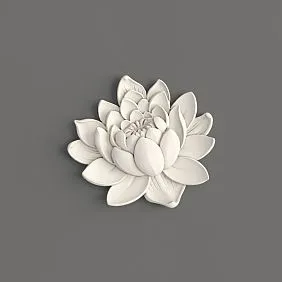
Round and oval rosettes are independent decorative elements with central symmetry. Diameter from 80 to 400 mm, relief from minimalist concentric circles to complex multi-layered compositions.
Small rosettes 80-120 mm are used as central accents on small nightstand doors, dresser drawers. Medium rosettes 150-250 mm are suitable for central cabinet doors, furniture wall pediments. Large rosettes 300-400 mm — for monumental furniture pieces: antique cabinets, palace buffets, fireplace portals (yes, polyurethane is also used for fireplaces, but that's a separate topic).
Rosette styles: geometric (circles, squares within a circle) for Art Nouveau and Art Deco, plant-based (leaves, flowers) for classic and Baroque, abstract (spirals, waves) for modern interiors.
Corner Elements: Masking Joints
Corner overlays solve two tasks at once: decorative and practical. They decorate furniture corners and simultaneously protect them from chips, impacts, and wear. Sizes of corner elements: from miniature 30×30 mm to protective 80×80 mm.
Internal corners: when moldings meet at 90°, a corner overlay masks the joint, making the transition smooth and beautiful. External corners: a corner element protects the edge from mechanical damage while creating a decorative accent.
Brackets and Corbels: Shelf Support
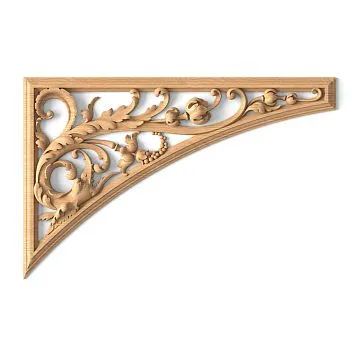
If your cabinet has open shelves, decorative polyurethane brackets will turn them into architectural elements. A bracket is an L-shaped or triangular element that visually supports a shelf (although the shelf actually rests on hidden fasteners).
Bracket sizes: from compact 60×80 mm to impressive 150×200 mm. Styles: classic curls, Baroque carving, minimalist trapezoids. Application: under shelves in shelving units, under tabletop surfaces of cabinets, under protruding cabinet cornices.
How to Choose Decor to Match Your Furniture Style
Mistake number one: buying beautiful decor without considering the furniture style. A carved Baroque overlay on a minimalist Scandinavian wardrobe is a stylistic disaster. Geometric Art Deco on a classic chest of drawers is also one. The right choice of decor depends on the style, color, and proportions of the furniture.
Classical Furniture: Symmetry and Opulence
Classical wardrobes, chests of drawers, and sideboards require decor with traditional motifs. Floral ornaments (acanthus, grapevines, laurel), symmetrical compositions, central rosettes, framing moldings. Color: most often white, ivory, gold, patinated bronze.
Proportions: large furniture — large decor. A 2.4-meter-tall wardrobe can accommodate an overlay of 300×400 mm. For a 60 cm high nightstand, an 80×100 mm overlay is suitable. The golden rule: the height of the overlay should be approximately 1/6 to 1/8 of the height of the facade.
Placement: a central overlay on each door, symmetrical corner elements, framing moldings around the perimeter. Symmetry is mandatory — classic style does not tolerate chaos.
Modern Furniture: Minimalism and Geometry
Modern interiors require restrained decor. Simple geometric shapes, minimal relief, clean lines. Square and rectangular overlays without complex ornaments, thin moldings 10-20 mm wide, round rosettes with concentric circles.
Color: white, black, gray, metallic. Bright colors are acceptable, but carefully — one accent element, no more. Proportions: decor should be noticeable but not dominant. The overlay occupies 10-15% of the facade area, no more.
Placement: asymmetry is acceptable. One large overlay on the left, two small ones on the right. Vertical strips of molding on one door, horizontal on another. Modern style allows for experimentation.
Scandinavian Furniture: Nature and Light
Scandinavian style is minimalist but not cold. Light tones, natural motifs, simple forms.decor for furnitureDecor in Scandinavian style includes thin moldings, small floral overlays (twigs, leaves), round rosettes with simple ornamentation.
Color: white, light gray, natural wood (polyurethane can be painted to look like wood — yes, it's possible). Proportions: small elements that do not overload the space. Placement: minimalism — one or two overlays for the entire piece of furniture, no more.
Loft Furniture: Industrial Aesthetic
Loft combines rough industrial elements with the nobility of classicism. Loft-style furniture is often made of rough wood, metal, but adding classic polyurethane decor creates an interesting contrast. A Baroque overlay on a rough metal safe-wardrobe door? Why not. A gilded rosette on an industrial chest of drawers? Sounds strange, but looks amazing.
Color: black, dark gray, rusty metallic, gold, silver. Proportions: large elements that create contrast with the rough texture of the base. Placement: deliberately random, asymmetrical, provocative.
Step-by-Step Guide: How to Turn an Old Wardrobe into a Work of Art
Theory without practice is useless. Let's break down step by step how to gluedecorative polyurethane elementsdecor onto furniture so that the result is professional.
Step one: surface preparation
Cleanliness is the key to success. Any dust, grease, old varnish, peeling paint — all of this will prevent the glue from adhering. The surface must be clean, dry, and degreased.
If the furniture is coated with varnish or glossy paint, lightly sand the surface with fine sandpaper (P180-P220). The goal is to create roughness for better glue adhesion. You don't need to remove all the varnish, just matte the surface. After sanding, wipe the surface with a damp cloth and let it dry.
If the furniture is painted and the paint is peeling in places, remove all unstable areas with a scraper. Fill in uneven spots with putty, let it dry, and sand. If the furniture is new and unvarnished — simply degrease it with alcohol or white spirit.
Step Two: Marking the Position of Elements
Don't glue by eye. Mark with a pencil or painter's tape where each element will be placed. For symmetrical compositions, use a tape measure, level, and plumb line. The central overlay must be exactly centered, side elements — at equal distances from the edges.
Place the decor on the surface without glue, see how it looks. Sometimes what seemed beautiful in the store looks out of place on real furniture. It's better to realize this before gluing than after.
If you are creating a frame from molding, cut the corners at 45° in advance. Use a miter saw or miter box for this. Place all parts of the frame on the surface, ensure the corners meet perfectly. If there are gaps — file, adjust. Only after perfect fitting start gluing.
Step Three: Choosing the Glue
Special adhesives are used for gluing polyurethane to wood, MDF, chipboard, metal, plastic. Options:
Polyurethane glue — the optimal choice. Sets in 15-20 minutes, fully cures in 24 hours. Bond strength is high, seam elasticity prevents detachment from vibrations, temperature changes. Apply in a zigzag pattern to the back of the decor, press onto the surface for 2-3 minutes.
Liquid nails (construction adhesive) — a more affordable option. Sets slower (30-40 minutes), requires longer fixation (5-10 minutes of pressure). Slightly lower strength, but sufficient for most tasks.
Epoxy glue — for critical connections subject to shear loads (e.g., brackets under shelves). The two-component compound cures slowly (2-4 hours), but creates an ultra-strong bond that cannot be removed without damaging the base.
Acrylic sealant — for temporary fixation of lightweight elements. Not suitable for load-bearing parts, but convenient because it is easily removed if you want to re-glue.
Step four: gluing
Apply glue to the back of the decor. If the element is small (up to 100 mm), apply glue in a continuous layer. If large (over 100 mm) — in a zigzag or dots around the perimeter and in the center. Don't skimp on glue, but don't over-apply — excess will squeeze out from the edges and will need to be cleaned up.
Place the element onto the surface precisely according to the markings. Press. Hold steady for 2-5 minutes (depends on the glue type — read the instructions). If the element is large and heavy, secure it with painter's tape or clamps during the glue setting time.
If glue has squeezed out from the edges, carefully remove the excess with a damp cloth before it sets. Dried glue is harder to remove — you'll have to scrape it off with a blade and sand it.
Step five: additional fixation (optional)
For heavy elements (large overlays, brackets), additional mechanical fixation is recommended. Thin finishing nails (length 20-30 mm) are driven through the decor into the base. Pre-drill holes with a diameter slightly smaller than the nail to avoid splitting the polyurethane.
Nail heads are countersunk by 1-2 mm, the holes are filled with acrylic putty, and sanded after drying. If the decor will be painted — the nails will not be noticeable at all.
Step six: painting
After the glue has completely dried (24 hours), you can paint. If the furniture is already painted and the decor was chosen to match the color — painting is not required. If the decor is white and the furniture is colored — you will have to paint.
Primer: apply acrylic primer to the entire decor, let dry for 2-4 hours. This improves paint adhesion and reduces its consumption. Painting: apply the first coat of paint with a brush or roller (for large elements, a spray gun is more convenient). Let dry for 4-6 hours. Apply the second coat. Two coats are mandatory for an even color.
To create effects (patina, gilding, aging), use special compounds: gold paint is applied with a dry brush to the raised parts of the relief, bitumen varnish fills the recesses, creating an aging effect, acrylic patina is applied with a sponge and partially wiped off with a cloth.
Mistakes that ruin the result
Even a simple task can fail due to typical mistakes. Let's look at what NOT to do.
Mistake one: gluing to a dirty surface
Grease stains, dust, old glue residue — all these are enemies of adhesion. The decor may stick, but will fall off in a week or a month. Degrease the surface with alcohol, mineral spirits, or a special degreaser. Let it dry before gluing.
Mistake two: wrong glue
PVA does not hold polyurethane. Super glue holds, but is brittle — it breaks under the slightest load. Instant glue is also not the best choice — the solvent in its composition can soften polyurethane. Use specialized glue for molding or polyurethane construction adhesive.
Mistake three: weak fixation during setting
Pressed the element for 10 seconds and let go? It will shift under its own weight before the glue sets. Hold for at least 2 minutes, preferably 5. For large elements, use temporary fixation with tape or clamps.
Mistake four: overloading with decor
More is not always better. If there are 5 overlays of different sizes and styles on each cabinet door — that's visual chaos, not decor. The rule: one large accent or several small identical elements, arranged symmetrically. Less is more.
Mistake five: style mismatch
A Baroque overlay on a minimalist IKEA cabinet looks ridiculous. Geometric Art Deco on a classic dresser — also. Choose decor that matches the style of the furniture. If in doubt — choose neutral decor (simple geometric shapes, thin moldings).
Additional overlays: not just for furniture
Buy decorative overlays for interior doors— another popular application of polyurethane decor. A smooth door turns into a paneled door in a couple of hours and a couple of thousand rubles. The technology is the same: marking, gluing, painting.
But the applications don't end there. Polyurethane overlays are used for decorating:
Walls — creating boiserie panel systems, framing niches, zoning space. Ceilings — rosettes for chandeliers, decorative panels, framing ceiling cornices. Fireplaces — portals, frames, imitation of stone and marble. Doors — both interior and entrance. Furniture — cabinets, dressers, tables, bed headboards, kitchen fronts.
The versatility of polyurethane makes it the number one material for budget-friendly yet impressive decoration of any surface.
How much does furniture upgrade with decor cost?
Specific numbers. A small overlay 80×100 mm costs 500-800 rubles. A medium overlay 150×200 mm — 1200-2000 rubles. A large overlay 400×600 mm — 5000-8000 rubles. Molding per linear meter — 200-600 rubles depending on the profile width. A round rosette with a diameter of 200 mm — 1500-2500 rubles.
To upgrade a standard wardrobe (3 doors) you will need: 3 medium-sized central overlays (3×1500 = 4500 rub.), molding for framing the doors (15 m × 400 rub. = 6000 rub.), glue (500 rub.). Total: about 11,000 rubles for materials. DIY work — free. The result is a wardrobe that looks custom-made for 150,000 rubles.
For comparison: buying a new wardrobe of similar quality will cost 80,000 — 120,000 rubles. Reupholstering and restoring an old wardrobe in a workshop — 30,000 — 50,000 rubles. DIY upgrade with decor — 11,000 rubles. The savings are obvious.
How to care for decorated furniture
Polyurethane decor does not require special care. Wipe with a damp cloth once a week, like regular furniture. Do not use abrasive products (powders, stiff brushes) — they can scratch the surface.
If the decor is painted, repainting may be required every 5-7 years. It's simple: light sanding with fine sandpaper, primer, two coats of new paint. One day of work — and the decor looks like new.
If an element accidentally comes off (impact, falling heavy object), it can be re-glued. Clean the old glue from the back side and from the furniture surface, apply fresh glue, press. The bond strength is restored.
Where to buy quality decor: selection criteria
decor for furniturePolyurethane decor is sold in hardware stores, online stores, and molding salons. How to distinguish quality decor from a cheap fake?
Density. Quality polyurethane is dense (300-500 kg/m³), does not dent when pressed with fingers. Cheap soft polyurethane (like a sponge) deforms quickly, the relief blurs.
Clarity of relief. Quality decor has clear relief, details are worked out to the millimeter. Cheap decor has blurry relief, smeared details, inaccurate shapes. Run your finger over the ornament — you should feel clear edges, not soft transitions.
Geometry. A quality element has a flat back side, edges without chips or burrs. A cheap one may be crooked, with material drips, uneven edges.
Smell. Quality polyurethane has almost no smell or a light neutral odor. Cheap polyurethane may smell of chemicals, solvent, rubber — a sign of low-quality raw materials.
Frequently asked questions: answers from a practitioner
Can polyurethane decor be glued to laminated furniture?
Yes, but the surface needs to be sanded with fine sandpaper (P180-P220) to create roughness. Smooth laminate does not hold glue well, rough laminate — perfectly.
Which glue is better — liquid nails or polyurethane?
Polyurethane glue is stronger, more elastic, and sets faster. Liquid nails are cheaper but require longer fixation. For most tasks, both are suitable.
Can polyurethane be painted with aerosol spray paint?
Yes, polyurethane paints excellently with aerosols. It's faster and more convenient than a brush, especially for small elements with complex relief. Apply 2-3 thin coats with 15-20 minute intervals.
How long does polyurethane adhesive take to dry?
Initial set (you can let go of the element) — 15-30 minutes. Full curing (can be painted, loaded) — 24 hours. Don't rush, let the glue fully harden.
Can polyurethane decor be used on kitchen furniture?
Yes, polyurethane is moisture-resistant, not afraid of steam, grease, or cleaning agents. Ideal for kitchens. The main thing is to use moisture-resistant paint (acrylic enamel, alkyd paint).
How to remove polyurethane decor if you want to re-glue it?
Carefully pry with a spatula or knife, peel off. Remove glue residue with solvent or mechanically (scraper, sandpaper). Sand the surface, you can glue new decor.
Can polyurethane elements be bent for curved surfaces?
No, polyurethane is rigid, does not bend. For radius surfaces, special curved elements are needed (they are also produced, but they are more expensive and not sold everywhere).
Does polyurethane decor withstand impacts and mechanical loads?
Polyurethane is stronger than plaster but inferior to wood. Under a strong impact, a piece may chip off. However, it is easily repaired: the chipped part is glued back with epoxy glue, the seam is sanded, painted — the defect is invisible.
Can polyurethane decor be used on metal furniture?
Yes, polyurethane adheres to metal using polyurethane or epoxy glue. The metal should be degreased beforehand and lightly sanded to improve adhesion.
How much does a 200×300 mm polyurethane overlay weigh?
Approximately 80-120 grams depending on the relief thickness. This is 3-5 times lighter than wood and 10 times lighter than plaster. Lightness is the main advantage of polyurethane for furniture.
Conclusion: Transform the ordinary into the unique with STAVROS
Furniture is not a consumable item that is replaced every five years. It is durable items that last for decades. But even quality furniture eventually becomes morally outdated, boring, and loses relevance. And heredecorative polyurethane elementsbecomes the salvation. Instead of buying a new wardrobe for hundreds of thousands, you transform an old one into a designer piece for pennies, making it pleasing to the eye again.
Moldings for Furnitureis not just decoration, it is a tool for transforming space. The same wardrobe with different decor looks completely different: classic overlays create a palace atmosphere, geometric moldings create modern minimalism, and floral motifs create romantic Provence. By changing the decor, you change the character of the interior without replacing the furniture.
Company STAVROS has been creatingpolyurethane decorfor professionals and enthusiasts. The assortment includes hundreds of options for overlays, moldings, rosettes, and corner elements in all styles and sizes. Each product undergoes strict quality control: material density, relief clarity, geometry, and absence of defects. You get decor that will last for decades without deforming, fading, or losing its shape.
STAVROS specialists will help you select the optimal decor for your project, calculate the required number of elements, and advise on installation and painting technology. Delivery throughout Russia and warehouse programs in Moscow and St. Petersburg ensure quick order receipt.
Transform an ordinary wardrobe into a furniture masterpiece. Give an old chest of drawers a second life. Create a unique interior that you won't find at your neighbors'. All this is possible with STAVROS decorative elements — where quality meets affordability, true beauty is born.