Article Contents:
- History of Furniture Decoration: From Antiquity to the Present
- Antiquity: Birth of Classical Forms
- Middle Ages: Gothic Expressiveness
- Renaissance: Revival of Classical Harmony
- Technology of Creation: From Concept to Realization
- Classicism: Return to Rigor
- Modernism: Nature as Inspiration
- Contemporary: Eclecticism and Minimalism
- Types of Furniture Decorative Elements
- Carved Appliqués: Universal Decoration Tool
- Plant ornaments
- Geometric patterns
- Decorative Compositions
- Cartouches and Frames
- Furniture Rosettes: Accents and Composition Centers
- Corner Elements
- Friezes and Borders
- Brackets and Consoles
- Moldings and profiles
- Capitals and Bases
- Furniture legs
- Materials for Furniture Decoration
- Natural wood: warmth and nobility
- Oak
- Oak
- Ash
- Birch
- Walnut
- Linden
- Polyurethane: Practicality and Accessibility
- MDF: Technological Advantages and Stability
- Combining materials
- Techniques for Creating Decorative Elements
- Hand Carving: Art and Uniqueness
- CNC Machine Carving
- Combined Technology
- Polyurethane Casting
- Application of Decorative Elements on Various Types of Furniture
- Cabinets and Buffets: Grandeur and Scale
- Commodes and Chests: Elegant Accents
- Tables: From Utility to Art
- Beds: From Functionality to Luxury
- Chairs and Sofas: Miniature Architecture
- Mirrors and Frames: Framing Beauty
- Doors: Grand Entrance
- Furniture Decoration Styles
- Classicism: Strict Harmony
- Baroque: Luxury and Dynamism
- Rococo: Elegance and Asymmetry
- Empire Style: Imperial Grandeur
- Modern style: natural organic
- Provence: Rustic Charm
- Country: Cozy Tradition
- Modern Style: Minimalism with Accents
- Furniture Decoration Process
- Planning and Sketching
- Selecting Elements
- Surface Preparation
- Installing Appliqués
- Joint sealing
- Finishing
- Modern Trends in Furniture Decoration
- Return to Classic Design
- Natural materials
- Customization
- Mixing Styles
- Artificial aging
- Color solutions
- Care for Decorated Furniture
- Regular Cleaning
- Protection against damage
- Maintaining Finish
- Controlling microclimate
- Restoration
- DIY Furniture Decoration: Step-by-Step Guide
- Choosing an Object
- Purchasing Elements
- Preparing tools and materials
- Surface Preparation
- Fitting
- Adhesive Application
- Putty
- Painting
- Enjoying the Result
- Where Furniture Decorative Elements Are Applied
- Home interiors
- Restaurants and Hotels
- Offices and Executive Offices
- Museums and Galleries
- Theaters and Film Production
- Churches and Temples
- Frequently Asked Questions
- Conclusion: Create Beauty with Professionals

Furniture is not just a utilitarian item filling space. It is an expression of taste, a demonstration of status, a realization of the owner's aesthetic preferences. The difference between an ordinary cabinet and a piece of furniture art often lies in the details — those verycarved appliqués on furniture, which transform a simple structure into an object of admiration. Decorative elements can radically change the appearance of furniture, give it individuality, fit it into a historical style, or emphasize modernity. In this material, we delve into the world of furniture decoration, revealing its possibilities, features of selection, and application.


The desire to decorate furniture is rooted in human nature. Since our ancestors learned to work with wood, they did not limit themselves to creating functional items—they adorned them with carving, inlay, and painting.
Antiquity: Birth of Classical Forms




Antiquity: Birth of Classical Forms
Ancient Egyptians decorated furniture with gilding and ivory inlay. Greeks and Romans created classical ornamental motifs still used today: acanthus leaves, meanders, palmettes, rosettes. These elements adorned thrones, beds, tables of the nobility, emphasizing the high status of the owner.
Our factory also produces:



Medieval: Gothic expressiveness
Gothic style brought pointed arches, delicate carvings, and religious symbolism into furniture art. Furniture became architectural — cabinets resembled cathedrals with turrets and spires, carved details abounded in complex interlacing.
Get Consultation
Renaissance: revival of classical harmony
The Renaissance revived interest in classical forms, but reinterpreted them.Wooden furniture decorationIncluded columns, pilasters, cartouches, grotesques. Furniture became a work of art, where carvers competed with painters and sculptors in skill.
Baroque and Rococo: The Apotheosis of Decoration
The XVII-XVIII centuries — the era of decoration triumph. Baroque brought grandeur, dynamism, abundance of gilding and carving. Rococo perfected decorative art — curved lines, asymmetrical compositions, elegant floral ornaments, shells and scrolls covered every square centimeter of surface.
Classicism: return to strictness
The end of the XVIII century marked a return to classical strictness and proportionality. Decoration became more restrained, geometric, symmetrical. Rosettes, garlands, laurel wreaths, meanders were used sparingly, emphasizing rather than concealing the structure.
Modern: nature as inspiration
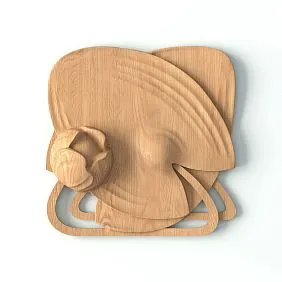
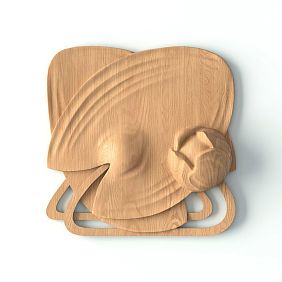
The turn of the XIX-XX centuries brought the modern style with its cult of natural forms. Carved elements depicted stylized flowers, climbing plants, flowing lines. Asymmetry, fluidity, organicism — characteristic features of furniture decoration at that time.
Contemporary: eclecticism and minimalism
Today, various approaches coexist. Minimalism implies minimal or no decoration. But simultaneously, interest is growing in classical forms, handcraft, unique carved elements. Modern technologies allow creating decoration of any complexity, making it accessible to a broad audience.
Types of decorative elements for furniture
The diversity of furniture decoration is astonishing. Let's consider the main categories of elements that transform furniture.
Carved appliqués: universal decoration tool
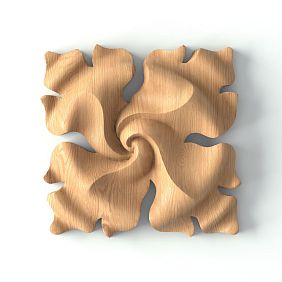
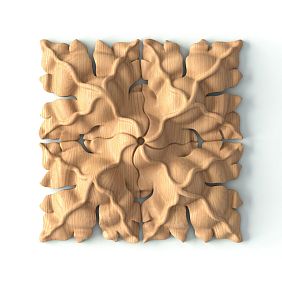
Appliqués are the most universal decorative elements. They are attached to the furniture surface, creating relief and enriching the visual image.Carved appliqués for furnitureThey come in various shapes and sizes — from miniature rosettes to large panels.
Plant Ornamentation
Nature motifs — eternal classic of furniture decoration. Acanthus leaves, grapevines with clusters, oak branches with acorns, floral garlands create the feeling of living nature frozen in wood. A skilled carver conveys not just the outline of a leaf, but its volume, curves, veins. Such appliqués are ideal for furniture in classical, baroque, and Provence styles.
Geometric patterns
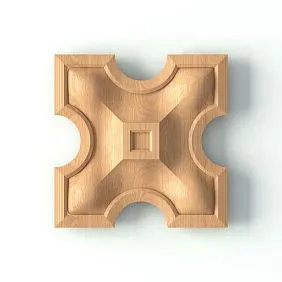
Meanders, rosettes, stars, diamonds, interlacing — geometric decoration emphasizes rationality, order, symmetry. It suits interiors of classicism, art deco, and modern styles. Geometric appliqués can be strictly symmetrical or represent complex interlacing with an illusion of movement.
Figurative compositions
Images of animals, birds, mythological creatures, human figures transform appliqués into miniature sculptures. Lion masks, griffins, cupids, caryatids — traditional elements of classical furniture. Such appliqués become compositional centers, drawing attention.
Cartouches and frames
Cartouches — decorative elements resembling a rolled scroll or shield, often with an empty center for initials, coats of arms, or other images. They create a visual center on the furniture facade, giving the item individuality.
Furniture rosettes: accents and compositional centers
Rosettes — circular or polygonal appliqués with symmetrical ornament radiating from the center. They resemble flowers, stars, or suns.Buy furniture rosettesThey come in various diameters — from several centimeters to dozens of centimeters.
Rosettes are used as standalone accents — in the center of cabinet doors, on drawers of chests, at the corners of tabletops. They can be grouped, creating a rhythmic pattern. Small rosettes decorate corners of frames and panels, acting as decorative nails or plugs.
Corner elements
Corners are the most vulnerable parts of furniture, often damaged. Decorative corner caps not only protect but also decorate. They are typically shaped like a 'G' or triangle, often stylized leaves, scrolls, or corner rosettes.
Corner elements create a sense of completion, frame surfaces, and emphasize the structural lines of furniture.
Friezes and Borders
Long horizontal appliqués with repeating ornamentation are called friezes. They run along the top or bottom edge of furniture, dividing facades into tiers and creating horizontal lines. The frieze ornament may be vegetal (a flowing wave of leaves), geometric (meander, scallops), or figurative (a sequence of mythological creatures).
Borders are narrow profiled appliqués framing panels, doors, drawers. They create a framing effect and visually structure the surface.
Brackets and Consoles
These elements are not only decorative but also functional — they support shelves, tabletops, and projecting cornices. A bracket has a curved shape, often adorned with carving — leaves, scrolls, volutes. A console is a larger element, may resemble a miniature sculpture.
Moldings and profiles
Profiled strips of various cross-sections are used to create frames, frame panels, and decorate furniture cornices. They create play of light and shadow, adding volume to flat surfaces. Mouldings can be simple — with one or two profile curves — or complex — multi-profiled with carved details.
Capitals and Bases
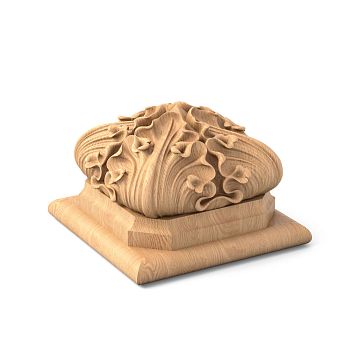
If furniture includes columns or pilasters (as in classic-style cabinets, beds, buffets), they require capitals — decorative upper finishes — and bases — lower supporting elements. Capitals replicate classical architectural orders — Doric, Ionic, Corinthian — or represent original interpretations.
Furniture Legs
Legs define the character of furniture no less than facades. Straight conical legs create classic rigidity. Curved cabriole legs give furniture baroque opulence. Turned baluster-like legs are characteristic of traditional furniture. Carved legs with vegetal ornamentation transform an ordinary table into a work of art.
Materials for Furniture Decoration
Material selection determines the appearance, durability, and cost of decorative elements.
Natural wood: warmth and nobility
Solid wood — traditional and most valuable material for furniture decoration. Different species have unique characteristics.
Oak
Hard, dense, durable wood with expressive texture. Color ranges from light yellow to dark brown. Oak is ideal for large carved elements requiring strength. It holds carving details well and does not chip. After staining, it acquires a noble dark tone.Decorative materialsOak elements serve for decades, preserving the clarity of relief.
Beech
Dense, uniform light-colored wood — from pink to cream. Beech is easy to carve, allows creating fine details. It is cheaper than oak but does not lack in strength. Beech appliqués, after staining, can imitate valuable species.
Ash
Strong wood with beautiful texture resembling oak but lighter. Ash is elastic, easily bends, suitable for creating curved elements. Its light tone is ideal for Scandinavian and modern styles.
Birch
Affordable light-colored wood. Birch is softer than oak and beech, but strong enough for most furniture elements. It is easy to process, paint, and stain. Birch appliqués are an optimal choice for budget projects.
Walnut
Valuable wood with noble dark tones and expressive texture. Walnut is dense, cuts well, and polishes to a mirror finish. Walnut decorative elements are a sign of luxurious furniture.
Linden
Soft light-colored wood, ideal for delicate openwork carving. Linden is easy to cut, allows creating minute details. Traditionally used for iconostasis carving, but also perfectly suitable for furniture in classic or country styles.
Polyurethane: Practicality and Accessibility
Polyurethane appliqués — a modern alternative to wood. They are lightweight, moisture-resistant, do not deform or crack. After painting, they visually match wooden or plaster elements. Polyurethane allows creating complex shapes via molding, which is impossible or extremely expensive in wood.
Polyurethane elements are ideal for furniture in rooms with variable humidity — kitchens, bathrooms. They are cheaper than wooden counterparts, making decoration more accessible.
MDF: Technological and Stable
MDF appliqués, cut on CNC machines, combine precision with affordability. MDF has no natural defects, is dimensionally stable, and paints well. Complex openwork patterns, impossible with hand carving, are easily created by milling.
MDF is less strong than solid wood, vulnerable to moisture, lacks natural texture. But for many tasks, it is the optimal choice.
Combining materials
Experienced furniture makers combine materials: use MDF or affordable wood species for the base, and valuable wood species for accent carved elements. This optimizes cost while preserving aesthetics.
Techniques for Creating Decorative Elements
The method of manufacture affects the quality, uniqueness, and cost of the decoration.
Hand-carving: Art and Uniqueness
Hand-carving is the oldest method of creating decoration. The carver works with chisels and knives, creating relief directly in the solid block of wood. Each piece is unique—it is impossible to carve two absolutely identical appliqués.
Hand-carving allows achieving maximum artistic expressiveness, creating the most complex compositions, conveying the finest nuances of form. But this is a long, labor-intensive process requiring high skill from the craftsman. Hand-carved elements are expensive, but they transform furniture into a work of art.
CNC machining
CNC carving revolutionized the production of decoration. A computer model is converted into a control program, and the machine cuts the element with precision down to tenths of a millimeter. Complex shapes can be reproduced, creating dozens of identical appliqués.
CNC carving combines high quality with an affordable price. Elements are precise, repeatable, and cleanly finished. But they lack the liveliness and handmade warmth characteristic of hand-carving.
Combined technology
The optimal solution is combining machine and hand processing. The main relief is carved on the machine, then the carver manually refines details, adds subtleties, and removes mechanical rigidity. This approach delivers handcrafted quality at a moderate cost.
Polyurethane Casting
Polyurethane elements are produced by casting into silicone molds. First, a master model (by hand or on a machine) is created, from which the mold is taken, and liquid polyurethane is poured into it. After hardening, the element is removed, processed, and painted. The technology allows reproducing the most complex shapes with the finest details.
Application of Decorative Elements on Various Types of Furniture
Let’s consider how decoration transforms specific pieces of furniture.
Cabinets and Buffets: Grandeur and Scale
Large case furniture is an ideal field for decoration. Cabinet doors are adorned with carved appliqués in the center, at the corners, and along the perimeter. The central rosette draws the eye, corner elements frame the surface, moldings create a framed composition.
The upper cornice of a cabinet is decorated with friezes and brackets. Pilasters or half-columns on the sides add architectural character. Buffets in the classical style become furniture palaces, impressing with carved details.
Commodes and Chests: Elegant Accents
Drawer fronts are ideal for appliqués. A central rosette or cartouche on each drawer creates a rhythmic composition. Handles in the form of carved brackets or rosettes complete the look.
A commode’s top may be framed by carved molding. Legs—simple turned or elaborate cabriole—determine the piece’s style.
Tables: From Utility to Art
Dining, writing, and console tables are decorated differently. The base—plinth and legs—are the main zones for decoration. Carved legs transform a table into a sculptural object. Plinths are adorned with friezes and appliqués.
The tabletop may have a carved edge, an inlaid border. Console tables placed against a wall often have a richly decorated front side with appliqués, rosettes, and brackets.
Beds: From Functionality to Luxury
Headboards and footboards are the main objects of decoration. Carved panels, cartouches, and floral compositions create an atmosphere of luxury and comfort. A royal canopy on columns with capitals transforms a bed into a furniture throne.
Side plinths of beds are decorated with moldings and friezes. Legs, especially in beds of classical style, are turned or carved columns.
Chairs and Armchairs: Miniature Architecture
Backrests of chairs are a field for artistic carving. Delicate floral compositions, cartouches, heraldic shields transform a simple chair into a piece of furniture art. Legs—front and rear—may be carved, turned, or curved.
Armrests of armchairs are often finished with carved rosettes, mascarons, or lion heads. The plinth under the seat is decorated with appliqués and friezes.
Mirrors and Frames: Framing Beauty
Frames for paintings, photographs, and panels are created by the same principle. Decorative elements emphasize the value of the framed object and create a transition from the wall to the image.
Frames for paintings, photographs, and wall hangings are created using the same principle. Decorative elements emphasize the value of the framed object and create a transition from the wall to the image.
Doors: Grand Entrance
Interior doors, especially in classical interiors, are decorated with appliqués. Panels are framed with moldings, and rosettes or cartouches are placed in the center. Carved casings complete the look.
Entrance doors can be adorned especially richly — with large appliqués, bas-relief carving, creating an impression of strength and protection.
Styles of Furniture Decoration
The choice of decorative elements determines the character of the furniture and the entire interior.
Classicism: strict harmony
Symmetry, proportionality, classical motifs — the foundation of classical decoration. Rosettes, meanders, laurel wreaths, flutes, grooves, Ionic volutes create an image of noble restraint. Colors — natural wood, white, bone, gold.Decorations for homein the classical style, timeless and unfashionable.
Baroque: Luxury and Dynamism
Abundance of carving, lavish forms, gilding, dynamic curved lines characterize baroque. Floral garlands, putti (winged infants), mascarons, cartouches cover the surfaces. Furniture in the baroque style is a demonstration of wealth and power.
Rococo: Elegance and Asymmetry
Lightness, playfulness, asymmetrical compositions, pastel tones distinguish rococo. Carved elements depict shells, scrolls, floral bouquets, birds. Gilding is subdued, not bright. Rococo furniture creates an atmosphere of refined aristocracy.
Empire: Imperial Grandeur
The style of Napoleon's Empire is characterized by monumentality, symmetry, classical motifs. Eagles, griffins, laurel wreaths, palmettes, sphinxes decorate furniture. Gold and bronze combine with dark wood. Empire creates a sense of strength and grandeur.
Modern: natural organic
Smooth, flowing lines, stylized plants, asymmetry, rejection of right angles are characteristic of modernism. Carved elements depict irises, poppies, climbing stems, dragonflies, butterflies. Modernism creates a poetic, dreamy atmosphere.
Provence: Rural Charm
Simplicity of forms, plant motifs, pastel colors, effects of artificial aging — characteristics of Provence. Carved elements are not overly complex — simple rosettes, lavender sprigs, olive branches, grapevines. Provence furniture creates an atmosphere of a French village.
Country: Cozy Tradition
Massiveness, durability, simple carving, natural wood tones characterize the country style. Decoration is functional and restrained — turned legs, simple rosettes, carved handles. Country creates a sense of homey comfort and tradition.
Modern style: minimalism with accents
Modern furniture often leans toward minimalism, but decorative elements are used selectively as accents. Simple geometric shapes, sleek profiles, matte or glossy surfaces. Decoration emphasizes rather than overwhelms.
Furniture Decoration Process
How to practically apply decorative elements to furniture?
Planning and sketching
Before purchasing appliqués, it is necessary to plan their placement. A sketch on paper or computer visualization shows how the furniture will look after decoration. It is important to consider symmetry, proportions, and balance.
Measure the furniture, determine the decorative zones — center of the facade, corners, perimeter, cornice. Select the size of appliqués to match the scale of the furniture. Too small elements will disappear, too large will overwhelm.
Element Selection
Decoration IdeasFor furniture, draw from catalogs, designer portfolios, historical samples. It is important that all elements on the furniture belong to the same style and have similar carving detail.
Select central rosettes, corner elements, moldings, friezes. Check compatibility of sizes — elements must harmonize together.
Surface preparation
The surface of the furniture must be clean, dry, and degreased. Old lacquer coating may require removal or sanding for better adhesive bond.
If the furniture is new and uncolored, the surface is sanded and dusted. To improve adhesion, you can prime the area where the appliqué will be installed.
Mounting overlays
Wooden overlays are attached using special carpentry adhesives — PVA, polyurethane, or epoxy. The adhesive is applied in a thin, even layer to the back of the overlay. The overlay is pressed onto the furniture surface, and excess adhesive is removed. The element is secured with clamps, tape, or weight until the adhesive dries.
For added security, wooden overlays can be additionally fastened with thin, headless finishing nails that are driven flush into the wood and sanded smooth.
Polyurethane overlays are mounted using a special polyurethane adhesive. They are lightweight, and mechanical fastening is usually not required.
Joint sealing
After the adhesive dries, joints between the overlay and the furniture surface, as well as areas where nails were installed, are sanded. Wood filler in the base color is used. After drying, the filler is sanded smooth.
Final finishing
If the furniture is to be painted, the overlays are primed and painted together with the base. This creates visual unity. Alternatively, contrast can be achieved — painting overlays in a different color, patinating, or gilding.
For furniture made of natural wood, treatments such as staining, toning, and varnishing are applied. Overlays are treated with the same compounds. Effects such as aging — brushing (removal of soft fibers), patination (darkening of carved recesses), or craquelure (creating cracks) — can be achieved.
Finish coatings — varnish, oil, or wax — protect the wood and highlight the beauty of carving. Matte finishes create a noble, restrained look, while glossy finishes convey grandeur and shine.
Modern trends in furniture decoration
Furniture fashion changes, but some trends remain stable.
Return to classicism
New trends in interior design 2025They highlight classic forms, quality materials, and handcrafted work. After decades of minimalism, people once again value decorative elements, carved details, and craftsmanship.
Natural materials
Trends in interior design 2026They emphasize ecological and natural qualities. Solid wood with emphasized grain, natural tones, and eco-friendly finishes are increasingly valued.
Customization
turn interior design into art, where every element is thoughtfully selected to express the owner's taste and individuality.They reflect owners’ desire for unique furniture. Custom carved elements, personalized ornaments, initials, and crests transform furniture into a personal statement.
Style mixing
Eclecticism allows combining classic carved elements with modern minimalist forms. A Baroque rosette on a minimalist facade creates an intriguing contrast, highlighting the owner’s individuality.
Artificial aging
Vintage aesthetics are popular. Techniques such as brushing, patination, and craquelure create the impression of antique furniture that has lived a long life. Carved elements with patina appear especially noble.
Color Solutions
Latest trends in interior designThey include warm natural tones and deep saturated hues. Decorative elements are painted in contrasting or matching colors, creating various visual effects.
Care for decorated furniture
Furniture with carved elements requires careful maintenance.
Regular cleaning
Dust accumulates in carved recesses, dulling the beauty of details. Regular dry cleaning with a soft brush or natural-bristle brush removes dust. A vacuum cleaner with a soft attachment on low power can also be used.
Wet cleaning is done with slightly damp cloth, without excess water. Wood does not like moisture — it can cause swelling and cracking of the finish.
Protection against damage
Carved elements, especially thin or protruding ones, are vulnerable to mechanical damage. Avoid impacts, do not place heavy objects on furniture that could break the carving.
Maintaining the finish
Varnished surfaces are periodically refreshed with special furniture polishes. Oil finishes require regular oiling — every six months to a year. Wax finishes are polished with soft cloth, creating a noble matte sheen.
Microclimate control
Wood reacts to humidity and temperature. Optimal relative humidity is 40–60%, temperature is 18–25°C. Sudden fluctuations may cause deformation or cracking. Do not place furniture near radiators, fireplaces, or air conditioners.
Restoration
If a carved element is damaged — chipped, cracked, or detached — restoration is required. Small chips are sanded, sanded, and touched up. Detached overlays are reattached. Serious damage requires professional restoration work.
DIY furniture decoration: step-by-step guide
The desire to refresh furniture and give it individuality can be realized by your own hands.
Choosing an object
Start with a simple item — a chest, cabinet, or wardrobe door. Assess the surface condition and determine where to place the decoration.
Purchase elements
Buy Carved DecorYou can buy them in specialized stores or online. Choose elements that match the style of the furniture and interior. Don't skimp on quality — good decor will last for decades.
Tool and material preparation
You will need: wood glue, glue brush, wood putty, sandpaper of various grits, primer, paint or varnish, painting brushes, clamps or weights for fixation.
Surface preparation
Clean the furniture of dirt. If the surface is glossy, lightly sand it for better adhesive bond. Dust and degrease.
Fitting
Lay out the appliqués on the surface, check the composition. Mark the installation spots with a pencil.
Adhesion
Apply glue to the back of the appliqué, place it on the marked spot, press down. Remove excess glue. Clamp or weight it down. Allow the glue to dry according to instructions — usually 12-24 hours.
Puttying
Fill joints and small defects with putty. After drying, sand it smooth.
Painting
Prime the surface, including the appliqués. After the primer dries, apply paint in two to three coats. You can patina — apply dark paint to the carving, then lightly rub it off, leaving the darkened areas in the recesses. Final varnishing will protect the finish.
Enjoying the result
Your furniture has been transformed. You have created a unique piece, infused a part of yourself, and expressed your creativity.
Where are furniture decorative elements applied?
The sphere of application extends beyond household furniture.
Home interiors
Living rooms, bedrooms, offices, hallways — wherever furniture with carved decoration creates an atmosphere, highlights the style, and demonstrates the owner's taste.
Restaurants and hotels
Decorations for the hallRestaurant and hotel lobbies create the first impression. Furniture with carved elements emphasizes the establishment's status and creates a memorable image.
Offices and executive offices
Presentable furniture in the director's office — a symbol of company success. A carved desk, chair, and cabinet demonstrate solidity and command respect.
Museums and galleries
Historic museum interiors require authentic furniture. Reconstruction of elements according to historical models — a task requiring skill and knowledge.
Theaters and film production
Creating Cinema DecorationsOften includes manufacturing furniture appropriate to the era. Carved elements create authenticity in historical scenes.Theatrical DecorationsIncludes furniture that must look convincing even from close range.
Churches and temples
Church furniture — thrones, altars, shrines, iconostases — is traditionally heavily decorated with religious motifs. These are sacred items requiring special care and craftsmanship.
Frequently asked questions
Can wooden appliqués be used on furniture made of MDF or LDF?
Yes, wooden appliqués adhere excellently to any surface — solid wood, MDF, LDF. It is important to properly prepare the surface and use the appropriate glue.
How to choose the size of the appliqué?
The appliqué should match the scale of the furniture. For a small chest, appliqués with a diameter of 5-8 cm are suitable; for a large cabinet, 15-25 cm. The appliqué should not cover more than one-third of the front panel's surface.
Can wooden appliqués be painted?
Yes, wooden elements paint beautifully. They are supplied either unfinished (ready for painting) or with factory finish. Unfinished ones can be stained, painted, varnished, patinated, or gilded.
What adhesive to use for attaching appliqués?
For wooden elements — carpentry glue PVA, polyurethane glue, epoxy compound. For polyurethane — special polyurethane glue or liquid nails.
Do you need to additionally nail appliqués?
For small elements, glue is sufficient. Large, heavy appliqués can be additionally secured with thin finishing nails, which are countersunk and sanded.
How to care for carved elements?
Regular dry cleaning with a soft brush, periodic treatment with polishes or wood oils, protection from mechanical damage and humidity fluctuations.
Can an appliqué be removed if it gets old?
Removing a glued appliqué without damage is difficult. You can carefully cut it with a knife, detach it, then sand the mounting area. Easier — repaint the furniture, changing the appliqué style.
How much do carved appliqués cost?
Price depends on size, carving complexity, material, and manufacturer. Simple birch rosettes cost from several hundred rubles, complex hand-carved oak panels — tens of thousands.
Can an appliqué be ordered according to a custom sketch?
Yes, many manufacturers offer custom production. This is more expensive than standard elements, but allows creating absolutely unique furniture.
What style of appliqués to choose for modern furniture?
For modern furniture, minimalist geometric elements, simple rosettes, minimalist moldings are suitable. You can create contrast by adding a classic baroque appliqué to a minimalist facade.
Do wooden appliqués fear moisture?
Wood is sensitive to moisture. For kitchens and bathrooms, better use polyurethane elements. If using wooden — treat them with moisture-resistant varnish.
Can you make carved appliqués yourself?
If you have woodworking skills, tools, and time — yes. But quality carving requires years of practice. Easier — buy ready-made elements.
How to create an aged effect on appliqués?
Use brushing (removal of soft fibers with a metal brush), patination (darkening recesses with dark paint or wax), craquelure (lacquer creating cracks).
Do wooden and polyurethane elements match on one piece of furniture?
Yes, if they are painted the same color and match in style. After painting, material differences are not noticeable.
Is special tool needed for installing appliqués?
Minimal set: brush, putty knife, sandpaper, clamps. Special tools are not required.
Conclusion: create beauty with professionals
Furniture is more than functional items. It is an expression of personality, a demonstration of taste, and the creation of home atmosphere.Carved appliqués for furnitureRosettes, moldings transform ordinary furniture into applied art pieces, filling space with character and style.
Choosing quality decorative elements is the key to success. Cheap items with rough carving, unclear details, uneven finishing will spoil the impression even of expensive furniture. QualityWooden furniture decoration, on the contrary, enhances even budget items, giving them dignity and value.
STAVROS — your reliable partner in furniture decor. For more than twenty-three years, we have created decorative elements that adorn thousands of interiors across Russia. Our products combine traditional craftsmanship with modern technologies, respect for classic forms, and a willingness to realize original ideas.
The STAVROS catalog features hundreds of models of carved appliqués, rosettes, friezes, corner elements, and moldings made from natural wood — oak, beech, ash, birch. We offer elements in various styles: from strict classicism to lavish baroque, from elegant modernism to cozy Provence. Each customer will find a solution that matches their taste and project.
Our own production allows us to control quality at every stage. We use carefully selected wood, proven processing technologies, and multi-stage quality control. Every appliqué leaving our workshops is flawless — precise carving, smooth sanding, exact dimensions.
Modern CNC machines create elements with intricate precision. Experienced carvers hand-finish details, adding liveliness and uniqueness. This combination of technology and craftsmanship delivers optimal results — high quality at a reasonable price.
We offer not only standard elements from the catalog, but also custom manufacturing based on individual sketches. Your idea, realized in wood by professional craftsmen, transforms furniture into a unique, one-of-a-kind artwork.
Buy furniture rosettesAppliqués, friezes, and corner elements are available in our online store with delivery across Russia. Our extensive warehouse inventory ensures prompt shipment of popular items — you’ll receive your order in the shortest time. Custom-made elements are produced according to the production schedule, respecting agreed-upon deadlines.
STAVROS professional consultants will help you select elements to match your furniture, recommend optimal sizes and styles, and answer any questions. We accompany our clients from selection to delivery, ensuring comfort and confidence.
No complaints — our standard. We guarantee that each element meets stated specifications, is flawlessly executed, and will serve for many years. This saves your time, nerves, and budget, allowing you to focus on creativity rather than resolving issues with defective products.
The trust of thousands of clients — professional furniture makers, interior designers, restorers, and private owners — confirms our reputation. High ratings, positive reviews, and repeat orders show that STAVROS is the right choice.
Furniture decor is an art accessible to everyone. You don’t need to be a carver or joiner to create unique furniture. Simply choose quality decorative elements, install them carefully, and finish them — and your furniture will transform, gain individuality, and become a source of pride.
Create beauty. Appreciate craftsmanship. Choose quality. Choose STAVROS — and your furniture will become a work of art that will delight you and impress guests for many years!