Article Contents:
- Ecology as a new luxury
- Wood species: from budget pine to elite wenge
- Pine — accessible classic
- Larch — golden middle ground
- Ash — light alternative to oak
- Oak — aristocrat among species
- Walnut — chocolate luxury
- Types of wooden finishing: from planks to carved panels
- Exotic species — for connoisseurs of uniqueness
- Plank — time-tested
- Imitation of beams — monumentality and volume
- Planken — modern minimalism
- Wall parquet — unconventional approach
- Solid board — seriousness and reliability
- Wooden panels — aristocracy of finishing
- Slabs — art of natural forms
- 3D wooden panels — volume and dynamics
- Finishing and treatment: from oil to patina
- Oil — natural protection
- Wax — silkiness and protection
- Lacquer — durability and shine
- Staining and toning — playing with color
- Brushing — emphasizing texture
- Aging and patination — noble antiquity
- Burning — Japanese yakisugi technique
- Wooden decor in different interior styles
- Scandinavian — light wood and minimalism
- Loft — rough texture and contrasts
- Country and rustic — village soul
- Country and rustic — village soul
- Classic and Neoclassic — noble panels
- Eco and Biophilic Design — maximum naturalness
- Japanese — restraint and philosophy
- Wooden finishing in different rooms
- Living room — grandeur and coziness
- Bedroom — intimacy and warmth
- Office — seriousness and respectability
- Children's room — eco-friendliness and safety
- Kitchen and dining room — practicality and atmosphere
- Bathroom — with caution
- Entryway — first impression
- Installing wooden finishing: from frame to finish
- Surface Preparation
- Lathing — foundation of reliability
- Installing wainscoting and panels
- Angles and Joints
- Final finishing
- Combining wood with other materials
- Wood and stone — natural duo
- Wood and metal — industrial contrast
- Wood and concrete — modern classic
- Wood and glass — lightness and brightness
- Wood and paint — play of contrasts
- Care for Wood Finishing
- Cost and budget planning
- Ecology and health: why wood is better
- Mistakes to avoid
- FAQ: Answers to Popular Questions
- Conclusion: returning to roots

Wood has returned. Not as a trendy whim, but as a conscious choice of those tired of the sterile plastic and synthetic coldness of modern interiors. Decorative wooden wall finishing — it’s more than aesthetics, it’s the philosophy of space, where every board breathes, lives, tells its story. It’s a choice in favor of naturalness, warmth, tactile pleasure, and eco-friendliness.
Why is wooden wall decoration experiencing a renaissance now? Because we’ve missed the real thing. Materials that don’t pretend, but exist. Textures that change with touch. The scent of freshly cut boards or the noble aroma of aged oak.Wooden wall claddingIt returns the soul to interiors that concrete and glass boxes of standard construction have taken away.


Why wood beats synthetics: arguments of nature
What happens when you enter a room with wooden walls? Everything changes. Acoustics become softer — wood absorbs sharp sounds, dampens echoes. Air feels different — wood breathes, naturally regulates humidity. Temperature seems more comfortable — wood feels warm to the touch even in winter, unlike stone or tiles.
Visual perception also transforms. The living texture of fibers creates endless variety. There are no two identical boards, just as there are no two identical trees. Annual rings, knots, unique patterns — this is natural graphics that cannot be artificially created. Light plays on wooden surfaces in a completely unique way: one shade in the morning, another in the evening, a third under artificial lighting.
Psychology confirms: wood calms. The presence of natural materials reduces stress levels, improves concentration, creates a sense of security. It’s no wonder in Scandinavia, Japan, the Alps — everywhere where quality of life is valued — wood in interiors is not luxury, but a norm.




Ecology as a new luxury
Times have changed. If previously rarity of materials and complex finishing were considered luxury, today the main luxury is eco-friendliness. Wood is a renewable resource with proper forest management. It does not emit toxins, does not accumulate static electricity, does not generate electromagnetic fields.Internal wooden wall finishes— this is a contribution to the health of your family and planet simultaneously.
Modern processing technologies allow preserving eco-friendliness while adding practicality. Oils based on natural ingredients protect wood without clogging pores. Waxes create a water-repellent layer without chemicals. Thermal treatment increases material stability without impregnation. Wood remains alive but becomes durable.
Our factory also produces:


Wood species: from budget pine to elite wenge
Choosing a species — this is choosing the character of the interior. Each wood has unique properties: color, texture, hardness, stability, price.
Get Consultation
Pine — affordable classic
Light, with pronounced texture, soft. Pine is the most budget-friendly option for solid wood finishing. Easy to process, pleasant pine resin smell, contains phytoncides that disinfect the air. Ideal for saunas, bathhouses, country houses, children’s rooms.
Drawbacks: soft, easily scratched and dented. Requires protective treatment. Over time, it may yellow, especially when treated with varnish. But for many, this patina is not a flaw, but a charm.
Price: from 400 to 1200 rubles per square meter depending on the grade.
Larch — golden middle ground
Stronger than pine, with amber tone, resistant to moisture due to high resin content. Larch does not rot even in water — not by accident, it was used to make piles for Venice.Wall finishing in a private house— is often made of larch.
Expressive texture with contrasting growth rings. Color ranges from light yellow to reddish-brown. Over time, it gracefully turns silver if not covered with protective coatings.
Price: from 800 to 2500 rubles per square meter.
Oak — The Aristocrat Among Species
Hard, dense, with pronounced texture. Oak is a symbol of reliability and longevity. Its wood hardly deforms, does not fear moisture, lasts for centuries. Color range is wide: from light beige to dark brown. Water-treated oak (aged in water) acquires almost black tone with a silver sheen.
Oak processing requires skill due to its hardness. But the result is impressive: deep texture, noble tone, monumentality.Solid wood cladding— oak is status, timeless elegance.
Price: from 2000 to 6000 rubles per square meter.
Ash — light alternative to oak
Similar to oak in hardness and texture, but lighter. Ash has a beautiful pattern with contrasting fibers, stains well, elastic. Its wood is strong, elastic, not prone to cracking.
Color ranges from white to light brown with gray or pinkish tones. Ash is ideal for light Scandinavian interiors where expressive texture without dark tones is needed.
Price: from 1800 to 5000 rubles per square meter.
Walnut — chocolate luxury
Dark, with rich chocolate tone, expressive texture. Walnut is valued for its decorative qualities: wavy lines, color variations, noble matte finish. Medium-hardwood, easy to process, polishable to mirror finish.
Walnut creates an atmosphere of respectability, coziness, intimacy. Ideal for offices, libraries, bedrooms in classic style.Decorative wooden panels— walnut is works of art.
Price: from 3000 to 10000 rubles per square meter.
Exotic species — for admirers of uniqueness
Teak, wenge, zebrawood, merbau, palisander — these species have unique colors and textures. Wenge is almost black with fine light veins. Zebrawood is striped like a zebra. Teak is oily, water-resistant. Merbau is reddish-brown with golden flecks.
Exotic woods are expensive but unique. Such finishing makes interiors exclusive. It is important to ensure the legality of wood origin — many species are protected.
Price: from 5000 to 25000 rubles per square meter.
Types of wooden cladding: from planks to carved panels.
Wood on walls can look completely different depending on the method of processing and installation.
Planks — time-tested.
Thin boards with tongue-and-groove joints. Classic wooden cladding. Available in different profiles: standard, euro, shiplap, American. Euro-plank has a wider tongue and a groove on the back for ventilation.
Planks are mounted on a subframe and can be arranged vertically, horizontally, diagonally, or in a chevron pattern. Vertical installation visually raises the ceiling, horizontal installation expands the space.Wooden plank for interior wall finishingUniversal, suitable for any room.
Price with installation: from 1000 to 3000 rubles per square meter.
Beam imitation — monumentality and volume.
Wide boards (usually 140-190 mm), imitating beams. Thicker than planks, they create a more powerful visual effect. Tongue-and-groove joints, mounted on a subframe.
Beam imitation suits rooms with high ceilings, where planks may appear too small. Creates an atmosphere of quality and solidity. Good for living rooms, fireplace rooms, hallways.Beautiful wooden wallsSurfaces made with beam imitation look impressive.
Price with installation: from 1500 to 4000 rubles per square meter.
Plank — modern minimalism.
Boards with beveled or rounded edges. Mounted with gaps, creating a graphic pattern with shadow lines. Plank can be straight (edges beveled at 45 degrees) or beveled (trapezoidal shape).
This is a modern material, popular in minimalist, Scandinavian, and loft interiors. Plank is mounted on hidden fasteners, creating a clean surface without visible nails or screws. Gaps between boards ensure ventilation and prevent deformation.
Price with installation: from 2000 to 5000 rubles per square meter.
Wall paneling — unconventional approach.
Why lay parquet only on the floor? Wall parquet creates a unique texture. You can use standard planks or create compositions: chevron, herringbone, deck layout, geometric patterns.
Wall parquet — elegance, play with texture and layout. Suitable for accent walls in bedrooms, offices, living rooms. It is important to use quality boards to prevent deformation.Wall finishing photoSurfaces with parquet demonstrate unusual solutions.
Price with installation: from 2500 to 7000 rubles per square meter.
Solid board — seriousness and reliability.
Thick boards made of solid wood. They are mounted on a frame or directly on the wall, creating a sense of solidity. Solid board can be smooth, brushed (with emphasized texture), or aged.
This type of cladding suits large spaces where monumentality is important. Country houses, cottages, spacious apartments. Solid wood creates an atmosphere of expensive, quality housing.Wall finishing in a houseSolid board — classic that never goes out of style.
Price with installation: from 3000 to 10000 rubles per square meter.
Wooden panels — aristocratic cladding.
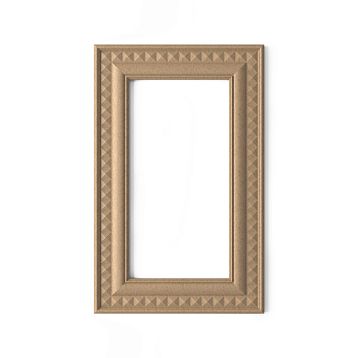
Ready-made panels from solid wood or veneer, often with carving, inlay, or routing. Can be assembled (from multiple elements) or solid. Panels create a bouclé effect — classic French cladding, where walls are divided into sections with panels.
Wooden panels — the highest level of decorative cladding. They require professional installation, are expensive, but the result is luxurious. Such cladding is suitable for prestigious interiors, offices, libraries, dining rooms.Decorative wall finishing optionsinclude panels as a premium solution.
Price including installation: from 5000 to 30000 rubles per square meter depending on complexity.
Slabs — the art of natural forms
A slab is a longitudinal cross-section of a tree trunk, preserving natural edges, texture, sometimes bark. Each slab is unique. They are used for countertops, but they also look incredible on walls.
A slab on the wall is an art object, an accent that draws attention. Suitable for lofts, eco-interiors, and custom spaces. Mounted on hidden fasteners, pre-treated with oil or epoxy resin (if there are voids or cracks).
Price: from 10000 to 100000 rubles per slab depending on size and species.
3D wooden panels — volume and dynamics
Carved, milled panels creating a three-dimensional relief. Waves, geometric patterns, abstract forms.3D Wall FinishingWood — modern art where natural material takes sculptural forms.
Such panels are mounted using special glue or hidden fasteners. Lighting enhances the effect — light and shadows play on the relief, creating a dynamic image. Suitable for accent walls in living rooms, bedrooms, restaurants, offices.
Price: from 4000 to 20000 rubles per square meter.
Finishing and treatment: from oil to patina
Wood on the wall — it is a semi-finished product. Final finishing determines the appearance and durability.
Oil — natural protection
Oils based on natural materials (linseed, tung, modified) penetrate into wood pores, protecting against moisture and dirt, but do not form a film. Wood remains breathable and tactile. Oil enhances texture, deepens color, creates a matte or semi-matte sheen.
Advantages: eco-friendliness, easy restoration (scratched — simply reapply oil), preservation of naturalness. Disadvantages: requires regular renewal (every 2–5 years), does not provide gloss.
Wax — silkiness and protection
Waxes (beeswax, carnauba) are applied over oil or independently. They create a water-repellent layer, imparting a silky surface and soft sheen. Wax is pleasant to the touch and enhances the wood’s natural aroma.
Used in bedrooms, children’s rooms, and spaces where tactile sensation is important. Requires periodic renewal; not suitable for high-traffic areas.
Varnish — durability and gloss
Varnishes (alkyd, polyurethane, acrylic) create a hard protective film. They can be matte, semi-matte, or glossy. Varnish protects wood better than oil from moisture, dirt, and mechanical damage.
But there are drawbacks: varnish seals pores, wood stops breathing. Damage requires full rework; local restoration is impossible. Over time, some varnishes yellow. For residential spaces, water-based varnishes are preferable — they are safer.
Staining and toning — playing with color
Stains and toning agents change the color of wood while preserving visible texture. You can make pine look like oak, lighten dark wood, or darken light wood.
Toning allows achieving the desired shade, harmoniously integrating wood into the interior color scheme. After staining, it is mandatory to apply oil, wax, or varnish for protection.
Brushing — emphasizing texture
Mechanical processing where soft fibers are removed by brush, while hard fibers remain. This creates a pronounced relief and tactile texture. Brushed wood looks aged and noble.
Brushing is especially effective on species with contrasting grain — oak, ash, larch. Suitable for loft, country, rustic style interiors.Wooden wall decorWith brushing, it acquires character.
Aging and patination — noble antiquity
Artificial aging creates an antique wood effect. Various techniques are used: mechanical (scratches, dents), chemical (patina, craquelure), thermal (burning).
Patina involves applying multiple layers of paint or wax in different shades, followed by sanding. Dark pigment remains in recesses, while lighter tones appear on raised surfaces. This creates an effect of aged, noble wear.
Aged wood is appropriate in classical, Provence, and vintage interiors. It adds history, soul, and uniqueness.
Burning — Japanese technique yakisugi
The wood surface is burned with fire, charred, then brushed. This results in a deep black or dark brown color with a pronounced texture. Burning is not only decorative but also functional: the charred layer protects the wood from rot, insects, and fire.
Yakisugi is used in lofts, Japanese, and minimalist interiors. It is dramatic, expressive, and unusual.Wall finishing with wood photoIt captivates with charred wood.
Wooden decor in different interior styles
Scandinavian — light wood and minimalism
Ash, birch, whitewashed oak. Smooth surface, light tones, natural oil. Wood here creates coziness in a restrained interior, adds warmth to white walls. Often used as an accent wall behind a sofa or bed.Modern wooden wallIn Scandinavian style — it is minimalism and functionality.
Loft — rough texture and contrasts
Unfinished planks, old beams, slabs, charred wood. Wood in a loft contrasts with brick, concrete, and metal. It can be dark, brushed, with visible cracks and knots. Imperfection — this is beauty.
Country and rustic — rustic soul
Veneer, imitation of beams, solid planks. Natural tones, simple shapes, visible joints. Wood here creates an atmosphere of a countryside home, coziness, closeness to nature. Often combined with stone, textiles, wrought elements.
Classic and neoclassic — noble panels
Carved panels of oak or walnut, bouillons, filigree. Symmetry, proportions, grandeur. Wood is refined to perfection, lacquered or patinated. This is respectability, status, timeless elegance.
Eco and biophilic design — maximum naturalness
Unprocessed or lightly sanded wood, slabs, live edges, preserved bark. Oil instead of lacquer, natural tones. Wood here — the main character, emphasis on naturalness and eco-friendliness.Interior wall finishing in an apartmentIn eco-style, it creates harmony with nature.
Japanese — restraint and philosophy
Dark wood with clear lines, geometric layout, minimal decoration. Wood in a Japanese interior creates calmness, balance, meditativeness. Often combined with rice paper, bamboo, stone.
Wooden finishing in different rooms
Living room — grandeur and coziness
Accent wall behind the sofa or fireplace — a classic technique. Wood creates a focal point around which the entire composition is built. Panels, beam imitation, 3D panels can be used.Wall finishing samplesLiving rooms showcase a wealth of solutions.
Bedroom — intimacy and warmth
A wooden headboard creates a cozy nook, a sense of security. Wood here soothes and prepares for rest. It is better to choose light species or warm tones, matte finish. Glossy lacquers are inappropriate in a bedroom — they create coldness.
Office — seriousness and respectability
Dark wood — walnut, oak, wenge. Panels, solid boards, carved elements. An office with wooden walls — this is solidity, professionalism, status. Classical finishing, expensive species, quality workmanship are appropriate here.
Children's room — ecological safety and safety
Light wood, treated with natural oil. No lacquers with toxic solvents. Planks, boards, smooth panels without sharp corners. Wood in a children's room creates a healthy microclimate and calms hyperactive children.
Kitchen and dining area — practicality and atmosphere
Wood in the kitchen requires protection — treatment with oil or lacquer, placement away from the stove and sink. The dining area is ideal for wooden finishes — it creates a cozy family atmosphere and invites long meals.
Bathroom — with caution
Wood and moisture — a complex pair. But with the right choice of species (teak, larch) and treatment (oil-wax), wooden finishes are possible. It creates a spa atmosphere, reminiscent of a sauna. Good ventilation is essential.
Entryway — first impression
Wood in the entryway creates a warm welcome and sets the tone for the entire house. Darker species, which are less prone to stains, or lighter ones with protective coating can be used. It’s practical to combine wood with stone or tile in the lower part of the wall.
Installing wooden finishes: from frame to finish
Surface preparation
Walls must be dry and treated with antiseptic. If the wall is uneven, installation is done on a subframe, which levels the surface. If the wall is flat, you can glue directly to it.
Subframe — foundation of reliability
Wooden beams 40x40 or 50x50 mm or metal profiles are mounted to the wall with a spacing of 40–60 cm. The subframe is leveled to create a perfectly flat surface. Insulation or soundproofing can be laid between the wall and the subframe.
The subframe direction is perpendicular to the direction of the final finish. If the planks are vertical, the subframe is horizontal, and vice versa.
Installing planks and panels
The first board is set strictly level — its alignment determines the entire subsequent geometry. Mounting can be open (screws into the face, then filled with putty) or hidden (clips, nails in grooves).
Hidden mounting is more aesthetic but more complex. Each board is inserted with a tongue into the groove of the previous one, clicked into place, and secured to the subframe with clips. The process is slow, but the result is clean — no visible fasteners.
Angles and joints
Corners are covered with special elements — corner pieces, strips. Or boards are cut at 45 degrees and joined. The second option is more complex but looks more professional.
Joints between boards must be tight, without gaps. If using planks with gaps, the distances should be uniform across the entire area.
Final finishing
After installation, wood is sanded (if required), cleaned of dust, primed, then finished with a finish — oil, wax, or lacquer. The number of coats depends on the product: oil usually 2–3 coats, lacquer 2–4 with intermediate sanding.
Combining wood with other materials
Wood and stone — natural duo
Warm wood and cold stone balance each other. A stone wall with a fireplace and wooden finish around — a classic combination for country homes. Or wooden panels and stone countertops in the kitchen.
Wood and metal — industrial contrast
Rough wood and black metal — the basis of loft. A wooden wall with metal lighting, shelves, and decor creates a brutal elegance. Or wooden slats on a metal frame.
Wood and concrete — modern classic
Concrete walls and wooden furniture, or vice versa — wooden wall finish and concrete floor. This contrast creates a modern, urban interior with warm notes.
Wood and glass — lightness and light
Glass partitions and wooden walls preserve the feeling of space, let in light, but add texture. Or wooden frames with frosted glass inserts — beautiful zoning.
Wood and paint — a game of contrasts
One wall is wooden, the others are painted. Or wood at the lower part (panels), paint at the top. This creates balance without overloading the interior.
Care for wooden finishes
Wood on walls is low-maintenance but requires attention.
Regular cleaning: dry cloth or vacuum with soft brush once a week. Dust should not accumulate in the texture.
Wet cleaning: slightly damp cloth once a month. Avoid excessive water, especially if the wood is oiled.
Finish renewal: oil requires renewal every 2–5 years depending on usage. Surface is cleaned, lightly sanded, and new layer is applied.
Moisture protection: in rooms with high humidity, monitor ventilation. Condensation is wood’s enemy.
Restoration: scratches on oil finish are easily removed by local oil application. Damage to lacquered surface requires full rework of the area.
Cost and budget planning
Decorative wood finishing — a pleasure that is not cheap, but long-lasting.
Materials:
-
Spruce siding — 400–800 rubles/m²
-
Larch siding — 800–1500 rubles/m²
-
Beam imitation — 1000–2500 rubles/m²
-
Plank — 1500–4000 rubles/m²
-
Wall parquet — 2000–6000 rubles/m²
-
Solid board — 2500–8000 rubles/m²
-
Decorative panels — 5000–25000 rubles/m²
Work:
-
Installing substructure — 300–500 rubles/m²
-
Installing siding — 500–1000 rubles/m²
-
Installing panels — 1000–2500 rubles/m²
-
Final finishing — 300–800 rubles/m²
Turnkey: from 1500 (budget siding) to 35,000 rubles per square meter (exclusive handcrafted panels).
For a 20 sq. m room with one accent wall of 10 sq. m, the budget will range from 15,000 (siding) to 350,000 rubles (premium panels).
Ecology and health: why wood is better
Wood regulates humidity, absorbing excess and releasing it when dry. This creates a comfortable microclimate. Phytoncides in coniferous species purify the air. Wood does not emit toxins, does not accumulate static, and does not generate electromagnetic fields.
In rooms with wooden finishes, breathing is easier, sleep is better, and headaches are less. This is not esotericism — it’s a scientifically proven fact.Internal decorative wall claddingWood — an investment in family health.
Mistakes to avoid
Using raw wood. The material's moisture content should be 8-12%. Raw wood will dry out after installation, causing gaps and deformations.
Lack of treatment. Untreated wood darkens, absorbs dirt, and may be affected by mold and insects.
Ignoring ventilation. If wood is installed tightly against walls without gaps, condensation may accumulate. An air gap or ventilation openings are required.
Incorrect wood species selection for humid areas. Pine in the bathroom without treatment — a path to problems. Moisture-resistant species or quality protection are needed.
Overloading interior. Wood on all surfaces — walls, floor, ceiling — creates a heavy feeling. Only 1-2 surfaces are sufficient.
Cutting corners on finishing treatment. Cheap varnishes yellow, peel, and emit toxins. Quality oil or varnish costs more but lasts for years.
FAQ: Answers to popular questions
Can wooden cladding be installed in humid areas?
Yes, if moisture-resistant species (larch, teak) are chosen and properly treated with wax-oil or special compounds. Good ventilation is mandatory.
Does wood on walls reduce space?
Dark wood on all walls may create a sense of confinement. Light species and one accent wall do not steal space but add character.
How long does wooden cladding last?
With proper care — decades. Wood with quality treatment is practically eternal; it can be restored and renewed.
Can a wooden wall be repainted?
Yes. Remove the old coating, sand, prime, and paint. Oil-based coatings are easier to refresh — simply sand and apply new coating.
How to choose wood species?
Depends on budget, interior style, and room functionality. For humid areas — larch or teak. For classic — oak or walnut. For Scandinavian — beech. For budget — pine.
Does wood attract dust?
No more than any other surface. Regular dry cleaning solves the problem.
Can wooden cladding be installed by oneself?
Yes, if you have tools and skills. Installing siding is not difficult. Panels and complex layouts are better left to professionals.
How to protect wood from insects?
Treat with antiseptics before installation. Use dry, quality material. Regular inspection.
Is wood flammable, is it dangerous?
Wood does burn, but treatment with fire retardants reduces flammability. Adhering to electrical safety rules minimizes risks.
Where to buy quality wood for cladding?
Specialized sawmills, flooring showrooms, manufacturers directly, online marketplaces with verified sellers.
Conclusion: Returning to roots
Decorative wall finishing with wood— it is not a fashion trend, but a return to conscious consumption, to values of quality and longevity. It is a choice of those who understand: home is not a temporary shelter, but a living space that must be healthy, beautiful, and soulful.
Wooden wall decor— creates an atmosphere impossible to replicate with synthetic materials. Living texture, warm surface, natural aroma — all this works on a sensory level, deeper than rational perception.
Wall cladding in an apartment— is accessible for any budget — from budget pine siding to exclusive panels from exotic species. The key is understanding the material, making a wise choice, and ensuring quality installation.
STAVROS company offers everything needed to create wooden interiors. The assortment includes:Wooden finishing materialshigh-quality materials: board, imitation beam, plank, solid board, panels, rails from different species. Materials undergo strict quality control, are properly dried, and are ready for installation. Professional consultants will help you choose the optimal solution for your project, calculate the required quantity, and provide recommendations for processing and installation. Delivery across Russia. Here you can find everything — fromrails for interior finishingto exclusive carved panels, from budget solutions to premium options.
Wood in interiors is a philosophy that opposes disposability and superficiality. It is a material that lives with you, ages beautifully, and acquires the patina of time. It is an investment that pays off daily comfort, health, and aesthetic pleasure. Choose wood — and your home will find its soul.