Article Contents:
- What is Decorative Interior Molding and Where is it Used
- Molding for Walls
- Ceiling molding
- Molding for Doors and Openings
- Molding for Furniture and Decorative Accents
- What Types of Interior Molding Exist
- Moldings
- Cornices
- Ceiling Rosettes
- Baseboards
- Inlays and Decorative Elements
- Corner and Ornamental Elements
- How to Choose Decorative Molding by Application Area
- Living Room
- Bedroom
- Entry Hall
- Office
- Kitchen and dining room
- Apartment and Country House
- How to Match Interior Molding to Style
- Classic Interior
- Neoclassicism
- Modern classicism
- Art Deco
- Modern interior with decorative accents
- How to choose molding by element type
- What to choose for walls
- What to choose for ceilings
- What to choose for doors and openings
- What to choose for furniture
- Polyurethane vs wood: which material to choose
- Polyurethane moldings
- Decorative products from solid wood
- What is important to consider when choosing a material
- How to combine decorative molding with each other
- Moldings + Cornices
- Cornices + Rosettes
- Moldings + Baseboards
- Stucco + Doors
- Stucco + Lighting and Chandeliers
- How to Choose Decorative Stucco by Size and Proportions
- Common mistakes when choosing interior molding
- How to Buy Decorative Stucco in Moscow Without Making a Mistake
- What to Pair with Interior Stucco
- 10 Practical Tips for Choosing Stucco
- FAQ: Answers to Popular Questions
- Conclusion

There are interiors that are memorable at first glance. Not because they have expensive furniture or rare materials—but because they have architecture. Walls aren't just painted—they are structured. The ceiling isn't just whitewashed—it is designed. Doorways don't just open—they are framed. It is decorative interior stucco that creates this feeling: space becomes not a set of surfaces, but a thoughtful statement.
Interior molding in Moscow is experiencing a renaissance today. It's not about the fashion for classics—it's that designers, architects, and thoughtful apartment owners have finally realized: decorative profiles, moldings, overlays, and cornices are not archaic. They are a tool. Powerful, versatile, and—when applied skillfully—flawless.
This article is about how to choose decorative molding for an interior without wasting time and money. How to avoid buying a random set of elements and instead assemble a system. How to select decor that suits the style, room, ceiling height, and logic of the entire space.




What is decorative interior molding and where is it used
Let's start with a fundamental distinction. Facade molding is architectural decor for exterior finishing: facade cornices, window casings, pilasters, medallions. It is designed to withstand atmospheric loads, temperature fluctuations, direct contact with moisture and ultraviolet light.
interior moldings— is a completely different story. These are decorative elements created for interior space. Their task is to finish surfaces, create architectural logic, zone space, highlight focal points, and connect walls with ceilings and floors into a unified system.
Where is interior molding used? Practically anywhere there are horizontal and vertical planes:
-
On walls — moldings, panels, decorative frames, friezes, inserts
-
On ceilings — cornices, rosettes, moldings for coffers, ornamental elements
-
On doorways — trims, architraves, overlays, corner elements
-
On furniture — facade overlays, rosettes, frame decor, ornamental inserts
-
In niches and arches — decorative profiles, corner elements, friezes
The main property of interior molding is systematicity. It does not work as individual elements. It works as a language. And this language must be consistent and internally coherent.




Wall molding
Wall decor is perhaps the richest direction in interior molding.Polyurethane wall decorincludes moldings, panel profiles, pilasters, horizontal friezes, inserts, and decorative rosettes. With their help, a wall transforms from a flat surface into an architecturally structured plane.
The classic technique for wall decoration is panel division with moldings. A system of rectangular cartouches is applied to the wall, inside which textured finishes, wallpaper, or simply a painted surface can be placed. The result is the feeling of a palace hall or library in a noble house. Moreover, depending on the scale and relief of the moldings, this can be strict classicism, calm neoclassicism, or even accent modern classicism.
Our factory also produces:


Ceiling molding
Ceiling molding consists of cornices along the perimeter, rosettes at central points, and moldings for coffers. It structures the upper plane of the space, sets the scale, and creates a visual sense of height and completeness.
buy decorative moldingsfor the ceiling means taking the first step towards a true architectural interior. The cornice forms the perimeter. The rosette holds the axis. Moldings divide the plane. All together — this is not decoration, but an architectural system for the ceiling.
Get Consultation
Molding for doors and openings
A door opening is the entry point into a space. How it is designed determines the perception of the entire room beyond it.Decorative overlays for furniture and doors— carved corner elements, architraves, side pilasters, frieze inserts — transform a standard door leaf into a portal with character.
In a classic interior, door framing is an essential element of architectural logic. The ceiling cornice should 'converse' with the door casing. The wall moldings should correspond with the side framing of the opening. Only then does the interior appear cohesive.
Molding for furniture and decorative accents
Furniture molding is a special category that undeservedly remains in the shadow of wall and ceiling solutions. Meanwhile,decorative overlays for facadesmade of wood—carved elements, corner accents, frame overlays for cabinet and dresser doors—can radically change the appearance of the most ordinary case furniture.
A classic sideboard with carved overlays on the doors is a completely different piece than the same sideboard without decoration. A kitchen with moldings on the facades transforms from a utilitarian space into a gastronomic salon. It is here that molding works as a class transformer for the interior.
What types of interior molding exist
Before diving into selection, it's necessary to understand the typology. Each type of element solves its own task, has its own proportions and rules of application.
Moldings are linear profiles used to create framed compositions, zone walls, and frame openings. They come in various widths (from 20 to 150 mm) and relief complexity — from smooth to richly decorated.
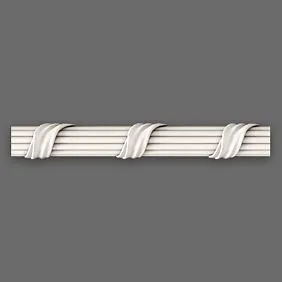
Moldings are profile decorative strips. They are used everywhere: for creating frames on walls, for framing ceiling coffers, for decorating furniture facades, for designing door architraves.decorative moldings—this is the basic vocabulary of molded decor.
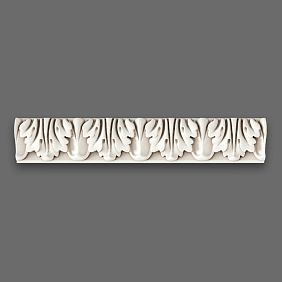
Moldings vary by cross-sectional profile: ogee, cyma, quarter-round, torus, fillet, composite profile. By ornamental content: smooth, with egg-and-dart, with acanthus leaves, with bead-and-reel, with meander, with geometric pattern. By scale: from thin strips 15 mm wide to wide composite profiles of 120 mm or more.
Choosing a molding is choosing an intonation. A thin, smooth molding speaks the language of restraint. A wide, ornamental one speaks the language of luxury and historical depth.
Crown mouldings
A cornice is a transitional element between the wall and ceiling. Its main architectural role is to form a horizontal entablature that completes the vertical plane of the wall and transitions into the ceiling zone.
Polyurethane ceiling cornicesThey can be simple—with one or two profile elements—and complex composite, including several tiers with different ornaments: dentils, egg-and-dart, lambrequin profile, acanthus leaves. The height of the cornice ranges from 40 mm (a laconic option) to 220 mm and more (for formal halls and high ceilings).
A cornice is not just a strip in the corner. It is the architectural scale of the room. The width of the cornice sets the proportions of the entire space.
Ceiling Rosettes
A rosette is the central element of the ceiling plane. Round, oval, square, multi-tiered—it fixes the visual center of the ceiling and accentuates the light fixture's hanging point.
ceiling rosettesIn a good interior, it is not a technical detail but a decorative dominant. The rosette's diameter is selected according to the room's area and the chandelier's size. The ornament—according to the stylistic concept of the entire space.
Baseboards
A baseboard completes the vertical decorative row from below. If the cornice is the architectural completion of the ceiling, then the baseboard is the base of the wall, its 'pedestal'. In a classic interior, the baseboard has a developed profile and can reach a height of 120–180 mm. In modern classicism—it is moderate and clear.
The baseboard must be stylistically coordinated with the cornice. If the cornice carries an ornamental load—the baseboard picks it up or echoes it with restraint. If the cornice is strictly geometric—the baseboard follows the same code.
Overlays and decorative elements
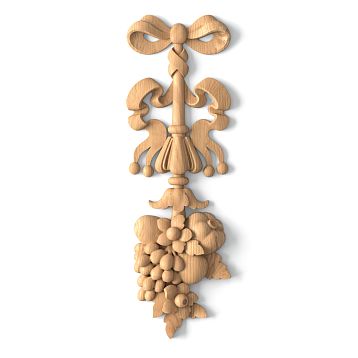
Decorative InsertsAppliqués are a separate category, combining carved corner elements, central ornamental inserts, connecting parts for moldings, and decor for door panels. Appliqués are mounted on top of the molding profile or directly onto the surface of the wall, door, or furniture facade.
Modular overlay-constructors deserve special attention: elements with docking edges that allow creating long ornamental compositions without visible seams. This solution is ideal for decorating long walls and door portals.
Corner and ornamental elements
Corner elements are rosettes for internal and external corners of moldings, corner connecting overlays, frieze inserts. They solve one of the main technical tasks of decoration: how to beautifully finish a molding in a corner without a rough 45° joint.
Ornamental inserts — medallions, cartouches, floral panels, rocaille, meander friezes — add stucco decor to key accent points of the interior. They can be the center of a wall composition or a detail in a molding system — depending on their scale and placement.
How to choose decorative stucco by application area
Each room is its own story. Its own proportions, its own atmosphere, its own requirements for decor.
Living Room
Living room — a formal space that carries maximum representational load. Here, the full spectrum of stucco decor is appropriate: developed cornices around the ceiling perimeter, a large central rosette, panel division of walls with moldings, decorative framing of door openings.
Interior decor with stuccoin the living room works on the principle of architectural symmetry: the cornice sets the upper boundary, the baseboard — the lower one, moldings on the walls — the rhythmic structure of the planes. The chandelier in the center, framed by a rosette, holds the vertical axis. The space gains scale and dignity.
Bedroom
Bedroom requires a different approach. Here, decor should create an atmosphere of coziness, intimacy, and soft luxury — without the monumentality of a formal hall. A moderate cornice, a modest or moderate rosette, moldings on the walls with a small frame spacing — enough to make the bedroom look complete and refined.
Panel decor on the headboard wall works especially effectively in the bedroom. Moldings create a decorative 'alcove' that visually highlights the bed as the main element and adds depth to the space.
Entryway
The hallway is the first and last impression of an apartment. Here, decorative interior moldings should be precise and targeted. A thin cornice around the perimeter, neat wall moldings—this is enough for the hallway to be perceived as part of a unified stylish space, not a bland transit corridor.
The accent should be on door frames: if the doors from the hallway are decorated with decorative architraves and corner overlays—this single element alone elevates the class of the interior.
Office
The study is a space for the mind. Here, moldings should work not for opulence, but for strictness and character. Geometrically precise moldings, a strict cornice without overloaded ornamentation, a moderate ceiling medallion above the work area—all this creates an atmosphere of dignity and concentration.
Bookcases decorated with decorative overlays and door portals with architraves—details that transform a study from just a workroom into a space with history.
Kitchen and dining room
In the kitchen, a ceiling cornice and minimal wall decor are all that's needed. Polyurethane profiles handle kitchen conditions perfectly: moisture, steam, temperature fluctuations are no problem for this material. In the dining room, where the atmosphere is created more deliberately, a more complete solution is appropriate: panel moldings on the walls, a cornice with moderate relief, a ceiling medallion for the central chandelier above the table.
Apartment and country house
For an apartment with limited area, decorative interior moldings are selected with attention to scale: elements are thinner, relief is calmer, molding frames have moderate spacing. For a country house with high ceilings and spacious rooms—the scale of the decor increases: wide cornices, large ceiling medallions, active ornamentation, complex panel systems.
Moldings for interiorin a country house is especially organic: the architecture of country properties is often more monumental in itself, and moldings fit into it naturally, as part of a unified concept.
How to choose interior molding to match the style
Interior style is the grammar by which every decorative element is read. To violate it is to make the phrase meaningless, even if each word individually is correct.
Classic interior
Classicism demands completeness. Here you cannot install one molding and stop — a classic interior works only as a system. Cornice with dentils and ionics, panel moldings with complex profiles, pilasters on walls, capitals, multi-tiered rosette with floral ornament, architrave door surrounds.
Important: in a classic interior, decor should not be random. Each element is part of an order system. Molding width is calculated from room height. Cornice proportions — from the scale of the hall. Ornament — from the overall decorative code.
Neoclassicism
Neoclassicism is classicism with discipline. Ornamentation is present but not dominant. The relief is expressive but not overloaded. Moldings are clear, with a comprehensible rhythm. The cornice is of moderate height with one or two ornamental bands. The rosette is geometrically precise, without Baroque excess.
Polyurethane wall decorIn a neoclassical interpretation — these are perfectly drawn rectangular frames, thin molding strips, horizontal friezes in the cornice zone. Everything speaks the language of order and measure.
Modern classic
Modern classicism — the most popular style among Moscow designers. It combines the laconicism of modern space with classical decorative references. Moldings — thin, with simple profiles. Cornice — expressive but without overload. Rosette — one, in the center. Wall frames — large, with wide intervals.
No Baroque, no lambrequins or swirls. Purity of forms, respect for space — and yet architectural depth, which only molding provides.
Art Deco
Art Deco style works on contrasts: geometry versus natural forms, mass versus emptiness, dark versus light. Molding in an Art Deco interior — these are stepped profiles, radial rosettes, ornaments with zigzags and 'solar' motifs, clear horizontal bands on walls.
Here, playing with color is especially appropriate: decor can be painted in a contrasting tone relative to the wall, which enhances geometric expressiveness.
Modern interior with decorative accents
Modern minimalist interiors do not reject molding—they embrace it in limited doses. One precise accent—a thin line of molding along the ceiling perimeter or a small rosette under a light fixture—adds architectural dimension to the space without archaic heaviness.
The main rule: in a modern interior, molding works as a pause, not as a theme. One element is stronger than ten.
How to choose molding by element type
Understanding which specific elements are needed is often the most difficult step. Let's break it down by zones.
What to choose for walls
For walls, the main elements are moldings and overlays.Moldings for wallsThey are mounted along the contour of rectangular frames, creating panel divisions. The width of wall molding ranges from 15 to 80 mm, depending on the scale of the room and ceiling height.
Decorative inserts and ornamental overlays are placed in the corners of frames, at the center of panels, or as standalone accents on an open surface. Horizontal friezes divide the wall into zones—the baseboard area, the main area, and the frieze under the cornice.
What to choose for the ceiling
For ceilings, the priority is the cornice and rosette. If the area is significant, coffer moldings are added. The cornice is chosen based on height and style. The rosette — based on room size and light fixture diameter.
Avoid overloading the ceiling with several large accents simultaneously. One main element, surrounded by a system, works better than five elements competing for attention.
What to choose for doors and openings
For a door opening you need: corner decorative overlays (in the upper corners of the architrave), side pilaster strips or profile architraves, a finishing element above the door — a keystone or ornamental insert.Decorative InsertsSolid wood or polyurethane work equally well here — the difference is in texture and price segment.
It is important to coordinate the opening decor with the moldings on the adjacent walls. Then the door will not seem like an 'inserted' element, but will become part of the room's architectural rhythm.
What to choose for furniture
Furniture molding is the most delicate section. The size of the overlays should be proportionate to the facade: for a cabinet door 700 mm high, the central overlay should not occupy more than 30–40% of its surface. Corner elements — strictly at the corners, without offsets. Ornament — in the same style as the cornices in the room.
Decorative overlays for furniture facadesSolid oak or beech — is a special story. They carry not only decorative but also tactile value: touching carved wood is a completely different experience than touching plastic or MDF.
Polyurethane vs Wood: Which Material to Choose
Polyurethane Moldings
polyurethane moldings— the standard for most interior tasks. Its advantages:
-
Light weight. A polyurethane cornice weighs 5–7 times less than a plaster equivalent. This simplifies installation and reduces load on walls.
-
Geometric precision. Mold production guarantees a perfect profile without distortions.
-
Moisture resistance. Polyurethane is not afraid of moisture, steam, or temperature fluctuations. Suitable for kitchens, bathrooms, and hallways.
-
Easy installation. Cuts with a hacksaw, glues with liquid nails or mounting adhesive. Does not require special tools.
-
Paintable. After installation, it is painted with acrylic paints together with the ceiling or wall — creating a monolithic coating.
Decorative items made of solid wood
Wooden carved overlays, moldings, and decorative elements made of solid oak and beech are a different level. Here, texture and tactility are key. Wood brings warmth, a living surface, scent, and — with proper treatment — durability that far exceeds ordinary renovation.
Wooden decor is appropriate where material contact is important: furniture, doors, portals, library shelves, fireplace areas. For ceiling decor, wood is less practical due to weight, but in certain architectural projects — it is indispensable.
What to consider when choosing a material
-
Density and elasticity — high-quality polyurethane does not deform when pressed.
-
Seam accuracy — two pieces should join perfectly, without gaps.
-
Surface — ready for painting without additional processing.
-
Geometry of supporting edges — the strips must lie strictly in the plane of the wall or ceiling without gaps.
How to combine decorative moldings with each other
This is one of the subtlest questions — and one of the most ignored. Buying elements is not difficult. Combining them into a unified system is an art.
Moldings + cornices
Wall moldings should be 'relatives' of the cornice — that is, belong to the same decorative register. If the cornice has an acanthus leaf ornament — the moldings can be smooth but with a similar scale and proportions. If the cornice is strictly geometric — the moldings should also maintain geometric logic.
Do not pair a heavy Baroque cornice with thin modern wall moldings — such contrast does not work.
Cornices + Rosettes
The cornice sets the horizontal rhythm, the rosette—the central point. Together they form a ceiling composition. There is one rule: the rosette must be proportionally scaled to the cornice. If the cornice is wide and active—the rosette should be large and rich. If the cornice is modest—the rosette can be delicate.
Moldings + Baseboards
The lower 'pedestal' of the wall—the baseboard—should stylistically echo the moldings. If the moldings have a pronounced turned profile—the baseboard should also carry a similar form. A mismatch between the upper and lower framing of the wall makes the interior look unfinished.
Molding + Doors
The decoration of the door opening is a continuation of the wall system. The corner overlays in the upper corners of the architrave should match the ornament of the moldings on the adjacent walls. If the walls are decorated with classical frames—the door should have a classical casing. If the walls are neutral—the door framing can be slightly more active, as an accent.
Molding + Light and Chandeliers
Correct installationCeiling rosetteThe rosette under a chandelier is not only decoration but also part of the lighting composition. The rosette around a classical chandelier should have an ornament in the same spirit—floral or geometric. For a modern pendant light—a clean geometric rosette without overload.
Hidden lighting behind a cornice is one of the most popular designer techniques. A wide cornice with a shelf creates a perfect groove for an LED strip. The light appears to flow from the architectural element—this is an effect that works on any audience.
How to Choose Decorative Molding by Size and Proportions
Size is half the success. The right element at the wrong scale is a mistake.
The width of wall molding is selected in proportion to the height of the room. For walls 2.7–3 m high, the width of the main molding is 30–60 mm. The inner frame molding can be narrower — 15–25 mm.
The height of the cornice is approximately 1/25–1/30 of the ceiling height. For a 2.7 m ceiling — cornice 90–110 mm. For 3.5 m — 140–170 mm. For high formal ceilings from 4 m — from 200 mm.
The diameter of the rosette is determined by the area of the room: up to 15 sq. m — rosette 25–35 cm, 20–30 sq. m — 40–55 cm, over 30 sq. m — from 60 cm. The size of the rosette should always be proportionate to the light fixture.
The depth of relief for low ceilings should not exceed 25–30 mm, otherwise the decor creates excessive shadow and visually overloads the space. For high rooms, the relief can be significantly deeper.
The spacing of molding frames on walls should be proportional to the width of the wall. Frames should not be too tight nor too sparse — optimally, when the gap between frames is 1/3–1/2 of the width of the frame itself.
Quantity calculation: room perimeter × 1.15 for cornices (accounting for corner cuts). The quantity of moldings for frames — according to the layout scheme. It's better to draw the scheme in advance.
Common mistakes when choosing interior molding
Knowing typical mistakes is half the way to making the right choice.
1. Selection by photo without measurements. A beautiful picture on the internet does not give an idea of the actual dimensions. Always measure the room and compare proportions.
2. Too many ornaments at once. Cornice with acanthus + rosette with scrolls + moldings with pearl beading = decorative chaos. One dominant ornament — maximum one additional.
3. Massive elements in a small room. A wide cornice in a 12 sq. m room with a 2.5 m ceiling creates a cave-like feeling.
4. Ignoring ceiling height. Decor that doesn't account for height ruins proportions. The result is either oppressive or lost decor.
5. Decor on all surfaces at once. Active moldings on walls + active cornice + large rosette + decorative overlays on all doors — too much. Choose a main accent zone.
6. Lack of a layout plan. Moldings for frames are cut and glued — they cannot be redone. Always draw a plan before installation.
7. Buying in different batches at different times. Profiles, shades, and batch variations may not match. Purchase the set all at once.
8. Lack of coordination between decor and lighting. A heavy, textured cornice without lighting creates a dead shadow. If you're installing a complex cornice — plan the lighting in advance.
9. Mismatch of styles. A classic cornice + minimalist furniture = a conflict with no winner. The style should be unified.
10. Choosing decor without understanding the final paint finish. Textured decor for painting in a dark color looks different than for white. Clarify the final color before purchase.
How to buy decorative molding in Moscow and not make a mistake
Buying decor is not an impulse, but a strategy. Here is the correct algorithm:
-
Define the room. Living room, bedroom, study — each has its own requirements for scale and style.
-
Formulate the style. Classic, neoclassical, modern classic — or something else? This will determine the type of ornament and proportions.
-
Measure the room. Ceiling height, area, perimeter — all parameters are needed before ordering.
-
Make a list of zones. Ceiling? Walls? Doors? Furniture? Determine where the decor will be.
-
Select elements by category. Cornice — according to ceiling height. Rosette — according to area and chandelier. Moldings — according to the frame scheme. Overlays — according to facades.
-
Coordinate proportions. Ensure all elements are proportionally scaled to each other and the room.
-
Calculate the quantity with a margin. +15% for cornices, +10% for moldings.
-
Order as a set. All decor — from one batch, one manufacturer, one style.
Buy interior molding in Moscow with a guarantee of quality, precise profile, and delivery throughout Russia — available from a trusted manufacturer with a full range in stock.
What to pair with interior molding
Interior molding is part of a system. To make it work to its fullest, it needs to be complemented:
-
Wall moldings — basic wall decor that creates the architectural structure of vertical planes
-
Ceiling cornices — finishing the ceiling plane and transitioning to wall decor
-
Ceiling rosettes — accenting the central ceiling area under a chandelier
-
Baseboards — the lower finishing of the wall system
-
Decor for doorways — corner overlays, architraves, keystones
-
Overlays for furniture fronts— ornamental inserts, corner elements, frame overlays
-
Decorative panels — for accent walls, fireplace areas, library niches
10 practical tips for choosing molding
-
Start with the ceiling height and room area — this is the foundation of the entire selection
-
For small rooms, choose thin moldings and a restrained cornice
-
In classic interiors, use a systematic set rather than single accents
-
Do not decorate all surfaces at once — choose the main zone
-
Create a layout diagram before ordering, especially for wall frames
-
Check the scale of the rosette relative to the chandelier and room area
-
Coordinate the cornice, moldings, baseboard, and door decor in one style
-
Consider the final painting when choosing the depth of the relief
-
Order everything in one batch from one manufacturer
-
For doors, use both corner overlays and side profiles — incomplete framing is worse than its absence
FAQ: Answers to popular questions
What is the difference between decorative molding and interior molding?
Essentially, it's the same thing in different wording. 'Decorative' emphasizes the function of decoration. 'Interior' refers to the place of application. In a professional context, both terms denote architectural decor for interior finishing of spaces.
Where is interior molding used in an apartment?
On ceilings (cornices, rosettes, coffered moldings), on walls (moldings, frames, friezes, overlays), on doors and openings (casings, architraves, corner elements), on furniture fronts (overlays, ornamental inserts).
What to choose for walls: moldings or decorative panels?
Moldings are for creating framed compositions and zoning walls. Decorative panels are for accent zones and complex ornamental solutions. In a classic interior, they work in tandem: panels inside frames made of moldings.
Is molding suitable for a modern interior?
Yes — in moderate doses. A thin molding or a neat rosette adds an architectural dimension even to a minimalist space. The main thing is one accent instead of a system.
Can interior molding be used in a small apartment?
You can and should — but in the right scale. Thin moldings, a narrow cornice, a small rosette. Molding doesn't create crampedness — it's the wrong scale of decor that does.
How to combine cornices, moldings, and rosettes?
All elements must belong to the same stylistic code and be proportionally scaled. The cornice sets the register. Moldings maintain the rhythm. The rosette holds the central point.
Is decorative molding suitable for doors and furniture?
Yes.Overlays for doors and furniture fronts— a separate category with a wide range. Carved corner elements, ornamental inserts, frame overlays for doors — all of this is sold within the system with wall moldings and decor.
How to choose the size of molding for a room?
Start from the ceiling height and area. Cornice — 1/25–1/30 of the ceiling height. Rosette — proportional to the room area and chandelier. Moldings — according to wall proportions and layout scheme.
Does interior molding need painting?
Polyurethane molding is supplied for painting. After installation, it is painted together with the ceiling or wall. This ensures monolithic integrity and hides joints.
Where to buy decorative molding in Moscow?
From the manufacturer with a full range, quality guarantee, and real samples —In the STAVROS catalog.
Conclusion
Decorative interior molding is not a tribute to the fashion for classicism. It is an architectural tool that gives a space scale, character, and completeness. Moldings structure walls. Cornices form the perimeter of the ceiling. Rosettes hold the center. Overlays transform doors and furniture. All together — it's a system, not a collection of elements.
The right choice begins with an understanding of the room and style, goes through an accurate calculation of dimensions, and ends with a conscious purchase of a kit from a trusted manufacturer. Then the molding works — and works for a long time.
STAVROS is a Russian manufacturer of architectural decor with a history since 2002. The company creates a full range of interior products from polyurethane and solid wood:ceiling cornices and rosettes, Moldings for walls, Decorative overlays for furniture and doors, wall decor in the neoclassical style, as well as a fullcatalog of interior decor for projects of any complexity. A leader in the Russian industry, over 240 five-star reviews, a 2000 sq. m warehouse, delivery throughout Russia and the CIS. For private clients, designers, architects, and furniture workshops, STAVROS is a reliable partner from whom you can buy interior molding in Moscow with confidence in every product.