Article Contents:
- What is decorative molding
- What elements belong to it
- How decorative molding differs from simple profile
- Where it is used in interior design
- What types of decorative molding can be used
- For walls
- For ceilings
- For doorways and portals
- For accent interior zones
- For comprehensive space design
- How to choose decorative molding by room
- living room
- for the bedroom
- For the hallway
- For Office
- For the dining room
- For commercial interiors
- How to choose decorative molding by interior style
- For classic style
- For neoclassical style
- For modern classic
- For a calm interior
- For a more expressive decorative solution
- What is important to consider when choosing decorative molding
- Room size
- Ceiling height
- Scale of the pattern
- Proportions and symmetry
- Combination with walls, ceiling, doors and furniture
- Where decorative molding looks best
- On walls
- In ceiling design
- In door and arch openings
- In accent compositions
- In classical and neoclassical interiors
- How not to overload the interior with decorative molding
- When basic elements are enough
- When more expressive details are needed
- Why you shouldn't mix too many ornaments
- How to maintain visual purity in interior design
- What to pair decorative molding with
- With moldings and cornices
- With ceiling rosettes
- With door frames
- With furniture, lighting, and textiles
- With the overall interior concept
- How to buy decorative molding in Moscow without mistakes
- What to determine in advance
- What dimensions and zones to consider
- How to select elements for your project
- Why it's important to look at the composition as a whole
- Common mistakes when choosing decorative molding
- What to choose for different tasks
- For a neat decorative accent
- For classic design
- For a neoclassical interior
- For an accent wall or ceiling
- For small spaces
- FAQ: answers to common questions about decorative molding
- About the Company STAVROS
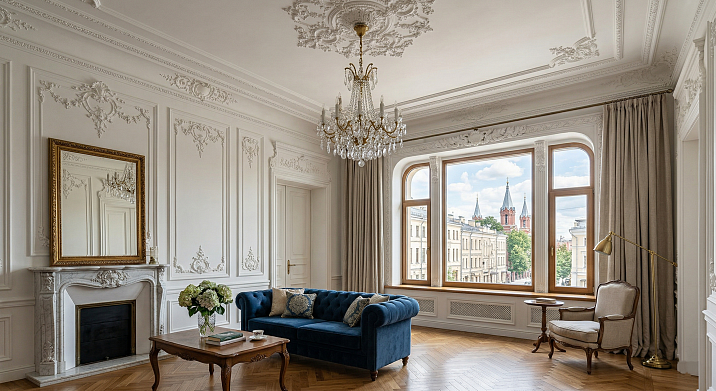
Decorative molding in Moscow is one of the most sought-after types of interior decor for those creating classical, neoclassical, or mixed spaces with character. It makes the interior cohesive, accentuates architectural zones, and gives the room a completeness that neither paint, wallpaper, nor the most expensive furniture can replace. But here's the paradox: many people buy decorative molding correctly by feel but incorrectly by choice. They take what they like in a picture without considering the scale of the room, ceiling height, interior style, and how the elements will combine with each other. The result is visual chaos instead of an elegant space.
This article is written for those who want to understand: what exactly falls under decorative molding, which elements to use for walls and ceilings, how to choose decor to match the style and room, avoid overloading the interior, and do everything so that every detail works for the overall concept.




What is decorative molding




Which elements belong to it
Decorative molding is a collective term for a group of interior elements united by a common purpose: to structure, enrich, and visually complete a space. It includes moldings, cornices, ceiling rosettes, friezes, decorative panels, inserts, pilasters, capitals, coffers, and door frame trims. Each of these elements solves its own task, but together they form a unified interior system.
wall and ceiling moldings— are linear profiles with decorative relief, used for dividing planes, framing panels, highlighting zones, and creating rhythm on walls and ceilings. Cornices are profile elements at the junction of the wall and ceiling, which establish horizontality and visually lift the space. Ceiling rosettes are central accents on the ceiling, traditionally placed above a chandelier. Friezes are horizontal strips with ornamentation, most often placed in the upper part of walls. Decorative panels and inserts are flat or relief elements that form accent surfaces on walls.
All of this is stucco decor for the interior in the broad sense. It can be made of wood, polyurethane, plaster, or MDF — depending on the purpose, budget, and required level of detail.
Our factory also produces:


How decorative molding differs from simple trim
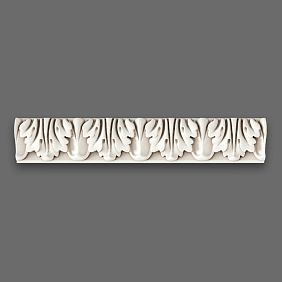
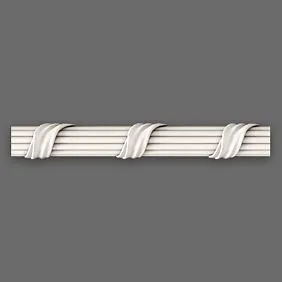
The fundamental difference lies in the relief and artistic elaboration. Simple smooth trim or baseboard without decoration is a technical element that conceals joints and transitions. Decorative molding is an architectural accent. It carries ornamentation: floral motifs, geometric patterns, volute scrolls, meanders, acanthus leaves, rosettes, beadwork. It is precisely through the relief and play of light on the surface that molding creates a depth in the interior that cannot be achieved with flat surfaces.
Another difference is scale. Decorative molding is designed to be seen: it works from a distance, creates visual focal points, and sets the tone for the entire space. Simple trim plays a more modest role — that of a technical divider.
Get Consultation
Where is it used in interiors
Decorative stucco finds application in practically any area of an interior: on walls, ceilings, in door and arch openings, on fireplace surrounds, in niches, and accent panels. It is used in living rooms, bedrooms, studies, hallways, dining rooms, as well as in commercial spaces — restaurants, hotels, executive-class offices, boutiques. Where image is important, where a sense of solidity and taste needs to be created — that's where decorative molding is needed.
What types of decorative molding can be used
For walls
Walls are the largest canvas of an interior, and it is here that decorative molding reveals its full potential. For walls, primarily Moldings are used, which create a geometric pattern of rectangular or square frames on the surface. This technique is called paneling or boiserie. It originated from 17th–18th century French architecture and is successfully used today in classical and neoclassical interiors.
For accent walls, decorative panels with relief ornamentation or friezes in the upper third of the wall are used. Wall inserts—medallions, cartouches, rosettes—place semantic accents in symmetrical compositions. Pilasters on walls create a vertical rhythm, visually dividing the space into sections.
An important principle: wall decor should have a unified ornamental language. Mixing Baroque swirls with geometric Art Deco means violating the visual logic of the space.
For ceilings
Ceiling decor is a separate story requiring special subtlety. Here, cornices along the perimeter, ceiling rosettes in the center, and coffers—rectangular or square coffered panels creating the illusion of a structured ceiling—are used. Rosettes placed above the chandelier complete the ceiling composition and justify the placement of the light fixture.
Cornices and moldings for the ceilingare chosen based on the room's height: in rooms with ceilings of 2.7–3 m, narrow profiles up to 7–10 cm wide are appropriate; with a height of 3.2–4 m, more substantial cornices with ornamentation can be used; for ceilings from 4 m—wide profile cornices with multi-level relief, friezes, and sub-cornice shelves.
For doorways and portals
Door framings—casings with decorative overlays, pediments, portals with pilasters and capitals—are areas that often go unnoticed, although they are precisely what connect the wall and ceiling decor into a unified system. A properly designed door opening withCarved casingsturns an ordinary door into an architectural element.
For classic styles, casings with profiled molding and corner rosettes are used. For neoclassicism—more austere forms with minimal ornamentation, focusing on proportions rather than detailing.
For accent interior zones
An accent zone is the wall behind the bed headboard, the wall behind the sofa in the living room, the fireplace wall, the wall with a niche for the TV. This is where decorative plasterwork works most expressively. For such zones, relief panels, symmetrical compositions of moldings, medallions, or central rosettes combined with horizontal friezes are selected.
The principle of an accent wall is to highlight it against the background of other surfaces, without turning the entire interior into a continuous ornamental carpet. This requires discipline and taste.
For comprehensive space design
A comprehensive approach — where cornices, moldings, rosettes, architraves, and panels form a unified architectural system — is the highest level of working with decorative molding. It is important here that all elements are from the same collection or stylistic range, have a coordinated ornamental language, and correspond to the proportions of the room.
STAVROS trim products— cornices, moldings, baseboards, architraves — are produced in unified series, which simplifies comprehensive selection: you can take a cornice, molding, and architrave from the same line and get a stylistically cohesive interior without extra effort.
How to choose decorative molding for a room
For the living room
The living room is the main representative space, and it is here that decorative interior molding shows its full potential. Cornices around the ceiling perimeter, a ceiling rosette above the chandelier, molding frames on the walls, and an accent panel behind the sofa are appropriate here. With ceiling heights from 3 m, you can create multi-level ceiling design with lighting, incorporating coffers or a wide profile cornice.
In a small living room of 18–22 m², narrow moldings on one accent wall and a ceiling cornice are sufficient. Do not cover all four walls with molding — this will create visual tension and make the space feel smaller.
For the bedroom
In the bedroom, decorative molding works more delicately. The main accent is the wall behind the headboard. Here you can place a symmetrical molding frame, a relief panel, or a combination of a horizontal frieze with vertical inserts. The ceiling is designed concisely: a small-profile cornice around the perimeter and a modest rosette in the center — this is enough.
In the bedroom, molding should create a sense of coziness and completeness, not architectural pomp. Therefore, for bedrooms, choose calmer ornaments: fine pearl molding, a smooth profile with a single bead, or a subtle floral motif.
For the hallway
The hallway sets the first impression of the interior. Vertical moldings that structure the walls and a cornice along the ceiling work here. If the hallway is small — one cornice and neat architraves on the doors are enough. If the hallway is spacious — you can add pilasters and wall rosette-medallions as decorative accents.
It is important that the hallway decor echoes the decor of adjacent rooms: the living room or hall. This creates a sense of a unified interior space.
For an office
The study is a space with a special atmosphere: concentration, dignity, intellectual depth. Here, decorative molding should be restrained but substantial. Boiserie panels on the lower third of the walls, a medium-width cornice, and book niches with molding frames work well. If the study has a fireplace, a portal with pilasters and capitals becomes the main visual anchor of the entire space.
For a study, solid oak or beech products are well-suited —STAVROS wooden moldingsthey create a sense of solidity and natural warmth that plaster cannot convey.
For the dining room
The dining room is a place where people gather and sit for a long time. Here, molding should create an atmosphere of significance without excessive formality. Ceiling cornices, molding frames on the walls, and a central rosette above the table are the basic set for a classic dining room. If the ceilings allow, coffers or profiled moldings are appropriate.
For commercial interiors
In commercial spaces — restaurants, hotels, banks, executive offices — decorative molding solves the task of shaping the brand image through the interior. More large-scale solutions are acceptable here: high cornices, complex ceiling compositions, portals, pilasters, and capitals. The molding communicates to the client: this is serious, this is quality, this space is respected. For such projects, a complete set from a single collection is especially important.
How to choose decorative molding according to interior style
For classic style
Classical interior implies strict adherence to the order system. All main elements are used here: cornices with egg-and-dart profiles and dentils, pilasters with Corinthian or Ionic capitals, friezes with ornamentation, ceiling rosettes with acanthus leaves, moldings with bead-and-reel and meander patterns. Symmetry is mandatory. Proportions are strict. The decor is rich but not chaotic.
For classic styles, collections with pronounced historical relief are suitable — Baroque motifs, Renaissance ornaments, Empire details.The 'Versailles' Collection by STAVROS— an example where proportions and ornamentation are maintained in the spirit of historical classicism.
For neoclassical style
Neoclassicism is classicism reinterpreted through a modern lens. The forms are more austere, the ornamentation more concise, the proportions purer. Heavy Baroque curls are unnecessary here, but clear profile moldings, correct capitals, and moldings with moderate relief are essential. Architectural purity is important—stucco emphasizes the spatial structure without overpowering it.
STAVROS 'Neoclassic Light' Collectionwas created precisely for such tasks: it preserves classical proportions, but the ornamentation is lightened for contemporary perception.
For modern classic
Modern classicism is a compromise between historical style and contemporary tastes. Here, stucco is used selectively: a cornice around the perimeter, a ceiling rosette, several molding frames on an accent wall. Ornamentation is minimal or absent. The focus is on line, symmetry, and proportion. This approach preserves interior elegance without the feeling of a historical set.
For a calm interior
If the interior is designed in neutral tones, with minimal decor and delicate surface textures, the decorative stucco should be the same: a thin, unornamented molding, a smooth cornice with a single profile, a modest rosette. The main task is to give the space a light architectural frame without turning it into a museum hall.
For a more expressive decorative solution
If the interior is conceived as rich, prestigious, with bright color accents and expensive finishing materials, the stucco can be more complex. Here, wide cornices with multi-level profiles, friezes with ornamentation, wall medallions, relief panels, pilasters with capitals are appropriate.STAVROS Carved Wood Decorallows you to create precisely such rich interior solutions with a high degree of detail.
What is important to consider when choosing decorative molding
Room size
This is the first and main filter. In a small room with an area of up to 20 m², a heavy cornice 25 cm wide will visually lower the ceiling and create a pressing sensation. Here, profiles 5–10 cm wide with minimal relief are needed. In a spacious living room of 40–60 m², a narrow wall molding will get lost and fail to create the desired effect — more large-scale solutions are needed there.
Rule: the scale of the decor must correspond to the scale of the space.
Ceiling height
This is the second key parameter. Standard ceilings of 2.5–2.7 m require laconic decor — a thin cornice, a small rosette. With a height of 3–3.5 m, more possibilities open up: medium-width cornices, coffers, full-fledged molding compositions on the walls. With ceilings from 4 m, you can work with a full-fledged classical system: a wide multi-profile cornice, frieze, moldings, pilasters.
Placing a complex three-tier cornice with a ceiling height of 2.6 m is not a mistake in taste, it is an architectural catastrophe. The space becomes cramped, the decor seems random and out of place.
Scale of the ornament
The size of the ornament should be legible from a distance corresponding to the size of the room. In a small room, a large relief ornament seems rough and heavy. In a ceremonial hall, a small ornament is simply not visible — it gets lost in the space. The scale of the pattern is selected according to the perception distance.
Proportions and symmetry
Decorative molding lives by the laws of symmetry. The arrangement of molding frames on the wall should be symmetrical — equal indents horizontally and vertically, equal margins from corners and ceiling. Deviation from symmetry is permissible in modern classicism, but requires a conscious compositional solution, not a random placement.
The proportions of the elements themselves are also important. The molding framing a panel should be proportionate to that panel. If the molding is too wide for a small frame — it will result in a caricature of classicism.
Combination with walls, ceiling, doors and furniture
Decorative molding is not an autonomous decor. It exists in an environment: it is surrounded by walls of a certain color and texture, ceiling, doors, furniture, curtains, lighting. A white molding cornice on a white ceiling creates a subtle plastic effect - a light play of light. The same cornice on a dark blue ceiling becomes a rigid graphic outline. Molding in the color of the wall reads delicately, in contrast to the wall - expressively and accentually.
Furniture in neoclassical and classic styles enhances molding. Modern furniture with laconic forms coexists with molding only on the condition that the decor is calm and not overloaded.
Where decorative molding looks best
On walls
Walls with molding paneling create a sense of architectural depth. This works especially well in living rooms and hallways with long straight walls. Properly placed molding frames structure the wall, break it into rhythmic sections and make the interior significant.
In ceiling design
A ceiling with decor is the most classic area of application for molding. A cornice around the perimeter and a rosette in the center is a basic scheme that works in any classic interior.STAVROS Ceiling Rosettes— are products with elaborated relief that create a decorative reference point for the entire ceiling space.
In door and arched openings
An arched opening with molding framing is one of the most expressive techniques in classical interior architecture. Decorative architraves, keystones, pilasters on the sides - all this turns an opening from a technical element into an architectural statement.
In accent compositions
A separate accent wall with a symmetrical stucco composition—a central medallion, frames, a horizontal frieze—acts as the focal point of the entire room. It is this wall that draws the eye and creates a sense of the space's significance.
In classical and neoclassical interiors
This is the native environment for decorative stucco. In classicism, it functions as an essential architectural component. In neoclassicism—as an exquisite accent, emphasizing the structure of the space without excessive ornamental load.
How not to overload the interior with decorative stucco
When basic elements are enough
If the interior is calm, with a neutral palette and minimal decor—a cornice around the perimeter of the ceiling and one or two molding frames on an accent wall are sufficient. This creates the desired sense of a classical space without turning the apartment into a theatrical set.
Basic set for a small apartment:
-
a cornice 6–10 cm wide around the perimeter of the ceiling;
-
a ceiling rosette for the chandelier;
-
molding frames on one accent wall;
-
Neat door trims.
This is enough to give the apartment architectural character.
When more expressive details are needed
For representative interiors with large areas, high ceilings, and rich finishes, a full classical system can be used. Pilasters, multi-level cornices, friezes, relief panels, and coffers are appropriate here. But even in a rich interior, there must be a hierarchy: some elements are main, others are background. Every detail cannot be accent at the same time.
Why you shouldn't mix too many ornaments
Each ornament has its own rhythmic and stylistic logic. A Baroque swirl and a strict meander exist in different architectural systems. Their juxtaposition creates a stylistic conflict. Even if both patterns are beautiful individually, together they give the impression of a random set, not a well-thought-out interior.
Rule: in one space — no more than two or three types of ornament, and all should belong to the same stylistic family.
How to maintain visual cleanliness in an interior
Visual cleanliness is not the absence of decor. It is its correct dosage. Decor should highlight what is important and recede where nothing needs highlighting. If there are moldings on all four walls, a cornice with ornament, a rosette, pilasters, and relief panels all at once — the eye doesn't know where to rest. The space loses its reference points. Remove half — and what remains will shine with new strength.
What to combine decorative stucco with
With moldings and cornices
Moldings and cornices from the same collection are the foundation of comprehensive decor.STAVROS wood moldingsare produced in lines stylistically coordinated with cornice profiles. This allows you to select elements so that they work as a unified architectural system.
With ceiling rosettes
A ceiling rosette is the 'cap' of a ceiling composition. It should be stylistically coordinated with the cornice: if the cornice has a floral ornament, the rosette should have similar motifs. Uncoordinated elements disrupt the integrity. The diameter of the rosette is selected proportionally to the size of the chandelier and the height of the ceiling.
With door trims
Door architraves with decorative overlays continue the style theme of the walls and cornice. This is a horizontal decorative connection around the entire perimeter of the room. If the wall moldings have one ornamental theme, the architraves should support it.
With furniture, lighting, and textiles
Classical and neoclassical furniture with carved legs, profiled fronts, and decorative details organically supports the moldings. Modern furniture with laconic forms works with moldings only if the latter is not overloaded with ornament.
Light plays in favor of moldings: side lighting reveals the relief and creates shadows that emphasize the plasticity of the profile. With general overhead lighting, the relief becomes flat. For maximum effect — wall sconces, floor lamps, and lamps with side lighting.
Textiles with classical motifs — damask, jacquard, striped fabric with a vertical rhythm — enhance the moldings. Neutral monochrome textiles create an elegant background.
With the overall interior concept
Decorative molding is not an ornament on top of the interior. It should be part of the original space concept, coordinated with the choice of flooring, color palette, type of lighting fixtures, and furniture. Molding added after the fact to an interior with a different stylistic logic will always look alien. The decision to include molding in the interior should be made at the design stage.
How to buy decorative molding in Moscow without mistakes
What to determine in advance
Before purchasing, you must clearly answer the following questions:
-
What is the interior style — classic, neoclassical, modern classic?
-
What is the ceiling height?
-
Which areas require decoration — walls, ceiling, doors, accent wall?
-
How rich should the decor be — a minimal accent or a full-fledged system?
-
Which material is preferable — wood, polyurethane, plaster?
Without answers to these questions, choosing molding turns into a random purchase that will have to be redone.
What dimensions and zones to consider
Before purchasing, you must measure the room: wall length, ceiling height, door opening width. For cornices, the linear footage of the perimeter is calculated. For molding frames on walls — the number and size of frames considering symmetry. For rosettes — the diameter of the chandelier and ceiling height.
STAVROS wooden millwork in stock in Moscow— this is a solution for those who need decor without waiting for production. A wide warehouse program allows you to get the necessary elements quickly.
How to select elements for a project
The best strategy is to select all elements from one collection or one stylistic series. This guarantees consistency of ornamental motifs, proportions, and profiles. If the collection does not cover all the necessary elements — it is acceptable to supplement it with neutral smooth profiles that do not conflict with the ornamented details.
Why it's important to look at the composition as a whole
A common mistake is to evaluate each element separately. A beautiful rosette, a beautiful cornice, beautiful moldings — but together they do not form a cohesive picture. The correct approach: build the entire stucco system as a unified interior graphic, where each element occupies its place in the hierarchy.
Common mistakes when choosing decorative stucco
Here are the most common miscalculations that negate all efforts:
-
Choosing elements without considering scale — overly large decor in a small room feels oppressive, overly small decor in a large room gets lost.
-
Mixing several ornamental motifs from different styles — baroque, art deco, and ethnic in one room creates visual noise.
-
Ignoring ceiling height — a wide multi-level cornice with a 2.6 m ceiling is a gross error.
-
Decor chosen separately from doors and ceiling — disparate elements do not form a system.
-
Overloading with ornamentation — plasterwork on all four walls, the ceiling, and every doorway turns the apartment into a confection.
-
Using complex elements where simple ones suffice — a single narrow cornice is enough in a small hallway; pilasters and coffers are unnecessary.
-
Style mismatch — Baroque-style plasterwork in an interior with modern furniture and an open floor plan looks like an architectural nonsense.
-
Buying without measurements — ordered a cornice, but there's a shortage of a linear meter on the wall, or conversely, an unsightly joining offcut remains.
-
Different collections for one room — even if both elements are high-quality, their ornamental conflict ruins the impression.
What to choose for different tasks
For a neat decorative accent
If the goal is to add elegance to the space without a complex decorative system: a narrow, plain molding on an accent wall and a smooth ceiling cornice. The minimum that works to the maximum.
For classic styling
Full-fledged classic decor: a wide profiled cornice with ornamentation, a ceiling rosette, molding frames on the walls, decorative door trims. All elements from the same collection, all proportions carefully calibrated.
For a neoclassical interior
Strict profile moldings without excessive ornamentation, correct pilaster capitals, clean forms of molding frames.STAVROS 'Neoclassic Light' Collection— is an example of exactly this approach: maximum architectural expression with minimal decorative load.
For an accent wall or ceiling
Relief panels or coffers on the ceiling, a symmetrical molding composition with a central medallion on the accent wall. Keep other surfaces calm — this way the accent zone will read as clearly as possible.
For small rooms
In small spaces — minimalism. One thin cornice, a small rosette, and optionally — molding frames on one wall. No more. Molding should enrich the space, not fill it.
FAQ: answers to common questions about decorative molding
What is decorative molding?
It is a group of interior elements with decorative relief — moldings, cornices, rosettes, friezes, panels, pilasters, architraves, and inserts. They structure and decorate the space, creating architectural expression for walls, ceilings, and openings.
Which elements belong to decorative molding?
Moldings, cornices, ceiling rosettes, friezes, decorative panels, wall inserts, pilasters, capitals, coffers, architraves with overlays, portals. All these elements are united by the presence of ornamental relief and artistic detailing.
Is decorative molding suitable for an apartment?
Yes, with a thoughtful choice of scale and amount of decor. For standard apartments with ceilings of 2.6–3 m, choose concise elements: a narrow cornice, a small rosette, molding frames on one or two walls. This is enough to give the apartment a classic character.
What to choose for walls: moldings, panels, or inserts?
It depends on the task. Moldings create a geometric pattern from frames. Panels form accent planes with relief. Insert medallions place individual decorative accents. For systematic design, use moldings. For an accent zone — panels or inserts.
Where is it better to use decorative stucco?
On the ceiling around the perimeter (cornice), in the center of the ceiling (rosette), on accent walls (molding frames), in doorways (trims), on walls with pilasters. Stucco works most effectively in living rooms, studies, and hallways.
How to avoid overloading the interior with stucco decor?
Work with hierarchy: highlight one or two accent zones, leave the remaining surfaces calm. Use elements from one collection. Do not use more than three types of ornament. Maintain the correspondence between the scale of the decor and the size of the room.
Is decorative stucco suitable for neoclassicism?
Yes, neoclassicism is one of the best stylistic environments for stucco. Here, strict profile moldings, correct architectural proportions, and concise ornament are used. Overloading neoclassicism with heavy Baroque decor is not advisable — it disrupts the stylistic logic.
What goes best with decorative molding?
With furniture in a classic or neoclassical style, with textiles in neutral or rich classic colors, with side lighting that reveals the relief, with doors and trims that are stylistically coordinated with the wall and ceiling decor.
Where to buy decorative molding in Moscow?
STAVROS is a manufacturer of wooden and polyurethane decor with 24 years of experience. Wide stock program, delivery of a single item across Russia, custom production. All products are released in coordinated collections.
How to choose decor according to the size of the room?
Start from the ceiling height and room area. For ceilings up to 2.8 m — cornices up to 8 cm wide. For 3–3.5 m — up to 15 cm. For 4 m and above — large multi-profile cornices. The scale of the ornament should be legible from a distance equal to the width of the room.
About the company STAVROS
Concluding the practical conversation about decorative molding in Moscow, it is important to mention the source of quality. When it comes to wooden and polyurethane interior decor — STAVROS is a name known to designers, architects, specifiers, and construction companies across Russia.
STAVROS is a Russian manufacturer with a 24-year history, specializing in solid wood products and interior decor. Moldings, cornices, baseboards, architraves, pilasters, rosettes, battens, decorative overlays — all are produced in-house with strict quality standards. The company guarantees quality without complaints, adherence to production deadlines, and delivery of a single item across Russia.
The wide stock program allows for quick problem-solving: no need to wait for production for months, but to receive the necessary elements in the shortest possible time. For professional market participants — designers, architects, construction companies, and interior studios — STAVROS is a reliable partner, whose reputation is confirmed by 246 reviews and a 5.0 rating.
You can view the full range of decorative molding, moldings, cornices, rosettes, and interior decor on the official STAVROS website. Here everyone will find what they need: from a minimalist profile for modern classics to rich ornamented decor for a representative interior. Quality, proportions, and style — in every product.