Article Contents:
- History of boiserie: from Versailles to modern apartments
- Classical structure of boiserie
- The return of boiserie: why today
- Wooden panels for boiserie: MDF or solid wood
- MDF with natural veneer: the optimal choice
- Solid wood: premium option
- Painted MDF panels: budget option
- Polyurethane moldings: framing panels without the weight of plaster
- Advantages of polyurethane moldings
- Molding profiles for boiserie
- Molding installation: technology
- Creating boiserie: step-by-step instructions
- Stage 1: Design and calculation
- Stage 2: Wall preparation
- Stage 3: Baseboard installation
- Stage 4: Panel installation
- Stage 5: Frame molding installation
- Stage 6: Ceiling cornice installation
- Stage 7: Decorative elements installation
- Stage 8: Final finishing
- Color schemes for boiserie in modern interiors
- Monochromatic white: French classic
- Two-tone: panels + contrasting moldings
- Natural wood + white moldings
- Dark panels + gilded moldings: palace style
- Boiserie in different rooms: adaptation to function
- Living room: formal area
- Bedroom: Cozy Intimacy
- Study: intellectual atmosphere
- Entryway: First Impression
- Mistakes when creating boiserie: what to avoid
- Frequently asked questions about boiserie
- Conclusion: turn your apartment into a palace with STAVROS

Why did French aristocrats of the 17th century spend fortunes on wall paneling? Why, instead of simple wallpaper or paint, did they cover walls with carved oak panels framed by gilded moldings, creating boiserie—a system of decorative panels that turns a room into a jewelry box? The answer is simple: status, beauty, comfort. Boiserie is not just a finish; it is wall architecture that creates volume, depth, and tactile richness. TodayWall decor with wooden panelsit is experiencing a renaissance: not only in mansions and palaces but also in ordinary city apartments. Why? Because modern materials and technologies have made boiserie more accessible: instead of solid wood, MDF veneer is used; instead of expensive plaster moldings, lightweightMoldings made of polyurethanepolyurethane ones, and installation takes days, not months. The result? An interior that looks like a million bucks on a budget accessible to the middle class.
What does boiserie offer a modern apartment? First, visual structure—instead of flat painted walls, there are volumetric sections, frames, and cornices that create a play of light and shadow. Second, tactility—wood is warm and pleasant to the touch, unlike cold wallpaper. Third, acoustic comfort—wooden panels absorb sound, making the room quieter. Fourth, durability—boiserie lasts for decades without repairs, while wallpaper needs replacement every 7-10 years. Fifth, status—an interior with boiserie is perceived as expensive, thoughtful, and sophisticated, even if made from budget materials.


The History of Boiserie: From Versailles to Modern Apartments
The word 'boiserie' comes from the French 'bois'—wood. Boiserie is a system of wooden wall paneling that originated in France in the 16th century and reached its peak in the 17th-18th centuries under Louis XIV and Louis XV. In Versailles, Parisian palaces, and Loire Valley châteaux, walls were covered with panels of oak, walnut, later painted in white, gray, pastel tones, and adorned with gilding, carving, and inlay.




The Classic Structure of Boiserie
Traditional boiserie divides the wall into three horizontal tiers:
Plinth (soubassement)—the lower part of the wall, 80-120 cm from the floor. Plinth panels are usually simple, smooth or with raised panels, without carving. Function—to protect the lower part of the wall from mechanical damage (furniture, feet, pets). The plinth color is darker than the upper part of the wall or contrasting.
Middle tier—from the top of the plinth to the start of the cornice, height 120-200 cm. Here, decoration is concentrated: panels are framed by moldings forming rectangular or square frames. Inside the frames—a smooth surface (painted, wallpapered, fabric-covered) or raised panels. Carved appliqués, rosettes, cartouches are placed at the corners of frames or in the center.
Cornice and frieze—the upper completion, transition to the ceiling. Cornice—a protruding profile; frieze—a decorated strip under the cornice. Frieze height 20-40 cm, cornice—10-20 cm.
This three-part structure creates vertical articulation, visually raises ceilings, and gives the room a sense of scale.
Our factory also produces:


The Return of Boiserie: Why Today
In the 20th century, boiserie fell out of fashion—the era of modernism, functionalism, and minimalism demanded simplicity, smooth walls, and absence of decoration. Walls were painted, wallpapered, at most textured plaster. But in the 21st century, a shift occurred: people grew tired of impersonal interiors, wanting individuality, complexity, history. Boiserie returned, but in an adapted form:
-
Instead of solid oak 30-40 mm thick, MDF veneer panels 10-16 mm thick are used (lighter, cheaper, more stable).
-
Instead of expensive carving—CNC milling (precision, repeatability, low cost).
-
Instead of plaster moldings—polyurethane moldings (lightweight, don't crack, easy to install).
-
Instead of months of manual labor—factory production of panels to room dimensions, installation in 3-5 days.
Get Consultation
Wooden Panels for Boiserie: MDF or Solid Wood
The choice of panel material determines the budget, durability, and appearance of boiserie. Let's examine the options.
MDF with Natural Veneer: The Optimal Choice
MDF (Medium Density Fiberboard)—a board made of medium-density wood fibers (700-800 kg/m³), pressed under pressure with binding resins. Advantages of MDF: stability (doesn't crack, warp from humidity), uniformity (no knots, resin pockets), ease of processing (cuts, mills, paints well).
Natural veneer—a thin slice of wood 0.5-1 mm thick, glued onto an MDF base. Veneer conveys the texture, color, and warmth of natural wood, but the entire structure is lighter and more stable than solid wood. Veneer species for boiserie: oak (expressive texture, dark or light tones), walnut (noble brown), ash (contrasting texture with gray veins), birch (light, uniform).
MDF-veneer panels are custom-made to room dimensions. Panel thickness 10-16 mm, section size typically 600×1200 mm, 800×1500 mm (depends on ceiling height and composition). Panels can be smooth or raised-panel (with a relief frame imitating classic raised panels).
Cost of MDF-veneer panels: 3000-6000 rub/m² (depends on veneer species, profile complexity). For a 20 m² room (wall area minus windows/doors)—60,000-120,000 rubles.
Solid Wood: The Premium Option
Panels made of solid oak, walnut, ash—this is maximum authenticity, tactile richness, durability for centuries. Solid wood panel thickness 20-30 mm, weight significant (oak density 700 kg/m³: a 1 m² panel 30 mm thick weighs 21 kg). Solid wood requires careful preparation: wood must be dried to 8-10% moisture content (otherwise panels warp), sorted by color (to avoid sharp tonal transitions).
Advantages of solid wood: naturalness (100% wood, no synthetic materials), durability (lasts centuries, boiserie from the 17th century preserved in European castles), restorability (scratches, dents can be sanded, repainted).
Disadvantages of solid wood: price (15,000-30,000 rub/m²), weight (requires reinforced fastening), instability (solid wood reacts to humidity changes, may crack with sudden fluctuations).
Solid wood is chosen for premium interiors, country houses, rooms with high ceilings (where panel weight is not critical). For city apartments, MDF-veneer is optimal—a reasonable balance of price, quality, aesthetics.
Painted MDF Panels: Budget Option
Instead of veneer, MDF panels are coated with enamel (usually white, but any color from the RAL catalog is possible). Painted panels are cheaper than veneered ones (2000-4000 rub/m²), suitable for interiors where wood texture is not needed (modern classic, neoclassical, art deco). White boiserie is a classic of French interiors, visually expands space, reflects light, creates a feeling of cleanliness and airiness.
MDF panel painting is performed at the factory: primer, two to three layers of enamel, polishing. The surface is perfectly smooth, without drips, matte or semi-matte (gloss is not used in classic interiors, looks cheap).
Polyurethane moldings: panel framing without the weight of plaster
Polyurethane moldings— a revolution in creating boiserie. Previously, panel framings were made of wood (heavy, expensive, require fitting) or plaster (fragile, crack, crumble). Polyurethane combines lightness, strength, precision of relief, and ease of installation.
Advantages of polyurethane moldings
Lightness — polyurethane density is 200-350 kg/m³ (2-3 times lighter than wood, 5-7 times lighter than plaster). A molding 2 meters long, 100 mm wide weighs 500-800 grams (wooden equivalent — 2-3 kg). Lightness simplifies installation, reduces load on walls.
Moisture resistance — polyurethane does not absorb water (unlike plaster, which gets soggy), does not rot (unlike wood). Polyurethane moldings can be used in bathrooms, kitchens, damp rooms.
Impact resistance — polyurethane is elastic, does not crack upon impact (plaster shatters, wood can split along the grain). Upon accidental impact (furniture, vacuum cleaner), a polyurethane molding dents, then restores its shape.
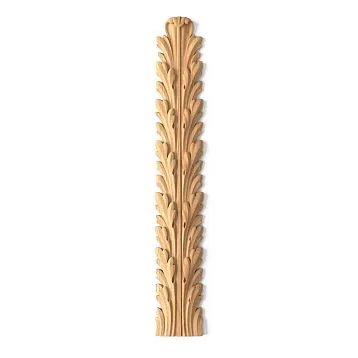
Precision of relief — moldings are cast in molds, the relief is repeated with an accuracy of fractions of a millimeter. Classic profiles (egg-and-dart ornament, dentils, acanthus leaves, pearl molding) are reproduced in detail, indistinguishable from plaster or wooden prototypes.
Ease of installation — moldings are glued to the wall with polyurethane adhesive, additionally fixed with finishing nails (if needed). Joints are filled with acrylic sealant, sanded. Installation of 100 linear meters (room + corridor) takes 2-3 days.
Paintability — polyurethane moldings are supplied white (primed), ready for painting. Painted with acrylic paint in any color, matte or semi-matte. Patina (gold, silver, copper) is possible, creating an antique effect.
Molding profiles for boiserie
Several types of moldings are used to create boiserie:
High baseboard — molding installed along the bottom of the wall, height 100-200 mm.Wooden baseboardis used if the panels are wooden (material unity). Polyurethane baseboard — if the panels are painted MDF or if economy is needed. The baseboard profile is usually classic: a scotia at the bottom (transition to the floor), a straight shelf, a torus or flutes at the top.
Frame moldings — narrow strips 30-60 mm wide, forming rectangular frames around panels. The frame molding profile is simplified: rectangular cross-section with a slight rounding or bevel at the edges. Frames create wall structure, divide it into sections.
Ceiling cornice — molding along the top of the wall, transition to the ceiling. Cornice width (projection from the wall) 50-150 mm, profile height 50-100 mm. The cornice profile is more complex: several steps, roundings, decorative ornament (dentils, egg-and-dart) is possible.
Corner elements and rosettes — decorative overlays placed at the corners of frames or in the center of panels. Rosette diameter 50-150 mm, relief is floral (acanthus, roses, laurel) or geometric (circular patterns). Rosettes create an accent, attract the eye.
Molding installation: technology
Walls must be level (deviations no more than 2-3 mm per meter of length), primed. Mark the location of moldings with a pencil, using a level (horizontal moldings must be strictly horizontal, vertical — vertical).
Cut moldings to length, corners at 45 degrees (a miter box or miter saw is used to create frames). Apply polyurethane adhesive to the back of the molding (zigzag or dotted), press to the wall, hold. Adhesive sets in 10-15 minutes, full polymerization 24 hours.
For heavy moldings (wide cornice) additionally secure with finishing nails 30-40 mm long (driven through the molding into the wall, heads countersunk, holes filled).
Fill joints between moldings with acrylic sealant (white), smooth with a wet finger. After drying (4-6 hours) joints are invisible.
Paint moldings with acrylic paint (two coats) with a brush or roller. Color — matching the walls or contrasting (white moldings on gray walls, gray moldings on white panels).
Creating boiserie: step-by-step instructions
The process of creatingwall decoration with wooden panelswith framing made of polyurethane moldings consists of several stages.
Stage 1: Design and Calculation
Measure the room: ceiling height, wall length, location of windows, doors, switches, outlets. Create a sketch: how will walls be divided into sections? What size frames? Will there be a dado? What height baseboard, cornice?
Classical proportions: dado height 1/3 of wall height (for a 3-meter ceiling, dado 100 cm), width of frame moldings 40-60 mm, frames square or rectangular with aspect ratio 1:1.5 or 2:3.
Calculate material quantities: panel area (m²), linear footage of moldings (m), number of corner elements, rosettes, fasteners, adhesive, paint.
Stage 2: Wall Preparation
Walls must be level, dry, and sturdy. If walls are uneven (variations exceeding 5 mm), level them with plaster or drywall. Prime the walls with acrylic primer (improves adhesive bonding, reduces absorbency).
Stage 3: Skirting Board Installation
Begin by installingtall skirting boardsalong the bottom of the walls. If the skirting boards are wooden, secure them to the wall with screws (6×40 mm anchors spaced 50-70 cm apart), countersink the screw heads, and fill the holes with putty. If the skirting boards are polyurethane, glue them with polyurethane adhesive.
Cut skirting board corners at a 45-degree angle (for both internal and external corners). Fill joints with sealant.
Stage 4: Panel Installation
MDF panels are attached to the wall with adhesive (liquid nails, mounting adhesive) or to a wooden frame (30×40 mm battens screwed to the wall, with panels secured to the battens using self-tapping screws). The adhesive method is faster, while the frame method is more reliable (panels can be removed and replaced).
Install panels from bottom to top: the first row above the skirting board, then the second, third (if the wall is tall). Leave a 2-3 mm gap between panels (for thermal expansion); gaps will be covered by moldings.
Stage 5: Frame Molding Installation
After installing the panels, mount the frame moldings that form rectangles around the panels. Glue the moldings onto the joints between panels or directly onto the panels (if panels are smooth, moldings create relief).
Each frame consists of four moldings: two vertical, two horizontal, with corners cut at a 45-degree angle. Cutting precision is critical—even a 1-2 degree deviation is noticeable in the corners.
Stage 6: Ceiling Cornice Installation
Complete the composition by installing a ceiling cornice along the top of the wall. The cornice creates a transition to the ceiling and visually increases the room's height.
Stage 7: Decorative Element Installation
Glue corner rosettes at the corners of the frames, and central rosettes in the center of large panels (if the composition requires). Rosettes add detailing, richness, and character typical of classic interiors.
Stage 8: Final Finishing
Fill all joints and fastener holes with acrylic putty. Sand with 180-220 grit sandpaper. Paint all elements (panels, moldings, skirting boards, cornice) in the chosen colors. Classic option: panels white or pastel (gray, beige, blue), moldings white, with contrast created by tone (panels slightly darker or lighter than moldings).
Color Schemes for Wainscoting in Modern Interiors
The color of wainscoting defines the character of the interior. Let's examine popular schemes.
Monochromatic White: French Classic
All elements are white: painted MDF panels, polyurethane moldings, skirting boards, cornice—all snow-white or ivory. This scheme visually expands space, reflects light, and creates a sense of purity and airiness. Suitable for small apartments, dark rooms, north-facing spaces.Classic FurnitureFurniture in such an interior should be light (white, cream) or contrasting (dark oak, black).
Two-Tone: Panels + Contrasting Moldings
Panels painted in a pastel tone (gray, beige, dusty blue, olive), moldings white. The contrast highlights the wall architecture, emphasizes frames, and creates depth. This scheme is more complex and interesting than monochromatic, suitable for living rooms, dining rooms, studies. Furniture should match the panel tone or be neutral.
Natural Wood + White Moldings
MDF veneer panels (oak, walnut, ash) coated with oil or varnish that preserves the texture. Polyurethane moldings white. The contrast of wood and white creates a warm yet structured atmosphere. This scheme suits studies, libraries, bedrooms. The wood texture adds tactility, white moldings add lightness.
Dark Panels + Gilded Moldings: Palace Style
Panels painted in dark tones (graphite gray, dark green, burgundy, black), moldings coated with gold or silver patina. This is a maximally dramatic, luxurious scheme, suitable for spacious rooms with high ceilings. In small rooms, dark panels can feel oppressive and visually shrink the space.
Boiserie in Different Rooms: Adaptation to Function
Living Room: Formal Zone
In the living room, boiserie creates formality and solemnity. The height of the panels is full-wall (from floor to cornice), frames are large (80×120 cm or 100×150 cm), with decorative rosettes in the corners. Color is light (white, gray, beige) or natural wood.Wall decoration in wooden housesIt is complemented by framed paintings (one painting per section between frames), mirrors, and sconces.
Furniture is classic: a sofa with curved armrests, chairs with button tufting, a coffee table on carved legs. Fabrics are velvet, silk, linen. Chandelier is crystal or classic multi-arm.
Bedroom: cozy intimacy
In the bedroom, boiserie creates intimacy and a sense of protection. Panels are installed only on the wall behind the bed headboard (accent wall) or on all walls, but only up to mid-height (dado 120-150 cm, above that - paint or wallpaper). Color is warm pastel (beige, dusty pink, lavender), moldings are white. Frames are not large (60×80 cm).
Furniture is a bed with a soft headboard, classic bedside tables, a chest of drawers. Lighting is soft, diffused (table lamps, sconces).
Study: Intellectual Atmosphere
In the study, boiserie creates a library-like, scholarly atmosphere. Panels are made of natural veneer (oak, walnut) full-wall height, moldings are wooden (matching the panels) or contrasting white. Frames can contain built-in bookshelves (depth 25-30 cm), creating a functional wall.
Furniture is a massive wooden desk, a leather armchair, bookcases. Lighting includes a desk lamp, floor lamp, built-in shelf lighting.
Entryway: first impression
In the hallway, boiserie (even on a small scale) creates a status-driven first impression. Panels are 100-120 cm high (dado), moldings are white, the upper part of the wall is painted in a contrasting color. Hallways are usually narrow, so the color is light (white, light gray), visually expanding the space.
Furniture is a console against the wall, a framed mirror, a coat rack or built-in closet. Lighting is bright (ceiling lights, sconces).
Mistakes when creating wainscoting: what to avoid
Mistake 1: Disproportionate frames. Too small frames (30×40 cm) on high walls (3 meters) create fragmentation and restlessness. Too large frames (150×200 cm) on low walls (2.5 meters) look crude. Rule: the height of the frame should be 1/3 to 1/2 of the height of the paneled part of the wall.
Mistake 2: Too wide moldings. A molding 100-150 mm wide on narrow frames (60×80 cm) consumes the area, turning the frame into a solid molding. Rule: the width of the molding should not exceed 1/10 of the frame width (for an 80 cm frame, the molding should not be wider than 80 mm).
Mistake 3: Ignoring the height of the baseboard. A standard baseboard 50-70 mm high looks stunted in an interior with boiserie. A high baseboard 100-150 mm is needed, proportional to the panels.
Mistake 4: Lack of a cornice. Panels reach the ceiling, but without a cornice, the transition is abrupt and unfinished. A cornice is mandatory, even if it is a simple profile.
Mistake 5: Style conflict. Classic boiserie + modern high-tech furniture (chrome, glass) creates dissonance. Boiserie requires classic or neoclassical furniture, fabrics, and accessories.
Frequently Asked Questions about Boiserie
Can boiserie be done in an apartment with low ceilings (2.5 meters)?
Yes, but with adaptation. Use a dado height of 80-100 cm, narrow moldings 30-40 mm, a low cornice 50-70 mm. Color should be light (white, light gray), visually raising the ceiling. Avoid dark colors, horizontal divisions (which visually lower the ceiling).
How much does it cost to create boiserie in a 20 m² room?
Approximately:
-
MDF veneer panels (40 m² of walls) — 4000 rub/m² × 40 = 160,000 rub
-
Polyurethane moldings (frame, baseboard, cornice, 150 linear meters) — 500 rub/m × 150 = 75,000 rub
-
Corner rosettes (20 pcs) — 300 rub/pc × 20 = 6,000 rub
-
Fasteners, glue, sealant, paint — 15,000 rub
-
Total materials: 256,000 rub
-
Labor (installation, painting): 100,000-150,000 rub
-
Total: 356,000-406,000 rub
Budget option (painted MDF panels): 200,000-250,000 rub turnkey.
Can boiserie be done as a DIY project?
Yes, if you have skills (working with a miter saw, level, screwdriver). Medium difficulty. Critical accuracy in cutting molding angles (45 degrees), alignment (horizontal, vertical). If you have no experience, it's better to hire professionals (at least for installation, painting can be done yourself).
How to care for boiserie?
Wipe with a dry or slightly damp cloth (remove dust). Oil-finished panels should be refreshed every 3-5 years (light sanding, applying a new coat of oil). Painted panels should be touched up locally as needed (scratches, chips). Polyurethane moldings require no maintenance (just wiping is enough).
Is boiserie only suitable for classic interiors?
No. Modern neoclassicism actively uses boiserie: simplified molding profiles (straight lines without ornament), monochrome coloring (gray on gray, white on white), large frames (minimal details). Boiserie fits into modern interiors if adapted stylistically.
Can wallpaper be used inside frames instead of panels?
Yes, a classic technique. Molding frames are mounted on a painted wall, wallpaper (fabric, patterned, textured) is pasted inside the frames. This is cheaper than MDF panels and creates an interesting effect (contrast of smooth moldings and patterned wallpaper).
Conclusion: Turn your apartment into a palace with STAVROS
Wall decor with wooden panelsin combination withpolyurethane moldings— is a way to create an interior that looks expensive, thoughtful, stylish, even on a limited budget. Boiserie turns ordinary walls into architecture, flat space into three-dimensional space, a standard apartment into individual housing with character.
STAVROS is a leading Russian manufacturer of materials for creating classic interiors with over twenty years of history. STAVROS offers everything needed for boiserie: from MDF veneer panels to polyurethane moldings, from wooden skirting boards to decorative rosettes, from design to installation.
MDF panels with natural veneer from STAVROS are custom-made to the dimensions of your room. Oak, walnut, ash veneer of class A — knot-free, with uniform texture, factory-sanded (ready for finishing). Panels can be smooth or paneled (with a relief frame), painted in any color from the RAL catalog, finished with oil (preserving texture) or varnish (gloss, semi-matte).
Polyurethane moldingsPolyurethane moldings from STAVROS — over 150 profiles: from simple rectangular (width 30-60 mm) to complex classical with ornament (dentils, egg-and-dart, acanthus leaves). Polyurethane density 300-350 kg/m³ (maximum relief clarity), white primer (ready for painting), plank length 2 meters (minimum joints).
Wooden Skirting BoardsWooden skirting boards from STAVROS — solid oak, beech, ash, height 100-200 mm, classic profiles. Skirting boards can be factory-painted in any color, oil-finished (natural texture), patinated (gold, silver). Hidden fastening (clips or countersunk screws).
Decorative elements — corner rosettes, central rosettes, cartouches, pilaster capitals — made of polyurethane, diameter 50-200 mm, relief floral or geometric. Rosettes create final accents, complete the composition.
Design service: STAVROS designers will create a boiserie sketch for your room, calculate the quantity of materials, and estimate the cost. After approval, all elements are manufactured and supplied as a complete kit, ready for installation.
Professional partner crews of STAVROS perform turnkey boiserie installation: wall preparation, panel installation, molding installation, puttying, painting. Work duration for a 20 m² room — 5-7 days. Warranty on materials and work.
By choosing STAVROS, you choose quality proven by thousands of completed projects. You choose materials that last for decades, preserving their original appearance. You choose a partner who understands that an interior is not just finishing, but a living space reflecting taste, status, individuality.
Turn your apartment into a space worthy of a palace. Create walls that tell stories. Surround yourself with the beauty of classical architecture adapted to modern life. With STAVROS materials and technologies, boiserie ceases to be a privilege of the aristocracy and becomes accessible to everyone who values beauty!