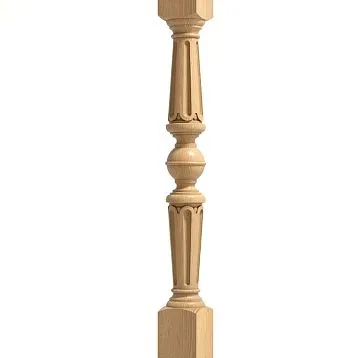
Article Contents:
- DIY Project: The Philosophy of Creating Unique Items
- What is a Wooden Blank
- Why Wood is the Best Material for DIY
- Wooden Item Decoration Techniques: From Simple to Complex
- Painting: Color as Transformation
- Patina: Artificial Aging
- Gilding: Luxury Accessible at Home
- Burning: The Texture of Fire
- Carving: The Pinnacle of Decoration
- Furniture Overlays: Ready-Made Elements for Instant Transformation
- Types of carved appliqués
- Overlay Material
- Overlay Attachment
- Overlay Finishing
- Furniture Handles: Replacing Hardware as an Art
- Wooden Furniture Handles: The Warmth of Nature in Your Hands
- Combined Handles: Wood + Metal
- Handle Installation: Simplicity Accessible to Everyone
- Wooden Box Decoration: A Step-by-Step Project for Beginners
- Choosing a Blank
- Design Concept
- Materials and tools
- Step-by-Step Instructions
- Common Mistakes for Beginners: How to Avoid Disappointment
- Mistake 1: Skipping Sanding
- Mistake 2: Impatience
- Mistake 3: Excess Adhesive
- Mistake 4: Unsuitable Wood Species
- Mistake 5: Fear of Mistakes
- Where to Buy Quality Blanks and Craft Materials
- Quality Criteria for Wooden Blanks
- Quality Criteria for Carved Overlays
- Frequently Asked Questions: Answers for Creative People
- Conclusion: Start Creating Unique Items with STAVROS

Have you ever looked at a simple wooden dresser or box and thought: something is missing? Not function—it's there. Not quality—it's in place. What's missing is soul, character, that special touch that turns an item from mass-produced into an author's piece, bearing the imprint of your personality.Decorating wooden blankswith your own hands is a way to breathe life into faceless forms, to create a unique item that cannot be bought in a store because it exists in a single copy, created by your hands, according to your design, for your home.
The DIY movement (Do It Yourself) has captivated millions of people worldwide, anddecorating wooden itemshas become one of the most popular directions. Why? Because wood is a grateful, living, responsive material. It forgives beginners' mistakes, rewards masters' patience, and retains the warmth of the creator's hands. A simple wooden dresser blank, treated with stain, adorned with carved overlays, complemented by author'sfurniture handlessolid oak or brass elements, transforms into a work of art worthy of becoming the center of attention in an interior.
This article is a complete guide for those who want to masterto buy, which will allow you to transform your furniture using carved wooden elements. You can use the C-003-3 decor set to decorate furniture, walls, doors, or any other surface. The C-003-3 decor set is made of oak or beech, known for their strength, durability, and beauty. You can buy the C-003-3 decor set at the Stavros decor store, which specializes in producing and selling decorative elements and hardware for furniture and interiors. At the Stavros decor store, you will find a wide selection of decor sets of various shapes, sizes, and styles. You can choosewith their own hands. We'll break down decorating techniques: from simple (painting, patination) to complex (carving, gilding, burning), learn how to choose and attach carved overlays to furniture fronts, replace standard hardware with author's wooden handles, and create from scratch a project fordecorating a wooden box—a small but full-fledged DIY case for beginners. We'll find out where to buy quality blanks, what tools are necessary, and how to avoid typical mistakes that turn the creative process into disappointment.




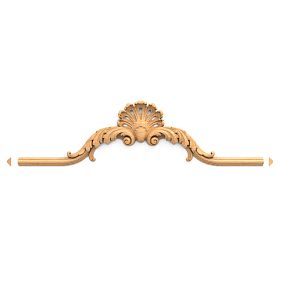
DIY Project: The Philosophy of Creating Unique Things
Why make it yourself if you can buy it ready-made? Skeptics who don't understand the essence of creativity ask this question. The answer is simple: because ready-made is faceless, mass-produced, identical for thousands of people. Something created with your own hands is unique, carries the creator's energy, and perfectly suits your needs and taste.




What is a Wooden Blank
A blank is a semi-finished product, a base for creativity. In the case of furniture, it's a dresser, cabinet, shelf, bookcase made of solid wood or MDF, without finishing (unpainted, unsanded, or base-sanded), without decorative elements. The blank is functional (has a structure, drawers, doors) but aesthetically neutral—a clean canvas for your creativity.
Small blanks—boxes, photo frames, trays, cutting boards, decorative panels—are ideal for first projects. They require less time, materials, and skills, allowing you to master techniques on a small object before moving on to larger ones (furniture, doors, wall panels).
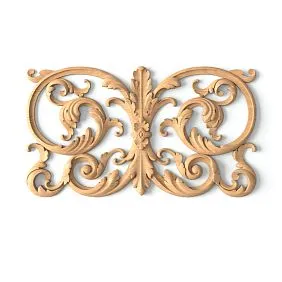
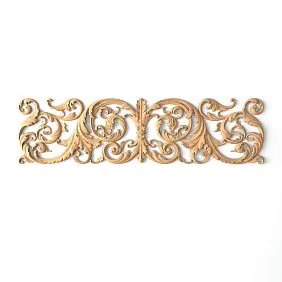
Our factory also produces:



Why Wood is the Best Material for DIY
Eco-friendliness: Wood is natural, without harmful emissions (unlike plastic, chipboard with formaldehyde). Working with wood, you don't breathe in toxins.
Ease of processing: Wood can be cut, sanded, and painted with tools available at any hardware store or even at home (handsaw, sandpaper, brushes).
Forgiving of mistakes: A mistake on wood (uneven cut, scratch, unsuccessful paint job) can be fixed—sanded, filled, repainted. Plastic or metal are less forgiving.
Tactility: Wood is pleasant to the touch (warm, alive), working with it provides sensory pleasure, calms, and grounds (as confirmed by art therapy research).
Durability: Properly treated wood lasts for decades; your decorated dresser can be passed down to grandchildren as a family heirloom.
Get Consultation
Techniques for Decorating Wooden Items: From Simple to Complex
There are dozens of wood decorating techniques, from elementary (accessible to a child) to master-level (requiring years of training). Let's consider the main ones applicable at home.
Painting: Color as Transformation
The simplest technique is to cover wood with paint. But even here there are nuances that turn banal painting into an art.
Paint choice: Acrylic (water-based, odorless, dries quickly, easy to apply with a brush or roller), chalk paint (matte textured, creates a vintage effect, easy to sand for patina), oil-based (deep, rich color, dries slowly—24 hours, more toxic).
Surface preparation: Sanding with 120-180 grit sandpaper (removes unevenness, burrs, creates roughness for paint adhesion), dust removal (with a damp cloth or tack cloth), priming (acrylic primer fills wood pores, reduces paint consumption, improves adhesion).
Application techniques: Solid painting (one color, 2-3 coats for even coverage), ombre (smooth transition from one color to another, applied with a sponge or brush with blending), stenciling (pattern applied through a stencil—geometric shapes, flowers, lettering), gradient (several colors smoothly transitioning into each other).
Patina: artificial aging
Patina is a patina that forms on metal or wood over time (darkening, paint wearing off on raised areas, cracks). Artificial patina imitates this, creating an antique effect.
Technique: Paint the workpiece with a base color (e.g., dark blue) and let it dry. Apply a second layer of a contrasting color (white, gold, silver) with a sponge or dry brush using light strokes on the raised areas (corners, edges, carved elements). After drying, lightly sand the raised areas with 220-320 grit sandpaper — the base color will show through, creating a worn effect.
Variation: Two-tone patina (dark base + light top) or reverse (light base + dark accents in recesses, imitating dirt accumulation, antiquity).
Gilding: Luxury accessible at home
Gilding — coating a surface with a thin layer of gold (gold leaf) or imitation (imitation gold leaf, gold paint). Real gold leaf is expensive and requires skill, but imitation is accessible.
Materials: Imitation gold leaf (imitation of gold leaf, sheets of thin foil in gold, silver, copper colors, price 200-500 rubles per booklet of 25 sheets), adhesive for imitation gold leaf (special sticky adhesive for attaching the sheet), fixative varnish (protects the imitation gold leaf from oxidation, darkening).
Technique: Apply adhesive to the area you want to gild (e.g., a carved overlay on a dresser facade), wait 15-20 minutes (the adhesive should become tacky but not wet). Place a sheet of imitation gold leaf, press with a soft brush (the sheet adheres to the adhesive, excess falls off). Remove excess with a brush. After drying (2-4 hours), coat with fixative varnish.
Effect: Gilded elements attract light, create luxury, solemnity, work in classic, baroque, eclectic interiors.
Charring: The texture of fire
Charring (brushing with charring) — a technique that gives wood a deep, contrasting texture. Soft wood fibers burn away, hard ones remain, revealing the relief of annual rings.
Tools: Gas torch (camping or construction), metal brush (for removing charred soft fibers), 120 grit sandpaper (finishing).
Technique: Evenly char the surface with a torch (the wood should darken but not catch fire, keep the torch 5-10 cm away, move smoothly). Let it cool. Go over with a metal brush along the grain (charred soft areas are removed, leaving the relief of hard fibers). Sand with sandpaper (removes sharp edges, evens out). Coat with oil or varnish (enhances contrast, protects).
Application: Charred wood is used for countertops, furniture facades in loft, rustic styles, for decorative panels, frames.
Carving: The pinnacle of decorative art
Wood carving — an ancient art requiring skill, patience, special tools (chisels, gouges). For beginners, geometric carving (simple elements — triangles, diamonds, lines) or contour carving (the pattern is cut along the contour, without volume) is recommended.
Tools: Set of chisels (flat, semicircular, corner, sizes 6-20 mm), skew knife (for geometric carving), mallet (wooden hammer for striking chisels).
Technique: Draw the pattern on the wood with a pencil (or via carbon paper). Cut along the contour with a knife or chisel (depth 2-5 mm for contour carving, deeper for relief). Clean up minor irregularities with a gouge. Sand with 220 grit sandpaper. Coat with oil or varnish.
For beginners: Start with simple patterns on small workpieces (cutting board with geometric pattern, box with contour flower design). As skills grow, move to complex ones — relief carving, sculptural carving.
Furniture overlays: Ready-made elements for instant transformation
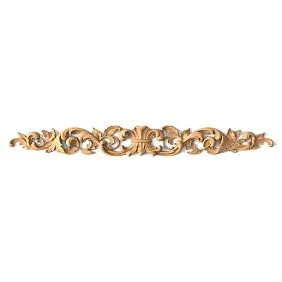
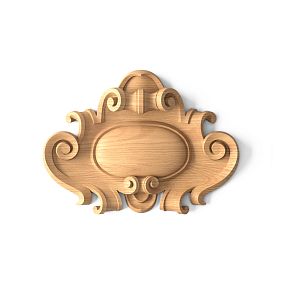
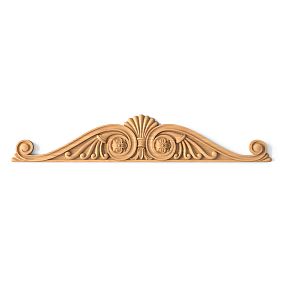
Not everyone is ready to master carving — it's time-consuming, complex, requires tools and talent. But there's a way to achieve the effect of carved decor without carving — use ready-made carved overlays.to buy, which will allow you to transform your furniture using carved wooden elements. You can use the C-003-3 decor set to decorate furniture, walls, doors, or any other surface. The C-003-3 decor set is made of oak or beech, known for their strength, durability, and beauty. You can buy the C-003-3 decor set at the Stavros decor store, which specializes in producing and selling decorative elements and hardware for furniture and interiors. At the Stavros decor store, you will find a wide selection of decor sets of various shapes, sizes, and styles. You can chooseCarved overlays — these are separate carved elements (rosettes, cartouches, corner pieces, strips with ornaments) that are glued or screwed onto furniture facades, doors, panels, turning them from simple to luxurious.
Types of Carved Appliqués
Corner overlays — elements sized 50×50 mm — 150×150 mm, decorating corners (cabinet doors, dresser drawer corners, mirror frames). Symmetrical ornament (acanthus leaves, scrolls, rosettes), positioned diagonally across the corner.
Central overlays (cartouches) — large elements sized 100×200 mm — 300×600 mm, placed in the center of a facade (cabinet door, bed headboard). Complex, voluminous ornament (coat of arms, floral composition, cornucopia).
Ornamental strips — long narrow elements width 30-80 mm, length 500-2000 mm, framing the perimeter of a facade, door, creating borders.
Round rosettes — elements diameter 50-200 mm, used as standalone decor (center of a door) or in composition (several rosettes on one surface).
Overlay material
Solid wood (oak, beech, ash, linden) — natural, heavy (weight of a 100×100 mm overlay in oak — 80-120 grams), expensive (price 300-2000 rubles/piece depending on size, carving complexity, wood species). Solid wood can be sanded, stained, painted, varnished, gilded — any treatment holds perfectly.
Polyurethane — imitation wood, lightweight (weight of a 100×100 mm overlay — 15-25 grams), cheap (price 100-500 rubles/piece), moisture-resistant. Downside — plastic feel, up close it's clear it's not wood. Suitable for budget projects, for areas not touched by hand.
Polymer gypsum — mixture of gypsum and polymers, heavier than polyurethane, lighter than wood, cheap. Brittle (easily chips on impact), rarely used.
Attaching overlays
With adhesive: Wood glue PVA (for wood on wood), polyurethane adhesive (universal, for any materials), liquid nails (quick fixation). Apply adhesive thinly to the back of the overlay, press onto the surface for 30-60 seconds, secure with painter's tape or weight until dry (4-12 hours). Wipe excess adhesive immediately with a damp cloth.
For screws: for heavy overlays (large, solid oak). Pre-drill holes in the overlay (diameter 2-3 mm to prevent splitting when screwing), apply glue, press, screw screws (length 20-30 mm) through the overlay into the base. Sink the screw heads, fill with putty, paint over.
Final processing of overlays
After fixing, the overlays are processed together with the base: sanding joints (if there are steps between the overlay and the facade), priming, painting or tinting. To create a single whole, the overlay and facade are painted the same color. To highlight the overlay, it is painted in a contrasting color (facade white, overlay gold; facade dark, overlay light).
Furniture handles: replacing hardware as an art
Standard furniture comes with standard hardware - plastic or metal handles, faceless, mass-produced, nondescript. Replacing them with customFurniture Handlesones made of wood, brass, or ceramic instantly transforms furniture, turning it from mass-produced goods into a designer piece.
Wooden furniture handles: the warmth of nature in your hands
Handles made of solid wood (oak, ash, walnut, wenge) - warm to the touch (unlike cold metal), pleasant tactilely, organically combined with wooden furniture. Shapes are varied: classic mushroom-shaped (round head diameter 30-40 mm on a stem), railing (straight or curved bar length 100-300 mm), buttons (small, diameter 20-30 mm, for small drawers), carved shaped (unique shapes - branches, animals, abstraction).
Advantages of wooden handles:
-
Eco-friendliness (natural material, no toxins)
-
Tactility (pleasant to hold)
-
Aesthetics (wood texture, noble shades)
-
Possibility of self-manufacturing (if you have a lathe or carving skills)
Disadvantages:
-
Less durable than metal (can chip under strong impact)
-
Require treatment (varnish, oil for protection from moisture, dirt)
-
More expensive than plastic (price of a wooden handle 200-800 rubles/piece vs. 50-150 rubles for plastic)
Combined handles: wood + metal
A popular trend is handles combining wood and metal. Metal base (brass, stainless steel, black matte metal) + wooden insert (oak, walnut, ash). Metal provides fastening strength, wood provides aesthetics and tactility. Such handles are universal, suitable for both classic and modern interiors.
Handle installation: simplicity accessible to everyone
A standard handle is fastened with a screw (one or two - depends on the handle type). To replace handles:
-
Unscrew the old handles (with a screwdriver from inside the drawer or door).
-
If the new handle's holes match the old ones - screw the new handle through the existing holes.
-
If they don't match - drill new holes (diameter 5-6 mm for M4-M5 screws), fill the old holes with wood putty, sand, paint over.
-
Screw on the new handle (screws usually included).
Time to replace handles on a chest of drawers with 5 drawers - 20-30 minutes. The effect is colossal, the furniture looks completely different.
Decorating a wooden box: a step-by-step project for beginners
Theory without practice is empty words. Let's create a real projectdecorating a wooden box- from purchasing a blank to the final result.
Choosing a blank
Wooden box blank (size 20×15×10 cm, solid pine, unpainted, with hinged lid, lock) - price 500-800 rubles. The blank is sanded with 120-grit sandpaper, ready for decoration.
Design Concept
Style: vintage, romantic. Color scheme: white + gold. Decor: patina, gilding, carved rosette overlay on the lid.
Materials and Tools
-
Matte white acrylic paint (100 ml, 150 rub)
-
Gold metallic acrylic paint (50 ml, 200 rub)
-
Gold leaf (book of 25 sheets, 300 rub)
-
Gold leaf adhesive (50 ml, 150 rub)
-
Matte acrylic varnish (100 ml, 200 rub)
-
Carved linden rosette overlay, 80 mm diameter (300 rub)
-
PVA wood glue (100 ml, 80 rub)
-
Sandpaper grit 180, 220 (set, 100 rub)
-
Brushes (3 pcs different sizes, 150 rub)
-
Sponge (for patina, 50 rub)
Total materials: 1680 rub + blank 650 rub = 2330 rub.
Step-by-step instruction
Step 1: Preparation. Sand the blank with 180 grit sandpaper (remove burrs, unevenness), then with 220 grit (final sanding, smoothness). Remove dust with a damp cloth.
Step 2: Base painting. Apply white paint with a brush in 2 coats (first coat dries for 2 hours, second coat after the first is dry). Paint along the wood grain, strokes even, without streaks.
Step 3: Patination. After the white paint dries (4 hours), apply gold paint with a sponge using light strokes on the corners of the box, edges of the lid, protruding areas (simulating wear, where the white paint appears worn away, revealing gold). Let dry (2 hours).
Step 4: Attaching the overlay. Glue the carved rosette to the center of the box lid. Apply PVA glue to the back of the rosette, press onto the lid, secure with a weight (place a 1-2 kg book on top). After 6-8 hours the glue will be completely dry, the weight can be removed.
Step 5: Gilding the overlay. Apply gold leaf adhesive with a thin brush onto the rosette (only on the protruding parts of the carving, leave recesses without gold for contrast). Wait 15 minutes (adhesive becomes tacky). Apply leaf sheets, press with a soft brush. Shake off excess. Let dry (2 hours).
Step 6: Final coating. Coat the entire box (including the rosette) with acrylic varnish in 2 coats (protects paint and leaf from wear, adds slight sheen). Each coat dries for 3-4 hours.
Result: after 24 hours (total drying time for all coats) the box is ready. White with gold wear marks, with a carved gilded rosette on the lid — unique, author's, created by your hands. Material cost 2330 rub, work time 4-5 hours (spread over 2 days due to drying coats). A similar decorative box in a store would cost 5000-8000 rub, yours is 2-3 times cheaper and exclusive.
Common mistakes: how to avoid disappointments
Mistake 1: Skipping sanding
Applying paint to an unsanded surface — paint goes on unevenly, highlights all roughness, burrs. Result looks sloppy. Solution: always sand the blank before painting, with two grits (first coarse 120-180, then finish 220-320).
Mistake 2: Impatience
Applying the second coat of paint before the first dries — paint smears, forms lumps, streaks. Solution: read the drying time on the can, wait, don't rush. Better to wait an extra hour than ruin the work.
Mistake 3: Excess glue
Applying too much glue when attaching overlays — glue squeezes out from under the overlay, stains the surface, hard to remove. Solution: apply glue in a thin layer (0.5-1 mm is enough), wipe excess immediately with a damp cloth before it dries.
Mistake 4: Unsuitable wood species
Choosing coniferous species (pine, spruce) for carving — conifers are resinous, soft, harder to carve (chisel gets stuck, carving turns out unclear). Solution: for carving choose deciduous species (linden — softest and easiest for beginners, oak, beech — for experienced).
Mistake 5: Fear of mistakes
Fear of ruining — creative paralysis, refusal of projects. Solution: remember, wood forgives mistakes. Failed painting can be sanded and repainted. A chip can be filled. The worst that can happen — you lose a blank worth 500-1000 rub, but gain experience that is priceless.
Where to buy quality blanks and materials for creativity
The quality of blanks, overlays, and handles determines the final result. Raw wood (moisture content over 15%) will crack after painting. A poorly sanded blank will require hours of additional work. Carved overlays with unclear carving will cheapen the look of the product.
Quality criteria for wooden blanks
Wood moisture content: no more than 12% (measured with a moisture meter, or check with the seller). Dry wood is stable and does not warp.
Absence of defects: knots (small, healthy, non-falling ones are acceptable), cracks (unacceptable), blue stain (fungus, unacceptable), rot (unacceptable).
Sanding: basic (grit 120-150) is sufficient, you can do the final sanding yourself. If the blank is very rough, it will require a lot of time for sanding.
Construction: if the blank has mechanisms (hinges, locks, drawers) — check the operation of the mechanisms before purchase (drawers slide smoothly, hinges don't squeak, the lock closes).
Quality criteria for carved overlays
Clarity of carving: all lines, curls, leaves should be clear, without blurriness. Hand-carved or high-quality CNC carving — details are well-defined.
Absence of chips: the overlay is intact, without chipped fragments (especially important for fragile species like linden).
Thickness: solid wood overlays with a thickness of 8-12 mm are optimal (not too thin — they don't break, not too thick — they don't overload the look).
Frequently asked questions: answers for creative people
Can particleboard (chipboard) furniture be decorated, or only solid wood?
Particleboard (chipboard) can be decorated, but with limitations. Chipboard does not hold screws well (when attaching overlays with screws, they may fall out), so attach only with glue. Chipboard should be painted after priming (otherwise the paint absorbs unevenly, spots may appear). Carving on chipboard is impossible (the material crumbles). Conclusion: for decoration with overlays and painting, chipboard is suitable; for carving — only solid wood.
How long does it take to decorate a dresser?
Depends on the complexity. Simple painting of a dresser (3-4 drawers) — 1 day (preparation, priming, painting in 2 coats, drying). Decoration with overlays, patina, gilding, replacing handles — 3-5 days (most of the time is waiting for layers to dry). Active hands-on work — 6-10 hours, the rest is patience.
How to replace expensive carving tools?
For first projects, utility knives (sharp, convenient for contour carving) and narrow chisels from a hardware store (cheap, 100-300 rubles each) will work. As your skills grow, invest in professional carving tools (Japanese, Swiss — 1000-3000 rubles each, but they last for decades).
How to protect decorated furniture from moisture in the kitchen or bathroom?
Use moisture-resistant coatings: yacht varnish (polyurethane, forms a waterproof film), oil-wax (special formulations for wet rooms), water-resistant paint (acrylic enamel for furniture). Avoid chalk paint (absorbs moisture) and regular acrylic varnish (not moisture-resistant enough for bathrooms).
Where to learn wood carving?
Online courses (YouTube channels of masters, paid courses on educational platforms), offline workshops (look for wood carving studios in your city offering master classes), books (classics — textbooks on artistic carving), practice (the most important teacher — try, make mistakes, analyze, try again).
How much does a full set of materials cost to start DIY wood decoration?
Minimum starter set (paints 3-4 colors, varnish, glue, brushes, sandpaper, a couple of overlays, a small blank) — 3000-5000 rubles. This is enough for 3-5 projects (boxes, frames, small panels). Extended set (more paints, carving tools, gold leaf, stains, various blanks) — 10000-15000 rubles. A professional master's set — 50000+ rubles, but it accumulates over the years.
Conclusion: start creating unique things with STAVROS
Decorating wooden blanksDIY is an exciting, meditative, deeply satisfying activity. Transforming a faceless blank into a unique item carrying your handwriting, your energy, your vision of beauty — a process close to magic.decorating wooden itemsUsing ready-made carved overlays is accessible even to beginners who do not know carving but want to achieve a handmade effect. Replacing standard hardware with author'sFurniture Handleswooden hardware instantly transforms furniture, turning it from mass-produced into designer.to buy, which will allow you to transform your furniture using carved wooden elements. You can use the C-003-3 decor set to decorate furniture, walls, doors, or any other surface. The C-003-3 decor set is made of oak or beech, known for their strength, durability, and beauty. You can buy the C-003-3 decor set at the Stavros decor store, which specializes in producing and selling decorative elements and hardware for furniture and interiors. At the Stavros decor store, you will find a wide selection of decor sets of various shapes, sizes, and styles. You can chooseand small items (decorating a wooden boxframes, trays) allows you to create an entire collection of unique items for the home or as gifts.
STAVROS is the largest Russian manufacturer and supplier of solid wood products, offering everything needed for DIY decor projects: blanks, carved overlays, furniture handles, tools, and finishing materials.
STAVROS wooden blanks — boxes, chests of drawers, cabinets, frames, trays, cutting boards, panels made of solid pine, oak, beech, linden; wood moisture content 8-12% (stability, no deformation after processing); base sanding with 120-grit (ready for final sanding and painting); quality construction (brass hinges, reliable locks, drawers on runners). Sizes range from small (boxes 10×15 cm) to large (chests of drawers 80×120 cm). Affordable prices: boxes from 400 rubles, chests of drawers from 8000 rubles.
STAVROS carved overlays made of solid wood — oak, beech, ash, linden; high-quality hand and CNC carving (clear lines, detailed work); sizes from miniature (corner pieces 30×30 mm) to large (cartouches 400×600 mm); classic ornaments (acanthus, grapes, rosettes), baroque (putti, garlands), modern (geometry, abstraction). Thickness 8-15 mm, finish: unpainted (for self-finishing), white primed (ready for painting), stained (oak, walnut, wenge stain). Prices from 150 rubles for a small overlay to 3000 rubles for a large hand-carved cartouche.
STAVROS wooden furniture handles — oak, ash, walnut; classic shapes (mushroom, knob), modern (rail, geometric), carved (branches, shaped), combined (wood + brass, wood + black metal). Sizes from miniature (25 mm diameter for small drawers) to large (200 mm length for wide doors). Finish: natural oil (wood grain visible), matte or glossy varnish, stain tinting. Prices from 180 rubles for a simple knob to 1200 rubles for a carved oak handle.
Decorative materials — acrylic paints (palette of 50+ colors), chalk paints (for vintage effects), water- and alcohol-based stains (oak, walnut, wenge, mahogany), wood oils (linseed, tung, special compounds), acrylic and polyurethane varnishes (matte, semi-matte, glossy), gold leaf (gold, silver, copper), decorative waxes. Tools: brushes (synthetic, natural bristle, various sizes), sponges, rollers, carving chisels (sets of 6-12 pieces), sandpaper (all grits).
Educational materials — on the STAVROS website, a blog section with master classes (step-by-step photo instructions for decorating boxes, furniture restoration, patination, gilding), videos on the YouTube channel (visual lessons), PDF guides (downloadable instructions). Free consultations: call, write in the chat, describe your project — specialists will advise which materials to choose, which techniques to use, and how to avoid mistakes.
Delivery across Russia — by courier in Moscow and St. Petersburg (1-3 days), by transport companies to regions (7-21 days). Reliable packaging (blanks and overlays in cardboard with impact protection). Pickup from showrooms in Moscow and St. Petersburg (addresses on the website, you can see in person, touch, assess quality).
By choosing STAVROS, creative people, DIY enthusiasts, beginner and experienced decorators choose quality (proven by thousands of projects), variety (everything in one place — saving time), professionalism (consultations, training, support), guarantee (return within 14 days if the product is unsuitable).
Start creating today. Order blanks, overlays, handles, materials on the STAVROS website, receive them, unpack, turn on music, brew tea, sit down at your work desk — and let your hands create beauty that has never existed in this world before. With STAVROS materials and your imagination, anything is possible!