Article Contents:
- Stairs as the Architectural Center of a Two-Level Apartment
- Balusters: Structural Necessity and Aesthetic Tool
- Choosing Wood Species: Technology and Symbolism
- Stylistic Directions of Balusters
- Wooden Casing: Framing Functional Openings
- Functional Tasks of Casing
- Casing Profile: From Simple to Complex
- Casing Width: A Question of Proportions
- Creating Stylistic Unity: Balusters and Casings in Dialogue
- Unity of material and color
- Repetition of Form and Profile
- Stylistic Continuity
- Railings and Balusters: A Constructive Union
- Поручень: эргономика и эстетика
- Posts and Newels: Vertical Accents
- Door Decoration: Casing as Part of the Composition
- Doorway Capital
- Rosettes and Corner Elements
- Spatial Transitions: Stairs as a Connection Between Levels
- Stairs in the Living Room: Dominant or Discrete
- Under-Stair Space: Function and Aesthetics
- Technological Aspects: From Idea to Implementation
- Baluster Installation: Mounting Methods
- Casing Installation: Traditions and Nuances
- Care and Preservation: Wooden Elements in the Long Term
- Protective coatings: varnish, oil, wax
- Regular Care: Simple Rules
- Frequently Asked Questions: Practical Experience
- Is it Necessary to Use the Same Wood Species for Balusters and Casings?
- What Distance Should Be Between Balusters?
- Can Wooden Balusters and Casings Be Painted in Bright Colors?
- How to Combine Wooden Elements with Modern Interior Design?
- Should the Ends of Balusters and Casings Be Treated After Cutting?
- How to Choose the Height of Stair Railings?
- Can MDF Be Used Instead of Solid Wood for Casings?
- What to do if the walls in the apartment are uneven?
- Should balusters and architraves be custom-made or is it better to buy ready-made ones?
- How to calculate the number of balusters for a staircase?
- Conclusion: a symphony of wooden details

A two-level living space is both a challenge and an opportunity. A challenge because connecting two floors into a cohesive composition is not easy. An opportunity because it is here that the potential of architectural thinking is revealed, when vertical and horizontal planes begin to engage in dialogue throughBalusters for staircaseandWooden casings. What turns disparate rooms into a harmonious home? The correct answer is a well-thought-out system of decorative elements working as a single organism.
The staircase in a two-level apartment is not just a functional structure for moving between floors. It is a visual dominant, a spatial accent, a connecting link between private and public areas. And architraves on door and window openings are the frame within which everyday life unfolds. When these elements speak the same language of form, color, and texture, the space gains integrity.


The staircase as the architectural center of a two-level apartment
In a multi-level dwelling, the staircase is always in sight. It greets those entering, sees off those leaving, and is constantly present in peripheral vision. It cannot be ignored—therefore, it must be made worthy of attention.




Balusters: a structural necessity and an aesthetic tool
Wooden balustersperform a dual function. The first, obvious one is ensuring safety. The stair railing prevents falls, creating physical and psychological comfort during ascent and descent. Building codes clearly regulate railing height, distance between balusters, and strength characteristics. But beyond the regulations lies the territory of creativity.
The second function of balusters is to form the rhythmic structure of the stair space. Vertical posts create a visual rhythm that either calms or energizes perception. Closely spaced thin balusters evoke a sense of lightness, airiness, and graphic sophistication. Widely spaced massive posts speak of solidity, reliability, and monumentality.
The shape of a baluster determines the style of the entire staircase. Turned balusters with classical profiles reference tradition, creating an atmosphere of respectability and time-tested aesthetics. Carved balusters with floral or geometric ornaments turn the staircase into a work of decorative art. Simple rectangular or square posts of modern design affirm a minimalist philosophy, where purity of lines and honesty of material are important.
Our factory also produces:


Choice of wood species: technology and symbolism
Oak, beech, ash—the classic trio of species for making stair elements. Choosing between them is not only a matter of budget but also an understanding of the material's character.
Oak is a symbol of strength and durability. Density 650-750 kg/m³, hardness, and wear resistance make oak balusters practically eternal. Oak's texture is expressive: large pores, clear annual rings, characteristic medullary rays create a noble pattern that is only enhanced by staining. Oak's color palette ranges from light straw to deep brown, and stained oak yields almost black shades with a silvery sheen.
Beech—density up to 800 kg/m³, fine-pored homogeneous structure, and warm pinkish hue. Beech balusters sand beautifully, creating a silky surface. Beech is ideal for painting—it absorbs dyes evenly, allowing for rich, uniform tones. In classic interiors, beech elements are often stained to resemble walnut or mahogany; in modern ones—painted white, gray, or graphite.
Ash is close to oak in strength but lighter and has a more contrasting texture. Ash balusters are the choice for those who appreciate the expressiveness of wood grain but prefer a light palette.
Get Consultation
Stylistic directions of balusters
The market offers thousands of baluster design options, but they all group around several stylistic directions.
Classical turned balusters. Elegant profiles with variable cross-sections, alternating thin waists and smooth swellings, strict symmetry—this is the language of classical architecture. Such balusters fit organically into interiors in the styles of classicism, baroque, and neoclassicism. They require appropriate surroundings: cornices, moldings, rosettes, capitals.
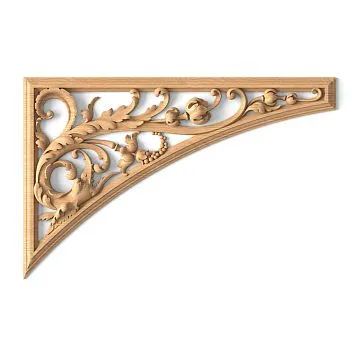
Carved balusters. Hand or machine carving turns a baluster into a sculptural object. Floral motifs—grape clusters, acanthus leaves, floral rosettes—are characteristic of baroque and rococo styles. Geometric ornaments—meanders, rhombuses, squares—lean towards art deco and ethnic directions. Carved balusters are always an accent; they require space and attention.
Modern geometric balusters. Straight posts of square or rectangular cross-section, absence of decoration, emphasis on material texture and quality of workmanship. This is the choice for minimalist, Scandinavian, and industrial interiors. Simplicity of form is compensated by the nobility of the wood and impeccable execution.
Combined solutions. Combining wooden balusters with metal inserts, glass panels, or forged elements opens wide possibilities for creating unique designer solutions. Such staircases become true art objects in the interior.
Wooden architrave: framing functional openings
Doors and windows are breaks in the continuity of the wall, functional openings that require framing.Wooden casingfulfills this task, concealing technological gaps and creating a visual frame around the door or window.
Functional tasks of the architrave
First and foremost, the architrave masks the mounting seam between the door frame and the wall. When installing a door, a gap inevitably remains, filled with mounting foam. Without an architrave, this joint looks unfinished and sloppy. The architrave covers it, creating a neat frame.
The second function is protective. Wall corners around door openings are prone to mechanical damage: impacts from furniture during moving, bumps with hands, accidental pushes. The architrave absorbs these impacts, protecting the more vulnerable wall finish.
The third function is acoustic and thermal insulation. A properly installed architrave fits tightly to the frame and wall, additionally blocking paths for sound transmission and heat leakage through mounting gaps.
But the main function of architraves in the context of creating stylistic unity is decorative. Architraves set the scale, proportions, rhythm, and style of the doorway.
Architrave profile: from simple to complex
The simplest architrave is a flat strip with a rectangular cross-section. Minimal decoration, emphasis on material and proportions. Such architraves are appropriate in modern minimalist interiors.
A milled architrave has a profiled cross-section with protrusions, grooves, and roundings. The play of light and shadow on the textured surface creates additional plasticity. The complexity of the profile can vary from simple bevels to multi-step classical profiles with fillets, beads, and coves.
Carved architraves are the pinnacle of decorativeness. Floral ornaments, geometric patterns, and custom compositions turn door framing into a work of art. Such architraves are manufactured on CNC milling machines according to custom projects or selected from manufacturer collections.
Architrave width: a question of proportions
The traditional architrave width is 60-80 millimeters. This is a universal size suitable for most interiors and standard-sized doorways.
Wide architraves (90-120 millimeters and more) create a monumental frame, emphasize the importance of the opening, and visually enlarge it. They are characteristic of classical interiors with high ceilings and spacious rooms.
Narrow architraves (40-50 millimeters) are a choice for compact spaces and modern styles where conciseness is valued.
Creating stylistic unity: balusters and architraves in dialogue
How to link stair railings and door frames into a unified system? There are several strategies.
Unity of material and color
The most obvious way is to use the same wood species and identical finish for balusters and architraves. Oak balusters and oak architraves, both coated with clear varnish or tinted in the same shade, automatically create a visual connection.
Color is of colossal importance. Light wood species or bleached wood make the space more airy and expand it. Dark shades — walnut, wenge, stained oak — bring solidity and intimacy. Medium tones — natural oak, beech — are universal and suit most interiors.
It is important that the color of wooden elements matches the floor color. A classic technique is to make the staircase, architraves, and baseboards in the same color, contrasting or harmonizing with the color of walls and doors. For example, light walls, white doors, dark floors, and dark wooden elements create a graphic, clear interior. Or vice versa: dark walls, light floors, and light wood give a soft, enveloping effect.
Repeating form and profile
A more subtle technique is repeating constructive and decorative motifs. If balusters have a turned profile with characteristic cross-section transitions, these same transitions can be repeated in the architrave profile. If balusters feature carved ornamentation — grape leaves, geometric patterns — this same ornamentation can appear on wide architraves or door opening capitals.
Rhythm is also important. The frequency of baluster placement creates a certain visual rhythm. If this rhythm finds an echo in other interior elements — for example, in the placement of wall moldings or the division of built-in furniture facades — a sense of thoughtfulness and harmony arises.
Stylistic Consistency
Mixing styles is a common mistake. Classic carved balusters in Baroque style conflict with minimalist flat architraves. Modern geometric balusters look alien next to luxurious milled architraves with many details.
Having chosen a stylistic direction for the staircase, it is necessary to consistently apply it to all wooden interior elements. Classic means classic everywhere. Modernity means restraint and conciseness in all details. Eclecticism is permissible but requires professional intuition and boldness.
Handrails and balusters: a constructive union
Handrails and balusters— are an inseparable pair. Balusters create the vertical structure of the railing, handrails — the horizontal finishing line along which the hand glides during ascent and descent.
Handrail: ergonomics and aesthetics
The handrail should be comfortable to grip. A classic round cross-section with a diameter of 40-50 millimeters is optimal for the human hand. An oval cross-section is also comfortable and more elegant. Rectangular handrails with rounded edges are characteristic of modern styles.
The material of the handrail can match the material of the balusters or contrast with it. Wooden balusters with a metal handrail is a common combination in modern interiors. Or a wooden handrail on metal balusters — the reverse option, providing the tactile warmth of wood while maintaining the visual lightness of metal.
The continuity of the handrail is important. It should smoothly flow from one flight to another, go around turns, without interruption or creating inconvenient joints. Professional manufacturersstaircase componentsoffer a system of elements: straight sections, turning sections, finishing elements, allowing the assembly of a handrail of any configuration.
Posts and newels: vertical accents
At the beginning and end of a stair flight, balusters are often replaced by more powerful posts — supporting or decorative uprights of larger cross-section. These elements perform several functions.
Constructive function — posts bear the main load from the handrails, especially at turning points or the end of a flight, where significant forces arise when leaning on the handrail.
Decorative function — posts set vertical accents, mark the beginning and end of the staircase, and create scale. They are often adorned with more complex carvings than regular balusters, crowned with finials — decorative balls, cones, vases.
Posts should harmonize with balusters in style and material, yet be visually weightier, more massive, and more significant. If a baluster is a violin in an orchestra, then a post is a cello: the same family of instruments, but a different register.
Door decor: casing as part of the composition
Door DecorationIn a duplex apartment, this includes not only casings but also capitals, cornices above openings, pilasters on the sides, and rosettes in the corners. In classic interiors, a doorway can transform into a full architectural portal.
Doorway capital
A capital is a horizontal element crowning the top of a doorway. It is an echo of classical architecture, where a capital crowned a column. In an interior, a capital above a door creates monumentality, emphasizes ceiling height, and adds solidity.
A capital can be simple—a profiled block continuing the line of the casings. Or complex—with carved consoles, rosettes, and modillions. In classic styles, the capital is often combined with pilasters—vertical decorative elements on the sides of the opening, creating the illusion of columns.
Rosettes and corner elements
At the intersection points of casings—in the corners of the door frame—decorative rosettes are often installed. These are carved or molded elements that conceal the joint while simultaneously creating a decorative accent.
Rosettes can be neutral—geometric shapes, simple reliefs—or expressive, with floral and figurative motifs. It is important that their style aligns with the overall interior concept and echoes the decor of the balusters if they feature carved elements.
Spatial transitions: the staircase as a connection between levels
In a duplex apartment, the staircase does not exist in isolation. It connects two spaces—typically public (living room, dining area) on the first level and private (bedrooms, study) on the second. This connection should be not only physical but also visual and stylistic.
Staircase in the living room: a dominant feature or discretion
If the staircase is located in the living room or common area, it becomes the central focus. In this case, its design must be impeccable. Balusters, handrails, treads—everything works to create an impression.
An alternative approach is to make the staircase visually light, almost invisible. Glass balustrades, minimalist metal handrails, cantilevered treads without visible supports—such a staircase does not overwhelm the space, keeping it airy and spacious. But even in this case, wooden elements—treads, handrails—should echo the casings and other wooden details in the interior.
Under-stair space: function and aesthetics
The space under the stairs is a valuable resource in compact apartments. It can be used functionally: built-in cabinets, a wardrobe, a workspace, a library. Or it can be left open, emphasizing the graphic quality of the staircase structure.
In any case, the design of the under-stair area should be coordinated with the overall concept. If built-in furniture is organized here, its facades can replicate the wooden elements of the staircase and door frames—the same wood species, color, texture.
Technical aspects: from idea to implementation
A beautiful concept requires competent execution. Installing balusters and casings is carpentry work that demands precision, care, and an understanding of the material.
Mounting balusters: fastening methods
Balusters are attached to the treads and the handrail base (the horizontal plank under the handrail). There are several attachment methods.
Attachment with dowels. Holes are drilled into the end of the baluster and into the tread, into which a wooden dowel is glued. This is a traditional, reliable method that provides an inconspicuous connection. Requires drilling precision—the holes must be strictly coaxial.
Attachment with threaded rods. A metal threaded rod is screwed into the end of the baluster, then passes through a hole in the tread and is secured with a nut from below. A sturdy connection, convenient for disassemblable structures, but requires access to the underside of the treads.
Attachment with screws. A screw passes through the tread and enters the end of the baluster. A simple method, but requires concealing the screw head—usually done with a wooden plug glued over the screw and sanded flush.
It is important to ensure the verticality of the balusters. Even a slight tilt will be noticeable and spoil the impression. Professionals use templates and guides for precise installation of each baluster.
Casing installation: traditions and nuances
Casings are attached to the wall and the door frame. Attachment methods depend on the wall construction and material.
Attachment with finish nails. Thin headless nails are driven through the casing into the frame and wall. After driving, the nail indentation is filled and touched up. A traditional method that provides a reliable connection.
Attachment with liquid nails. Construction adhesive is applied to the back of the casing, which is then pressed against the wall. Suitable for smooth walls and lightweight casings. Advantage—no visible fasteners.
Attachment with screws. Screws are driven through pre-drilled holes. The heads are countersunk and covered with decorative plugs matching the wood color.
Casing corners are mitered at 45 degrees to create a neat joint. This operation requires precision—even a millimeter deviation will create a noticeable gap. Professionals use miter saws with laser guides to achieve a perfect cut.
Care and preservation: wooden elements in the long term
Wood is a living material that requires attention and care. Proper use and maintenance extend the life of wooden elements for decades.
Protective coatings: varnish, oil, wax
Untreated wood is vulnerable to moisture, dirt, ultraviolet light, and mechanical damage. A protective coating is essential.
Varnish creates a durable film on the surface, protecting against all external influences. Modern water-based polyurethane varnishes are eco-friendly, odorless, dry quickly, and provide long-term protection. Varnish can be glossy, semi-matte, or matte—the choice depends on the desired effect.
Oil penetrates the wood structure, highlighting its grain and preserving its natural appearance and tactile feel. Oiled wood is pleasant to the touch, warm, and natural. The drawback is that an oil finish is less durable than varnish and requires periodic renewal.
Wax provides a matte, silky surface and a pleasant scent. Wax finishes are used less frequently, typically as a top coat over oil for added protection and to impart a soft sheen.
Regular care: simple rules
Wooden balusters and trim do not require complex maintenance. Regular dry cleaning with a soft cloth or a special brush removes dust. Wet cleaning is acceptable, but without excess water—wipe with a slightly damp cloth and immediately dry thoroughly.
Avoid aggressive cleaning agents, abrasive sponges, and solvents. To clean heavy soiling, use special wood care products appropriate for the type of finish.
Monitor the microclimate. Sudden changes in temperature and humidity can cause wood deformation. Maintain air humidity in the range of 40-60%, and avoid direct streams of hot air from radiators and air conditioners onto wooden elements.
Frequently Asked Questions: Practical Experience
Is it necessary to use the same wood species for balusters and trim?
Not necessary, but advisable. Different species have different grain and color, which can disrupt visual unity. If you still want to combine species, do so consciously, creating a controlled contrast. For example, light beech trim and dark oak balusters can create an interesting effect if the rest of the interior supports this interplay of light and dark wood.
What distance should be between balusters?
Building codes require that the gap between balusters not exceed 100-120 millimeters—this is a safety requirement, especially if there are children in the home. The optimal distance for aesthetics is 120-150 millimeters between baluster centers. Too close spacing creates a cramped feeling, too sparse spacing disrupts rhythm and can appear unsafe.
Can wooden balusters and trim be painted in bright colors?
Yes, and this is a common practice in modern interiors. White, gray, graphite, even blue or green wooden elements create a fresh, contemporary look. The main thing is to use high-quality wood paints intended for interior work and properly prepare the surface: prime, lightly sand, and apply paint in several thin coats.
How to combine wooden elements with modern interior design?
Wood fits perfectly into modern interiors if you choose the right form and finish. Simple geometric balusters with square profiles, minimalist flat trim, natural wood grain under matte oil or varnish—all of this fits organically into minimalist and Scandinavian spaces. The main thing is to avoid excessive ornamentation and intricate carved forms characteristic of classic styles.
Is it necessary to treat the ends of balusters and trim after cutting?
Absolutely. End cuts are the most vulnerable parts of wooden products. Through open ends, wood actively absorbs and releases moisture, which can lead to cracking. After cutting, the ends must be sanded and coated with the same protective agent as the rest of the surface—varnish, oil, or wax.
How to choose the height of a stair railing?
The standard railing height is 900 millimeters from the step surface to the top of the handrail. This is the optimal height for most people. If tall people live in the house, it can be increased to 950-1000 millimeters. For children's areas, an additional handrail is sometimes installed at a height of 600-700 millimeters.
Can MDF be used instead of solid wood for trim?
Yes, and this is a common practice. MDF trim is cheaper, more stable (does not warp from humidity), and easily painted any color. MDF is used less often for balusters due to structural loads, but for trim it is a perfectly acceptable solution, especially if painting in opaque colors is intended.
What to do if the walls in the apartment are uneven?
Wooden trim requires relatively flat walls for a tight fit. If the walls have irregularities, there are two paths: level the walls with plaster or filler in the area where the trim will be installed, or use flexible polyurethane trim, which adapts better to irregularities. The second option, however, deprives you of the natural wood grain.
Is it worth having balusters and trim custom-made or is it better to buy ready-made ones?
Ready-made products from a manufacturer's catalog are usually cheaper and available immediately. A custom order provides freedom in choosing dimensions, shape, and decoration, but costs more and requires manufacturing time. If your interior is non-standard or you want a unique solution—a custom order is justified. If the project fits standard solutions—choose ready-made products from the assortment.
How to calculate the number of balusters for a staircase?
Measure the length of the stair flight, decide on the desired distance between baluster centers (usually 120-150 mm), divide the length by this distance—you get the number of gaps. The number of balusters equals the number of gaps plus one. Don't forget about support posts at the beginning, end, and turning points—they replace several standard balusters.
Conclusion: A Symphony of Wooden Details
A two-level apartment is a complex spatial composition, where verticals and horizontals, functional zones and transitions between them must form a harmonious whole.Balusters for staircaseandWooden casings— are not just decorative details, but key elements that bind the space into stylistic unity.
By selecting the wood species, baluster shape, casing profile, color, and type of finish, you create the visual language of your home. This language should be consistent, clear, and expressive. Every detail speaks. It is important that they all speak in harmony, supporting each other, creating that very atmosphere in which you want to live.
The staircase greets you every time you ascend to the second level. Casings frame every doorway you pass through dozens of times a day. These daily visual and tactile contacts accumulate into the experience of living in the space. The quality of this experience directly depends on the quality of the details.
For over twenty years, STAVROS has been creating wooden elements for interiors where every detail matters.Balusters made from solid oak and beech, turned and carved, classic and contemporary.Wooden casings of all profiles and sizes.staircase components — handrails, posts, risers, treads. Everything needed to create a cohesive and harmonious interior for a two-level dwelling.
By choosing STAVROS, you choose a partner who understands the importance of details, values natural materials, and masters the technology of their processing at the highest level. Let your two-level apartment become a space where verticals and horizontals, function and aesthetics, tradition and modernity find perfect balance, and every wooden element sounds its own note in the symphony of a harmonious home.