












































































Article Contents:
- Wholesale molding market structure: players, segments, features
- Profile assortment: variety as a competitive advantage
- Batch production: economies of scale and production optimization
- Packaging: product protection and logistics optimization
- Warehouse storage: space organization and inventory management
- Geometric tolerances: technical standards and size control
- Supply stability: logistics, planning, working with manufacturers
- Quality control: multi-level inspection system
- Profitability: economics of wholesale business
- Working with different customer segments
- Digitalization of wholesale business: modern technologies
- Trends and future of the wholesale molding market
- FAQ: answers to frequently asked questions about wholesale molding supply
- Conclusion: wholesale molding as a systemic business

In the world of decorative materials and architectural elements, there exists a unique niche where production and business, aesthetics and logistics, tradition and modern technologies converge. This is wholesale molding — a market segment that requires not only an understanding of design trends but also deep knowledge of manufacturing processes, warehouse logistics, and quality control systems.molding wholesaleThis is not simply bulk purchasing of decorative molding. It is a structured system in which every element — from profile assortment to packaging and transportation — affects the final outcome: customer satisfaction, business profitability, and supplier reputation.
The wholesale molding market serves a wide range of customers: molding workshops, design studios, construction companies, furniture manufacturers, retail stores. Each of these segments has its own requirements regarding assortment, delivery timelines, pricing policy, and packaging. And it is precisely the supplier’s ability to flexibly respond to these requirements, maintain stable deliveries while consistently ensuring high product quality, that determines its market position and business profitability.

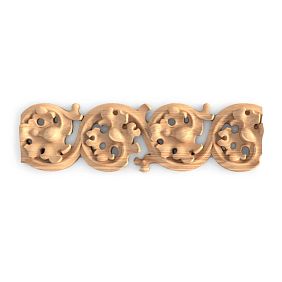


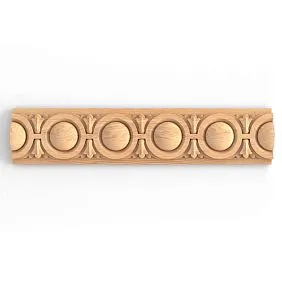
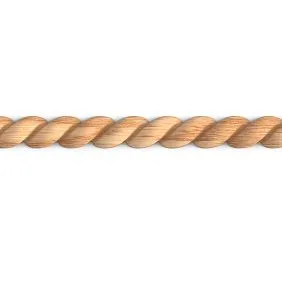


Wholesale molding market structure: players, segments, features
The wholesale molding market is heterogeneous. Here, manufacturers, distributors, importers, and specialized wholesale companies operate. Each player occupies its own niche and operates according to its own rules. Molding manufacturers are typically oriented toward large batch production, have established manufacturing processes, possess warehouse facilities, but may not always have a developed distribution network. Distributors purchase products from manufacturers and distribute them regionally, ensuring product availability at various points across the country.
Importers work with foreign manufacturers, bringing molding from China, Turkey, Europe. Their advantage is access to a broad international assortment, including exclusive profiles and finishes. Their disadvantage is longer delivery times, dependence on exchange rates, customs procedures, and international logistics. Specialized wholesale companies operate at the intersection: they may have their own production, purchase from other manufacturers, import, creating the widest possible assortment for their clients.
Market segmentation also occurs by product type. There is a segment of classic molding for paintings and mirrors — a traditional niche with established demand. The architectural molding segment for interior decoration is growing particularly actively: here, cornices, moldings, baseboards, decorative strips are in demand. A separate segment — technical molding for special applications: molding for stretch ceilings, curtains, LED lighting. Each segment has its own specificity regarding profiles, materials, and quality requirements.
Price segmentation is also important. There is a budget segment — plastic molding, simple wooden profiles without complex processing. The mid-range segment — quality wooden molding, polyurethane products with good detailing. The premium segment — molding from solid premium wood, hand-carved, gilded, exclusive finishes. A wholesale supplier must understand which segment they are targeting, or be able to work simultaneously in several, offering a product gradation.
The geographical structure of the market is determined by logistical capabilities. Large cities — Moscow, St. Petersburg, regional centers — have developed infrastructure, where the main consumers are concentrated. However, demand also exists in smaller cities, where molding workshops, construction companies, and designers operate. An effective wholesale company builds a logistical network ensuring product availability in all regions of operation.




Profile assortment: variety as a competitive advantage
Assortment is the foundation of wholesale business. The wider the selection of profiles, the more customer needs you can meet, the higher your competitiveness. A modern wholesale molding catalog may include hundreds, sometimes even thousands of positions. These are profiles of various widths — from narrow 15-20 mm to wide 100-150 mm and more. These are profiles of various heights — from flat 5-7 mm to high box-like 50-60 mm. This is a variety of cross-sectional shapes: classic concave, reverse, flat, rounded, complex multi-step.
The material component of the assortment is equally important. Wooden molding from various species: pine, spruce, linden for the budget segment; beech, ash, oak for the mid-range and premium segments; exotic species for exclusive orders. Plastic molding — polystyrene, polypropylene — lightweight, moisture-resistant, affordable. Polyurethane molding, combining lightness with the ability to create complex relief. MDF profiles with veneer or laminate, offering a compromise between price and quality. Aluminum molding for modern minimalist interiors.
Finishing profiles multiply the assortment exponentially. The same profile can be presented in dozens of finish variations: natural wood in various tones, painting in different colors, gilding in various shades, silvering, patination, brushing, imitation of metals, stone, leather. Decorative elements — carving, embossing, applied ornaments — add another level of diversity.
Assortment formation is a strategic task. You cannot simply collect everything — this will lead to capital being frozen in unsellable positions. You need demand analysis, understanding of trends, knowledge of target segment needs. Classic profiles, proven over time, must always be available — this is the foundation of stable sales. Trendy novelties should be introduced gradually, testing demand. Seasonal positions — for example, molding for New Year frames — are purchased seasonally.
Working with the assortment requires constant monitoring. Which positions sell well, which are dead stock? Which profiles do customers request but are not in stock? What new products have competitors introduced? An effective wholesaler regularly updates the assortment, removing dead stock and introducing in-demand items. This is an ongoing process requiring attention and flexibility.
In addition to the profile, the assortment often includes complementary items. This includes:Buy decorative elementsitems for additional finishing: outlets, corner caps, ornaments. These are materials for profile production: cardboard for passe-partout, glass, MDF for backings, fasteners, adhesives, varnishes, paints. A comprehensive offering increases the average order value, making the supplier more attractive to customers who can meet all their needs in one place.
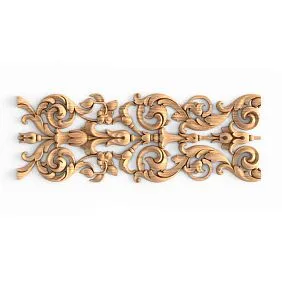
Our factory also produces:




Batch production: economies of scale and production optimization
Batch production is the foundation of wholesale business. Producing and purchasing profiles in large batches ensures economies of scale, reduces the cost per unit, and allows offering competitive prices. However, working with batch production requires precise planning, understanding of demand cycles, and effective inventory management.
The size of a batch is determined by several factors. The first is production capacity and economic feasibility. For woodworking equipment, there is a minimum economically justified production volume, below which the cost per unit sharply increases. For example, starting a line to produce a specific profile requires setup time and material for test samples. These costs are spread across the entire batch volume, so the larger the batch, the lower the cost per unit.
The second factor is warehouse capacity. A large batch requires storage space. If the warehouse is overloaded, access to goods becomes problematic, the risk of damage increases, and turnover decreases. Therefore, batch size must correspond to warehouse storage capabilities.
The third factor is product turnover. Fast-moving items can be purchased in large batches — they won’t sit unsold. Slow-moving items are better purchased in smaller batches to avoid tying up capital. Turnover analysis is a key tool for planning purchases.
The fourth factor is supplier conditions. Many manufacturers set minimum order volumes. This may be a minimum per item (e.g., at least 100 linear meters of one profile) or a minimum total order volume (e.g., at least 500 kg or a certain amount). Wholesalers must be able to form orders taking these constraints into account.
Working with batch production involves planning several cycles ahead. Demand must be forecasted, seasonality considered, and production capacity reserved with suppliers. Large wholesalers operate according to delivery schedules agreed with manufacturers months in advance. This ensures stability: the manufacturer knows they have guaranteed order volumes, and the wholesaler knows the goods will be delivered on time.
Batch production allows optimizing technological processes. When producing one item in large volume, equipment can be maximally configured, staff trained, and workflow rhythm established. This reduces the percentage of defective items, increases productivity, and improves quality. Conversely, frequent changes in production tasks and small, diverse orders reduce efficiency and increase costs.
However, batch production also carries risks. The main risk is overstocking. If demand is lower than forecasted, a large batch becomes frozen capital. Therefore, a balance between economies of scale and flexibility is crucial. Some wholesalers use a mixed strategy: popular items are purchased in large batches, less popular items in smaller batches or on order.
Get Consultation
Packaging: product protection and logistics optimization
In wholesale business, packaging performs several critically important functions. First, it protects products from damage during transport and storage. Profiles are relatively fragile, especially those with thin elements, threading, or gilding. Improper packaging can lead to chips, scratches, or deformation, rendering the product unsellable.
Second, packaging optimizes logistics. Properly packaged goods are more compact, easier to load, unload, store, and track. Standardized packaging allows calculating how many units fit in transport and how efficiently to use warehouse space.
Third, packaging carries an informational function. The packaging indicates the item code, profile name, linear meters or pieces, batch, production date, and barcode. This simplifies product acceptance, inventory, and order fulfillment.
Standard profile packaging depends on material and profile size. Wooden profiles are typically packed in shrink wrap, 20-40 pieces per pack. Ends are protected by cardboard or plastic caps to prevent damage to the ends. Packs are placed on pallets and additionally wrapped with stretch film for load stabilization. Plastic and polyurethane profiles may be packed in boxes if the profile is lightweight and small, or also in shrink wrap if the profile is large.
The quality of packaging materials matters. Cheap, thin film may tear during transport, leaving the product unprotected. Poor-quality caps may not stay in place, allowing profiles to rub against each other at the ends. Saving on packaging results in losses from damaged goods, which is significantly more expensive.
Packaging labeling should be clear and informative. It is better if each pack has a label with complete information about its contents. This speeds up warehouse work and reduces the likelihood of errors during order fulfillment. Barcode labeling of packages allows automating inventory tracking and integrating the warehouse system with inventory management software.
There are different approaches to packaging depending on the type of client. For large clients purchasing goods in full pallets, maximum protection with minimal excess packaging is important — it will still be disposed of at the client’s warehouse. For small clients receiving goods in consolidated shipments via transport companies, especially strong packaging is needed, capable of withstanding multiple reloads.
Returnable packaging is an interesting solution for regular clients with recurring deliveries. For example, profiles may be delivered in special containers or racks that are returned to the supplier after unloading. This reduces packaging material costs, decreases waste, but requires a well-established return logistics system.
Environmental aspects of packaging are becoming increasingly important. Using recyclable materials, minimizing plastic, switching to biodegradable film — this is not only a corporate responsibility issue but also a market requirement. Many clients, especially in the premium segment, pay attention to packaging eco-friendliness.
Warehouse storage: space organization and inventory management
Warehouse storage is a critically important element of wholesale business. Efficiently organized storage ensures product safety, fast order fulfillment, accurate inventory, and minimizes losses. An inefficient warehouse becomes a source of constant problems: goods are lost, damaged, outdated, and occupy space that could be used productively.
The first principle of organizing profile storage is vertical storage of long materials. Profile rails have lengths from 2 to 4-5 meters and must be stored so they do not deform, sag, or suffer mechanical damage. Specialized racks for long materials with sections for different lengths and supports at regular intervals ensure proper storage.
The second principle is warehouse zoning. Fast-moving items, shipped daily, should be located in easily accessible zones, closer to the packing and shipping area. Less frequently used items can be placed deeper. Large items are stored separately from small ones. Items requiring special conditions (e.g., profiles with moisture-sensitive coatings) are stored in appropriate zones.
The third principle is an address-based storage system. Each item has its designated location on the warehouse floor, recorded in the inventory system. When goods arrive, they are placed at their assigned address. When an order is created, the warehouse staff knows exactly where to find the required item. This dramatically speeds up operations, reduces errors, and allows conducting inventory without halting shipments.
The fourth principle is the FIFO (First In, First Out — first in, first out) rule. Goods that arrived earlier must be shipped first. This is especially important for wooden profiles, which, although processed, are still susceptible to time-related effects. Stockpiled goods may lose their appearance or change geometry. FIFO ensures turnover of the entire inventory.
Storage conditions must meet material requirements. Wooden profiles are sensitive to humidity and temperature. Optimal conditions: temperature 18-22°C, humidity 40-60%. At high humidity, wood swells; at low humidity, it dries and cracks. Plastic profiles are less demanding, but should not be stored under extreme temperatures. Polyurethane is stable, but it is better to store it under moderate conditions.
Warehouse lighting must be sufficient for safe work and accurate product identification. However, direct sunlight is not allowed — it fades coatings, especially on colored and gilded profiles. Windows must be shaded or the warehouse must be windowless with artificial lighting.
Fire safety is a mandatory requirement. Wooden molding, packaging materials — all of these are flammable materials. The warehouse must be equipped with fire suppression systems, smoke detectors, and fire extinguishers. Staff must be trained on actions to take in case of a fire.
Inventory management is a separate science. It is necessary to maintain a balance between sufficient stock (to always be able to fulfill an order) and excess (which ties up capital). For this, various methods are used: calculating reorder points, ABC analysis (dividing products by importance), forecasting demand based on historical data. Modern warehouse management software automates these processes, suggesting when and how much to order.
Inventory count is a regular procedure ensuring accurate accounting. Even with the strictest discipline, errors can occur: goods may be incorrectly received, shipped without documentation, damaged and written off but not reflected in the system. Regular inventory (full or partial) reveals discrepancies and allows adjusting the accounting.
Geometric tolerances: technical standards and size control
Geometric tolerances are permitted deviations of the product's dimensions and shape from specified parameters. In molding production, as in any production, absolute precision is impossible. Wood is a living material that may slightly change dimensions depending on humidity. Equipment has its own limits of accuracy. However, deviations must be within acceptable norms; otherwise, the product becomes unsuitable for use.
Main parameters on which tolerances are set: profile width, profile height, rail length, straightness, end perpendicularity. For example, for wooden molding, profile width may have a tolerance of ±0.5 mm, height ±0.3 mm, rail length ±5 mm per 3 meters. Rail straightness should not deviate more than 2 mm per 1 meter of length. Ends must be milled perpendicular to the rail axis with accuracy to 1-2 degrees.
For plastic and polyurethane molding, tolerances may be stricter, as these materials are produced by extrusion or molding, where precision is higher. Here, tolerances for width and height may be ±0.2-0.3 mm. However, plastic is more sensitive to thermal deformation, so storage condition stability is crucial.
Why are tolerances important? First, the accuracy of dimensions affects the quality of molding joints during frame assembly or wall mounting. If the profile width is uneven, joints will have gaps or overlaps, which is unacceptable in quality work. Second, geometry affects the appearance of the product. A curved rail, non-perpendicular ends, variable cross-section — all of these are visible to the eye and reduce aesthetic value.
Geometric control is performed at several stages. The first — incoming inspection upon receipt of goods from the manufacturer. The wholesaler must check whether the delivered batch matches the specified parameters. Usually, a sample is checked: several random rails are taken from the batch and checked with a caliper, ruler, and square. If the sample does not meet the standard, the batch may be rejected or accepted at a discount.
Second stage — storage control. Wooden molding may change geometry if stored improperly. Rails lying at an angle may acquire residual deformation. Wet molding may swell, overly dry molding may shrink and warp. Regular selective checks of warehouse stock reveal such issues.
Third stage — control before shipment. Especially important when shipping to large clients or in the premium segment. The goods are checked once more for compliance with standards, defective rails are removed from the batch.
Molding manufacturers use various methods to ensure accuracy. Modern CNC woodworking equipment allows achieving high repeatability of dimensions. However, machines must be regularly adjusted, calibrated, and maintained. Tool wear (knives, cutters) leads to deterioration of profile quality, so tools are replaced according to schedule or at the first signs of quality decline.
There are industry standards and norms regulating tolerances. In Russia, these may be GOSTs, technical specifications (TU), corporate standards of major manufacturers. A serious wholesaler works only with suppliers who comply with these standards and are willing to document quality.
It is important to understand that tolerances are not only about dimensions. They also concern surface quality: absence of chips, cracks, scratches, roughness. Concerning finish quality: uniform color, absence of lacquer buildup, quality of gilding. Concerning completeness: if the profile is supplied with caps or fasteners, they must be available and match the profile. A comprehensive approach to quality ensures customer satisfaction.
Supply stability: logistics, planning, working with manufacturers
Supply stability is the ability of a wholesale company to guarantee its clients the availability of needed goods at the required time. It is not just about having goods in stock. It is about a system that ensures uninterrupted product flow from the manufacturer to the end consumer, despite possible disruptions, seasonal demand fluctuations, and unforeseen circumstances.
Long-term relationships with manufacturers are the foundation of stability. A wholesaler who works with the same suppliers for years receives production priority, more flexible terms, and the ability to reserve capacity. In turn, the manufacturer receives predictable order volumes, can plan production, and optimize raw material purchases. Mutual benefit creates stability.
Supplier diversification is an important risk management element. Dependence on a single manufacturer is dangerous: if an accident, fire, financial problems, or production halt occurs at that manufacturer, the wholesaler will be left without goods. Working with multiple suppliers reduces this risk. However, diversification must be reasonable: too many suppliers complicate management, dilute order volumes, and reduce bargaining power.
Supply planning is based on demand forecasting. Historical sales data is used: which profiles sell better, which months have higher demand, how sales structure changes. Seasonal factors are considered: demand for molding for frames with gift certificates and greeting cards increases before New Year, while in spring, demand for interior renovation molding rises. Market trends and customer information about planned projects are also taken into account.
Based on the forecast, a procurement plan is formed. How much and what type of molding should be ordered to meet demand without creating excessive stock? Which positions should be ordered in large batches (bestsellers, stable items), which in small batches (niche, trend items)? When should orders be placed, considering production and delivery lead times? Effective planning is an art of balance.
Delivery logistics is the next link in the chain. Molding is a long-length cargo requiring special transport. Vehicles must be equipped with securing devices to prevent cargo displacement. Drivers must be trained in the rules for transporting fragile materials. A wholesale company may have its own transport or work with logistics partners. The key is reliability and predictability of delivery times.
Geographically distributed warehouses increase delivery stability for regional clients. If a wholesaler has warehouses in several cities, it can ship goods to a client from the nearest warehouse, reducing delivery time and cost. This is especially important for urgent orders, when the client needs molding "yesterday."
Safety stock is an important tool for ensuring stability. It is an additional reserve of best-selling items beyond the calculated level. If demand unexpectedly increases or delivery from the manufacturer is delayed, safety stock allows continuing shipments without leaving clients without goods. The size of safety stock depends on demand volatility and delivery reliability.
Communication with clients is an essential part of stability. If a delivery delay occurs, the client must be informed in advance and offered alternatives. If the item is not in stock but is expected soon, the client must be provided with exact delivery dates. Transparency and honesty build trust, which is worth more than one missed deal.
Flexibility of the supply system is important in unpredictable conditions. The ability to quickly switch to an alternative supplier, find a substitute for an unavailable item, and urgently organize an unplanned delivery — this is what distinguishes a professional wholesale company from a mere reseller mechanically re-selling goods.
Quality control: multi-level inspection system
Quality control in wholesale business is not a one-time check but a multi-level system covering the entire product flow cycle. Quality is established at the manufacturer, checked upon receipt, maintained during storage, and controlled before shipment. Each level is important; skipping even one creates a risk of defective goods reaching the client.
First level — control at the manufacturer. A serious manufacturer has a technical control department that checks products upon leaving production. Geometric parameters, surface quality, finish conformity to standards, and completeness are checked. Defective products are sent for rework or disposal. The wholesaler, selecting a supplier, must ensure that the supplier has a quality control system in place.
Second level — incoming inspection upon receipt of goods. When the shipment arrives at the wholesaler's warehouse, an inspection is conducted. External inspection of packaging for damage. Opening several packages and checking contents. Measuring geometric parameters of samples. Checking appearance and finish. If deviations from the standard are found, an act is prepared, and the batch is returned to the supplier or accepted at a discount.
Third level — control of storage conditions. Regular checks of warehouse premises for compliance with requirements: temperature, humidity, lighting, cleanliness. Checking the condition of stored goods: signs of deformation, mold, discoloration, or other defects. Rotating stock according to FIFO principle to prevent stockpiling of batches.
Fourth level — control during order picking. The warehouse clerk, assembling the order, must visually assess the condition of the goods. If a rail has a defect, it is not included in the shipment. It is better to lose one defective rail than to send it to the client and receive a complaint.
Fifth level — final inspection before shipment. Especially important for large or premium orders. The quality specialist inspects the assembled goods, checks compliance with the order specifications, ensures correct packaging and labeling.
Handling complaints — an essential part of the quality control system. Despite all inspections, defects sometimes reach the client. How a company responds to a complaint determines its reputation. Professional approach: prompt complaint review, acknowledgment of the problem, timely replacement of defective goods or compensation, analysis of causes and measures to prevent recurrence. Unprofessional approach: ignoring complaints, shifting blame, delaying resolution. The first approach retains the client; the second loses them permanently.
Quality documentation creates the foundation for analytics. Records of inspections, non-conformance reports, and complaints accumulate and are analyzed. Which supplier delivers the most defects? Which profiles have defects more frequently? At which stage do problems occur most often? Answers to these questions allow targeted improvement of the system.
Product certification — additional quality assurance. The presence of certificates confirming compliance with standards increases customer trust. This is especially important when working with government and corporate clients, who require documented proof of quality.
Profitability: the economics of wholesale business
Profitability is the difference between the selling price and the cost of goods, expressed as a percentage of the selling price. It is a key indicator of business profitability. In wholesale trade, the profitability of decorative molding is usually lower than in retail, but due to higher sales volumes, the absolute profit can be substantial.
Typical profitability in wholesale trade of decorative molding varies from 15% to 40% depending on the segment. Budget plastic molding has profitability at the lower end of the range — here there is high competition, transparent pricing, and low differentiation. Premium wooden molding with unique finish may have profitability at the upper end — here there is less competition, higher perceived value, and more room for pricing policy.
Factors affecting profitability:
Purchase volume. The larger the volume, the lower the purchase price and the higher the margin. A large wholesaler purchasing by railcars gets better terms than a small wholesaler purchasing by trucks.
Direct contracts with manufacturers. Excluding intermediaries reduces cost and increases margin. Working directly with the factory is more advantageous than through a distributor.
Operational efficiency. The lower the operational costs (warehouse rent, staff salaries, logistics, defects, unsold inventory), the higher the net profit at the same margin.
Product assortment policy. Different positions have different profitability. A balanced assortment, including both best-selling positions with small but stable margins and niche positions with high margins, ensures optimal overall profitability.
Pricing policy. Competitive prices attract more customers but reduce margin. Premium prices provide high margin but may deter customers. The balance depends on company positioning, target segment, and competitive situation.
Additional services. Custom cutting, gilding, patination, expedited delivery — all these are services that can be offered at an additional cost. They increase the overall profitability of the business.
Managing profitability requires constant attention. Regularly analyze the sales structure: which positions sell best, what is their profitability, what contribution each position makes to overall profit. Positions with low profitability and low sales are candidates for removal from the assortment. Positions with high profitability and high sales are the focus of promotion.
It is important to distinguish between margin and markup. Markup is the percentage added to cost. Margin is the percentage of the selling price. For example, if the cost is 100 rubles and the selling price is 150 rubles, the markup is 50%, and the margin is 33.3%. You must manage margin, as it shows the actual profit share in the price.
Seasonal fluctuations affect profitability. During peak season, when demand is high, you can maintain higher prices, increasing margin. During low season, prices must be lowered and promotions run, which reduces margin but maintains turnover. Annual profitability is an average result, where peaks compensate for dips.
Working with large clients often involves individual terms. A large client may demand lower prices in exchange for larger volumes. This reduces the margin for that client but increases turnover, warehouse load, and business stability. You must calculate whether such cooperation is beneficial overall.
Working with different customer segments
The customer base of a decorative molding wholesaler is heterogeneous. Different customer segments have different needs, purchasing behavior, and price sensitivity. An effective wholesale company segments its customer base and tailors its work with each segment according to its specific characteristics.
Molding workshops. This is the main customer segment. Workshops purchase molding for custom frame production. They require a wide assortment to offer customers a choice. Reliable supply is crucial — a workshop cannot tell a client, 'come back in a month when molding arrives.' The ability to purchase the same molding later, if the client wants to make another frame, is also important. For workshops, the ability to purchase in small batches — a few rails of a specific profile — is often important.
Design studios and decorators. They purchase molding for interior projects: wall framing, ceiling moldings, architectural decoration. They require consultative support: which profile suits a specific project best, how to calculate the quantity. The ability to obtain samples is important. Timeliness is crucial — projects often follow a schedule, and delivery delays can derail the entire work.
Construction and renovation companies. They purchase molding in large quantities for specific projects. Price is important — tenders are often won on price. The ability to deliver large volumes on time is important. Documentation — certificates, invoices, acceptance acts — is important. These companies typically have fewer orders but larger volumes.
Retail stores. They purchase molding for resale to end consumers. They require a balance between assortment and turnover — they do not want to tie up capital in a broad assortment, but they also do not want to disappoint customers. Marketing materials — catalogs, samples, displays — are important. The ability to return unsold inventory is important.
Furniture manufacturers. They use molding as a decorative element in furniture. Consistent product characteristics are important — if molding is used in mass-produced furniture, it must always be identical. Long-term contracts with fixed prices are important. Integration into the production process is important — molding must be delivered on time and in the required quantity.
For each segment, the wholesaler can develop special terms. For workshops — the ability to purchase in small quantities and a loyalty program. For designers — technical support and samples. For construction companies — tender terms and wholesale discounts. For stores — marketing support and flexible payment terms. For furniture manufacturers — long-term contracts and priority in deliveries.
Digitalization of wholesale business: modern technologies
Modern wholesale business is unthinkable without digitalization. Warehouse management software (WMS), customer relationship management (CRM) systems, B2B e-commerce platforms, analytical tools — all of these increase efficiency, reduce costs, and improve service.
WMS automates warehouse operations. The system knows where each item is located, how much there is, and when it arrived. The warehouse clerk receives order-picking tasks electronically, and the system indicates the optimal route through the warehouse. Items are tracked by barcode, eliminating errors. Inventory is automated — it can be conducted using a scanner, without manual counting.
CRM manages customer relationships. The system stores all customer information: contacts, order history, special conditions, communication. The manager sees what the customer ordered before, can suggest complementary products, remind the customer if they haven't placed an order for a long time. The system helps segment customers, plan sales, analyze manager performance.
B2B e-commerce — an online platform where customers can place orders 24/7. They see current inventory levels, prices adjusted for their individual conditions, can track order status and purchase history. This reduces the load on managers, speeds up order processing, and increases customer satisfaction.
Analytical tools allow deep data analysis. Which products sell better? Which customers generate more profit? What is the sales trend by month? What is the inventory turnover rate? Which products are returned most often? Answers to these questions help make informed management decisions.
System integration creates a unified information space. When a customer places an order in the B2B system, it automatically enters the WMS for picking, the accounting system for invoicing, and the CRM for recording in the customer history. Data is not manually duplicated, errors are eliminated, and the process is accelerated.
Mobile apps for managers and warehouse staff increase mobility. A manager on the road can check product availability, place a customer order, and agree on terms. A warehouse staff member with a mobile terminal can scan items directly at the shelf, without returning to a computer.
Trends and the future of the wholesale market for picture frames
The wholesale market for picture frames is evolving, reflecting changes in design trends, production technologies, and consumer preferences. Several key trends define the future of the industry.
Ecological sustainability. Demand is growing for picture frames made from eco-friendly materials and with eco-friendly finishes. Customers are increasingly interested in the origin of the wood, presence of FSC certification, and absence of harmful substances in finishes. Manufacturers respond by offering eco-friendly picture frame lines.
Customization. Standard profiles are still in demand, but interest is growing in custom solutions. Customers want unique picture frames tailored to their projects. Manufacturers are developing capabilities to produce picture frames to order based on individual sketches.
Digital design. 3D visualization allows customers to see how the picture frame will look in the interior before purchasing. Online configurators let customers assemble frames themselves, selecting profiles, passe-partout, and glass. This increases customer engagement and reduces uncertainty.
Omnichannel. Customers want to interact with suppliers through various channels: in person, by phone, via website, mobile app, or messaging. A wholesaler must be accessible wherever the customer finds convenient and provide a seamless interaction experience.
Speed. Delivery times are shrinking. If previously a week was considered normal for receiving an order, now customers expect delivery within 1-2 days, and in cities with presence — on the day of ordering. This requires revising logistics, increasing warehouse stock, and more efficient processes.
Service. A wholesaler is no longer just a product seller. They become providers of comprehensive solutions: consultation on selection, quantity calculation, cutting to size, delivery, installation assistance, and staff training. The more value added to the product, the stronger the competitive advantage.
FAQ: Answers to frequently asked questions about wholesale picture frame supply
What is the minimum order volume for wholesale purchases?
It depends on the supplier and product type. Usually, the minimum is 50 to 200 linear meters per item or 10,000 to 50,000 rubles for the total order amount. Some suppliers work with smaller volumes, offering small-wholesale terms.
How quickly can I receive the product after placing an order?
If the item is in stock — from 1 to 5 days depending on the delivery region. If the item is not in stock and requires production — from 2 to 6 weeks depending on the profile complexity and production load.
Are discounts available for large volumes?
Yes, volume discounts are standard practice. Usually, the discount system is tiered: the larger the volume, the higher the discount percentage. Discounts may also be offered to regular customers and cumulative discounts.
Can I return a product if it doesn't suit me?
Return conditions depend on the reason. If the product is defective — return or replacement is mandatory. If the product is of good quality but doesn't suit for any reason — return is possible by agreement, usually within a limited period and if the product retains its condition.
How is quality controlled in wholesale deliveries?
Serious suppliers have a multi-level quality control system: inspection at the manufacturer, incoming inspection upon receipt, storage control, and inspection before shipment. Customers can request quality certificates and samples before ordering large batches.
What documents are provided in wholesale deliveries?
Standard package: invoice, delivery note, tax invoice (for VAT payers). Additional documents such as certificates of conformity, declarations, and quality passports may be provided upon request.
Is payment deferral possible?
For regular customers with a good payment history, payment deferral is possible. Usually from 7 to 30 days, sometimes up to 60 days for large, verified clients. New customers are typically offered advance payment or payment upon receipt of goods.
How is delivery cost calculated?
It depends on the cargo volume, delivery distance, and urgency. It may be a fixed rate for certain regions or calculated according to the transport company’s tariffs. Delivery is often free for large orders.
Conclusion: Wholesale supply of picture frames as a systemic business
Wholesale supply of picture frames is a complex, multi-faceted business requiring competencies in production, logistics, inventory management, and client relations. It is not merely reselling goods at a markup. It is building a system that ensures stable delivery of high-quality, wide-ranging products at competitive prices.
Key elements of success: a broad, properly selected range of profiles, ability to handle serial batches, effective packaging and warehousing, strict control of geometric tolerances, stable deliveries, multi-level quality control, healthy business margins. Each of these elements requires attention, investment, and continuous improvement.
The market is evolving, becoming more demanding and competitive. Clients expect not only quality products but also high service levels, fast delivery times, flexible terms, and added value. Wholesale companies that understand these expectations and can meet them will win in the long term.
Digitalization opens new opportunities for optimizing processes, improving the customer experience, and more precise business management. Investments in information technology are no longer optional—they have become necessary to maintain competitiveness.
high quality with guaranteed stable deliveries. The assortment includes hundreds of wooden picture frame profiles from various species,
The company STAVROS offersmolding wholesaleand much more. All products undergo strict quality control, meet established geometric tolerances, are properly packaged for safe transportation. Warehousing is organized in accordance with all requirements for conditions and address-based systems. The company works with serial batches, ensuring competitive prices while maintaining high quality. For regular clients, a flexible discount and customized terms system is developed, ensuring healthy margins for their business. STAVROS — a reliable partner for picture frame workshops, design studios, construction companies, retail stores, and furniture manufacturers. Professional team, modern technologies, responsible approach to every order — the foundation of long-term cooperation and mutual success.Polyurethane moldings, Crown Molding, Baseboards, decorative elements, furniture componentsWholesale picture frames from STAVROS — a wide selection of wooden profiles for framing paintings, mirrors, and wall panels. Production from solid oak and beech, precise geometry and stable deliveries guarantee high-quality execution. Quality control at every stage ensures perfect corner alignment and even coating. The assortment includes classic, modern, and carved picture frames for interior and decorative applications.


