Article Contents:
- Classicism as a System: The Philosophy of Integrity
- Architectural Decor as the Skeleton of an Interior
- Furnishings as Content
- Staircase as a Link Between Levels and Styles
- Wall Decor: Polyurethane Molding as the Foundation
- Panel Moldings: Vertical Structure
- Capitals and Pilasters: The Order System in Interior Design
- Brackets and consoles: functional decor
- Ceiling Decor: Completing the Vertical
- Cornices and Rosettes: The Classical Triad
- Coffers: Volumetric Architecture
- Furniture Ensemble: The Center of the Composition
- Classical Furniture: Carving, Proportions, Nobility
- Furniture Handles: The Detail That Speaks of Taste
- Staircase Group: The Vertical Sculpture of the House
- Balusters: Safety Through Beauty
- Handrails and Newel Posts: Completing the Composition
- Molding Along the Staircase Flight
- Unity of Style: The Art of Selecting Ornaments
- The Principle of Visual Rhyme
- Harmonizing Proportions
- Color Harmony
- Practical cases: from concept to implementation
- Two-Story House 180 m²: Full Classic
- Three-Room Apartment: Restrained Neoclassicism
- Where to Buy Everything in One Place: Savings and Convenience
- Advantages of a Comprehensive Purchase
- Forming a Comprehensive Order
- Frequently Asked Questions
- Conclusion: Create Ensembles, Not Collections of Items

Why do some homes give the impression of a palace, while others remain simply well-renovated boxes? The secret is not in the cost of the finishes or the square footage. The secret lies in systemic thinking, where architectural decor, furniture, staircase elements, and hardware are perceived as a single ensemble, where each detail enhances the others, and everything is subordinated to a unified stylistic logic.Polyurethane molding decor for wallscombined with classic furniture, wooden balusters, and thoughtfully chosen furniture handles creates precisely such a system — visually complex, stylistically cohesive, and emotionally rich. A classic interior is not a collection of expensive items, but a well-considered composition where a plaster cartouche on the wall rhymes with the carving on a staircase baluster, where the pattern of a furniture handle echoes the relief of a ceiling rosette, where everything is connected by invisible threads of proportion, rhythm, and stylistic unity. In this article, we will detail how to create such an ensemble, which elements to choose, how to combine them, where to buy everything needed, and how to avoid common mistakes.
Classic as a System: The Philosophy of Wholeness




Architectural Decor as the Skeleton of an Interior
A classic interior begins not with furniture, but with architecture. Walls, ceilings, openings, and staircases form the spatial framework, which is then filled with objects. If the framework is weak, inexpressive, or devoid of decor — no furniture will save the interior. Bare walls with an expensive sofa look worse than walls with molding panels and a simple sofa. Because architecture is the foundation, and furniture is the filling.
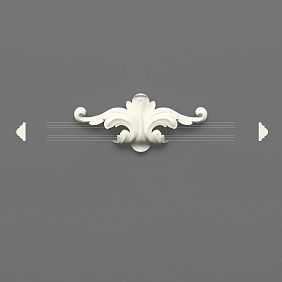
Plasterwork creates architectural expressiveness where it is lacking by nature. A standard apartment in a panel building or a new private house made of aerated concrete have rectangular room boxes without any architectural refinements. Plasterwork transforms these boxes into spaces with character: ceiling cornices frame the volume from above, wall moldings create vertical structure, pilasters and capitals imitate the order system (columns supporting the ceiling), rosettes under chandeliers mark compositional centers.
Our factory also produces:


Furnishings as Content
Furnishings are layered onto the architectural framework: furniture, lighting, textiles, accessories.Classic Furniturein a classic interior — are not just functional items (a sofa for sitting, a table for eating, a cabinet for storage), but compositional elements that continue the style of the architecture. If the walls are decorated with plasterwork featuring a floral pattern (acanthus leaves, roses), the furniture should have similar motifs in the carving of its legs, backs, and fronts. If the plasterwork is strict neoclassical with geometric relief, the furniture should be restrained, with straight lines and minimal carving.
Furniture handles — a seeming trifle that is actually critical to perception. A cabinet with cheap plastic handles ruins the impression of expensive plasterwork on the walls. Wooden or bronze handles with carving, patina, and classic shapes enhance the overall impression of luxury, attention to detail, and a systematic approach.
Get Consultation
Staircase as a Link Between Levels and Styles
In a two-story house or a duplex apartment, the staircase is a central element that everyone always sees. A staircase without decor (metal frame, glass railings, minimalist handrails) is appropriate in modern interiors but ruins a classic one. A classic staircase requires wooden balusters with carving, a massive handrail, possibly decorative newel posts at the start and end of the flight, and carved risers.
The staircase connects levels not only physically but also stylistically. If the walls on the first floor are decorated with plasterwork, there should also be plasterwork on the second floor. If the furniture on the first floor is classic with carving, it should be similar on the second floor. The staircase balusters become a visual bridge between levels — their carving echoes the wall plasterwork, their material (wood) rhymes with wooden furniture, and their proportions (height, diameter, installation rhythm) are coordinated with the scale of the space.
Wall Decor: Polyurethane Plasterwork as the Foundation
Moldings for Panels: Vertical Structure
Polyurethane molding on the wallcreate decorative panels — rectangular or square frames that break up the wall into segments, creating rhythm, depth, and classic elegance. Panels are an attribute of 18th-19th century European interiors, where walls were paneled with wood (boiserie) with carving and gilding. Modern imitation using polyurethane moldings provides a similar effect for 5-10% of the cost.
The size of the panels is determined by wall height and style. For classic interiors with high ceilings of 3.0-3.5 meters, large panels of 100×150 cm, 120×180 cm are suitable, arranged in one or two tiers. For neoclassical interiors with ceilings of 2.7-2.9 meters, medium panels of 80×120 cm, 90×140 cm are suitable. Narrow vertical panels of 60×180 cm visually raise the ceiling, wide horizontal panels of 150×100 cm expand the space.
The width of the molding is selected according to the panel size. Small panels require narrow moldings of 50-70 mm, medium panels require moldings of 70-100 mm, large panels require wide moldings of 100-140 mm. The molding profile should be classic: cavetto (concave element), torus (convex element), possibly dentils (small teeth) or floral ornament.
The color of the panels is most often contrasting: white moldings on colored walls (dark blue, emerald, burgundy for luxurious classic; gray, beige, powder for restrained neoclassical) or colored moldings on white walls (gold, silver moldings for palatial luxury). A monochrome solution (white moldings on white walls) is possible but requires good lighting so that the relief creates shadows and the panels are visible.
Capitals and Pilasters: The Order System in the Interior
Capitals and pilasters are elements of the classic architectural system borrowed from antiquity. A pilaster is a flat column projecting from the wall by 30-80 mm, having a base (lower part), a shaft (middle part, often with fluting — vertical grooves), and a capital (upper part with ornament). A capital is the upper element of a column or pilaster that visually supports the entablature (ceiling, cornice).
The use of pilasters in interior design creates a sense of architectural solidity, as if the walls are supported not by concrete slabs but by classical columns. Pilasters are installed at room corners, on the sides of door or window openings, and symmetrically along long walls (every 1.5-2.5 meters). The height of a pilaster equals the wall height from baseboard to ceiling cornice (2.0-3.2 meters depending on the room).
Capitals come in three classic orders: Doric (simple capital in the form of a square slab with a round cushion), Ionic (capital with volutes — spiral scrolls on the sides), Corinthian (lush capital with floral ornament — stylized acanthus leaves). For luxurious classic interiors, choose Corinthian capitals; for restrained neoclassical, Ionic; for brutal classic (loft with classic elements), Doric.
Material: pilasters and capitals can be wooden (for premium projects, heavy, expensive, natural) or polyurethane (budget option, lightweight, visually indistinguishable after painting). Polyurethane pilasters are glued to the wall, wooden ones are mounted on a frame or attached with dowels and adhesive.
Brackets and consoles: functional decor
Corbels and consoles — decorative elements that support shelves, cornices, countertops, creating the illusion that these items are held not by hidden fasteners but by beautiful decorative supports. A corbel is a vertical or slanted element attached to the wall, on which a shelf or cornice rests. A console is a similar element but often larger and more ornamented.
In classic interiors, corbels are used: under shelves in a library or study (imitating that shelves are held by decorative supports), under window cornices (creating the impression that the cornice rests on corbels, though it is actually attached to the wall or ceiling), under bar counter or kitchen island countertops (visual support for the overhanging part of the countertop).
The shape of corbels varies from simple curved planks to complex ornamented elements with carving, scrolls, floral motifs. For classic, ornamented corbels with acanthus leaves, volutes, and carved details are suitable. For neoclassical — simplified corbels with geometric relief or smooth curved lines.
Material: polyurethane (lightweight, inexpensive, easy to install, can be painted any color) or wood (heavy, expensive, require sturdy mounting, but create a sense of naturalness and strength). Color: white (universal for classic), gold or bronze (for luxurious interiors), matching the wood tone of the furniture (to create unity).
Ceiling Decor: Completing the Vertical
Cornices and Rosettes: The Classic Triad
polyurethane ceiling stucco buybegins with two main elements: a ceiling cornice (cove, crown molding) and a rosette for the chandelier. The cornice is mounted around the perimeter of the ceiling, creating a transition between the wall and ceiling, framing the volume from above. The rosette is installed in the center of the ceiling (or several rosettes in different points), framing the chandelier, creating a focal point.
Cornice width for classic interiors is 100-200 mm depending on ceiling height. For ceilings 2.7-2.9 meters, cornices of 100-140 mm are optimal. For ceilings 3.0-3.5 meters — 140-180 mm. For high ceilings 3.6+ meters — 180-250 mm. The cornice profile should be complex, multi-element: a cavetto, a torus, dentils, possibly a floral ornament (for Baroque) or geometric relief (for Art Deco).
Ceiling rosette diameter of 70-120 cm for classic interiors. Small rosettes 50-70 cm are suitable for bedrooms, studies, dining rooms. Medium rosettes 80-100 cm are suitable for living rooms with an area of 20-30 m². Large rosettes 110-140 cm are suitable for spacious halls with an area of 35-50 m² and ceilings from 3.2 meters. The rosette ornament should match the style: floral (acanthus leaves, roses, laurel wreaths) for classic and Baroque, geometric (concentric circles, rays, stepped shapes) for Art Deco and Neoclassicism.
The color of ceiling molding is classically white or cream, but for luxurious interiors, gilding (full or partial — only the protruding parts of the relief), patination (antique effect), or painting to match the ceiling color (if the ceiling is colored — light blue, pale pink, beige) is used.
Coffers: Volumetric Architecture
Coffers are decorative recesses in the ceiling formed by the intersection of beams or moldings, creating the illusion of a three-dimensional architectural ceiling. A classic coffered ceiling is an attribute of palaces, town halls, theaters, where coffers were made of wood or stone. Modern coffers made of polyurethane moldings imitate this luxury.
Technology for creating coffers: a grid of squares or rectangles is marked on the ceiling (typical size 80×80 cm, 100×100 cm, 120×120 cm), moldings 80-150 mm wide are glued along the grid lines, creating a relief structure. Inside each square, a decorative overlay (small rosette, ornamental insert) can be added, and the background can be painted in a contrasting color (white moldings, light gray or beige background inside the squares).
Coffers are only suitable for high ceilings from 3.0 meters and spacious rooms from 25 m². In low and small rooms, coffers create a feeling of pressure and overload. The cost of a coffered ceiling is high: for a 30 m² ceiling with a grid spacing of 1 meter, about 60 meters of moldings are required, which at a price of 800-1500 rubles/m gives 48,000-90,000 rubles for materials plus 40,000-70,000 rubles for installation.
Furniture Ensemble: The Center of the Composition
Classic Furniture: Carving, Proportions, Nobility
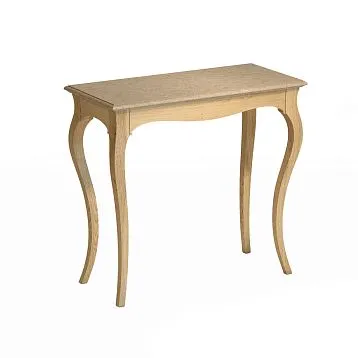
Classic furniture differs from modern furniture not only in style but also in philosophy. Modern furniture is functional, minimalist, often mass-produced. Classic furniture is decorative, ornamented, each piece is unique or produced in small series with a high degree of handcraft. Characteristic features: carved elements (legs, backs, facades), natural materials (solid wood, genuine leather, high-quality textiles), curved lines (cabriole — a curved leg with an expansion at the top), ornament (floral motifs, geometric patterns, inlay).
A set of classic furniture for a living room includes: a sofa and armchairs with carved wooden armrests and legs, a coffee table with a marble or wooden top on carved legs, a bookcase or display cabinet with glazed doors and carved cornices, a console table against the wall with a carved facade. All pieces are made in the same style, from the same wood species (oak, walnut, mahogany), with the same type of carving.
Furniture upholstery: velvet, silk, jacquard with classic patterns (damask, monograms, floral motifs), solid-colored or with contrasting piping. The upholstery color is coordinated with the wall color: if the walls are dark (blue, green, burgundy), the upholstery is light (cream, beige, light gray) for contrast. If the walls are light, the upholstery can be either light (tone-on-tone, monochrome solution) or dark or bright (accent solution).
Furniture Handles: The Detail That Speaks of Taste
Furniture Handles— an element that either enhances the impression of the furniture or ruins it. A beautiful classic chest of drawers with cheap plastic handles looks like a fake. The same chest of drawers with bronze handles with patina or carved wooden handles looks like an antique.
Types of furniture handles for classic interiors: knobs (round or oval handles that attach with one screw, suitable for small drawers of chests, cabinets, wardrobes), pulls (U-shaped or curved handles that attach with two screws, suitable for large drawers, wardrobe doors), rings (suspended rings on a decorative rosette, a traditional element of antique furniture).
Material: bronze or brass (patinated for an antique effect, polished for shine), wood (carved, stained to match the furniture or contrasting), ceramic (with painting, suitable for Provence and country, less so for classic). The handle ornament should echo the molding ornament: if the molding has floral motifs, the handles should also have leaves, flowers, vines. If the molding is geometric, the handles should have geometric relief.
Handle size: small knobs with a diameter of 25-40 mm for small drawers, medium knobs 40-60 mm for standard drawers, large pulls with a length of 100-200 mm for wardrobe doors, sideboards, chests. Color: bronze with patina (universal for classic), gold (for luxurious interiors), silver or nickel (for cold Neoclassicism), natural wood (for warm classic).
Staircase Group: The Vertical Sculpture of the House
Balusters: Safety Through Beauty
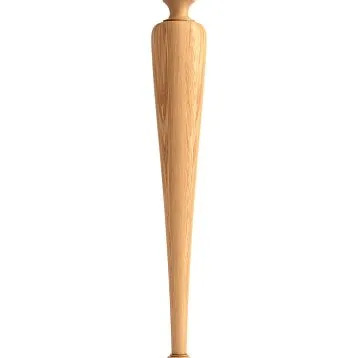
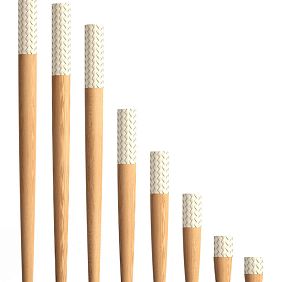
buy balusters— a key element of a classic staircase that performs the functions of safety (guarding the flight) and decoration (vertical sculpture, creating rhythm and beauty). A baluster is a vertical post 700-900 mm high, installed between the steps and the handrail, forming the infill of the railing.
The classic baluster shape consists of three parts: base (the lower part that attaches to the step or stringer of the staircase), body (the middle part, often turned or carved, creating a decorative profile), neck (the upper part on which the handrail rests). The baluster body can be: turned (lathe work creates symmetrical expansions, contractions, beads, cavettos), carved (hand carving creates floral motifs, geometric patterns, complex ornaments), combined (turned base plus carved inserts).
Baluster material: solid wood (oak, ash, beech for strength and durability; pine for budget projects, but less durable). Oak is the optimal choice for a classic staircase: hard wood withstands loads, does not crack, has a noble texture, and stains well. Ash is slightly lighter than oak, beech is more uniform in texture. Exotic species (meranti, merbau, teak) are used in premium projects, have unusual color and texture.
The number of balusters is determined by the installation spacing. For safety (especially if there are children in the house), the spacing should not exceed 150 mm — a child should not be able to squeeze between the balusters. The typical spacing is 100-120 mm (two balusters per step with a length of 900-1000 mm). For decorative purposes, sometimes three balusters are installed per step, creating a dense palisade that looks luxurious but increases the cost.
Handrails and Newel Posts: Completing the Composition
Handrail (railing) — a horizontal element on which the hand rests when ascending the stairs. The handrail should be comfortable (diameter or width 50-70 mm, smooth finish without splinters or sharp edges), strong (withstand lateral force of 100-150 kg without bending), beautiful (profiled or carved, coordinated in style with the balusters).
A classic handrail has a complex profile: the upper part is rounded for a comfortable grip, the lower part can be flat or with decorative grooves, the sides are curved. A simple round handrail with a diameter of 50 mm is appropriate in modern interiors, but for classic, a profiled one is preferable.
Newel posts — support posts installed at the beginning and end of a staircase flight, as well as at turns. A newel post is larger than a baluster (cross-section 80×80 mm, 100×100 mm, 120×120 mm), often has a decorative top (ball, cone, carved capital, figured finial). Newel posts are perceived as architectural accents, setting the scale and style of the staircase.
The material for handrails and newel posts is the same as for balusters — solid oak, ash, beech. The staining is uniform for all staircase elements: balusters, handrail, newel posts are finished with the same oil or varnish, creating a cohesive composition. A contrasting solution is possible: dark balusters and newel posts, light handrail (or vice versa) — creates a graphic effect but requires precise color matching.
Molding Along the Staircase Flight
The wall along the staircase is a vertical plane visible when ascending and descending, an ideal place for decoration. Moldings create panels along the entire height of the wall: from the level of the first floor to the level of the second floor, the panels run in steps, following the incline of the stairs, or are placed horizontally at different levels. The molding ornament is coordinated with the baluster carving: if the balusters have floral carving, the moldings also have a floral ornament.
Decorative overlays (cartouches, rosettes) are placed in the centers of molding panels or on the piers between panels, creating a rhythm for the vertical composition. If the staircase has intermediate landings, a large overlay or a small pilaster is installed on the landing wall, marking the transition between flights.
The color of the molding on the staircase wall is coordinated with the color of the molding in the other rooms (usually white or cream), but it can contrast with the wall color (dark blue, green, terracotta wall with white molding) to create a dramatic effect.
Style Unity: The Art of Selecting Ornaments
The Principle of Visual Rhyme
Style unity is achieved not by copying elements, but through their visual rhyme. The ornament on the molding should not exactly repeat the carving on the baluster, but should be similar in spirit, motifs, and detailing. Molding with acanthus leaves rhymes with balusters featuring carved leaves, vines, and rosettes. Molding with geometric relief (meander, stepped forms, concentric circles) rhymes with turned balusters featuring geometric beads, astragals, and cones.
Furniture handles rhyme with the molding and balusters in terms of ornament. Bronze handles with floral ornamentation (leaves, flowers) pair with molding and balusters that have botanical motifs. Wooden carved handles pair with carved balusters — wood to wood, carving to carving.
Proportion Coordination
The scale of elements must be coordinated. Large, lavish molding (200 mm cornices, 120 cm rosettes) requires large, massive balusters (60-80 mm cross-section, 850-900 mm height, complex carving), and large furniture handles (150-200 mm backplates). Small balusters and handles will be lost against the powerful molding, creating an imbalance.
Restrained neoclassical molding (100-130 mm cornices, 70-80 cm rosettes, minimal ornament) requires proportional balusters (turned with a simple profile, 50-60 mm cross-section), and moderate handles (40-50 mm knobs, 100-120 mm backplates). Excessive carving on balusters and handles will disrupt the restraint of neoclassicism.
Color Harmony
Color unites the elements. Classic scheme: white molding, dark wood (balusters, furniture, handrails stained in walnut, fumed oak, mahogany), bronze hardware (handles, patinated light fixtures). The contrast of white and dark creates graphic clarity, bronze adds warmth and luxury.
Light scheme: cream or light beige molding, light wood (balusters, furniture made of ash or whitewashed oak, finished with clear oil), silver or nickel-plated hardware. Effect: lightness, airiness, Scandinavian classicism.
Luxury scheme: white or gold molding (or white with gold patina), red wood (balusters, furniture made of mahogany, merbau), gold hardware. Effect: palatial grandeur, status, wealth.
Practical cases: from concept to implementation
Two-story house 180 m²: Full classicism
House with a 40 m² hall-living room on the first floor, a 20 m² dining room, a 16 m² study, and three 14-18 m² bedrooms on the second floor. First-floor ceilings are 3.2 meters, second-floor ceilings are 2.9 meters. L-shaped staircase with a landing, 16 steps. Decor budget: 950,000 rubles.
Architectural decor:
-
Ceiling cornices polyurethane 150 mm first floor, 110 mm second floor: 95 meters × 1100 rub/m average = 104,500 rub materials, installation 66,500 rub
-
Rosettes: hall-living room 120 cm (8500 rub), dining room 90 cm (4800 rub), study 80 cm (3600 rub), bedrooms 3 pcs 70 cm each (3×3200 rub = 9600 rub), total 26,500 rub materials, installation 3600 rub
-
Molding panels hall-living room (three walls, 20 panels 100×150 cm): moldings 200 meters × 900 rub/m = 180,000 rub, corner overlays 80 pcs × 800 rub = 64,000 rub, installation 140,000 rub
-
Pilasters in the hall (4 pcs height 2.8 meters): polyurethane 48,000 rub materials, installation 22,000 rub
Staircase:
-
Balusters oak 32 pcs (two per step): 32 × 2800 rub = 89,600 rub
-
Handrails oak 8 meters: 8 × 3200 rub/m = 25,600 rub
-
Newel posts oak 3 pcs: 3 × 12,000 rub = 36,000 rub
-
Installation of staircase elements 45,000 rub
Furniture and hardware:
-
Classic furniture set for hall-living room (sofa, two armchairs, coffee table, display cabinet): 280,000 rub
-
Furniture handles for dressers, cabinets throughout the house (65 pcs): 65 × 1200 rub average = 78,000 rub
Total: materials 932,200 rubles, labor 277,100 rubles, total 1,209,300 rubles (overrun 259,300 rubles). Adjustment: omitting pilasters saves 70,000 rubles, replacing some molding panels with door/window surrounds saves 80,000 rubles, using budget furniture handles saves 30,000 rubles. Final budget 1,029,300 rubles (acceptable).
Result: the house received a luxurious classic interior with prominent molding in the hall-living room (the central formal space), a wooden staircase with carved balusters (vertical sculpture, visible from the hall), classic furniture, and well-considered hardware. All elements work in a unified style, creating a sense of palace grandeur, status, and taste.
Three-room apartment: Restrained neoclassicism
85 m² apartment with a 24 m² living room, 16 m² bedroom, 14 m² children's room, 16 m² kitchen-dining room, hallway and bathrooms 15 m². Ceilings 2.75 meters. Decor budget 320,000 rubles.
Architectural decor:
-
Polyurethane ceiling cornices 100 mm: 48 meters × 750 rub/m = 36,000 rub materials, installation 28,800 rub
-
Rosettes: living room 80 cm (3,600 rub), bedroom 70 cm (3,000 rub), children's room 60 cm (2,400 rub), total 9,000 rub materials, installation 1,800 rub
-
Molding panels in the living room on one wall (6 panels 80×120 cm): moldings 48 meters × 700 rub/m = 33,600 rub, corner overlays 24 pcs × 650 rub = 15,600 rub, installation 33,600 rub
Furniture and hardware:
-
Classic living room furniture (sofa, two armchairs, chest of drawers): 165,000 rub
-
Furniture handles (35 pcs): 35 × 950 rub = 33,250 rub
Total: materials 293,450 rubles, labor 64,200 rubles, total 357,650 rubles (overrun 37,650 rubles). Adjustment: using more budget furniture handles (600 rub instead of 950 rub) saves 12,250 rubles, optimizing molding panels (5 panels instead of 6) saves about 8,000 rubles, choosing rosettes of slightly smaller diameter saves 3,000 rubles. Final budget 334,400 rubles (close to budget).
Result: the apartment acquired a neoclassical look with restrained decor that does not overload the space but creates a sense of style, thoughtfulness, and good taste. Molding panels in the living room make it formal, rosettes emphasize composition centers, classic furniture and thoughtful handles complete the ensemble.
Where to buy everything in one place: savings and convenience
Advantages of a comprehensive purchase
Purchasing molding, balusters, furniture handles, and furniture from one supplier offers several advantages. Stylistic consistency — the manufacturer or large distributor forms collections where elements are coordinated in style, ornaments, and proportions. Molding, balusters, and handles from the same collection are guaranteed to match.
Price benefit — when ordering a set (molding + balusters + handles + furniture) for an amount from 200,000 rubles, many suppliers offer an 8-15% discount. On an order of 300,000 rubles, a 10% discount saves 30,000 rubles — an amount that can be used to buy additional decorative elements.
Logistical simplicity — everything arrives in one or two deliveries (furniture may come separately from molding due to different warehouses), no need to coordinate multiple suppliers or track numerous shipments. One point of contact, one manager who handles the order from placement to delivery.
Technical support — supplier specialists help select matching elements, calculate quantities, and provide installation recommendations. Designers develop comprehensive design projects with 3D visualization, showing how molding, furniture, and stairs work together.
Forming a comprehensive order
Determine the style: classic (ornate, ornamented), neoclassical (restrained, geometric), baroque (maximally decorative, gilded). The style determines the choice of all elements.
Make a list of rooms and elements. For each room: ceiling cornice (measure the ceiling perimeter), rosette (determine the chandelier diameter), molding panels (draw a wall diagram, calculate the molding footage). For the staircase: number of balusters (usually two per step), handrail footage, number of posts. For furniture: list of items (sofa, armchairs, chests, wardrobes), number of handles per item.
Open the catalog, select a collection. Browse the collection elements: molding, balusters, handles are coordinated in style. Select specific article numbers, add to cart or note for ordering by phone.
Add related materials: adhesive for molding, sealant for joints, paint (if planning to paint), varnish or oil for balusters, fasteners for stair elements. Check with the manager for completeness — often fasteners for balusters and posts are sold separately.
Place the order, clarify production and delivery times. Molding is usually in stock or produced in 3-7 days. Balusters and posts are made to order in 10-20 days (lathe and carving work requires time). Furniture is produced or assembled in 15-30 days. Coordinate delivery so that elements arrive as rooms become ready for installation.
Frequently asked questions
Can polyurethane molding be combined with wooden elements?
Not only can it, but it should be. Polyurethane is ideal for ceiling and wall molding (lightweight, inexpensive, easy to install, allows complex shapes). Wood is ideal for stair elements and furniture (durable, natural, pleasant to the touch). The combination provides an optimal balance of price/quality/aesthetics.
How to match molding ornament to baluster carving if they are from different collections?
Focus on the general character of the ornament. If balusters have plant carving (leaves, vines), choose molding with plant ornament (acanthus leaves, roses, wreaths). If balusters are turned geometric, choose molding with geometric relief. Exact motif matching is not necessary — visual similarity is important.
How much does comprehensive decoration for a 200 m² house in classic style cost?
For a 200 m² house with full classic finishing (molding on ceilings and walls in all rooms, wooden staircase with carved balusters, classic furniture for living and dining rooms, furniture handles throughout the house) the budget is 800,000-1,500,000 rubles depending on decor saturation and material choice. Of this: molding and architectural decor 300,000-600,000 rub, staircase 150,000-350,000 rub, furniture 250,000-450,000 rub, hardware and accessories 100,000-200,000 rub.
Are wooden balusters stronger than polyurethane ones?
Significantly stronger. Oak wooden balusters withstand lateral loads of 150-200 kg without deformation and last for decades. Polyurethane balusters are decorative but not load-bearing — they can be used as railing infill if the main load is on a metal or wooden frame. For a classic staircase, wooden balusters are recommended — strength, durability, and naturalness are more important than savings.
Can molding and balusters be installed independently?
Molding can be installed independently — the process is not complicated (gluing with mounting adhesive, sealing joints with sealant, painting). Installing balusters is more difficult — requires precision (balusters must stand strictly vertical), special tools (for angle cutting, drilling holes for fasteners), and understanding of staircase construction. If you have carpentry experience — you can try. If no experience — it's better to hire specialists; the overpayment of 40,000-80,000 rubles will pay off in quality and absence of errors.
Does classic furniture require special care?
Standard care is sufficient. Wooden surfaces are wiped with a damp cloth once a week and polished with special wood care products every 2-3 months. Upholstery is vacuumed with a brush attachment, and stains are removed with special textile cleaners. Every 5-10 years, wooden parts are refreshed (sanding, a new coat of varnish or oil). No complex maintenance is required.
Conclusion: create ensembles, not collections of items
The difference between a home with character and a soulless home lies in systematic thinking. You can spend a million on furniture, half a million on finishes, a hundred thousand on accessories—but if all these exist separately, not connected by a single logic, the result will be mediocre. Molding lives on its own, furniture on its own, the staircase on its own—you end up with a set of expensive elements without composition.
An ensemble is born when each element enhances the others, when the ornament of the molding rhymes with the carving of the balusters, when furniture handles continue the stylistic language of the architectural decor, when color, proportions, and materials are coordinated. A classic interior is not a museum of antiques, but a living space where beauty serves life, where details are thought through, where everything is in its place.
Polyurethane molding offers the freedom to create architectural expressiveness in any space—from an apartment in a panel building to a cottage made of aerated concrete. Polyurethane is easy to install, reasonably priced (3-5 times cheaper than plaster, 8-12 times cheaper than carved wood), lasts for decades, can be painted any color, and imitates any historical style. But molding is only the skeleton of an interior that requires filling.
Classic furniture, wooden balusters, well-thought-out furniture handles—this is the filling that transforms an architectural framework into a living interior. Furniture creates focal points of composition, around which the rest of the space is built. The staircase physically and visually connects the levels of the house, becoming a sculpture that is always seen by everyone. Handles—a seemingly minor detail—either enhance the impression of the furniture (quality carved or bronze handles) or ruin it (cheap plastic).
The cost of creating a classic ensemble in a 150-200 m² house is 600,000-1,200,000 rubles (architectural decor + staircase + furniture + hardware), which is 15-25% of the cost of building and finishing the house. Not a small amount, but the result is transformative—the house turns from a functional structure into a work of art where it is pleasant to live, where you want to return, and which you can be proud of.
The company STAVROS offers a full range of elements for creating a classic ensemble. Polyurethane molding with over 500 items—ceiling cornices, rosettes, moldings, pilasters, capitals, brackets, overlays—in all styles from strict Doric to lavish Baroque. Collections are coordinated in ornaments and proportions, simplifying the selection of compatible elements.
Staircase elements made of solid oak, ash, beech—turned and carved balusters with over 80 models, handrails of various profiles, posts with decorative finials, carved risers. Production in our own facilities with quality control, possibility of manufacturing custom elements according to customer drawings.
Furniture handles with over 200 models—knobs, pulls, rings made of bronze, brass, wood, ceramics. Collections styled as classic, Baroque, Art Deco, Provence. Patination, gilding, artificial aging are available to create an antique luxury effect.
Classic furniture made of solid wood and using natural materials—sets for living rooms, dining rooms, bedrooms, studies. Sofas and armchairs with carved elements, handcrafted tables and chests of drawers, display cabinets and sideboards with glass and carving. Production and sourcing from European factories, possibility of custom sizing.
The STAVROS design studio develops comprehensive interior design projects where all elements are selected in a unified style. 3D visualization allows you to see the result before work begins—how the wall molding combines with the furniture, how the staircase fits into the hall, how the handles on the chests of drawers rhyme with the decor. Adjustments are made at the project stage, saving time and money.
For orders of element sets (molding + balusters + handles + furniture) totaling from 250,000 rubles, STAVROS provides a 10% discount on decorative elements (molding, balusters, handles). For orders from 500,000 rubles—a 12% discount plus free delivery to Moscow and the region, St. Petersburg and the region. Savings amount to 30,000-70,000 rubles, which can be directed to additional decorative elements or installation.
STAVROS installation teams are experienced craftsmen specializing in classic interiors. Installation of molding considering all nuances (precise corner cutting, joint sealing, priming, painting, patination if necessary). Installation of staircase elements following technology (precise placement of balusters, secure fastening of handrails, fitting of posts). Work in Moscow, St. Petersburg, travel to regions for large projects, 3-year quality guarantee. Choosing STAVROS means choosing a partner in creating a classic interior where every detail is thought through, every element is in its place, everything works as a unified ensemble. Don't assemble disparate items from different stores—create cohesive compositions with the help of professionals. Classic does not tolerate randomness, chaos, cheap compromises. Classic requires systematicity, quality, taste. And STAVROS helps achieve this for everyone who is ready to invest in beauty, durability, and true style.