






























































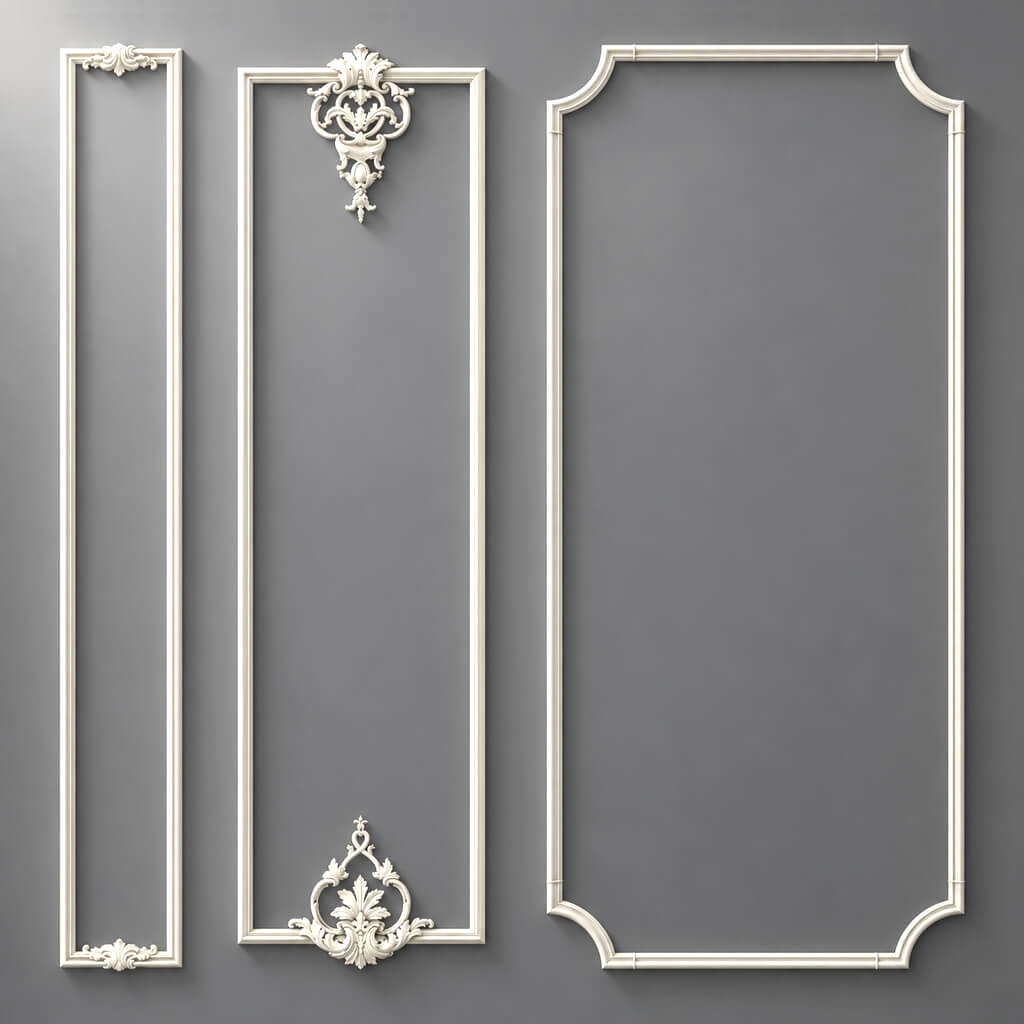
Idea for decorating wall panels INTPAN-005
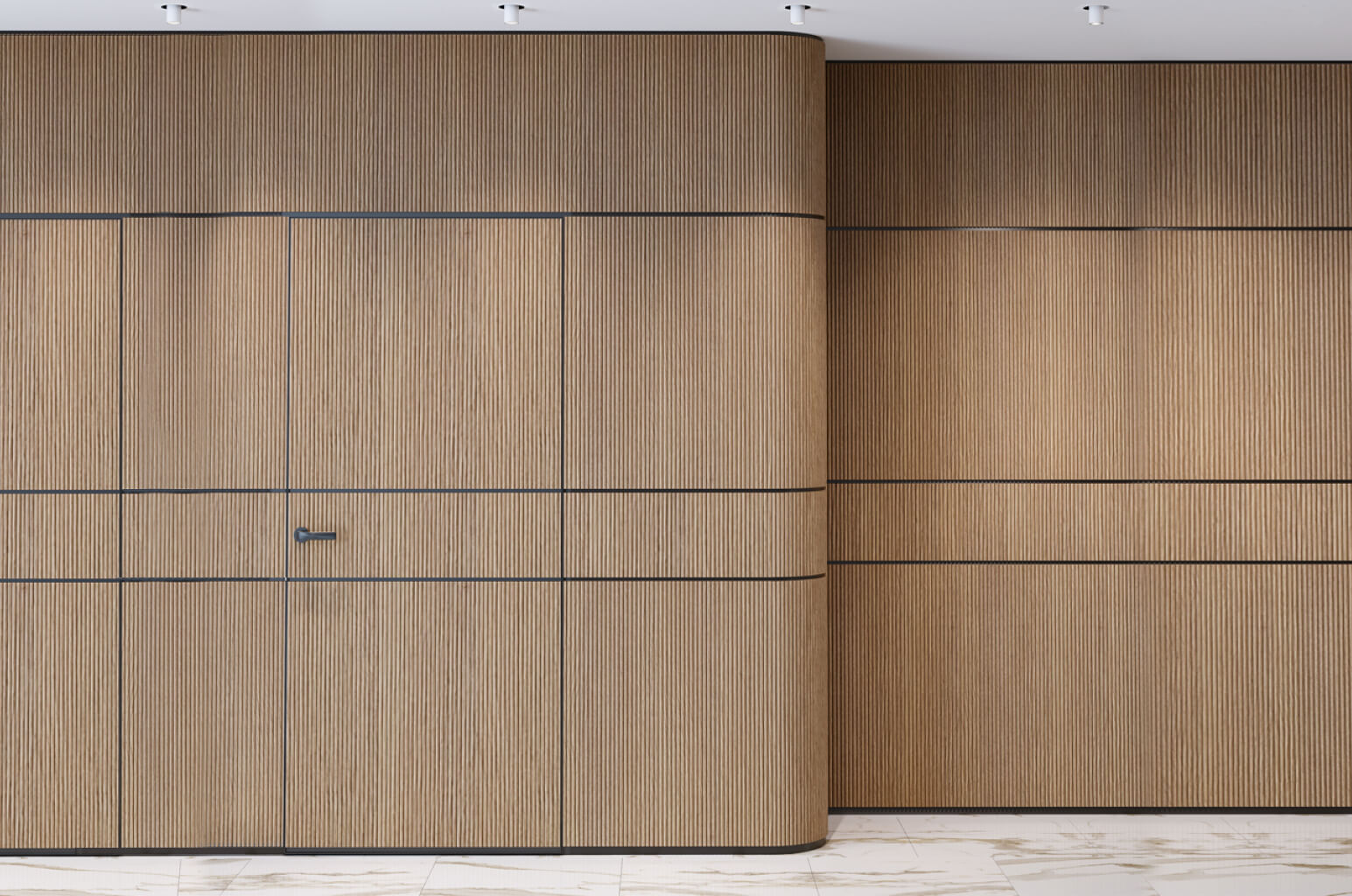
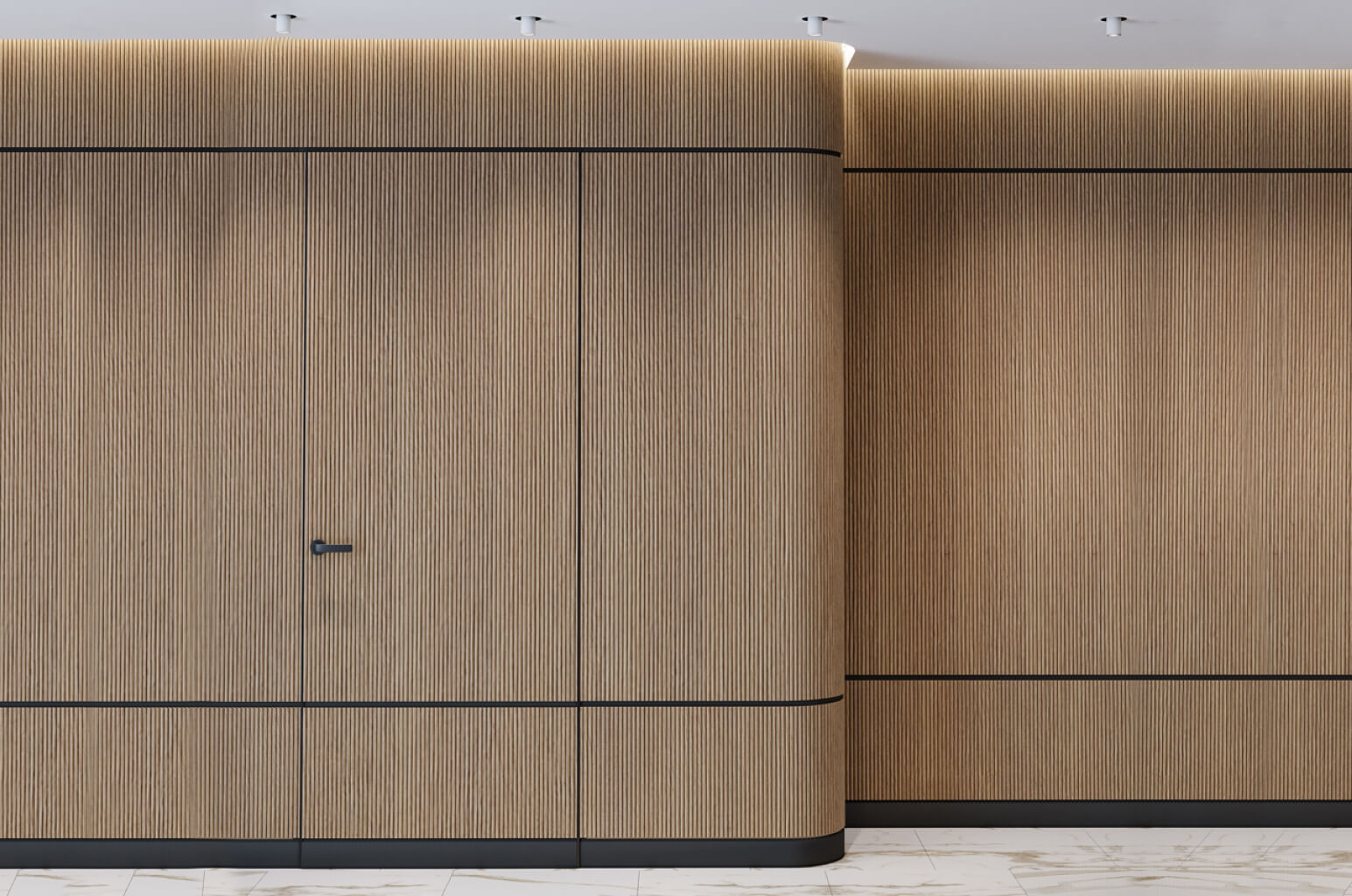
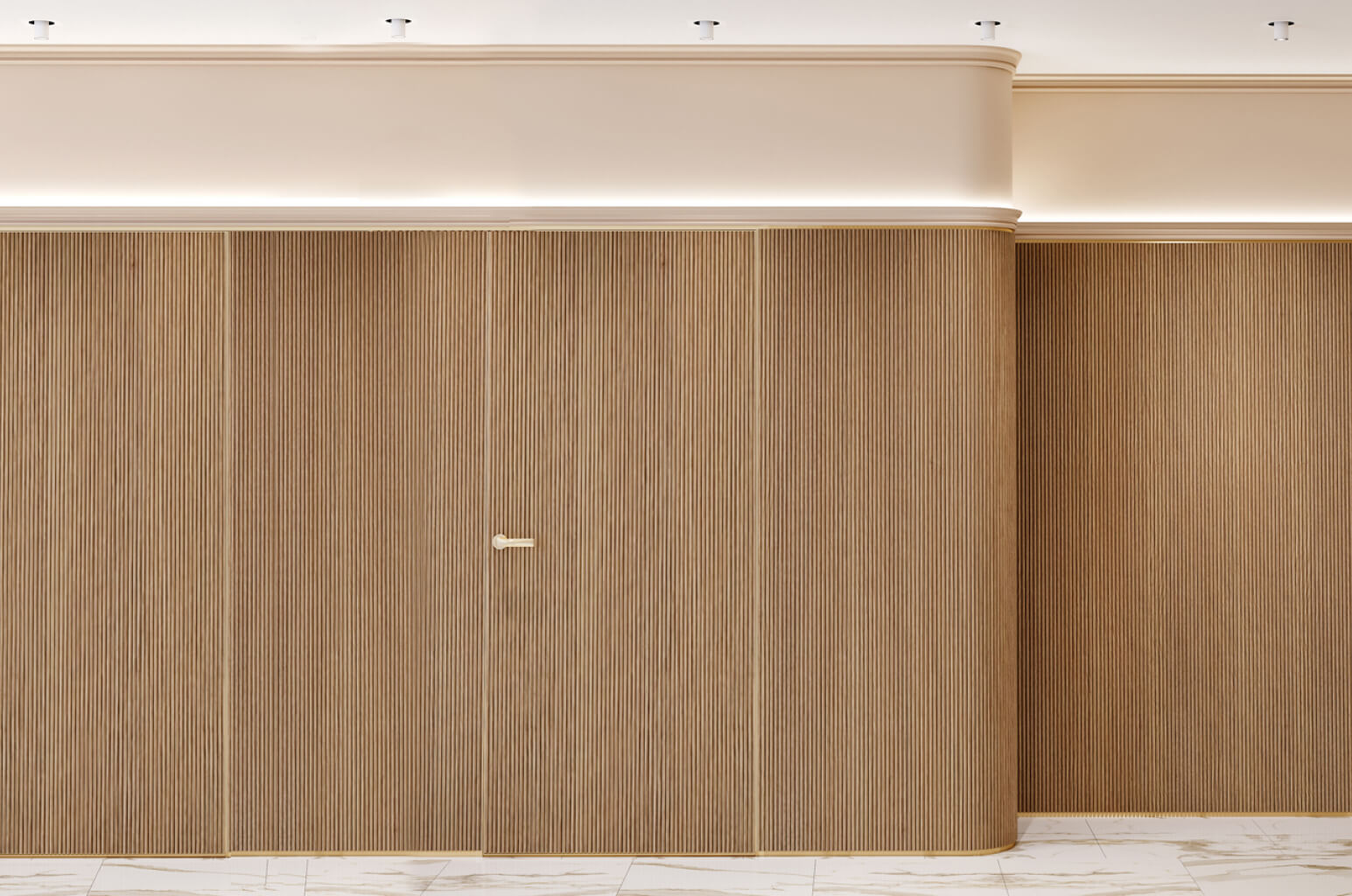
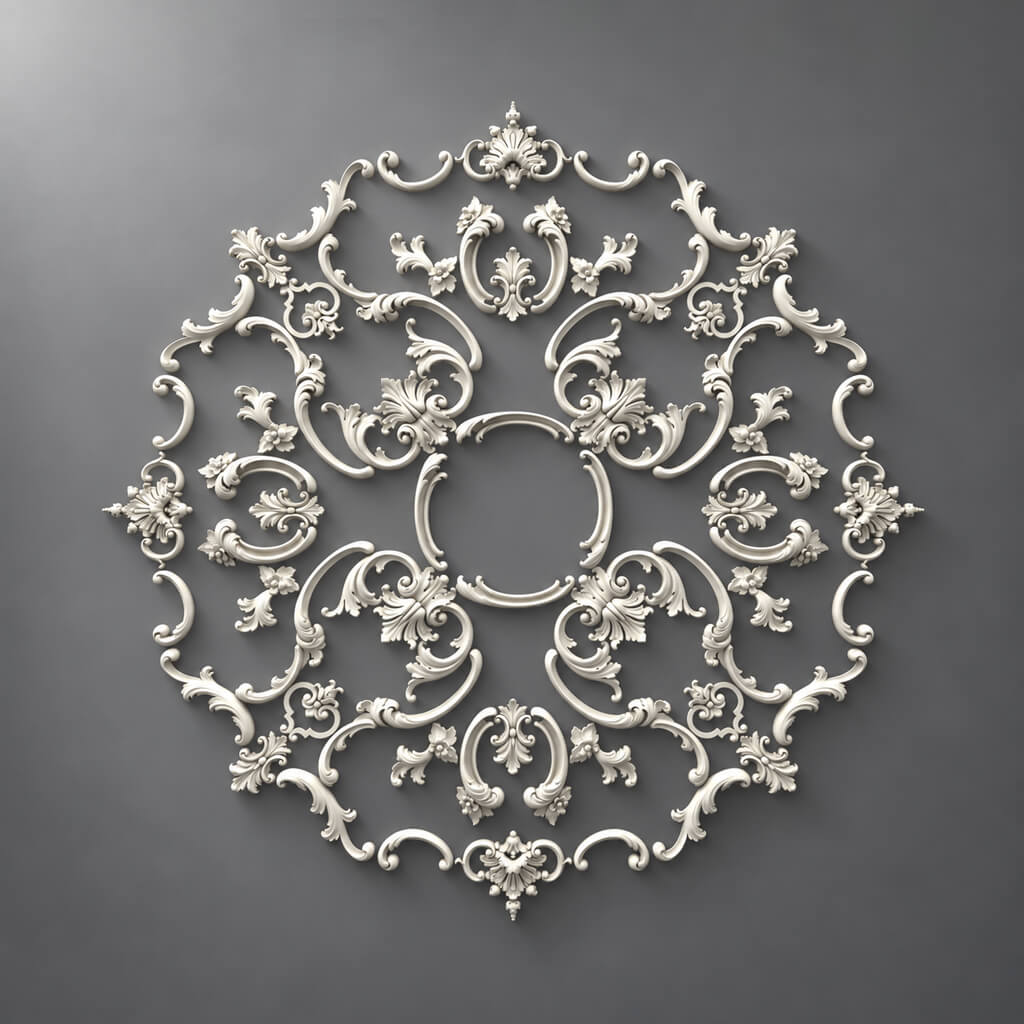
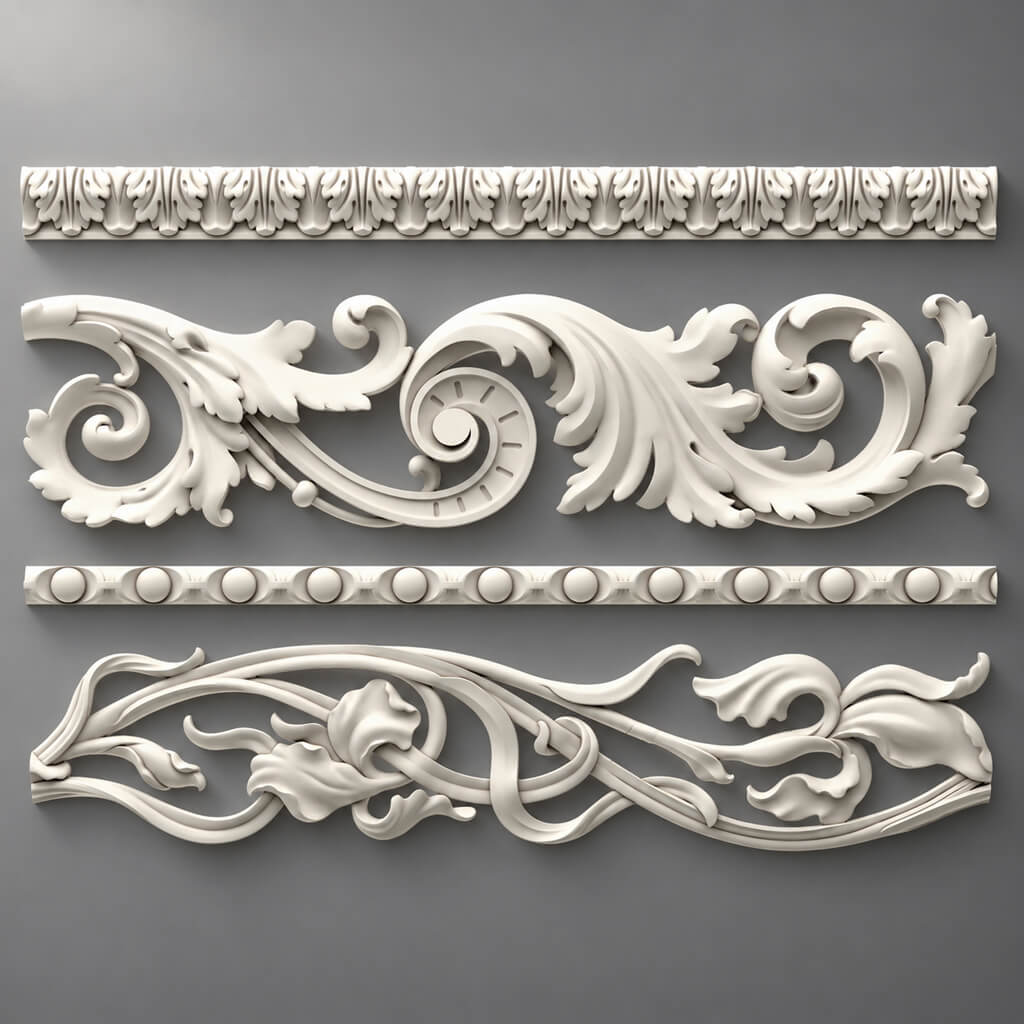
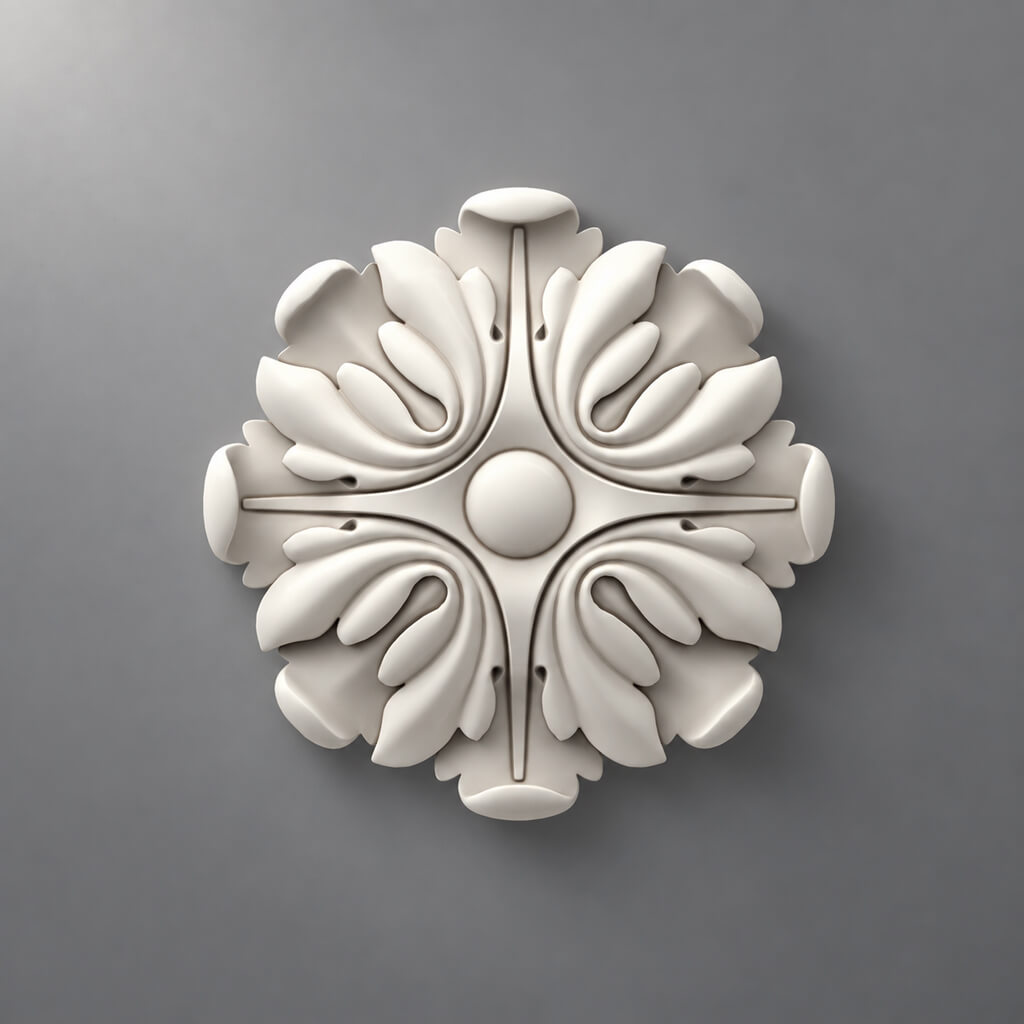
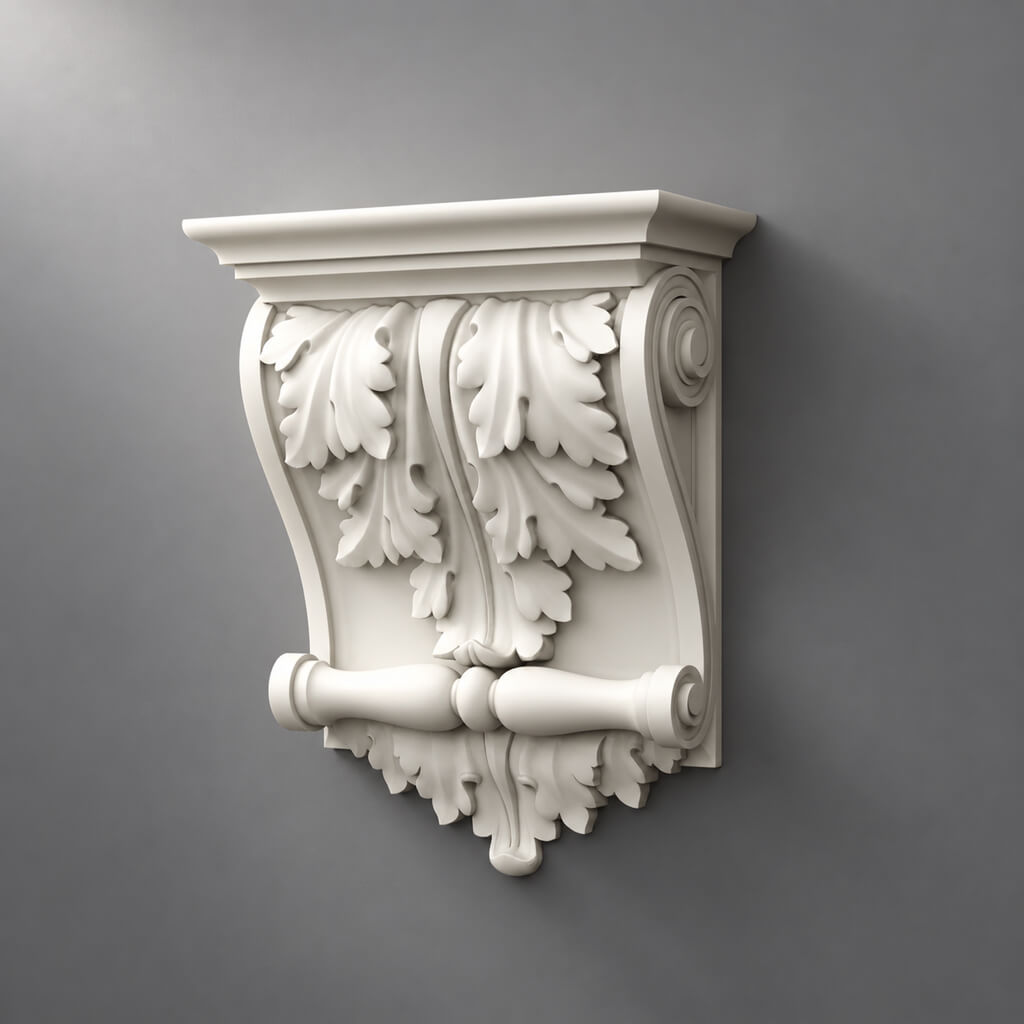
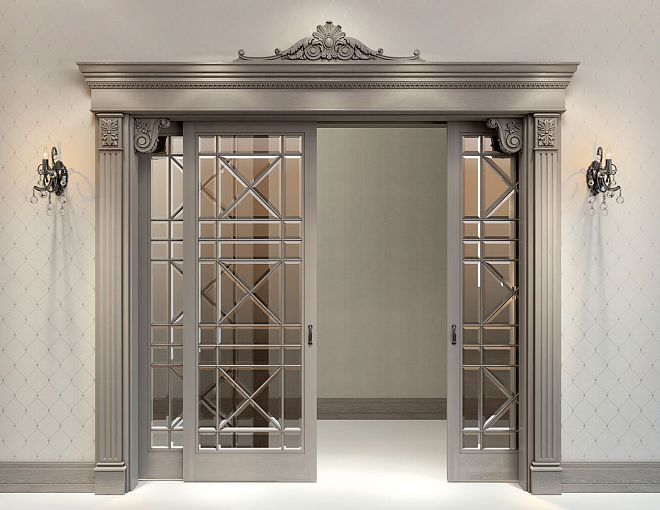
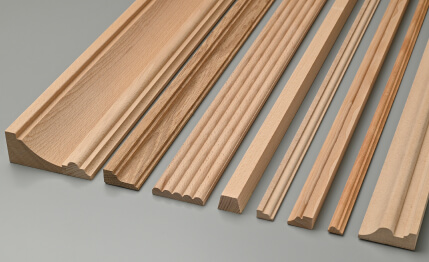
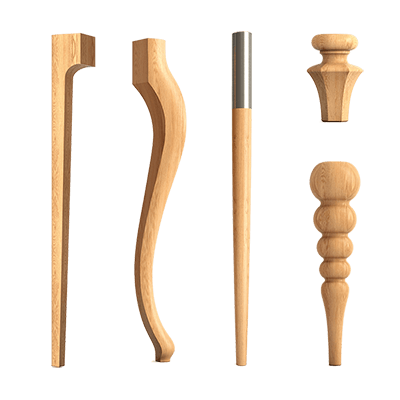
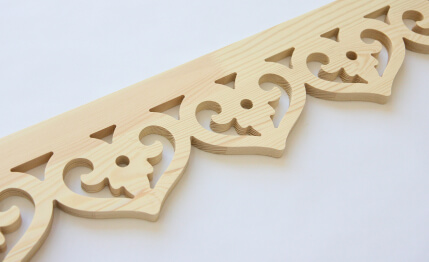
Used elements from the STAVROS array
We will help you implement the project
Measurements
You send us furniture, interior, and preferences dimensions
Design
Our specialists will create a project (paid service, from 2000 rub.)
Kitting
After project approval, you receive a specification
Implementation
We will select partners in your city for painting and mounting decor
You may also be interested in


Frequently asked questions
Our showrooms are located in Saint Petersburg and Moscow. Production is located in Saint Petersburg.
Moscow contacts: https://www.stavros.ru/contacts_all/?tab=msk
Contacts of Saint Petersburg: https://www.stavros.ru/contacts_all/?tab=spb
- Send request by email [email protected]
- Write to us at Telegram
- Write to us at WhatsApp
- Order by phone +7 (800) 555-46-75
- Visit our showroom in Saint Petersburg and Moscow
Yes, we ship orders throughout Russia and to CIS countries.
We cooperate with transportation companies such as СДЭК and DPD.
You can also arrange pickup of your order through any convenient transportation company for you.
Delivery cost depends on the size, weight of the item, and delivery address.
When placing an order, the delivery cost is calculated automatically and displayed as a separate line on our website.
Prices and availability of items on the website are always current. Data is updated daily.
Note: items in stock are stored on the warehouse in unpolished form and shipped within 3 working days.
If the item is not in stock, average production time: 5–10 working days.
This is the quality of polishing of the items.
Standard — machine polishing, at a more attractive price.
Prestige — detailed hand polishing, items do not require further work.
More details: https://www.stavros.ru/information/kachestvo/
This is the type of veneer of the items.
Under enamel: produced by gluing wooden laminates without color and texture matching. Contrast tonal and textural differences are noticeable. This blank should be chosen if the item is intended for opaque coating.
Under tinting: produced by gluing wooden laminates with color and texture matching. Tonal and textural differences may occur. This blank should be chosen if the item is intended for semi-transparent finish.
More details: https://www.stavros.ru/information/kachestvo/
Beech — dense, non-porous wood, most often used for items covered with enamel.
Oak — dense, porous wood with clearly visible natural grain. Due to its strength and decorative properties, it is often used in items with semi-transparent coating, highlighting the wood pattern.
Custom-made, if non-standard items are required, we can produce products from other types of wood, including blanks provided by the customer, manufactured according to our technical specifications.
All our furniture legs can withstand a vertical load of at least 100 kg.
Average production time for custom-made items: 5–10 working days.
Most items are stored on the warehouse in unpolished form. We need time to polish and pack orders.
Yes, we manufacture non-standard items according to individual projects, but we only accept orders with a minimum quantity.
We can manufacture items of the desired size, but we only work with bulk orders. For details, please consult the sales department manager.
Yes, some of our products can be used outdoors. For example, polyurethane items, as well as carved door casings made of pine.
Other items are produced to order using PUR glue, if minimum quantity is available. No warranty is provided for such products, as outdoor conditions are considered aggressive.
Yes, we paint items when ordering products for a total amount of 150,000 rubles or more.
- Dust removal. After sanding, the surface must be dusted.
- Priming. Apply primer in an even layer.
- Matting. After the primer has fully dried, the surface should be matted (lightly sanded for better adhesion).
- Finish coating. Apply finish coating: lacquer or enamel, in 2 layers, with interlayer drying.
More details: https://www.stavros.ru/information/sovety/
Apply adhesive to the decor. Attach to the surface and press briefly. Then, remove the decor from the surface and leave it open for 3–5 minutes. Press the decor firmly onto the surface and hold for 5–10 seconds.
More details: https://www.stavros.ru/information/sovety/
Ideally, you should prepare a design project before placing an order.
You can do this yourself by downloading drawings of our products from our website, or you can order a project from us.
If the number of decorative elements and fittings is small, our company's manager can assist you with selection.
Unfortunately, this service is not provided.
The packaging method depends on the type of items, but in each case, we ensure sufficient protection for safe transportation.
We most often use corrugated cardboard and stretch film. Fragile items are additionally secured on a rigid base to prevent damage during transport.
We ship all items starting from 1 piece.
Room measurements and item installation can be performed by our partners — carpentry companies represented in most regions of Russia.
Also see
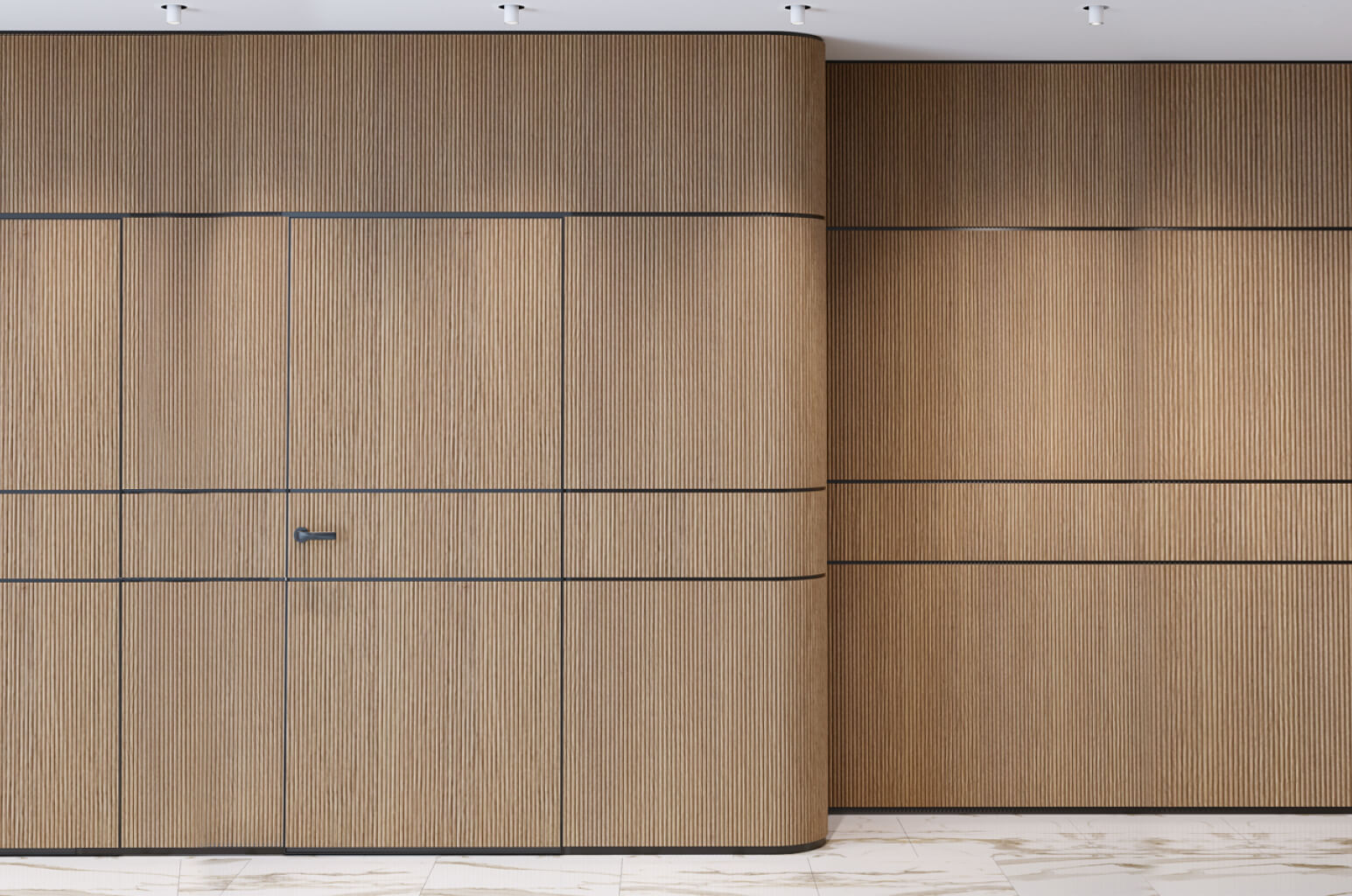
Natural wooden wall with slatted texture, hidden doors, and a smooth radius
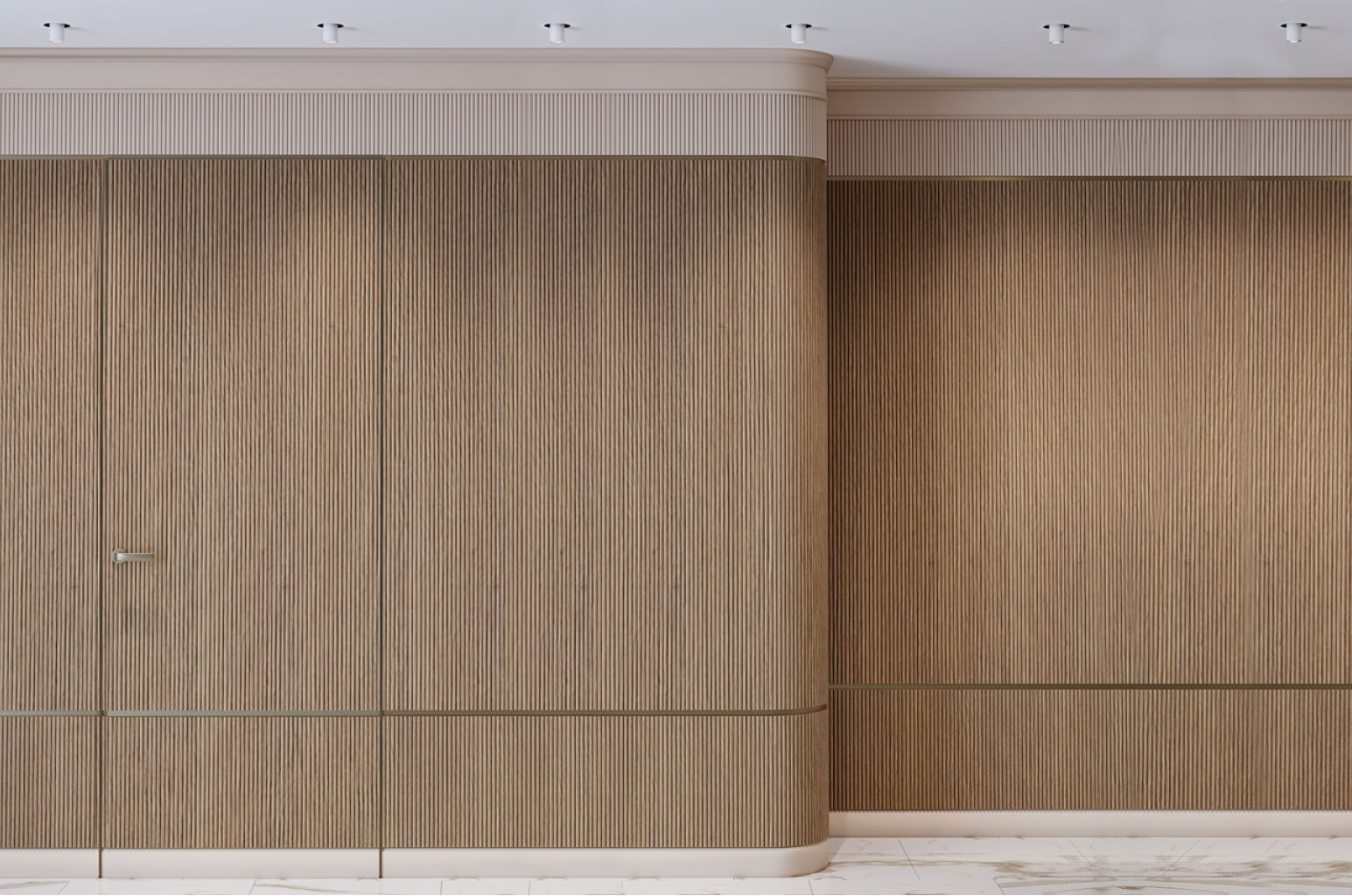
Wooden slatted wall panel with hidden doors and a radius corner
Wood on the wall can look different. It can evoke rustic coziness—then it's paneling with a sauna texture. It can hide behind a wood-look film—then it's an imitation that deceives the eye until you get closer. Or there's a third option: wood as an architectural material—precise, modern, honest. This is exactly what the ideaof decorating wall panels INTPAN-005.
Here, the slatted panel is not a way to 'cover a bare wall.' It's a way to create a cohesive wooden architectural surface that encompasses straight sections, a radius corner, and door panels that visually dissolve into this surface. The vertical rhythm of the battens, horizontal shadow lines, warm top lighting—all of this transforms a functional hallway or entryway wall into an interior statement with a premium feel.
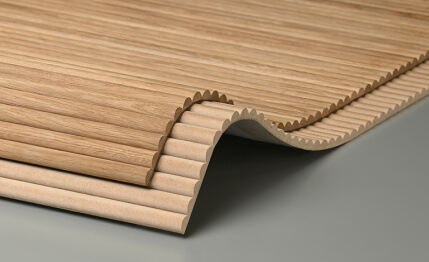
At the core of the idea iswooden slatted panel PAN-001 STAVROS. A modular solution on a flexible fabric base with semi-circular battens made of oak, beech, or MDF. The manufacturer specifically notes: thanks to the flexible base, PAN-001 is suitable not only for straight but also for curved surfaces. This makes it indispensable for the INTPAN-005 concept, where the radius corner is one of the key architectural details.
What is INTPAN-005: an architectural cladding, not a decorative overlay
Before diving into the details, it's important to understand how INTPAN-005 differs from previous ideas in the series. And the difference here is fundamental.
INTPAN-002 is an accent wall with a slatted texture. Flat, straight, expressive.
INTPAN-004 — dark radius panel with hidden doors. Emphasis on color and volume.
INTPAN-005 — something else. Here, natural wood texture takes center stage. The warm shade of solid wood reads as a living material. Horizontal shadow lines that turn a large plane into an architectural grid. Backlighting that reveals the depth of the slatted relief. And all of this — on a single continuous surface that covers the wall, radius corner, and hidden doors.
Wooden wall panel with slats in this interpretation — it is cladding, not finishing. The difference in approach: finishing covers the surface, cladding shapes it. INTPAN-005 reshapes the wall — as an architectural object with character, warmth, and structure.
Slatted panel PAN-001: the construction that makes this possible
It would be dishonest to talk about the idea without analyzing the tool that implements it.Slat panel PAN-001 — this is not a standard MDF board with routing. It is a fundamentally different construction.
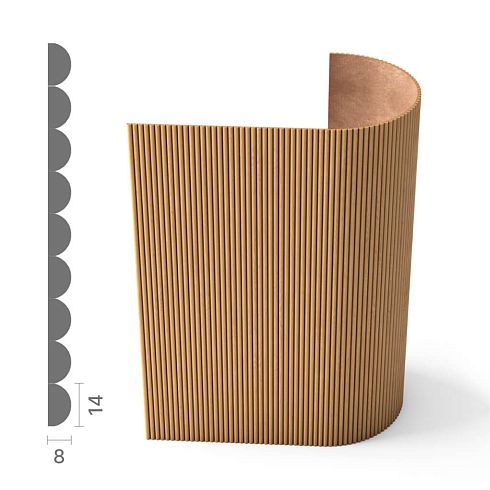
Half-round battens of equal cross-section are glued onto a flexible fabric base with a precise, fixed pitch. The fabric base maintains the geometry: the distance between battens remains constant along the entire length. When adjacent modules are joined, the batten pitch matches exactly — the boundary between panels visually disappears. No matter how many meters are clad,Decorative wall paneling with slats is perceived as a single seamless covering.
The key feature without which INTPAN-005 would be impossible — the flexibility of the fabric base. It allows the panel to wrap around curved surfaces: radius corners, rounded jambs, columns, arched slopes. For radii of 300 mm and more — direct installation, without pre-soaking or bending individual battens. The fabric base stretches, the battens spread with minimal gaps — and the pattern remains visually uniform.
Three materials: three different stories
Oak. The most expressive option in the series. Oak has a pronounced layered grain pattern, which becomes the main visual element of the surface when tinted or coated with clear varnish.oak slat panel — it is a living texture that changes depending on the lighting angle. On the radial section, oak is especially expressive: the curve emphasizes the direction of the grain, and the wall acquires a sculptural dimension.
Beech. A dense, neutral wood with a fine, uniform pattern.Slatted panel made of beech when tinted in a neutral warm shade, it gives a smooth, calm surface without surprises. A good choice for interiors where natural warmth is needed without a dominant texture. Beech does not compete with other elements of the space — it creates a background.
MDF. For the option where the panel is planned to be painted in a specified interior color. The homogeneous structure without natural defects accepts any enamels — from white to black, from pastel to saturated.Slat panel made of MDF for painting — is the most predictable option in terms of the final result.
For the INTPAN-005 idea in its "natural" interpretation — a warm wooden surface with a lively texture — oak or beech are optimal. More details about the properties of each material and surface preparation requirements are in the sectionMaterials and quality of STAVROS products.
Natural wood texture as the main argument of INTPAN-005
There is a question that naturally arises when looking at any wooden wall in an interior: doesn't it look too "rustic"? Won't the space lose its modernity? The answer depends on how the wood is present in the interior.
Horizontal tongue-and-groove paneling with rounded edges — yes, that is a rustic look. Butwooden planks on the wallwith a vertical rhythm, precise spacing, geometric profile, and horizontal shadow lines — that is a completely different story. Here, wood is not an imitation of nature, but an architectural material with its own logic.
What exactly makes a wooden slat wall modern?
-
Vertical rhythm — not horizontal. Verticality is associated with architecture, structure, tectonics. Horizontality — with nature and coziness. PAN-001 works precisely with verticality.
-
Precise spacing of the battens — not a chaotic layout, but a modular rhythm with mathematical precision.
-
Semicircular profile — not a sharp rectangle, not decorative carving, but a modern cross-section with a smooth light-and-shadow transition.
-
Horizontal shadow lines — an architectural grid that makes a large surface structured.
-
Unified surface — wall, radius, doors — all in one rhythm, one material, one color.
Natural wooden slats for the wallin this execution, it is a material that simultaneously carries natural warmth and architectural rigor. It is this combination that makes INTPAN-005 universal: it works both in residential spaces and commercial ones.
Horizontal shadow lines: an architectural grid on a wooden surface
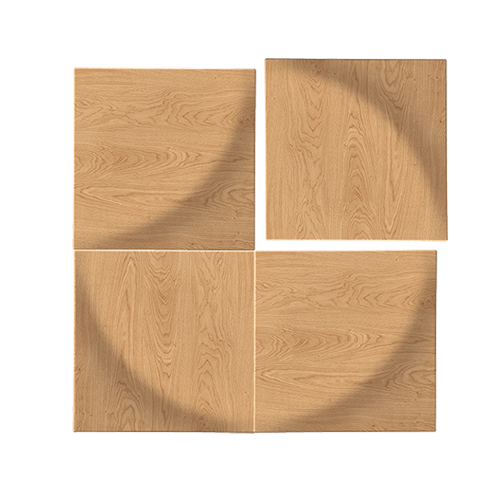
This is a separate visual feature of INTPAN-005 that is important to examine in detail. The image clearly shows: a large wooden surface is divided into horizontal sections by thin dark lines. They do not interrupt the vertical slat rhythm—they work across it, creating a rectangular architectural grid.
Why are these horizontal lines needed?
First: scale. A large wall plane without division is perceived as a monolith. It feels oppressive. Horizontal lines break it into parts, making the surface more human-scale. The eye finds landmarks—not only vertical slats but also horizontal sections.
Second: architectural rigor.Wall panel with shadow gapsis a design technique that has long been used in professional interior design. The shadow seam between sections—a dark horizontal line—adds graphic quality to the surface that a uniform wooden plane cannot provide.
Third: door concealment. Horizontal lines help build a common architectural grid into which hidden doors are integrated. The boundary of the door leaf is perceived not as a joint between two elements, but as part of the overall geometric order of the surface.
Fourth: installation logic. Horizontal shadow gaps often mark the boundaries between panel sections by height. This is an architectural solution that is also structurally honest: the division into sections is a real module boundary, designed as a design element.
Shadow horizontal lines can be implemented in several ways: using thin black or dark molding at horizontal joints, shadow aluminum profile, or a painted strip in petroleum blue or graphite color.A wooden panel with horizontal lines— one of the most sought-after requests in modern commercial interior design.
Hidden doors: disappear correctly
A hidden door is not a technical trick. It is a design solution that requires careful elaboration. The mechanics of hidden installation — Krona hinges, magnetic closer, push system — are now perfected to automation. The problem has always been different: how to make the door not just "hide" but also organically integrate into the wall composition?
Slat panels for hidden doorssolve this task more precisely than a smooth surface. Why?
On a smooth painted wall, any vertical joint is clearly visible. The slightest difference in light reflection, a thin shadow from the edge of the panel, a gap of 1–2 mm — and the "hidden" door immediately catches the eye. A slatted surface already has an embedded vertical rhythm — many parallel lines. The joint of the panel gets lost in this rhythm: it is perceived as one of many vertical lines, not as the boundary of a doorway.
Technical conditions for effective concealment
For a hidden door to truly "disappear" into a slatted wall panel, several conditions must be met.
Precise matching of the batten spacing. PAN-001 on a fabric base ensures this structurally: the batten spacing is identical along the entire length of the module. When installing on the door leaf, the count starts from the last batten of the wall panel with the same interval — and the first batten of the door section aligns into a continuous row. The joint ceases to be noticeable.
Minimum blade gap. For hidden doors, systems with anti-casing are optimal: the gap between the blade and the frame is 2–3 mm. In a slatted texture, such a gap is invisible.
Single material and finish. The wall and door must be covered with PAN-001 from the same material (oak to oak, beech to beech, MDF to MDF), the same tint, the same batch — otherwise, a tone discrepancy is possible.
No visible handle. A push system or magnetic closer are the only functional options that do not disrupt the surface continuity. A furniture magnet on the end, built into the slatted rhythm, is another elegant solution.
Camouflaging a door with a wall panel in the INTPAN-005 logic is applicable for a wide variety of functional tasks. A wardrobe door is hidden in the hall. An entrance to the study is dissolved into the wall panel of the study-library. A technical room door ceases to exist visually. A hidden entrance to the bathroom in an interior without obvious doors.
Radius corner: why smoothness is more expensive than a straight joint
There are three ways to go around a corner in an interior. The first is a straight joint of two planes with a molding. The second is a miter cut. The third is a radius transition. And it is the third option that gives the impression of architectural maturity.
Why? Because a right angle is a technical norm. A radius is a choice behind which lies an architectural concept. A rounded transition between two planes eliminates the rigid joint, softens the room's geometry, and creates the feeling of a solid volume rather than a set of individual walls.
Slatted panel for a radius wall is a task that standard rigid panels cannot handle. MDF board does not bend without special treatment. Veneered panels crack. Wallpaper tears on the radius. PAN-001 on a fabric base bends around curved surfaces freely — the slats diverge with a minimal gap, the fabric base follows the shape, the pattern remains uniform.
What happens to a wooden slatted surface on a radius section?
-
The vertical rhythm of the glazing beads follows the curve — and emphasizes it
-
The semicircular profile of the glazing bead creates a smooth chiaroscuro transition, especially expressive on a rounded surface
-
Natural wood on the radius looks sculptural — the material "works" with the form
-
The transition between the straight and radiused section in a unified slatted texture is perceived as a single volume, not as a joint between two different elements
Finishing a radius wall with slats — one of the most specific and professionally sought-after requests in interior design. INTPAN-005 provides a precise answer to it.
Practical recommendations for installation on radius and curved surfaces are described in detail in the articleHow to install slatted panelson the STAVROS website.
Lighting: when light turns a finish into a scene
The image of INTPAN-005 clearly shows the top lighting. It is not accidental — it is a fundamental part of the architectural idea.
Warm directional light falling from above along the slatted surface creates several effects simultaneously.
Reveals the texture. Each glazing bead casts a long, thin shadow onto its neighbor — and the surface becomes sculptural. A flat wooden wall under side lighting transforms into a three-dimensional architectural element.
Reveals the texture of the wood. The natural oak fiber acquires a golden depth under warm light. Each slat becomes a separate tactile object — you want to touch them.
Creates a "floating" effect. Top lighting separates the panel from the ceiling with a light gap — the wall seems to slightly "lift off" from the upper plane. This is one of the classic architectural techniques that creates a feeling of lightness in a heavy volume.
Sets the atmosphere.Wall panel with backlight in the hall or entryway changes the character of the space in the evening: the strict daytime cladding turns into a warm scene with depth that invites rather than just divides.
For implementing the lighting, an LED profile is used, built into the upper horizontal line — in the shadow gap between the first panel section and the ceiling. Warm white light (2700–3000 K) is the optimal choice for natural wood: it enhances the golden tones of oak and softens neutral beech. Cool white light (4000 K and above) gives a more modern, strict character — suitable for office and commercial spaces.
Finish: wood in all its states
Clear varnish: honest natural texture
Wooden slats under varnish — the most direct path to natural aesthetics. Clear polyurethane or acrylic varnish preserves the natural color of oak or beech and forms a protective coating resistant to moisture and mechanical impact. Matte varnish gives a more modern, "dry" result — the texture is readable, but the surface does not shine. Semi-matte adds depth and a sense of processed material.
Oil: the most alive finish
Oil coating — Rubio Monocoat, Osmo, Borma and similar — penetrates the wood structure without creating a film on the surface. Result: the wood remains "breathable", the texture is tactile, the surface looks natural and soft. The oil vividly reveals the oak grain pattern — this is the most valuable finish for interiors in Japandi or eco-minimalist style.Wood wall cladding under oil — a choice for those who value the natural honesty of the material.
Tinting: color without losing texture
Tinting oils, stains, semi-transparent varnishes — a wide range of possibilities for changing the natural color of wood while preserving the fiber texture. Gray oak (ash), tobacco cognac, neutral ash, soft wenge — each of these shades changes the mood of a wooden wall without turning it into a painted surface.Slatted oak panel under tinting — a professional choice for interiors with a well-thought-out color concept.
MDF under enamel: when color is needed
If the INTPAN-005 idea is adapted for a colored wall panel — for example, in a neutral gray-beige, milky, or dark accent shade — MDF under enamel ensures a predictable, even result. Recommendations for priming and painting are in the sectioninstallation and finishing tips.
Where to use INTPAN-005: from hallway to showroom
Entrance hall and hallway in a private house or apartment
Wooden slats on the wall in the entrance hall — this is the first design impression of the entire interior. In the INTPAN-005 concept, the entrance hall with wooden slat cladding ceases to be a transit zone: it becomes an architectural introduction. The rounded corner softens the transition from the entrance hall to the corridor. Hidden doors to the dressing room or bathroom disappear into the slatted surface. Top lighting creates an atmosphere even in the absence of natural light.
Corridor and passage area
The corridor is the most difficult room for design. Long, narrow, functional.Wall panel in the corridor with a vertical slatted texture visually solves the main problem: the vertical rhythm draws the eye upward, the ceiling feels higher, and horizontal shadow lines break the long wall into neat sections. The wooden warmth neutralizes the feeling of a "pipe."
Living room with an accent wall
Slatted wall in the living room in a natural wooden finish is an accent element that requires no other accents. A sofa against a wooden slatted wall reads as an independent interior scene. Top lighting completes the picture.
Office and library
Wall panel for the study with a wooden slatted texture adds seriousness and warmth to the workspace at the same time. A library or study with wooden slats is not pretentious; it is an image of concentration and culture. Especially appropriate in combination with bookshelves: the slats and book spines create a double vertical rhythm that structures the space.
Office, reception, showroom
Slatted panels for commercial interior — is a tool for creating an atmosphere that directly influences brand perception. A reception area with a wooden slatted wall cladding signals quality and thoughtfulness. A showroom with natural wooden panels provides a natural, honest, and inviting backdrop for any product.
Restaurant, cafe, lounge
Wooden panels for a restaurant or cafe create that very atmosphere of comfort and quality that people are willing to return for. Warm wood, vertical rhythm, lighting — three components that turn an ordinary hall into a premium space.
Interior styles: where INTPAN-005 works best
Japandi — a perfect fit
Oak with oil finish, vertical rhythm, natural shade, geometric precision, warm lighting — all of this is the direct language of Japandi.Slatted panels in Japandi style — is not just an aesthetically appropriate solution, but literally its visual manifesto. Japanese aesthetics value rhythm, pause, and natural material. All of this is fully present in PAN-001 made of oak.
Modern minimalism
Minimalism is not emptiness. It is precision. One wooden slatted wall in a minimalist hall is exactly the one thing this space needs.Minimalist wall panelsfrom PAN-001 work as an anchor element: everything else — furniture, lighting, decor — is built around it.
Contemporary
Contemporary does not require stylistic fidelity — it accepts natural wood, painted MDF, and horizontal shadow lines as an architectural technique.Wooden wall panel in a premium interiorin the contemporary style — quality without pretension and elegance without pathos.
Eco-minimalism
Natural material, natural texture, warm shade — three basic requirements of eco-style.Natural wood in interior designin the form of a slatted panel PAN-001 made of oiled oak — this is eco-minimalism without admixture.
Soft loft
Wood as a warm counterpoint to concrete, metal, dark glass. A slatted wooden wall in an interior with a concrete ceiling and steel pipes is one of the most expressive material dialogues in modern design.
Installation strategy: how to assemble INTPAN-005 on site
Installation of a wall composition in the INTPAN-005 logic requires a preliminary design solution for several positions.
Definition of sections and horizontal lines. Before installation, the wall must be divided into horizontal sections: determine their height, decide how to finish horizontal joints (shadow profile, molding, open gap). Sections are typically 80–120 cm high, which is a multiple of the standard lengths of the PAN-001 panel (950, 2400, 2670 mm).
Base preparation. The wall must be level, clean, and degreased. Irregularities greater than 3 mm are leveled with putty. For a large-scale project with a curved section and several door panels, frame installation on a metal profile is recommended: this allows all surfaces to be aligned into a single plane. More details on installation methods are in the article.walls made of slatted panelson the STAVROS website.
Panel finishing before installation. For oak and beech — tinting, oil, or varnish before wall installation. After installation, only the front surface is accessible. The back side and ends of the battens must be treated in advance — this is critical for the stability of the wooden material during humidity fluctuations.
Installation on straight sections. Fixation with contact adhesive and additional fastening with micro-pins on the fabric base. Fastening step — 150–200 mm. Joints between modules — butt joints, with precise alignment of the batten spacing.
Installation on a curved section. The panel is fixed from the start of the arc step by step — in small sections, with a pause for the adhesive to set before moving to the next section. With proper tension, the fabric base follows the radius without pattern deformation. For convex sections — mandatory mechanical fastening along the entire arc.
Integration of door panels. The batten spacing on the door panel is counted from the last batten of the wall section. Fastening to the door panel — with adhesive and mechanical point fasteners on the fabric base. The ends of the door panel are covered with a thin wooden molding or painted in the panel color.
Horizontal shadow lines. Installed on finished sections: a thin aluminum or wooden profile is fixed along the horizontal joint between sections. If LED lighting is planned, the profile for the strip is installed simultaneously with the horizontal division.
Catalog and material selection for INTPAN-005
The idea behind INTPAN-005 isthe slatted panel PAN-001 STAVROS. For a natural wood scenario — an oak option with oil or tinting. For a neutral natural background — beech. For a colored option — MDF with enamel.
If a surface is required that is already fully prepared for final painting without priming on site —Slatted panel PAN-002 primedreduces preparation time.
Full STAVROS slatted panel catalogis available on the website.wall panel design optionsin various interior scenarios — in the ideas section. Allinterior solutionsfrom STAVROS — walls, doors, furniture, portals — on one catalog page.
FAQ: answers to popular questions about INTPAN-005
Can PAN-001 be used for a wall panel with a hidden door?
Yes. The vertical slatted texture helps visually merge the door leaf with the wall. With an exact match of the batten pitch at the wall-door joint, the leaf visually dissolves into the panel. Optimal hardware is a push system or magnetic closer without a visible handle.
Is PAN-001 suitable for a radius corner?
Yes. The fabric base of PAN-001 allows it to wrap around curved surfaces without breaks or deformation of the pattern. For radii from 300 mm — installation without pre-treatment. On tighter radii — step-by-step fixing with a holding period.
Which is better for a natural wood surface — oak or beech?
Oak has a pronounced fiber texture, expressive under tinting or oil. Beech has a neutral fine structure, smooth and calm. Oak is chosen when natural texture is the main design element. Beech is chosen when a warm background without a dominant pattern is needed.
Why are horizontal shadow lines needed?
They solve three tasks: break a large wall plane into neat sections, add architectural graphic quality to the surface, and help visually integrate hidden doors into the overall geometric grid of the wall.
How to implement lighting in such a wall panel?
The LED profile is mounted in the shadow gap between the top horizontal line and the ceiling — or between sections. Warm white light (2700–3000 K) is optimal for natural oak. The lighting is directed along the slatted surface, creating sliding light and emphasizing the relief of the battens.
Where to buy the slatted panel PAN-001?
The slatted panel PAN-001 can be purchased in the STAVROS catalog. Options are available in MDF, oak, and beech in lengths of 950, 2400, and 2670 mm. Delivery across Russia and CIS.
Is a specialist needed for installation?
Installation on straight surfaces is accessible for an experienced craftsman. Working with curved sections, integrating hidden doors, and horizontal shadow profiles require a professional approach. Detailed instructions are in the sectioninstallation tips STAVROS.