













































































CPU-2-4 decorative molding set
Set Composition


Have questions?
Customers also buy

Yulia Kh.
March 24, 2026
I was satisfied with the quality of the products; we purchased furniture legs. I would especially like to highlight the professionalism of manager Oksana—very client-oriented, competent, and precise specialist. She even arranged additional trimming of some elements as an extra service for us. Huge thanks!
Incognito 7.
March 24, 2026
One of the few firms that is pleasant to interact with on renovation matters. Adequate, responsive managers. Adherence to deadlines. Execution of even complex projects. Bravo! May there be more such firms!!
Marina D.
February 15, 2026
The company ordered the pens for us when we ordered furniture. But I decided to write a review personally because they are amazing! Stylish, expensive, high-quality!
More than 20 years on the market
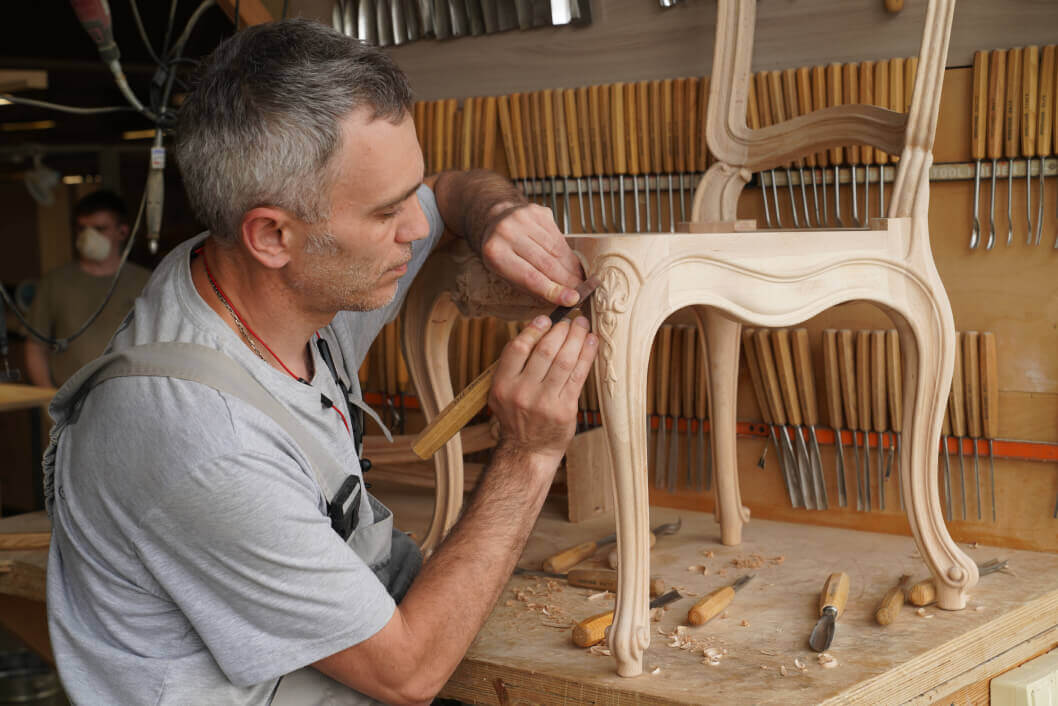
The company's success began in 2002, when two artists — Andrey Ragozin and Evgeny Tsapko — created a small creative workshop for producing wooden carved items. The masters' work was quickly noticed, and within a year they were invited to participate in the reconstruction of the Konstantinovskiy Palace in Strelna.
After the success of this project, the company focused on recreating palace interiors, furniture, church furnishings, and carved decorations in various artistic styles. They worked with cultural heritage sites: The Hermitage, the Alexandrovsky Palace, the Troitsko-Izmaylovsky Cathedral, the Sheremetyevsky Mansion, and many others.
The masters' task — and still is — to create wooden items with the highest level of detail and understanding of every element, based on impeccable knowledge of artistic laws and interior styles.
STAVROS Guarantees
Quality of products without complaints
We save your time, peace of mind, and budget
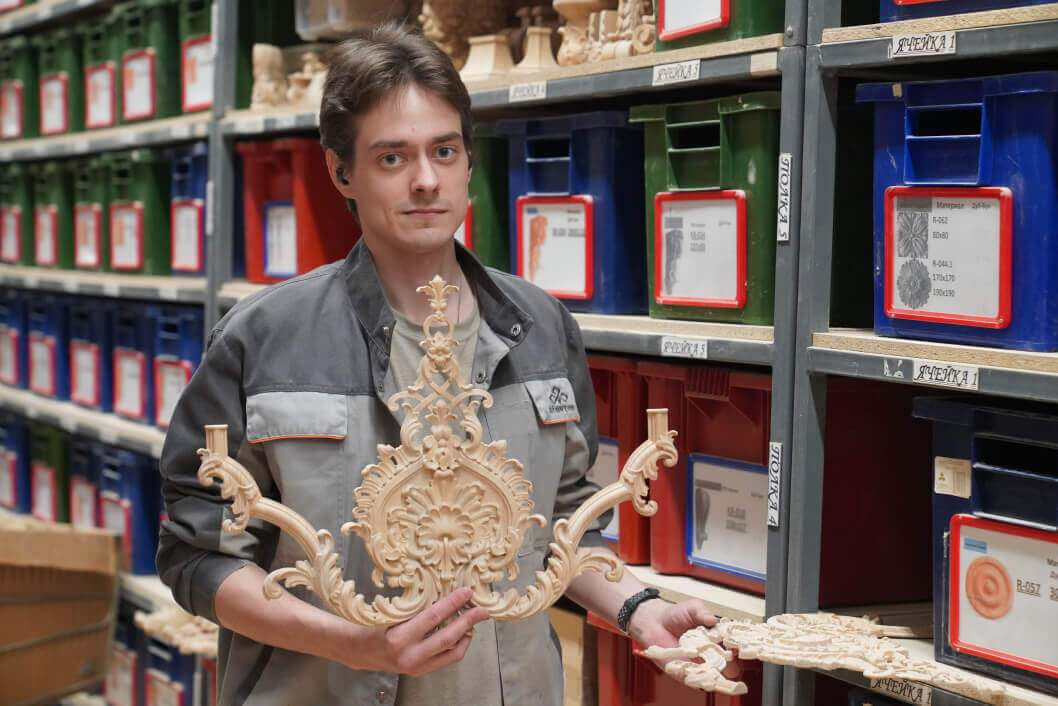
Large warehouse program
We solve your tasks with maximum speed
Adherence to production deadlines
Streamlined process reduces all risks
Delivery from 1 piece throughout Russia
Quality service regardless of order volume
Your positive business reputation
Reliable partner — the foundation of your business
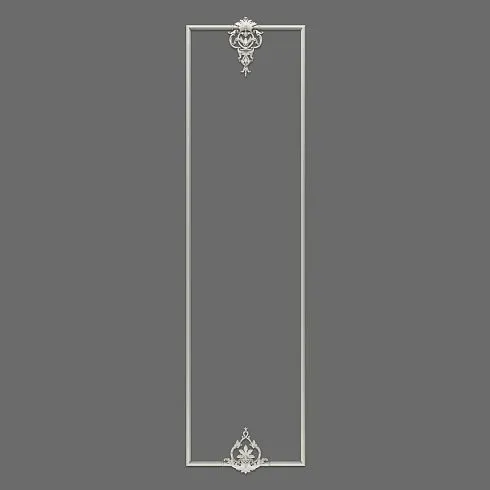
More products in the Neoclassic Light collection
Frequently asked questions
Our showrooms are located in Saint Petersburg and Moscow. Production is located in Saint Petersburg.
Moscow contacts: https://www.stavros.ru/contacts_all/?tab=msk
Contacts of Saint Petersburg: https://www.stavros.ru/contacts_all/?tab=spb
- Send request by email [email protected]
- Write to us at Telegram
- Write to us at WhatsApp
- Order by phone +7 (800) 555-46-75
- Visit our showroom in Saint Petersburg and Moscow
Yes, we ship orders throughout Russia and to CIS countries.
We cooperate with transportation companies such as СДЭК and DPD.
You can also arrange pickup of your order through any convenient transportation company for you.
Delivery cost depends on the size, weight of the item, and delivery address.
When placing an order, the delivery cost is calculated automatically and displayed as a separate line on our website.
Prices and availability of items on the website are always current. Data is updated daily.
Note: items in stock are stored on the warehouse in unpolished form and shipped within 3 working days.
If the item is not in stock, average production time: 5–10 working days.
This is the quality of polishing of the items.
Standard — machine polishing, at a more attractive price.
Prestige — detailed hand polishing, items do not require further work.
More details: https://www.stavros.ru/information/kachestvo/
This is the type of veneer of the items.
Under enamel: produced by gluing wooden laminates without color and texture matching. Contrast tonal and textural differences are noticeable. This blank should be chosen if the item is intended for opaque coating.
Under tinting: produced by gluing wooden laminates with color and texture matching. Tonal and textural differences may occur. This blank should be chosen if the item is intended for semi-transparent finish.
More details: https://www.stavros.ru/information/kachestvo/
Beech — dense, non-porous wood, most often used for items covered with enamel.
Oak — dense, porous wood with clearly visible natural grain. Due to its strength and decorative properties, it is often used in items with semi-transparent coating, highlighting the wood pattern.
Custom-made, if non-standard items are required, we can produce products from other types of wood, including blanks provided by the customer, manufactured according to our technical specifications.
All our furniture legs can withstand a vertical load of at least 100 kg.
Average production time for custom-made items: 5–10 working days.
Most items are stored on the warehouse in unpolished form. We need time to polish and pack orders.
Yes, we manufacture non-standard items according to individual projects, but we only accept orders with a minimum quantity.
We can manufacture items of the desired size, but we only work with bulk orders. For details, please consult the sales department manager.
Yes, some of our products can be used outdoors. For example, polyurethane items, as well as carved door casings made of pine.
Other items are produced to order using PUR glue, if minimum quantity is available. No warranty is provided for such products, as outdoor conditions are considered aggressive.
Yes, we paint items when ordering products for a total amount of 150,000 rubles or more.
- Dust removal. After sanding, the surface must be dusted.
- Priming. Apply primer in an even layer.
- Matting. After the primer has fully dried, the surface should be matted (lightly sanded for better adhesion).
- Finish coating. Apply finish coating: lacquer or enamel, in 2 layers, with interlayer drying.
More details: https://www.stavros.ru/information/sovety/
Apply adhesive to the decor. Place it on the surface and press briefly. Then, lift the decor from the surface and leave it open for 3–5 minutes. Press the decor firmly onto the surface and hold for 5–10 seconds.
More details: https://www.stavros.ru/information/sovety/
Ideally, you should prepare a design project before placing an order.
You can do this yourself by downloading drawings of our products from our website, or you can order a project from us.
If the number of decorative elements and fittings is small, our company's manager can assist you with selection.
Unfortunately, this service is not provided.
The packaging method depends on the type of items, but in each case, we ensure sufficient protection for safe transportation.
We most often use corrugated cardboard and stretch film. Fragile items are additionally secured on a rigid base to prevent damage during transport.
We ship all items starting from 1 piece.
Room measurements and item installation can be performed by our partners — carpentry companies represented in most regions of Russia.
Often searched in category Wall Decor
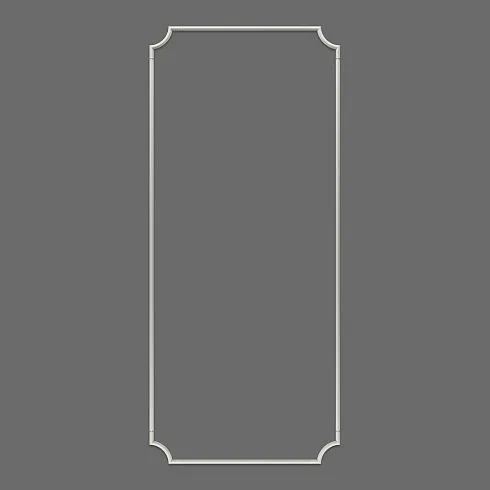
CPU-2-4 Molding Decor Set: symmetrical decorative frame for wall decoration in classical and neoclassical interiors
There is a special moment in working with space when a designer stops before a wall and realizes: it requires framing. Not just decor — specifically a frame. That architectural boundary that transforms a chaotic plane into an organized statement, giving the wall structure and dignity.
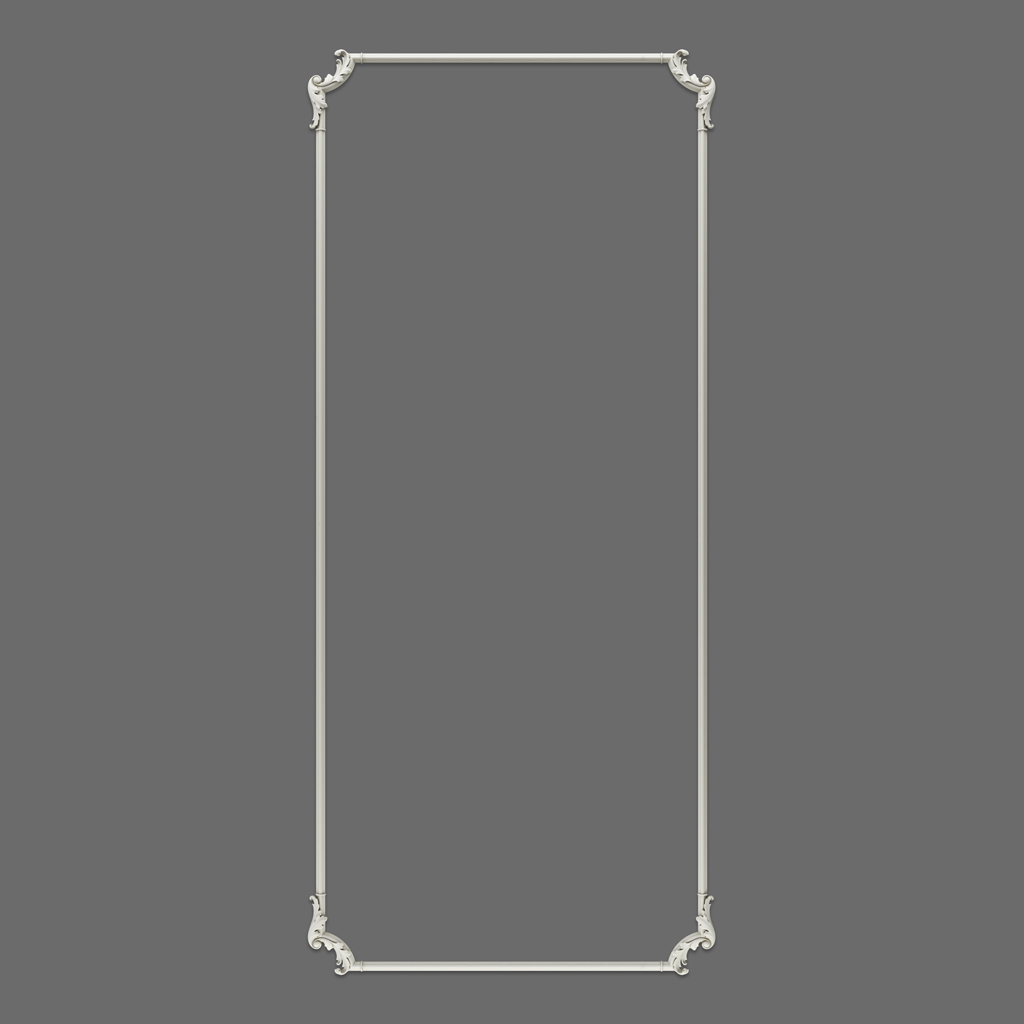
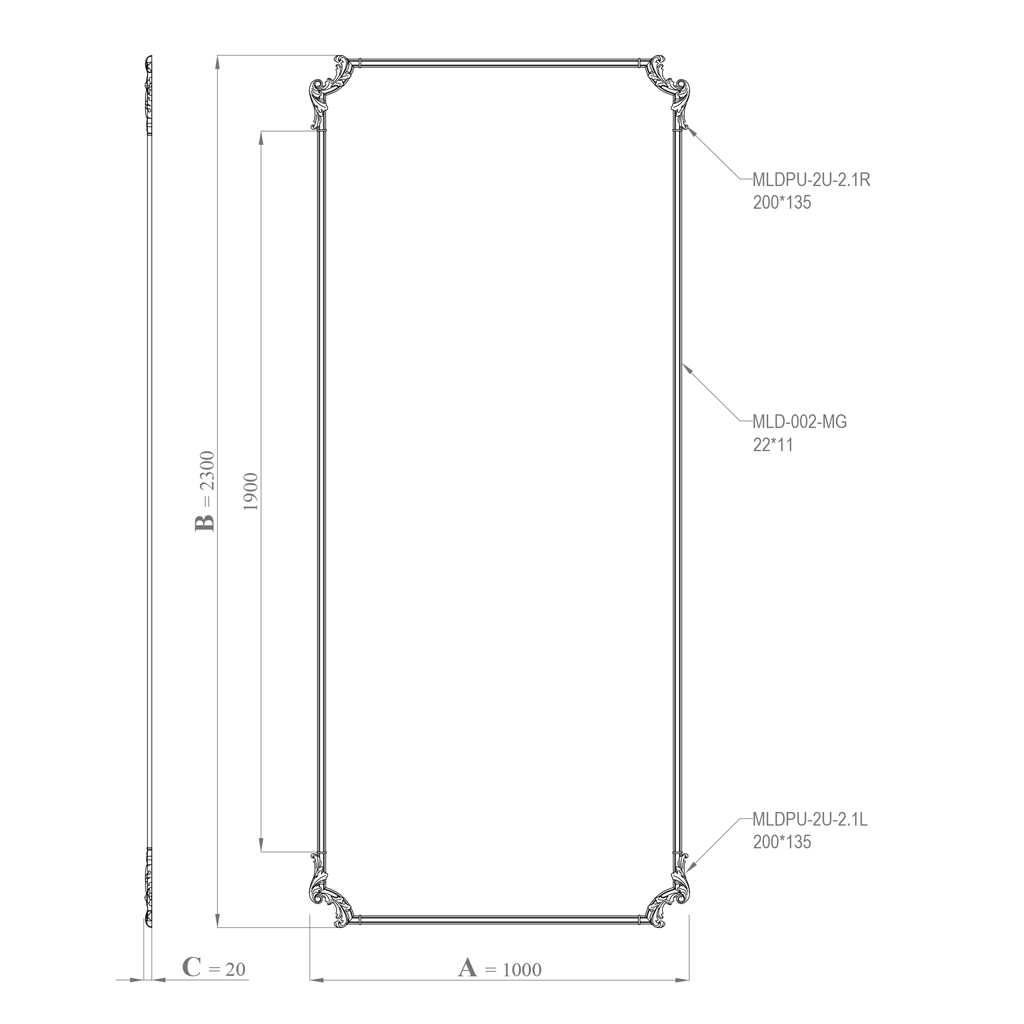
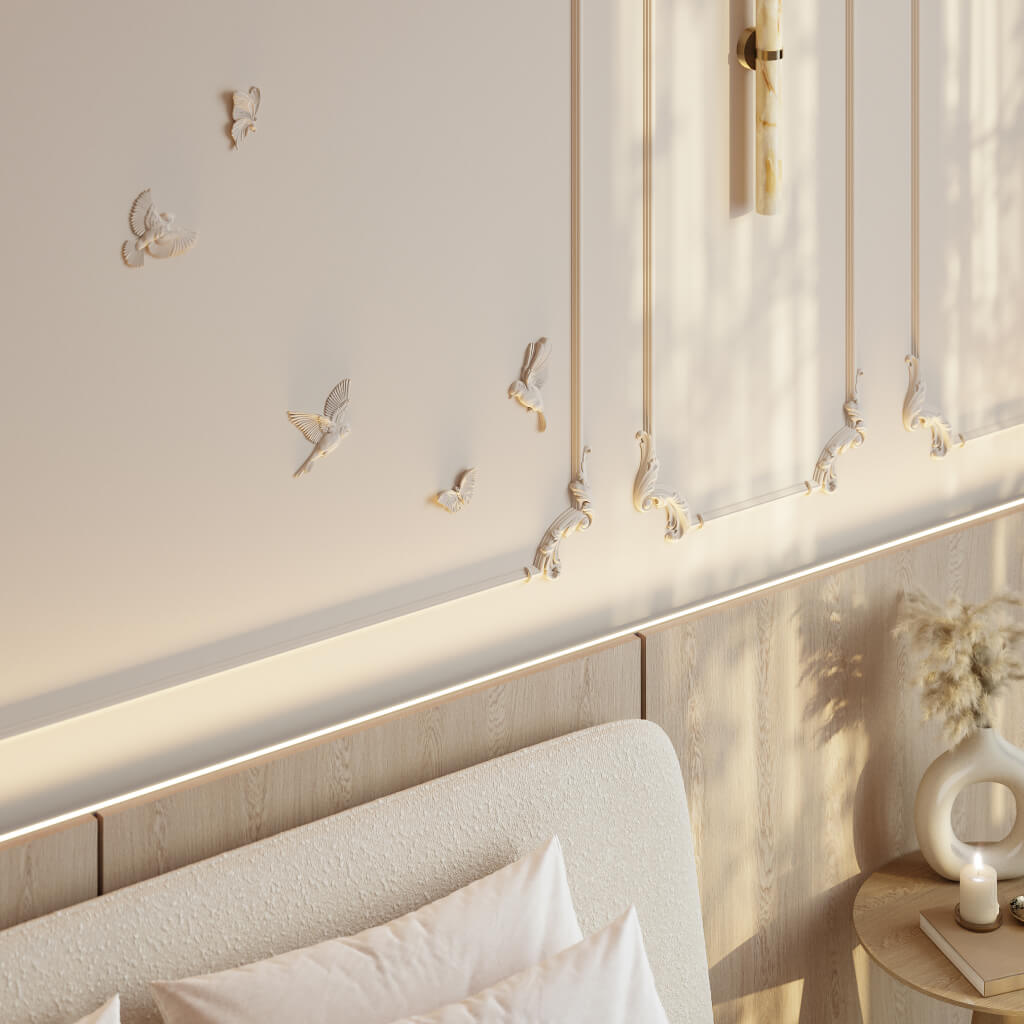
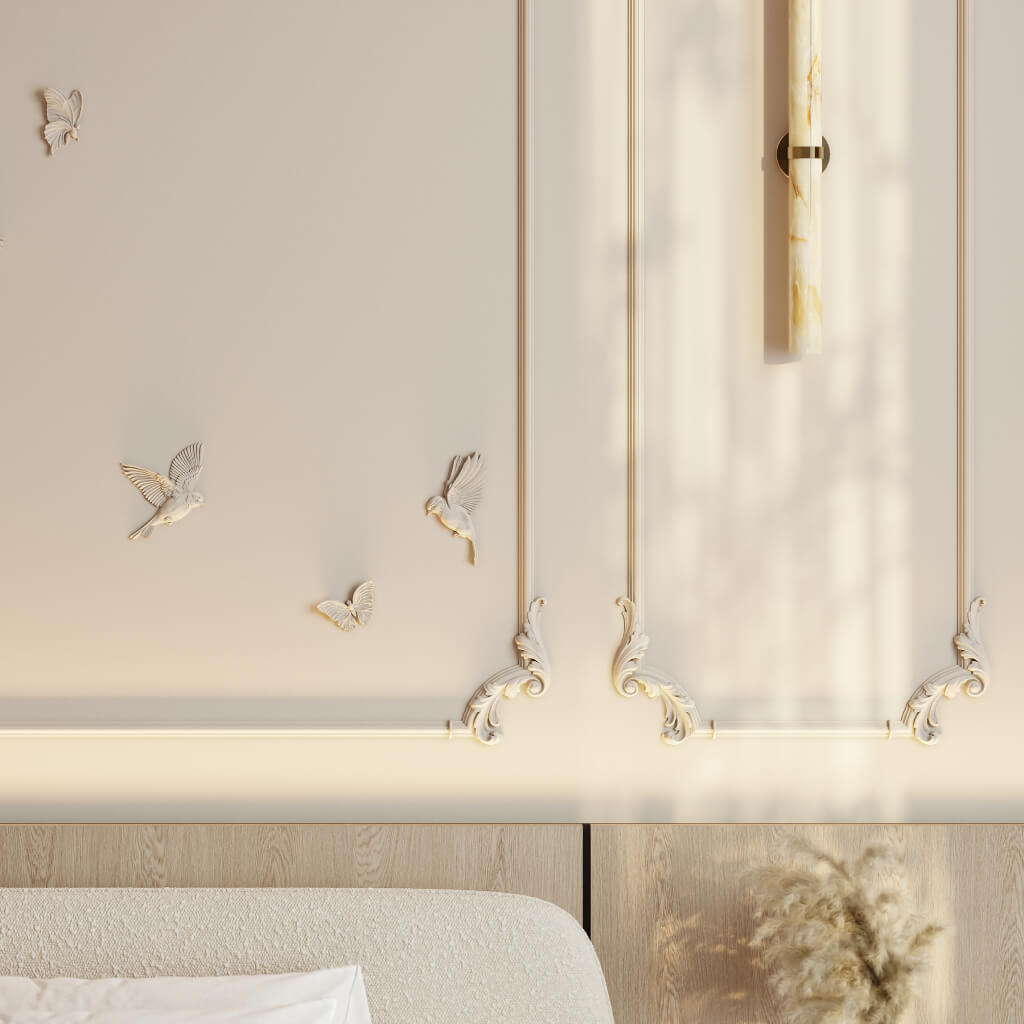
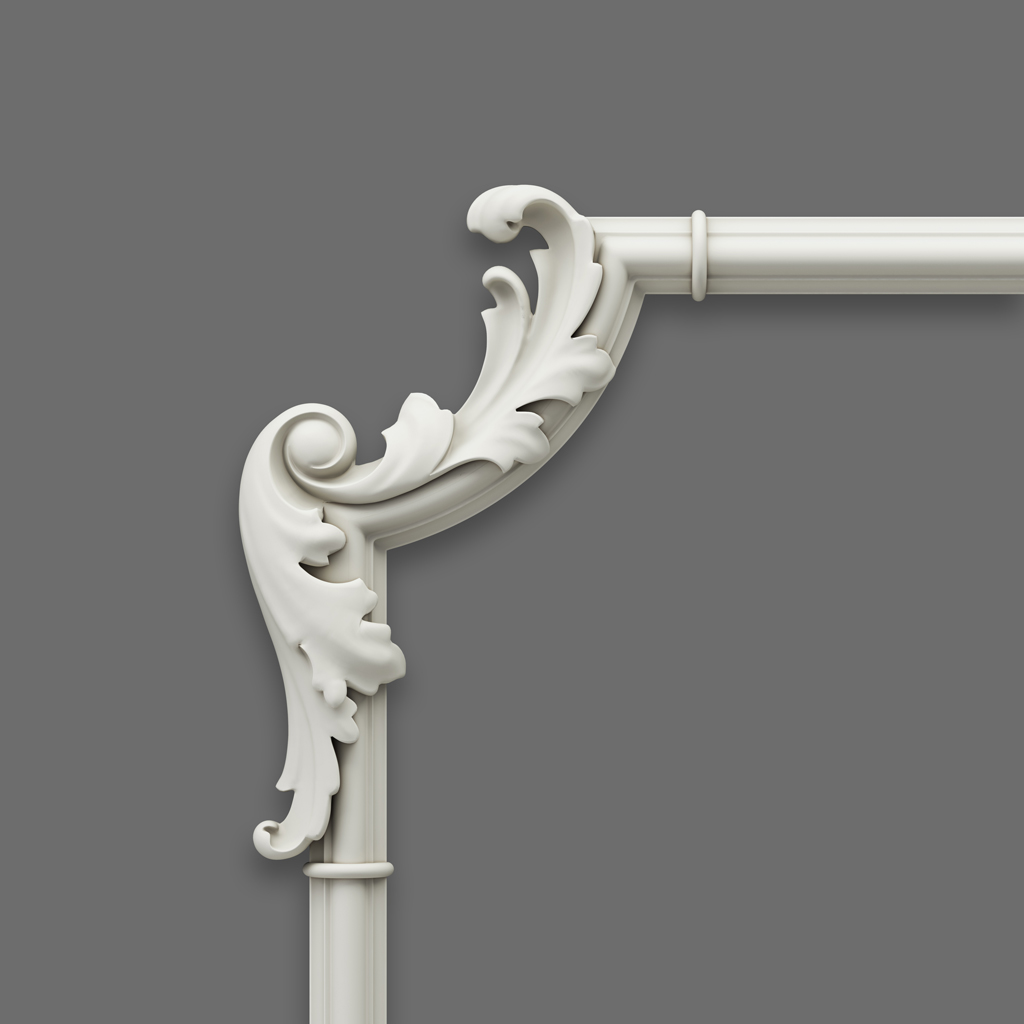
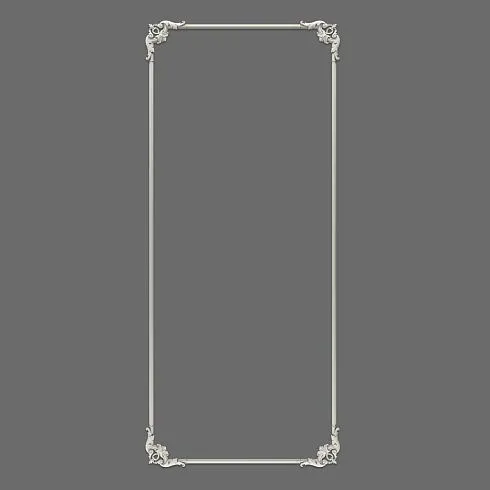
It is precisely for such tasks that the CPU-2-4 molding decor set was created — a ready-made symmetrical decorative wall frame measuring 1000 × 2300 × 20 mm from the 'Neoclassic Light' collection. The set includes a pair of mirror-symmetrical polyurethane decorative elements (right MLDPU-2U-2.1R and left MLDPU-2U-2.1L, two of each) and a primed MDF molding MLD-002-MG. This is not just 'molding' — it is a ready-made wall composition with precise symmetry, finished geometry, and well-thought-out proportions, which is mounted without selecting individual elements or professional adjustment.
The key word here is 'symmetry'. This is the property that fundamentally distinguishes CPU-2-4 from linear sets: four corner elements — two on each side — form a closed frame with accentuated vertices. A classic decorative wall frame, ready for installation.
Composition of the CPU-2-4 set: what exactly is included in the kit
Before talking about application and style — let's analyze the composition accurately and honestly. This is important: the buyer must understand that what they are looking at is not a single item, but a complete set solution.
The CPU-2-4 molding decor setincludes:
-
MLDPU-2U-2.1R — polyurethane decorative element, right-hand version, 2 pieces
-
MLDPU-2U-2.1L — polyurethane decorative element, left-hand version, 2 pieces
-
MLD-002-MG — MDF molding, primed, cross-section 22 × 11 mm, length 2600 mm
It is precisely this combination that creates that very symmetrical decorative frame: the right and left elements form paired corners, while the molding provides straight lines between them. The compact 22 × 11 mm profile keeps the frame light and delicate, without weighing down the space.
Please note: the kit includes polyurethane decorative elements and primed MDF molding — this is fundamentally important for understanding the material logic of the set. Do not perceive it as a 'purely polyurethane' product: the molding here is MDF, and this is a deliberate technological solution ensuring the geometric stability of the frame's linear elements.
Detailed technical data for the MLD-002 molding profile are available on the pagewooden molding MLD-002, where the complete list of versions for this profile is also presented.
Size 1000 × 2300 × 20 mm: a scale that works
The size of the decorative frame is not just a technical parameter. It is an architectural solution.
Width 1000 mm — exactly one meter. This is the width of a standard double bed plus a small amount of air on the sides. It is the width of a typical wall section between two windows in a living room. It is the width at which a frame composition reads as an independent architectural object, not as a decorative detail.
Height 2300 mm — almost the full height of a wall with a standard ceiling of 2.5–2.7 m. A frame from the level of the lower molding at the floor to the upper molding under the ceiling creates a sense of a full-fledged architectural framing of the wall — complete, confident, with a vertical accent that visually stretches the room in height.
Depth 20 mm — the most expressive of the three formats considered in the series. It is precisely 20 mm of depth that provides sufficient volume to form an expressive shadow strip along the molding and accentuated shadows in the corners, where the polyurethane elements work. With directed light — from a sconce, spotlight, or floor lamp — such a frame lives and breathes, changing its character depending on the lighting angle.
The combination of these parameters makes CPU-2-4 a tool for forming an accent zone, not just for adding decoration. A frame of this scale is a statement of intent to create an architectural center in the space.
Materials: polyurethane and MDF — why exactly this combination
A question every thoughtful buyer asks: why not make everything from one material? Why are the corners polyurethane and the molding MDF?
The answer lies in the physics of materials and sound production sense.
Polyurethane for corner elements
The corner elements MLDPU-2U-2.1R and MLDPU-2U-2.1L bear the main decorative load of the frame: it is in the corners that the relief, shape, and visual accent of the entire composition are concentrated. For this task, polyurethane is the ideal material: it allows for the reproduction of complex three-dimensional forms with high detail, preserves these forms throughout the entire service life, and does not react to changes in temperature and humidity.
The weight of the polyurethane corner elements is minimal. This means installation is possible with ordinary mounting adhesive without additional reinforcement, without dowels, without specialized tools.molded decoration made of polyurethaneEssentially, it's a technological response to the demand for 'classical molding without complex installation.'
For a broader context on the application of polyurethane decorative elements, see the sectionPolyurethane wall decor: it features a full catalog that can serve as a starting point when expanding the decorative program of a project.
MDF for Molding: A Line Without Compromises
Molding is a line. Its task is to maintain a straight, even, stable contour of the frame along its entire length from corner to corner. This task requires geometric predictability, which natural wood does not provide: solid oak or beech profiles react to climatic changes, can warp, or open at the joints. MDF, with its homogeneous compressed structure, holds its shape without compromises.
Factory priming of the MLD-002-MG molding is an additional practical advantage. The buyer receives a profile ready for final painting straight out of the packaging, without intermediate operations on the construction site.
Symmetry as the Main Advantage: Why It Works This Way
Let's talk about what makes CPU-2-4 special within the entire series.
Unlike kits with a single central decorative element, CPU-2-4 is built on paired corner accents. Four corners of the frame—four symmetrical decorative points, each mirroring the opposite one. This is a principle that human perception registers as beauty at a pre-reflective level: symmetry is associated with order, completeness, and quality.
In classical architecture, this principle was applied at all scales—from the layout of palace complexes to the details of interior frames. Decorative frames with accentuated corner elements are one of the fundamental tools of classical decor. It is they that establish the hierarchy of the surface: the frame denotes the center, the center is filled with meaning—a painting, a mirror, wallpaper texture, or simply a clean wall.
CPU-2-4 embodies this principle in a ready-to-use, accessible format that can be installed in half a day. This is not a homemade version of a classic frame—it is an engineered and thoughtfully designed product, crafted for repeatable results.
Classical and Neoclassical Interiors: In Which Context CPU-2-4 Fully Shines
Neoclassicism: Moderation as a Principle
The 'Neoclassic Light' collection is a specific stylistic position, not just a marketing name. 'Light' means: without total decorative overload, without replicating a palace interior in the scale of a city apartment. This is neoclassicism that works in modern residential or commercial spaces—where architectural character is important, but decorative excess is not welcome.
For a residential interior in 2026, this is precisely the stylistic tone that proves most in demand: clean surfaces, a few pinpoint decorative accents, and precise proportions.
Article'Neoclassicism in 2026: Cornice, Wall Moldings, and Panels'explains this approach in detail as applied to modern projects—I recommend it as contextual material when working with any object in this style.
Classic: CPU-2-4 in a Traditional Interior
In a classic interior with more saturated decor, CPU-2-4 finds its place as one of the basic wall elements. Here, frames are traditionally used in combination with ceiling cornices, complex-profile baseboards, pilasters, and rosettes. The decorative wall frame from the CPU-2-4 set integrates organically into this system: its scale, the 22 × 11 mm molding profile, and the character of the corner elements are coordinated with typical classical interior architecture.
For designers working systematically with the classic style—it's worth paying attention toMLD-003 moldings with a cross-section of 35 × 12 mm: a larger profile for horizontal wall articulation or creating larger-scale external frames over or next to CPU-2-4.
Modern Eclecticism
Non-standard but one of the most expressive application scenarios for CPU-2-4 is modern eclecticism, where classical architectural forms are deliberately placed in a non-standard context. A decorative frame made of CPU-2-4 in graphite finish on a wall with geometric-patterned wallpaper is a bold yet entirely professional solution, found in the works of leading interior design studios.
Application map: where CPU-2-4 performs best
Living room: accent behind the sofa and TV wall
In the living room, a decorative wall frame behind the sofa is a classic technique that visually 'unifies' the seating area and gives it a finished look. The frame marks the center of the seating zone, sets the scale, and creates a sense of intentional design.
On the TV wall — several frames with the TV symmetrically placed in the central one create a strong architectural image.Neoclassical wall decorIn such a layout, it makes the TV zone not just functional but designed.
Bedroom: headboard with architectural character
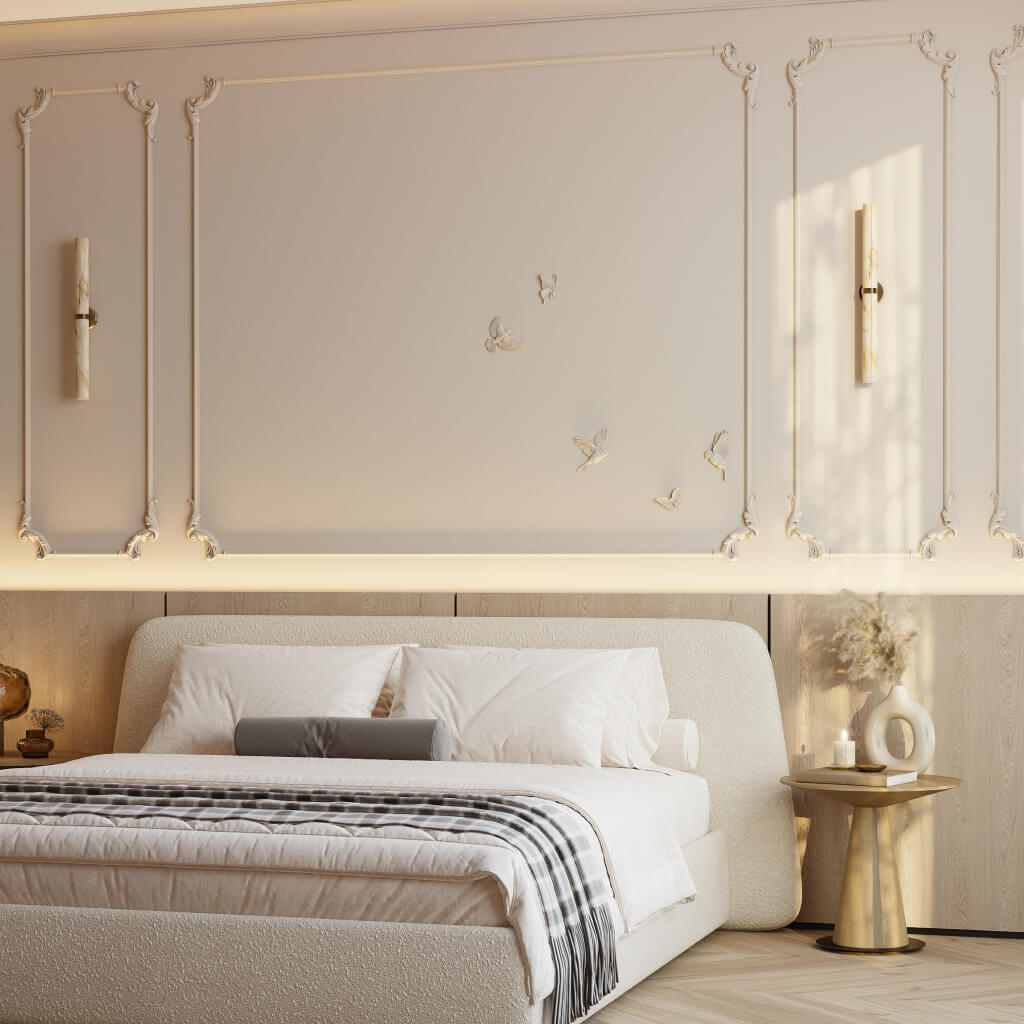
A CPU-2-4 frame 1000 mm wide — an exact match for the width of a standard double bed. Mounted on the wall behind the headboard, it turns an ordinary painted surface into an architectural headboard — without bulky wooden structures, without soft upholstery, without complex installation.
Symmetrical corner elements in the upper and lower corners of the frame create four decorative points that, under any bedroom lighting—daytime, evening, or nighttime—ensure a lively play of shadows.
Hallway: an architectural portal from the first step
In the hallway, a decorative frame of meter-wide width on the wall visually creates a sense of a portal or niche—even though the wall remains completely flat. This optical effect is a consequence of framing: the brain reads the frame as the boundary of an architectural element and interprets the content as a specially designated zone.
For narrow hallways with limited square footage, CPU-2-4 is even more valuable: a vertical frame from floor to ceiling with a height of 2300 mm visually stretches the space upward, which is especially relevant with a standard height of 2.5 m.
Study, library, meeting room
A decorative frame on the wall behind the desk is a professional, calm, status accent. In the study, CPU-2-4 works as an element that signals taste and attention to detail. It doesn't shout, doesn't overwhelm—it simply exists with dignity.
For meeting rooms in the office, where client meetings take place, and for video calls, where the background behind the speaker contributes to image formation—a decorative frame behind the workspace is one of the most professional solutions.
Commercial spaces: hotel, restaurant, showroom
In hotel rooms, frames fromsets of wall molding decorBehind the bed headboard — a standard for the 4–5 star segment. Polyurethane elements withstand years of use, can be easily repainted when updating the interior, and do not react to humidity or temperature fluctuations.
In restaurants, decorative frames on walls create a sense of intimate, designed space. A guest sitting by a wall with an architectural frame physically feels the difference from a plain plastered surface — and this difference enhances the overall perception of the establishment.
In showrooms, frames are used as a professional display background: items presented within a decorative frame are perceived in a higher price context.
Installation of decorative frame CPU-2-4: sequence and nuances
Installing the kit is a task any mid-skilled finishing specialist can handle. For DIY installation — it's quite achievable with careful attention to marking.
Marking: the foundation of the result
Marking accounts for 80% of success. An error in drawing the center lines multiplies over the entire 2300 mm height of the frame and is perceived as a misalignment of the entire composition when finished.
Marking sequence:
-
Determine the horizontal center axis of the panel — along the bed axis, at the center of the wall, or based on another reference point;
-
Draw the vertical center line with a pencil, check with a plumb line or laser level;
-
From the axis, measure half the frame width (500 mm) in each direction — you'll get the left and right vertical boundaries of the molding;
-
Determine the height of the lower molding from the floor level (usually along the top line of the baseboard or 80–100 mm from the floor) and draw a horizontal line.
-
Measure the frame height (2300 mm) from the lower horizontal line and draw the upper horizontal line.
The resulting rectangle on the wall is the installation outline of the molding. Check the diagonals: with correct marking, they should be equal.
Cutting of molding MLD-002-MG
The MLD-002-MG molding, 2600 mm long, is cut at a 45° angle at the points where the horizontal and vertical parts of the frame meet in the corners. A miter saw or miter box with a backsaw is used for this.
Important nuance when cutting: start with the longer (vertical) elements, then cut the horizontal ones. This allows using offcuts from long parts for short sections of the frame.
Molding Installation
Mounting adhesive is applied to the back surface of the molding in a zigzag pattern, with a 2–3 cm setback from the ends. Press against the wall along the applied marking, hold for 30–60 seconds. Until the adhesive reaches full strength (usually 12–24 hours), horizontal sections of the molding can be secured with painter's tape.
Molding joints in the corners are filled with acrylic sealant, after drying, sanded with P180 sandpaper until completely leveled.
Installation of corner elements MLDPU-2U-2.1R and MLDPU-2U-2.1L
Polyurethane corner elements are installed at the intersection points of vertical and horizontal molding. The right element (R) goes in the right corners of the frame, the left (L) in the left corners. 2 pieces of each type cover all four corners.
Adhesive is applied in dots to the back surface of the element. Press for 1–2 minutes while holding level. Gaps between the corner element and the molding are filled with the same acrylic sealant used for the molding joints.
Final painting
The entire set is painted in a uniform tone. The molding is factory-primed; polyurethane corner elements accept acrylic enamel without prior priming. Two coats of matte or semi-matte finish enamel with 2–4 hours of intercoat drying—and the decorative frame is ready.
Color strategies: from delicate to expressive
Choosing a color solution for CPU-2-4 is a choice between different degrees of decorative statement.
Monochrome frame: subtlety through volume
The decor and wall are painted the same color. The frame is present in the interior as a pure architectural volume—without color contrast, only through the play of shadows. This is the most modern, most sophisticated solution. A white frame on a white wall—it seems nothing could be simpler, yet this technique currently dominates the best interior projects.
White decor on a neutral background
A classic. A frame in white or ivory on a wall of gray, beige, soft green, or dusty pink. The contrast is delicate, the accent is there—just enough for a neoclassical interior.
Dark decor on a light wall
A bold, unexpected, very modern option. An anthracite or graphite frame on a light gray or white wall translates the classic form into a contemporary visual language. This technique is especially effective in interiors with dark furniture and metal hardware.
Decor in a corporate color
For commercial properties — hotels, restaurants, offices — painting decorative frames in the corporate brand color according to RAL or NCS allows for the integration of architectural decor into the space's visual identity. Polyurethane accepts any acrylic and alkyd enamels without palette limitations.
The topic of color solutions for neoclassical decor is covered in detail in the article 'Wall moldings and furniture legs: How to assemble the perfect set for an interior in the neoclassical style' — the logic of combining decor with furniture and other interior elements is also explained there.
Systematic application: CPU-2-4 as part of a decorative program
One set is a point of view. A system of several is architecture.
CPU-2-4 in systematic application opens up several scenarios at once:
Rhythmic row of frames — several sets with equal spacing along the entire length of the wall. A uniform rhythm of decorative frames creates the effect of an enfilade, characteristic of state halls in classical architecture. In a residential interior — this is a powerful way to decorate a long wall in a living room or hallway without overloading it.
Symmetrical pair — two sets on either side of a central element (fireplace, mirror, window). The symmetry of the frames works to create a sense of order and architectural completeness.
Multi-level system — CPU-2-4 as wall frames + moldings of larger cross-section as horizontal wall articulation. For example, molding MLD-004 with a cross-section of 15 × 8 mmcan be used as a thin horizontal frieze, separating the upper part of the wall from the frame zone.
Comprehensive decorative program withpolyurethane rosettesin the center of the frames or on the ceiling above them creates a full-fledged classical system of wall and ceiling decor in a unified style.
Technical specifications of the CPU-2-4 kit
| Parameter | Value |
|---|---|
| Article number | CPU-2-4 |
| Collection | "Neoclassic Light" |
| Overall dimensions | 1000 × 2300 × 20 mm |
| Decorative elements | MLDPU-2U-2.1R (2 pcs.) + MLDPU-2U-2.1L (2 pcs.) |
| Molding | MLD-002-MG, primed MDF, 22 × 11 × 2600 mm |
| Material of corner elements | Polyurethane |
| Molding material | Primed MDF for painting |
| Feature | Symmetrical right and left corner elements |
| Production method | Custom Order |
| Production time | 5–10 business days |
| Delivery | Throughout Russia, SDEK |
Order and delivery: from decision to object
Decorative wall frame CPU-2-4Made to order with a production time of 5–10 working days. This is the standard production cycle, ensuring proper quality of polyurethane corner element casting and precise molding cutting.
Delivery is carried out throughout Russia via the SDEK transport company. The cost is calculated when placing an order. Polyurethane elements are packed in protective packaging to prevent mechanical damage during transportation.
STAVROS works with private clients, design bureaus, architectural studios, furniture manufacturers, and commercial facilities. For large orders — multiple sets for one project or bulk delivery for a series of rooms/halls — a manager consultation is provided to calculate quantities and coordinate timelines.
Frequently asked questions about the CPU-2-4 set
What does the marking R and L in the corner element article numbers mean?
R (right) — right corner element, L (left) — left. These are mirror-symmetrical parts: each one frames two corners of the frame (top and bottom on one side). The set includes 2 pieces of each type — they cover all four corners of the decorative frame.
Can the right and left elements be mixed up during installation?
Yes, if installed carelessly — it is possible. Before installation, lay out all four elements on the floor according to their position in the finished frame, ensure correct orientation, and only then proceed with installation. Re-gluing after the adhesive has set is labor-intensive.
Do polyurethane corner elements need to be primed before painting?
In most cases — no. Acrylic enamel adheres directly to polyurethane. When using oil-based or alkyd compositions — light priming with acrylic primer is recommended for better adhesion.
Is CPU-2-4 compatible with wallpaper on the wall?
Yes. The installation technology for wallpaper is the same as for a painted surface: mounting adhesive is applied to the back of the elements and pressed against the wall. It is important to ensure that the wallpaper is well adhered around the entire perimeter of the future frame—otherwise, the weight of the molding may lift a poorly secured edge of the wallpaper.
Can I order CPU-2-4 with a larger cross-section molding?
The MLD-002-MG molding is part of the kit. If your project requires a larger profile—contact a STAVROS manager: it may be possible to assemble the kit with moldings from other series upon approval of the technical specifications.
How should the kit be stored before installation?
In a horizontal position in a dry room at a stable temperature. Polyurethane elements are protected by packaging during transportation; the molding should be stored horizontally to avoid deformation under its own weight if improperly placed.
How long does it take to install one kit?
With proper marking and the necessary tools—3–5 hours, including adhesive curing time. Final painting is a separate step, to be done the next day after the adhesive has fully dried (24 hours).
Are there other wall kits in the 'Neoclassic Light' collection?
Yes. The full range of kits is in the section Wall Decoron the STAVROS website. There are sets of different sizes and with different decorative elements included to solve various tasks.
Your request has been sent!
Our manager will contact you within 5 minutes