



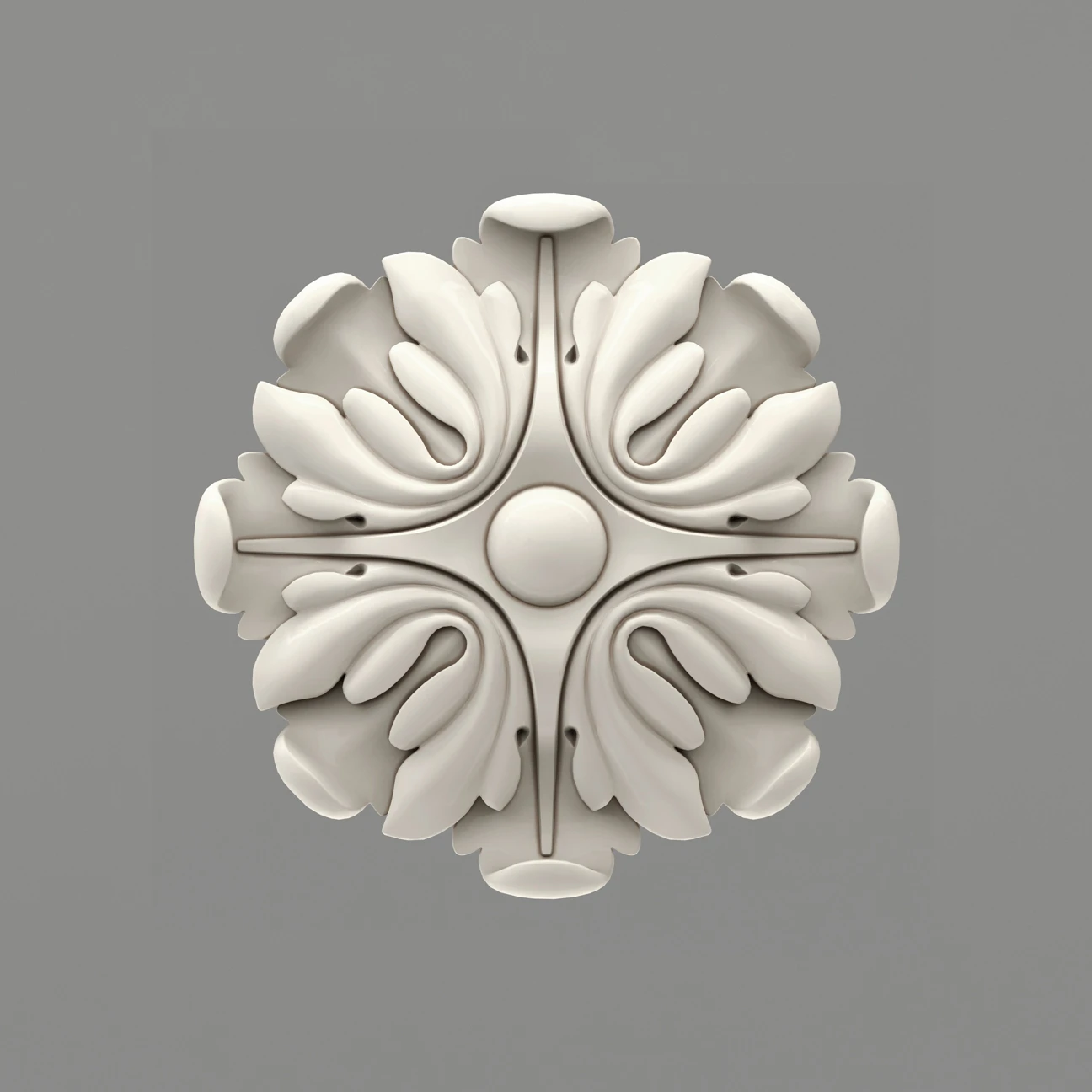
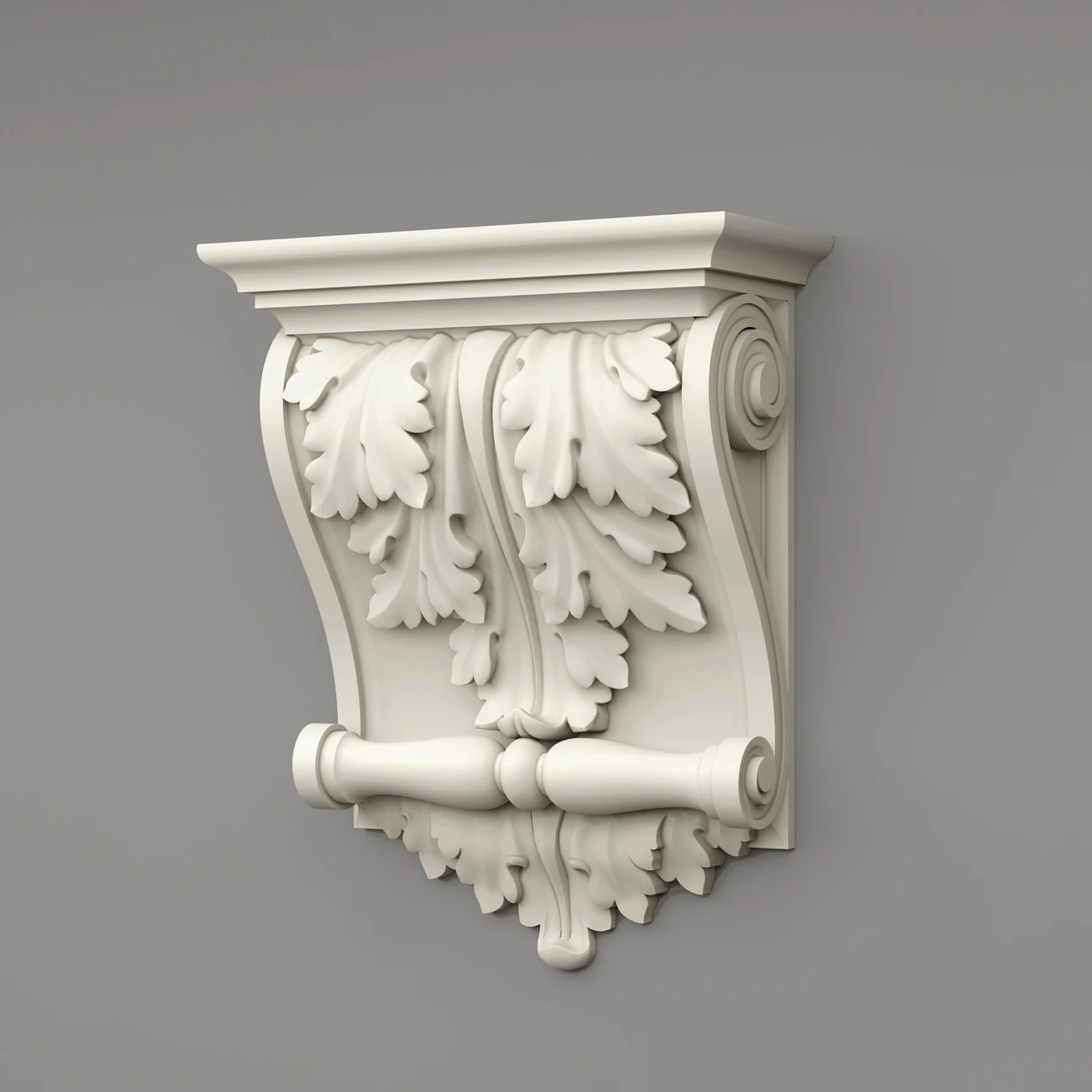
























Customers also buy

Alexander U.
October 2, 2026
I have been working with Stavros since 2024, and the quality of the products is top-notch. Customers are happy!!!
Elena G.
September 29, 2026
Daria is a very competent specialist; she provided consultation and helped us select items. They were sent promptly.
Jony F.
September 23, 2026
We have our own furniture production and have been in touch with Stavros for many years. We regularly order sockets and brackets from them. The quality of the wooden decor in the Prestige finish is simply top-notch; the elements arrive perfectly prepared for painting. I would also like to mention the bulletproof packaging: everything is wrapped in stretch film, padded with foam material, and packed in thick cardboard. It arrives in perfect condition. A true luxury level, we will continue working together.
More than 20 years on the market
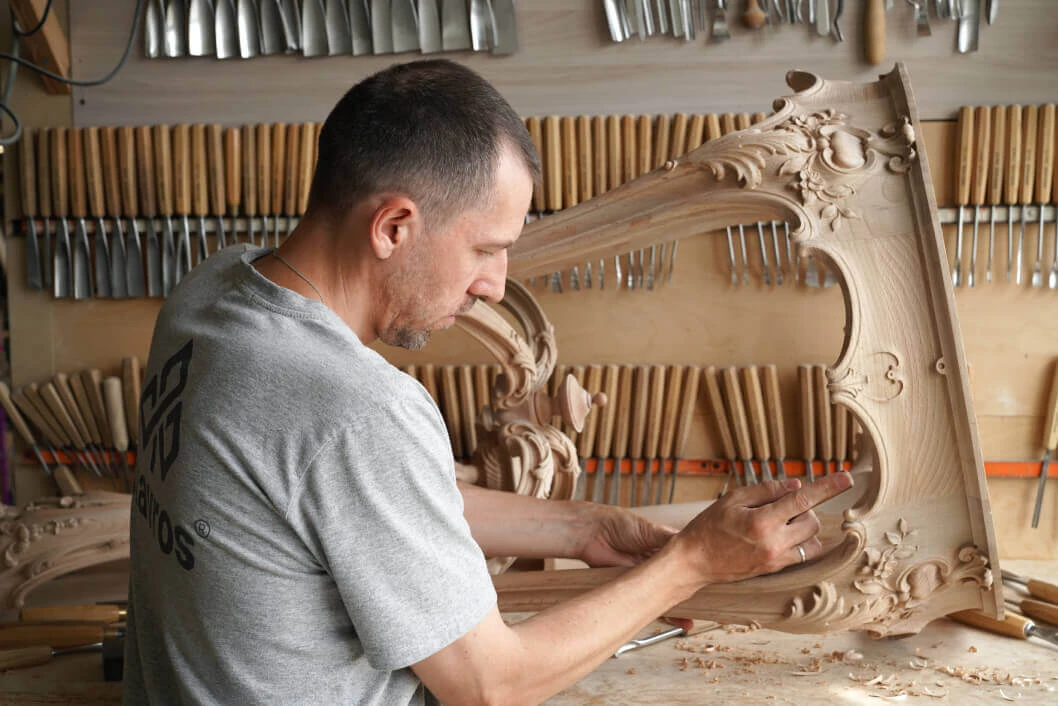
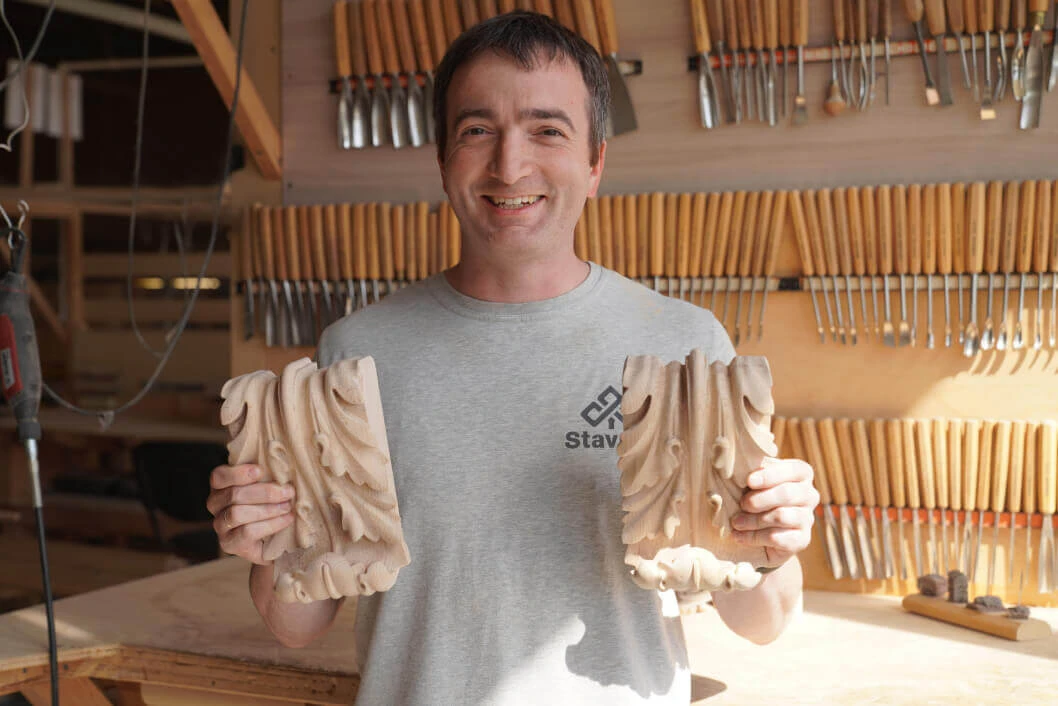
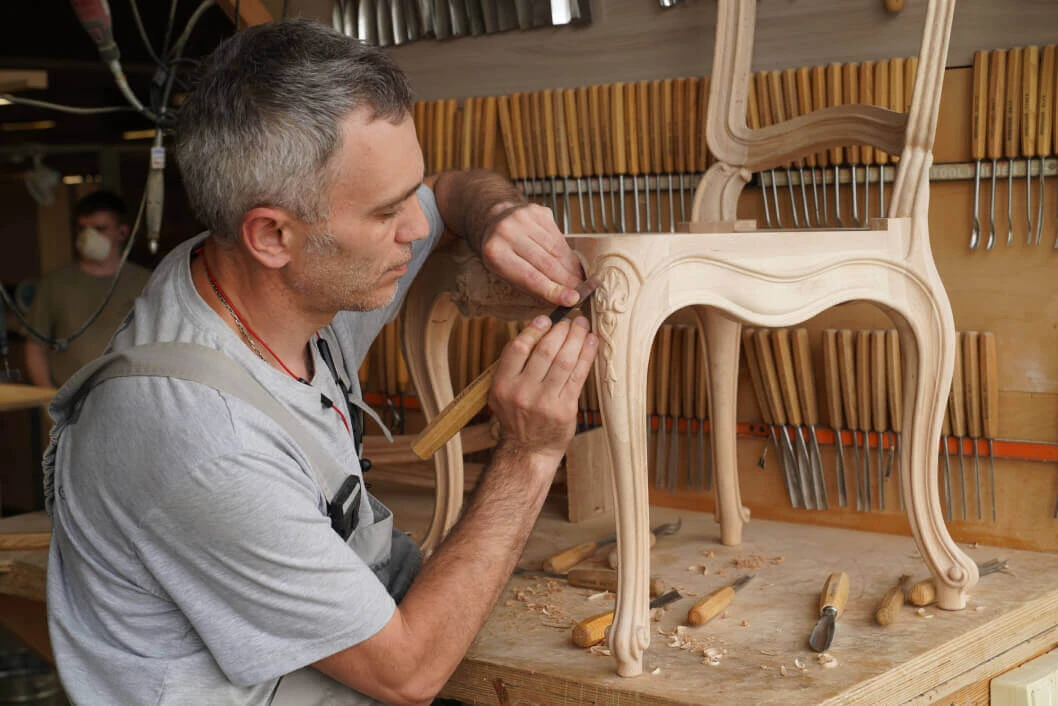
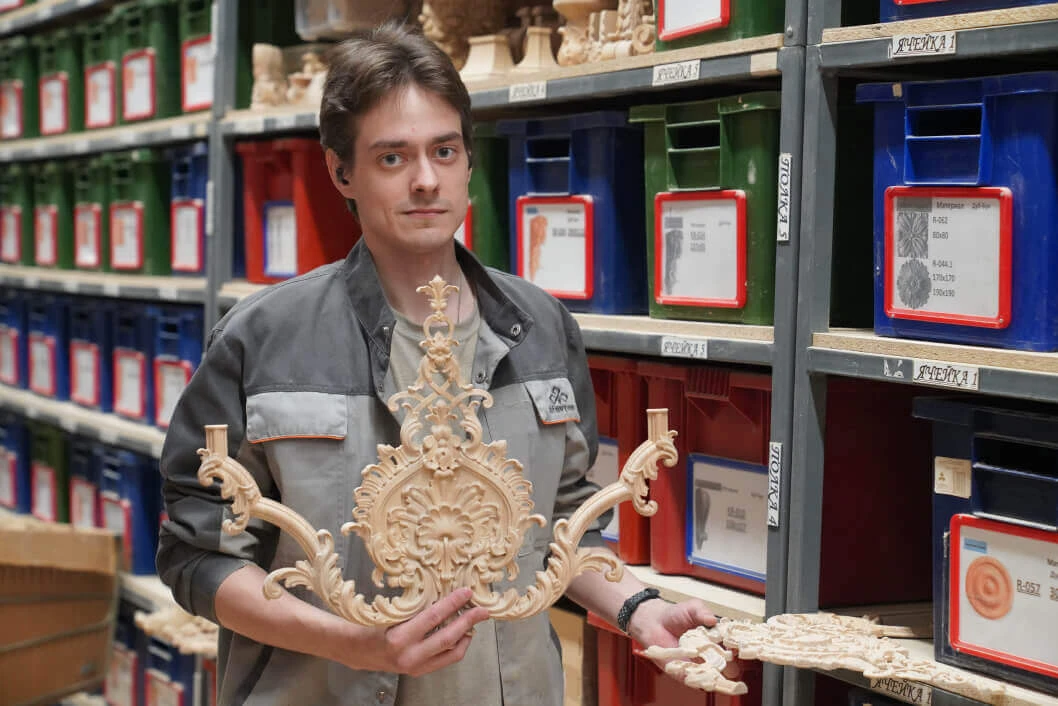
The company's success began in 2002, when two artists — Andrey Ragozin and Evgeny Tsapko — created a small creative workshop for producing wooden carved items. The masters' work was quickly noticed, and within a year they were invited to participate in the reconstruction of the Konstantinovskiy Palace in Strelna.
After the success of this project, the company focused on recreating palace interiors, furniture, church furnishings, and carved decorations in various artistic styles. They worked with cultural heritage sites: The Hermitage, the Alexandrovsky Palace, the Troitsko-Izmaylovsky Cathedral, the Sheremetyevsky Mansion, and many others.
The masters' task — and still is — to create wooden items with the highest level of detail and understanding of every element, based on impeccable knowledge of artistic laws and interior styles.

STAVROS Guarantees
Quality of products without complaints
We save your time, peace of mind, and budget
Large warehouse program
We solve your tasks with maximum speed
Adherence to production deadlines
Streamlined process reduces all risks
Delivery from 1 piece throughout Russia
Quality service regardless of order volume
Your positive business reputation
Reliable partner — the foundation of your business
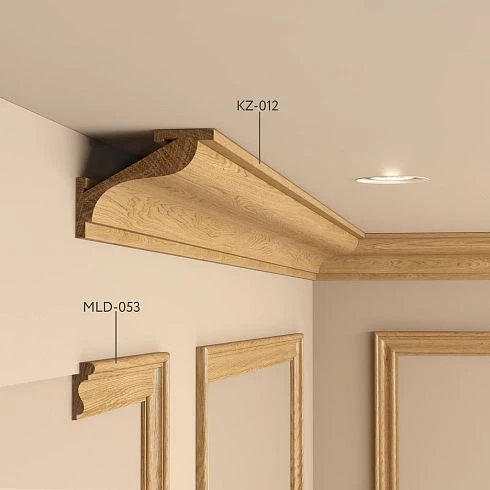
More products in the category of trim items
Frequently asked questions
Our showrooms are located in Saint Petersburg and Moscow. Production is located in Saint Petersburg.
Moscow contacts: https://www.stavros.ru/contacts_all/?tab=msk
Contacts of Saint Petersburg: https://www.stavros.ru/contacts_all/?tab=spb
- Send request by email [email protected]
- Write to us at Telegram
- Write to us at WhatsApp
- Order by phone +7 (800) 555-46-75
- Visit our showroom in Saint Petersburg and Moscow
Yes, we ship orders throughout Russia and to CIS countries.
We cooperate with transportation companies such as СДЭК and DPD.
You can also arrange pickup of your order through any convenient transportation company for you.
Delivery cost depends on the size, weight of the item, and delivery address.
When placing an order, the delivery cost is calculated automatically and displayed as a separate line on our website.
Prices and availability of items on the website are always current. Data is updated daily.
Note: items in stock are stored on the warehouse in unpolished form and shipped within 3 working days.
If the item is not in stock, average production time: 5–10 working days.
This is the quality of polishing of the items.
Standard — machine polishing, at a more attractive price.
Prestige — detailed hand polishing, items do not require further work.
More details: https://www.stavros.ru/information/kachestvo/
This is the type of veneer of the items.
Under enamel: produced by gluing wooden laminates without color and texture matching. Contrast tonal and textural differences are noticeable. This blank should be chosen if the item is intended for opaque coating.
Under tinting: produced by gluing wooden laminates with color and texture matching. Tonal and textural differences may occur. This blank should be chosen if the item is intended for semi-transparent finish.
More details: https://www.stavros.ru/information/kachestvo/
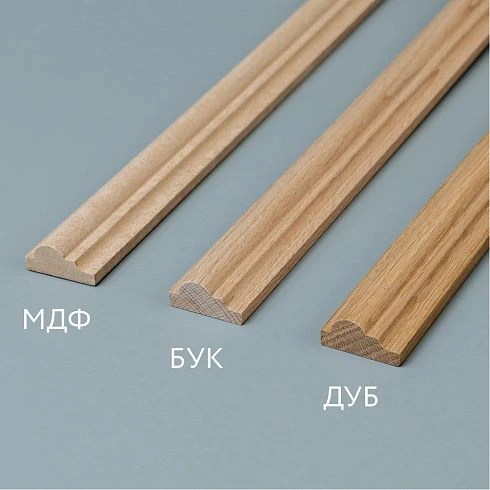
Beech — dense, non-porous wood, most often used for items covered with enamel.
Oak — dense, porous wood with clearly visible natural grain. Due to its strength and decorative properties, it is often used in items with semi-transparent coating, highlighting the wood pattern.
Custom-made, if non-standard items are required, we can produce products from other types of wood, including blanks provided by the customer, manufactured according to our technical specifications.
All our furniture legs can withstand a vertical load of at least 100 kg.
Average production time for custom-made items: 5–10 working days.
Most items are stored on the warehouse in unpolished form. We need time to polish and pack orders.
Yes, we manufacture non-standard items according to individual projects, but we only accept orders with a minimum quantity.
We can manufacture items of the desired size, but we only work with bulk orders. For details, please consult the sales department manager.
Yes, some of our products can be used outdoors. For example, polyurethane items, as well as carved door casings made of pine.
Other items are produced to order using PUR glue, if minimum quantity is available. No warranty is provided for such products, as outdoor conditions are considered aggressive.
Yes, we paint items when ordering products for a total amount of 150,000 rubles or more.
- Dust removal. After sanding, the surface must be dusted.
- Priming. Apply primer in an even layer.
- Matting. After the primer has fully dried, the surface should be matted (lightly sanded for better adhesion).
- Finish coating. Apply finish coating: lacquer or enamel, in 2 layers, with interlayer drying.
More details: https://www.stavros.ru/information/sovety/
Apply adhesive to the decor. Place it on the surface and press briefly. Then, lift the decor from the surface and leave it open for 3–5 minutes. Press the decor firmly onto the surface and hold for 5–10 seconds.
More details: https://www.stavros.ru/information/sovety/
Ideally, you should prepare a design project before placing an order.
You can do this yourself by downloading drawings of our products from our website, or you can order a project from us.
If the number of decorative elements and fittings is small, our company's manager can assist you with selection.
Unfortunately, this service is not provided.
The packaging method depends on the type of items, but in each case, we ensure sufficient protection for safe transportation.
We most often use corrugated cardboard and stretch film. Fragile items are additionally secured on a rigid base to prevent damage during transport.
We ship all items starting from 1 piece.
Room measurements and item installation can be performed by our partners — carpentry companies represented in most regions of Russia.
Often searched in category Wooden and MDF items
7627
3332
2639
2503
1931
1608
1325
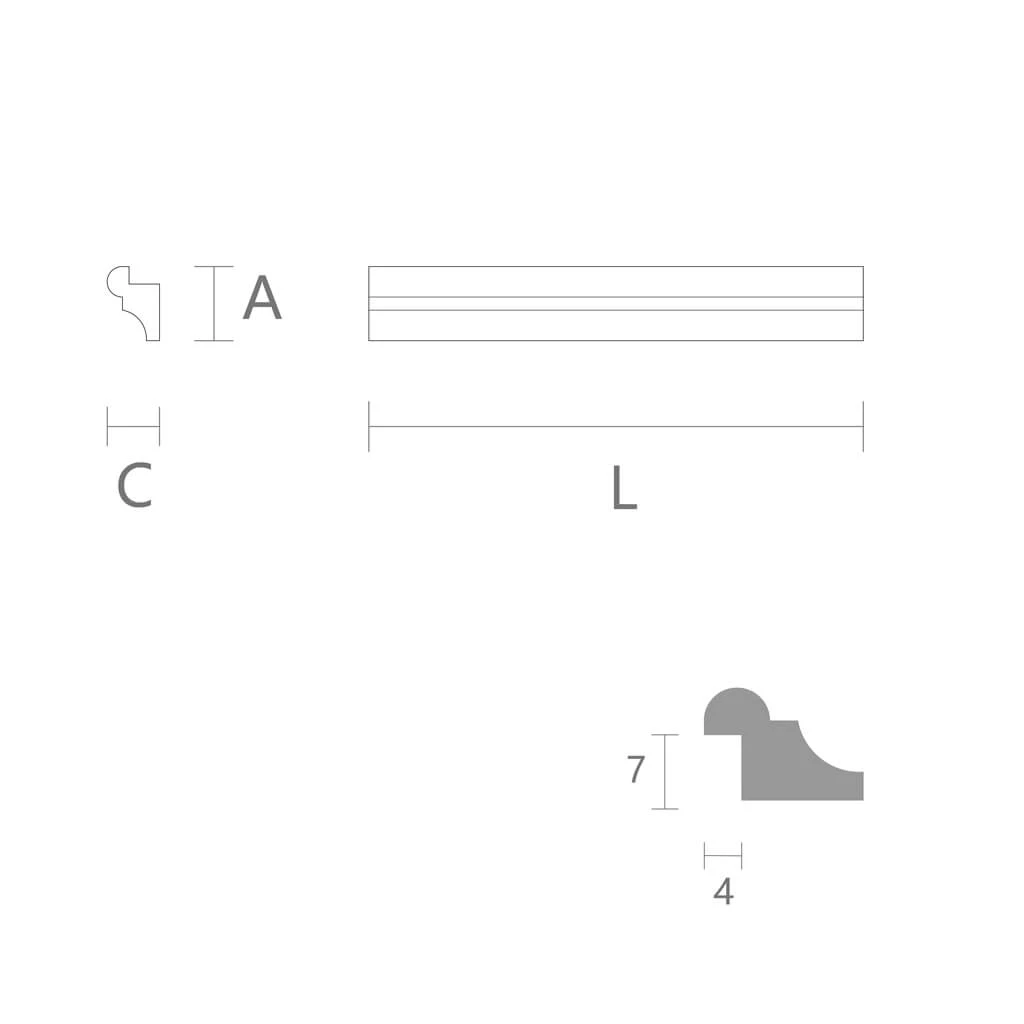
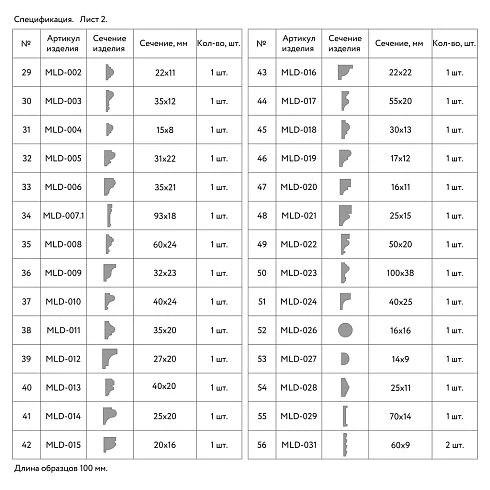
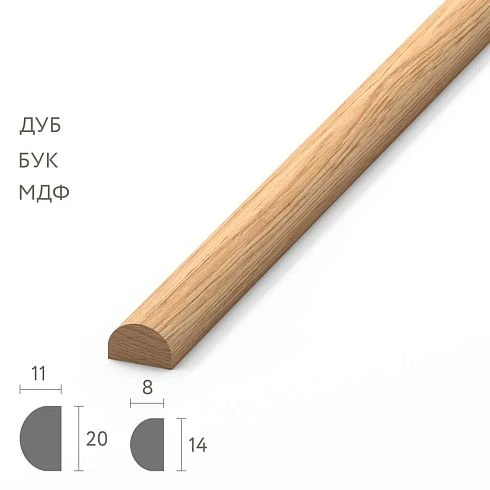
Compact furniture profile 17×12 mm for frames, facades and decorative trim
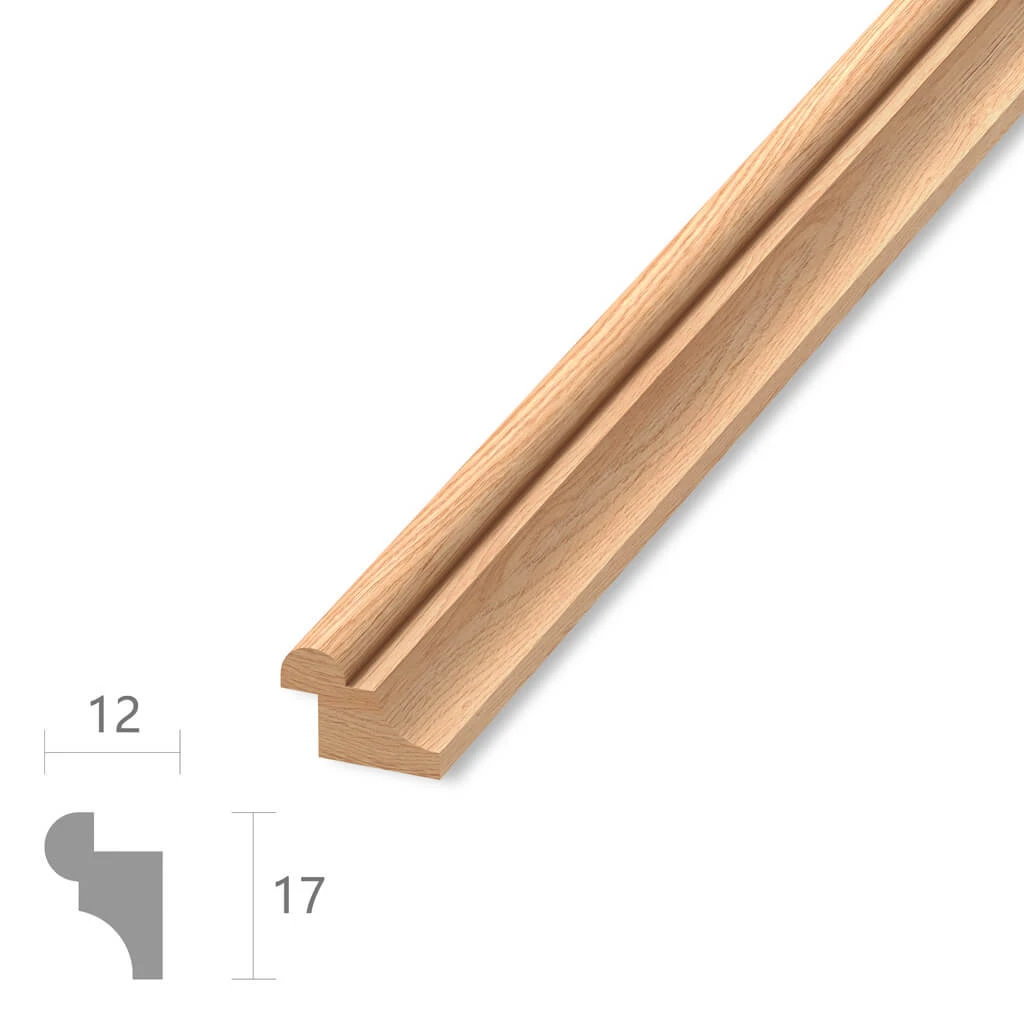
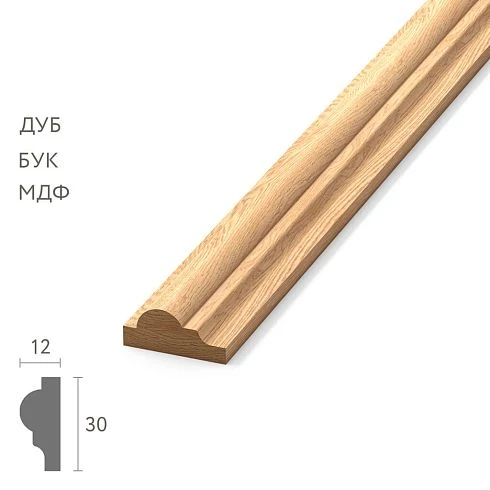
A decorative profile with a small cross-section is one of the most convenient tools for working with furniture facades. It allows you to add volume to a flat surface, form a neat frame, emphasize the geometry of a door or drawer, and visually unite individual furniture elements into a single composition. MLD-019.1 was created precisely for such tasks: it is a compact furniture molding with a cross-section of 17×12 mm that does not overload the facade, yet remains clearly readable thanks to its expressive profile and smooth height transition.
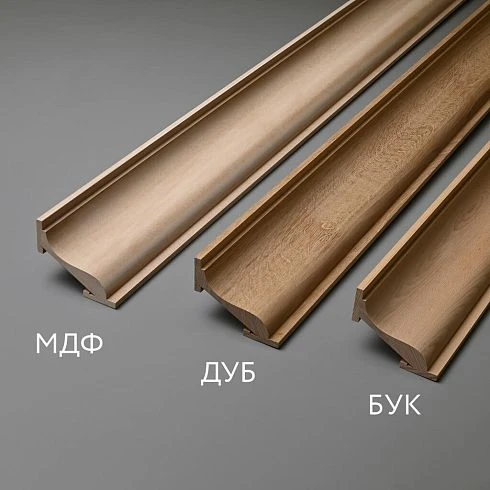
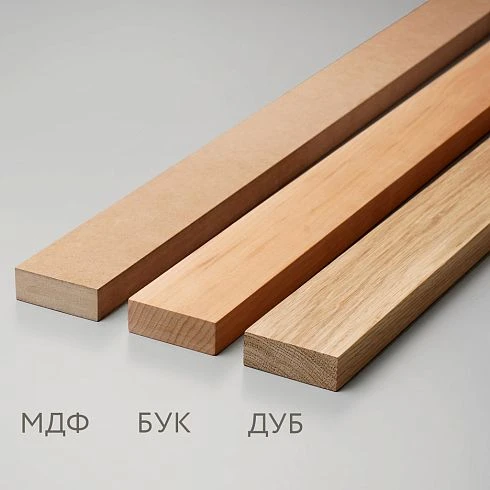
The model is available in several materials. For projects with natural wood texture, beech or oak can be chosen, while for painted facades and decorative structures, an MDF option is available. Thanks to this, the same profile can be used in completely different projects: from solid wood and veneer furniture to modern facades for enamel finishing.
MLD-019.1 is especially convenient where wide, massive decor would be too heavy. The 17×12 mm cross-section makes the profile suitable for small doors, drawers, chests of drawers, bedside tables, display cabinets, sideboards, wardrobes, decorative furniture panels and other details that require a neat relief frame.
This is not a carved ornament or a large cornice. Its task is different — to create a precise line that emphasizes the shape of the product. That is why a wooden furniture molding of this size is equally appropriate in classical, neoclassical and fairly restrained modern projects.
Key characteristics of MLD-019.1
| Characteristic | Value |
|---|---|
| Product type | decorative furniture molding |
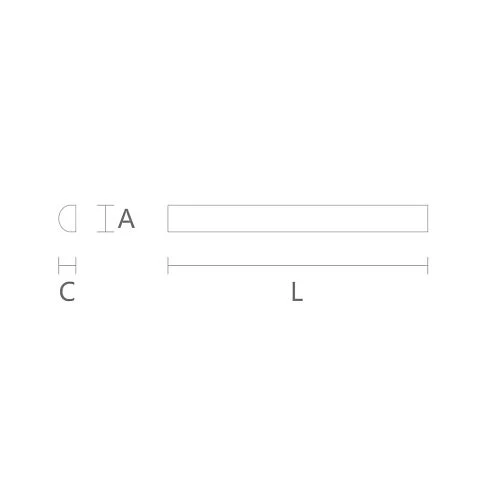
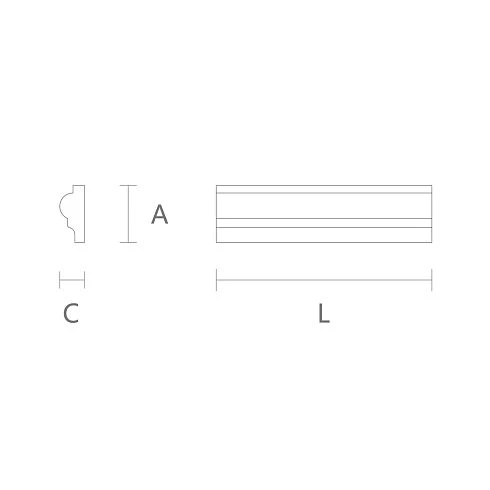
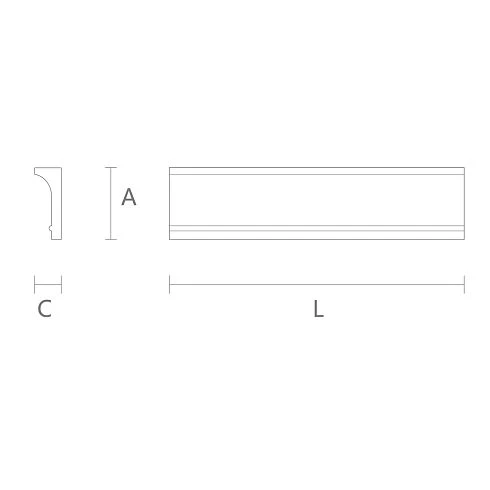
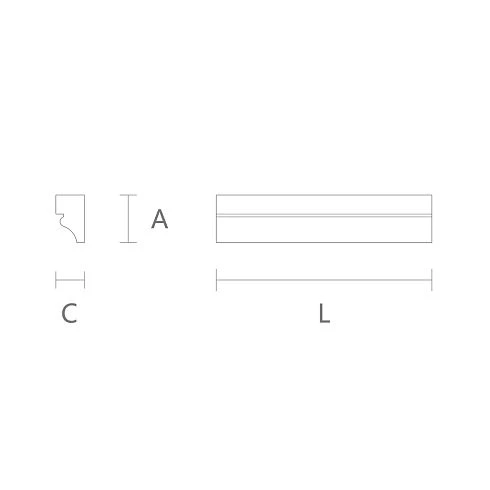
| Profile size A | 17 мм |
| Profile size C | 12 мм |
| MDF length | 2600 мм |
| Beech length | 2400 мм |
| Oak length | 2400 мм |
| Materials | MDF, beech, oak |
| Sanding quality | Prestige |
| Primary application | furniture facades, frames, decorative panels, doors, interior elements |
The current price of a specific version depends on the selected material and is displayed in the size and price table on the product page. This approach is more convenient than fixing the price in the description: the buyer immediately sees the price of the exact modification selected.
Why the 17×12 mm size is convenient for furniture fronts
When choosing a molding for furniture fronts, size matters no less than the shape of the profile. Decor that is too wide reduces the visual area of the panel, especially on small doors and drawers. A rail that is too thin, on the other hand, can get lost on the surface and hardly create the necessary relief.
The 17×12 mm size falls within a compact range. Thanks to this, MLD-019.1 can be used as a standalone decorative contour without turning it into a dominant element of the composition.
On a chest of drawers front, such a profile can form a neat rectangular frame. On a cabinet door, it can emphasize proportions and add depth to a flat surface. On a sideboard or display cabinet, it can visually separate the main plane from the central insert. On a side panel of furniture, it can repeat the motif of the fronts and make the carcass more architectural.
It is the small size that makes this furniture molding especially convenient in serial projects: the same model can be used on fronts of different formats while maintaining a common design language.
Under angled lighting, the rounded part of the profile creates a soft light-and-shadow effect. The frame becomes noticeable not due to its massiveness, but thanks to its volume. This is an important property for furniture finished with solid-color enamel: even when the molding and the front are painted in the same color, the relief remains and reads well.
Wooden furniture molding made of oak
The oak option is intended primarily for projects where natural material and pronounced wood texture are important. Oak molding pairs well with solid wood furniture, veneered fronts, wooden countertops, decorative panels, and other details made of natural wood.
The main decorative advantage of oak is its characteristic grain pattern. After applying a clear or tinted finish, the surface does not become visually uniform: the fibers and natural pattern of the wood continue to participate in the design of the product.
This option is especially appropriate for studies, libraries, chests of drawers, display cabinets, classic wardrobes, living room furniture, and individual pieces of interior joinery. The oak profile can also be used in fairly modern furniture if a combination of laconic geometry with natural material is required.
If a seamless construction is required, it is advisable to select the profile species taking into account the material of the main facade. For example, on an oak or oak-veneered facade, a wooden profile for furniture made of oak allows maintaining a unified character of the surface after tinting.
It is necessary to take into account the natural characteristic of solid wood: the grain pattern of each part is individual. This is not a defect, but the character of the natural material. Therefore, with a transparent finish, it is advisable to first lay out several strips forming a single frame and match them by pattern and tone.
Beech molding for furniture under enamel and tinting
Beech gives a different visual perception. Its structure is calmer than that of oak, so beech molding is well suited for projects where the profile should have a natural base but should not compete with the shape of the furniture with an active pattern.
Beech MLD-019.1 can be used under tinting, lacquer, paint, and various furniture finishing systems compatible with wood. The material works especially well on classic and neoclassical facades, where clear geometry of the frames and a neat final surface are important.
For example, on a chest of drawers with several identical drawers, a small decorative profile can be repeated on each facade. A rhythm of horizontal and vertical lines emerges. The furniture becomes significantly more expressive, although the body construction itself does not change.
For painting, it is necessary to follow the technology of the selected coating system: surface preparation, priming, intermediate sanding, and application of finish coats. This is especially important in the corners of the frame, where the miter joints should look like a single profile after assembly.
MLD-019.1 made of MDF for painted facades
If the task is to create a decorative frame for opaque painting, MDF molding becomes a rational option.
MDF is not intended to display a natural wood pattern. Its advantage is revealed specifically under paint or enamel. After appropriate preparation, the surface of the profile and the surface of the facade can be unified with a single color.
This technique is actively used in furniture making, where the frame should be noticeable only due to the relief. White, grey, beige, graphite, green or another colour runs through the entire composition, while the profile creates light and shadow and volume.
As a result, an ordinary flat door gets a more complex architectural structure without the need to create deep milling directly in the facade panel.
For projects under enamel this is especially convenient. The moulding for painting can be installed on a prepared surface, form a decorative contour, process the joints with quality and then perform the general finishing.
The length of the MDF version is 2600 mm, so before purchasing it is worth calculating not only the total perimeter of the frames, but also the optimal cutting scheme.
Moulding for frames on furniture facades
One of the main purposes of MLD-019.1 is the formation of a decorative frame.
The principle is simple: four profile segments are placed along the perimeter of the selected facade area. But the visual result depends on the accuracy of the marking much more than it might seem.
The frame should have the same offset from the edge of the facade along the entire perimeter. On adjacent facades of the same furniture item, it is desirable to repeat the position of the mouldings. If one drawer has an offset of 40 mm and another 46 mm, the difference may be clearly noticeable after installing the furniture.
This is especially important on chests of drawers and cabinets, where several frames are in the same field of view at once.
Moulding on furniture can be installed not only as a single rectangle. Double frames, combinations with wider profiles, dividing a large panel into several fields and other schemes are possible.
However, the compact MLD-019.1 works especially well as a thin standalone frame. Its relief is expressive enough to make the surface more complex, but its size does not take up a significant portion of the usable facade area.
Decorative molding for a chest of drawers
A chest of drawers is one of the most illustrative examples of using this profile.
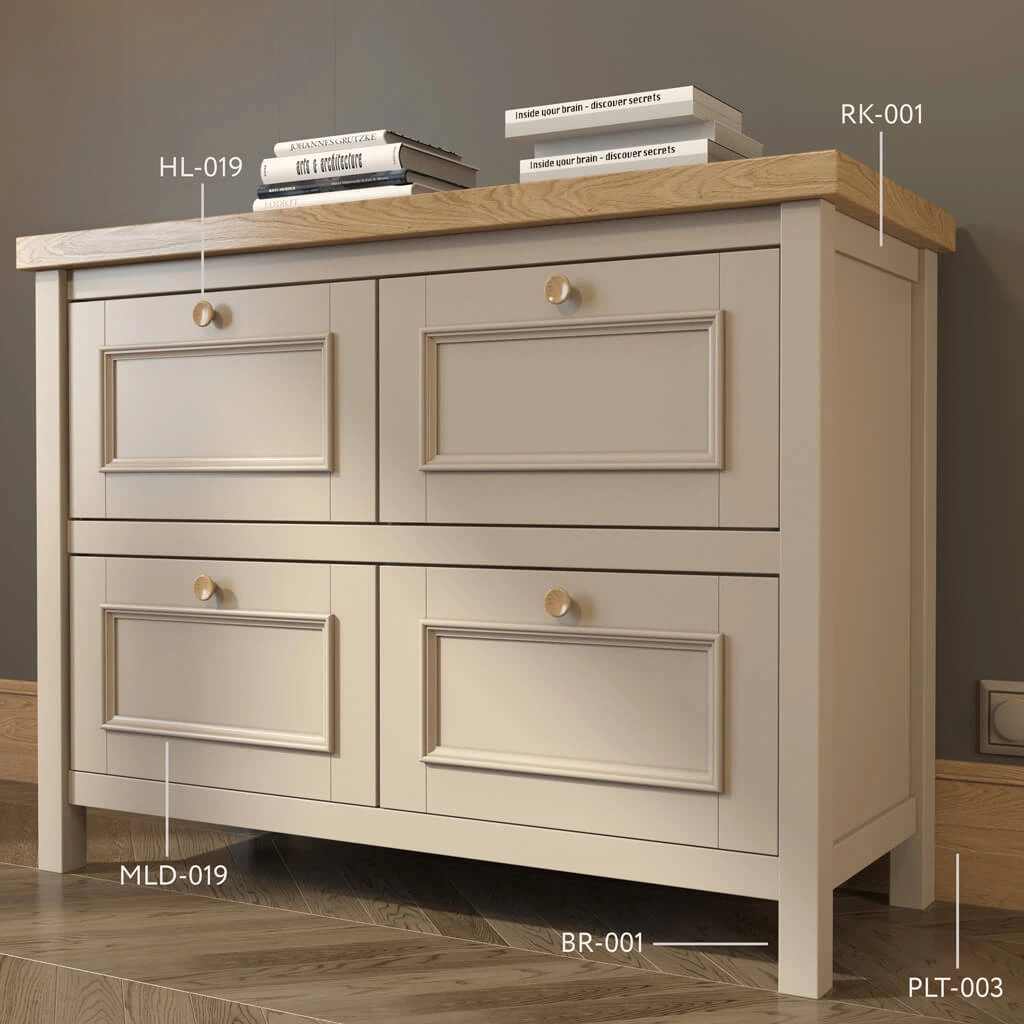
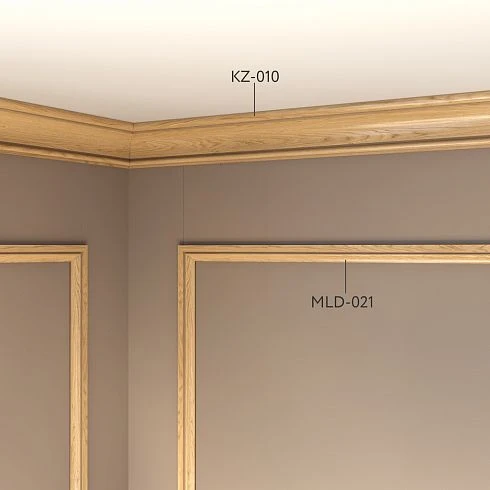
In the photo showing the application of MLD-019, the frames are located directly on the fronts of the drawers. The profile is repeated four times and links all the drawers into a single system.
This technique works because the molding has the right scale relative to the facade. A more massive decor would make the small drawers visually heavy. But MLD-019.1 merely outlines the contour.
When designing such a chest of drawers, the placement of the handle should be taken into account in advance. There must be enough space between the frame and the furniture handle so that the drawer is convenient to use and the elements do not look randomly placed.
If the furniture is painted entirely, the molding can be included in the overall finishing system. If oak or beech under a clear finish is used, the frame can, on the contrary, become a standalone wooden accent.
Therefore, decorative molding for furniture is not just an embellishment that is added after design. Its dimensions, position, material, and finish should preferably be taken into account already when developing the facade.
Molding for a wardrobe, cabinet, sideboard, and display case
On hinged cabinet doors, MLD-019.1 makes it possible to organize a large surface and remove the feeling of visual emptiness. This approach works especially well on furniture in the classical and neoclassical style.
On bedside tables, a small wooden furniture molding allows you to repeat the design of a large dresser or wardrobe, creating a unified furniture set.
On sideboards and display cabinets, the profile can be used to frame the solid parts of the facade or as a decorative element around inserts. However, when working with glass, it is necessary to determine separately whether MLD-019.1 is only a decorative detail or should be part of the construction. A decorative overlay frame and an element for actually securing the glass are technically different tasks.
On the side surfaces of furniture, the profile allows you to continue the facade pattern. This is especially useful when the side panel is clearly visible in the interior. Instead of a completely flat side panel, you can create a decorative panel that repeats the proportions of the doors or drawers.
Thus, the same furniture molding allows you to decorate not only the front part of the item, but also its entire visible architecture.
Use on doors, panels, and other interior elements
Although the main intent of the card should remain furniture-related, the scope of the profile is not limited to this.
A compact wooden molding can be used for small interior panels, decorative inserts, frames, individual sections of door leaves, and joinery products.
At the same time, it is important to maintain scale. A profile 17 mm wide is not intended for the role of a large architectural cornice. On a large empty wall, one such element may appear visually too thin. But on a furniture or small decorative panel, it is precisely its compactness that becomes an advantage.
Therefore, it is more correct to position MLD-019.1 not as a universal “molding for everything,” but as a precise decorative profile for objects of small and medium scale.
Such a description better matches both the actual product and the search intent of a buyer looking to buy furniture molding for facade decoration.
How to choose between oak, beech, and MDF
The material should be chosen not on the principle of "what is better in general," but based on the future finish.
If a pronounced natural texture is required, oak is the logical choice.
If you need solid wood with a calmer grain pattern, suitable for various furniture finishing options, beech can be considered.
If the surface will be fully covered with an opaque coating and the main requirement is a paintable decorative profile, the MDF option is the rational choice.
Useful rule:
transparent finish → primarily solid wood;
opaque paint → solid wood or MDF depending on the project.
That is precisely why different materials are presented in a single product card. The molding geometry remains the same, while the designer or furniture maker can adapt it to the specific furniture manufacturing technology.
MDF should not be viewed as an imitation of oak, nor oak as an "improved MDF." These are different materials with different application logic.
How to calculate the required amount of molding
For a simple rectangular frame, the calculation starts with the perimeter.
If the length of the decorative frame is X, and the height Y, the theoretical profile length is:
2 × X + 2 × Y.
But you should not buy exactly the calculated amount of material. It is necessary to take into account cuts, the orientation of parts, possible defects during processing, matching the wood grain, and offcuts that cannot be used in the next section.
Particular care is needed when calculating several identical fronts. Sometimes the total linear meters suggest that there is seemingly enough material, but the actual length of the commercial strip does not allow obtaining the required number of long parts without additional joints.
Therefore, it is better to first create a cutting plan.
For beech and oak, the profile length is 2400 mm. For MDF, it is 2600 mm. Consequently, the same total linear meters in different materials may require a different number of whole strips.
For visible furniture frames, it is undesirable to make a joint in the middle of one side unless necessary. It is better to use a single continuous piece for each side of the front if the dimensions allow.
This is especially important when purchasing wooden molding for furniture under a transparent finish: the joint will be more noticeable than on MDF painted in a single color.
Mitering corners and assembling a decorative frame
For rectangular framing, a 45° miter cut is the most typical. Here, the quality of the result directly depends on precision.
Even a small gap between two parts becomes noticeable after the final finish, especially if the profile is painted with glossy or semi-gloss enamel.
Before cutting, it is useful to lay out the parts directly on the facade, check the outer and inner dimensions of the frame, and only then make the final miter cut.
You should work with a sharp tool suitable for the specific material. The cut should remain clean, without a torn edge.
When working with solid wood, the direction of the grain is also important. If several segments are joined into one frame for a transparent finish, it is advisable to pre-select them to match each other.
After a dry fit, check the corners, symmetry, and position of the entire structure. Only then is the decorative furniture molding fixed using the chosen method.
How to attach furniture molding
The installation method depends on the facade material, the profile material, and the subsequent coating.
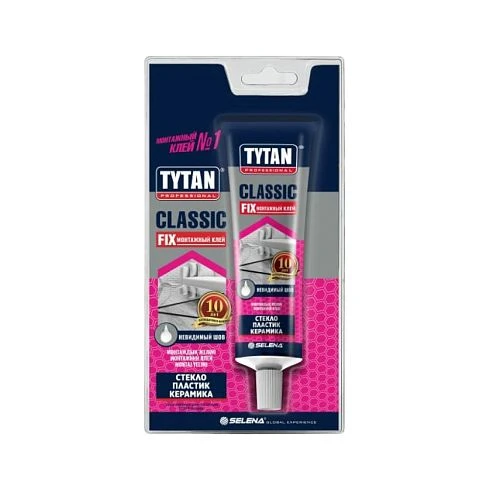
For decorative overlay elements, adhesive bonding is often used. The compound must be compatible with both the base and the molding itself. Before gluing, the surface must be clean, dry, and prepared in accordance with the requirements of the chosen adhesive.
Precise pre-marking is critically important. Once the adhesive has been applied, adjusting the position of the long strip becomes significantly more difficult.
For several identical fronts, it is convenient to make a simple template or use identical reference dimensions from the edges. This helps avoid the accumulation of errors.
If the molding for furniture fronts is to be painted together with the front, the joints between the parts are additionally treated after assembly. The specific technique depends on the material and the paint system.
You should not try to compensate for a poorly made cut with adhesive. The geometry of the frame must first be assembled correctly by mechanical means, and the adhesive joint then fixes the result.
Finishing a wooden profile
An oak or beech wooden profile for furniture offers wide finishing possibilities.
You can preserve the natural color of the material and use a transparent protective coating. You can change the shade with a tinting compound. You can match the color to other wooden elements of the furniture or, conversely, create contrast.
On oak, a finish that keeps the wood structure visible works especially well. The profile gains additional depth because the decorative shape combines with the natural pattern of the material.
When painting solid wood, it should be taken into account that the wood structure may remain visually noticeable even under some opaque systems. If the goal is to obtain the most uniform smooth surface possible, the primer, preparation, and finish must be selected accordingly.
An MDF option, by contrast, is especially logical for projects where the entire decorative composition should be perceived through shape and color without a pronounced natural texture.
Where a small profile looks better than a wide one
A common mistake when choosing furniture decor is assuming that a larger profile automatically looks more expensive.
In real furniture, everything is determined by proportion.
On a small drawer, a wide molding can leave too little inner field. The front becomes visually cramped. On a narrow door, an overly massive frame starts to compete with the handle. On a compact cabinet, large decor can make the body feel heavier.
In such situations, MLD-019.1 wins precisely because of its size of 17×12 mm.
It creates a relief border but leaves enough free surface inside the frame.
Therefore, if you need molding for a chest of drawers, a small cabinet, a furniture drawer, a compact door, or a decorative insert, MLD-019.1 is worth considering among the first.
For very large fronts, on the contrary, a wider profile or a composition of several elements may be required. The scale of the piece should always remain the main selection criterion.
MLD-019.1 in classic furniture
A classic interior is built on dividing the surface into separate fields. That is why moldings work so organically on classic fronts.
However, classic does not necessarily mean an abundance of carving.
A small, smooth furniture molding can create the desired architecture far more delicately. The frame forms the center and periphery of the facade, sets symmetry, and emphasizes the vertical and horizontal axes.
On a chest of drawers, several identical frames create rhythm. On a wardrobe, vertical frames visually elongate the doors. On a sideboard, you can separate the lower closed section and the upper display cabinet while maintaining the overall character of the decor.
If a more complex composition is required, MLD-019.1 can be combined with other wooden elements — cornices, skirting boards, furniture legs, decorative overlays. The main thing is that the elements match each other in scale.
Use in neoclassicism
For neoclassicism, a small profile is often even more convenient than massive carved decor.
Here, clean symmetry, calm reliefs, and high-quality finishing are important. A wooden molding for furniture facades creates exactly this kind of detailing.
The combination of a flat painted facade, the rectangular frame MLD-019.1, and a laconic furniture handle is especially expressive.
All elements perform their own task: the handle becomes an accent, the molding forms the architecture, and the main plane retains visual lightness.
With the right proportions, this technique is suitable not only for expensive solid wood furniture. It can also be used when creating painted facades based on MDF.
Restoration and updating of existing furniture
Another scenario is updating ready-made furniture.
If the structure of a wardrobe, chest of drawers, or cabinet is in good condition, but the flat fronts look too plain, a decorative frame can significantly change their appearance.
Before such a remodel, you need to check the condition of the existing finish. You cannot expect the molding to hold reliably on peeling varnish, weak paint, or a dirty surface.
You also need to check the gaps between doors and drawers, the placement of handles, and the free opening of adjacent elements.
Thus, furniture molding should be considered part of the front's construction, even if it is installed during the restoration of an already finished item.
Why it is better to use one material for a single piece of furniture
If one frame is made from several strips, it is desirable to make all its sides from the same material.
For a clear finish, the reason is obvious: oak, beech, and MDF look different.
But the rule is also worth following under opaque paint. Different materials have different structures and may behave differently during preparation and application of coatings.
Therefore, when calculating the order, it is better to determine the material for the entire series of fronts right away.
If, for example, a chest of drawers has four identical drawers, it is more sensible to order the required quantity of MLD-019.1 in one selected variety than to assemble the structure from random leftovers of different materials.
Why sanding quality matters specifically for moulding
On a flat panel, a small surface defect can sometimes be corrected quite easily. With a shaped profile, the situation is more complicated.
Radii, transitions, and internal areas of the relief are harder to sand by hand without altering the geometry. Therefore, the quality of preparation of the linear trim part directly affects the final finish.
For MLD-019.1, the sanding quality is specified as “Prestige.” Before applying the finishing system, it is still necessary to follow the recommendations of the manufacturer of the selected coating and assess the actual condition of the part, but a well-prepared initial surface simplifies further work.
This is especially important if moulding for painting is used in large quantities on several identical fronts: repeatability of the result becomes no less important than the appearance of a single individual strip.
How to order wooden moulding MLD-019.1
Before ordering, it is recommended to determine five parameters:
material, required perimeter of the frames, number of fronts, cutting plan, and required reserve.
For natural wood, you can choose beech or oak. The strip length is 2400 mm.
For the MDF version, a length of 2600 mm is provided.
The cross-section in all the specified versions is 17×12 mm.
After calculation, you should check the current price and availability of the specific modification in the size table on the product page.
If you plan to buy wooden furniture molding for several fronts at once, it is better to calculate the entire project as a whole rather than each element separately. This allows for a more efficient distribution of strips when cutting and helps you understand the required material reserve in advance.
For serial furniture, it is especially important to first manufacture and approve one control front. On it, you can check the scale of the frame, the distance to the edges, the combination with the handle, the quality of the corner joints, and the chosen finish. After that, the dimensions are transferred to the remaining items.
What tasks is MLD-019.1 suitable for?
MLD-019.1 is worth considering if you need a compact wooden molding to create a decorative frame without a massive relief.
It is suitable for:
- fronts of chests of drawers and cabinets;
- furniture drawers;
- hinged cabinet doors;
- kitchen and dining furniture;
- sideboards and display cabinets;
- decorative side panels;
- interior wooden elements;
- solid wood and veneer furniture;
- enamel-painted fronts;
- furniture restoration and refinishing.
At the same time, the main advantage of the model is not the number of possible applications, but its successful proportions. The 17×12 mm profile is compact enough for a small furniture front, while also having enough volume for the frame to remain visible after the final finish.
Wooden moulding MLD-019.1 as an element of a well-considered furniture composition
Good furniture decor should not exist separately from the piece of furniture. Its task is to improve proportions, emphasise the construction and help the eye read the form.
This is exactly how MLD-019.1 works.
On a flat facade it creates an additional level. On a series of drawers it sets the rhythm. On cabinet doors it forms a vertical composition. On oak or beech furniture it supports the aesthetics of natural wood. On painted MDF facades it works through light and shadow and geometry.
Therefore, when choosing between a random decorative strip and a specialised furniture moulding, it makes sense to focus primarily on the profile, cross-section and material.
MLD-019.1 has a cross-section of 17×12 mm and is available in MDF, beech and oak. The compact size makes it particularly suitable for furniture frames where a neat volume is required without an excessively massive decorative line.
If you need to buy a wooden moulding for a chest of drawers, cabinet, nightstand, sideboard, display case or another furniture piece, MLD-019.1 allows you to choose the version for a specific finishing technology: solid oak with an expressive natural texture, beech with a calmer grain, or MDF for projects to be painted.
Correctly calculated, neatly mitred and quality-installed, the profile becomes not an applied ornament, but a full-fledged part of the furniture design. This is precisely the case when a small moulding fulfils its main function — making a simple surface architecturally complete while maintaining the right scale and not overloading the piece.
Your request has been sent!
Our manager will contact you within 5 minutes