Article Contents:
- Why the bathroom becomes cold: anatomy of a mistake
- Ceramic monopoly
- Lack of tactile diversity
- Psychology of whiteness
- How to escape the cold: strategy for introducing wood
- Protected zones concept
- Raised tile as a foundation
- Mirror as a compositional center
- Requirements for wood in wet rooms
- Wood species: from best to acceptable
- Protective coatings: oils, varnishes, waxes
- Processing technology: multilayer protection
- Ventilation: a mandatory condition
- Installation technology: tile and wood in one space
- Layout scheme: ceramic base + wooden skirting
- Height for installing wooden skirting
- Processing corners and joints
- Mounting a mirror in a wooden frame
- Color combinations: wood and ceramics
- Wood and white tile: classic contrast
- Wood and stone: natural affinity
- Wood and colored tile: accents and nuances
- Wood and black tile: graphics and warmth
- Dimensions and proportions for different bathrooms
- Small bathroom (2–4 sq.m): minimalism and precision
- Medium bathroom (4–6 sq.m): balance of function and decor
- Large bathroom (6–10 sq.m and more): full wooden theme
- Practical tips for operation
- Daily care
- Weekly Cleaning
- Seasonal care
- Combatting mold
- Stylistic solutions: wood in different bathroom interiors
- Scandinavian style: light wood and minimalism
- Classic style: oak, carving, nobility
- Modern style: geometry and clarity
- Loft: rough wood and industrial details
- Eco-style: nature in its pure form
- Frequently Asked Questions
- Will wood deteriorate from humidity in the bathroom?
- Can MDF be used instead of solid wood?
- How often should protective coating be renewed?
- What size mirror to choose for a 4 sq.m. bathroom?
- Can a wooden baseboard be installed directly on the floor, without a ceramic plinth?
- Is dark or light wood better for a small bathroom?
- How much does a mirror in a wooden frame for the bathroom cost?
- Does the back side of a wooden baseboard need to be treated?
- Can lights be hung on a wooden mirror frame?
- How to remove white stains from a wooden mirror frame?
- STAVROS company: wood for wet rooms

A bathroom is not an operating room. But why does it so often look exactly like one: white tiles from floor to ceiling, the cold gleam of ceramics, a feeling of sterility? Yes, tiles are practical, moisture-resistant, and easy to clean. But they strip the bathroom of the warmth that turns a technical space into a place for relaxation. How to bring coziness back to the bathroom without sacrificing functionality? The answer is simple: add wood.Mirror in a wooden frame for the bathroomandWooden baseboard— two elements that will break the cold of ceramics and create an atmosphere you'll want to linger in.
But can wood be used in a wet room? Will it not deteriorate from steam and splashes? Which species to choose, how to protect it, where to place it? Let's understand the technology of creating a warm bathroom, where tiles remain in their places but stop dominating.





Why the bathroom becomes cold: anatomy of a mistake
Where does this feeling of a hospital ward in modern bathrooms come from? It's not about the quality of the renovation or the price of the materials. It's about uniformity.




Monopoly of ceramics
When the entire room is clad in one material — ceramic tiles — visual and tactile monotony arises. The eye has nothing to catch onto, there is no contrast of textures, no warm surfaces. Tiles reflect light harshly, create a ringing echo, chill bare feet even with underfloor heating.
It's functional but soulless. The bathroom turns into a technical space where hygiene procedures are performed, but no relaxation occurs. Yet the modern bathroom is a place of relaxation, where long baths are taken, where the day begins and ends.
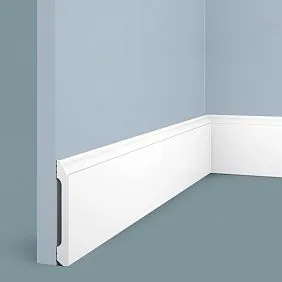
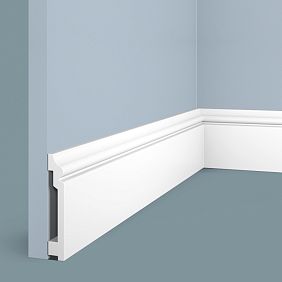
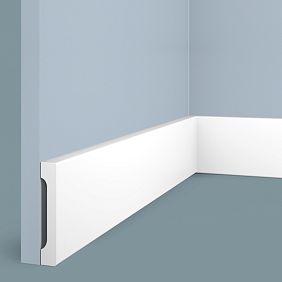
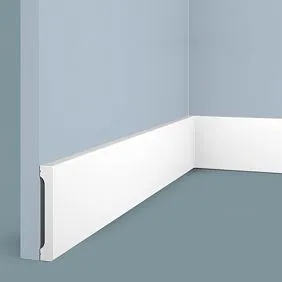
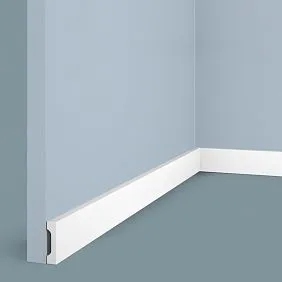
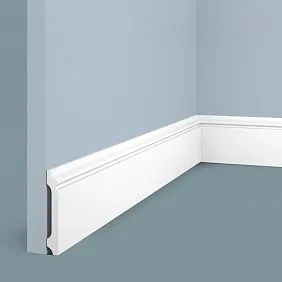
Our factory also produces:

Lack of tactile diversity
People need variety in textures. Smooth ceramics are good, but if you add warm wood, soft textiles, a living plant — the space comes alive. Wood in the bathroom is a tactile anchor, a point you want to touch, which radiates warmth.
A wooden mirror frame above the sink — the first thing you see in the morning. A wooden baseboard — a visual anchor that structures the space. These elements are not just decor — they change the physics of perceiving the room.
Get Consultation
Psychology of whiteness
White tiles are associated with cleanliness, but in excess they create sterility. It's the color of hospitals, laboratories, public restrooms. In a home bathroom, whiteness is needed, but in doses — as a background against which warm accents unfold.
Wood of a natural shade (honey oak, walnut, light ash) breaks the sterility, returns a residential character to the space. Even a small amount of wood — a mirror frame, baseboard, shelf — radically changes the atmosphere.
How to move away from the cold: strategy for introducing wood
The task is not to replace tiles with wood — that's impractical and expensive. The task is to introduce wood in doses, in those areas where it won't be subjected to direct contact with water, but will still create the desired visual and tactile effect.
Protected zones concept
The bathroom has wet zones (shower cabin, bathtub rim, area around the sink) and relatively dry zones (upper part of walls, ceiling, floor away from water sources). We place wood in the second category of zones — where humidity is elevated but there is no direct contact with water.
The skirting board is installed at a height of 80–120 mm from the floor level — higher than the raised ceramic tile or porcelain stoneware. This means that even if water gets on the floor, it won't reach the wood. The tile acts as a protective barrier, and the wood serves as a decorative element.
Mirror in a wooden frame for the bathroomis placed above the sink at a height of 100–120 cm from the floor. Splashes from the faucet usually don't reach the frame if the distance from the edge of the sink to the mirror is at least 15–20 cm. The frame is protected with special moisture-resistant compounds that prevent moisture from penetrating the wood.
Raised tile as a foundation
A classic technique: ceramic tile or porcelain stoneware is raised from the floor to a height of 15–30 cm, forming a kind of ceramic skirting. This protects the walls from splashes when washing the floor and creates a clear boundary between wet and dry zones.
Above this ceramic belt, at a height of 20–40 cm from the floor, a wooden skirting board is placed. It is already in a safe zone — water doesn't reach it. At the same time, visually it performs its function: it frames the room, creates a warm accent, and structures the space.
This scheme is especially good in spacious bathrooms, where you can afford two levels of skirting: ceramic at the bottom (practical) and wooden higher up (decorative).
Mirror as a compositional center
A mirror always hangs above the sink in the bathroom — this is a functional necessity. But why should it be in a plastic frame or no frame at all?Mirror in a wooden frame for the bathroominstantly becomes the compositional center of the room.
In the morning, when you wash your face, the first thing that comes into view is your reflection in the frame. If the frame is wooden, of a warm shade, with a beautiful texture — it sets the mood for the whole day. If the frame is plastic or chrome — it's just a function.
Wood in the mirror frame creates a visual connection with the wooden skirting board. The two elements begin to resonate, supporting each other. A theme emerges that unifies the space.
Requirements for wood in wet rooms
Not all wood is suitable for the bathroom. High humidity, temperature fluctuations, steam — all of this is a test for the material. Species with natural moisture resistance and professional protective treatment are needed.
Wood species: from best to acceptable
Teak — the king of bathrooms. This tropical species contains natural oils that repel water. Teak furniture lasts for years on yachts in rain and spray — let alone in a bathroom. But teak is expensive and rare, not always available.
Larch — a Russian alternative to teak. High density, natural resistance to rot due to gum in its structure. Larch lasts a long time even in baths and saunas where humidity is close to 100%. For a bathroom — an ideal choice in terms of price-quality ratio.
Oak — a classic, tested for centuries. Dense wood, high content of tannins that protect against biological damage. Oak skirting and oak mirror frame will last in a bathroom for 20–30 years with proper treatment.
Ash — beautiful texture, slightly less dense than oak, but also quite suitable for the bathroom provided high-quality protection with moisture-resistant compounds.
Beech — requires especially thorough protection, as it is hygroscopic. But with proper treatment with oils and varnishes, it lasts a long time. The main thing is not to place beech elements in zones of direct contact with water.
Protective coatings: oils, varnishes, waxes
Oil for wood in wet rooms is the optimal choice. It penetrates deep into the structure, does not create a surface film, allows the wood to "breathe," but at the same time repels water. Specialized oils with wax form a hydrophobic surface — droplets roll off without being absorbed.
Oil treatment requires renewal every 2–3 years, but it's a simple procedure: wipe the surface with fine sandpaper, apply a fresh layer of oil, let it absorb. No complex restoration needed.
Yacht varnish — the second protection option. Creates a strong waterproof film on the surface. Lasts 5–7 years without renewal. The downside — if the film is damaged (chip, scratch), moisture can penetrate underneath, and then a complete redo will be required.
Wax — additional protection on top of oil. Creates a silky surface, enhances water-repellent properties. Wax requires renewal more often than oil — once a year, but the procedure takes 10 minutes.
Treatment technology: multi-layer protection
Professional preparation of wood for the bathroom includes several stages:
Sanding to smoothness (abrasive P240–P320) — opens the pores of the wood for the penetration of protective compounds.
Water-based antiseptic impregnation — protection against mold and fungus. A mandatory step for wet rooms.
Oil primer — the first layer that penetrates as deeply as possible. Applied generously, excess is removed after 20–30 minutes.
Second oil layer — final protection. Applied thinly, rubbed in until completely absorbed.
Wax polishing (optional) — to enhance shine and add extra hydrophobicity.
Each layer must dry completely before applying the next. The full treatment takes 3–5 days, but the result is wood that is not afraid of moisture.
Ventilation: a mandatory requirement
Even the best wood protection is powerless if there is no ventilation in the bathroom. Stagnant humidity is the main enemy of wood. The forced exhaust should work not only during the shower but also for 15–20 minutes after it to remove excess steam.
Ideally, the exhaust is equipped with a humidity sensor and turns on automatically when the threshold of 70% is exceeded. This guarantees that the wood will be in acceptable conditions — humidity of 50–65%, not 80–90%.
A window in the bathroom is an additional plus. Ventilating once a day reduces overall humidity, preventing mold from appearing on walls and wooden elements.
Installation technology: tile and wood in the same space
How to technically implement the combination of ceramics and wood? What is the sequence of work? Where is the boundary between the materials?
Layout scheme: ceramic baseboard + wooden skirting board
First stage — laying floor tiles or porcelain stoneware. The floor must be perfectly level, with a minimal slope towards the drain (if there is a shower area).
Second stage — wall cladding with ceramic tiles. The lower part of the wall (15–30 cm from the floor) is tiled, forming a ceramic baseboard. This is a protective zone that catches splashes when washing the floor.
Third stage — preparing the wall above the ceramic belt. If the wall will be painted, it needs to be puttied, sanded, and primed. If wallpaper or decorative plaster will be used — prepare accordingly.
Fourth stage — installation of the wooden skirting board. It is installed at a height of 20–40 cm from the floor, i.e., above the ceramic belt. Attached with dowels or adhesive (if the wall is even). Corner joints are mitered at 45 degrees, seams are sealed.
Fifth stage — final wall finishing and installation ofmirror in a wooden frame bathtub.
Installation height of the wooden skirting board
The standard skirting board height in living spaces is 70–100 mm. But in a bathroom with a ceramic baseboard, the wooden skirting board is located 20–40 cm above floor level. This means it is visually perceived as decorative molding, not as a classic skirting board.
The height of the wooden element itself can be 60–80 mm — this is enough to create a visual accent without overloading the space. In small bathrooms, it's better to choose a 60 mm skirting board; in spacious ones — 80–100 mm.
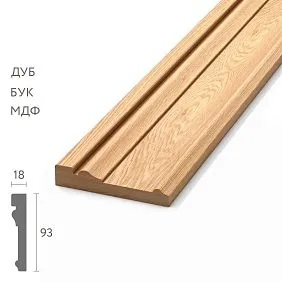
If the bathroom is combined and large (8–10 sq.m), you can useWooden baseboardup to 120 mm in height. It will create a sense of solidity, especially if the walls are painted in a deep color (dark blue, green, gray).
Corner and joint processing
Internal corners (junction of two walls) — the skirting board is mitered at 45 degrees, parts are tightly joined. The joint is additionally coated with moisture-resistant silicone-based sealant. This prevents moisture from penetrating the wood through the ends.
External corners (if there are protrusions, columns) — also mitered at 45 degrees. After installation, the joint is sanded and treated with oil.
Junction of the skirting board with the door frame — the skirting board is cut flush to the frame, the gap is sealed with clear or wood-toned silicone.
Mounting a mirror in a wooden frame
A mirror in a solid wood frame weighs 10–20 kg depending on size. Standard plastic dowels are not suitable — anchor bolts or chemical anchors are needed.
If the wall is made of concrete or brick — drill holes, install metal anchors, hang the mirror on them using special fasteners (French cleats, D-rings).
If the wall is made of drywall (moisture-resistant) — attach the mirror to the metal frame, not to the sheet itself. Or use special drywall anchors with a load capacity of up to 25 kg.
After installation, check the level — the mirror must hang perfectly horizontal, otherwise the reflection will be distorted and this will be irritating every day.
Color combinations: wood and ceramic
Wood in the bathroom is not just a material, but a color, texture, tone. How to combine it with ceramic? Which combinations work, and which create visual conflict?
Wood and white tile: a classic contrast
White ceramic tile is the most common choice for the bathroom. It visually expands the space, reflects light, creates a sense of cleanliness. But in excess — it feels cold.
A wooden baseboard in a natural shade (light oak, ash, beech) against a white tile background creates a soft, warm contrast. Wood breaks the sterility, adds coziness.Mirror in a wooden frame for the bathroomA mirror frame of the same shade completes the composition.
If you want to enhance the contrast, choose wood in medium tones — walnut, cognac oak. Against white, they look even warmer and more expressive. Dark stains (wenge, stained oak) create a graphic, almost black-and-white effect — stylish, but less cozy.
Wood and stone: natural affinity
Porcelain tile imitating natural stone (marble, travertine, slate) is a noble choice for the bathroom. It creates a sense of luxury, naturalness. Wood combines perfectly with such tile — two natural materials enhance each other.
Light marble (white, cream, gray-beige) + light wood (oak, ash) — a calm, elegant combination. Suitable for classic and neoclassical interiors.
Dark slate or graphite porcelain tile + dark wood (walnut, wenge) — a dramatic, masculine combination. Good for large bathrooms with good lighting.
Terracotta tile or porcelain tile imitating red sandstone + wood in warm tones (cherry, mahogany, teak) — Mediterranean or colonial style. Creates the atmosphere of a villa on the coast.
Wood and colored tile: accents and nuances
Blue, green, gray tile in the bathroom — the choice of those who want to move away from whiteness but preserve a sense of cleanliness and freshness. Wood with colored tile requires caution — not all shades combine well.
Light gray tile + light wood with a grayish tint (whitewashed oak, ash) — a Scandinavian scheme. Calm, elegant, modern.
Dark blue tile + wood in medium tones (walnut, cognac) — a nautical theme. The contrast of warm and cold creates dynamism.
Green tile (olive, mint, emerald) + natural wood without staining — natural harmony. Green and wood are natural neighbors; they always work together.
Avoid combining bright orange or red tile with wood in red tones — it will result in an overloaded, garish combination.
Wood and black tile: graphics and warmth
Black tile in the bathroom is a bold choice. It creates drama, depth, makes the space intimate. Wood against a black background looks especially warm and cozy.
Matte black tile + light wood (oak, ash) — maximum contrast. The wood literally glows against the black background, creating a visual accent.
Glossy black tile + dark wood (wenge, stained oak) — an exquisite, almost jewel-like combination. For large bathrooms with good lighting.
Black tile only in wet areas (shower, bathtub rim), the remaining walls light + wood in medium tones — a balanced option that does not overload the space.
Sizes and proportions for different bathrooms
A small bathroom and a large bathroom require different approaches to selecting wooden elements. Proportions, sizes, amount of wood — all of this depends on the room's area.
Small bathroom (2–4 sq.m): minimalism and precision
In a small bathroom, every centimeter counts. Massive wooden elements can overload the space, make it cramped. Lightness and precision are needed.
Baseboard — height 60–70 mm, light wood shade (whitewashed oak, light ash). A dark baseboard in a small bathroom will visually reduce the wall height.
Mirror — medium size 50×70 cm or 60×80 cm. Frame — thin, 4–6 cm, of the same light shade. A massive frame in a small bathroom will look out of place.
Additional wooden elements — minimal. You can add a wooden shelf under the sink or a wooden lid for the toilet tank (if it's a wall-hung toilet). But no more — otherwise there will be too much wood.
Color scheme — white or light gray tiles + light wood. This will visually expand the space and won't create a feeling of clutter.
Medium-sized bathroom (4–6 sq.m): balance of function and decor
In a medium-sized bathroom, you can afford more wood without fear of overwhelming the space.
Baseboard — height 70–80 mm, medium wood tone (natural oak, walnut). You can use a baseboard with a slight relief, bevel.
Mirror — size 70×90 cm or 80×100 cm. Frame — medium, 6–8 cm, with a slight profile volume. Can be slightly darker than the baseboard, but within the same color palette.
Additional elements — wooden countertop under the sink (if it's a vessel sink), a wooden shelf or étagère, wooden frame for a second mirror (if it's a combined bathroom and there's space for two sinks).
Color scheme — white tiles + medium-toned wood, or colored tiles (gray, blue) + light wood. More freedom for experimentation.
Large bathroom (6–10 sq.m and more): full-fledged wooden theme
In a spacious bathroom, wood can become a full-fledged theme, not just an accent.
Baseboard — height 80–120 mm, any shade depending on the style. You can use a shaped profile, carved elements (for classic interiors).
Mirror — large, 90×120 cm or even 100×150 cm. Frame — wide, 8–12 cm, voluminous, with decorative elements (if the style allows).
Additional elements — wooden furniture (vanity under the sink, tall cabinet, bench), wooden panels on part of the wall (wainscoting), wooden ceiling or a fragment of it, wooden frame for a large window (if present).
Color scheme — any. In a large space, you can combine dark walls, light wood, and white plumbing. Or white walls, dark wood, and colored tiles in the shower area.
Zoning — wood helps divide the space into functional zones: washing area (wooden countertop, mirror frame), bathing area (wooden shelf next to the bathtub), storage area (wooden tall cabinet).
Practical tips for operation
Wooden elements in the bathroom require minimal but regular care. It's not difficult, but it's important to do it systematically.
Daily Care
After each shower or bath, turn on the exhaust fan for 15–20 minutes. This will remove excess steam and prevent condensation from settling on wooden surfaces.
If water splashes get on the mirror frame, wipe them off with a dry soft cloth. Don't let droplets dry on the surface — they can leave whitish stains.
Don't hang wet towels on wooden elements (if you have wooden hooks or shelves). Use metal or ceramic towel holders.
Weekly Cleaning
Once a week, wipe the wooden baseboard and mirror frame with a damp (not wet!) cloth. Wipe dry immediately. Don't use aggressive cleaning agents with chlorine or abrasives — they damage the protective coating.
Check the joints of the baseboard with the wall and the ceramic plinth. If gaps appear (wood may have shrunk slightly), seal them with silicone sealant matching the wood color.
Ventilate the bathroom by opening the door or window (if present) for 10–15 minutes. This will reduce the overall humidity in the room.
Seasonal maintenance
Every 6–12 months, renew the wax coating on wooden elements. It's a simple procedure: apply a thin layer of furniture wax or special wood wax, let it absorb for 10 minutes, polish with a soft cloth. The surface will become hydrophobic and silky again.
If the wood is treated with oil, renew the oil coating every 2–3 years. Lightly sand the surface with fine sandpaper (P320–P400), remove dust, apply a fresh layer of oil. After 24 hours, the wood is protected again.
Check the condition of the mirror mounts. In a humid environment, metal elements can corrode. If you notice rust on the mounts, replace them with stainless steel ones.
Fighting mold
If dark spots appear on wooden elements (initial stage of mold), treat them immediately with a wood antiseptic. Compositions based on chlorhexidine or special anti-mold products for wood work well.
After treatment, enhance ventilation in the bathroom — mold only appears with insufficient air exchange.
If mold has penetrated deep into the wood (wood has turned black, become porous), you'll have to replace the damaged element. But with proper protection and ventilation, this is not a threat.
Stylistic solutions: wood in different bathroom interiors
Wood is universal, but it looks different in different styles. Species, color, treatment, shape — all this is determined by the interior's style.
Scandinavian style: light wood and minimalism
Bleached oak, light ash, pine with a whitish tint — these are the materials for a Scandinavian bathroom. A simple-profile skirting board, without relief. The mirror frame is thin, rectangular, without decoration.
Color scheme — white tiles on the walls, gray porcelain stoneware on the floor, light wood. Minimum items, maximum light, functionality without excess.
Classic style: oak, carving, nobility
Natural oak in medium tones (walnut, cognac) with pronounced texture. Skirting board with a shaped profile, coving. The mirror frame is wide, 10–12 cm, with carved elements, possibly with patina or gilding.
Color scheme — white or cream tiles, marble-look porcelain stoneware, oak elements. Brass faucets and accessories complete the look.
Modern style: geometry and clarity
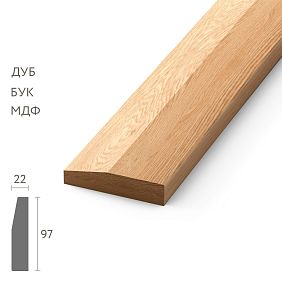
Wood in a modern bathroom means clear lines, simple shapes, absence of decoration. Skirting board with a rectangular cross-section with sharp edges or a single bevel. The mirror frame is thin, strict, without frills.
Wood color — any, but medium and dark tints (walnut, wenge) are often chosen for contrast with white plumbing and light tiles.
Loft: rough wood and industrial details
In a loft-style bathroom, wood can be deliberately rough — with preserved natural texture, knot marks, brushed surface. Skirting board made from old planks (or imitation aging). Mirror frame made from solid timber with visible texture.
Color scheme — concrete or gray walls, dark wood, black plumbing or faucets. Industrial lighting fixtures, metal pipes as part of the decor.
Eco-style: nature in its pure form
Natural wood without tinting, with natural texture. Skirting board made from unedged planks (with part of the bark preserved) or from timber with a simple cross-section. Mirror frame made from branches, driftwood, or timber with natural defects turned into virtues.
Color scheme — natural stone, wood, living plants. Minimum artificial materials, maximum natural textures.
Frequently Asked Questions
Will wood deteriorate from humidity in the bathroom?
It will not deteriorate if three conditions are met: the wood is treated with moisture-protective compounds, ventilation works in the room, and wooden elements are not in direct contact with water. Oak and larch in a properly prepared bathroom last 20–30 years.
Can MDF be used instead of solid wood?
Yes, but only moisture-resistant MDF (green color) and only with complete sealing of the edges. MDF is cheaper than solid wood but less durable in a humid environment. If the budget is limited, MDF with oak veneer is an acceptable compromise.
How often should the protective coating be renewed?
Oil-wax — once every 2–3 years. Yacht varnish — once every 5–7 years. But if you notice that water has stopped beading on the surface and has started to be absorbed — renew the coating immediately, without waiting for the scheduled time.
What size mirror to choose for a 4 sq.m. bathroom?
Optimally 60×80 cm or 70×90 cm. The mirror should be large enough for comfortable use but should not dominate the small space. The frame — no wider than 6 cm.
Can a wooden skirting board be installed directly on the floor, without a ceramic plinth?
Yes, but it's risky. If water gets on the floor (and in the bathroom, this is inevitable), the wood will come into contact with moisture. It's better to raise the wooden skirting board by 20–30 cm and make a ceramic belt at the bottom.
Dark or light wood is better for a small bathroom?
Light. Dark wood visually reduces space, makes it more intimate. In a small bathroom, this will create a feeling of tightness. Light oak, ash, bleached larch — the optimal choice.
How much does a mirror in a wooden frame for a bathroom cost?
Depends on size, wood species, complexity of the frame. A simple oak frame 60×80 cm — from 15,000 rubles. A carved oak frame 80×100 cm — from 35,000 rubles. A frame according to an individual sketch — from 50,000 rubles.
Is it necessary to treat the back side of a wooden skirting board?
Absolutely. It is the back side that contacts the wall, where condensation can accumulate. Treatment with oil or antiseptic will protect the wood from mold.
Can light fixtures be hung on a wooden mirror frame?
Yes, if the frame is thick enough (from 6 cm) and securely fastened. Use LED lights — they don't heat up and won't damage the wood. Hide the wiring in the wall, don't run it along the surface of the frame.
How to remove white stains from a wooden mirror frame?
White stains are marks from hard water (limescale). Wipe them with a cloth soaked in a weak vinegar solution (1:3 with water), then dry thoroughly and polish with wax. The stains will disappear.
STAVROS Company: Wood for Wet Rooms
When you decide to introduce wood into the bathroom, you choose warmth, coziness, and naturalness. But this decision requires a professional approach — not every wood, not every treatment is suitable for wet rooms.
STAVROS Company has been working with solid oak, ash, larch, and beech for over twenty years. We know how to prepare wood for use in high humidity conditions. Ourmirrors in wooden frames for the bathroomundergo multi-stage processing: drying to 8% moisture content, impregnation with antiseptics, priming, coating with moisture-resistant oil or yacht varnish.
Wooden baseboardfrom oak and larch by STAVROS are not just decorative elements, but engineered solutions for wet rooms. Special treatment protects the wood from mold, fungus, and deformation. We use professional compounds from European manufacturers that create a reliable barrier against moisture.
Our catalog includes skirting boards from 60 to 140 mm in height, with straight and shaped profiles, in natural color and with tints. Mirrors in wooden frames — from minimalist Scandinavian to carved classic — are custom-made to your dimensions.
We deliver products throughout Russia and provide a guarantee against wood deformation and cracking. If you want to create a warm bathroom without tile coldness — STAVROS will offer solutions that will last for decades.