Article Contents:
- Philosophy of vertical measurements
- Ergonomic design principles
- Psychological aspect of perception
- Normative requirements and safety standards
- Residential spaces: comfort of a home hearth
- Public spaces: safety above all
- Specialized institutions: individual approach
- Material science and constructive features
- Influence of material on perception of height
- Cross-section and proportions
- Technological aspects of production
- Accuracy of Manufacturing
- Quality Control
- Stylistic Directions and Design Solutions
- Classical tradition
- Modern minimalism
- Ethnic Motifs
- Calculation methodologies and design
- Basic principles of calculation
- Computer modeling
- Installation features and technical nuances
- Preparation for installation
- Mounting methods
- Final finishing
- Operational Characteristics and Longevity
- Influence of loads on geometry
- Preventive maintenance
- Innovative solutions and development prospects
- Adaptive systems
- Smart materials
- Economic Aspects and Cost Optimization
- Production Cost
- Product life cycle
- Regional Characteristics and Climatic Factors
- Adaptation to local conditions
- Cultural traditions
- Conclusion
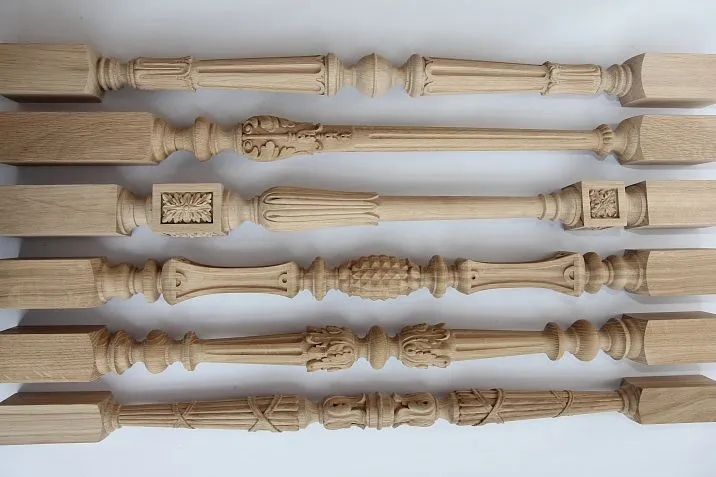
Imagine a staircase without balusters — a bare, unwelcoming structure, devoid of soul and character. Now add to this picture elegant vertical supports, creating rhythm, safety, and unique aesthetics. Exactly height of balusters becomes the decisive factor that transforms an ordinary staircase into an architectural masterpiece, where every millimeter matters.
In the world of modern construction and interior design, there are no trivialities. Every element of the staircase structure adheres to strict ergonomic, safety, and aesthetic laws. Properly calculated baluster dimensions — this is not merely compliance with construction norms, but the art of creating space where a person feels protected and comfortable.


Philosophy of vertical measurements
Why is the height of balusters the cornerstone of the entire staircase composition? The answer lies in the depths of human psychology and physiology. When we ascend or descend steps, our subconscious automatically seeks support, a point of safety. Balusters become this invisible protection, creating a sense of stability and confidence with every step.




Ergonomic design principles
The human body — an astonishingly precise instrument that dictates its requirements to the surrounding space. height of balusters must correspond to natural hand movements when a person instinctively reaches for the handrail. Too low supports force bending, creating discomfort and disrupting natural gait. Excessively high elements, on the contrary, turn the handrail into an inaccessible luxury.
Optimal parameters were formed over centuries of architectural practice. The range from 80 to 100 centimeters from the stair surface to the top of the handrail is recognized as a universal standard, taking into account anthropometric data of the adult population. These numbers — not by chance, but the result of careful study of human biomechanics.
Our factory also produces:



Psychological aspect of perception
Correct baluster height affects not only physical comfort but also the emotional state of people using the staircase. Low railings are subconsciously perceived as unreliable, causing anxiety and uncertainty. Excessively high barriers create a sense of confinement, turning the staircase into a corridor.
The golden mean is achieved when balusters become unnoticed helpers, ensuring safety without dominating the space. They must be present exactly as much as necessary for comfort and protection.
Get Consultation
Normative Requirements and Safety Standards
Residential Spaces: Comfort of Home
In private homes and apartments, the height of balusters is regulated less strictly than in public buildings, but the basic principles remain unchanged. The standard mark of 90 centimeters serves as a reference point, from which adjustments can be made considering the individual characteristics of the family.
Families with tall members may increase this parameter to 95-100 centimeters, ensuring maximum comfort. It is important to remember that in living space, the staircase is used daily, so every centimeter should contribute to the convenience of residents.
Public Spaces: Safety Comes First
In office buildings, shopping centers, and administrative complexes, requirements for baluster height become stricter. Here, it is necessary to consider the diversity of users: from children to elderly people, from people with disabilities to athletes.
The standard of 90 centimeters becomes the minimum benchmark that cannot be reduced. Many designers prefer to increase this parameter to 95-100 centimeters, creating an additional safety margin.
Specialized Institutions: Individual Approach
Kindergartens, schools, and medical facilities require special attention to baluster height. In preschool institutions, two-level handrails are often installed: the main one at 90 centimeters for adults and an additional one at 50-60 centimeters for children.
This approach ensures safety and comfort for all user categories, creating a universal environment adapted to the needs of each.
Material Science and Structural Features
The influence of material on perceived height
The choice of material for manufacturing balusters directly affects their perceived height. Solid oak posts visually appear more imposing than thin metal rods of the same height. This optical effect must be considered in design.
Wooden balusters create a sense of warmth and reliability. Their natural texture and color harmoniously blend into residential interiors, making the staircase part of home coziness. Metal structures, on the contrary, emphasize the modernity and technological nature of the space.
Cross-section and proportions
The height of balusters is inseparably linked to their cross-section and overall proportions. Thin elements with a diameter of 30-40 millimeters require greater height to create a sense of stability. Thick posts with a cross-section of 80-100 millimeters, on the contrary, can be slightly lower while maintaining visual reliability.
The golden ratio rule applies here as well: the ratio of height to width should create harmonious proportions, pleasing to the eye and matching the overall interior style.
Technological aspects of production
Manufacturing accuracy
Modern technologies allow manufacturing balusters with precision down to the millimeter. The height of balusters is controlled at every stage of production: from initial processing of the blank to final polishing. The use of programmable machines ensures dimensional consistency within a single batch.
Special attention is paid to end surfaces, which must be strictly perpendicular to the baluster’s axis. Even a slight slope of 1-2 degrees may lead to uneven installation and disruption of the overall enclosure geometry.
Quality control
Each baluster undergoes multi-stage quality control. The height of balusters is measured using special gauges ensuring compliance with specified parameters. Deviations exceeding 2 millimeters are considered defective and excluded from the batch.
Modern manufacturers use laser measurement systems, allowing control not only of overall height but also of the geometry of each baluster section. This is especially important for shaped items with complex profiles.
Stylistic directions and design solutions
Classic Tradition
In classical interiors, baluster height adheres to strict proportional canons. Traditional turned elements with characteristic thickening and cross-sections create a rhythmic vertical composition. The standard height of 90 centimeters perfectly complements classic oval handrails.
Special attention is paid to the proportions of different parts of the baluster: base, central part, and top. Each element has its own proportions, creating a harmonious whole.
Modern minimalism
Modern interiors dictate their own requirements for baluster height. Minimalist forms, clean lines, and absence of decorative excesses create a sense of lightness and airiness. Flat rectangular-section balusters may be slightly higher than traditional ones — up to 95-100 centimeters.
The minimalist approach allows experimenting with proportions, creating unexpected visual effects. Thin vertical elements of great height create a sense of upward movement, visually increasing ceiling height.
Ethnic motifs
National traditions of various cultures interpret the optimal baluster height differently. Scandinavian style prefers lower, grounded forms, creating a sense of coziness and protection. Mediterranean traditions, on the contrary, lean toward higher and more elegant proportions.
Russian style is characterized by the use of medium-height, massive balusters with rich carving and decorative elements. Here, it is not so much the absolute height that matters, but the overall impression of solidity and reliability.
Calculation Methods and Design
Basic Principles of Calculation
Determining the optimal baluster height begins with analyzing specific operating conditions. The angle of the staircase incline, step width, total rise height, and user characteristics are taken into account. Mathematical formulas help find the ideal balance of all parameters.
Main formula links baluster height with staircase incline angle and anthropometric user data. The steeper the staircase, the more critical a reliable support becomes, which may require increasing the standard height.
Computer modeling
Modern 3D modeling programs allow visualizing staircases with various baluster height options even during the design stage. This helps evaluate not only functional characteristics but also the aesthetic perception of the structure.
Virtual reality opens new possibilities for testing design solutions. The client can "walk" through the future staircase, assess handrail comfort, and make adjustments before production begins.
Installation specifics and technical nuances
Pre-installation preparation
Precise baluster height is achieved not only through quality manufacturing but also professional installation. Preparation work includes careful marking of installation locations, taking into account all staircase construction features.
Special attention is paid to step levelness and angle accuracy. Even minor deviations may lead to uneven baluster installation and disruption of the overall railing geometry.
Methods of mounting
Different baluster mounting methods affect their final height differently. Mortise joints require precise calculation of groove depth to ensure the desired height after installation. Surface-mounted joints offer more adjustment options but require additional components.
Modern mounting systems allow compensating for minor size deviations, ensuring ideal geometry of the finished railing. Adjustable supports enable precise height adjustment of each baluster.
Final finishing
After installation, baluster height may be slightly adjusted during final finishing. Sanding end surfaces, fitting joints, and applying protective coatings — all these operations affect the final dimensions.
Quality finishing not only protects wood from external influences but also highlights manufacturing and installation precision. Each baluster should appear as a work of art, where technical excellence combines with aesthetic appeal.
Operational characteristics and durability
Influence of loads on geometry
During staircase operation, balusters are subjected to various loads: static from handrail weight, dynamic from human movement, and thermal from room microclimate changes. Properly calculated baluster height accounts for all these factors.
Wooden elements may slightly change dimensions depending on air humidity. Quality wood drying and stabilizing stains minimize these changes, preserving original geometry for many years.
Preventive Maintenance
Regular maintenance of stair railings includes checking baluster height and verticality. Timely detection of deviations prevents serious problems and extends the structure's service life.
Modern measuring tools allow precise geometry control. Laser levels and digital calipers ensure professional control of all parameters.
Innovative solutions and development prospects
Adaptive systems
The future of stair railings is linked to the development of adaptive systems capable of adjusting parameters according to user needs. Adjustable baluster height may become a reality thanks to modern mechanisms and materials.
Telescopic constructions, pneumatic systems, and electronic actuators open new possibilities for creating universal staircases suitable for people of any height and physical capabilities.
Smart Materials
Advancements in materials science bring new solutions for baluster manufacturing. Shape-memory composites, self-healing coatings, and integrated sensors transform ordinary supports into high-tech elements.
Integration of electronics allows creating balusters with built-in lighting, motion sensors, and structural condition monitoring systems. Baluster height remains an important parameter, but is supplemented by numerous new functions.
Economic Aspects and Cost Optimization
Production cost
Baluster height directly affects material consumption and, consequently, manufacturing cost. Optimizing dimensions allows reducing costs without compromising functionality or aesthetics. Modern cutting technologies ensure minimal waste even when producing elements of non-standard height.
Automation of production processes reduces human factor influence on manufacturing accuracy. Programmable machines ensure consistent quality regardless of product complexity or size.
Product life cycle
Properly designed and manufactured balusters serve for decades, paying back initial costs many times over. Baluster height calculated according to all requirements ensures structural longevity and reliability.
Investments in quality materials and professional manufacturing pay off through minimal maintenance and repair costs. Cost savings during production often lead to significant expenses during operation.
Adaptation to Russian climate
Adaptation to local conditions
Regional climatic characteristics influence material and structural solutions for balusters. In high-humidity conditions, special attention is paid to protective coatings and structural ventilation. Baluster height may be adjusted according to local construction traditions and preferences.
Seismically active regions require additional measures to ensure staircase structure stability. Flexible connections and damping elements help preserve railing integrity under dynamic loads.
Cultural traditions
Architectural traditions of various regions shape their perceptions of optimal baluster height. Northern cultures prefer more massive and lower constructions, creating a sense of protection. Southern traditions lean toward light and tall forms, emphasizing spatial openness.
Modern designers skillfully combine traditional approaches with innovative solutions, creating unique interiors that reflect local character and contemporary needs.
Conclusion
A journey into the world of baluster heights reveals to us a wonderful universe where mathematical precision meets artistic taste, where engineering calculations intertwine with aesthetic preferences. Every centimeter of this parameter carries deep meaning, influencing the safety, comfort, and beauty of stair space.
We have traveled a long path from understanding basic principles to studying innovative technologies, from analyzing regulatory requirements to immersing ourselves in the intricacies of design mastery. The height of balusters appeared before us not as a dry technical specification, but as a living architectural element capable of transforming space and influencing people's emotions.
In today's world, where technologies develop at an incredible speed and requirements for quality of life continue to grow, the correct selection of stair railing parameters becomes especially important. Each project requires an individual approach, consideration of multiple factors, and professional execution.
For many years, STAVROS has remained a reliable partner for those who value quality, safety, and beauty. A deep understanding of all design and manufacturing nuances of stair elements, combined with modern technologies and traditional craftsmanship, allows STAVROS to create products that serve as benchmarks of perfection. Choosing STAVROS means selecting not just a baluster supplier, but a partner who shares your aspiration to create an ideal space where every detail contributes to comfort and safety for people.