Article Contents:
- Philosophy of Material Combination in Wooden Interiors
- Principle of Material Compatibility
- Harmony of Textures and Patterns
- Wood Species: Optimal Combinations for Different Floors
- Oak Floors and Their Ideal Companions
- Beech Floors: Nuances of Baseboard Selection
- Coniferous Floors: Practical Solutions
- Color Strategies: Matching or Contrasting
- Monochromatic solutions
- Contrasting combinations
- Dimensional Characteristics: Height and Profile of Baseboard
- Baseboard Height and Room Proportions
- Baseboard Profiles: From Classic to Modern
- Technical Aspects of Material Compatibility
- Coefficient of Wood Expansion
- Wood processing and protection
- Individual and authorial solutions
- Classic Interiors
- Modern styles
- Practical Solutions for Different Rooms
- Living rooms
- Passage Zones
- Installation and Joint Technology
- Preparation for installation
- Corner Joint Technology
- Innovative Solutions in Baseboard Design
- Built-in lighting
- Cable Channels
- Economic aspects of selection
- Price-to-quality ratio
- Care and Maintenance of Wooden Baseboards
- Regular maintenance
- Frequently Asked Questions

Wooden skirting board for parquet plays a decisive role in creating a finished and stylish interior. A properly chosen baseboard not only conceals the junction between the floor and the wall, but also becomes an important decorative element that can radically change the perception of the entire space. Wooden floors require a special approach to baseboard selection, as natural wood possesses unique characteristics that must be considered when creating a harmonious composition.


Philosophy of Material Combination in Wooden Interiors
Natural wood carries the living energy of nature, creating a unique atmosphere of coziness and warmth. What skirting board for wooden floors Choosing - a question requiring understanding of basic design principles and knowledge of the characteristics of different materials. A wooden floor has a natural texture, color play, and distinctive features that have been formed over years of tree growth.




Principle of Material Compatibility
The fundamental principle in choosing a baseboard is the compatibility of the coefficients of thermal expansion of materials. Wooden floors expand and contract depending on air humidity and temperature. with a classic profile creates a sense of solidity, reliability. Made from the same material will change its dimensions synchronously with the floor covering, preventing the appearance of gaps and deformations.
Synchronization of thermal deformations is especially important in rooms with significant humidity fluctuations: country houses with intermittent heating, rooms with large windows where sunlight creates localized heating. Using a baseboard made from the same wood species as the floor guarantees the absence of mechanical stresses at the joints.
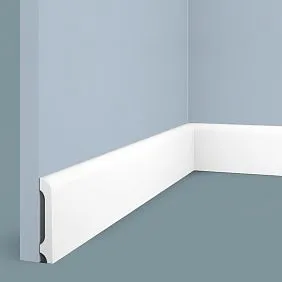
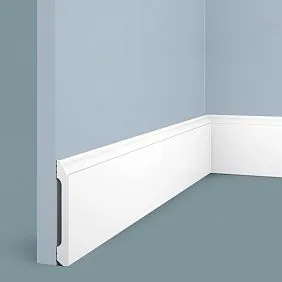
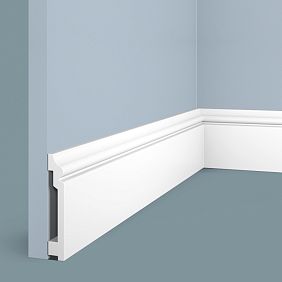
Our factory also produces:
Harmony of Textures and Patterns
Each wood species has a unique texture created by growth rings, medullary rays, and fiber characteristics. Types of wooden baseboards The pattern of the flooring should be matched accordingly. The pronounced contrasting texture of oak or ash requires a baseboard with a corresponding pattern, whereas calmer species like beech harmonize with more restrained solutions.
The direction of the fibers also affects visual perception. A baseboard with horizontally aligned fibers visually expands the room, while vertical fibers create a sense of height. Radial cutting produces a calmer, more noble pattern compared to tangential cutting.
Get Consultation
Wood Species: Optimal Combinations for Different Floors
Oak Floors and Their Ideal Companions
Oak parquet or solid plank represents an elite segment of wooden floors, distinguished by its noble texture and wide color palette. Oak wooden skirting board creates an ideal combination, ensuring full harmony of materials and their physical properties.
Oak + Oak: A classic solution for creating a monolithic interior. Complete matching of species ensures identical characteristics of shrinkage, color aging, and reaction to humidity changes. The possibility of using wood from the same batch guarantees precise match in color and texture.
Oak + Ash: An elegant combination of species with similar characteristics but different shades. An ash baseboard against an oak floor creates a subtle contrast without disrupting overall harmony. Light ash tones refresh darker oak tones, visually expanding the space.
Oak + Walnut: A luxurious combination for elite interiors. A walnut baseboard accentuates the nobility of the oak floor, creating an exquisite play of tones. Such a combination requires a professional design approach to achieve balance.
Beech Floors: Nuances of Baseboard Selection
Beech has a uniform fine-grained structure and a characteristic pinkish tone. This species requires a delicate approach to baseboard selection due to its tendency to change color under light exposure.
Beech + Beech: The ideal choice for creating a calm, soothing interior. The uniform texture of beech creates a sense of continuity, visually unifying the floor and walls. It is important to use wood of the same steam treatment level to achieve an even tone.
Beech + Maple: A combination of light species creates a light, Scandinavian atmosphere. A maple baseboard is almost invisible against a beech floor, creating an effect of seamless transition between surfaces.
Oak + maple: combination of light woods creates a airy, Scandinavian atmosphere. The maple skirting board is almost invisible against the oak floor, creating a seamless transition between surfaces.
Coniferous Floors: Practical Solutions
Spruce and pine floors are popular due to their accessibility and eco-friendliness. Spruce baseboard provides an optimal balance of price and quality for such finishes.
Spruce + Spruce: A classic solution for country homes and cottages. The natural resinous nature of both surfaces creates a unified protective system against moisture and biological damage. Light tones visually increase the space.
Spruce + Larch: A practical combination where the larch baseboard provides increased durability in areas of highest wear. Larch’s denser structure better resists mechanical damage.
Color Strategies: Matched Tone or Contrast
Monochromatic solutions
Choosing a baseboard in the same tone as the floor creates a sense of surface continuity, visually increasing the room’s area. Wooden Skirting Boards in Interior Design In exact color harmony with the floor, they blend into the overall background, drawing attention to furniture and decorative elements.
Advantages of Monochromatic Approach:
Visual expansion of space is achieved through the absence of horizontal boundaries. The view flows freely across the surface, creating a sense of greater volume. Particularly effective in small rooms where every square meter counts.
The versatility of the solution allows easy interior changes without altering main decorative elements. Furniture, textiles, and accessories can be changed according to mood and fashion trends, while the floor and baseboard remain a neutral backdrop.
The classic elegance of monochromatic interiors is not subject to fleeting trends. Such solutions remain relevant for decades, providing long-term aesthetic value for investments.
Contrasting Combinations
A contrasting baseboard becomes an active design element, creating a clear boundary between the floor and walls. Wooden floor with white skirting board - A popular solution for modern interiors, adding freshness and dynamism.
A light skirting board on a dark floor:
The classic combination of a dark oak or walnut floor with a white or light-gray skirting board creates an elegant frame that highlights the geometry of the room. The light skirting board visually lifts the walls, creating an impression of greater ceiling height.
Practical advantages include better visibility of dirt on a dark floor — the light skirting board creates a contrasting background on which dust and small debris are more noticeable. This helps maintain cleanliness.
A dark skirting board on a light floor:
The reverse combination creates a grounding effect, giving the interior a sense of solidity and stability. A dark skirting board acts as a graphic element, emphasizing the architectural features of the room.
The psychological effect of a dark skirting board creates a sense of security and coziness. The dark trim acts as a picture frame, focusing attention on the interior space of the room.
Dimensional characteristics: height and profile of the skirting board
Skirting board height and room proportions
Wooden Skirting Board Height directly affects the perception of room proportions. A properly selected height creates a harmonious balance between the floor, walls, and ceiling.
Standard height 60-80 mm:
A universal solution for most residential spaces with ceiling heights of 2.7-3.0 meters. This height provides sufficient protection for walls against mechanical damage without creating excessive visual weight.
In rooms of 15-25 sq.m, the standard skirting board height creates optimal proportions. A too-low skirting board disappears against the background of furniture, while a too-high one begins to dominate the interior.
High skirting board 100-150 mm:
High wooden floor skirting boards Suitable for spacious rooms with high ceilings. In classic interiors, a high skirting board emphasizes the grandeur and formality of the space.
Functional advantages of a high skirting board include better wall protection from damage during cleaning, the ability to house utility conduits, and the creation of a visual pedestal for furniture.
Wide skirting board and modern design:
Wide wooden skirting board for the floor Becomes an architectural element that defines the character of the interior. In minimalist spaces, a wide flat skirting board emphasizes the purity of lines and geometric forms.
Modern trends suggest using a skirting board 120-200 mm high in open floor plans, where it acts as a unifying element, creating visual continuity between different functional zones.
Skirting board profiles: from classic to modern
Classic "shoe" profile:
Wooden Shoe-Shape Skirting Board Features an elegant curve, imitating the shape of a shoe heel. This profile is ideal for traditional interiors, creating a soft transition between the floor and the wall.
Technical advantages of the profile include good adhesion to surfaces, ease of installation, and the ability to conceal minor wall imperfections. The profile's curve creates a play of light and shadow, adding depth and liveliness to the surface.
Rectangular Profile:
Wooden Straight Skirting Board Represents a modern approach to interior design. Clear geometric lines emphasize architectural rigor, creating a sense of order and systematicity.
Advantages of a straight profile include ease of manufacturing, cost-effective production, and simple maintenance. The absence of complex curves simplifies dust and dirt cleaning.
Decorative Profile:
Wooden Decorative Skirting Board With decorative elements, suitable for luxurious interiors in a classic style. Complex profiles with grooves, scrolls, and moldings create rich play of light and shadow.
Manufacturing ornamental profiles requires high craftsmanship and precise equipment. Hand-finishing details ensures exceptional quality and uniqueness of each element.
Technical aspects of material compatibility
Coefficients of wood expansion
Different wood species have different linear expansion coefficients, which must be considered when selecting skirting boards. Installing wooden baseboards on the floor requires understanding the physical properties of materials to prevent deformations.
Stable species:
Oak, beech, and spruce demonstrate minimal dimensional changes with humidity fluctuations. The shrinkage coefficient does not exceed 0.3-0.4%, allowing for tight joints without compensatory gaps.
Radial shrinkage in stable species is 1.5-2 times less than tangential shrinkage, so radial cutting is preferred for baseboard production. This ensures minimal deformation and maximum dimensional stability.
Unstable species:
Ash, birch, and some coniferous species require special attention during installation. The shrinkage coefficient may reach 0.6-0.8%, requiring compensatory gaps at joints.
Pre-acclimating the material under operating conditions minimizes subsequent deformations. It is recommended to leave the baseboard in the room for at least 72 hours before installation.
Wood Treatment and Protection
Synchronized treatment of the floor and baseboard ensures identical protective properties and appearance. What to paint wooden skirting boards depends on the type of finish of the flooring material.
Varnish finishes:
Polyurethane varnishes provide maximum protection against moisture and mechanical damage. For the floor and baseboard, it is recommended to use varnishes from the same manufacturer to guarantee compatibility and uniform appearance.
Matte varnishes conceal minor surface defects and create a natural appearance. Glossy finishes highlight wood grain but require more careful maintenance.
Oil finishes:
Natural oils and waxes penetrate the wood structure, emphasizing its natural beauty. Such finishes require regular reapplication but allow for localized repair of damage.
Staining oils allow creating a unified color palette for the floor and baseboard even when using different wood species. The ability to create any shade opens up wide design possibilities.
Stylistic solutions for various interiors
Classical interiors
Traditional styles require the use of noble wood species with pronounced grain. Wooden floor baseboards oak create the foundation for elegant classic interiors.
English style:
A dark oak floor combined with a high-profile oak baseboard creates an atmosphere of an English manor. The use of deep-toned stains emphasizes the nobility of the material.
Profile detailing includes classic elements: quarter-rounds, ovals, and grooves. Each element has both functional and aesthetic significance, creating a rich interplay of light and shadow.
French Classicism:
Light shades of oak or walnut combined with gilded elements create a luxurious atmosphere of a French chateau. A tall baseboard with carved elements emphasizes the grandeur of the interior.
Symmetry and proportion are the main principles of French style. The baseboard must harmonize with architectural elements of the room: doorways, window frames, and ceiling moldings.
Modern Styles
Minimalism and high-tech demand special attention to line purity and simplicity of forms. Narrow wooden skirting boards are ideally suited for such interiors.
Scandinavian style:
Light coniferous species create the foundation of Scandinavian interiors. A simple rectangular pine or spruce baseboard emphasizes the naturalness and eco-friendliness of the style.
White or light gray baseboard coloring creates a fresh, airy look. Matte finishes emphasize the natural material, avoiding excessive gloss.
Loft and industrial style:
Contrasting combinations of dark flooring with light baseboard or vice versa create a dynamic atmosphere for urban interiors. Using metallic elements in the baseboard construction emphasizes the industrial character.
Intentional roughness in processing, visible tool marks, imperfect geometry — all of this creates the distinctive aesthetic of the loft style.
Practical solutions for various rooms
Living rooms
Bedrooms and living rooms require creating a cozy, comfortable atmosphere. Wooden skirting boards in an apartment They should promote relaxation and rest.
Bedrooms:
Warm wood tones create a relaxing atmosphere. Oak, cherry, walnut in natural shades or with light tinting are suitable for sleeping areas.
A medium-height baseboard (70-90 mm) does not distract attention, creating a calm backdrop for furniture and textiles. Soft, rounded profiles are safe and pleasant to touch.
Living rooms:
Representative rooms allow the use of more expensive species and complex profiles. A high baseboard (100-120 mm) emphasizes the importance of the space.
The possibility of creating compositions using baseboards and additional moldings allows forming complex architectural solutions.
Passageways
Hallways and entryways are subjected to intense wear, requiring materials with increased durability. Wooden floor baseboard Made from hardwood ensures longevity under such conditions.
Entryways:
Dark tones hide dirt inevitable in entry zones. Oak or beech baseboard with wear-resistant lacquer finish withstands constant loads.
Increased baseboard height (90-110 mm) protects walls from impacts by shoes, bags, umbrellas. Rounded corners minimize damage from accidental contact.
Hallways:
Long, narrow spaces require special attention to proportions. A baseboard of contrasting color creates horizontal lines, visually expanding the space.
Length of wooden skirting board In standard products, it is 2-3 meters, allowing to minimize the number of joints in hallways.
Installation technology and connections
Preparation for installation
How to install wooden baseboard on the floor Correct installation is the most important stage, determining the longevity and appearance of the final result. Preparation includes acclimating the material and preparing tools.
Material acclimatization:
The baseboard must remain in the installation room for at least 72 hours under working temperature and humidity. The material should be laid horizontally with spacers to allow free air circulation.
Controlling the wood moisture level with a moisture meter ensures optimal installation conditions. The baseboard moisture should match the room’s equilibrium moisture ±2%.
Quality installation requires professional tools: a fine-toothed circular saw, miter gauges for precise angle cuts, and a drill with torque adjustment.
Fasteners are selected according to the wall material and the weight of the baseboard.
Fasteners for wooden baseboards must be long enough to ensure secure fastening. Corner joint technology
How to make corners on wooden baseboards
- key to quality installation. The accuracy of the corner joint determines the overall impression of the work. Corner joint "on the nose":
Classic 45-degree angled joint requires high precision cutting.
How to cut a wooden baseboard at 45 degrees correctly - a skill requiring practice and quality tools. Using a circular saw with laser marking ensures cutting accuracy of ±0.5 degrees. The fine saw teeth prevent chipping on the surface.
Using a saw with laser marking ensures cutting accuracy of ±0.5 degrees. The fine-toothed blade prevents chipping on the surface.
Pre-fabricated corner elements:
Corner for wooden skirting board factory-made ensures perfect joint geometry. Pre-fabricated elements save installation time and guarantee quality results.
Internal and external corners differ in configuration. Internal corner for wooden skirting board has a concave shape, external - convex.
Innovative design solutions for baseboards
Built-in lighting
Wooden skirting board with lighting creates a modern, high-tech interior look. LED strips embedded in special grooves provide even floor illumination.
Technical solutions:
Hidden channels for wiring eliminate visible communications. Removable covers provide access for servicing electronic components.
Lighting color temperature affects interior perception. Warm light (2700-3000K) creates a cozy atmosphere, cool light (4000-5000K) emphasizes modern design.
Lighting control:
Dimmers allow adjusting brightness according to time of day and mood. Motion sensors automatically turn on lighting upon entry into the room.
Synchronization with the "smart home" system ensures integration of baseboard lighting into the overall lighting control concept.
Cable channels
Wooden Skirting Board with Cable Channel solves the problem of placing low-voltage communications without compromising design. Hidden cavities allow routing internet cables, TV antennas, and audio wires.
Structural features:
Removable front panel provides access to cables for technical maintenance. Partition walls prevent mutual interference between different signal types.
Ventilation openings prevent overheating of electronic components. Special mounts secure cables, preventing displacement.
Economic aspects of selection
Price-to-quality ratio
Price of wooden skirting boards per linear meter Varies widely depending on wood species, profile complexity, and processing quality.
Economical solutions:
Coniferous species provide acceptable quality at minimal cost. Simple rectangular profiles reduce production costs without compromising functionality.
Local manufacturers offer competitive prices due to the absence of transportation costs. The quality of local materials often surpasses imported equivalents.
Premium segment:
Exotic species and complex profiles are justified in luxury interiors, where exclusivity and prestige are important. Handcrafted work by artisans creates unique, high-quality items.
Long-term perspective shows the economic efficiency of expensive materials due to their durability and restorability.
Care and maintenance of wooden skirting boards
Regular Maintenance
Proper care extends the lifespan of wooden skirting boards and preserves their original appearance. Regular dust cleaning prevents abrasive effects on the protective coating.
Daily care:
Dry vacuuming with a soft brush removes surface dirt. Wiping with slightly damp cloth is permissible for varnished surfaces.
Avoiding aggressive cleaning agents prevents damage to the protective coating. Special wood care products maintain the natural beauty of the material.
Periodic maintenance:
How to fill gaps in wooden skirting boards Addressing minor defects is an important aspect of maintenance. Wax pencils or wood putty eliminate small imperfections.
Renewing the protective coating every 5-7 years maintains protective properties and appearance. Light sanding removes surface damage before applying a new layer.
Frequently Asked Questions
Should the skirting board match the floor tone exactly?
Exact tone matching is not mandatory. More important is the harmony of shades and textures. The skirting board can be 1-2 tones lighter or darker than the floor, creating a subtle contrast. Contrasting solutions are popular in modern interiors: dark floor with light skirting or vice versa. The main condition is overall stylistic compatibility and high-quality execution of all elements. Using skirting board from the same wood species as the floor automatically ensures perfect material harmony.
Which skirting board to choose for parquet?
For parquet, skirting board made from the same material as the floor planks is preferable. This ensures identical expansion coefficients and color aging. The skirting board height should match the room's status: 60-80 mm for living rooms, 90-120 mm for formal spaces. The profile can be classic "shoe" or modern rectangular, depending on interior style. It is important to use the same protective coating for the floor and skirting board to avoid differences in gloss and color tones.
Can a white skirting board be installed on a wooden floor?
A white skirting board on a wooden floor is a stylish and practical solution for modern interiors. Such a combination visually expands the space, creating a fresh and airy look. It looks especially striking on dark oak or walnut floors, creating an elegant contrast. It is important to choose a high-quality material with a durable coating resistant to stains and mechanical impacts. White color requires more careful maintenance, but modern lacquer coatings ensure easy cleaning and long-lasting finish.
Choosing skirting board for wooden floor is a responsible decision affecting the overall perception of the interior and its functionality. A properly selected skirting board not only completes the room's design but also ensures the longevity of the entire finish, creating a harmonious unity of materials and styles. Investments in quality materials and professional installation pay off for years of flawless service and enduring interior beauty.