Article Contents:
- Wood: A Living Material with a Changeable Nature
- Physics of Moisture Exchange: Why Wood Cannot Be Stable
- Critical Periods: When Wood Is Maximally Unstable
- Optimal Window: When to Safely Install Wood
- Acclimatization: How to Prepare Wood for Installation
- Curing Duration: How Long to Wait
- Storage Conditions Before Installation
- Polyurethane: A Material That Ignores Weather Whims
- Temperature Range: From Frost to Heat
- Polyurethane Acclimatization: Is It Needed?
- Winter Installation: Heating as a Risk Factor and Opportunity
- Advantages of Winter Repairs
- Risks and Their Minimization
- Summer Installation: Heat, Humidity, and Their Consequences
- Heat: How It Affects Materials and Adhesives
- Humidity: Protecting Unsecured Elements
- Optimal Conditions for Summer Installation
- Shoulder Seasons: Transitional Periods and Their Features
- Spring: Humidity Rises, Wood Swells
- Autumn: Humidity Peaks, Mold Risk
- Surface Preparation: Substrate Moisture Is Critical
- Moisture Standards for Different Substrates
- Measuring Humidity
- Expansion Gaps: Giving Wood Freedom to Move
- Gap Calculation
- Techniques for Creating Gaps
- Frequently Asked Questions
- Conclusion: Plan Repairs Wisely, Considering Material Nature

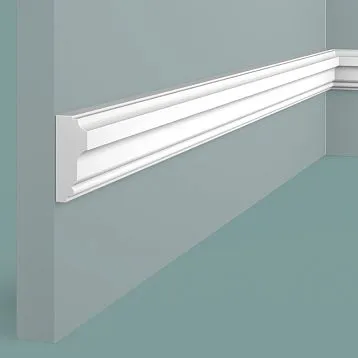
Repair isn't just about money and design. It's about timing. Not just how many weeks the process will take, but when exactly to start it. January frost outside, July heat, or October dampness—each season dictates its own conditions for working with decorative materials.wooden skirting board purchaseIt's easy to buy, but harder to install correctly if you don't account for wood's whims.polyurethane moldingsPolyurethane is more forgiving of weather, but it too has tolerance limits. Let's figure out when to start repairs so decor doesn't become a source of problems.


Wood: A Living Material with a Changeable Character
Wood is not stone or plastic. It was a living organism that, even after sawing, drying, and processing, retains the ability to react to the environment. Wood fibers act like microscopic pumps that absorb moisture when air humidity is high and release it when it is low. This is called hygroscopicity, and it is precisely what makes wood a capricious material for installation.




The Physics of Moisture Exchange: Why Wood Cannot Be Stable
Wood moisture content is measured as the percentage ratio of the mass of water to the mass of absolutely dry wood. Freshly cut wood contains 40-80% moisture — half the weight of the trunk is water. For productionwooden baseboardswood is dried in kilns to 8-12%. This is the equilibrium moisture content for living spaces with central heating.
But the equilibrium is conditional. In winter, when the heating is on, the relative humidity in the apartment drops to 20-30%. Wood releases moisture and shrinks. A baseboard 100 mm wide can shrink by 2-3 mm. In summer, especially in rainy weather, air humidity rises to 60-80%. Wood absorbs moisture and swells. The same baseboard expands back by 2-3 mm.
The magnitude of deformation depends on the wood species. Pine and spruce with a loose structure change dimensions more strongly — up to 5-7% in width with a 10% change in moisture content. Oak and ash with a dense structure are more stable — 3-4%. This is critical during installation — if a pine baseboard is installed in winter at low humidity, in summer it will swell, press against the walls, warp, and crack.
The direction of deformation is uneven. Along the grain (along the length of the board), wood hardly changes — shrinkage is 0.1-0.3%. Across the grain (in width and thickness), deformation is maximum — 3-10%.Wooden plankwith a cross-section of 40×50 mm, when moisture content changes from 8% to 15%, increases in width and thickness by 1.5-2 mm, and in length — by 0.2-0.3 mm over 3 meters.
Our factory also produces:




Critical Periods: When Wood is Most Unstable
Heating season — a period of extremely low humidity. From October to April, radiators dry the air to 20-25% relative humidity. For wood, this is stress. It quickly loses moisture, shrinks, and internal stresses increase. Wooden elements installed in autumn before the heating starts, at 50-60% air humidity, will shrink in winter. Gaps will appear between the baseboard and the wall, corners will separate, and joints will become visible.
Spring transition — April-May, when the heating is off but the weather is still cool. Air humidity quickly rises to 50-70%. Wood absorbs moisture and swells. Baseboards installed in winter in dry air will expand in spring. If installation was done without expansion gaps, the elements will press against each other and warp.
Summer heat with rains — July-August in the middle latitudes. Air humidity fluctuates from 40% on sunny days to 90% during downpours. Daily fluctuations force wood to constantly expand and contract. This is exhausting for the material — micro-cracks appear, which over time turn into visible defects.
Autumn dampness — September-October, when the heating is not yet on, the temperature has dropped, and the air becomes humid. Humidity of 70-85% is normal. Wood absorbs maximum moisture, reaching peak swelling. Installation during this time is dangerous — in spring, when the heating is turned on, the elements will shrink sharply, and gaps will appear.
Get Consultation
Optimal Window: When to Install Wood Safely
Late spring — May-June, when the heating is already off, the weather is stable, and air humidity has settled at 45-55%. Wood is in an intermediate state — not overdried from winter, not oversaturated with moisture from summer. Installation during this period results in minimal seasonal deformation. In summer, the wood will swell slightly; in winter, it will shrink slightly, but the amplitude will be moderate.
Early start of the heating season — October-November, 2-3 weeks after the radiators are turned on. The air has already dried to 30-40%, and the wood has equalized in moisture. Installation at this moment means the elements will be stable in winter — they have already adapted to the dry air. In spring, moderate swelling will occur, but it will be controllable if expansion gaps are provided.
Exclude critical periods — do not install in August-September (maximum humidity, wood is oversaturated) and in January-February (minimum humidity, wood is overdried). These months create the highest risks of subsequent deformation.
Acclimatization: How to Prepare Wood for Installation
BringingWooden planksfrom a cold warehouse and installing it immediately is a guaranteed path to problems. Wood must adapt to the conditions of the room where it will live. This is called acclimatization, and it is a mandatory step that cannot be skipped.
Duration of Conditioning: How Long to Wait
Minimum 48 hours — the absolute minimum for small cross-section elements (baseboards 50-80 mm high, battens 20×30 mm) with a small difference between storage and installation conditions. If the temperature difference does not exceed 10 degrees and humidity 20%, two days is sufficient.
Optimally 7-10 days — the recommended period for standard height baseboards 80-120 mm, battens with a cross-section of 30×40 — 50×60 mm, wooden overlays 15-25 mm thick.Conditioning for a weekallows the wood to fully equalize its moisture content with the surrounding air. The inner layers of the wood reach the same moisture content as the surface layers.
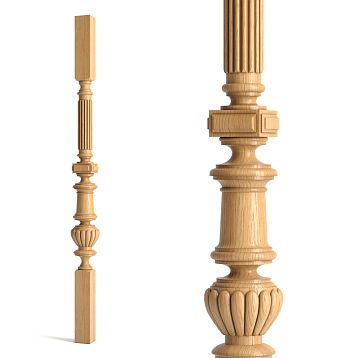
For massive elements (balusters 80-100 mm in diameter, posts with a cross-section of 100×100 mm, wide baseboards 150-200 mm), 14-21 days are required. The thicker the element, the slower moisture diffuses into its depth. Rushing will result in the surface equalizing in moisture while the core remains different. After installation, the core will begin to dry or swell, creating internal stresses that will manifest as cracks.
Storage Conditions Before Installation
The temperature of the room for acclimatization should be 18-22°C — standard room temperature. If the wood was stored in a cold garage at 0-5°C, a sudden move to a heated apartment at +23°C creates shock. Condensation forms on the surface, the wood absorbs moisture quickly and unevenly, leading to deformations.
Relative air humidity 45-65% — the optimal range. This corresponds to the conditions of most living spaces in summer and the shoulder seasons. In winter with the heating on, humidity is 25-35% — acclimatization under such conditions is correct if installation will be in winter. In summer with humidity of 60-75% — acclimatization under such conditions is correct for summer installation.
Unpacking is mandatory. Wood sealed in polyethylene film or cardboard boxes cannot exchange moisture with the air. Unpack the elements, lay them out on a flat surface with gaps between the parts. Air must circulate freely from all sides. Do not stack slats in a tight pile — there must be spacers 10-15 mm thick between them for ventilation.
Horizontal position is the only correct one for storage. Vertically standing boards can warp under their own weight, especially if they are long. Horizontally laid elements maintain their geometry if supports are placed at intervals of no more than 50-70 cm.
Polyurethane: a material that ignores weather whims
Polyurethane for molding— a synthetic polymer that does not absorb moisture, does not react to its changes, does not dry out or swell. The water absorption coefficient is 0.6-0.8% after 24 hours of complete immersion — this is practically zero. An element weighing 1 kg will absorb 6-8 grams after a day in water, and this will not change its dimensions or shape.
Temperature range: from frost to heat
Polyurethane retains its properties in the range from -50°C to +80°C. In winter, in an unheated room or during transportation in frost, the material does not become brittle or crack. In summer, under the influence of heated air from an air conditioner or under a roof, the material does not soften or deform. This means that polyurethane elements can be installed year-round without regard to the thermometer.
The linear coefficient of thermal expansion of polyurethane is 150-180×10⁻⁶ 1/°C. This means that a 2-meter long cornice, when heated by 50 degrees (from 0°C in winter to +50°C in summer under the ceiling), will lengthen by 1.5-1.8 mm. This is negligible — compensated by joint putty and the elasticity of the adhesive. For comparison, wood deformation due to humidity can reach 20-30 mm for the same length.
Shape stability is the main advantage. A polyurethane cornice installed in winter will look exactly the same in summer. A polyurethane rosette mounted in a rainy autumn will not change its diameter in a dry winter. This eliminates the need to calculate expansion gaps, the risk of cracking, and gaps in joints.
Polyurethane acclimatization: is it needed
Temperature adaptation is needed, but for a different reason. If a 2-meter long polyurethane cornice was stored in a cold warehouse at -10°C, its temperature is -10°C. Brought into a room at +22°C, it will begin to heat up. A temperature difference of 32 degrees will cause an elongation of 1.0-1.2 mm. If the cornice is already glued to the wall in a cold state, upon heating it will expand but will not be able to lengthen — the ends will be constrained. Internal stresses will arise.
The solution is simple — let the elements acclimate in the room for 24 hours before installation. Within a day, the material's temperature will equalize with the room temperature. After installation, temperature fluctuations within a living space are insignificant (±5-7 degrees), and linear expansion will be minimal, easily compensated by the elasticity of the adhesive seam.
Humidity acclimatization is not needed — polyurethane does not react to air humidity. You can bring elements from a damp basement with 90% humidity and immediately install them in a dry room with 30% humidity — the dimensions will not change.
Winter installation: heating as a risk factor and an opportunity
The heating season creates specific conditions. The air is dry, humidity 20-35%, temperature stable at +22-24°C. For polyurethane, this is ideal — adhesive sets quickly, the material is stable. For wood, this is a challenge — the material dries out if it was not pre-dried to such humidity.
Advantages of winter renovation
Temperature stability — radiators work around the clock, room temperature fluctuates within ±2 degrees. For adhesives, sealants, and putties, this is optimal — they polymerize evenly, without acceleration or deceleration. Adhesion quality is maximum.
Dry air promotes rapid setting of water-based adhesives. Acrylic adhesives for polyurethane molding set in 2-4 hours instead of 6-8 hours in summer. You can work faster, move to the next stage without long waiting.
Absence of insects and dust — in winter, windows are closed, insects do not fly in from outside, poplar fluff, pollen, and street dirt are not brought in. Freshly painted surfaces remain clean, bugs and dust do not stick.
Risks and Their Mitigation
Over-drying of wood is the main risk. If a baseboard was stored in a warehouse with air humidity of 50-60%, its moisture content is 10-12%. Brought into a heated apartment with air humidity of 25%, it will dry to 6-7% within a week. Installed in this state, in spring it will swell back to 10-11% moisture content, expanding by 2-3 mm in width.
The solution is acclimatization for at least 10-14 days in a heated room.Wood must dryto an equilibrium moisture content of 6-8% before installation. After installation, spring swelling will be moderate if expansion gaps of 3-5 mm per 3 meters of length are provided.
Adhesive temperature is critical. Polyurethane and acrylic adhesives are stored at temperatures of +5-25°C. If adhesive is brought from a cold warehouse, it must warm up to room temperature. Cold adhesive thickens, spreads poorly, and sets slowly. Let adhesive tubes acclimate in a warm room for 12-24 hours before use.
Ventilation is dangerous. An open window in winter lets in cold air at -10-20°C. A sharp temperature drop causes freshly glued elements to contract. The adhesive has not yet fully set, the element may detach from the wall. Ventilate before starting installation, keep windows closed during work.
Summer installation: heat, humidity, and their consequences
Summer seems like the ideal time for renovation — it's warm, light, and you can open windows for ventilation. But high temperatures and variable humidity create their own complexities.
Heat: how it affects materials and adhesives
Temperatures above +28-30°C accelerate adhesive polymerization. Acrylic compounds set in 30-60 minutes instead of 2-4 hours. This reduces the time for adjusting the element's position. If you glue a cornice unevenly — it's impossible to correct after 40 minutes, the adhesive has set. High precision is required on the first try.
Polyurethane adhesives foam more actively at temperatures above +30°C. Instead of expanding by 10-15%, they expand by 20-30%, squeezing out from under the element. You have to press harder, hold longer, and remove more excess.
Wood is unstable in summer if air humidity fluctuates. A sunny day - humidity 40%, rain - humidity 80%. A 40% change within a day causes wood to expand and contract. A baseboard installed on a dry day will swell in the evening after rain. If the installation was tight without gaps, stress will occur.
Humidity: protection of unsecured elements
A summer thunderstorm can raise humidity from 50% to 90% in an hour. Wooden elements laid out for acclimatization begin to absorb moisture. In 2-3 hours at 85-90% humidity, unprotected wood can gain 1-2% moisture, causing swelling of 0.5-1 mm in width.
Film protection - if rain is forecast, cover the laid-out elements with polyethylene film. But not completely sealed - leave the ends open for ventilation. Completely sealed wood under film in heat can 'steam,' causing moisture to condense on the surface.
Storage in a dry room - if renovation is in one room, store wooden elements in another where humidity is controllable. Move them to the work area immediately before installation. This prevents uncontrolled moisture absorption.
Humidity control with a hygrometer - an inexpensive household hygrometer shows relative air humidity with an accuracy of ±5%. If humidity rises above 70%, postpone wood installation until it decreases. Polyurethane can be installed at any humidity.
Optimal conditions for summer installation
Morning hours - from 7:00 to 11:00, when the temperature has not yet risen above +25°C, humidity is stable at 50-60%. The adhesive sets at an optimal speed, allowing time for adjustments. By noon, when the heat intensifies, installation work is finished, and puttying and sanding are done.
Evening hours - from 18:00 to 22:00, when the heat has subsided, and the temperature has dropped to +22-26°C. Conditions are close to spring, work is comfortable. The adhesive will set overnight without temperature fluctuations.
Avoid midday heat of +30-35°C - during these hours, the adhesive sets too quickly, work is uncomfortable, and there is a high risk of errors. It's better to take a break and continue in the evening.
Shoulder seasons: transitional periods and their features
Spring (April-May) and autumn (September-October) - periods of unstable weather. Temperature fluctuates from +5°C at night to +20°C during the day, humidity from 40% to 80%. Heating is sometimes on, sometimes off. These are the most challenging conditions for installation.
Spring: humidity rises, wood swells
March-April - heating is still on or just turned off, it's warm outside but rainy. Humidity quickly rises from winter levels of 25-30% to 50-70%. Wooden elements installed in dry winter air begin to swell. If expansion gaps were not provided, elements press against each other and warp.
May - the optimal month for wood installation. Heating is off, temperature is stable at +18-22°C, humidity has settled at 45-55%. Wood is at an intermediate moisture level, and subsequent seasonal changes will be moderate.
For polyurethane, spring is ideal - stable temperature, moderate humidity, adhesives work optimally. No limitations.
Autumn: humidity is at its peak, risk of mold
September - warm rains, humidity 70-85%, heating not yet on. The worst time for wood installation. Wood absorbs maximum moisture, swelling to its limit. If installed in this state, it will shrink sharply in winter, creating gaps 3-5 mm wide.
Risk of mold - at humidity above 75% and temperature +18-25°C, mold spores actively develop. Wooden elements, especially those unprotected by varnish or paint, can become moldy in 2-3 weeks of storage. Treatment with antiseptics before installation is mandatory.
October after heating is turned on - a good time. After 2-3 weeks of radiator operation, humidity drops to 35-45%, and wood dries out. Installation during this period yields stable results - the wood has already adapted to winter conditions.
Polyurethane can be installed in autumn without limitations. Humidity does not affect the material, and indoor temperature is comfortable for working with adhesives.
Surface preparation: substrate moisture is critical
Not only the decorative material must be prepared. Walls and ceilings - the substrate to which the decor is attached - must be dry. Substrate moisture above the norm destroys adhesive adhesion, causes element detachment, and promotes mold.
Moisture norms for different substrates
Concrete and brick walls - moisture no more than 4-5%. Fresh plaster dries for 3-4 weeks at +20°C and 50-60% air humidity. Attempting to install decor on wet plaster leads to detachment - the adhesive does not set on a wet surface.
Drywall - moisture no more than 8-12%. Drywall dries faster than plaster but still requires curing. Freshly puttied drywall should dry for 7-10 days. Water-based putty contains a lot of moisture that must evaporate.
Wooden substrates - moisture no more than 10-12%. If decor is attached to a wooden wall or panel, the substrate must be dry. Wet wood will dry out, pulling the glued decor with it, creating stress in the adhesive joint.
Measuring humidity
Pin moisture meter - a professional tool that measures moisture in wood and mineral substrates. Pins are inserted into the material at a depth of 10-20 mm, the device shows moisture percentage with an accuracy of ±1-2%. Essential for checking substrate readiness for installation.
Non-contact moisture meter - measures moisture at a depth of 20-40 mm without damaging the surface. Applied to the wall, it shows results in a few seconds. Less accurate than pin meters (error ±3-5%), but sufficient for household control.
Visual signs of excessive moisture — dark spots on plaster, salt efflorescence, peeling wallpaper, musty odor. If any of these signs are present, decorative installation is postponed until complete drying.
Expansion gaps: giving wood freedom to move
Wood will deform — this is inevitable. The goal of proper installation is to anticipate where this deformation will go and provide space for movement.
Gap calculation
Standard gap for baseboards — 3-5 mm per 3 meters of length. This compensates for summer swelling and winter shrinkage within a 2-4% humidity change amplitude. Gaps are left in corners, at joints, and between elements.
Increased gap for unstable species — 5-7 mm per 3 meters for pine, spruce, and other soft coniferous species with high hygroscopicity. These species deform more and require greater freedom.
Reduced gap for stable species — 2-3 mm per 3 meters for oak, ash, beech. Dense wood changes less, so the gap can be minimal.
Gap creation techniques
End gaps — when joining two baseboards end-to-end, leave a 2-3 mm gap filled with elastic acrylic sealant. The sealant stretches and compresses with the wood, keeping the seam sealed but flexible.
Corner gaps — in room corners, baseboards are not joined tightly; leave a 3-5 mm gap covered by a corner element or filled with sealant. This is critical — two elements meet at the corner, both may expand; without a gap they'll press against each other and warp.
Wall gap — leave a 1-2 mm gap between the baseboard and wall, filled with sealant or left open. This allows the baseboard to expand away from the wall without creating stress.
Frequently asked questions
Can wooden baseboards be installed in winter in a heated room?
Yes, but with mandatory long acclimatization of 10-14 days.Wood must dryto winter equilibrium moisture of 6-8%. Provide expansion gaps of 3-5 mm per 3 meters for spring swelling. Winter installation is possible and yields good results when technology is followed.
Is acclimatization needed for polyurethane molding?
Yes, but brief — 24 hours for temperature equalization. If elements were stored in cold, they must warm to room temperature to avoid thermal expansion after installation. Moisture acclimatization isn't needed — polyurethane doesn't absorb moisture.
What time of year is best for installing wooden decor?
May-June and October-November (2-3 weeks after heating is turned on). During these periods, air humidity is stable at intermediate levels of 40-55%, temperature is comfortable at +18-22°C. Wood is in equilibrium state, subsequent seasonal changes are minimal.
Can decor be installed in an unheated room in winter?
No, for wooden decor this is unacceptable — at temperatures below +10°C adhesives don't set, wood freezes, and may deform after thawing. For polyurethane, technically possible from +5°C, but working in such conditions is uncomfortable and installation quality suffers.
How to protect wooden elements from moisture during summer renovation?
Store in a dry room, bring to work area immediately before installation. If rain suddenly starts and humidity jumps above 70%, cover elements with film but not completely — leave ends open for ventilation. Monitor humidity with a hygrometer.
How long does adhesive take to dry when installing decor in winter and summer?
Winter (temperature +22-24°C, humidity 25-35%): acrylic adhesives set in 2-4 hours, full polymerization 24 hours. Summer (temperature +28-30°C, humidity 60-70%): setting 30-90 minutes, full polymerization 12-18 hours. Consider this when planning work.
What to do if gaps appear after baseboard installation?
Gaps up to 2-3 mm wide are normal for wood with seasonal humidity changes. Fill with acrylic sealant matching baseboard color. Gaps wider than 5 mm indicate improper installation (installation during humid period without accounting for shrinkage). Will need to remove and reinstall with expansion gaps.
Can wooden decor be installed in autumn before heating is turned on?
Not recommended, especially in September. Air humidity 70-85%, wood is maximally swollen. After heating is turned on in winter, it will shrink sharply, creating large gaps. Wait for heating to be turned on, allow 2-3 weeks, then install.
Is polyurethane really unaffected by moisture and temperature?
Yes,polyurethane is moisture-resistant(water absorption 0.6-0.8% per 24 hours) and thermally stable (range -50 — +80°C). It can be installed in any season, in humid rooms, at any temperature. Limitations only apply to adhesive — it requires positive temperature for polymerization.
How to tell if wood has acclimatized sufficiently?
Measure moisture with a moisture meter. For living spaces, 8-12% is optimal in winter with heating on, 10-14% in summer. If the difference between the wood's moisture and the equilibrium moisture for the given conditions does not exceed 2%, acclimatization is complete.
Conclusion: plan your renovation wisely, taking into account the nature of materials
Renovation timing is not an arbitrary choice. It's a calculation based on understanding material properties.Wooden wall decorrequires respect for wood's hygroscopicity, foresight in season selection, and patience during acclimatization.polyurethane elementsgive you freedom — install whenever you want, the material won't let you down.
Winter renovation with wood is possible if the wood is dried to winter equilibrium moisture and compensation gaps are provided for spring swelling. Summer installation requires humidity control, protection of materials from rain, and work during morning and evening hours when temperatures are moderate. The shoulder seasons — May-June and October-November after heating is turned on — are optimal periods when conditions are stable and wood is at an intermediate moisture state.
Polyurethane eliminates these complexities.polystyrene ceiling cornicesare installed in January frost and August heat with equal success.moldings for wall panelsdo not react to humidity, maintain dimensions year-round. This makes polyurethane the ideal choice for those who want to install decor when convenient, not when the weather permits.
But the choice between wood and polyurethane is not just a matter of installation convenience. It's a choice between the living warmth of natural material and the practicality of synthetics. Wood breathes, smells, ages nobly. Polyurethane is stable, durable, requires no maintenance. Both materials have a right to exist in interiors, both require understanding their nature.
Company STAVROS offers both directions —solid wood elementsandpolyurethane decor. STAVROS wood undergoes kiln drying to 8-12% moisture, which corresponds to equilibrium moisture for living spaces. Geometry is maintained with an accuracy of up to 0.5 mm thanks to modern equipment. This guarantees that with proper acclimatization and installation, the elements will be stable, with minimal deformation.
STAVROS polyurethane products are made from high-density material 250-300 kg/m³, ensuring strength, resistance to mechanical damage, and durability. Temperature stability is maintained in the range of -50 to +80°C, water absorption does not exceed 0.8% over 24 hours. The material does not deform, crack, or swell regardless of installation season.
STAVROS consultants will help choose the optimal time for installing specific elements, taking into account region, season, and site conditions. We know that autumn humidity in St. Petersburg is higher than in Moscow, and this affects recommendations. We understand that a wooden house in the Moscow region and a brick apartment in the city center require different approaches to choosing installation timing.
Plan your renovation taking into account material properties, and the result will delight you for decades, with STAVROS — a partner who understands the whims of wood and the advantages of polymers.