Article Contents:
- Classification by Purpose: Floor, Ceiling, Universal
- Floor Skirting Boards: Protection and Aesthetics
- Ceiling Skirting Boards: Cornices and Covings
- Universal Skirting Boards: Dual Purpose
- Classification by Profile: Smooth, Figural, Carved
- Smooth Skirting Boards: Minimalism of Form
- Figural Skirting Boards: Classical Architecture
- Carved Skirting Boards: Ornamental Luxury
- Skirting Board Sizes: From Miniature to Monumental
- Miniature Skirting Boards: 40-60 mm
- Standard Skirting Boards: 70-90 mm
- Tall Skirting Boards: 100-140 mm
- Monumental Skirting Boards: 150-200 mm
- Modern Furniture and Wooden Skirting Boards: The Art of Pairing
- Minimalism: Low Furniture and Low Skirting Board
- Scandinavian Style: Natural Wood and Light Tones
- Loft: Contrasts and Rough Textures
- Battens and Skirting Boards: Multi-Level Wall Architecture
- What Are Wooden Battens
- Combination of Battens and Skirting Boards: Three Tiers of Decoration
- Accent Wall: Battens as Texture
- Polyurethane Molding: Completing the Wooden Composition
- Polyurethane Moldings: Complement to Wooden Skirting Boards
- Polyurethane Ceiling Cornices: Alternative to Wooden Ones
- Ceiling Medallions: Focal Point of the Ceiling
- Frequently Asked Questions
- Table of Types of Wooden Skirting Boards
- Conclusion: Architecture of Details

Imagine an interior without skirting boards. Bare joints between floor and walls, unfinished corners, a lack of architectural logic — the space looks incomplete, no matter how expensive the parquet or furniture might be.Types of wooden baseboardsThis is not just a catalog of sizes and profiles; it is a dictionary of the architectural language spoken by the interior. Floor skirting boards, ranging in height from 40 to 200 mm, frame the floor, creating a visual transition from the horizontal plane of the floor to the vertical plane of the wall. Ceiling skirting boards (cornices, covings), ranging in height from 50 to 150 mm, complete the upper part of the room, softening the sharp joint between wall and ceiling. Figural skirting boards with carved elements (dentils, egg-and-dart, ovolos) add ornamentation and classical solemnity. Smooth skirting boards with a rectangular cross-section create minimalist rigor and modern conciseness.Wooden Skirting Board HeightThe height of the skirting board changes the proportions of the room: a tall skirting board (120-200 mm) visually lowers the ceiling, making the space more intimate and cozy (characteristic of classical interiors with high ceilings of 3.0-3.5 m); a low skirting board (40-70 mm) visually increases the height, creating lightness and airiness (characteristic of modern minimalist interiors with ceilings of 2.5-2.7 m).Modern Furniture(low sofas on metal legs, tables with thin tops, armless chairs — minimalist forms without decoration) require baseboards with simple profiles, painted in neutral colors (white, gray, black), which do not compete with the furniture but create a calm background.Rough wooden skirting boardson walls (vertical or horizontal slats with a cross-section of 20×40 mm or 30×50 mm, mounted at intervals of 50-100 mm) are combined with floor baseboards, creating multi-level architecture (slats in the middle of the wall, baseboards at the bottom, cornices at the top — three tiers frame the space). Polyurethane moldings (ceiling rosettes under chandeliers, wall moldings) complement wooden baseboards, creating a balance of natural wood and practical polyurethane. In this article, we systematize the types of wooden baseboards, explain the logic of choosing height, teach how to combine baseboards with modern furniture, and show how to combine slats and baseboards to create expressive decor. Get ready to make an informed choice that will turn your interior from a set of elements into a cohesive work of art.




Classification by purpose: floor, ceiling, universal




Baseboards: protection and aesthetics
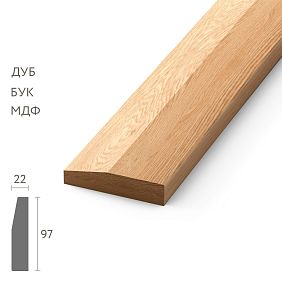
Floor wooden baseboard — a plank installed along the joint of the wall and floor, covering the gap (a technical gap of 10-15 mm between the edge of the parquet/board and the wall is necessary to compensate for the thermal expansion of wood), protecting the lower part of the wall from impacts by feet, furniture, vacuum cleaners, mops. Functions: practical (wall protection, gap concealment, cable routing — many modern baseboards have a channel for wires), aesthetic (framing the floor, creating a visual transition from floor to wall, completing the composition).
The height of the floor baseboard varies from 40 mm (minimalist narrow profiles for small rooms with low ceilings of 2.5-2.7 m, where a high baseboard will visually overwhelm the space) to 200 mm (wide classic baseboards for spacious rooms with high ceilings of 3.0-3.5 m and above, where a narrow baseboard will get lost). Standard heights: 60, 70, 80, 100, 120, 140, 160 mm. Selection rule: the height of the baseboard should be approximately 1/20 of the room height. Ceiling 2.5 m: optimal baseboard height is 125 mm, but since such a standard does not exist, we choose 120 mm. Ceiling 3.0 m: optimal height 150 mm, we choose 140-160 mm.
Thickness of floor baseboard (distance from the wall to the outer edge of the baseboard): 18-25 mm. Thin baseboards of 18 mm look delicate but are fragile (easily damaged by impacts). Thick baseboards of 22-25 mm are stronger, more massive, but protrude more from the wall (may interfere with pushing furniture flush against the wall).
Our factory also produces:

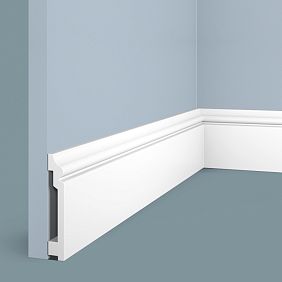
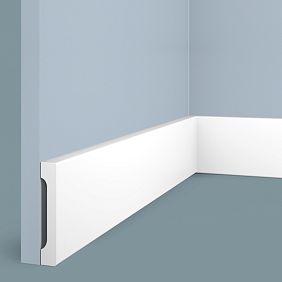
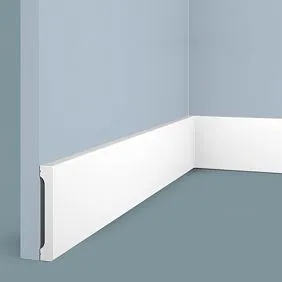
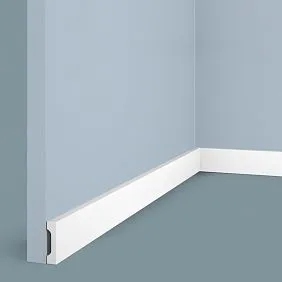
Ceiling baseboards: cornices and covings
Ceiling wooden baseboard (correct name — cornice or coving) — a plank installed along the joint of the wall and ceiling, softening the transition, creating architectural framing of the ceiling. Functions: aesthetic (visually lowering the ceiling height — a high cornice descends 80-120 mm from the ceiling, makes a high ceiling cozier, less oppressive; creating a ceiling frame — the ceiling is perceived as a separate plane, framed by a cornice, not merging with the walls).
Height of ceiling cornice (distance from the wall-ceiling joint down the wall): 50-150 mm. Small cornices of 50-70 mm are used in rooms with ceilings of 2.5-2.7 m (the cornice should not visually overwhelm, be proportionally scaled to the room). Medium cornices of 80-100 mm are suitable for ceilings of 2.8-3.0 m (standard for most apartments and houses). Large cornices of 110-150 mm are used in rooms with high ceilings of 3.2-4.0 m (grand halls, libraries, dining rooms in private houses, old Stalin-era apartments).
Profiles of ceiling cornices: simple (one or two steps, without decoration, minimalist), classic (ovolo, torus, grooves — traditional elements of classical architecture), carved (dentils — teeth, egg-and-dart — egg-shaped ornament, acanthus leaves — complex carved profiles for luxurious interiors).
Get Consultation
Universal baseboards: dual purpose
Some baseboard profiles are universal: can be used as floor or ceiling (depending on room size, style, task). A baseboard with a simple rectangular profile with a chamfer, height 80-100 mm, works as a floor baseboard (standard height for floor baseboard) or as a ceiling cornice (in small rooms with ceilings of 2.5-2.7 m, where a cornice of such height will not overwhelm the space). Universality saves manufacturers costs for molding different profiles, gives consumers flexibility (bought one profile, used both at the bottom and top — stylistic unity).
Classification by profile: smooth, shaped, carved
Smooth baseboards: minimalism of form
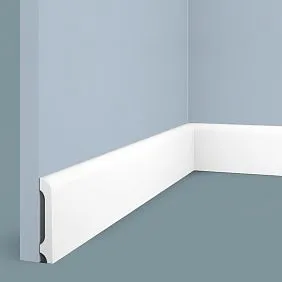
Smooth baseboard — a profile without decorative elements, rectangular or trapezoidal cross-section, one or two chamfers (beveled edges at a 45-degree angle) soften the edges, but there is no decoration. Visually: a strict, laconic, neutral element that does not attract attention, does not compete with other interior elements (furniture, lighting fixtures, decor), serves as a background, frame, finishing touch. Suitable for modern, minimalist, Scandinavian, loft interiors, where decorativeness is minimal, emphasis is on purity of forms, materials, space.
Smooth baseboard is painted to match the wall color (visually merges with the wall, becomes almost invisible, creates a seamless transition effect from floor to wall), in a contrasting color (white baseboard on gray walls, black baseboard on white walls — a graphic accent, highlights the floor line), remains in the natural color of wood (if the floor is wooden, a natural wood baseboard creates material unity). Smooth baseboard is easy to install (no complex relief elements that need careful joining in corners), easy to maintain (smooth surface is easily wiped clean of dust, no recesses where dirt accumulates).
Shaped baseboards: classical architecture
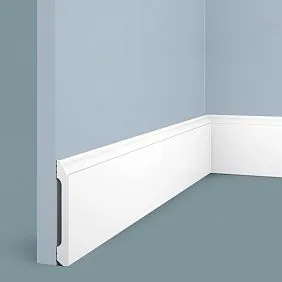
Shaped baseboard — a profile with decorative elements: ovolo (convex semi-circular element along the top of the baseboard, protrudes 8-15 mm, creates play of light and shadow), torus (cylindrical element of smaller diameter than ovolo), grooves (recesses running along the baseboard in parallel lines), steps (several planes at different depths, creating relief). Visually: a classic, traditional, architectural element that references classical European architecture (antiquity, Renaissance, Baroque, Classicism). Suitable for classic, neoclassical, traditional interiors, where historicity, decorativeness, and attention to detail are valued.
Shaped baseboard creates rhythm (repeating elements — ovolos, grooves — along the entire perimeter of the room create a rhythmic composition, dynamism), volume (the relief of the baseboard casts shadows, changing throughout the day depending on lighting — the baseboard lives, breathes), connection with other decorative elements (if the ceiling cornice has an ovolo, the floor baseboard with the same ovolo rhymes, creating unity of top and bottom).
Carved baseboards: ornamental luxury
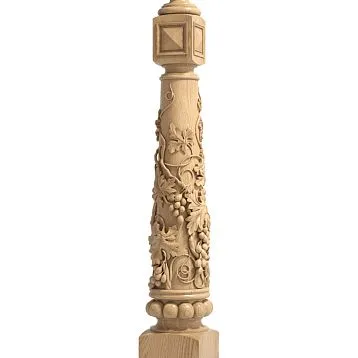
Carved baseboard — a profile with carved ornaments: dentils (teeth — rectangular projections running along the baseboard at equal intervals, resembling teeth, hence the name), egg-and-dart (egg-shaped ornament — elements in the shape of an egg and a dart, alternating along the baseboard), acanthus leaves (stylized leaves of the acanthus plant, carved on the baseboard — a characteristic element of the Corinthian order), meander (geometric ornament in the form of a broken line forming a continuous band).
Carving is done on CNC machines (computer numerical control — the machine cuts the ornament according to a given program, high precision, perfect repeatability, cost lower than hand carving, high productivity) or by hand (a woodcarver cuts the ornament with chisels, each element is unique, has an authorial character, cost is high 5000-12000 rubles/m, production time is long). Carved baseboards are used in luxurious, palatial, Baroque interiors, where decorativeness is maximal, where every detail is a work of art.
Baseboard sizes: from miniature to monumental
Miniature baseboards: 40-60 mm
Baseboards with a height of 40-60 mm — the lowest, delicate, almost unnoticeable. Used in small rooms (area 10-15 m², ceilings 2.5-2.7 m), where a high baseboard will visually overload the space, make the room even smaller. In modern minimalist interiors, where architectural elements should be as restrained as possible, not distract from furniture, art, views from the window. In interiors with an emphasis on the floor (expensive parquet, mosaic flooring, decorative tiles), where the baseboard should not compete with the floor, serves only as a functional edging.
Wooden Skirting Board Height40-50 mm creates lightness, airiness, visually increases the height of the room (the smaller the baseboard, the higher the ceiling appears — the baseboard does not steal height). Disadvantages: a small baseboard protects the wall worse from impacts (a narrow plank covers less of the lower part of the wall), conceals the gap between floor and wall worse (if the gap is more than 10-15 mm, a narrow baseboard may not cover it completely), does not have a channel for cables (there is no space for routing wires in a narrow baseboard).
Standard baseboards: 70-90 mm
Baseboards with a height of 70-90 mm (most popular sizes: 70, 80, 90 mm) — standard for most living spaces. Used in medium-sized rooms (area 15-30 m², ceilings 2.6-2.8 m), in apartments with typical layouts (panel, brick houses with ceilings of 2.6-2.7 m), in modern and eclectic interiors (where the baseboard should be neither too small nor too massive, the golden mean).
A standard baseboard with a height of 80 mm is visually balanced (does not get lost against the wall, but does not dominate either), sufficient for wall protection (covers the lower 80 mm of the wall — the zone most often impacted by feet, furniture, mops), has a channel for cables (many baseboard models with a height of 80-90 mm are equipped with an internal channel with a cross-section of 15×15 mm or 20×20 mm, where wires are routed — internet, telephone, antenna, electrical cables of low-power devices).
High baseboards: 100-140 mm
Baseboards 100-140 mm high (popular sizes: 100, 120, 140 mm) are tall, noticeable architectural elements. Used in spacious rooms (area 30-50 m², ceilings 2.8-3.2 m), in classic interiors (where a tall baseboard is a tradition, an element of classical architecture), in rooms with expensive wooden floors (parquet made of valuable species, solid board 200-300 mm wide — the scale of the floor requires a large-scale baseboard).
A tall 120 mm baseboard visually lowers the ceiling (the taller the baseboard, the lower the ceiling appears — the baseboard takes away height from the wall), creates coziness, intimacy (a tall baseboard makes a room more enclosed, protected, less spacious — an effect suitable for living rooms, libraries, bedrooms where comfort is needed, not spaciousness), adds monumentality (a tall, massive baseboard is associated with stability, solidity, weightiness — characteristic of classic, traditional, prestigious interiors).
Monumental baseboards: 150-200 mm
Baseboards 150-200 mm high (and more — there are projects with baseboards 250-300 mm high, but this is rare) are monumental, dominant elements. Used in large halls (area 50+ m², ceilings 3.5-4.5 m and higher), in historical buildings (old mansions, palaces, museums — where baseboards are originally tall, restoration requires preserving original proportions), in modern interpretations of classics (neoclassicism, eclecticism, where a tall baseboard is a dramatic accent, a statement).
A monumental baseboard 180-200 mm high radically changes the perception of space (the wall is visually divided into three parts: a dark lower part — a 200 mm high baseboard, a middle light part — a 2.3-2.5 m high wall, an upper dark part — a 100-150 mm high ceiling cornice; the proportions are classic, solemn), requires high ceilings (with a 2.7 m ceiling, a 200 mm high baseboard will eat up a third of the wall height, crush the space, look absurd; with a 3.5-4.0 m ceiling, the same baseboard is proportional, appropriate).
Modern furniture and wooden baseboards: the art of combination
Minimalism: low furniture and low baseboard
Modern FurnitureMinimalist style — low sofas with a seat height of 35-40 cm from the floor (traditional sofas 42-45 cm), on thin metal legs or without legs at all (the sofa base lies on the floor), coffee tables 25-35 cm high (low, almost Japanese proportions), armless chairs with thin legs, dining tables with thin tops 20-30 mm thick (visually weightless) — everything is aimed at creating lightness, airiness, minimum mass.
Baseboard for a minimalist interior: height 40-70 mm (low baseboard rhymes with low furniture, does not compete in scale, does not create visual conflict), profile smooth rectangular (without decoration, without fillets, grooves — pure geometry), color matching the walls (baseboard painted the same color as the walls — white, light gray, beige — visually merges with the wall, becomes almost invisible, does not distract from furniture and space) or contrasting (black baseboard on white walls — a graphic accent, emphasizes the floor line, but requires confidence in the choice, risky).
Example composition: a room with white walls, light gray floor (vinyl flooring under concrete or light bleached oak parquet), a low gray sofa on metal legs, a glass and metal coffee table 30 cm high, a white smooth baseboard 60 mm high. The baseboard is delicate, does not attract attention, the furniture is light, the space is airy — minimalism in its pure form.
Scandinavian style: natural wood and light tones
Scandinavian furniture — simple forms (without excessive decoration, but not minimalist — there is softness, roundness, warmth), natural light wood (pine, birch, ash, bleached oak — color light beige, cream, whitish-gray), natural textiles (linen, cotton, wool — pillows, blankets, chair upholstery), emphasis on function and comfort (furniture is comfortable, practical, durable).
Baseboard for a Scandinavian interior: height 70-100 mm (medium scale, proportionate to Scandinavian furniture), profile simple with a fillet (not completely smooth, but not carved — light relief adds warmth, does not overload), material solid pine or ash (natural wood rhymes with wooden furniture), finish oil or white paint (oil emphasizes the wood texture, preserves naturalness; white paint lightens the wood, creates airiness, typical of Scandinavian style).
Example composition: a room with white walls, wooden floor made of light pine, wooden dining table made of ash, chairs with wooden legs and linen upholstery, pine baseboard 80 mm high under oil (natural light yellow wood color). The warmth of wood, naturalness of materials, light palette — Scandinavian harmony.
Loft: contrasts and rough textures
Loft furniture — industrial aesthetic (metal, roughly processed wood, leather, concrete), contrasts (black metal + light wood, dark leather + concrete floor), open structures (visible weld seams on metal table legs, open shelves, open cabinets without doors), large forms (massive tables with thick tops, deep and low sofas, voluminous leather armchairs).
Baseboard for a loft interior: height 80-120 mm (medium or tall, proportionate to the massive loft furniture), profile smooth or simple shaped (can be smooth rectangular, can have one bevel or fillet — the main thing is that there is no carving, ornaments, which are inappropriate in industrial aesthetics), material solid oak or ash (hardwoods that withstand rough use), finish dark tint (wenge, black, graphite — dark baseboard contrasts with light concrete or brick walls) or natural (oak under oil beige-brown rhymes with wooden furniture).
Example composition: a room with brick walls (natural red brick or painted white), concrete floor or dark parquet, metal shelving with wooden shelves, black leather sofa, oak baseboard 100 mm high, tinted black. The baseboard is massive, dark, graphic — loft brutality.
Battens and baseboards: multi-level wall architecture
What are wooden battens
Rough wooden skirting boards— thin long slats with a cross-section of 20×40 mm, 30×50 mm, 40×60 mm (width less than height, the slat is elongated vertically), mounted on walls vertically or horizontally with an interval of 50-150 mm (create a rhythmic texture, striped surface, play of light and shadow). Battens do not carry a functional load (do not protect the wall, do not cover gaps), serve as a decorative element (create architectural interest, texture, volume).
Batten material: solid oak, ash, pine (the same species as for baseboards, to create material unity), MDF (cheaper than solid wood, paints perfectly, suitable for budget projects). Finish: natural oil (emphasizes wood texture, preserves natural color), tinting (gray, brown, black — changes the shade while preserving texture), paint (white, colored — hides texture, emphasis on form and rhythm).
Combination of battens and baseboards: three tiers of decor
Classic scheme of multi-level architecture: floor baseboard (lower tier, height 80-120 mm, frames the floor), wooden battens on walls (middle tier, height from 80-100 cm from the floor to 180-220 cm from the floor, create texture of the middle part of the wall), ceiling cornice (upper tier, height 80-120 mm, frames the ceiling). Three tiers divide the wall horizontally, create structure, rhythm, architectural expressiveness.
Vertical battens: mounted on the wall from the level of the floor baseboard (start at a height of 80-120 mm from the floor, the upper edge of the floor baseboard) to a level of 180-220 cm from the floor (do not reach the ceiling cornice by 50-80 cm, leaving the upper part of the wall free). Interval between battens: 50-80 mm (frequent rhythm, dense texture, active surface), 100-150 mm (rare rhythm, airy texture, calm surface). Battens create vertical stripes, visually increase the height of the room (vertical lines pull the gaze upward), add dynamics.
Horizontal battens: mounted on the wall horizontally at one height (for example, at a height of 100 cm from the floor there is a horizontal line of several battens with an interval of 50-100 mm, creating a strip 30-50 cm high). Horizontal battens emphasize horizontality, visually expand the space (horizontal lines pull the gaze sideways), create a zone (for example, horizontal battens behind the bed headboard highlight the sleeping area, behind the TV — the TV zone).
Accent wall: battens as texture
Accent wall — one wall in a room that differs from the others (in color, texture, material, decor), creating a focal point that attracts the eye. Battens on an accent wall: mount vertical battens with an interval of 50-70 mm on one wall (for example, the wall behind the sofa in the living room, the wall behind the bed headboard in the bedroom, the wall behind the dining table in the dining room), paint the other walls smoothly (white, gray, beige paint). The wall with battens becomes textured, voluminous, stands out against the smooth walls, creates an accent.
Color scheme: battens of natural wood (oak beige-brown) on white walls (contrast of warm wood and cold white, classic scheme). White battens (painted) on white walls (monochrome, only the relief stands out, play of light and shadow). Black battens on white walls (graphic contrast, dramatic accent, suitable for loft, Scandinavian, modern interiors).
Floor baseboard in an interior with an accent wall made of battens: material the same as the battens (if battens are solid oak, baseboard is also solid oak — material unity), height medium 80-100 mm (does not compete with battens, serves as a frame for the floor), color the same as the battens (if battens are natural wood, baseboard is natural wood; if battens are white, baseboard is white — color unity creates harmony).
Polyurethane molding: finishing the wooden composition
Polyurethane moldings: an addition to wooden skirting boards
Polyurethane moldings are strips 40-100 mm wide, mounted horizontally on walls (similar to wooden slats, but made of polyurethane—a synthetic material that is lightweight, moisture-resistant, and easy to install), creating frames, panels, and architectural structure. Advantages of polyurethane over wood: lower price (an 80 mm wide polyurethane molding costs 350-650 rub/m, while a wooden molding of the same size costs 800-1500 rub/m—saving 50-60%), lighter weight (a linear meter of polyurethane molding weighs 0.5-0.7 kg, while wooden molding weighs 1.0-1.5 kg—easier installation, can be glued without screws), absolute moisture resistance (polyurethane does not absorb water, does not swell, does not rot—can be installed in bathrooms, kitchens, where wood is risky).
Combination of wooden skirting boards and polyurethane moldings—a balance of naturalness and practicality. Wood where it is most valuable and noticeable (floor skirting board around the perimeter of the room—an element you constantly see, sets the main tone, rhymes with the wooden floor). Polyurethane where decorative volume is needed without high cost (moldings on walls at a height of 100-120 cm from the floor, creating panels, frames—elements that add architectural interest but do not have to be made of wood).
Stylistic compatibility: wooden skirting board in natural color (oak beige-brown) + white polyurethane moldings (classic combination, contrast of warm wood and cool white). Painted white wooden skirting board + white polyurethane moldings (monochrome scheme, color unity, materials differ in texture but visually blend). Tinted gray wooden skirting board + gray polyurethane moldings (modern monochrome scheme).
Polyurethane ceiling cornices: an alternative to wooden ones
Polyurethane ceiling cornice (height 60-150 mm, width adjacent to wall and ceiling 50-100 mm)—an alternative to wooden ceiling skirting board, cheaper (a 100 mm high polyurethane cornice costs 450-850 rub/m, wooden 1200-2500 rub/m), lighter (a linear meter of polyurethane cornice weighs 0.6-1.0 kg, wooden 1.5-2.5 kg), easier to install (glued with polyurethane adhesive, sets in 10-15 minutes, wooden requires screws or reliable adhesive plus supports).
Combination of wooden floor skirting board and polyurethane ceiling cornice—a practical solution. Wood at the bottom (prestige, naturalness, durability, rhymes with wooden floor), polyurethane at the top (savings, ease of installation, moisture resistance—less risk of mechanical damage on the ceiling, polyurethane works excellently there). Visually, if the skirting board and cornice are painted the same color (both white, both gray), the material is not discernible from a distance, the interior is perceived as cohesive.
Ceiling rosettes under the chandelier: focal point of the ceiling
Polyurethane rosette with a diameter of 60-120 cm, mounted on the ceiling in the center of the room, the chandelier is attached through the central hole of the rosette. The rosette creates visual support for the chandelier (the chandelier does not hang in emptiness but grows from a decorative element), adds architectural interest to the ceiling (relief, ornament, play of light and shadow), stylistically rhymes with the wooden floor skirting board (if the skirting board is classic with a torus, the rosette is also classic with a floral ornament; if the skirting board is simple, the rosette is geometric).
Color combination: natural wooden floor skirting board (oak beige-brown) + white rosette (classic). Painted white wooden skirting board + white rosette (monochrome). Tinted gray wooden skirting board + gray rosette (modern option).
Frequently asked questions
Can the same skirting board profile be used for floor and ceiling?
Yes, you can, if the profile is universal (simple rectangular or with a torus, height 80-100 mm is suitable both for standard-height floor skirting board and for ceiling cornice in rooms with ceilings 2.5-2.8 m). Advantages: style unity (top and bottom of the room are framed by identical elements, creating a symmetrical frame), savings (you buy one profile, use it both at the bottom and top, no need to find two compatible profiles). Limitations: if ceilings are high (3.0+ m), a ceiling cornice height of 80-100 mm may be too small (a cornice of 120-150 mm is needed for proportionality), then a universal profile will not work, you will have to select different ones.
How to choose skirting board height relative to ceiling height?
Classic rule: skirting board height = 1/20 of room height. Ceiling 2.5 m: optimal skirting board height 125 mm, nearest standard 120 mm. Ceiling 2.7 m: 135 mm, choose 140 mm or 120 mm (depends on style—classic interior requires a higher skirting board 140 mm, modern allows 120 mm or even 100 mm). Ceiling 3.0 m: 150 mm, choose 140-160 mm. Ceiling 3.5 m: 175 mm, choose 160-180 mm. The rule works for classic and traditional interiors. In minimalist and modern interiors, you can intentionally reduce skirting board height (choose 60-80 mm even with a 2.7 m ceiling to create lightness, airiness, visually increase height).
Is it necessary to paint a wooden skirting board if it is made of oak or ash with beautiful texture?
Not necessarily, if you want to preserve the naturalness of the wood. Solid oak or ash skirting board with expressive texture is beautiful on its own (annual rings, knots, color transitions—uniqueness of each plank). Oil finish (linseed, tung) emphasizes the texture, protects the wood from moisture and dirt, preserves the natural color (oak beige-brown, ash light yellow). Paint hides the texture (if the skirting board is painted with white or colored enamel, the texture of annual rings is not visible, emphasis only on shape and color). Painting makes sense if: the interior requires a monochrome scheme (white walls, white skirting board, white doors—color unity), if the wood texture does not match the overall style (e.g., in strict minimalism, wood texture can be excessive decoration), if the skirting board is made of cheap wood (pine with knots, uneven color—paint will enhance).
Can wooden slats be mounted on a wall independently or are specialists needed?
You can do it yourself if you know how to use a level, drill, and screwdriver. Technology: mark vertical lines on the wall (distance between lines = interval between slats, e.g., every 70 mm), check verticality with a laser level (each line strictly vertical, otherwise slats will be crooked, composition falls apart). Drill holes in the wall along marked lines (step 40-50 cm), insert plastic dowels. Place the slat against the wall (align with marked line), screw with screws through the slat into dowels (screws 50-60 mm long pass through slat thickness 20-30 mm, enter dowel 30-40 mm, hold firmly). Screw heads are countersunk into wood 2-3 mm, masked with wooden plugs or putty. Installing 10-15 slats 2.0 m high will take 4-6 hours (with marking, drilling, fastening, masking). If no experience, afraid of messing up, you can hire a craftsman (work cost 1500-3000 rub for a wall area of 10-15 m² with slats).
How to care for wooden skirting boards and slats?
Wood under oil: dust wiped with a dry soft cloth or vacuum with soft attachment (once a week or two). Stains (spots, hand marks, dirt) removed with a damp cloth, slightly moistened with water and a drop of neutral soap (not wet, so water does not soak into wood for long). Oil coating renewed every 3-5 years (apply a new layer of oil with a brush or cloth, oil absorbs, refreshes color and protection).
Wood under varnish: dust and stains removed with a damp cloth (varnish creates a waterproof film, easier to wash than oil). Varnish lasts 7-12 years, then may dull, develop microcracks, requires renewal (sanding old varnish with sandpaper grit 180-220, applying a new layer of varnish).
Painted wood: dust and stains washed with a damp cloth and soapy solution. Paint lasts 8-15 years, then may yellow (white) or fade (colored), will require repainting (sanding old paint, priming, new two coats of paint).
How much do wooden skirting boards and slats cost? How to calculate the budget?
Price per linear meter of wooden skirting board: solid pine 850-1600 rub/m (depends on height, profile, finish), solid oak 1800-3200 rub/m, solid ash 1500-2800 rub/m. Wooden slats: solid pine 450-800 rub/m, solid oak 1200-2200 rub/m. For a 60 m² apartment (wall perimeter approximately 65 meters): floor skirting board made of oak height 100 mm = 65 m × 2200 rub/m = 143000 rub. Accent wall with slats (wall area 3.5 m × 2.7 m = 9.5 m², vertical slats with interval 70 mm, need approximately 50 linear meters of slats height 2.0 m): 50 m × 1500 rub/m = 75000 rub. Total: skirting boards + slats = 218000 rub material only (without labor). Installation labor: skirting boards 300-600 rub/m (65 m × 450 rub/m = 29250 rub), slats 1500-3000 rub per wall (2500 rub). Total with labor: 249750 rub. Budget is high, but quality, durability, beauty of natural wood justify it.
Table of types of wooden skirting boards
| Criterion | Floor skirting board 40-60 mm | Floor skirting board 70-90 mm | Floor skirting board 100-140 mm | Floor skirting board 150-200 mm | Ceiling cornice 60-100 mm | Ceiling cornice 110-150 mm |
|---|---|---|---|---|---|---|
| Room height | 2.4-2.6 m (low ceilings) | 2.6-2.8 m (standard ceilings) | 2.8-3.2 m (high ceilings) | 3.5-4.5 m (very high ceilings) | 2.5-2.8 m (standard) | 3.2-4.5 m (high) |
| Interior style | Minimalism, modern, Scandinavian | Universal (modern, eclectic, light classic) | Classic, neoclassical, traditional | Palatial, historical, luxurious classic | Modern, eclectic | Classic, neoclassic |
| Visual effect | Increases height, lightness | Balance | Reduces height, coziness, monumentality | Drastically reduces height, intimacy | Ceiling framing is delicate | Ceiling framing is large-scale |
| Profiles | Smooth rectangular | Smooth, simple figured | Figured with fillet, carved | Carved with ornaments | Simple, classic | Classic, carved |
| Price per linear meter (oak) | 1800-2200 rub | 2000-2500 RUB | 2200-2800 RUB | 2800-3500 RUB | 1200-2000 RUB | 2000-3000 RUB |
| Application | Small rooms, emphasis on height | Standard apartments, universal | Spacious rooms, classic interiors | Halls, formal rooms, mansions | Standard rooms | Large halls, high-ceilinged rooms |
Conclusion: the architecture of details
Types of wooden baseboards— is not a technical catalog of sizes, but a palette of architectural tools used to create an interior. Floor skirting boards with heights from 40 to 200 mm frame the floor, protect walls, and set the scale (low skirting creates lightness, high — monumentality). Ceiling cornices with heights from 60 to 150 mm finish the upper part of a room, soften the wall-ceiling joint, and visually lower the ceiling (making a high room cozier). Figurative skirting boards with fillets, grooves, and carvings add classic decorativeness, referencing European architectural tradition (antiquity, classicism, empire). Smooth skirting boards with a rectangular profile create minimalist rigor and modern conciseness.
Wooden Skirting Board Height is selected according to the 1/20 rule of room height (ceiling 2.5 m — skirting 120 mm, ceiling 3.0 m — skirting 150 mm), but the rule is adjusted by interior style (minimalism allows for a lower skirting of 60-80 mm even with a 2.7 m ceiling, classic requires a higher one of 140-160 mm even with a 2.8 m ceiling).Modern Furniture of minimalist style (low sofas, thin countertops, metal legs) pairs with low, smooth skirting boards 40-70 mm high, painted in wall color or contrasting. Scandinavian furniture (natural light wood, simple forms) harmonizes with pine or ash skirting boards 70-100 mm high, finished with oil or white paint. Loft furniture (industrial aesthetic, metal and wood) requires massive oak skirting boards 80-120 mm high, stained in dark colors.
Rough wooden skirting boards on walls (vertical or horizontal slats with cross-sections of 20×40 mm, 30×50 mm) are combined with floor skirting boards, creating multi-level architecture (skirting at the bottom, slats in the middle, cornice at the top — three tiers frame the space). An accent wall with vertical slats (interval 50-70 mm) becomes textured, expressive, a focal point of the interior. Polyurethane molding (wall moldings, ceiling cornices, ceiling medallions) complements wooden skirting boards, creating a balance of natural wood (prestige, warmth, durability) and practical polyurethane (cheaper, lighter, more moisture-resistant).
STAVROS has been operating in the interior solutions market for over twenty-three years, offering a full range of wooden skirting boards, slats, cornices, and moldings for comprehensive finishing. Wooden floor skirting boards made of solid oak, ash, pine, larch — height from 40 to 200 mm (standard 60, 70, 80, 100, 120, 140, 160, 180 mm, custom sizes available), profiles from simple smooth (rectangular cross-section with one or two chamfers, minimalist) to classic figurative (fillet, bead, grooves) and carved (dentils, egg-and-dart, acanthus leaves — hand-carved or CNC-carved), finish natural with oil (linseed, tung oil highlights the grain, natural beige-brown color for oak, light yellow for ash), stained (gray, brown, wenge, black — stain changes the shade while preserving the grain), painted (white acrylic enamel, any RAL color — paint hides the grain, emphasis on form and color). Cost 850-3500 RUB/m depending on wood species (pine cheaper, oak more expensive), height, profile, finish.
Wooden ceiling cornices (ceiling skirting boards, coving) made of solid oak, ash, pine — height from 60 to 150 mm (standard 70, 80, 100, 120, 140 mm), profiles from simple (one or two steps without decor) to classic (fillet, bead) and carved (dentils, ornaments), finish natural, stained, painted. Cost 1200-3000 RUB/m.
Wooden slats made of solid oak, ash, pine — cross-section from 20×40 mm to 40×60 mm (standard 20×40, 30×50, 40×60 mm), plank length 2.0-3.0 meters, finish natural with oil, stained, painted (white, gray, black). Cost 450-2200 RUB/m depending on wood species, cross-section, finish.
Moldings and cornices made of polyurethane — over 100 profiles: width from 40 to 150 mm (narrow 40-60 mm for delicate decor, medium 70-100 mm for standard compositions, wide 110-150 mm for large-scale panels and cornices), profiles from smooth (simple rectangular cross-section — for modern interiors) to classic with ornaments (dentils, beads, floral elements — for classic, neoclassic). Moldings are supplied in planks 2.0-2.4 meters long, polyurethane from European manufacturers with density 180-220 kg/m³ (high density ensures whiteness, strength, clarity of relief), moisture-resistant (can be installed in bathrooms, kitchens), lightweight (linear meter of molding 80 mm wide weighs 0.5-0.7 kg, installed with adhesive). Cost 350-1200 RUB/m.
Comprehensive approach: STAVROS offers to select floor skirting boards, ceiling cornices, wooden slats, polyurethane moldings so that all elements harmonize stylistically (unified style — classic, neoclassic, minimalist, Scandinavian, loft, eclectic), color-wise (natural wood + white molding, white skirting + white moldings, gray skirting + gray moldings + gray slats), proportionally (skirting height, molding width, slat cross-section are balanced). Designer consultations (element selection, material quantity calculation, layout development for slats and moldings), technical support (installation instructions, recommendations for fasteners, adhesives, tools), quality guarantee (24 months on solid wood skirting boards, 24 months on slats, 36 months on moldings).
Choosing STAVROS means choosing quality materials (solid wood kiln-dried to 8-10% moisture content, polyurethane from European manufacturers), breadth of assortment (dozens of skirting profiles, hundreds of molding profiles, many slat options), professional consultations (assistance in selection, calculation, design), honest prices without markups. Create interiors where every detail is thought out, every line works, every element is in its place. With STAVROS, the architecture of details becomes reality.