Article Contents:
- Evolution of decorative finishing: from antiquity to the present day
- Antiquity: birth of architectural decoration
- Renaissance and Baroque: peak of ornamentation
- Neoclassicism and Neoclassical: return to harmony
- Modern types of decorative wall finishing
- Decorative plaster: texture and color
- Wallpapers: from simple to complex
- 3D Panels: volume and dynamics
- Decorative stone and brick: brutality and character
- Trim items: architecture in details
- Moldings: universal design tool
- Crown moldings: completion of composition
- Baseboards and casings: details matter
- Beautiful molding: elegance in every line
- What is interior molding
- Materials for molding production
- Ornaments and styles
- Trim collections: systematic approach to beauty
- Advantages of the collection approach
- STAVROS 'Classic' Collection
- Application of molding in interior: from classic to avant-garde
- Classic interior: luxury in details
- Neoclassicism: traditions in modern interpretation
- Eclecticism and fusion: bold combinations
- Modern style: classic reinterpreted
- Technologies for working with molding: from selection to installation
- How to choose the right molding
- Finishing molding
- Installing molding: professional approach
- Frequently asked questions about decorative wall finishing
- Which type of finishing is the most durable?
- Can different types of finishing be combined?
- Is molding suitable for small rooms?
- How much does decorative wall finishing cost?
- Can molding be installed by oneself?
- How to care for decorative finishing?
- Are classical forms going out of fashion?
- STAVROS: craftsmanship proven by time

An empty wall is not just a design problem — it's a missed opportunity. An opportunity to tell a story, create an atmosphere, express individuality. In an era when standard layouts make apartments look alike,decorative wall finishingbecomes the very tool that transforms a soulless space into a unique, character-filled interior.
Worldtypes of decorative wall finishingis incredibly diverse — from minimalist geometric solutions to luxurious ornamental compositions. But there is an element that unites classicism and modernity, luxury and minimalism, traditions and innovations. This element —beautiful interior moldingis capable of transforming space simply by its presence.


Evolution of decorative finishes: from antiquity to the present day
The desire to decorate the walls of dwellings is rooted in human nature since ancient times. Cave paintings by prehistoric people, frescoes in Egyptian temples, mosaics in Roman villas — all of this are precursors of modern decorative finishes.




Antiquity: birth of architectural decoration
Ancient Greeks and Romans elevated the art of space decoration to unprecedented heights. It was in antiquity that the architectural orders — Doric, Ionic, Corinthian — were born, defining beauty canons for centuries to come. Cornices, friezes, architraves, column capitals — all of this was not merely structural elements, but full-fledged works of art.
Stucco — relief decorations made of plaster or stucco, depicting plant motifs (acanthus, laurel, grapevine), geometric ornaments (meander, beads, Ionic patterns), mythological scenes. These elements created visual opulence, emphasized the owner’s status, demonstrated refined taste and commitment to cultural traditions.
The Romans perfected the technique of decorative finishes. Walls of villas were covered with frescoes, divided into horizontal zones using relief moldings, adorned with niches containing statues. Ceilings were decorated with coffers — recessed square or polygonal panels with paintings. All of this created a sense of monumentality, richness, and cultural refinement.
Our factory also produces:


Renaissance and Baroque: the peak of ornamentation
After the relatively austere Middle Ages, the Renaissance revived interest in ancient canons of beauty. Renaissance architects and artists studied Roman monuments, revived forgotten techniques, and adapted ancient forms to new realities. Walls of palaces and churches were once again adorned with stucco, frescoes, and marble.
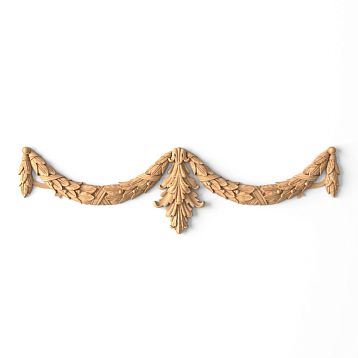
Baroque took decorative art to unprecedented scale. Walls became complex multi-level compositions, where stucco intertwined with painting, gilding shimmered in candlelight, and mirrors doubled the luxury.Relief DecorationIt became even more lavish, dynamic, and theatrical — acanthus scrolls, putti, shells, garlands created a sense of unrestrained celebration.
Parallel to this, the art of wooden finishes developed. Boiserie — wooden panels with carving and inlay — adorned walls of aristocratic residences. Parquet made from precious woods was laid in complex geometric patterns. Wooden ceilings with carved beams and coffers created a sense of warmth and solidity.
Get Consultation
Classicism and Neoclassicism: return to harmony
A reaction to Baroque excess, Classicism — a style returning to ancient strictness and harmony of proportions. Decoration became more restrained, yet no less refined. Straight lines, symmetrical compositions, noble materials — marble, precious woods, quality plaster.
MoldingsNeoclassicism at the end of the 19th — beginning of the 20th century revived interest in these forms, adapting them to new technologies and materials. Lighter and more accessible ways of creating decoration appeared, making classical finishes accessible not only to the aristocracy but also to the middle class.
Modern types of decorative wall finishes
Modern types of decorative wall finishes
Today's market offers an incredible variety of materials and technologies for wall finishing. Let's consider the main directions.
Decorative plaster: texture and color
Decorative plaster is one of the most popular types of finishing. It is a coating that creates a certain texture on the wall — from smooth, like marble, to rough, relief-like. There are many techniques and effects.
Venetian plaster imitates polished marble. It is applied in extremely thin layers, each of which is smoothed and polished. The result is a deep, almost transparent surface with subtle color reflections, creating a sense of luxury and refinement. Ideal for classical and neoclassical interiors.
Textured plaster creates a relief surface. 'Termite' — with characteristic grooves resembling the tracks of a termite. 'Shuba' — with a rough, granular texture. 'Barash' — with small rounded protrusions. These options are more democratic, practical, and suitable for modern interiors.
Structural plaster contains various fillers — mineral granules, fibers, mother-of-pearl. It allows creating unique textures and effects — from imitation of stone and wood to abstract artistic surfaces. The possibilities are limited only by the master's imagination.
Wallpapers: from simple to complex
Wallpapers have gone a long way from simple paper rolls to high-tech coatings with 3D effects. Modern wallpapers are not a budget compromise, but a full-fledged design tool.
Textile wallpapers create a sense of luxury and comfort. Silk, linen, velvet on a fabric base — these finishes have noble texture, pleasant to the touch, provide additional sound insulation. They are expensive, require professional installation and careful maintenance, but the result is worth it.
Vinyl wallpapers on a non-woven base — the golden middle ground between beauty and practicality. They can imitate any materials — brick, stone, wood, leather, textile. Durable, washable, long-lasting, they are suitable even for rooms with high humidity.
Photo wallpapers and frescoes turn the wall into a painting. Modern printing technologies allow creating photographic-quality images on any theme — from classical landscapes to abstract compositions. This is a powerful tool for creating accent walls, visually expanding space, and realizing bold design ideas.
3D panels: volume and dynamics
3D panels — a relatively new direction rapidly gaining popularity. These are relief panels creating a volumetric pattern on the wall — waves, geometric shapes, abstractions, natural motifs. Materials are diverse — gypsum, MDF, PVC, wood, composites.
Gypsum 3D panels are eco-friendly, fire-safe, and have good sound insulation. They can be painted in any color, patinated, or gilded. The downside — fragility, demanding installation, significant weight.
MDF or PVC panels are lighter, easier to install, and more affordable. They can imitate various materials, be covered with photographic film. The downside — less eco-friendliness, more 'artificial' appearance compared to gypsum.
Wooden 3D panels — premium segment. Natural wood with its texture, warmth, tactile qualities creates a unique atmosphere. Such panels can be carved, inlaid, or combined with different species. These are true works of art capable of becoming the focal point of the entire interior.
Wall finishing with stone or decorative brick: brutality and character
Wall finishing with stone or decorative brick — a choice for those who appreciate texture, brutality, and connection with nature. Natural stone is expensive and requires professional installation, but its beauty and durability have no analogues.
Artificial decorative stone imitates natural materials — slate, sandstone, limestone, granite. It is lighter than natural stone, easier to install, more affordable, but still looks quite convincing. Stone cladding creates an accent, attracts attention, adds character to the interior.
Decorative brick — classic for loft and industrial style interiors. Red, white, weathered, glazed — brick comes in various forms, but always creates a sense of strength, reliability, history. A brick wall can be brutal or refined — it all depends on the finish and context.
Moldings — extended decorative elements: moldings, cornices, baseboards, door and window casings, picture frames. They are sold by the linear meter (hence the name) and are used for framing, zoning, and creating architectural accents.
Trimming ItemsMoldings: a universal design tool
A molding is a decorative strip with a profiled cross-section. It can be simple (one convexity or concavity) or complex (combination of several elements, carved ornament). Moldings are made from various materials — polyurethane, gypsum, wood, MDF.
The main application of moldings is creating wall panels. Moldings frame rectangular or square wall sections, which are then highlighted with color, wallpaper, or fabric. This is a classic technique characteristic of palace interiors, but still relevant today.
Moldings are used to visually divide walls into zones. A horizontal molding at about one-third the height from the floor creates a 'plinth,' visually making the room more proportionate. Vertical moldings create rhythm, draw the eye upward, and raise the ceiling.
Moldings frame doors, windows, mirrors, and paintings. A molding can be wide and heavy or thin and elegant — the choice depends on the room's scale and interior style. It is important to maintain proportions: a too heavy molding in a small room will overwhelm, while a too thin one in a large hall will disappear.
Moldings frame doors, windows, mirrors, and paintings. Moldings can be wide and heavy or thin and delicate — the choice depends on the room’s scale and interior style. It is important to observe proportions: an overly heavy molding in a small room will feel oppressive, while a too thin molding in a large hall will disappear.
Cornices: finishing the composition
A cornice is a molding installed at the junction of the wall and ceiling. It performs several functions: hides unevenness at the junction, creates a smooth transition, adds completeness to the room. A cornice can be simple and minimalist or ornate, with carved ornament.
Wide cornices visually lower the ceiling height, which may be appropriate in rooms with very high ceilings. Narrow ones, on the contrary, create a sense of lightness, do not overload the space. A cornice with backlighting (when an LED strip is hidden behind it) creates a 'floating ceiling' effect, adding modernity to the interior.
Classic cornices are often adorned with carving — acanthus leaves, palmettes, beads, Ionic elements. These ornaments originated in antiquity and remain relevant in classical and neoclassical interiors. For modern styles, choose minimalist profiles without decoration, emphasizing clean lines and proportions.
Baseboards and casings: details matter
A baseboard is an element covering the junction of the wall and floor. It may seem purely functional, but it largely determines the perception of the interior. A high baseboard (12-15 cm) is characteristic of classical interiors, creating a sense of solidity. A low one (5-7 cm) — for modern, minimalist spaces.
Casings are frames for door and window openings. They can be flat or three-dimensional, simple or carved. A casing 'completes' the opening, making it a decorative element rather than just a technical necessity. Wide carved casings are characteristic of classic styles, while narrow minimalist ones — for minimalism.
Moldings — frames for door and window openings. They can be flat or three-dimensional, simple or carved. A molding 'completes' the opening, turning it into a decorative element rather than just a technical necessity. Wide carved moldings are characteristic of classicism, while narrow, minimalist ones suit minimalism.
Beautiful picture frame
Picture frames — a special category of molding products, distinguished by complex profiles and rich decoration. If a molding is a functional element with decorative properties, a picture frame is primarily decorative, although it performs certain functions.What is an interior picture frame
A picture frame is a profiled strip with carved or relief decoration, used to frame mirrors, paintings, panels, and create decorative compositions on walls and ceilings. The term comes from French (baguette — stick) and originally denoted picture frames.
Over time, the application of picture frames has expanded. Today
Over time, the application of molding expanded. Todaypicture frames are used not only for framing but also as standalone decorative elements — for creating wall panels, decorating ceilings, embellishing furniture, forming niches and portals.Picture frames differ from simple moldings in profile complexity and ornament richness. While a molding can be relatively simple, a picture frame is always rich in details — carving, relief, combinations of various elements. This makes it more expressive but also more demanding in terms of context — a picture frame must match the interior style.
Molding differs from simple molding in profile complexity and ornament richness. While molding can be relatively simple, molding is always rich in detail — carving, relief, combinations of various elements. This makes it more expressive, but also more demanding in terms of context — molding must match the interior style.
Materials for making picture frames
Traditional material for quality picture frames — natural wood.Wooden decorationWooden decoration possesses unique qualities: warmth, noble texture, tactile comfort, durability. Oak, beech, walnut, ash — each species imparts its own character to the picture frame.
Oak picture frames are massive, solid, with expressive texture. This is a choice for classical interiors where solidity and prestige are valued. Oak does not deform, is not afraid of moisture, serves for decades, gradually acquiring noble patina.
Beech picture frames are more delicate, with uniform fine-grained structure. Beech is ideal for delicate carving, well-suited for toning, creating a lighter, more elegant impression. This is a choice for neoclassical and transitional interiors, where elegance without excessive massiveness is important.
MDF as a base for picture frames — a compromise solution combining accessibility and good operational qualities. MDF does not deform, does not crack, is excellently machined, creating sharp, geometrically precise profiles. MDF picture frames can be painted, laminated, or covered with veneer, imitating expensive wood species.
Polyurethane picture frames — the most affordable option. They are lightweight, easy to install, not afraid of moisture. Modern technologies allow creating polyurethane products that are visually indistinguishable from wooden or gypsum ones. The downside — 'plastic' tactile sensations, less prestige compared to natural materials.
Ornaments and styles
Decorative profilesDecorative profiles differ not only by material but also by ornament style. Each historical era developed its own characteristic motifs.
Classic ornaments trace back to antiquity. Acanthus — stylized leaves of a Mediterranean plant — one of the most common motifs. Meander — continuous broken line, symbolizing eternity. Ionic — egg-shaped elements alternating with darts. Beads — chain of round elements. Palmettes — stylized fan-shaped leaves.
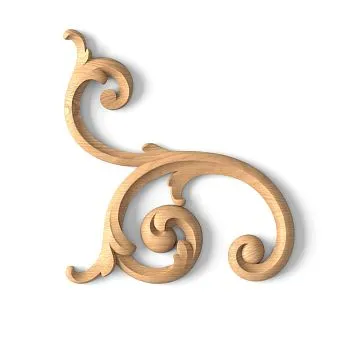
Baroque ornaments are more lavish, dynamic, and asymmetrical. Scrolls, shells, cartouches, garlands of flowers and fruits, putti (small angels) — all this creates a sense of movement, theatricality, luxury. Baroque picture frames are suitable for interiors of corresponding style or eclectic spaces, where their excess becomes a deliberate accent.
Modern ornaments are characterized by smooth, curved lines, plant motifs — stylized irises, lilies, climbing stems. Modern style is more restrained than baroque, but no less decorative. This is a choice for interiors where elegance without excessive ornamentation is valued.
Modern picture frames can be minimalist, geometric, or minimalist. They lack traditional ornamentation but are expressive due to the play of volumes, proportions, combinations of planes and edges. Such picture frames are suitable for modern interiors where classical forms are adapted to a new aesthetic.
Collections of moldings: systematic approach to beauty
Collections of moldingsCollections of moldings — ready-made sets of decorative elements united by a common style. A collection may include picture frames of different widths, moldings, cornices,carved appliqués, rosettes — everything needed for comprehensive interior decoration.
Advantages of the collection approach
Working with a collection simplifies design. There is no need to select elements from different sources, risking stylistic mismatch. Everything in the collection harmonizes with each other — profiles, ornaments, proportions. This saves the designer's time and guarantees the integrity of the result.
The collection ensures scalability. The same ornament repeats in elements of different sizes — from thin moldings to wide cornices. This creates visual unity, linking different parts of the interior into a cohesive composition.
The collection approach simplifies phased project implementation. You can start with basic elements — cornices and skirting boards, then add moldings to create panels, later enhance the composition with cornices and appliqués. Everything will harmonize, as it belongs to one collection.
STAVROS 'Classic' Collection
The 'Classic' collection is the embodiment of centuries-old traditions of furniture and architectural decoration. Each element of the collection is designed according to the canons of classical style, but adapted to the realities of modern interiors. These are not museum replicas, but living, functional items capable of organically fitting into today's space.
The collection is based on traditional antique ornaments: acanthus leaves, Ionic motifs, beads, meanders, palmettes. These motifs have stood the test of time, they are universal, recognizable, always relevant. The carving is done with jewel-like precision, each leaf and line is clearly and expressively rendered.
The collection includes elements of different widths and levels of decoration. Thin cornices (20-40 mm) with delicate ornamentation are suitable for small rooms, where lightness and elegance are important. Medium (50-80 mm) — universal, suitable for most interiors. Wide (100-150 mm and more) — for spacious halls with high ceilings, where the scale of decoration must match the scale of the space.
The collection's cornices are made from high-grade solid oak or beech. The wood undergoes kiln drying to a moisture content of 8-10%, ensuring dimensional stability and absence of deformation. After milling, the cornices are carefully sanded, preparing them for final finishing.
Application of cornice in interior: from classic to avant-garde
A beautiful cornice is a universal tool. It is suitable for the most different styles and contexts, provided it is properly selected and applied.
Classic interior: luxury in details
In a classic interior, cornice is a mandatory element. Here, it is used extensively: to create wall panels, frame mirrors and paintings, decorate fireplaces and niches, embellish doors and furniture.
Wall panels made of cornice are a characteristic feature of classic interiors. Walls are divided into rectangular or square sections framed by cornice. Inside the sections, there may be contrasting paint, wallpaper with a delicate pattern, fabric, even mirrors. Such a solution creates rhythm, structures the space, and gives it a grandeur.
Cornice framing mirrors transforms them into full-fledged art objects. A wide carved cornice with gilding or patina turns an ordinary mirror into a work of art. This is especially important in hallways, where the mirror is one of the main elements of the interior.
Paintings in cornice frames — the classic genre. Here, it is important to observe proportions: the frame should correspond to the size and character of the artwork. For large canvases — a wide, solid cornice; for small graphic works — a thin, elegant one. The color and finish of the frame are also important: gilded cornice emphasizes classicism, dark matte creates a more modern sound.
Neoclassicism: traditions in modern interpretation
The neoclassical style takes classical forms, but interprets them more restrainedly, adapting them to modern aesthetics. Here, cornice is used sparingly, as an accent, not as total decoration.
One or two cornice panels on an accent wall instead of total coverage. Framing one large mirror instead of multiple small ones. A cornice crown on the ceiling, but without additional horizontal rails on the walls. Such selectivity creates elegance without excess.
The color palette of neoclassicism is more restrained. Instead of gilding and patina — natural wood or neutral tones: white, gray, beige. Cornice can be stained to match the furniture color or, conversely, contrast with it, but always remains within the framework of a calm, harmonious palette.
Eclecticism and fusion: bold combinations
Eclectic interiors allow combining the incompatible, creating unique authorial spaces. A classical cornice can coexist with contemporary art, vintage furniture, industrial elements. The key to success — a unifying idea, color, or texture.
A gilded baroque cornice against a concrete wall — an effective contrast of luxury and brutality. A wooden classical cornice in a minimalist interior — an accent that draws attention and creates a point of interest. Combining cornices of different styles and eras in one space — a bold solution requiring refined taste.
Modern style: classic reinterpreted
Even in distinctly modern interiors, there is room for cornice — if it is properly selected. Minimalist profiles without ornamentation, geometric shapes, neutral colors — such cornice does not conflict with modern aesthetics, but complements it.
A thin metallic cornice creates a light frame without overwhelming the space. A wide simple cornice, painted in the wall color, creates relief exclusively through the play of light and shadow. Combining wooden cornice with other natural materials — stone, glass — emphasizes the ecological quality and finish of the interior.
Technologies for working with cornice: from selection to installation
The beauty of cornice is revealed only with proper selection, processing, and installation.
How to choose the right cornice
Choosing cornice begins with analyzing the room. Ceiling height, room area, lighting, furniture style — all this affects the decision. For rooms with ceilings below 2.7 meters, it is better to choose thin cornices — wide ones will visually press down. For high ceilings (3 meters and above), massive profiles are suitable.
Lighting is important: in dark rooms, a light cornice will create a sense of airiness, in bright rooms, you can afford dark, contrasting solutions. Furniture style sets the cornice style: classical furniture requires a classical carved cornice, modern — minimalist forms.
Material is chosen based on budget, usage conditions, and aesthetic preferences. Natural wood — always a priority if funds allow. MDF — a reasonable alternative. Polyurethane — for budget projects or humid environments.
Final finishing of cornice
Wooden cornice requires final finishing for protection and to highlight its beauty. Options are numerous: from natural oils to pigmented paints.
Transparent finish (oil, varnish) preserves the natural look of wood, highlighting its texture. Oil creates a matte velvety surface, varnish — from matte to glossy sheen. The choice depends on the desired effect and usage conditions.
Staining with stains changes the color of the wood, preserving the visibility of the texture. You can make light wood darker or give it a specific shade — reddish, grayish, golden. Staining is often combined with transparent finish for protection.
Painting with covering paints completely hides the texture, creating a uniform color. This allows implementing any color solutions — from classic white to bold bright tones. Painted cornice is easier to integrate into the interior color scheme.
Patination creates an effect of noble antiquity. A contrasting pigment (often gold or silver) is applied to raised parts of the carving, which is then partially worn away, leaving only in recesses. This highlights the relief, creates depth, and gives the item an antique appearance.
Cornice installation: professional approach
Quality installation — half the success. Cornice is attached to the wall or ceiling using glue and additional mechanical fasteners (nails, screws). Careful fitting of corners is important — they must join perfectly, without gaps.
Corners are cut at 45 degrees using a miter box or a circular saw. For complex carved cornices, special care is required: the carving on joining elements must match, creating an illusion of continuous ornament.
Before installation, the wall or ceiling is leveled — cornice will highlight even minor irregularities. Glue is applied to the back of the cornice, the element is pressed against the surface and additionally secured with nails or screws. Fasteners are then covered with putty and painted to match the cornice color.
Joints between elements are also spackled, sanded, and painted. After quality installation, joints are almost invisible, and the cornice looks like a single whole. This requires skill, patience, attention to detail — which is why cornice installation is better entrusted to professionals.
Frequently Asked Questions about decorative wall finishing
Which type of finishing is the most durable?
Natural materials, with proper care, serve for decades. Wooden cornice from oak or beech, quality plaster molding, ceramic tiles, natural stone — all of this is practically eternal. Synthetic materials are less durable, but more accessible and easier to install.
Can different types of finishing be combined?
Not only can, but should. Combining creates interesting textured compositions, adds depth and character to the interior. The key — to observe moderation and stylistic unity. Wood combines beautifully with stone, plaster, textiles. Molded decoration — with painted walls and wallpaper.
Is cornice suitable for small rooms?
Yes, if properly selected. For small rooms, thin cornices (20-40 mm) with delicate ornamentation or even without it are suitable. Light tones visually expand the space. Vertical placement of cornice elements raises the ceiling. Avoid bulky wide cornices — they will press down.
How much does decorative wall finishing cost?
The range is vast — from several hundred to tens of thousands of rubles per square meter. Painting — the most budget-friendly option. Wallpaper, decorative plaster — mid-range price segment. Wooden panels, quality cornice, natural stone — premium. It is important to consider not only material costs, but also labor — complex finishes require professional execution.
Can cornice be installed by oneself?
Theoretically — yes, but a quality result requires experience. Special tools (circular saw, miter box), skills in precise corner cutting, understanding of installation technology are needed. For simple projects (framing a mirror with a straight cornice) you can try it yourself. For complex compositions, it is better to hire professionals.
How to care for decorative finishing?
It depends on the material. Wood requires regular dry dusting, periodic renewal of protective coating. Plaster and polyurethane — sufficient to wipe with dry or slightly damp cloth. Stone and tiles — can be washed with cleaning agents. Wallpaper — clean according to manufacturer's recommendations.
Do classic forms go out of fashion?
Classic is called classic because it is not subject to fashion. Basic architectural forms — cornices, moldings, cornices — have been used for centuries and remain relevant. Interpretations, proportions, and methods of application may change, but the idea of architectural decoration is eternal.
STAVROS: craftsmanship proven by time
Creating a truly beautiful interior is impossible without quality materials and products. The company STAVROS has been one of the leading manufacturers of architectural decoration andmolding productsin Russia.
STAVROS offers a full range of products for decorative finishing: wooden cornices and moldings, cornices and skirting boards,carved appliquésand sockets,decorative panelsand boiserie, molded decoration from polyurethane. Each item is the result of careful design, use of the best materials and modern processing technologies.
The 'Classic' collection is STAVROS's pride. These are cornices and molding products embodying the best traditions of classical decoration. Each profile is designed according to historical canons, but adapted to modern realities. Carving is performed on high-precision equipment, ensuring line clarity and ornament repeatability.
STAVROS works with high-grade oak and beech solid wood. The wood undergoes multi-stage drying and acclimatization, guaranteeing dimensional stability and absence of deformation. After processing, the items are carefully sanded and prepared for final finishing.
STAVROS offers not just products, but a comprehensive solution. The company's specialists will help you select optimal elements for your project, calculate the required quantity, advise on installation and maintenance issues. Custom manufacturing from individual sketches is possible — your ideas will be realized in wood with the highest quality.
By contacting STAVROS, you receive a guarantee of quality, professional support, a wide selection, and access to exclusive collections. Your interior deserves the best — entrust its design to professionals for whom beauty, quality, and craftsmanship tradition are not just words, but the essence of their work!