












































































Article Contents:
- Psychology of Space: Why It's Important to Decorate Walls
- Visual Saturation: The Eye's Need for Information
- Emotional Resonance: How Decor Affects Mood
- Architectural Correction: Visual Adjustment of Proportions
- Practical Function: Camouflage and Zoning
- Polyurethane: A Revolution in Wall Decor
- What is Polyurethane and Why It's Ideal for Decor
- Production Technology: Precision and Detailing
- Types of Wall Decorations: From Simple to Complex
- Moldings: Universal Linear Elements
- Overlays and Decorative Panels: Accent Elements
- Pilasters and Half-Columns: Architectural Monumentality
- Brackets and Consoles: Functional-Decorative Elements
- 3D Panels: Modern Volumetric Design
- Styling of Wall Decorations: From Classic to Futurism
- Classical Styles: Baroque, Rococo, Classicism
- Empire and Neoclassicism: Monumentality and Restraint
- Art Nouveau and Art Deco: Lines and Geometry
- Contemporary Minimalism: Less is More
- Loft and Industrial: Unexpected Combinations
- Application of Wall Decorations in Different Rooms
- Living Room: Formal Decor
- Bedroom: Coziness and Serenity
- Kitchen and dining room: practicality and style
- Bathroom and Toilet: Beauty Without Compromise
- Entryway and Corridor: First Impression
- Children's room: safety and fantasy
- Mounting Decorations on Walls: From Preparation to Finish
- Surface preparation: foundation for success
- Marking: Precise Placement
- Adhesive Bonding: Reliable Fixation
- Sealing Joints: Invisible Connections
- Painting: Final Touch
- Care for Polyurethane Decorations: Easy Maintenance
- Frequently Asked Questions about Wall Decorations
- How much do polyurethane overlays and panels cost?
- Can decor be installed independently or are professionals needed?
- How to choose the right size of elements for a room?
- How does polyurethane decor differ from polystyrene decor?
- Can decor be used on uneven, curved walls?
- Is polyurethane safe for health?
- Can polyurethane decor be combined with wooden or plaster decor?
- What mistakes are most often made during decor installation?
- How often should wall decor be updated?
- Is polyurethane decor suitable for outdoor use?
- Conclusion: Create Your Masterpiece with STAVROS
- An assortment that surprises with its diversity
- European-level quality
- Full range of services
- Affordability and value
- Partnership with professionals
- Your step towards a beautiful interior
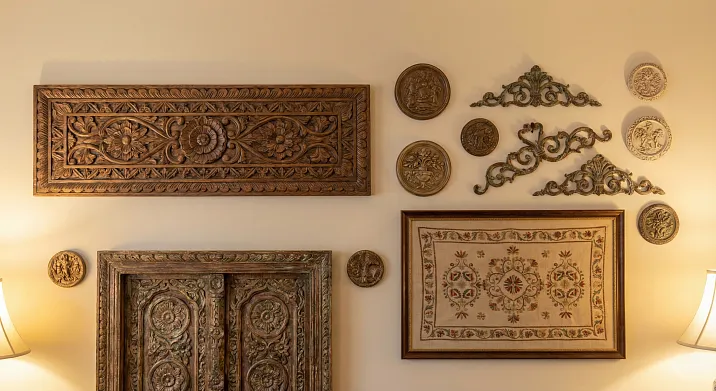
Walls are silent. But should they be? In a world where every square meter of living space is expensive, where interior design affects mood, productivity, and self-perception, bare walls are a missed opportunity.Wall decorationscan transform a featureless vertical plane into an artistic statement, into a dialogue between architecture and people, into a space that inspires, calms, or energizes—depending on your goals.
For millennia, people have decorated walls. Cave paintings of primitive humans, frescoes in Egyptian tombs, mosaics in Byzantine temples, tapestries in medieval castles, baroque stucco in palaces—wherever humans created living spaces, they sought to adorn their walls. Why? Because a wall is not just a structural element. It is a canvas on which we paint our lives, our worldview, our aesthetic philosophy. And today, when technology offers unprecedented opportunities, the question is not whether to decorate walls, but how to do it in the most impressive, practical, and accessible way.


Psychology of space: why it is important to decorate walls
Before discussing specific types of wall decorations, let's ask a fundamental question: why is decor needed at all? Isn't it enough to have well-painted or plastered walls?




Visual enrichment: the eye's need for information
The human eye is evolutionarily tuned to perceive complex visual information. Our ancestors survived thanks to their ability to instantly analyze their surroundings, notice details, distinguish shades and textures. In the modern world, this ability has not disappeared. Monotonous, detail-free surfaces evoke a subconscious feeling of discomfort, boredom, emptiness.
Decorative elements on walls create visual variety. Relief, play of light and shadow, patterns, compositions—all of this gives the eye work, stimulates the brain, creates a sense of environmental richness. Interestingly, this works even with minimalist decor. One elegant overlay on a large wall can create sufficient visual tension so that the space does not seem empty.
Our factory also produces:


Emotional resonance: how decor affects mood
Wall decorations are not only about aesthetics but also about emotionally tuning a space. Classical patterns create a sense of stability, rootedness, connection with tradition. Floral motifs bring warmth, organicity, closeness to nature. Geometric compositions set rhythm, order, modernity.
By choosing decor, you are essentially programming the emotional background of a room. Want the living room to encourage calm conversations? Use soft, flowing shapes, neutral colors. Need an energetic atmosphere for a home office? Apply contrasting, dynamic elements, clear lines.
Get Consultation
Architectural correction: visual alteration of proportions
Well-placed wall decorations can radically change the perception of a room. Vertical elements visually raise the ceiling. Horizontal ones expand narrow spaces. Large overlays in light tones make a small room feel more spacious. Dark, contrasting details on one wall create a focal point, diverting attention from the flaws of other areas.
This is not an optical illusion, but proven design techniques. Moldings that divide a high wall into zones visually lower it, making the space cozier. Wide borders under the ceiling create the effect of volumetric stucco, adding monumentality to the interior.
Practical function: masking and zoning
We should not forget about purely utilitarian functions. Decorative overlays perfectly hide defects: cracks, unevenness, traces of repairs, joints of dissimilar materials. Why do a major wall leveling when you can simply cover problem areas with elegant decor?
Zoning space is another important task. In studios and open-space apartments, there is often a lack of walls to separate functional zones. Decorative elements help visually mark boundaries: the living area is highlighted with one style of decoration, the dining area with another, the bedroom with a third. There are no physical partitions, but the space is structured, organized, and clear.
Polyurethane: a revolution in the world of wall decor
Traditionally, stucco and decorative elements for walls were made from plaster, alabaster, stone, and wood. These materials are beautiful but problematic: heavy, fragile, expensive, and difficult to install. Polyurethane changed everything.
What is polyurethane and why it is ideal for decor
Polyurethane is a synthetic polymer obtained from the reaction of polyols with isocyanates. Depending on the composition and production technology, materials with different properties can be obtained: from soft elastic foams to hard, durable plastics. Forwall decor made of polyurethanerigid high-density polyurethane (250-400 kg/m³) is used, which has a unique set of characteristics.
Strength: polyurethane is not brittle like plaster. It can be dropped, hit, bent—it will withstand it. This is critical during transportation and installation.
Lightness: the density of polyurethane is several times less than that of plaster or wood. A large overlay measuring one meter by one meter can weigh only 2-3 kg, while a plaster one of the same size weighs 15-20 kg. This simplifies installation, reduces the load on walls, and allows one person to work without assistants.
Moisture resistance: polyurethane does not absorb water, does not swell, and does not deform from humidity. This allows it to be used in bathrooms, kitchens, swimming pools, saunas—anywhere where plaster would quickly deteriorate.
Durability: polyurethane is not susceptible to biological damage (fungus, mold), does not age, does not yellow (quality polyurethane), and retains its properties for 50+ years. This is an investment for decades.
Versatility of processing: polyurethane is easily cut, sawn, and sanded with ordinary tools. But most importantly—it paints perfectly with any paints. You can create any color, any texture, any effect—from snow-white classic to imitation of bronze, patina, or old stone.
Production technology: precision and detailing
Polyurethane moldingsis manufactured by injection molding. The process looks like this: a mold—an exact copy of the original product (often a plaster model sculpted by hand)—is made from durable silicone or metal. Liquid polyurethane component is injected into the mold under pressure, which quickly polymerizes, solidifying into a hard mass. The product is removed from the mold, undergoes quality control, and is primed.
The key advantage of this technology is the absolute precision in reproducing details. The finest lines, thinnest leaves, complex curls—everything is transferred with photographic accuracy. Each product is identical to the previous one down to fractions of a millimeter. This is impossible with hand-sculpted plaster, where each element is unique (which is sometimes good, but sometimes creates problems with symmetry and repeatability).
Modern productions use high-precision CNC machines to create master models, 3D scanning for quality control of molds, and automated casting lines. This ensures consistently high product quality.
Types of wall decorations: from simple to complex
What types of wall decorative elements are there? The classification is extensive, but let's highlight the main categories.
Moldings: universal linear elements
A molding is a long strip with a profiled cross-section.Polyurethane moldings for wallsare used for many tasks.
Creating frames and panels: moldings arranged in a rectangle or other geometric shape form frames, inside which there can be contrasting paint, wallpaper, or textured plaster. This is a classic technique that divides a large wall into sections, creating rhythm and structure.
Framing doors and windows: molding around an opening gives it completeness, visually enlarges it, and connects it with the overall design of the room.
Dividing zones: a horizontal molding at the middle height of the wall (classic height is 90-120 cm from the floor) divides it into two zones, which can be decorated differently. The lower part is often painted in a darker color or covered with panels, while the upper part remains light. This creates visual variety and protects the lower part of the wall from dirt.
Moldings can be flat (minimalistic, with a simple profile) and ornamented (with plant patterns, geometric reliefs). Width varies from narrow 2-3 cm to wide 15-20 cm and more.
Overlays and decorative panels: accent elements
Overlays are separate decorative elements that are mounted on the wall, creating visual accents. They can be small (10×10 cm) or large (1×1 meter and more).
Rosettes are round or oval overlays with radial ornamentation. They are often used as a central element of a composition, as an accent above a sofa, bed, or in a dining area.
Cartouches are oval or shield-shaped elements, often with a frame of scrolls, ribbons, and garlands. The center may have a smooth area for a monogram, date, or symbol.
Corner elements are overlays of a special shape designed for placement in room corners or in the corners of molding frames. They complete the composition and create visual unity.
Friezes are horizontal ornamental strips, often placed under the ceiling or as a divider between wall zones.
Panels are large compositions, often thematic or with rich ornamentation. A panel can occupy a significant part of a wall, becoming the main decorative element of a room.
Pilasters and half-columns: architectural monumentality
Pilasters are vertical elements that imitate flat columns protruding from the wall. They include a base (lower part), a shaft (main part), and a capital (upper part with ornamentation). Pilasters give the interior monumentality, create a vertical rhythm, and visually raise the ceiling.
Half-columns are three-dimensional elements representing half of a round column. They are used similarly to pilasters but create a more powerful three-dimensional effect.
These elements are characteristic of classical styles—antiquity, Renaissance, Baroque, Classicism. But with proper application, they can also fit into a modern interior, creating an interesting contrast.
Brackets and consoles: functional-decorative elements
A bracket is a decorative support protruding from the wall, on which a shelf, sculpture, or vase can be placed. Brackets range from simple rectangular ones to complex, ornamented ones imitating wood or stone carving.
A console is a larger element of similar purpose, often used to support cornices, balconies (in facade decoration), or massive shelves.
In polyurethane execution, these elements are purely decorative—they do not bear real load. But visually, they create a sense of constructive logic, support, and stability.
3D panels: modern volume
A relatively new category—three-dimensional wall panels. These are large (usually square 50×50 cm, 60×60 cm) elements with volumetric relief. The relief can be geometric (cubes, pyramids, waves), floral (stylized leaves, flowers), or abstract.
Panels are mounted flush, covering a significant wall area. An impressive textured surface is created, which, with side lighting, plays with light and shadow, creating visual depth and dynamics.
3D panels are especially popular in modern interiors, where minimalism of forms is valued, but it is desirable to avoid the monotony of smooth planes. One wall covered with panels becomes an accent wall, setting the character for the entire room.
Stylistics of wall decorations: from classic to futurism
Decor should correspond to the overall style of the interior. Let's consider the main directions.
Classical styles: Baroque, Rococo, Classicism
These styles are characterized by abundant, rich stucco. Baroque loves opulence: large acanthus leaves, putti (baby angels), garlands of fruits and flowers, complex cartouches. Rococo is lighter, more playful: asymmetrical scrolls (rocaille), shells, elegant floral motifs, pastoral scenes.
Classicism returns to ancient canons: symmetry, strict proportions, restrained ornamentation. Meanders, palmettes, laurel wreaths, rosettes with simple radial patterns.
Interior design with polyurethane decorin a classic style requires careful selection of elements, adherence to proportions, and competent painting. Multi-color finishing is often used: a white background with golden accents on the protruding parts of the ornament.
Empire and neoclassicism: monumentality and restraint
Empire—the style of Napoleon's empire—is distinguished by monumentality, the use of military and antique symbolism (eagles, laurel wreaths, swords, shields), and Egyptian motifs (sphinxes, lotuses). The decor is strict, graphic, often gilded on a dark background.
Neoclassicism is a modern reinterpretation of classical principles. Symmetry, proportions, and antique motifs are preserved but simplified and become more laconic. Neoclassicism combines well with modern materials and technologies.
Art Nouveau and Art Deco: lines and geometry
Art Nouveau (late 19th — early 20th century) rejects historical styles, creating a new language of forms. Characteristic are flowing, asymmetrical lines, floral motifs (irises, lilies, algae), female figures with flowing hair. The decor emphasizes line and movement.
Art Deco (1920s-30s) geometrizes Art Nouveau, adding luxury. Zigzags, stepped forms, stylized sun rays, exotic motifs. Often combined with expensive materials, metal inlays, mirrors.
Modern minimalism: less is more
Minimalism seemingly excludes decor. But well-chosen elements can enhance minimalist aesthetics. Simple geometric moldings creating strict frames. Monochrome panels with shallow relief, adding texture without visual noise. Single overlays as sculptural accents on large empty walls.
Color — matching the walls or contrasting but restrained (black on white, dark gray on light gray). No gilding, multicolor, excessive detailing.
Loft and industrial: unexpected combinations
Loft with its rough concrete and brick surfaces seems antagonistic to elegant molding. But it's precisely the contrast that makes the interior interesting. Classic molding on a concrete wall, a Baroque rosette on brickwork — these combinations work, creating tension between industrial brutality and classical elegance.
A sense of proportion is important. One or two decorative elements as accents, but not total wall coverage with molding.
Application of wall decorations in different rooms
Where and how to use decorative elements? Each room has its own specifics.
Living room: formal decor
The living room is the main room of the house, where guests are received and family evenings are spent. Rich, representative decor is appropriate here. The wall behind the sofa is the perfect place for a composition of moldings creating frames, inside which paintings, mirrors, or simply contrasting paint are placed.polyurethane wall decorIt can include a large panel, pilasters in the corners of the room, a decorative frieze under the ceiling.
It's important not to overload the space. If the walls have abundant decor, the furniture should be simpler, and vice versa. Balance is the key to harmony.
Bedroom: comfort and tranquility
The bedroom requires a more restrained approach. This is a place of rest; excessive visual stimulation is not needed. The accent is the wall behind the headboard. Here you can place a symmetrical composition of moldings creating a frame, inside which is a soft headboard panel or wallpaper with a delicate pattern.
Colors — calm, pastel. White, beige, light gray decor on slightly darker walls creates a gentle, unobtrusive relief.
Kitchen and dining room: practicality and style
In the kitchen, wall decorations should be not only beautiful but also practical. Polyurethane is ideal — it's not afraid of humidity, easy to clean, doesn't absorb odors. Moldings can be used to frame the kitchen backsplash, create frames on cabinet fronts, highlight the dining area in a kitchen-living room.
In a separate dining room, more solemn decor is appropriate — panels on the walls, a decorative frieze, a rosette on the ceiling above the dining table (if there is a chandelier).
Bathroom and toilet: beauty without compromise
Humidity is the main enemy of many decorative materials. But not polyurethane. In the bathroom, you can create a luxurious interior using moldings, panels, even pilasters. The technique of creating frames from moldings around the mirror, framing niches, highlighting the bathtub area is often used.
For the bathroom, additional treatment of the decor with moisture-resistant paints or varnishes is recommended, although polyurethane itself is not afraid of moisture.
Hallway and corridor: first impression
The hallway is the first thing visitors see. Here, the decor sets the tone for the entire house. Hallways are often small, narrow. Vertical elements (pilasters, narrow panels) will visually raise the ceiling. A mirror in a molding frame will expand the space and add light.
Corridors suffer from monotony — a long wall without windows is boring. Rhythmic placement of decorative elements (panels at equal intervals, alternating molding frames) creates visual interest, makes moving through the corridor more pleasant.
Children's room: safety and fantasy
In a child's room, decor should be safe (polyurethane is eco-friendly, has no sharp edges, doesn't crumble) and visually stimulating but not overwhelming. Bright colors, playful shapes, thematic elements (e.g., stylized clouds, stars made of 3D panels).
As the child grows, the decor can be easily repainted, changing the room's concept without dismantling elements.
Mounting decorations on walls: from preparation to finish
How to install decorative elements? The process is not complicated but requires care and adherence to technology.
Surface preparation: the foundation of success
The wall must be clean, dry, relatively flat. Perfect leveling is not required (decor will hide minor defects), but large pits and bumps should be eliminated. Dust, grease, peeling paint are removed. The surface is primed — this improves adhesive adhesion.
Marking: placement accuracy
Marking is done before installation. Use a level (preferably laser), tape measure, pencil. Placement locations for elements are marked. For symmetrical compositions, it's important to find the central axis from which all dimensions are measured.
A useful technique — creating a temporary mockup. Elements are placed against the wall (can be fixed with painter's tape), the overall appearance is evaluated. If something doesn't look right — it's easy to change before final installation.
Adhesive bonding: reliable fixation
Special adhesives are used for polyurethane decor — polyurethane, acrylic, construction (liquid nails). The adhesive is applied to the back of the element (spot application for small pieces, in a serpentine pattern or solid layer for large ones). The element is pressed against the wall and held in place for several seconds.
Large, heavy elements are additionally secured with screws (the holes are later filled with putty) or painter's tape until the adhesive is completely dry (usually 12-24 hours).
Sealing joints: invisible connections
Moldings are joined butt-to-butt or at an angle (to create frames). Joints should be tight, but perfection is not always achievable. Gaps are filled with acrylic sealant or putty. After drying, they are carefully sanded with fine sandpaper. A well-executed joint becomes completely invisible after painting.
Painting: the final touch
Most polyurethane products come pre-primed and ready for painting. Water-based, acrylic, and latex paints are used. They are applied with a brush (for detailed painting of relief) or a roller (for smooth surfaces).
Special techniques are used to create effects (patina, gilding, imitation of metal, stone): multi-layer painting with intermediate sanding, application of metallic pastes, glazing (semi-transparent layers of paint), artificial aging.
Caring for polyurethane decorations: ease of use
How to care for the decor? Minimally.
Regular cleaning: every few months, wipe with a soft, slightly damp cloth or vacuum with a soft brush attachment. This removes dust from the relief.
Local cleaning: stains are removed with a soft sponge and neutral detergent. Polyurethane is not afraid of water, but avoid aggressive chemicals and abrasives.
Refinishing: after 10-15 years (or earlier if you want to change the color), the decor can be repainted. Light sanding, priming, new paint — and the interior is refreshed.
Repairing damage: if an element is broken (which is unlikely, as polyurethane is durable), it can be glued with polyurethane adhesive. If lost — order a similar one.
Frequently asked questions about wall decorations
How much do polyurethane overlays and panels cost?
Prices vary widely depending on size, complexity, and manufacturer. A simple 2-meter long molding — from 300-500 rubles. A decorative rosette with a diameter of 30 cm — from 800-1500 rubles. A large 80×80 cm panel — from 8000-15000 rubles. Exclusive custom-made items — from 20000 rubles and above.
This is several times cheaper than plaster stucco of similar quality, while installation is simpler and faster, saving on labor costs.
Can the decor be installed independently or are professionals needed?
Most elements can be installed independently with basic repair skills and the necessary tools (level, tape measure, handsaw, adhesive). Manufacturers provide detailed instructions, and there are plenty of video tutorials online.
For complex projects (a room fully in classic style with abundant stucco, multi-level compositions, facade decor), it is recommended to involve professionals. They will do it faster, more neatly, with guaranteed results.
How to choose the right size of elements for a room?
General rule: the larger the room and the higher the ceilings, the larger the decorative elements can be. In a small 3×3 meter room with 2.5 m ceilings, large stucco will be overwhelming. Here, thin moldings and small rosettes are appropriate.
In a spacious living room with 3-3.5 m ceilings, wide moldings, large panels, and pilasters can be used.
Proportion is important. A molding 15 cm wide on a wall 2.5 m high occupies about 6% of the height — this is harmonious. A 30 cm molding on the same wall — already 12%, may create an effect of excess.
How does polyurethane decor differ from polystyrene (foam) decor?
Polystyrene (expanded polystyrene) is cheaper and lighter than polyurethane but inferior in many parameters. Polystyrene is fragile — it breaks and crumbles easily. It is less detailed — small elements appear blurred. Polystyrene is afraid of some solvents found in adhesives and paints. It is flammable (with flame retardants added — difficult to ignite, but still worse than polyurethane).
Polyurethane is stronger, more detailed, and more versatile. For responsible projects where durability and quality are important, the choice is clear.
Can decor be used on uneven, curved walls?
Rigid elements (moldings, panels) require relatively flat surfaces. On curved walls, gaps form that are difficult to fill.
The solution — flexible polyurethane moldings. They have lower density, can bend, following the curvature of the wall. They are used for framing arches, bay windows, and columns.
For walls with significant unevenness, preliminary leveling is recommended, at least in the areas where the decor will be installed.
Is polyurethane safe for health?
High-quality polyurethane from trusted manufacturers is environmentally safe. It does not emit harmful substances, is odorless, and hypoallergenic. Certified for use in residential spaces, including children's rooms.
Important: when purchasing, always request quality and safety certificates. Cheap products of dubious origin may not meet standards.
Can polyurethane decor be combined with wood or plaster decor?
Yes, combinations are possible and often used. For example, the main molding can be polyurethane (lighter, cheaper), while central accent panels can be carved wood (exclusivity, tactile richness).
It is important to select elements so that the styles, proportions, and colors harmonize. After a unified paint job, the difference in materials may be almost visually imperceptible.
What are the most common mistakes made during decor installation?
Typical mistakes:
Insufficient surface preparation — decor is glued onto a dusty, greasy wall and falls off.
Lack of marking — elements are placed 'by eye,' resulting in crookedness and asymmetry.
Incorrect adhesive — using incompatible compounds, poor adhesion.
Rushing — not waiting for the adhesive to dry, causing elements to shift.
Poor joint sealing — gaps remain visible after painting.
Excessiveness — too much decor, the interior becomes overloaded and feels heavy.
How often does wall decor need to be updated?
Polyurethane decor lasts for decades without changes. Updating (repainting) may only be necessary if you wish to change the interior's color scheme or if there is damage to the finish (which is rare under normal use).
Physical replacement of elements is usually not needed. Polyurethane does not age, deform, or lose its properties.
Is polyurethane decor suitable for exterior applications?
Yes, polyurethane is used for facade decor. It is resistant to moisture, frost, UV rays, and temperature fluctuations. Facade polyurethane is typically denser (300-400 kg/m³) with additional UV protection.
Used for decorating entrance groups, framing windows, creating cornices, pilasters, and decorative panels on facades. It is an alternative to heavy, expensive facade stone or concrete stucco.
Conclusion: Create your masterpiece with STAVROS
Wall decorations are not an extravagance but a necessity for those who understand: the space we live in shapes us. Bare walls create emptiness. Decorated walls create an environment that inspires, calms, delights the eye, and makes each day a little more beautiful.
Polyurethanedecorative overlays and panelshave democratized the art of interior decor. What was once accessible only to the very wealthy — luxurious stucco, exquisite panels, monumental pilasters — is now affordable for everyone. Polyurethane has made beauty accessible without sacrificing quality.
STAVROS is one of the leading Russian manufacturers and suppliers ofmoldings from polyurethane, offering solutions for the most demanding clients. Over the years, STAVROS has earned a reputation as a company that maintains a perfect balance between quality, assortment, and price.
An assortment that surprises with its diversity
The STAVROS catalog includes hundreds of models ofmoldings, cornices, ceiling rose, decorative overlays, panels, pilasters, brackets. All styles are represented: from strict antique classicism to lavish Baroque, from elegant Art Nouveau to contemporary minimalism.
Continuous updating of collections ensures the relevance of the assortment. STAVROS designers follow global trends, adapt them to the Russian market, and create original models with no analogues.
European-level quality
STAVROS works exclusively with high-quality polyurethane with a density of 280-320 kg/m³, ensuring strength, detail clarity, and durability. Production is carried out on modern equipment using precision molds that reproduce the finest details of ornaments.
Each product undergoes multi-stage quality control. Geometry, absence of defects (pores, chips, deformations), and primer quality are checked. Only perfect elements go on sale.
Priming is an important stage. All STAVROS products are supplied already primed, ready for painting. This saves installation time and ensures even paint application.
Full range of services
STAVROS is not just a decor store. It's a comprehensive service.
Design consultations: specialists will help you select elements for your interior, calculate the required quantity, and create project visualizations. The service is free with purchase.
Custom manufacturing: need an element of unique shape? STAVROS will produce it according to your sketch. Minimum order — from one piece. Lead time — from two weeks.
Installation services: STAVROS team of professional installers will perform turnkey installation. From measurement to final painting. Work warranty — 2 years.
Delivery: to Moscow, St. Petersburg, all of Russia. Large-sized orders are packaged with special care to prevent damage during transportation.
Affordability and value
STAVROS prices are among the most competitive on the market. In-house production avoids intermediary markups. Regular promotions, discounts for wholesale buyers, and loyalty programs make purchases even more advantageous.
With no compromises on quality. STAVROS proves: premium decor can be affordable.
Partnership with professionals
STAVROS is the choice of interior designers, architects, and construction companies. Special conditions are provided for professionals: extended discounts, priority production and delivery times, technical support, material samples.
Cooperation with STAVROS means confidence in quality, reliable deliveries, and flexibility in solving non-standard tasks.
Your step towards a beautiful interior
Don't postpone transforming your home. STAVROS wall decorations are a simple, affordable, and impressive way to create your dream interior. Visit the website, explore the catalog, choose elements that resonate with your vision of beauty.
Call, write, or visit the STAVROS showroom in Moscow or St. Petersburg. Specialists will answer questions, show samples, and help with selection. Start creating a space where walls cease to be silent surfaces and begin to speak the language of beauty, style, and your individuality.
STAVROS — where quality, style, and affordability unite to make your home more beautiful!


