Article Contents:
- Architectural Foundations: Structure as Decoration
- Moldings: Lines that Define Space
- Cornices: The Crown of the Ceiling
- Pilasters and Columns: Verticals of Grandeur
- Wall Panels: Texture and Volume
- Boiserie: Classic Panel Decoration
- Slat Systems: Modern Interpretation
- Carved decor: art in details
- Overlays: Accents on Surfaces
- Rosettes: Radial Symmetry
- Stairs: Vertical Circulation as an Art Object
- Balusters: Rhythmic Structure
- Pillars: Supporting Dominants
- Doors and Openings: Portals Between Spaces
- Door Casings: Framing the Opening
- Door Overlays: Decorating the Panel
- Color and Finish: The Invisible Component of Decoration
- Natural Wood: The Beauty of Texture
- Toning: Managing the Shade
- Painting: Color Without Limits
- Lighting: Decoration Through the Eyes of Light
- Side Lighting: Revealing Relief
- Accent Lighting: Spotlights
- Hidden Lighting: Contour Glow
- Stylistic Directions: Decoration as a Style Code
- Classicism: Order and Symmetry
- Baroque: Luxury and Excess
- Scandinavian Minimalism: Simplicity and Functionality
- Loft: Industrial Aesthetics
- Practical Questions: From Selection to Implementation
- Question: Where to Start with Interior Decoration?
- Question: How to choose the size of decorative elements?
- Question: Can different decor styles be combined?
- Question: How to care for wooden decor?
- Question: Can decorative elements be installed independently?
- STAVROS: 23 years of mastery in creating decorative elements
- History and philosophy
- Production and Technologies
- Assortment and Possibilities
- Warranties and Service
- Client Trust
- Conclusion: decor as a lifestyle
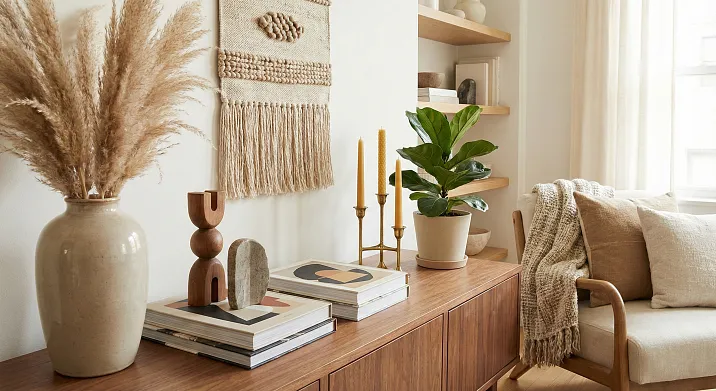
Have you ever wondered why some interiors are memorable, evoke delight, make you return your gaze to details, while others remain faceless despite expensive furniture and high-quality finishes? The answer lies not in the scale of the budget, but in understanding the subtle art called home interior decoration. It is the ability to see space as a whole, where every detail matters, every element works towards the overall atmosphere.
Home interior decorations— these are not just accessories placed on shelves. This is the architectural language spoken by space. Moldings, cornices, pilasters, decorative overlays, carved panels — all these elements shape the character of a room, determine its stylistic affiliation, create visual depth and emotional response. Their presence or absence is the difference between an apartment and a home, between housing and a living space.
The modern approach to interior decorating is characterized by flexibility. There are no rigid rules, there are principles. There are no mandatory schemes, there is the logic of composition. You can create a classic interior with an abundance of stucco and carving or a minimalist space where the only decorative element becomes a powerful accent. The main thing is to understand how each detail works, what role it plays in the overall symphony of space.


Architectural foundations: structure as decoration
Before talking about decorative details, you need to understand a fundamental principle: architecture itself can be decoration.Decorative Elements in Interior Design are divided into architectural and accessory. The former are integrated into the structure of the space, becoming part of it, the latter are added on top.




Moldings: lines that define space
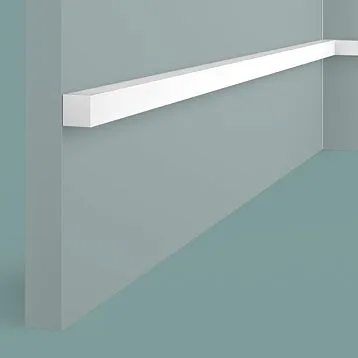
A molding is a profiled strip that can be placed on a wall, ceiling, door, any vertical or horizontal surface. It seems like a simple element. But it is moldings that can radically change the perception of a room.
Horizontal moldings divide the wall into zones. A classic technique is a line at one-third height from the floor, dividing the wall into a panel and an upper part. This is not just a decorative solution. Such division visually stabilizes the space, creates a sense of solidity. The lower third, usually darker or contrasting, seems to ground the interior. The upper, lighter part gives a sense of height and air.
Vertical moldings create rhythm. Evenly spaced vertical lines stretch the room upward, making ceilings appear visually higher. This is especially important in standard apartments, where the standard height of 2.5-2.7 meters may seem insufficient. Several vertical moldings running from floor to ceiling change the proportions of the room.
Frame compositions made of moldings are a classic that never ages. A system of rectangles is marked on the wall, each framed by molding. The inner space can be painted, wallpapered, left neutral, or used to place a painting, mirror, or light fixture. Such a structure gives the wall architectural clarity, turning it from a flat surface into a three-dimensional composition.
Our factory also produces:


Cornices: the crown of the ceiling
wooden cornices at the junction of the wall and ceiling is the finishing touch, without which the interior seems incomplete. Imagine a room with perfect walls, a beautiful floor, but a bare corner between the wall and ceiling. Something is wrong, right? A cornice solves this problem, creating a smooth transition, visually uniting the horizontal of the ceiling and the vertical of the walls.
The size of the cornice matters. A narrow, delicate cornice is suitable for low rooms — it marks the boundary but does not overload. A wide, massive cornice requires corresponding ceiling height. In a room with ceilings of 3 meters and above, a wide cornice with a complex profile looks appropriate and majestic.
A cornice can be a functional element for hidden lighting. An LED strip is placed behind the protruding part of the cornice, creating contour lighting along the perimeter of the ceiling. Such lighting visually raises the ceiling, creates a floating effect, and adds airiness to the space.
Get Consultation
Pilasters and columns: verticals of grandeur
If moldings are lines, thenpilasters and columns are vertical accents, architectural dominants. A column is a round-in-section vertical element consisting of a base, shaft, and capital. A pilaster is a flat version of a column, a rectangular projection on a wall, imitating a column but not bearing a real load.
In modern interiors, real load-bearing columns are rare; more often they are decorative elements. But their symbolic role is enormous. A column is an archetype of support, foundation, stability. Its presence gives the interior monumentality, grandeur, and a connection to classical architectural tradition.
Pilasters are used to frame door and window openings, highlight accent zones, and structure large walls. A pair of pilasters on either side of a fireplace turns it into an architectural portal. Pilasters framing bookshelves create a library atmosphere. Pilasters at the entrance to a room form a ceremonial passage.
The details of pilasters and columns — base, shaft, capital — can vary from simple geometric shapes to richly ornamented ones. The Doric order — strict, minimalist. Ionic — more decorative, with scrolls on the capital. Corinthian — luxurious, with plant motifs, acanthus leaves. The choice depends on the overall style and scale of the room.
Wall panels: texture and volume
Decorative wall panels is a comprehensive solution for wall decoration, where all elements are selected and coordinated. A panel system can cover the entire wall or part of it, creating accent zones.
Boiserie: The Classic Panel Decoration
Boiserie is a French term for wooden wall paneling with a frame-and-panel structure. This classic solution, popular in aristocratic interiors of the 17th-19th centuries, remains relevant today.
The construction of boiserie is simple yet sophisticated. The wall is divided into rectangular sections. Each section is framed by profiled strips—moldings—creating a frame. The inner space—the panel—can be filled in various ways: with a smooth wooden panel, a veneered surface, fabric, leather, or even a mirror.
The height of a classic panel varies. A low panel—from the floor to a height of 90-120 cm—creates a sense of protection and coziness. This solution is suitable for bedrooms, studies, and dining rooms. A high panel—up to 150-180 cm—is more formal, suitable for reception rooms, living rooms, and halls. Full wall cladding from floor to ceiling creates a maximum effect but requires ample space to avoid appearing overwhelming.
The upper border of the panel is typically marked by a dado rail—a wide profiled strip that, in historical interiors, served as a support when moving along the wall. Today, it is a purely decorative element, but it is compositionally important—creating a clear horizontal line that structures the space.
Slat Systems: A Modern Interpretation
An alternative to classic boiserie is slat systems, popular in modern, Scandinavian, and loft interiors. These are parallel wooden slats, mounted vertically or horizontally with equal or variable spacing.
Vertical slats elongate the space, creating a sense of height. Horizontal slats widen it, making the room visually broader. Diagonal slats add dynamism and movement. Directions can be combined to create geometric patterns—herringbone, diamonds, complex compositions.
The distance between slats determines the character of the surface. Close spacing—2-3 cm between slats—creates an almost solid surface with thin shadow lines. Medium spacing—5-10 cm—forms a pronounced rhythmic structure. Wide spacing—15-20 cm or more—gives a graphic effect, where the gaps between slats are as important as the slats themselves.
Slats can be attached directly to the wall or mounted on a frame with a 2-5 cm gap. The latter option creates a more expressive play of light and shadow, adds real depth, and allows for hidden lighting or acoustic panels behind the slats.
Carved decoration: art in details
Carved Wood—is the highest form of decorative art, where material transforms into ornament, pattern, sculpture. Carved elements can be independent objects—panels, sculptures—or part of architectural elements—overlays on moldings, carved column capitals, ornamented cornices.
Overlays: Accents on the Surface
Carved overlays are three-dimensional wooden elements with relief ornamentation, attached to flat surfaces. They can adorn anything: furniture fronts, doors, walls, ceilings, even small items like frames or boxes.
The size of overlays varies from miniature 5x5 cm to large-scale 60x80 cm and more. Small overlays are used as point accents—in panel corners, at molding intersections, in the center of small panels. Large ones become independent decorative objects, focal points of the composition.
The ornamentation of overlays is extremely diverse. Floral motifs—leaves, flowers, branches, fruits—are the most popular. They are universal, understandable, emotionally neutral, suitable for most interiors. Geometric ornaments—rosettes, meanders, braids—are more strict and rhythmic. Figurative images—mascarons, putti, animals—are characteristic of luxurious classical interiors.
The depth of carving determines the visual effect. Flat carving with a relief of 3-5 mm creates a delicate pattern visible up close but unobtrusive from a distance. Medium carving of 10-15 mm gives pronounced volume, noticeable from any angle. Deep carving of 20-30 mm becomes almost sculptural, creates dramatic shadows, and requires a corresponding scale of the room.
Rosettes: Radial Symmetry
Rosettes are circular or polygonal elements with ornamentation radiating from the center to the periphery. They can be wall or ceiling-mounted, flat or three-dimensional, simple or richly ornamented.
Ceiling rosettes are traditionally placed at the point of chandelier attachment. A rosette with a diameter of 40-60 cm creates a decorative frame for the light fixture, visually emphasizing the center of the room. In large spaces with high ceilings, rosettes can reach 80-120 cm in diameter, becoming impressive architectural elements.
Wall rosettes are used as focal points on a wall plane. A rosette in the center of a panel, above a fireplace, or at the intersection of room diagonals—all are ways to create a compositional center around which the rest of the decor is organized.
The number of rays or petals in a rosette can vary. Four-rayed rosettes create a cross-shaped structure. Six- and eight-rayed ones are more complex and dynamic. Rosettes can have several concentric tiers, creating a deep, multi-layered composition.
Stairs: Vertical Circulation as an Art Object
In duplex apartments and country houses, the staircase is not just a functional element but an important part of the interior, visible from many points.Balusters and Posts for Staircasesdefine the character of the entire structure.
Balusters: Rhythmic Order
Balusters are vertical posts filling the space between steps and the handrail. Typically, there are one or two balusters per step, forming a rhythmic row. Their shape can range from the simplest—a square or round rod—to complex turned profiles with alternating expansions and contractions, balls, disks, cones.
Simple balusters suit modern, minimalist, Scandinavian interiors. They do not overload the space, creating a clean vertical structure. Turned balusters with complex profiles are characteristic of classical, traditional interiors. Each baluster becomes a mini-sculpture, and their rhythmic repetition creates an impressive effect.
Balusters can be identical along the entire length of the staircase or vary. Alternating balusters of different shapes—for example, simple, complex, simple—creates a more complex rhythm, visually enriching the staircase.
The material of balusters usually matches that of the staircase itself but can also contrast. Dark steps with light balusters, light with dark—such combinations emphasize the structure, making the staircase graphic and expressive.
Newels: Supporting Dominants
Posts are enlarged balusters installed at key points: the start of a flight, the end, turns, landings. A post is one and a half to two times thicker than a baluster, often has a more complex shape, and richer decoration.
Functionally, a post is the main support of a railing. The handrail is attached to the posts, and the balusters between them serve a filling role. Aesthetically, a post is an accent that stands out from the row of balusters, creates visual pauses in the rhythm, and structures the staircase.
Posts can be crowned with decorative elements — spheres, cones, carved overlays, even sculptural figures. In historical interiors, staircase posts were decorated with heraldic symbols, animal figures, torches. Today this is less common, but the idea of accentuating the post remains relevant.
Doors and openings: portals between spaces
A door is not just a functional element that closes a passage. It is a boundary between spaces, a transition zone that can be designed with special attention.
Casing: framing an opening
Casing is a frame around a door or window opening. The simplest casing is a flat strip covering the joint between the wall and the frame. But even such a minimalist element is important — it creates a clear boundary, finishes the opening.
Decorative casings are profiled or carved strips that turn an opening into an architectural element. Wide casings with a classic profile, casings with carved corner elements, casings with capitals and bases imitating pilasters — all these are ways to turn an ordinary door into a ceremonial portal.
The upper part of the casing can be crowned with a pediment — a triangular or semicircular top characteristic of classical architecture. A pediment with carved ornamentation or a central rosette becomes a focal point, drawing attention to the opening.
Door overlays: decorating the panel
The door panel itself can also be decorated. Paneled doors have a frame-and-panel structure, where the relief is created by the construction itself. Smooth doors can be decorated with applied elements — moldings creating an imitation of panels, carved overlays, rosettes.
Such decoration allows updating a simple door, giving it stylistic correspondence to the interior. A white smooth door with glued moldings, painted to match, becomes a classic paneled door. Adding carved corner elements enhances the effect, creating the impression of an expensive historical door.
Color and finish: the invisible component of decor
Decorating a home's interior is not only about forms but also about color. Wooden decorative elements can be natural, stained, or painted, and this choice affects the overall impression.
Natural wood: the beauty of texture
Wood in its natural state, covered with transparent oil or varnish, showcases the natural texture — the pattern of annual rings, rays, pores. Each species has its own texture. Oak — with pronounced open pores, contrasting rings. Beech — more uniform, with a fine texture. Ash — similar to oak but lighter, cooler in tone. Walnut — with a rich chocolate hue and expressive pattern.
Natural wood suits interiors where natural aesthetics are valued — Scandinavian style, eco-style, modern classic. It adds warmth, creates a connection with nature, makes the space more lively, organic.
It is important to consider that natural wood has a certain color range. Light species — pine, birch, ash. Medium — beech, natural oak. Dark — walnut, stained oak, wenge. When choosing a natural finish, you need to understand what shade you will get and how it will fit into the interior's color scheme.
Staining: controlling the shade
Staining allows changing the color of wood while preserving the visibility of the texture. Light wood can be stained to a darker shade — from golden to chocolate. Dark wood can be bleached, lightened.
Staining provides more flexibility in color design. All wooden interior elements — moldings, casings, furniture — can be stained to a uniform shade, creating harmonious color unity. Or you can use contrasting staining — dark moldings on a light wooden panel, creating a graphic effect.
Modern water-based staining compositions are eco-friendly, have no strong odor, and dry quickly. They penetrate the wood without forming a film on the surface, which preserves the tactile qualities of the wood, its naturalness.
Painting: color without limits
Painting with enamel completely covers the wood texture, creating a smooth colored surface. This gives absolute freedom in color choice — from pure white to deep black, from delicate pastel shades to saturated bright ones.
White decor is universal. White moldings, cornices, pilasters suit any interior, any color scheme. White visually expands space, adds light, creates a feeling of cleanliness, freshness. In classic interiors, white is associated with luxury, sophistication. In modern ones — with minimalism, Scandinavian aesthetics.
Black decor is the opposite pole. Black moldings on a light wall create a powerful graphic contrast. This is a bold, dramatic solution, suitable for modern, eclectic, art deco interiors. Black requires confidence, but the result is impressive.
Colored decor allows creating accents, supporting the room's color scheme. Blue moldings in a bedroom painted in shades of blue and white. Terracotta in a living room with a warm southern palette. Emerald in an interior with green accents. The color of the decor can be tone-on-tone with the main room color or contrasting, creating visual tension.
Lighting: decor through the eyes of light
Any decor is revealed through lighting. Flat, uniform light kills relief, makes decorative elements unexpressive. Proper lighting, on the contrary, enhances volume, creates dramatic shadows, turns a simple overlay into a sculptural masterpiece.
Side lighting: revealing relief
A light source positioned to the side of a decorated surface creates grazing light that reveals every irregularity, every protrusion and recess. A carved overlay casts deep shadows under side lighting, making the relief maximally expressive.
Wall sconces installed on the sides of a decorative panel, floor lamps providing light from bottom to top along the wall—all of this creates dramatic side lighting. This looks especially expressive in the evening when there is no natural light, and artificial sources fully control how we perceive the space.
Accent lighting: spotlights
Directional fixtures—spots, track systems—allow highlighting specific decorative elements. A ceiling rosette illuminated by a separate spot becomes a focal point. A carved panel with its own light fixture transforms into an art object.
Modern LED spots with adjustable beam angles provide the ability to precisely direct light and create the desired effect. A narrow beam creates a dramatic spot of light with sharp boundaries. A wide beam provides soft fill lighting.
Hidden lighting: contour glow
An LED strip placed behind a cornice, behind a panel, inside a niche creates hidden lighting. The light source is not visible; only the glow is seen, which outlines contours and emphasizes architectural lines.
Hidden lighting behind a ceiling cornice creates a floating ceiling effect. Light coming from behind the cornice upwards illuminates the ceiling, visually separating it from the walls. The room appears taller and more airy.
Lighting behind wall panels or inside niches creates depth and volume. An illuminated niche becomes a visual accent, attracts attention, and can serve as an exhibition zone for placing sculptures, vases, or collectible items.
Stylistic Directions: Decor as a Style Code
Home interior decorationsmust correspond to the overall style of the space. Let's examine how decor functions in different stylistic contexts.
Classicism: Order and Symmetry
The classical style is based on the principles of ancient architecture—symmetry, proportionality, the order system, noble materials.decorative elementsin a classical interior are numerous but subordinate to a strict hierarchy.
Moldings create framed compositions on walls. Cornices with complex profiles crown ceilings. Pilasters frame openings and highlight zones. Carved overlays with plant motifs—acanthus, laurel, oak leaves—adorn key points. All elements are made from quality materials, meticulously finished, and coated with white enamel or gilding.
The color palette of classicism is restrained—white, cream, beige, light gray as the base. Gold, bronze as accents. Natural wood of noble species. No garishness, no randomness—every detail is in its place.
Baroque: Luxury and Excess
Baroque is classicism taken to maximalism. More decor, more gold, more carving, more drama. Moldings are not just profiled but with stucco ornaments. Cornices are not just wide but multi-level, with garlands and scrolls. Pilasters are not just indicated but adorned with capitals featuring putti and mascaron.
Carving in Baroque is deep, sculptural, almost three-dimensional. Ornaments are dynamic, full of movement—scrolls, volutes, intertwinings. Abundant gilding—on carvings, on moldings, on frames. Colors are saturated—burgundy, emerald, sapphire—combined with gold and white.
Baroque requires space. In a small room, an abundance of decor will be overwhelming. But in a large room with high ceilings, Baroque aesthetics create an impression of luxury, theatricality, and grandeur.
Scandinavian minimalism: simplicity and functionality
The Scandinavian approach is the opposite of Baroque. Minimum decor, maximum functionality. But this does not mean a complete absence of ornamentation. Scandinavian decor exists; it is simply delicate, unobtrusive, subordinate to the principle of sufficiency.
Moldings are simple, rectangular in cross-section, painted white or light gray. Cornices are narrow, marking the boundary but not overloading. Pilasters are absent or replaced by simple vertical slats. Carved decor is minimal—perhaps a few delicate overlays with geometric patterns.
Materials are natural—light wood, predominantly pine, birch, ash. Colors are neutral—white, gray, beige, with accents of natural shades—blue, green, terracotta. The main thing is the feeling of light, air, spaciousness, and purity.
Loft: Industrial Aesthetics
Loft values contrasts—rough and refined, industrial and domestic. Decor in a loft is either absent, emphasizing the space's brutality, or used contrastingly, creating a clash of eras and styles.
You can leave walls of bare brick or concrete without decor. Or add refined classical moldings, carved panels against a backdrop of concrete and brick. Such contrast creates tension, makes the interior memorable, provocative.
Wooden elements in a loft can have an emphasized rough finish—visible saw marks, knots, cracks. Or, conversely, be impeccably polished, contrasting with untreated surfaces. Colors are dark, saturated: black, graphite, dark brown.
Practical Questions: From Selection to Implementation
Understanding the principles, we move to practice. How to choose the right elements? How to calculate the quantity? How to install? How to maintain?
Question: Where to start decorating an interior?
Start with an analysis of the space. Assess the room dimensions, ceiling height, existing finishes, and lighting. Determine the style you are aiming for. Study examples of interiors in the chosen style, pay attention to which decorative elements are used, how they are arranged, and what their proportion is to the overall volume of the room.
Create a plan. Don't try to do everything at once. Start with one room, with one wall. Place the elements virtually—you can make a simple sketch or use 3D modeling software. Evaluate the result and adjust if necessary.
Question: How to choose the size of decorative elements?
The size should correspond to the scale of the room. In a room with a 2.5-meter ceiling, a wide 15-centimeter cornice will be excessive and will visually lower the already low ceiling. A narrow 5-7-centimeter one is optimal. In a room with a 3.5-meter ceiling, a narrow cornice will get lost; a 12-15 cm or wider cornice is needed.
The same applies to moldings, trims, and pilasters. Large furniture requires corresponding decorative elements. Delicate, light furniture requires delicate decor. The rule: the larger the space, the larger the decor can be.
Question: Is it possible to combine different decor styles?
Yes, but carefully. Eclecticism—the mixing of styles—is a recognized direction in design. But eclecticism requires understanding, taste, and a sense of proportion. You can't just mix everything together and hope for luck.
The principle of combination: one style dominates, the others are added as accents. The base is Scandinavian minimalism, the accents are several classic carved elements. The base is classic, the accents are modern geometric forms. Such a combination creates an interesting, multi-layered interior.
Avoid chaos. If the moldings are classic, don't add ultra-modern futuristic lamps. If the walls are minimalist, don't overload them with baroque carvings. Look for balance, points of contact, common denominators—color, material, proportions.
Question: How to care for wooden decor?
Wooden elements are low-maintenance but require minimal care. Dust is removed with a dry soft cloth or a vacuum with a soft brush attachment. Avoid wet cleaning if the wood is not coated with moisture-resistant varnish.
Once a year, you can renew the protective coating. Natural wood coated with oil needs reapplication of oil every 1-2 years. This is a simple procedure: clean the surface, apply a thin layer of oil, let it absorb, remove excess.
Painted elements are more durable. High-quality enamel maintains its appearance for years. If necessary, you can refresh the coating—lightly matte the surface with fine sandpaper, apply a new layer of paint.
Avoid direct sunlight on natural wood—it can fade. Use curtains, blinds for protection. Monitor humidity—too dry air can cause cracking, too humid—deformation. Optimal humidity is 40-60%.
Question: Is it possible to install decorative elements yourself?
Most elements can be installed by yourself, with basic skills and tools. Moldings, cornices, overlays are attached with glue or screws. The main thing is precise marking, accuracy, patience.
For corner connections of moldings, a miter saw or miter box is needed—a device for precise cutting at a 45-degree angle. Modern miter boxes are inexpensive and easy to use.
Large elements—pilasters, columns, wall panels—are better entrusted to professionals. They require precise installation, can be heavy, and need reinforced fastening. A mistake here will be costly.
If you doubt your abilities, start small. Install a few overlays on furniture or doors. If it turns out well, move on to more complex tasks. Experience comes with practice.
STAVROS: 23 years of mastery in creating decorative elements
When it comes to quality elements for decorating a home interior, the company STAVROS holds a special place on the Russian market. This is not just a manufacturer, but a true workshop where traditions of woodworking art meet modern wood processing technologies.
History and Philosophy
STAVROS has been operating for 23 years, during which a rich catalog of decorative elements has been created—over 5000 items. Moldings of all profiles and sizes, cornices from simple to multi-level, pilasters and columns of various orders, carved overlays and rosettes with hundreds of ornaments, balusters and posts for stairs, furniture legs and handles.
The company's philosophy is simple and simultaneously demanding: quality without compromise. Only solid noble woods are used—oak, beech, ash. No imitations, no MDF with film. Careful wood selection, proper drying to 8-10% moisture content, multi-stage control at every production stage.
Production and Technologies
STAVROS combines manual labor and high-precision equipment. Basic operations—cutting, milling, turning—are performed on modern CNC machines, ensuring perfect geometry and repeatability. Finishing—sanding, detailing of carvings, quality control—is done manually by experienced craftsmen.
This approach guarantees a combination of technological perfection and the living soul of the product. Every element is precise but not faceless. Every detail is verified but carries the trace of the master's hand.
Assortment and capabilities
The standard catalog is the foundation, but not the limit. STAVROS fulfills individual orders based on client or designer sketches. A unique molding profile for a specific project, an exclusive carved overlay, non-standard panel sizes—all of this is achievable.
For large-scale projects, STAVROS offers a comprehensive approach: on-site measurements, development of a design project with visualization, production of all elements, delivery, professional installation. The client receives a finished result from a single contractor, eliminating problems of incompatibility and mismatches.
Warranties and Service
STAVROS guarantees product quality. A large stock program ensures the availability of popular items and fast shipping. Adherence to production deadlines—a streamlined process minimizes risks. Delivery from 1 piece across all of Russia—quality service regardless of order volume.
Consultation support helps make the right choice. STAVROS specialists will answer questions, help calculate the required number of elements, suggest the optimal installation method and care.
Customer Trust
Over 23 years of operation, STAVROS has completed thousands of projects — from small apartments to large-scale country residences, from private interiors to commercial spaces. Positive client feedback, high ratings, and repeat business are the best confirmation of quality and reliability.
STAVROS is your partner in creating your dream home. A home where every detail is thoughtfully considered, where interior decoration becomes an art, and where space is filled with beauty, harmony, and individuality.
Conclusion: Decor as a Lifestyle
Decorating your home's interior is not a one-time event, but an ongoing process. The space lives and changes with us. What we liked yesterday may become boring tomorrow. What seemed excessive becomes necessary. Decorative elements allow for evolution without radical changes.
Adding new overlays, replacing handles, installing wall moldings — these are all ways to refresh an interior without a major renovation. Small changes create a fresh perception, maintain interest in the space, and allow you to adapt your home to changing needs and tastes.
Working with decor develops aesthetic sense, an understanding of proportions, harmony, and style. You begin to notice details, see how composition works, and understand why one interior makes an impression while another leaves you indifferent. This knowledge enriches you, making your view of the world more conscious and profound.
And most importantly — creating beauty brings joy. Seeing how a space transforms, how adding a simple molding changes an entire wall, how a carved overlay turns an ordinary door into a work of art — this is a special pleasure, accessible to anyone willing to pay attention to details.
Let decorating your home's interior become your creative journey. And STAVROS will gladly provide everything needed to realize your boldest ideas, offer professional advice, and guarantee quality worthy of your home.