Article Contents:
- Philosophy of decorative design: when architecture becomes poetry
- Psychology of architectural form perception
- Materials of modernity: from traditions to innovations
- Wood: eternal classic in a new interpretation
- Polyurethane: technologies of the future already today
- Stylistic directions: find your unique look
- Russian style: revival of traditions
- European Classicism: elegance beyond time
- Modern: when nature meets architecture
- Technological solutions: how an idea becomes reality
- Design: where perfection is born
- Production: where technology serves beauty
- Installation: the final chord
- Regional characteristics: when climate dictates the rules
- Northern regions: when frost is not feared
- Southern Regions: Protection from Sun and Heat
- Economic aspects: investment in beauty and status
- Impact on property value
- Long-Term Savings
- Modern trends: what's in style today
- Ecological and natural properties
- Minimalism with Accents
- Technology integration
- Choosing an executor: what to pay attention to
- Experience and portfolio
- Technological Equipment
- Service and Warranties
- Practical Tips: How to Avoid Mistakes
- Error #1: Incorrect scale selection
- Error #2: Mixing styles
- Error #3: Ignoring climatic conditions
- Future of architectural decoration: looking ahead
- New Materials
- Digital technologies
- Intelligent systems
- Frequently asked questions and expert answers
- Conclusion: your home is your business card
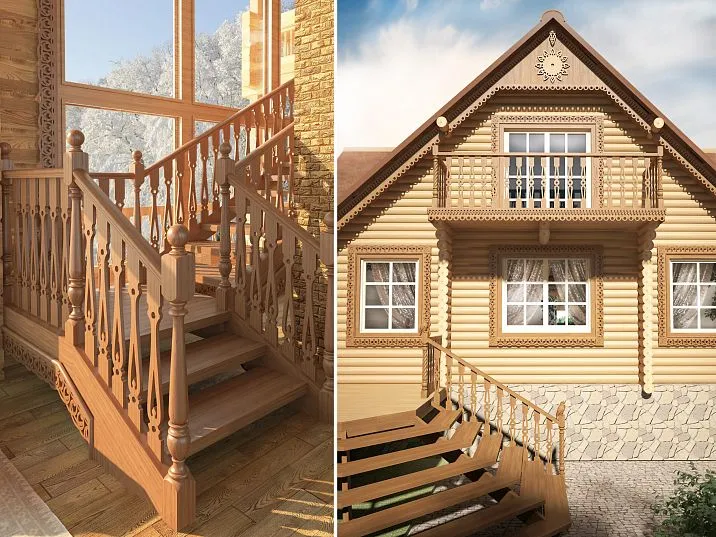
Imagine this: you're driving down the street and suddenly stop, captivated by the beauty of one house. What made you stop? Most likely, it was the harmony of architectural forms, where each element of the facade played its part in creating a cohesive image. And at the center of this symphony of beauty is the pediment — the crown of architectural art, which can turn an ordinary building into a true masterpiece.
Decorating the house facade gable with decorative elements This is not just a designer’s whim — it’s the art of creating a first impression that lasts a lifetime. In a world where every house strives to be unique, it is the decorative treatment of the pediment that becomes the magical key that opens the door to the world of exclusive architecture.
But what makes a pediment truly outstanding? Why do some houses remain memorable for decades, while others go unnoticed? The answer lies in understanding that a pediment is not merely the triangular part of the wall under the roof — it is a canvas for creativity, where every line and every pattern tells its own story.


Philosophy of decorative design: when architecture becomes poetry
Have you ever wondered why ancient architects paid so much attention to decorating pediments? They understood something important: architecture is not only function, but also emotion. The pediment served as a book written in the language of stone and wood, where each ornament carried deep meaning.
Modern Decorating the house facade gable with decorative elements Reinterprets this ancient wisdom. We no longer carve mythological scenes into marble, but the principle remains the same: to create something greater than just a roof over our heads. We create a home that speaks of the character of its inhabitants, their taste, their relationship to beauty.




Psychology of architectural form perception
Why does one pediment seem welcoming to us, while another appears cold? The secret lies in understanding the psychology of form perception. Smooth lines soothe, sharp angles add dynamism, and rich decoration creates a sense of luxury and prosperity. Experienced architects play on these strings of the human soul, creating pediments that not only decorate but also affect emotions.
Carved facade decoration can radically change the perception of the entire building. A house with an ornate pediment appears more prestigious, more cozy, more 'alive'. This is not an illusion — it is the result of careful design, where every element contributes to creating the desired image.
Our factory also produces:


Materials of modernity: from traditions to innovations
A true revolution has occurred in the decorative treatment of pediments. If previously the choice was limited to wood and stone, today the palette of materials is astonishing in its diversity. But does this mean that traditional materials have lost their relevance? Absolutely not!
Get Consultation
Wood: eternal classic in a new guise
Wood remains the king among materials for decorating the house's pediment with decorative elements. But modern processing technologies have enabled wooden decoration to reach a fundamentally new level. Today, wooden elements can serve for decades, preserving their original beauty thanks to special protective coatings.
What makes wood so attractive? Primarily, its unique texture. Each board, each block has its own unique grain pattern. This means that even two decorative facade elements identical in shape decorative facade elements will slightly differ from each other, giving the pediment liveliness and naturalness.
Modern woodcarvers create true masterpieces. They can carve delicate, almost weightless lacework, or create powerful, expressive compositions visible from afar and leaving an indelible impression.
Polyurethane: technologies of the future already today
But what if you need a complex shape that is difficult to carve from wood? Or if you live in a region with a harsh climate, where even the highest quality wood requires constant care? This is precisely for such cases that polyurethane decor.
polyurethane — a material of the 21st century — combines the plasticity of clay, the strength of stone, and the lightness of polystyrene. From it, elements of any complexity can be made, from simple cornices to intricate baroque compositions with numerous fine details.
The main advantage of polyurethane is its resistance to external influences. It does not rot, does not crack, does not fear frost or heat. Polyurethane elements can be painted in any color, and the coating will retain its vibrancy for years without fading.
Stylistic directions: find your unique look
Choosing a style for decorating the house's pediment with decorative elements — is, perhaps, the most important decision in the entire process. For style determines not only the appearance, but also the character of the house, its 'personality'.
Russian style: revival of traditions
Russian style in architectural decoration is experiencing a true rebirth. And this is not surprising! In the era of globalization, people are increasingly turning to their roots, to what makes their culture unique.
Pediment in Russian style — is an encyclopedia of folk art. Here you can find plant ornaments symbolizing a connection with nature, geometric patterns carrying ancient protective meanings, and images of mythical creatures believed to protect the house from evil forces.
The peculiarity of the Russian style is its multi-layered nature. Here, not only the overall composition matters, but also the tiniest details. Each swirl, each rosette has its own meaning. An experienced craftsman can 'read' the pediment like a book, learning about the tastes, wealth, and worldview of the house's owners.
European Classicism: elegance beyond time
If Russian style speaks of soul, then European classicism speaks of reason. Here, everything is subject to strict proportions, mathematically precise ratios, and ancient canons of beauty.
Classic decorative pediment may seem simple at first glance, but this simplicity is deceptive. Behind the apparent lightness lies a profound understanding of architectural principles, refined over centuries of European art development.
Columns, pilasters, entablatures, pediments — all these elements work together, creating a sense of harmony and completeness. A classic pediment does not shout about itself; it speaks softly but confidently about the good taste and education of its owners.
Modern: when nature meets architecture
The modern style brought a fresh breeze of change to architecture. Rejecting strict geometric forms, it turned to nature for inspiration. Smooth lines, botanical motifs, asymmetrical compositions — all of this makes the modern gable recognizable at first glance.
The hallmark of modernism is its emotionality. While classicism appeals to reason, modernism speaks directly to feelings. A modern gable can be lyrical or dramatic, calm or dynamic, but it always remains alive, as if filled with inner energy.
Technological Solutions: How an Idea Becomes Reality
A beautiful idea is only the beginning of the journey. To Decorating the house facade gable with decorative elements become reality, numerous technical challenges must be solved. And here, modern production and installation technologies come to the rescue.
Design: Where Perfection is Born
Modern design of decorative elements is an art based on precise science. Today, designers use complex computer programs that allow them to create a three-dimensional model of the future gable with millimeter accuracy.
But the computer is only a tool. The main thing is the artist's vision, their ability to imagine how the finished element will look on the building's facade. An experienced designer takes into account not only aesthetic, but also practical aspects: how the element will be mounted, how it will behave under various weather conditions, how long it will last.
Production: Where Technology Serves Beauty
Modern Production decorative elements for the facade — it is a symbiosis of traditional craftsmanship and advanced technologies. CNC machines allow cutting intricate details from wood with precision unattainable by hand.
But manual labor is not forgotten. Final finishing, fitting details, applying protective coatings — all of this requires human hands and the eye of a master. It is precisely this combination of technology and craftsmanship that allows creating items that impress with their quality.
Installation: The Final Chord
Even the most beautiful decorative element can be ruined by improper installation. Therefore, installation of gable ornaments — is a job for professionals.
Modern mounting systems allow securely fastening even the heaviest elements. It is important not only to ensure the strength of the connection, but also to provide for the possibility of thermal expansion of materials, protect the connection points from moisture.
Regional Characteristics: When Climate Dictates Rules
Russia is a country of contrasts, and climatic conditions vary drastically across different regions. What works beautifully in Krasnodar may be unsuitable for Arkhangelsk. Therefore, when selecting materials and technologies for decorating the house's pediment with decorative elements it is necessary to consider local conditions.
Northern Regions: When Cold is Not a Problem
In regions with harsh climates, material frost resistance is especially important. Wooden elements must be made from dense wood species and treated with special frost-resistant compounds. polyurethane decorative elements These materials perform especially well under these conditions — they do not crack at low temperatures and do not lose their properties even at -40°C.
In northern regions, special attention is paid to snow loads. The gable must be designed to withstand the weight of snow that may accumulate on its surface during winter months.
Southern regions: protection from sun and heat
In southern regions, the main enemy of decorative elements is the sun. Ultraviolet radiation can cause paint to fade and damage certain materials. Therefore, here it is especially important to use UV-stable coatings.
High temperatures cause thermal expansion of materials. This must be considered when designing the mounting system of decorative elements for the gable. Elements must be able to 'breathe', expanding and contracting without losing the strength of the connections.
Economic Aspects: Investment in Beauty and Status
Many consider Decorating the house facade gable with decorative elements luxury, which can be done without. But is it really so? Let's look at this question from an economic perspective.
Impact on property value
market research shows that homes with quality architectural decoration sell, on average, 15-25% more than similar properties without decoration. This means that investments in Facade Decoration not only pay off, but also bring profit.
This is especially noticeable in the segment of suburban real estate, where buyers are willing to pay extra for beauty and exclusivity. A house with a unique decorative facade becomes the "face" of the neighborhood, its calling card.
Long-term savings
properly executed decorative finishing serves for decades without requiring major repairs. Modern materials and technologies allow creating decorative elementsthat do not require annual maintenance.
Compare: simple facade painting requires renewal every 3-5 years, while quality decorative elements retain their appearance for 20-30 years. In the long term, investments in quality decoration prove more advantageous.
Modern trends: what's in style today
The world of architectural decoration is not standing still. New materials are appearing, technologies are developing, aesthetic preferences are changing. What trends define the modern approach to decorating the house facade with decorative elements?
Ecological and natural
One of the key trends — striving for eco-friendliness. People increasingly value natural materials that do not harm the environment. Wood from sustainably managed forests, recycled materials, water-based coatings — all of this is becoming a standard of quality.
Minimalism with accents
Another important trend — minimalism. Modern homeowners prefer restrained decoration with bold accents. decorative gable can be quite simple in shape, but made from expensive material or painted in an unusual color.
Integration of technologies
Modern facades can be integrated with "smart" home systems. Built-in lighting, motion sensors, even irrigation systems for greening the facade — technologies open up new possibilities for architectural creativity.
Choosing an executor: what to pay attention to
Quality decorating the house's pediment with decorative elements depends largely on the professionalism of the executor. How to choose a company that will bring your dreams to life?
Experience and portfolio
First, pay attention to the company's experience and portfolio. A good company is always ready to show examples of its work, tell about complex projects it successfully implemented.
It is especially important to have experience working in your region. Local climatic conditions leave their mark on production and installation technologies, and this experience cannot be replaced by theoretical knowledge.
Technological equipment
Modern production requires appropriate equipment. A company working on outdated machines will not be able to ensure high product quality. Pay attention to the presence of modern equipment, an in-house design department, a quality control laboratory.
Service and Guarantees
A good company does not simply sell products — it provides a comprehensive service. This includes consultations during the design stage, assistance in selecting materials, professional installation, post-sale service.
Be sure to pay attention to warranty obligations. A serious company always provides a warranty on its products and is ready to take responsibility for the quality of work performed.
Practical tips: how to avoid mistakes
Planning Decorating the house facade gable with decorative elements, it is easy to make mistakes that can be costly. Here are several practical tips to help avoid them.
Error #1: Incorrect scale selection
One of the most common mistakes — incorrect selection of decorative element sizes. Too small decoration "disappears" on a large facade, while too large elements will look disproportionate.
The rule is simple: the larger the building, the larger the decorative elements should be. But there are exceptions — sometimes many small details create an interesting "lace" effect.
Error #2: Mixing styles
Another common mistake — attempting to combine incompatible styles. Baroque scrolls poorly match minimalist forms, while Russian folk motifs clash with high-tech designs.
This does not mean you must strictly adhere to one style, but transitions between different stylistic elements should be thought out and harmonious.
Error #3: Ignoring climatic conditions
When choosing materials, many focus only on aesthetic considerations, forgetting about the climate. The result — premature deterioration of decorative elements and the need for expensive repairs.
Always consult specialists regarding the suitability of selected materials for your region.
The future of architectural decoration: a look into tomorrow
Where the industry is headed Decorating house facades with decorative elements? What innovations await us in the near future?
New materials
The development of new materials is underway. Already today, composites are appearing that combine the beauty of natural wood, the strength of metal, and the lightness of plastic. Bio-composites based on plant fibers promise to become an eco-friendly alternative to traditional materials.
Digital technologies
Digitalization affects all spheres of life, and architectural decoration is no exception. Technologies such as 3D printing are already used to create prototypes and small decorative elements. In the future, this technology may become the main method for production. Facade decorative elements.
Intelligent systems
Facades of the future may become part of a "smart home." Built-in sensors will monitor the condition of the structure, self-cleaning systems will maintain the pristine appearance of elements, and adaptive lighting will change depending on the time of day and weather conditions.
Frequently Asked Questions and Expert Answers
How much does decorating a facade with decorative elements cost?
The cost depends on many factors: the size of the facade, the complexity of the decoration, and the materials chosen. Simple decoration may cost 50-100 thousand rubles, complex projects with exclusive decoration may cost several million. Remember that this is an investment that pays off through increased property value.
How long do decorative elements last?
With proper material selection and quality installation, decorative elements can last 30-50 years or more. Wooden elements require periodic renewal of protective coatings, while polyurethane elements practically require no maintenance.
Can decorative elements be installed on an already built house?
Yes, this is possible in most cases. Modern mounting technologies allow installing decorative elements even on finished facades. However, it is better to plan this during the design stage.
Is special care required for decorative elements?
Modern materials minimize the need for maintenance. Wooden elements require periodic treatment with protective compounds, while polyurethane elements need to be washed only occasionally. The key is regular inspection to detect possible damage.
Do decorative elements affect the energy efficiency of a house?
With proper design, decorative elements can even improve energy efficiency, providing additional protection against wind and precipitation. However, it is important to correctly address insulation issues at the points of attachment.
Conclusion: your home is your business card
Decorating the house facade gable with decorative elements — this is not just a way to make your home more beautiful. It is an opportunity to express your individuality, showcase your taste, and create something truly unique. In a world where standardization is taking over new spheres, architectural decoration remains an island of creativity and self-expression.
Modern technologies and materials open up boundless opportunities to realize the boldest ideas. Whether it's a classic mansion with carved elements in Russian style or a cutting-edge home with minimalist decoration — everyone can find their solution.
The main thing is not to be afraid to dream and entrust the realization of your dreams to professionals. For many years, the company STAVROS has helped people create homes of their dreams. Rich experience, modern technologies, attention to detail, and an individual approach to each project — all of this makes STAVROS a reliable partner in creating architectural masterpieces.
By contacting STAVROS, you are not just getting decorative elements — you are getting the opportunity to turn your home into a work of art that will delight you and your loved ones for many years. Because a home is not just a place where we live — it is a reflection of our soul, our values, our aspirations. And STAVROS will help make this reflection truly beautiful.