Article Contents:
- Do You Need to Paint Polystyrene Skirting Boards: Debunking Myths
- Arguments in Favor of Painting
- Arguments Against Painting
- Compromise Solution
- Preparation for Painting: Professional Technology
- Choosing paint
- Tools and Materials
- Painting Technology
- Decorative painting techniques
- Daily Care for Polystyrene Skirting Boards
- Regular dry cleaning
- Wet Cleaning of Unpainted Skirting Boards
- Care for Painted Skirting Boards
- Removing Various Types of Stains
- Dust and Household Dirt
- Footprint and Rubber Sole Marks
- Greasy Stains
- Marker and Crayon Marks
- Mold and Mildew
- Scratches and Wear
- What Absolutely Cannot Be Used for Cleaning
- Prohibited Substances and Their Consequences
- Signs of Damage Caused by Incorrect Cleaning Agents
- Safe Alternatives
- Restoring the Appearance of Old Skirting Boards
- Condition assessment
- Restoration Stages
- Alternative to Restoration - Decorative Inserts
- Skirting Board Care in Different Rooms
- Bathroom
- Kitchen
- Entry Hall
- Living room and bedroom
- Children's room
- Seasonal Care and Maintenance
- Spring-Autumn Period
- Summer period
- Winter period
- Annual Prevention
- Professional Secrets from Specialists
- Secret 1: Protective Coating Immediately After Installation
- Secret 2: Toothpaste for Minor Scratches
- Secret 3: Child powder against squeaking
- Secret 4: Hairdryer for dents
- Secret 5: Preventive caulking of joints
- Secret 6: Cleaning schedule
- Secret 7: Documentation
- Eco-friendly care: natural products
- Vinegar solution
- Baking soda for greasy stains
- Lemon juice for shine
- Essential oils as anti-static
- Starch for polishing
- Choosing quality baseboards: key to easy care
- Criteria for quality baseboards
- Products from reputable manufacturers
- Frequently asked questions about caring for polystyrene baseboards
- How often should polystyrene baseboards be cleaned?
- Can a steam generator be used for cleaning?
- Why do baseboards yellow and how to prevent it?
- How to remove adhesive tape residue?
- Can you paint already painted baseboards?
- How to care for baseboards with textured surface?
- Is it necessary to paint polystyrene baseboards?
- What is the lifespan of polystyrene baseboards with proper care?
- How to protect baseboards from pets?
- Is it worth using wax for polishing?
- Conclusion

Polystyrene baseboards have gained popularity due to their affordable price, ease of installation, and attractive appearance. However, many apartment owners wonder: how to properly care for these items to maintain their flawless look for years? Should polystyrene baseboards be painted immediately after installation, or can they remain in their original state? Let’s explore all the nuances of operating and maintaining polystyrene baseboards.


Should polystyrene baseboards be painted: debunking myths
This is one of the most frequent questions heard by consultants in building materials stores. The answer is not as straightforward as it may seem at first glance. Let’s examine all arguments for and against painting.




Arguments in favor of painting
Protection from dirt: painted surfaceLess prone to absorbing dirt and dust. Paint creates a protective barrier that significantly simplifies cleaning. The porous structure of uncolored polystyrene can accumulate fine dust particles, which over time give the skirting board a grayish tint.Resistance to yellowing: High-quality acrylic paint with special additives protects polystyrene from ultraviolet radiation. Uncolored white polystyrene may yellow over time, especially in rooms with large windows facing the sun. This process is irreversible and significantly deteriorates the interior's appearance.
Additional mechanical strength: Several layers of paint provide extra protection against minor scratches and abrasions. This is especially relevant for floor skirting boards, which are constantly at risk of contact with vacuum cleaners, mops, and shoes.
Color options: Painting opens up unlimited design possibilities. You can choose the perfect shade to match the interior, create contrasting accents, or, conversely, make the skirting board as inconspicuous as possible.
Joint masking: After painting, the joints between skirting boards and spackled areas become completely invisible. A uniform color tone creates the impression of a monolithic structure.
Extended service life: The protective paint layer extends the lifespan of the skirting board, protecting the material from aggressive environmental factors.
Extended lifespan: The protective paint layer extends the life of the baseboard, protecting the material from exposure to aggressive environmental factors.
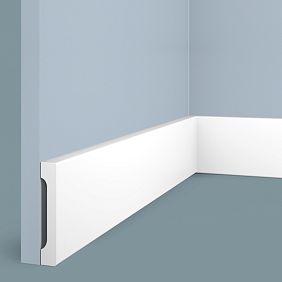
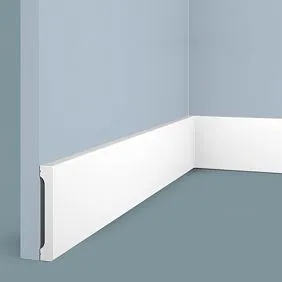
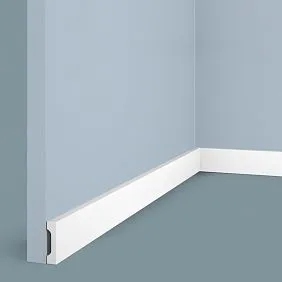
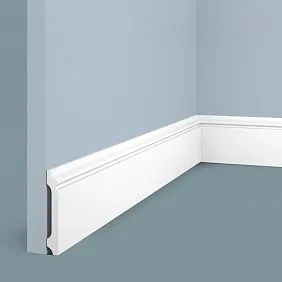
Our factory also produces:


Arguments against painting
Time and cost savings: Painting requires additional expenses for materials and time. Primer, paint, painter's tape, brushes — all of this increases the total repair cost. Plus, the painting process itself takes 1-2 days, including drying time.
The original appearance is sufficiently good: Modern manufacturers, such as Hi Wood, produce skirting boards with perfectly smooth, snow-white surfaces. Such products look presentable without additional processing.
Risk of poor execution: Incorrect painting may ruin the appearance. Streaks, uneven layers, brush hairs stuck on the surface — all of this is difficult to fix.
Possibility of painting in the future: If the white skirting board currently suits you, it can always be painted later when there is a need or desire to refresh the interior.
Quality polystyrene does not yellow quickly: Products from reputable manufacturers with stabilizers retain whiteness for 5-7 years even without painting.
Get Consultation
Compromise solution
Is it necessary to paint polystyrene skirting boards? No, it is not mandatory. However, professionals recommend the following approach:
In dry rooms with minimal load (bedroom, living room), you can leave skirting boards uncolored if they are of good quality and snow-white.
In humid and frequently used rooms (kitchen, bathroom, hallway, children's room), painting is desirable to simplify maintenance and extend service life.
If spackling compound is used for joints, painting is mandatory; otherwise, spackled areas will be noticeable.
If planning a colored interior, painting skirting boards to match wall color or in contrasting colors will create a harmonious composition.
Preparation for painting: professionals' technology
If you have decided to paintpolystyrene baseboardIt is important to follow the correct technology.
Paint Selection
Acrylic paints: Optimal choice for polystyrene. They contain no aggressive solvents, dry quickly, have no strong odor, and are safe for health. Modern acrylic formulations create a durable, flexible coating resistant to washing.
Latex paints: Excellent option for humid rooms. Latex creates a water-repellent film that does not fear direct contact with water. Ideal for bathrooms and kitchens.
Water-emulsion paints: Budget option, but require multiple layers for quality coverage. Good choice for ceiling skirting boards that are not subjected to mechanical stress.
Alkyd enamels: Create a durable glossy coating, but have a strong odor and take a long time to dry. Not recommended for living spaces due to toxicity of vapors.
Absolutely prohibited: Paints based on acetone, white spirit, and other solvents. They literally dissolve polystyrene, turning the skirting board into a shapeless mass.
Tools and materials
For quality painting, you will need:
-
Deep-penetration acrylic primer
-
Paint of selected type and color
-
Fleecy brush width 50-70 mm or velour roller
-
Painters tape width 30-50 mm
-
Sandpaper grit P180-P220
-
Clean cloths for dust removal
-
Paint container
-
Floor protective film
Painting Technology
Step 1: Surface cleaning
Even new baseboards need to be cleaned of dust. Wipe them with a damp cloth and allow to dry completely. This is critically important — paint applied to a wet surface will not adhere evenly and may peel off.
Step 2: Sanding
If the surface has roughness, unevenness, or cut edges, carefully smooth them with fine sandpaper. Movements should be light, without pressure. After sanding, remove dust with a dry cloth or vacuum cleaner with a soft attachment.
Step 3: Protecting adjacent surfaces
Apply painter’s tape along the baseboard and on the floor. Leave a small gap of 1-2 mm between the tape and the baseboard — this will allow paint to fill small gaps. Protect floor areas 30-40 cm away from the baseboard with protective film.
Step 4: Priming
Apply acrylic primer in a thin, even layer. Use a medium-stiff brush, spreading the primer along the baseboard. Pay special attention to raised elements and recesses. Allow the primer to dry completely according to the manufacturer’s instructions (usually 2-4 hours).
Step 5: First coat of paint
Thoroughly mix the paint. Dip the brush lightly and apply the first coat in strokes along the baseboard. Do not aim to create a thick, uniform layer in one go — it’s better to apply several thin coats than one thick one with drips. Allow the first coat to dry for 3-4 hours.
Step 6: Intermediate sanding
After the first coat dries, small fibers may rise. Carefully sand the surface with the finest sandpaper, then remove dust.
Step 7: Second and third coats
Apply the second coat of paint similarly to the first. Usually, two coats are sufficient for a quality white finish. For colored or dark shades, a third coat may be required. Allow each coat to dry completely before applying the next.
Step 8: Removing protection
After the final coat has fully dried (24 hours), carefully remove the painter’s tape. Do this slowly at a sharp angle to avoid damaging the paint at the baseboard edges.
Decorative painting techniques
Patina: Creates an effect of noble antiquity. Apply a base light layer, let it dry. Then apply dark paint and immediately partially remove it with a dry cloth from raised parts of the relief. Seal the result with a matte varnish.
Gilding and silvering: Use acrylic paints with metallic effect. Apply them with a fine brush to raised decorative elements over the base color. Creates a luxurious look in classic interiors.
Gradient coloring: Transition from one shade to another. Requires skill, but the result is impressive. Use a sponge or airbrush for smooth color transitions.
Texture imitation: Special painting techniques (stenciling, edge brushing) create interesting textural effects on smooth polystyrene surfaces.
Daily care for polystyrene baseboards
Proper care significantly extends the lifespan of baseboards and preserves their attractive appearance.
Regular dry cleaning
Frequency: 1-2 times per week depending on room cleanliness.
Tools: Soft dry microfiber cloth, flannel, or special dusting cloth. Can use vacuum cleaner with soft brush attachment on minimum power.
Technique: Wipe baseboards gently along their length. Pay special attention to textured elements where dust accumulates more. For hard-to-reach recesses, use a soft brush or cotton swabs.
Antistatic agents: To reduce dust attraction, periodically treat baseboards with plastic antistatic spray. Spray the agent onto a cloth (not directly onto the baseboard!) and wipe the surface.
Wet cleaning of uncolored baseboards
Frequency: As needed, but no less than once a month.
Cleaning agents: Warm water with a mild detergent. Optimal options:
-
Liquid soap (1 teaspoon per liter of water)
-
Dishwashing liquid (a few drops)
-
Specialized plastic cleaners
-
Baby shampoo solution (hypoallergenic and safe)
Cleaning technique:
-
Prepare the cleaning solution in a container
-
Dampen a soft sponge or cloth, then wring out thoroughly
-
Wipe the baseboard with a damp cloth
-
Immediately wipe dry with a cloth to remove moisture
-
Allow the baseboard to dry completely naturally
Important: Avoid prolonged contact of polystyrene with water, especially at joints. Although the material is moisture-resistant, water may seep under the baseboard and damage the adhesive layer.
Care for painted baseboards
Painted baseboards are more resistant to dirt and easier to maintain:
Dry cleaning: Similar to unpainted ones, but you can use a vacuum cleaner more frequently — paint protects the surface from scratches.
Wet cleaning: Painted baseboards can be washed more often and more thoroughly. Quality paint creates a water-repellent layer. Use the same cleaning agents, but you don’t need to wring out the sponge as thoroughly.
Removing stubborn stains: For painted baseboards, it is permissible to use window-cleaning agents containing alcohol. They effectively remove grease stains and fingerprints without damaging the paint.
Restoring shine: Periodically (every 3-4 months) wipe painted baseboards with plastic polish. This restores shine and provides additional protection.
Removing various types of stains
Different types of stains require specific cleaning approaches.
Dust and household dirt
Problem: The most common type of contamination. Dust accumulates gradually, making the baseboard dull and gray.
Solution: Regular dry cleaning prevents buildup. To remove stubborn dust, use a slightly damp cloth with a drop of detergent. Wipe in one direction, then immediately dry thoroughly.
Prevention: Use antistatic agents, ventilate the room, and install an air purifier in rooms with high dust levels.
Footprint and rubber sole marks
Problem: Black streaks from shoes, especially in the hallway. Rubber leaves hard-to-remove marks.
Solution: Special eraser for removing marks (sold at hardware stores). Gently rub the stained area. Alternative - a regular white school eraser. For stubborn stains, use a melamine sponge soaked in water.
Prevention: Entrance mat, training household members to remove shoes immediately at the door.
Greasy stains
Problem: Relevant for kitchen skirting boards. Grease settles on all surfaces during cooking.
Solution: Dishwashing detergent works excellently with grease. Apply a drop to a damp sponge, lather, treat the stain, rinse with clean water, and dry thoroughly. For old greasy stains, use a baking soda solution (1 tablespoon per glass of water).
Prevention: Regular wet cleaning, using range hood in the kitchen, promptly removing fresh splashes.
Marker and felt-tip pen stains
Problem: Relevant for families with children. Children's creativity often goes beyond paper.
Solution: Depends on the marker type:
-
Water-soluble markers: Wash with warm water and soap.
-
Permanent markers: Remove with alcohol (isopropyl or medical-grade).
-
Ballpoint pen stains: Use alcohol or acetone-free nail polish remover.
Apply the product to a cotton pad, gently rub the stain, then rinse with water.
Prevention: Store markers out of children's reach, explain proper usage rules.
Mold and mildew
Problem: Occurs in damp, poorly ventilated areas. Unpainted skirting boards are most affected.
Solution: Chlorine-based bleach solution (1:10 with water) or special antifungal agent. Apply to the affected area, leave for 10-15 minutes, rinse thoroughly, and dry. In extensive cases, skirting board replacement may be required.
Prevention: Regular ventilation, use of air dehumidifiers, prompt repair of leaks, painting skirting boards in bathrooms.
Scratches and scuffs
Problem: Mechanical damage from contact with furniture, vacuum cleaners, and pets.
Solution:
-
Minor scratches on painted skirting boards: Touch up with a fine brush.
-
Deep scratches: Fill with acrylic putty, sand, and repaint.
-
Minor scratches on unpainted skirting boards: Polish with a soft cloth.
-
Deep damage on unpainted skirting boards: Fill and repaint the entire skirting board.
Prevention: Careful handling of furniture, use soft vacuum cleaner attachments, protect skirting boards during furniture rearrangement.
What absolutely cannot be used for cleaning
Polystyrene - chemically active material that can be damaged by improper cleaning agents.
Forbidden substances and their consequences
Acetone and solvents: Literally dissolve polystyrene. Skirting board deforms, becomes sticky, loses shape. Damage is irreversible and requires replacement.
White spirit and other petroleum products: Cause swelling and softening of the material. The surface becomes loose and easily damaged.
Abrasive powders: Dishwashing powders and cleaning agents with abrasive particles leave micro-scratches. The surface becomes matte and rough, attracting dirt more strongly.
Hard metal brushes: Scratch the surface, remove the protective paint layer, and create grooves where dirt accumulates.
Aggressive acids and alkalis: Concentrated cleaners for pipes, toilets, and ovens may damage the polystyrene structure.
Hot water and steam: Temperature above 70 degrees causes deformation. Do not use steam generators to clean polystyrene baseboards.
Chlorine-based bleach on uncolored baseboards: May cause yellowing or discoloration of areas.
Signs of damage from inappropriate cleaning agents
If you used an inappropriate cleaner, the following problems may arise:
-
Sticky surface - sign of beginning dissolution
-
Deformation, profile distortion
-
Color change, appearance of stains
-
Material softening
-
Paint peeling
-
Appearance of cracks
-
Matte finish, loss of gloss
If these signs appear, immediately stop using the cleaner and rinse the baseboard with clean water. Unfortunately, most chemical damages are irreversible.
Safe alternatives
For effective and safe cleaning, use:
Natural cleaners:
-
Soap solution
-
Baking soda solution (for grease)
-
Diluted vinegar solution (for lime scale)
-
Diluted lemon juice (for shine)
Specialized cleaners:
-
Plastic cleaners
-
Window cleaning agents (contain alcohol, but in safe concentration)
-
Baby cleaning agents (hypoallergenic, gentle)
-
Professional cleaners for polymer surfaces
Soft tools:
-
Microfiber cloths
-
Melamine sponges (use carefully)
-
Soft foam sponges
-
Cotton pads for spot cleaning
-
Soft brushes for relief elements
Restoring the appearance of old baseboards
Even old polystyrene baseboards can be brought back to life without replacement.
Condition assessment
Before starting restoration, assess the extent of damage:
Minor defects: Fading, slight yellowing, small scratches, dirt. Resolved by cleaning and painting.
Moderate damage: Deep scratches, small chips, partial delamination, noticeable yellowing. Requires repair and painting.
Critical damage: Deformation, extensive cracks, broken fragments, structural damage. Replacement is recommended.
Restoration stages
Stage 1: Deep cleaning
Thoroughly clean the baseboard of all dirt. Use warm water with detergent, a soft brush for hard-to-reach areas. For heavy stains, use a melamine sponge. Remove all stains, grease, and residue. Allow the baseboard to dry completely for 24 hours.
Stage 2: Repair damage
Scratches: Fill with acrylic putty. Apply a small amount with a rubber spatula, smooth it out. After drying (4–6 hours), sand with fine-grit sandpaper until perfectly smooth.
Chips: Restore shape using two-component epoxy putty. It remains pliable until it sets, allowing you to mold it into the desired shape. After setting, sand and paint.
Detached areas: Clean the surface of old adhesive, apply fresh polystyrene adhesive, press down, and secure with painter’s tape for 12 hours.
Cracks: Fill with liquid polystyrene (special adhesive) or acrylic sealant. After drying, sand smooth.
Stage 3: Removing yellowing
Yellowed polystyrene can be attempted to be whitened:
Method 1: Apply 3% hydrogen peroxide solution to a cotton pad, treat yellowed areas. Leave for 30 minutes, rinse with water. Repeat if necessary.
Method 2: Apply a weak chlorine bleach solution (1:20) for 10–15 minutes, then thoroughly rinse. Use with caution, test on an inconspicuous area first.
Method 3: If whitening does not help, the only option is painting.
Stage 4: Painting
After repair and cleaning, painting is mandatory — it will hide all restoration traces and give the baseboard a fresh look. Follow the technology described above: primer, 2–3 coats of paint with intermediate drying.
Stage 5: Final finishing
For additional protection and gloss, apply acrylic lacquer. Matte lacquer creates an elegant look, glossy lacquer adds brightness. Lacquer also simplifies future maintenance.
Alternative to restoration — decorative overlays
If baseboards have multiple damages but are structurally intact, decorative self-adhesive films can be used. Modern films imitate wood, marble, metal. The application technology is simple:
-
Clean and degrease the surface
-
Cut the film with a 2-3 cm allowance
-
Gradually peel off the protective layer and smooth the film with a squeegee
-
Remove air bubbles
-
Trim excess with a box cutter
The film protects the surface and completely refreshes the appearance.
Care for baseboards in different rooms
Each room has its own specifics that must be considered when caring for it.
Bathroom
Features: High humidity, temperature fluctuations, direct contact with water, risk of mold formation.
Care Recommendations:
-
Wipe baseboards with a dry cloth daily after water-related activities
-
Ventilate the room regularly
-
Use antifungal agents once a month for prevention
-
Check the seams for tightness and promptly renew the sealant
-
Painted baseboards are preferable - paint provides additional protection
Cleaning frequency: Wet cleaning 1-2 times per week.
Kitchen
Features: Grease stains, food splashes, high heat from stovetop, increased humidity.
Recommendations:
-
Use grease-removing agents
-
Remove fresh splashes immediately - dried stains are harder to clean
-
Treat baseboards with a protective polish - creates a barrier against dirt
-
Painting is mandatory - simplifies maintenance
Cleaning frequency: Wet cleaning 2-3 times per week.
Entryway
Features: Dust and dirt from outdoors, shoe marks, mechanical impacts, temperature and humidity fluctuations.
Recommendations:
-
Use abrasion-resistant paints when painting
-
Regularly remove shoe marks
-
Protect baseboards when moving bicycles or strollers
-
A doormat at the entrance will reduce dirt
Cleaning frequency: Dry cleaning daily, wet cleaning twice a week.
Living room and bedroom
Features: Minimal load, primary contamination - dust.
Recommendations:
-
Regular dry cleaning is sufficient
-
Wet cleaning as needed
-
Use anti-static agents
-
Can be left uncolored with high-quality material
Cleaning frequency: Dry cleaning once a week, wet cleaning once a month.
Children's room
Features: Risk of mechanical damage, creative marks (paint, clay, markers), active play.
Recommendations:
-
Mandatory coloring with washable paint
-
Use protective pads in high-risk zones
-
Choose wide, durable baseboards
-
Explain children rules for careful handling
Cleaning frequency: Daily inspection, wet cleaning 2-3 times a week.
Seasonal care and prevention
Baseboards require special attention during certain periods of the year.
Spring and autumn periods
Features: Increased humidity, dirt from outdoors, temperature fluctuations.
Actions:
-
Check seam tightness
-
Treat baseboards with protective compound
-
Increase frequency of wet cleaning
-
Check ventilation in rooms
Summer period
Features: High temperature, intense ultraviolet radiation.
Actions:
-
Use curtains to protect from direct sunlight
-
Check uncolored baseboards for yellowing
-
Ensure good ventilation
Winter period
Features: Dry air from heating, static electricity, more dust.
Actions:
-
Use air humidifiers
-
Apply anti-static agents more frequently
-
Increase frequency of dry cleaning
-
Ensure baseboards do not overheat near radiators
Annual preventive maintenance
Perform comprehensive inspection and maintenance once a year:
-
Thorough inspection of all baseboards for damage
-
Checking the reliability of mounting
-
Updating sealant at joints as needed
-
Deep cleaning with cleaning agents
-
Updating varnish or repainting as needed
-
Replacing damaged sections
Professional secrets from specialists
Finishing experts share proven tricks for baseboard care.
Secret 1: Protective coating immediately after installation
After installation and painting, apply a thin layer of plastic car wax. This creates an invisible protective film that:
-
Repels dirt and water
-
Eases subsequent cleaning
-
Protects against yellowing
-
Adds shine
Refresh the coating every 6 months.
Secret 2: Toothpaste for minor scratches
Regular white toothpaste (not gel!) polishes minor scratches on white baseboards. Apply a little paste to a soft cloth and polish the scratch in circular motions. The paste contains mild abrasives that smooth the surface.
Secret 3: Baby powder for squeaking
If the baseboard squeaks when walking (contact with the floor), apply baby powder into the gap between the baseboard and the floor. Talc reduces friction and eliminates the sound.
Secret 4: Hairdryer for dents
Small dents on polystyrene can be attempted to be fixed by heating. Aim the hairdryer (not hot air!) at the dent for 30-60 seconds. The material will soften and may partially restore its shape. Do not overheat!
Secret 5: Preventive caulking of joints
Even if joints look good, refresh the sealant every 2-3 years. Over time, it loses elasticity, develops microcracks, into which dirt and moisture get.
Secret 6: Cleaning schedule
Professionals recommend a rotation system:
-
Monday: dry cleaning all rooms
-
Thursday: wet cleaning of kitchen and bathroom
-
Sunday: wet cleaning of living rooms
This prevents dirt accumulation and distributes the workload.
Secret 7: Documentation
Photograph the skirting boards immediately after installation. Take control photos after one year. Comparing them will show whether you are caring for them properly and if it’s time for restoration.
Eco-friendly care: natural products
For those who prefer natural products, there are effective eco-friendly alternatives.
Vinegar solution
Composition: 1 part table vinegar 9% to 10 parts water.
Application: Universal cleaning agent. Removes grease, limescale, and disinfects. Wipe the skirting boards with the solution, then with clean water, and dry thoroughly.
Limitation: Not suitable for marble or limestone surfaces near the skirting boards.
Baking soda for greasy stains
Composition: 2 tablespoons of baking soda per glass of warm water.
Application: Excellent for grease stains in the kitchen. Apply the paste to the stain, leave for 5 minutes, wipe with a damp cloth, and rinse with water.
Enhancement: For heavy stains, add a few drops of liquid soap.
Lemon juice for shine
Application: Add juice from half a lemon to a glass of warm water. Wipe the skirting boards — the citric acid removes deposits and adds shine.
Bonus: Pleasant fresh scent in the room.
Essential oils as anti-static agents
Application: 5–7 drops of tea tree or lavender essential oil per glass of water. Spray onto a cloth and wipe the skirting boards. The oils have anti-static and antibacterial effects.
Starch for polishing
Application: Potato starch on a damp cloth polishes the surface to a shine. Suitable for final finishing after wet cleaning.
Choosing quality skirting boards: the key to easy care
The right choice of skirting boards significantly simplifies subsequent care.
Criteria for quality skirting boards
Density of material: Qualitypolystyrene skirting boardhas a density of at least 100 kg/m³. Such material is stronger, absorbs less dirt, and is easier to clean.
Surface smoothness: An ideally smooth surface without roughness or pores accumulates less dust and is easier to clean.
Whiteness: Quality polystyrene has a uniform snow-white color without yellowish tinge. This is a sign of stabilizers used to prevent yellowing.
Geometric accuracy: Correct geometry ensures tight fit to surfaces, minimizing gaps where dirt accumulates.
Presence of protective coating: Some manufacturers apply a protective primer to skirting boards at the factory. Such products are more resistant to dirt.
Products from reputable manufacturers
The company STAVROS cooperates with reliable manufacturers such as Hi Wood (HiWood, Хай Вуд, ХайВуд). Products from these brands differ by:
-
Stable quality
-
Using modern stabilizer additives
-
Precise profile geometry
-
Ideal surface
-
Affordable price
Choosing quality baseboards from trusted manufacturers is an investment in easy maintenance and longevity.
Frequently asked questions about caring for polystyrene baseboards
How often should polystyrene baseboards be cleaned?
The recommended frequency depends on the room. In living rooms, wet cleaning once a month and dry cleaning weekly is sufficient. In the kitchen and bathroom, wet cleaning is needed 2-3 times a week. In the hallway - twice a week.
Can a steam generator be used for cleaning?
No, high steam temperature (above 70 degrees) can deform polystyrene. Use only warm or cool water.
Why do baseboards yellow and how to prevent it?
Yellowing is caused by UV exposure on cheap polystyrene without stabilizers. Prevention: buy quality products, use curtains for sun protection, paint baseboards with UV-filter paint.
How to remove adhesive tape residue?
Heat the area with a hairdryer (warm air), the tape will soften and easily peel off. Remove adhesive residue with vegetable oil, then wash with soap solution.
Can you repaint already painted baseboards?
Yes, you can repaint unlimited times. Prepare the surface: wash, lightly sand if necessary, prime, and apply new paint.
How to care for baseboards with textured surface?
Use a soft brush or toothbrush to clean grooves. For wet cleaning, use a sponge, gently going over all relief elements. Dry with a cloth or hairdryer on cold setting.
Is it necessary to paint polystyrene baseboards?
No, it is not necessary. Quality baseboards from trusted manufacturers look presentable without painting. However, painting is recommended for humid rooms, where joint spackling is present, to prevent yellowing and simplify maintenance.
What is the lifespan of polystyrene baseboards with proper care?
With proper care, quality polystyrene baseboards last 15-20 years. Painted ones may last up to 25 years. Limitation is usually due to mechanical damage or desire to refresh the interior.
How to protect baseboards from pets?
Use special protective caps in areas where pets frequently scratch. Regularly trim pets' nails. Treat baseboards with citrus-scented repellent sprays (safe for polystyrene).
Is it worth using wax for polishing?
Yes, special plastic or automotive wax creates a protective layer that simplifies care and protects against dirt. Apply a thin layer every 6 months.
Conclusion
Caring for polystyrene baseboards does not require special skills or expensive products. Regular simple cleaning, proper choice of cleaning agents, and timely repair of minor damage — these are the keys to long service life and flawless appearance.
Whether or not to paint polystyrene baseboards is a personal decision. Painting provides additional protection and simplifies care, but quality unpainted baseboards also last long with proper use. The key is to choose products from trusted manufacturers and follow simple care rules.
STAVROS offers a wide selection of quality polystyrene baseboards from a reliable partner Hi Wood. Our specialists will help you choose the optimal solution for your interior, explain care rules, and provide professional advice on usage. Contact our experts — create a beautiful and long-lasting interior with STAVROS!
Do you have questions about caring for polystyrene baseboards or want personalized recommendations for your specific case?