Article Contents:
- Anatomy of a corner protective element: form follows function
- Materials science: why solid wood surpasses alternatives
- Protective function: where corner protectors are necessary
- Decorative role: corner as a stylistic element
- Bracket as a sculptural element of functional architecture
- Load-bearing capacity calculation: engineering behind decoration
- Bracket applications: from bookshelves to architectural elements
- Installation of wooden corners: technology and nuances
- Bracket installation: precision determines the result
- Stylistic integration: coordination with interior design
- Combination with other wooden elements
- Restoration and renewal: giving elements a second life
- Custom manufacturing: when standard doesn't fit
- Economics of protection: calculating the benefits
- Questions and answers: practical advice
- Conclusion: details create perfection

The corner is the point of maximum vulnerability in any structure. Corners are the first to take impacts, wear down from contact, and chip from careless handling. Wall corners in hallways get worn down to the base by bags and suitcases. Furniture edges lose their finish from daily contact. But what if we could turn vulnerability into an advantage, and the need for protection into an opportunity for decoration?
Wooden corner bracket solves both tasks simultaneously. It's not just an overlay protective profile, but a full-fledged decorative element capable of transforming the geometry of a space.Decorative Bracket made from solid wood becomes a functional support for shelves, countertops, canopies, and simultaneously adds sculptural expressiveness. These elements operate at the intersection of engineering and art, where load-bearing calculations meet aesthetic exploration.


Anatomy of a corner protective element: form follows function
A wooden corner is a profiled product with a ninety-degree angle, designed for installation on external or internal corners of structures. The cross-section varies from compact 20×20 millimeters for decorative purposes to massive 60×60 millimeters for high-traffic areas. Standard product lengths are 2400 or 2600 millimeters, which corresponds to typical room height with allowance for trimming.
The corner profile can be symmetrical (both flanges equal width) or asymmetrical (one flange wider than the other). Symmetrical profiles are used on equally accessible corners—external column corners, decorative boxes, furniture edges. Asymmetrical profiles are justified where one side of the corner is more visible or experiences greater mechanical load. For example, on hallway corners in furniture passage areas, the wider flange is installed on the movement side.
The shape of the corner edges influences perception and tactile comfort. Rounded edges make the profile visually softer and safer for accidental contact. Sharp chamfers emphasize geometry, create graphic quality, but require careful handling. Profiled edges with decorative curves or beads transform a utilitarian element into an exquisite detail of classical interior.
The internal corner of the profile is rarely perfectly straight. Craftsmen leave a small gap (1–2 millimeters)—this compensates for possible irregularities of the mounted corner, ensuring tight contact of flanges to surfaces. Without such a design gap, the corner could "hang" on a protruding section of the base, creating gaps along the edges.
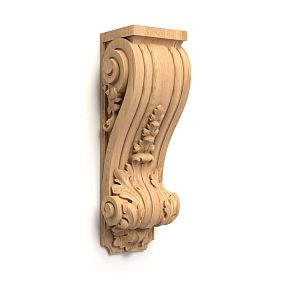
Furniture Bracket has different anatomy. This is a corner element where one side attaches to a vertical surface (wall, furniture side), the second serves as support for a horizontal plane (shelf, countertop). Between the vertical and horizontal parts forms a diagonal connection—a reinforcing brace that takes the bending moment and evenly distributes the load.
The shape of the brace determines the bracket's style. A straight brace at a forty-five degree angle—a minimalist technical solution. A curved S-shaped brace creates baroque plasticity. A brace with openwork ornamentation, plant carving, or geometric motifs transforms a structural element into a decorative work.




Materials science: why solid wood surpasses alternatives
The market offers corner protective profiles from various materials: plastic, aluminum, MDF with coating, polyurethane. Each material has its niche. Plastic corners are practical for technical spaces. Aluminum profiles are indispensable in aggressive environments. But when it comes to residential interiors, where environmental friendliness, visual warmth, and integration into any style are important, solid wood has no competitors.
Natural wood possesses a unique set of properties. Its strength combined with elasticity allows elements to withstand significant mechanical impacts without breaking. A wooden corner piece absorbs shock upon impact, deforms slightly, and then returns to its original state. Plastic cracks under similar load, while aluminum remains dented.
Wood is highly workable: it can be subjected to any type of processing—milling, sanding, carving, bending. This enables the creation of profiles of any complexity, from the simplest rectangular ones to multi-stage profiles with decorative elements. The possibility of tinting, painting, and patination opens up limitless color solutions.
The eco-friendliness of solid wood is critical for living spaces. Wood does not emit toxic substances, is hypoallergenic, and regulates air humidity. Plastic profiles, when heated (for example, in rooms with underfloor heating or under direct sunlight), can release volatile compounds. Wooden elements are absolutely safe.
Oak is a classic choice for load-bearing elements and high-traffic areas. High density of about seven hundred and twenty kilograms per cubic meter, pronounced texture with large medullary rays, natural resistance to decay due to high tannin content. Oak corner pieces and brackets serve for decades without loss of load-bearing capacity. The wood takes well to tinting, from light bleached oak to dark stained oak.
Beech is characterized by a uniform, fine-pored structure, a light tone with a slight pinkish hue, and high hardness. Beech wood is excellently processed with milling cutters, allowing the creation of profiles with fine details. It takes dye easily and accepts any shades evenly. The only limitation is that beech is demanding regarding humidity stability, therefore it is not recommended for damp rooms without additional protection.
Ash is similar to oak in mechanical characteristics but is more elastic. Light wood with contrasting annual rings creates an expressive, graphic pattern. Ash elements are ideal for modern interiors where the natural beauty of the material is valued without excessive decoration.
Pine is a budget-friendly solution for projects with subsequent painting or for rooms with low operational load. Soft, resinous wood is easy to work with but less resistant to mechanical damage. Pine corner pieces are suitable for protecting corners in bedrooms, children's rooms, and country houses.
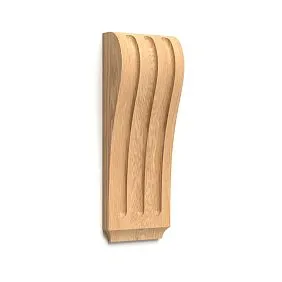
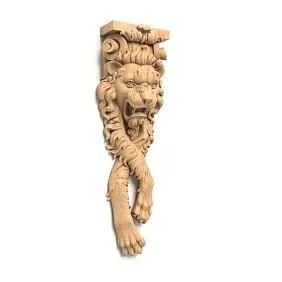
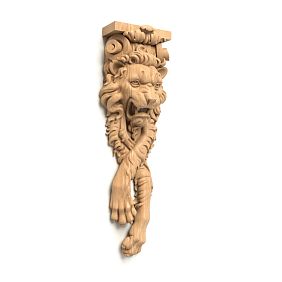
Our factory also produces:


Protective function: where corner pieces are necessary
Corridors and hallways are areas of maximum risk for wall corners. There is constant movement, handling of bulky items, carrying bags and suitcases. External corners at room entrances, corners of niches for built-in wardrobes, corners of decorative columns—all inevitably come into contact with carried objects. Without protection, wallpaper tears, plaster chips, and scuffs and dents form.
Installing wooden corner pieces in these locations solves the problem once and for all. The solid wood absorbs all mechanical impacts. Even under intensive use over the years, the wood only becomes slightly polished from contact, acquiring a noble patina. If necessary, the surface can easily be refreshed by sanding and reapplying the finish.
The optimal height for corner protection in a corridor is from the floor to a height of 1200–1500 millimeters. This corresponds to the level at which bags are usually carried, furniture is moved, and large items are passed. It is possible to install a full-length corner piece along the entire wall height, but this is functionally excessive and economically costly. Partial protection of the most vulnerable zone is optimal.
Children's rooms and play areas require special attention to corner safety. Sharp wall edges are dangerous for actively moving children. Wooden corner pieces with rounded edges soften the geometry, minimizing the risk of injury from accidental collisions. An additional plus is that the corners are protected from the inevitable mechanical impacts from toys, balls, and bicycles in a child's room.
Kitchens and dining rooms, where furniture is often moved for cleaning, where tables and chairs are placed against walls, need corner protection in the dining area. Small corner pieces with a height of 600–800 millimeters, covering the most risky section, are appropriate here. The material must be easy to clean, withstand wet cleaning with household chemicals—varnished oak or beech are ideal.
Office spaces, especially corridors and common areas with constant foot traffic, document and equipment handling, experience maximum operational stress on corners. Wooden corner protectors here are not just functional elements but also part of the company's image. High-quality solid wood products with professional finishing convey status, attention to detail, and long-term thinking.
Furniture corners are a separate category of application. Dressers, wardrobes, tables, especially those made of MDF with thin veneer, are easily damaged at the corners. Wooden overlay corner pieces protect vulnerable edges while simultaneously becoming a decorative accent. This is especially relevant for antique or restored furniture, where historical corner damage needs to be preserved and protected from further deterioration.
Get Consultation
Decorative role: the corner piece as a stylistic element
In addition to its protective function, a wooden corner piece works as an architectural element that structures the space. A contrasting corner piece (dark on a light wall or vice versa) emphasizes the geometry of the room, makes corners visually clear and graphic. This is especially effective in minimalist interiors where architectural form is more important than decoration.
A corner piece matching the wall color, on the contrary, blends in, working solely as protection. A wooden profile painted to match the wall color is practically invisible but performs its function. This solution is suitable when you don't want to draw attention to the corners, and visual integrity of the planes is important.
Profiled corner pieces with decorative coves, beads, and stepped sections become a full-fledged part of architectural decor. They echo withbaseboards and moldings, creating a unified stylistic ensemble. In classical interiors, such elements form an architectural order system, where every detail is in its place.
Carved corner pieces with plant or geometric ornamentation represent the pinnacle of decorative work with corner elements. They are appropriate in palace-style interiors, Baroque, Rococo, in spaces where demonstrating status and attention to detail is important. Carving can be flat (contour), relief, or three-dimensional. Motifs range from classical acanthus scrolls to floral compositions.
The color solution for wooden corner pieces opens wide possibilities. The natural tone of wood with transparent oil or varnish is the choice for supporters of eco-style, Scandinavian direction, and naturalistic interiors. Tinting in dark shades—like wenge, stained oak, walnut—creates contrasting accents and adds depth. Painting white is universal, fitting into any style from classic to contemporary. Bright colors—blue, green, red—are a bold solution for eclectic or children's interiors.
The bracket as a sculptural element of functional architecture
If a corner piece works primarily in the plane of the wall, then a bracket projects into space, becoming a three-dimensional object. This makes it much more noticeable, turning it into an independent decorative accent. The shape of the bracket, its degree of decorativeness, proportions—all critically influence the perception of the interior.decorative bracketMinimalist brackets with straight lines, no decoration, geometrically correct—the choice for modern interiors. Here the form is maximally close to structural necessity: vertical, horizontal, diagonal brace. No ornaments—only an honest demonstration of the material and construction at work. Such brackets often combine wood with metal, creating an industrial aesthetic.
Classical brackets with an S-shaped curved brace are a legacy of furniture art from past centuries. The smooth line of the brace visually lightens the massiveness of the structure, creates dynamism, and directs the gaze from the wall to the supported surface. The curve can be soft, barely noticeable, or pronounced, almost spiral. The degree of curvature depends on the interior style and the size of the bracket.
Carved brackets with plant ornamentation are a typical element of Baroque, Rococo, and Victorian styles. The brace is decorated with acanthus leaves, grapevines, floral garlands. Carving can cover the entire surface or concentrate on key points—at the junction of the vertical and the brace, at the end of the horizontal shelf. Gilding or patination emphasizes the relief, creating the effect of an antique piece.
Pierced brackets with openwork ornamentation demonstrate the highest level of craftsmanship. The brace turns into a lace-like composition where wood alternates with voids. Geometric patterns—meanders, rosettes, stars—are characteristic of Neoclassicism and Art Deco. Plant motifs are for Art Nouveau and Victorian style. Creating a pierced bracket requires precision: too thin bridges between voids weaken the structure, too thick ones make the ornament coarse.
Pierced brackets with intricate openwork patterns demonstrate the highest level of craftsmanship. The brace transforms into a lace-like composition where wood alternates with voids. Geometric patterns—meanders, rosettes, stars—are characteristic of Neoclassicism and Art Deco. Floral motifs are typical of Art Nouveau and Victorian style. Creating a pierced bracket requires precision: overly thin bridges between voids weaken the structure, while overly thick ones make the pattern appear crude.
Combined brackets, where wood is combined with forged metal elements, create a special expressiveness. The wooden base is complemented by metal overlays, the brace is reinforced with a forged bracket. Such solutions are characteristic of Provence, country, and rustic styles. The combination of the warmth of wood and the texture of metal creates a rich material palette.
Load-bearing capacity calculation: engineering behind the decor
The beauty of a bracket should not be achieved at the expense of its primary function—bearing load. Calculating load-bearing capacity is critical for safe operation. An insufficiently strong bracket under a heavy shelf will eventually fail, which risks not only property damage but also injuries.
The load-bearing capacity of a bracket depends on several factors: wood species, cross-section of elements, geometry of the structure, quality of wall attachment. Oak and beech with a density of about 700 kilograms per cubic meter withstand significantly greater loads than pine with a density of 500 kilograms per cubic meter. All else being equal, an oak bracket is one and a half times more reliable than a pine one.
The cross-section of the vertical post and horizontal shelf determines the rigidity of the structure. For lightweight decorative shelves with a load of up to 10 kilograms, a 40×40 millimeter cross-section is sufficient. For bookshelves with a load of 20–30 kilograms, a cross-section of at least 60×60 millimeters is required. For countertops, work surfaces with a load of 50 or more kilograms, brackets with a cross-section of 80×80 millimeters or more are needed.
The brace angle affects load distribution. The optimal angle is about 45 degrees. At this angle, the vertical and horizontal load components are equal, the brace works primarily in compression, which is efficient for wood. A too steep brace (more than 60 degrees) resists bending worse. A too shallow brace (less than 30 degrees) creates excessive horizontal forces trying to pull the bracket off the wall.
The number of brackets under a shelf depends on its length and expected load. For a shelf up to 60 centimeters long, two brackets at the edges are sufficient. For a shelf 80–120 centimeters long—two brackets, but considering the shelf deflection between them (a thick board of 30–40 millimeters is required). For long shelves over 120 centimeters, a third central bracket is necessary, otherwise the shelf will sag.
Attaching the bracket to the wall is a critical moment. The strength of the entire structure is limited by the strength of the fasteners. For brick and concrete walls, use dowels with screws 8–10 millimeters in diameter, at least 80 millimeters long. The number of attachment points—at least three on the vertical post of the bracket. For drywall partitions, special butterfly or molly anchors are needed, but the load-bearing capacity is still limited—no more than 15–20 kilograms per bracket.
Application of brackets: from bookshelves to architectural elements
Bookshelves ondecorative brackets—a classic solution for home libraries, studies, living rooms. Open shelves create a sense of lightness compared to closed cabinets, allow displaying book collections, make them accessible. Wooden brackets support both massive oak boards and modern glass shelves.
Kitchen shelves for dishes, spices, decorative elements are often mounted on brackets. Here, material resistance to humidity and temperature fluctuations is important. Varnished oak or beech brackets easily withstand kitchen conditions, are easy to clean from dirt. Stylistically, brackets can complement the kitchen set—classical carved ones for traditional furniture, minimalist ones for modern facades.
Bathrooms allow the use of wooden brackets provided high-quality moisture protection. Yacht varnishes, oils with water-repellent additives create a reliable moisture barrier. Oak brackets, due to their high tannin content, are naturally resistant to rot. Shelves on brackets are used for storing towels, cosmetics, decorative elements.
Console countertops, where the work surface is attached to the wall without legs, rely on powerful brackets. This solution is popular for compact workstations, bar counters, dressing tables. Here, maximum strength brackets made of oak or beech are required, with a cross-section of at least 80×80 millimeters, spaced 60–80 centimeters apart. Attachment is done through embedded elements or into load-bearing walls.
Canopies over entrance doors, windows, porches are traditionally supported by wooden carved brackets. This is an architectural element, visible from afar, shaping the building's appearance. Outdoor brackets require special protection from atmospheric influences—multi-layer coating with varnishes or paints, antiseptic treatment, regular maintenance. Wood species—larch, oak, other durable species.
Cornices and soffits, decorative projections on building facades also rest on brackets. Here, the functional load is minimal (the element's own weight), the main role is decorative. Brackets can be maximally elegant, rich in carving, lacy. They shape the building's silhouette, create play of light and shadow on the facade.
Installation of wooden corner guards: technology and nuances
Installing a protective corner guard seems like a simple task, but the quality of installation determines the durability and appearance of the result. The first stage is surface preparation. The corner must be cleaned of dust, peeling coatings, grease stains. If the corner has significant irregularities (more than 2–3 millimeters), they need to be leveled with putty or plaster. The corner guard will repeat all base irregularities, forming gaps.
The second stage is marking and trimming the corner guard to height. Measure the height of the protected area, mark it on the corner guard, saw off the excess with a miter saw or fine-toothed hacksaw. The cut must be strictly perpendicular to the longitudinal axis, otherwise the corner guard will have a gap against the floor or ceiling. After sawing, sand the cut with fine sandpaper, remove burrs.
The third stage is choosing the adhesive composition. For wooden corner guards on painted or plastered walls, use polymer-based mounting adhesive (liquid nails, mounting foam). For corner guards on wooden surfaces, woodworking PVA or polyurethane glue is suitable. It is important that the adhesive has some elasticity after curing—this compensates for wood's thermal and moisture deformations.
The fourth stage is applying adhesive and mounting. Apply adhesive to both inner surfaces of the corner guard in a thin, wavy bead. Do not cover the entire surface with a continuous layer—when pressed, the adhesive will spread, excess will squeeze out. Place the corner guard against the corner, align it vertically (check with a level), press firmly. Hold for several minutes until the adhesive sets.
The fifth stage is additional fixation. Adhesive alone is insufficient for reliable attachment of corner guards in high-traffic areas. Additionally, use finishing nails or screws. Nails 30–40 millimeters long are driven in at 300–400 millimeter intervals, slightly countersinking the heads. For screws, pre-countersink (create a countersink for the head), then screw flush or slightly recessed.
The sixth stage is filling fasteners and joints. Nail or screw heads are filled with wood-colored furniture putty. After drying, sand the putty with fine sandpaper. Joints of the corner guard with the floor and ceiling, if there are small gaps, are sealed with acrylic sealant matching the corner guard color or clear. Apply sealant in a thin bead, smooth with a wet finger, remove excess.
The seventh stage is finishing. If the corner guard is made of unfinished solid wood, after installation, coat it with oil, wax, or varnish. The coating protects the wood from dirt, moisture, mechanical damage. Apply 2–3 coats with intermediate sanding. If the corner guard already has a finish, skip this stage.
Bracket installation: precision determines the result
Bracket installation requires more thoroughness than corner guard installation, as precision determines shelf levelness and load-bearing capacity. The first stage is determining shelf height. Consider ergonomics: shelves at a height of 1400–1600 millimeters are convenient for an average-height adult to reach items. Shelves above 1800 millimeters require a stepladder. Shelves below 800 millimeters are inconvenient if frequent access is needed.
The second stage is marking attachment points. Mark a horizontal line on the wall at the height of the shelf's lower edge (use a laser or bubble level). Determine bracket positions: for an 80-centimeter shelf, place two brackets 10–15 centimeters from the shelf edges. Place the bracket against the wall, align its top edge with the horizontal line, mark the fastener hole points.
The third stage is drilling holes for fasteners. The drill bit diameter must match the dowel diameter. For 8-millimeter dowels, use an 8-millimeter bit; for 10-millimeter dowels, use a 10-millimeter bit. Drilling depth—5–10 millimeters more than the dowel length. Drill strictly perpendicular to the wall, without tilting. Use a hammer drill for concrete and brick, a drill for wood and drywall.
The fourth stage is installing dowels and attaching brackets. Tap dowels into the holes with light hammer blows until fully seated. Place the bracket against the wall, aligning the holes, screw in the screws. Tighten evenly, without excessive force. Overtightening can split the bracket wood or crush the wall dowel. Under-tightening leaves play, the structure will wobble.
The fifth stage is checking levelness and rigidity. Place a level on the bracket's top edge, ensure the bubble is centered. If the bracket is tilted, loosen the fastener, place a thin shim (wood chip, plastic plate) under the back edge, retighten. Press on the bracket with hand force—it should not move, flex, or creak. Any play is unacceptable.
Stage Six — Shelf Installation. Place the shelf board on the brackets, aligning it with the edges (overhangs should be equal). Check the shelf's horizontality with a level. If the shelf rests freely, installation is complete. If the shelf needs to be secured, screw in screws from below through the bracket into the board; the screws should be 5 millimeters shorter than the board's thickness (so they don't protrude from the top).
Stage Seven — Load Test. Gradually load the shelf, starting with small weights. Place a few books, observe for a day. Add more, observe again. If the structure is stable, with no sagging or creaking, the shelf can be used to its full capacity. If concerning signs appear, reduce the load or reinforce the structure with an additional bracket.
Stylistic Integration: Coordination with the Interior
Wooden corner brackets and shelf brackets fully realize their potential when harmoniously integrated into the room's style. Random choices in decorativeness, color, or shape can disrupt the interior's integrity. A systematic approach ensures the organic inclusion of elements into the overall composition.
Classical interiors (Baroque, Rococo, Empire, Classicism) require maximum decorativeness. Carved brackets with floral ornamentation, gilding, or patination are appropriate here. Corner brackets with profiled edges that repeat the profileof cornices and moldings. Wood species — oak, walnut, mahogany. Finish — polishing, glossy varnishing, toning in dark, noble shades.
Neoclassicism allows for more restrained decorativeness. Brackets with geometric motifs — meanders, rosettes, fluting. Corner brackets of simple forms but with clear edges and bevels. Color palette — white, cream, light wood tones. Local gilding is possible — only on the peaks of the carving, creating an accent without excess.
Art Nouveau is characterized by flowing plant lines, asymmetry, and the rejection of right angles. Brackets have curved braces in the shape of stylized plants, wavy lines. Carving is flat, contour-based, emphasizing the silhouette. Corner brackets can have an asymmetrical profile, with one shelf wider than the other. Toning — medium and dark tones that emphasize the texture.
Scandinavian style leans towards naturalness, light tones, and minimal decor. Brackets of simple forms made from light wood species — ash, birch, pine. Coating — clear oil or wax, preserving the natural color and texture. Corner brackets with rectangular cross-section and rounded edges. No carving, no gilding — only purity of form and quality of material.
Loft and industrial styles allow for rough processing, preserving the wood's natural defects. Brackets are massive, brutal, often combined with metal. The wooden part is wire-brushed (soft fibers are removed, texture is emphasized), coated with oil, or left uncoated. Corner brackets made from aged wood, with knots, cracks, perceived as part of the aesthetic.
Provence and country styles require a touch of antiquity, pastel tones, simple forms. Brackets are painted in white, cream, blue, lavender colors with a distressed effect. Paint is partially worn away in places, exposing the wood, imitating long-term use. Corner brackets are also painted, with light carving or none. The atmosphere of cozy rustic simplicity is important.
Minimalism and contemporary styles require absolute conciseness. Brackets are geometrically correct, without a single decorative element. Corner brackets with rectangular cross-section, monochrome. Colors — white, black, gray, natural light wood tone. No ornaments — form is determined solely by function.
Combination with Other Wooden Elements
Wooden corner brackets and shelf brackets are most effective when combined with other solid wood elements in the interior.Decorative Insertson furniture, doors, walls; baseboards and moldings; door casings and cornices — all these details should echo each other in style, wood species, color, type of coating.
Unity of wood species creates a harmonious material palette. If brackets are made of oak, it is logical for shelves, casings, furniture legs to also be oak. The texture will be recognizable, the color will match, the material will be perceived as a single whole. Mixing species is permissible but requires a subtle sense of color and texture.
Unity of finish is no less important. If matte oiled surfaces predominate in the interior, a glossy varnished bracket will clash. If furniture is painted, corner brackets should also be painted. If patination is applied, it should be on all wooden elements. Stylistic consistency creates a professional result.
The profile of corner brackets can repeat the profile of baseboards or moldings. This creates an architectural system where horizontal and vertical elements are visually connected. A classic technique — the corner bracket and baseboard have identical cross-section and profile, perceived as a single frame bordering the room's walls.
Carved decor on brackets can echo carving on furniture, doors,decorative appliqués. Repeating motifs — acanthus leaves, grapevines, geometric ornaments — create rhythm, uniting disparate elements into a composition. This is especially important in classical interiors, where the coordination of decor forms stylistic identity.
Restoration and Renewal: A Second Life for Elements
Wooden corner brackets and shelf brackets, even after decades of use, can be restored. Wear, scratches, faded coating — all this can be remedied. Restoration is significantly cheaper than replacement and preserves the patina of time, valuable for antique interiors.
The first stage of restoration — damage assessment. Surface scratches and wear are easily eliminated by sanding and reapplication of coating. Deep chips and cracks require filling with wood putty followed by sanding. Structural damage — a broken bracket brace, a split corner bracket — require professional repair or replacement.
The second stage — removal of old coating. Varnish or paint is removed mechanically (by sanding) or chemically (with stripper). Sanding is labor-intensive but safe and does not damage the wood. Stripping is faster but requires caution — aggressive compounds can burn skin, ruin surrounding surfaces. After coating removal, the element is thoroughly cleaned and dried.
The third stage — defect repair. Cracks are filled with epoxy putty mixed with wood dust to imitate texture. Chips are restored by gluing in wooden inserts, then sanded flush. Loose bracket joints are disassembled, old glue is cleaned off, reglued with polyurethane glue, clamped with clamps until completely dry.
The fourth stage — sanding. Start with coarse sandpaper (grit 80–100) to remove unevenness, gradually move to fine (220–320) for a smooth surface. Sand strictly along the grain — cross-grain scratches will be visible under the coating. Carved elements are sanded by hand with fine sandpaper, following all the curves of the ornament.
The fifth stage — toning or painting. If color change or tone evening after repair is needed, stain is applied. Apply with a brush or pad, let it soak in, remove excess. For opaque coating, use paint — acrylic or oil-based, depending on operating conditions. Apply paint in thin layers with intermediate sanding.
The sixth stage — final coating. Apply oil or wax with a pad, let it soak in, polish. Apply varnish with a brush or sprayer in 2–3 layers with intermediate sanding with fine sandpaper (320–400). The final layer is not sanded or is polished to a shine with special pastes. After the coating is completely dry, the element is ready for installation.
Custom Manufacturing: When Standard Doesn't Fit
Serial production offers dozens of corner models and hundreds of bracket options, but sometimes a completely unique solution is required. Restoration of historical buildings, where lost elements need to be precisely reproduced. Custom interiors where standard products don't fit the concept. Non-standard sizes or loads requiring special structures. In such cases, custom production is the answer.
The process begins with a consultation. You provide a sketch, a photo of a sample, a detailed description of the desired product, and technical requirements. Specialists assess feasibility, select the wood species, calculate load-bearing capacity for brackets, and estimate cost and timelines.
For complex carved elements, a detailed sketch is created—a drawing outlining all ornament details with dimensions. The sketch is approved by the client, and adjustments are made. Sometimes a scaled-down prototype is made from inexpensive wood to evaluate the three-dimensional form.
After sketch approval, manufacturing begins. Blanks of the required cross-section and length are cut from solid wood. Corner profiling is done on milling machines. Brackets are cut according to a template, elements are joined with tenons or dowels and glue. Carved decor is first cut on a CNC machine (this speeds up the process), then refined by hand by a carver—the machine cannot create fine, lively carving.
Finishing includes multiple sanding, applying coating in several layers with intermediate processing. For outdoor elements, enhanced protection is used—impregnation with antiseptics, multi-layer varnishing with yacht-grade compounds. Finished products are packaged to prevent damage during transportation.
Custom manufacturing is more expensive than serial production, but the result is worth it. You get a product that precisely meets your requirements, unique, created specifically for your project. It's an investment in durability and the aesthetic perfection of the interior.
Protection Economics: Calculating the Benefit
Installing wooden corners and brackets is an investment. How justified is it? Let's compare costs and results.
Repairing damaged wall corners is not cheap. Restoring wallpaper, plaster, painting—costs several thousand rubles per corner. If damage is significant, leveling, priming, and several layers of finishing coatings are required. Work time—several days accounting for material drying. A set of wooden corners for protecting corners in a three-room apartment costs 5–10 thousand rubles, installation takes one day. After a few years, the savings are obvious: corners remain perfect, no repairs needed.
Brackets for shelves are cheaper than closed cabinets and shelving units. Three to four shelves on brackets cost 10–15 thousand rubles including boards and fasteners. A comparable capacity solid wood shelving unit costs 40–80 thousand. Savings are multiple. An additional plus—open shelves are visually lighter, don't clutter the space, and are easily removable if needed.
The durability of solid wood elements is measured in decades. A properly installed oak corner will last 30–50 years without losing functionality. Beech or oak brackets withstand constant loads for decades. The only maintenance—periodic coating renewal every 5–10 years. Total lifecycle costs are minimal.
Aesthetic value is not measured in money. An interior with thoughtful details—wooden corners, carved brackets, coordinated solid wood elements—looks professional, expensive, and individual. It creates an atmosphere, influences mood, and demonstrates the owner's taste. The cost of these intangible aspects significantly exceeds the cost of the elements.
Questions and Answers: Practical Advice
Can wooden corners be installed on uneven corners?
Yes, but with limitations. The corner replicates the base's unevenness. If the corner is out of square (not 90 degrees), the corner will also be incorrect. If surfaces have dips and bumps, gaps will form between the corner and the wall. Optimally—level the corner with filler before installation. If impossible, choose a corner with an internal gap—it compensates for minor unevenness.
How to calculate the required number of brackets for a shelf?
Basic rule: distance between brackets no more than 80 centimeters for light shelves (decorative items), no more than 60 centimeters for medium loads (books), no more than 40 centimeters for heavy loads (archival folders, tools). Also consider shelf board thickness: a thick 40-millimeter board is stiffer, allows larger spans. A thin 20-millimeter board requires frequent bracket placement.
Which wood species to choose for a damp room?
For bathrooms, kitchens, other damp rooms, choose oak or larch—species with natural moisture resistance. Treatment with moisture-resistant compounds is mandatory—yacht varnish, oil with water-repellent additives. Avoid beech—it's hygroscopic, reacts to humidity changes by swelling and shrinking.
Can a wooden corner be painted after installation?
Yes, but inconvenient. Painting before installation allows uniform treatment of all surfaces without staining walls. If painting an installed corner, thoroughly protect adjacent surfaces with painter's tape. Use a brush or small roller. Apply thin coats—thick ones will run and form drips.
How to reinforce a bracket if the load exceeds the calculated one?
Several options: add extra brackets, reducing the span between them; use brackets with larger cross-section; install a reinforcing brace (if design allows); use combined brackets with metal reinforcing elements. Simplest—add brackets, doesn't require modifying existing mounts.
Do wooden corners need antiseptic treatment?
For interior rooms with normal climate, antiseptic treatment is optional. The finish coating (varnish, oil) itself protects against biological damage. For damp rooms, unheated dachas, outdoor elements, antiseptic treatment is mandatory. Use deep-penetration compounds, apply before the finish coating.
What thickness board to use for a shelf on brackets?
Depends on span and load. For decorative shelves with spans up to 60 centimeters, 20–25 millimeters is sufficient. For book shelves with spans 60–80 centimeters, 30–35 millimeters is needed. For heavy loads or spans over 80 centimeters—40–50 millimeters. Too thin a board will sag, too thick—visually heavy and expensive.
How to care for carved brackets?
Remove dust with a soft brush or vacuum with a brush attachment—it reaches into carving recesses. For wet cleaning, use a slightly damp cloth, without excess water. After wiping, use a dry cloth—water shouldn't accumulate in the carving. Treat with wax once a year—it refreshes the coating, protects the wood.
Conclusion: Details Create Perfection
Interior design is a system where the overall impression is formed from numerous details. One can invest enormous funds in finishing, but if corners are chipped and shelves hang on plastic brackets, the integrity is compromised. Conversely, well-thought-out details can transform the most ordinary space, filling it with character, individuality, and aesthetic perfection.
Wooden angleandFurniture Bracketmade from solid wood — these are precisely such details. They operate on two levels: functional and aesthetic. They protect vulnerable areas from damage, extending the life of the finish. They support shelves, countertops, architectural elements, ensuring structural safety. Simultaneously, they decorate the space, introduce the warmth of natural wood, create stylistic accents, and structure the geometry of the room.
The choice of shape, wood species, degree of decorativeness, and color is a creative process requiring an understanding of style, a sense of proportion, and knowledge of materials. The simplest rectangular corner piece can be elegant in a minimalist interior. A carved, gilded bracket becomes the pearl of a classic space. The element's conformity to the overall concept and its harmonious integration into the architectural composition are important.
The technological aspect is no less important. Correct calculation of the load-bearing capacity of brackets ensures safety. Quality installation of corner pieces guarantees long-lasting protection. A competent choice of wood species and finish determines resistance to operational factors. Adherence to technological standards transforms decorative elements into reliable, functional components of the interior.
For over two decades, the company STAVROS has specialized in manufacturing solid wood products for interiors and furniture. Rich experience, modern equipment, and qualified craftsmen allow for the creation of products of the highest quality. The catalog featuresWooden corner piecesvarious profiles and sizes,Decorative bracketsfrom minimalist to luxurious carved,Trimming Itemsfor comprehensive interior design.
STAVROS uses select oak and beech wood, kiln-dried to a moisture content of eight to ten percent. This guarantees the stability of the products, with no deformation or cracking. Each element undergoes strict quality control at all stages of production. The final finishing is done with professional compounds, ensuring durable protection and impeccable appearance.
For projects requiring unique solutions, STAVROS offers custom manufacturing based on customer sketches. A team of experienced designers and carvers will bring any idea to life — from recreating historical elements to developing original designer solutions. Manufacturing of non-standard sized elements, with special load-bearing parameters, and exclusive carved decor is possible.
The comprehensive approach of STAVROS allows for the creation of a stylistically unified interior. The company's assortment includesFurniture legs, Decorative Inserts, balusters for staircases, Carved Decorative Elements. All products are coordinated in style, wood species, and quality of execution, ensuring harmonious combination of elements.
Professional STAVROS consultants will help select optimal solutions for your project. They will calculate the required amount of materials, recommend suitable models, and advise on installation and finishing methods. Delivery is carried out throughout Russia with careful packaging that prevents damage to products during transportation.
By choosing STAVROS products, you are investing in quality, reliability, and beauty. This is a solution for those who value natural materials, respect craftsmanship traditions, and strive for perfection in every detail of their home. Wooden corner pieces and brackets from STAVROS are protection that decorates and decor that serves.