Article Contents:
- Function and form: why corner elements are needed
- Technical necessity: the problem of joints
- Decorative value: from utility to ornamentation
- Simplified installation: saving time and nerves
- Typology of corner elements: variety of forms and functions
- Internal corners: classic application
- External corners: accent points
- Corner blocks for intersections: complex nodes
- Corner elements for baseboards: finishing the lower tier
- Corner elements for ceiling cornices: upper framing
- Material and technology: why polyurethane
- Advantages over plaster
- Advantages over wood
- Advantages over plastic
- Application in interiors: from classic to modern
- Classical styles: emphasis on details
- Neoclassic: Reserved Elegance
- Modern styles: geometry and minimalism
- Art Deco: Geometric Luxury
- Installation technology: professional approach
- Preparation and planning
- Installing corner elements
- Joining with moldings
- Finishing
- Tips for Selection and Purchase
- Matching the molding profile
- Manufacturing quality
- Calculating quantity with margin
- Verified manufacturers
- Trends 2026: what's relevant
- Large elements with pronounced relief
- Contrast painting
- Metallic effects
- Integration with lighting

A perfect interior is built from details. You can choose expensive furniture, quality finishing materials, thoughtful lighting — but if corners look sloppy, if molding joints are rough, if plane transitions aren't refined — the entire work loses meaning. It's precisely details that distinguish professional interiors from amateur ones, expensive finishes from cheap ones. And among these details, corner elements hold a special place — decorative components that turn technical joints into architectural accents.Polyurethane corner moldingshave become the standard of modern finishing — they solve technical tasks while simultaneously creating visual value.
By 2026, the approach to interior design is becoming increasingly demanding. Buyers and clients have seen enough examples of quality work to distinguish good from mediocre. Designers understand: every element must be thought out, every joint must be flawless, every detail must be in its place. In this context, corner elements have ceased to be optional—they have become a necessity for those creating professional-level interiors.




Function and Form: Why Corner Elements Are Needed




Technical Necessity: The Problem of Joints
When a molding or baseboard reaches a room corner, the task arises of joining two planks. The classic solution is a 45-degree miter cut using a miter box or miter saw. Theoretically, two planks cut at the correct angle should meet perfectly. In practice—almost never.
There are several reasons. First, room corners are rarely exactly 90 degrees. Deviations of 1-2 degrees are normal even in new buildings; in older housing stock, deviations can reach 5-7 degrees. A standard 45-degree miter cut will leave a gap on such an angle.
Second, a complex molding profile with ornamentation makes precise joining difficult. Even with the correct miter angle, the pattern must be aligned—the slightest error, and the ornament doesn't match. For carved decor, this is critical—a break in the pattern is immediately visible.
Third, polyurethane when cut does not yield a perfectly smooth edge—the material stretches slightly with the saw, creating micro-irregularities. On flat profiles, this isn't a big deal; on carved ones—every imperfection ruins the picture.
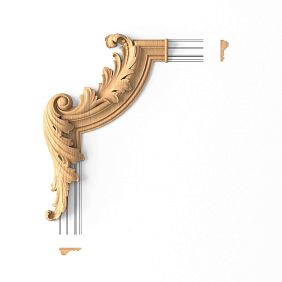
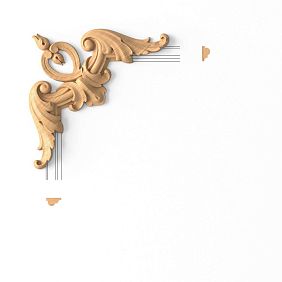
A corner element solves all these problems at once. It is a ready-made fragment that covers the corner, to which straight-cut molding planks are fitted from both sides. No need to miter, no need to adjust, no need to worry about the accuracy of the room's angle. The result—a perfect joint every time.
Our factory also produces:




Decorative Value: From Utility to Adornment
Butpolyurethane decorative corners—it's not just a solution to a technical problem. It is an independent decorative element that can be richer and more expressive than the main molding.
A classic technique: a simple-profile molding along the entire wall length, and in the corners—elements with carved ornamentation, rosettes, scrolls. The eye stops at the corners, perceiving them as accents. The room gains rhythm, structure, and visual dynamics.
Corner elements can be larger than the main molding—protrude further from the wall, be taller or wider. This creates the effect of architectural nodes, points where the structure is reinforced. In classical interiors, this technique emphasizes monumentality; in modern ones—it creates a geometric play.
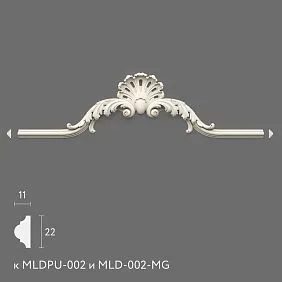
For ceiling cornices, corner elements are often made with complex relief—a central rosette from which ornamental lines radiate, transitioning into the profile of the main cornice. This turns a technical corner into a decorative accent that draws the eye and sets the tone for the entire ceiling framing.
Get Consultation
Simplified Installation: Saving Time and Nerves
For professional finishers, corner elements are a tool for increasing productivity. Instead of meticulous miter fitting, which can take 20-30 minutes per corner (especially for complex profiles and uneven room angles), installation takes 5 minutes. Glue the element, fit the molding planks from both sides—done.
This is critical for projects with many corners—apartments with complex layouts, offices, commercial spaces. Time savings translate into cost savings—more orders can be completed in the same time.
For non-professionals doing DIY renovations, corner elements are a lifesaver. A precise 45-degree miter cut requires skill and tools. A mistake means a ruined piece of molding and the need to cut a new one. With corner elements, this problem disappears—anyone who can apply glue and press parts to the wall can manage.
Typology of Corner Elements: Diversity of Forms and Functions
Internal Corners: The Classic Application
Internal room corners are the primary zone for applying corner elements. Here, two walls meet at an angle, usually close to 90 degrees, and the molding running along both walls must connect.
Polyurethane corner moldings for internal corners have a concave shape, mirroring the geometry of the corner. They continue the molding profile, smoothly turning it 90 degrees. The element's size corresponds to the width and height of the molding it is intended for.
Simple molding profiles are equipped with corner elements of corresponding simplicity—smooth transition of lines, without excessive decor. Complex carved moldings receive corner elements with rich ornamentation—often rosettes from which carving lines radiate, transitioning into the molding's pattern.
There are universal corner elements suitable for several molding profiles of similar size. This is convenient for small projects where one doesn't want to keep dozens of specialized element types in stock.
External Corners: Accent Points
External corners—where a wall protrudes into space—are less common than internal ones but require no less attention. These are columns, pilasters, protruding parts of structures, bay windows.
Corner elements for external corners have a convex shape. They are often made larger and more decorative than internal ones—an external corner is highly visible, it is in the focus of attention, so it makes sense to make it impressive.
External corner elements in the form of capitals—the upper part of a pilaster or column, richly adorned with carving—are popular. The molding approaches from below, transitioning into the capital, which crowns the vertical element. This creates a classical architectural composition.
For modern interiors, geometric external corners are produced—clear edges, minimal decor, emphasis on form. They emphasize constructiveness and create a graphic effect.
Corner Blocks for Intersections: Complex Nodes
When horizontal molding intersects with vertical molding (for example, wall molding meets door trim), a complex joint is formed. Miter cutting does not work here—a special element is needed.
Corner blocks for intersections are compact square or rectangular elements with relief, from which profiles extend at right angles. One profile connects with horizontal molding, the other with vertical. The block conceals the joint while simultaneously serving as a decorative accent.
Such blocks are often used in classic interiors with an abundance of moldings. The wall is divided into panels framed by moldings. At the intersections of horizontal and vertical lines, corner blocks are installed—resulting in a regular grid with accents at the joints.
Corner elements for baseboards: finishing the lower tier
Baseboards also require corner elements. Tall baseboards with complex profiles are difficult to miter precisely—a corner element solves this problem.
Baseboard corner elements are usually simpler than wall ones—they are located at the bottom, partially concealed by furniture, and less noticeable. But for interiors where the baseboard is a significant decorative element (classic, neoclassical, art deco), richly decorated corner elements with carvings, rosettes, and ornaments are used.
Specialized corner elements are produced for baseboards with integrated lighting. They feature channels for running LED strips, which pass through the corner without interruption. This is important for creating uniform lighting around the entire perimeter of the room.
Corner elements for ceiling cornices: upper framing
Ceiling cornices—cove moldings—conceal the joint between the wall and ceiling. Their corner elements function in conditions where both adjoining elements are at an angle to the vertical and horizontal.
polyurethane decorative cornersCorner elements for ceiling cornices are often made especially decorative. These are large rosettes, from which ornamental lines radiate. In classic interiors, ceiling cornice corner elements can be 20×20 centimeters or larger, creating powerful accents in the ceiling corners.
For cornices with concealed lighting, specialized corner elements with internal cavities for housing LED strip power supplies are produced. This allows technical components to be hidden within decorative elements without compromising aesthetics.
Material and technology: why polyurethane
Advantages over plaster
Traditionally, corner elements for decorative molding were made from plaster. A craftsman would cast them in molds or sculpt them by hand, requiring high skill and time. Plaster elements are heavy—a large corner element can weigh several kilograms, complicating installation and requiring secure fastening.
Plaster is fragile—small details, especially protruding parts of the ornament, easily chip during transportation and installation. Repairing chips on plaster is possible but requires plastering skills. Plaster absorbs moisture, so it is unsuitable for damp rooms without special treatment.
Polyurethane lacks these drawbacks. A corner element, even of large size, weighs 100-300 grams—it can be easily held with one hand during installation. The material is impact-resistant—accidental drops or impacts will not cause breakage. Polyurethane is not afraid of moisture, so it can be used in bathrooms, kitchens, and damp rooms without restrictions.
The cost of polyurethane elements is 3-5 times lower than plaster ones with comparable appearance. This makes decoration accessible to a wide range of customers, not limiting it to the elite segment.
Advantages over wood
Carved wooden corner elements are a tradition rooted in centuries. They are beautiful, pleasant to the touch, and have the prestigious aura of a natural material. But wood has significant limitations.
Wood reacts to humidity—it swells or shrinks, changing its geometry. A corner element installed in winter in a dry, heated room may develop cracks. One installed in summer during humid weather may swell and deform the joints.
Wood carving is expensive. Even with mechanized manufacturing (CNC milling), the cost of a wooden corner element is 7-10 times higher than a polyurethane one. Hand carving is even more expensive—it is a custom product for exclusive interiors.
Polyurethane is stable—it does not change size or shape under any humidity or temperature within normal living conditions. An element, once installed, will look the same decades later. With proper painting, polyurethane is visually indistinguishable from wood—the texture is imitated with paints, and the relief is identical to carving.
Advantages over plastic
Polystyrene (foam) corner elements are a budget alternative to polyurethane. They are 2-3 times cheaper but inferior in quality.
Polystyrene is fragile—thin parts of the ornament easily break during installation and use. The surface is grainy, the relief is less defined—in casting molds, polystyrene does not replicate fine details as accurately as polyurethane.
Polystyrene does not paint well with many paints—solvents in paints degrade it. Only water-based compositions can be used, limiting finishing options.
Polyurethane is denser, stronger, and replicates the finest details of relief. It is compatible with any paints—acrylic, alkyd, oil-based, polyurethane. This expands decorative finishing possibilities.
Application in interiors: from classic to modern
Classic styles: emphasis on details
In classic interiors—Baroque, Rococo, Classicism, Empire—Polyurethane corner moldingsare a mandatory element. Simple miter cuts are not used here—only special corner pieces, often richly decorated.
A typical composition: the wall is divided by moldings into rectangular panels. Corner elements with carved rosettes are installed at the corners of the panels, from which the molding lines radiate. Inside the panels—painting in a contrasting color, patterned wallpaper, decorative plaster. Room corners are decorated with large corner elements, which can be complemented by vertical overlays imitating pilasters.
Ceiling cornices in classic style also come with corner elements—often large rosettes with acanthus, grapevines, Baroque scrolls. They are painted to match the cornice color or highlighted with gilding, creating accents in the ceiling corners.
Baseboards 15-20 centimeters high with complex profiles also receive decorative corner elements. In luxurious interiors, internal corners may be finished with one type of element, external corners (if there are columns or projections)—with others, even more decorative.
Neoclassicism: Reserved Elegance
Neoclassical style uses classical principles but simplifies forms, making them more contemporary. Corner elements are present here, but they are more laconic.
Moldings with simple profiles frame panels on walls. In corners—elements without excessive ornamentation, possibly with a small rosette or geometric relief. Color is usually uniform—white or matching the walls, without gilding or contrasts.
This approach provides the elegance of classicism without its opulence. The interior looks noble but not museum-like. Corner elements fulfill their function—creating perfect joints and subtle accents—but do not dominate the composition.
Modern styles: geometry and minimalism
In modern interiors—minimalism, Scandinavian style, loft, contemporary—the use of decorative moldings is limited. But where they are present, corner elements are necessary for clean lines.
Simple moldings with rectangular cross-sections create frames on walls.polyurethane decorative cornersHere—pure geometry without ornamentation. Square or rectangular blocks that simply cover the joint at a right angle.
Painting tone-on-tone with the wall—elements are visible only due to the relief. Or contrasting—black elements on a white wall create a graphic effect. Metallic paints (bronze, copper, steel) give the elements an industrial character, suitable for lofts.
High baseboards with simple profiles—a popular element of Scandinavian style—also come with corner elements. They allow installation of the baseboard without visible joints, preserving minimalist clean lines.
Art Deco: geometric luxury
Art Deco style favors a special type of corner elements—geometric, with clear edges, stepped forms. Here, corner blocks in the shape of stepped pyramids, trapezoids, polygons are appropriate.
Moldings with stepped profiles in corners receive elements that continue this geometry, enhancing it. Painting is contrasting—gilding on a dark background, silver on black, bronze on burgundy.
Corner elements in Art Deco become jewel-like accents, emphasizing the luxury and graphic nature of the style. They are often larger than the main molding, protrude further, and attract attention.
Installation technology: professional approach
Preparation and Planning
Quality results begin with planning. Before purchasing corner elements, their quantity must be accurately calculated.
For a rectangular room with four corners, four internal corner elements for wall moldings, four for baseboards, and four for ceiling cornices will be needed. If the layout is more complex—with niches, projections, bay windows—the quantity increases.
It is important to correctly match elements to moldings. Manufacturers usually indicate compatibility—which molding profile a given corner element suits. Mismatched sizes or profiles will create problems during joining.
Before installation, check the room corners. If a corner deviates significantly from 90 degrees (more than 5 degrees), a standard corner element may not fit perfectly. In such cases, adjacent molding strips are cut at a non-standard angle or sealant is used to fill gaps.
Installing a corner element
Installation begins with marking. Determine the exact position of the corner element—usually it is placed exactly in the room corner, but sometimes shifted for compositional symmetry.
Apply adhesive to the back of the element. For small elements (up to 10×10 cm), a few dots or one strip along the center is sufficient. For large ones (over 15×15 cm)—several strips or a grid of dots. Do not apply adhesive in a solid layer—it will squeeze out when pressed, and you will spend time removing it.
Place the element against the corner, aligning it with the markings. Press evenly over the entire area, hold for 30-60 seconds. Check that the element is installed level—use a level to control horizontal and vertical alignment.
If the element is heavy or the adhesive sets slowly, secure it until completely dry. Use painter's tape applied crosswise over the element onto the wall. Or carefully screw one or two thin screws through the element into the wall—after the adhesive dries, remove the screws and fill the holes with putty.
Joining with moldings
After installing corner elements, molding strips are mounted. They are cut strictly at a right angle—the end must be perpendicular to the length of the strip. Use a miter saw or miter box set to 90 degrees.
Bring the molding strip to the corner element, ensure the profiles align, with no gaps or steps. If the joint is not tight—check the cut angle of the strip, recut if necessary.
Apply adhesive to the back of the molding strip, glue it to the wall, press it against the corner element. The joint should be tight, without gaps. If a small gap (up to 1 mm) still forms, it can be filled with acrylic sealant after the adhesive dries.
Repeat the operation for the second molding strip approaching the corner element from the other side. Ensure both strips meet the element at the same level, without height differences.
Final finishing
After the adhesive has completely dried (usually 24 hours), inspect all joints. Fill any gaps with acrylic sealant or putty. Apply the material into the gap, smooth it with a wet finger or rubber spatula, and remove excess. After drying (1-2 hours for sealant, 2-4 hours for putty), lightly sand the joint area with fine sandpaper.
If self-tapping screws were used for temporary fixation, also fill their holes with putty, and sand after drying.
Now the entire structure—corner elements and moldings—is ready for painting. Prime the surface with acrylic primer in two coats. The primer will create an adhesion layer and even out absorbency, ensuring uniform paint coverage.
After the primer dries, apply the paint. The first coat may go on unevenly—this is normal. The second coat (after the first dries) will provide an even, solid color. Thoroughly paint the joints—the brush should reach into all recesses.
If decorative finishing (patination, gilding) is planned, it is done after the base painting. Patina—a dark paint in the recesses—will accentuate the relief. Gilding the raised parts will add luxury.
Tips for Choosing and Purchasing
Matching the molding profile
The main rule: the corner element must exactly match the molding profile. Manufacturers typically release collections where each molding profile has a corresponding corner element with an article number.
When purchasing, confirm compatibility. If buying online, carefully read the description—it will indicate which moldings the element suits. If unsure—contact a consultant, provide the molding article number, and they will select a compatible corner element.
Some manufacturers offer universal corner elements that fit several similar profiles. This is convenient, but check the fit before installation—place the element against the molding, assess if there are any steps or gaps.
Manufacturing quality
Inspect the element before purchase (if buying in a physical store) or immediately upon receipt (if ordered with delivery). Check several points.
Clarity of relief: all ornament details should be well-defined, without smeared areas or underfills. Surface: smooth, without pits, pores, or blisters. Geometry: the element should not be warped or deformed. Dimensions: match the stated ones, with deviations no more than 1-2 millimeters.
Quality manufacturers control these parameters, but defective items do occur. If an element has defects, return it to the seller and demand a replacement.
Calculating quantity with a margin
After calculating the required number of corner elements, add a 10-15% margin. This will cover possible installation errors, accidental damage, or shortages due to complex layouts.
A margin is especially important for large projects or when using rare elements. If during installation it turns out that one corner element is missing and it cannot be quickly purchased (out of stock, long delivery), work will halt.
Unused elements can be returned (if the seller accepts returns) or kept for the future—sooner or later they will be useful for repairs or other projects.
Trusted manufacturers
The quality of polyurethane decor varies greatly among different manufacturers. Market leaders use quality raw materials, precise molds, and multi-stage control. Lesser-known firms may cut corners on materials and technology, affecting the result.
STAVROS—a recognized leader in the Russian market for polyurethane and wood decor. 23 years in the market, own production, extensive catalog, impeccable reputation.Polyurethane corner moldingsSTAVROS products are distinguished by clear relief, dimensional stability, and durability. The company offers a full range: from miniature elements to large decorative compositions, from simple geometric shapes to intricate carvings.
When buying from STAVROS, you get quality assurance, prompt delivery across Russia, and professional consultations on selection and installation. The stock program allows shipping popular items immediately, without waiting for production. For large projects, custom elements can be manufactured based on customer sketches.
Trends 2026: what's relevant
Large elements with pronounced relief
The modern trend is toward larger decor. Instead of many small details, fewer elements are used, but each is of significant size with expressive relief. This applies to corner elements as well.
Corner elements sized 20×20 centimeters and larger for wall moldings are popular. For ceiling cornices—up to 30×30 centimeters. Such elements become full-fledged interior accents, not just technical details.
Contrast painting
Corner elements are painted in colors contrasting with the main molding. White molding—black corner elements. Gray molding—gold elements. Beige molding—dark brown elements.
This creates a graphic effect, emphasizes the decor's structure, and makes the interior more dynamic. Especially relevant for modern styles where geometry and contrast are valued.
Metallic effects
Coating corner elements with metallic paints—bronze, copper, brass, steel—creates the effect of metal inserts. This adds industrial flair (for loft), luxury (for art deco), or modernity (for contemporary) to the interior.
Patinated metallic finishes are popular — imitations of aged copper or bronze with a greenish patina, rusty metal, or tarnished silver.
Integration with lighting
Corner elements become functional — they integrate lighting fixtures or LED strip components. A ceiling cornice corner element may have a recess for a spotlight that illuminates the corner. A wall molding corner element features a hidden channel for LED strips.
This combines decorative and lighting functions, creating a modern, high-tech interior.
Details create perfection, but perfection is not a detail.Polyurethane corner moldings— precisely those details that transform a merely finished space into a professionally designed interior. They solve technical challenges of seamless joints, create visual accents, simplify installation, and add a sense of completion.
In 2026, interior quality standards are higher than ever. Using corner elements has become a sign of a professional approach, attention to detail, and a pursuit of perfection. By choosing quality products from trusted manufacturers like STAVROS, you guarantee your interior an impeccable look that is noticeable at first glance and valued for years.
Create spaces where every corner is thoughtfully designed, every joint is flawless, and every detail is in its place. This is how inspiring interiors are born.