Article Contents:
- Anatomy of a wall corner element: technical breakdown
- Geometric principles of design
- Physical properties and loads
- Materials science: choosing a substrate for perfection
- Solid wood: classic, proven over centuries
- Innovative Composite Solutions
- Hybrid Technologies
- Technological processes: from idea to implementation
- Computer-Aided Design and Modeling
- Precision machining on CNC equipment
- Quality control at the molecular level
- Design systems: integration into architectural space
- Modular solutions for comprehensive finishing
- Adaptability to various architectural styles
- Color Solutions and Finish Coatings
- Installation technologies: the art of invisible mounting
- Fastening systems: reliability for decades
- Mounting methods: reliability for decades
- Final processing of joints
- Bio-tech: Organic forms of the future
- Neoclassicism: modern interpretation of timeless forms
- Scandi style: functional beauty of the North
- Loft: industrial aesthetics
- Functional aspects: more than decoration
- Protective functions: extending the lifespan of finishes
- Acoustic Properties: Comfort of Sound Environment
- Visual Space Correction
- Economic justification: investing in quality
- Impact on property value
- Operating Costs: Savings in the Long Term
- Trends in development: looking into the future
- Digitalization of design
- Ecological innovations
- Smart Materials and Coatings
- Expert practical recommendations
- Material selection: balancing criteria
- Stages of Professional Installation
- Care and maintenance: extending service life
- Conclusion: investing in perfection
Have you ever wondered why some interiors captivate at first glance, while others leave you indifferent? The secret lies in details that many consider secondary. Corner elements for walls These are precisely the unnoticed heroes that transform ordinary spaces into works of art. They operate like invisible conductors of an orchestra, creating harmony where previously there was chaos of unstyled transitions and rough joints.
Modern interior architecture is experiencing a true renaissance of attention to detail. After decades of utilitarian dominance, designers are once again turning to classical principles of space design. Corner decorative elements Become key tools of this aesthetic revolution, allowing the creation of interiors that are not only functional but also emotionally comfortable.


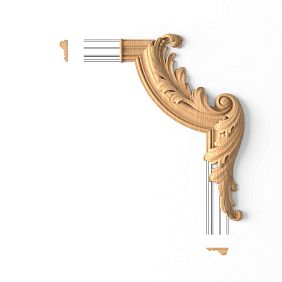


Anatomy of a wall corner element: technical breakdown
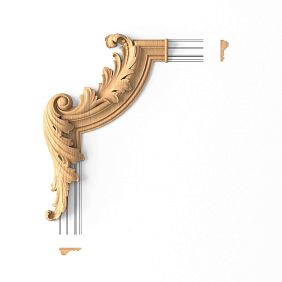
What does an ideal wall corner element look like from a technical standpoint? It is not merely a decorative detail, but a complex engineering structure that must solve multiple tasks simultaneously. The geometry of the element is calculated taking into account the specifics of human perception, laws of optics, and principles of architectural composition.




Geometric principles of design
Corner elements for walls Designed based on the mathematical principles of the golden section and Le Corbusier's modulor. Each profile line has a defined relationship with overall dimensions, creating visual harmony. Radii of fillets, angles of surface inclinations, relief depth — all are governed by strict proportional laws.
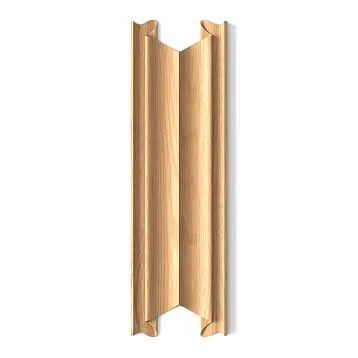
The profile of a modern corner element may include up to 15-20 different geometric transitions: straight sections alternate with convex and concave surfaces, creating a complex interplay of light and shadow. Wooden Corner Elements Enable the realization of the most daring design concepts thanks to the plasticity of the material and the capabilities of modern processing.
Our factory also produces:


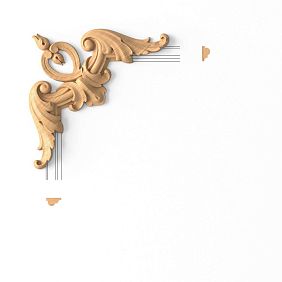


Physical Properties and Loads
Wall corner elements operate under complex conditions of constant micro-deformations. Buildings "breathe" under the influence of temperature changes, humidity, and wind loads. A quality corner element must compensate for these movements while maintaining the ideal geometry of joints.
Mechanical loads on wall corner elements differ significantly from those on ceiling elements. Walls are subjected to more random impacts, abrasive effects, and temperature fluctuations. Mold Corner Element Must withstand these effects without losing decorative qualities for decades.
Get Consultation
Materials Science: Choosing the Substrate for Perfection
Solid Wood: Classic, Time-Tested
Wood remains an unmatched material for manufacturing decorative elements due to its unique combination of technological efficiency, aesthetic qualities, and ecological safety. Each wood species possesses distinctive properties that determine its area of application.
Oak is the king among wood species for decorative elements. Its dense structure ensures exceptional strength and longevity. Oak Corner elements for walls can serve for centuries, acquiring a noble patina with age. Tangential rays in oak's structure create a unique texture play, enhanced by any finish coating.
Ash has a contrasting texture with clearly defined annual rings. This creates additional decorative possibilities — ash elements appear dynamic and modern. Ash's high strength allows creating thin, elegant profiles without risk of breakage.
Innovative composite solutions
Corner Polyurethane Element Represents the pinnacle of modern materials science. High-density polyurethane can precisely imitate the texture of any wood, stone, or metal while being significantly lighter and more moisture-resistant.
Modern polyurethane compositions include modifiers that impart special properties to the material. Flame retardants increase fire resistance, biocides prevent microbial growth, UV stabilizers protect against fading. Such Decorative corner elements are suitable for use in the most demanding conditions.
Hybrid Technologies
Leading manufacturers experiment with multi-layered constructions combining the advantages of various materials. A stable composite base ensures geometric precision, a natural veneer decorative layer provides aesthetic value, and a protective coating ensures long-term durability.
Technological Processes: From Concept to Implementation
Computer-Aided Design and Modeling
Creating a modern corner element begins in the virtual space of CAD systems. Three-dimensional modeling allows calculating all nuances of the future product: stress distribution, optimal lighting angles, visual perception in various interior compositions.
Parametric design opens opportunities for creating families of interrelated elements. The base profile can be scaled and modified for different room sizes while maintaining proportional harmony. This is especially important for Buy corner molding within large projects featuring rooms of varying sizes.
Precision Machining on CNC Equipment
Modern multi-axis machining centers achieve positioning accuracy down to 0.001 mm. This enables creating corner elements with ideal joint geometry. Special woodworking tools ensure surface quality requiring no additional finishing.
Adaptive feed technology automatically adjusts machining modes depending on material properties at each specific point of the workpiece. This is especially important when working with natural wood, where density may vary depending on fiber orientation.
Quality control at the molecular level
Modern quality control methods include non-destructive assessment of material internal structure. Ultrasonic testing detects hidden cracks and voids. Moisture meters monitor the uniformity of moisture distribution across the workpiece cross-section.
Corner elements for walls Undergo climate tests simulating long-term operational conditions. Cycles of heating and cooling, humidity changes, and UV exposure allow predicting material behavior for decades ahead.
Design Systems: Integration into Architectural Space
Modular Solutions for Comprehensive Finishing
The modern approach to decorative finishing is based on systems thinking. Corner elements for walls should harmoniously match other interior elements: skirting boards, window casings, cornices, and outlets.
Professional design systems offer a complete set of interconnected elements executed in a unified style and scale. This ensures visual unity of the interior and simplifies the design process. Door Frame Installation Using elements from a single system always looks professional and finished.
Adaptability to various architectural styles
The versatility of modern corner elements lies in their ability to adapt to various stylistic concepts. Classic profiles with rich detailing suit traditional interiors. Minimalist geometric forms harmonize with minimalist design.
and frames create a home atmosphere, making it truly cozy and individual. This is an investment in beauty, which pays off every day through aesthetic pleasure from admiring the beautiful. can be supplemented with removable covers, outlets, and corner inserts, allowing variation in decorative degree depending on specific project requirements.
Color solutions and finishing coatings
Modern finishing technologies open up limitless possibilities for color decoration of corner elements. Traditional lacquering highlights the natural beauty of wood. Staining allows changing the color while preserving texture visibility. Painting creates a uniform color surface.
Special effects — patination, gilding, silvering, and aging effects — transform an ordinary corner element into a work of art. Moldings for painting made of MDF provide an ideal base for any lacquer coatings.
Installation technologies: the art of invisible mounting
Preparation work: the foundation of quality
The quality of mounting corner elements depends 80% on surface preparation. Walls must be perfectly flat, clean, and dry. Any irregularities exceeding 2 mm per meter will result in visible gaps and deformation of elements.
Marking is performed using laser levels and precise measuring tools. Professional installers use special templates ensuring identical angles on all elements. Even the slightest marking error will lead to accumulated errors and inability to achieve quality element joints.
Mounting methods: reliability for decades
The choice of mounting method depends on the wall material, weight of elements, and operating conditions. Corner elements for walls Elements of small cross-section are mounted using special polyurethane adhesives, providing connection strength exceeding the strength of the material itself.
Heavy elements require combined mounting: adhesive bonding for even load distribution and mechanical mounting for peak load resistance. Modern concealed fasteners allow mounting elements without visible fastening points.
Joint finishing
The quality of corner element joints is the main criterion of professional installation. Modern sealants and putties allow creating completely invisible connections. Special wood-based compounds have similar expansion coefficients, preventing cracking during operation.
Corner element for ceiling Requires special attention to joints, as they are at eye level and any defects are easily noticeable.
Stylistic Directions: From Classicism to Avant-Garde
Neoclassicism: modern interpretation of eternal forms
Modern neoclassicism reinterprets traditional architectural forms through the prism of modern technologies and lifestyle. Corner elements for walls In neoclassical style, classical proportions are combined with minimalist detailing.
The color palette of neoclassicism is built on noble neutral tones: ivory, pearl gray, warm white. These shades highlight the elegance of forms, create a sense of light and space. Gold and silver accents add luxury without disrupting the overall restraint.
Scandi-style: functional beauty of the North
Scandinavian design values naturalness, functionality, and coziness. Wooden Corner Elements Wood from light species — birch, pine, spruce — fits perfectly into this concept. Minimal surface treatment preserves the natural wood texture.
Simple geometric forms without excessive ornamentation are characteristic of the Scandinavian approach. Functionality prevails over decoration, but this does not mean the absence of beauty. Beauty arises from the harmony of proportions, quality of materials, and precision of execution.
Loft: Industrial Aesthetic
Loft style seems opposite to decoration, but this is a misleading impression. Industrial interiors require a special approach to decorative elements. Decorative corner elements In loft interiors, they imitate structural elements: beams, I-beams, angles.
Loft decor materials — metal, weathered wood, concrete. The deliberate roughness of forms is compensated by high-quality execution. Patination, artificial aging, corrosion imitation — special effects requiring skill.
Functional aspects: more than decoration
Protective functions: extending the lifespan of finishes
Corner elements for walls They perform an important protective function, safeguarding vulnerable areas of finishes from damage. Corners — zones of concentrated mechanical stress, where cracks, chips, and scratches most often appear.
Quality corner elements distribute loads, compensate for thermal deformations, and protect the main finish. In public buildings with high foot traffic, this is especially important — cost savings on corner elements result in frequent repairs.
Acoustic Properties: Comfort of Sound Environment
The textured surface of decorative elements affects the acoustic characteristics of a room. Complex profiles break up sound waves, preventing standing waves and echoes. Decorative Accents for Furniture They also contribute to improved acoustics.
In rooms with hard finishes — ceramic, glass, metal — decorative elements become an important tool for acoustic correction. A properly designed system can reduce reverberation time by 20-30%.
Visual space correction
Corner elements — a powerful tool for visual correction of room deficiencies. Horizontal elements visually expand narrow rooms. Vertical elements increase perceived ceiling height. Diagonal elements create dynamism in static spaces.
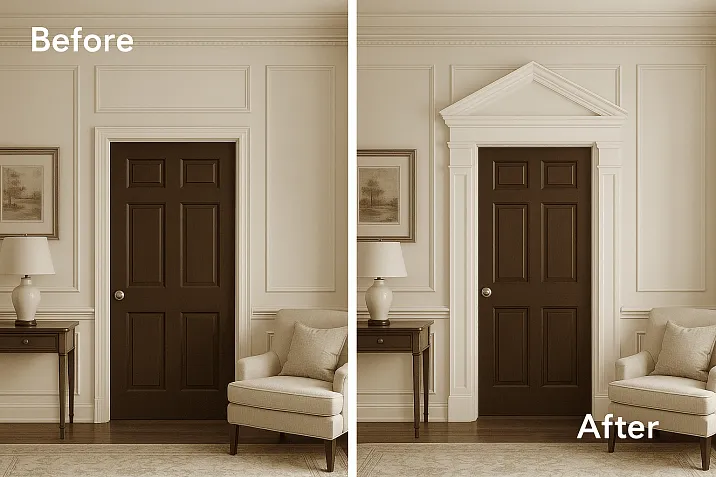
door frame trim With decorative corner elements, perception of doorway proportions can be radically altered. Wide framing visually reduces the door’s size, while narrow framing visually increases it.
Economic justification: investment in quality
Impact on property value
Quality decorative finishing significantly increases the market value of real estate. Studies show that investments in professional finishing yield returns at a ratio of 1:3 to 1:5 upon sale. Corner elements for walls — one of the most effective ways to enhance the attractiveness of a property.
Potential buyers assess the quality of renovation within the first minutes of inspection. Perfectly finished corners create an impression of expensive, professionally executed finishing. This allows positioning the property in a higher price segment.
Operating costs: savings in the long term
Quality decorative elements serve for decades without losing their consumer properties. Initial investments are spread over a long service life, making them economically justified. Inexpensive analogs require replacement every 3-5 years.
Maintenance of quality elements is minimal. Periodic cleaning and updating the protective coating every 10-15 years — that’s all required to maintain the original appearance. Savings on preventive maintenance far exceed the initial cost difference.
Trends in development: looking to the future
Digitalization of design
Virtual and augmented reality fundamentally change the interior design process. Clients can "walk through" the future interior, evaluate how decorative elements will look at real scale, under different lighting, from various viewpoints.
Parametric design allows creating elements adapted to a specific room. Algorithms automatically adjust dimensions, proportions, and detailing to architectural features of the object. This opens the era of mass customization in decorative element production.
Ecological Innovations
Growing consumer environmental awareness stimulates the development of "green" technologies in decorative element production. Certified wood from sustainable forests, formaldehyde-free adhesives, water-based varnishes — a new production standard.
The concept of a circular economy is applied in decorative element production. Wood processing waste is used to manufacture composite materials, and old elements are recycled into secondary raw materials.
Smart Materials and Finishes
Nanotechnologies introduce entirely new properties into decorative elements. Self-cleaning coatings based on titanium dioxide break down organic contaminants under light. Antibacterial coatings with silver ions ensure hygienic safety.
Chromogenic materials change their properties depending on external conditions. Thermochromic coatings change color with temperature variations, creating dynamic, adaptive interiors.
Expert practical recommendations
Material selection: balancing criteria
When selecting material for corner elements for walls the choice must consider operating conditions, project budget, and aesthetic requirements. For dry heated rooms, natural wood remains the optimal choice. For humid zones, polyurethane analogs are better suited.
Element sizes must match the room’s scale. In small rooms, large elements will overwhelm the space. In spacious halls, thin profiles will disappear and fail to fulfill their compositional role.
Stages of professional installation
Quality installation begins with detailed room measurements and creation of an installation plan. All dimensions must be precise to the millimeter. Cut pieces are prepared with consideration for the specific joint characteristics of each element.
Test assembly without gluing allows identifying and eliminating all discrepancies before the final installation. Professional installers always perform a "fit" of the entire system of elements before starting gluing.
Care and maintenance: extending the service life
Regular care of decorative elements includes dry cleaning with soft brushes, wet cleaning with specialized agents, and periodic renewal of protective coatings. Use of aggressive cleaning agents is prohibited — they may damage the finish.
Preventive inspections allow identifying problems at an early stage. Minor damages are easily repaired with local repairs, while advanced defects may require complete replacement of the element.
Conclusion: investment in perfection
The world of modern design evolves rapidly, but some principles remain unchanged. The quality of details determines the overall impression of the interior, and Corner elements for walls are among the most important tools for creating a harmonious space.
Investing in high-quality decorative elements is investing in personal comfort, image, and future property value. Each element contributes to creating an atmosphere where it is pleasant to live, work, and entertain guests. This is an investment in quality of life that pays off every day of use.
A professional approach to selecting and installing decorative elements requires expert knowledge, quality materials, and modern equipment. Saving money at the stage of selecting elements inevitably leads to higher costs in the future — for repairs, replacements, and additional finishing.
STAVROS offers comprehensive solutions for creating perfect interiors. Our long-standing experience in producing decorative elements from solid wood guarantees the highest quality of each item. We use only premium raw materials, modern processing technologies, and strict quality control at every stage of production. STAVROS is the guarantee that your interior will delight with flawless execution for many years.