












































































Article Contents:
- Architectural Anatomy of Facade Corners
- Historical Heritage and Modern Interpretations
- Material Science in Facade Architecture
- Technological Revolution in Production of Facade Elements
- Engineering Aspects of Installation
- Aesthetic Integration into Architectural Context
- Stylistic Diversity of Facade Solutions
- Regional characteristics and climate adaptation
- Economic Aspects and Lifecycle
- Ecological aspects and sustainable development
- Innovations and technologies of the future
- Conclusion

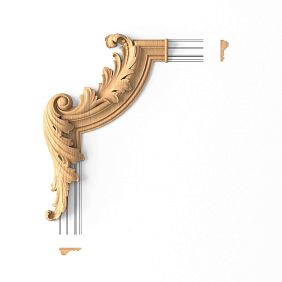
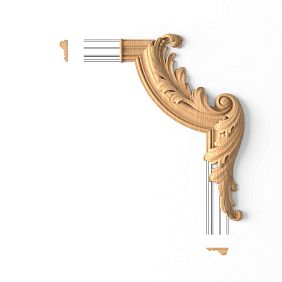
What makes a building memorable? Why do some houses pass by unnoticed, while others compel us to stop and admire? The secret lies in details that transform an ordinary box into an architectural masterpiece. Facade Corner Elements These are precisely the details that create the magic of first impressions and shape the character of a building for decades to come.
Modern architecture is experiencing a remarkable revival of interest in decorative elements. After decades of dominance by minimalism and functionalism, architects and designers are once again turning to the rich heritage of classical architecture, reinterpreting traditional forms within the context of modern technologies and materials.
Facade corner elements play the role of architectural accents capable of radically changing the perception of a building. They create play of light and shadow, form the rhythm of the facade, highlight structural features, and add volume to flat surfaces. Each element becomes part of a grand architectural symphony, where every note has its own significance.
Choosing the right corner elements requires a deep understanding of architectural principles, knowledge of materials and their properties, as well as a sense of proportion and style. This is an art that combines technical precision with aesthetic vision, creating solutions capable of serving for centuries.




Architectural Anatomy of Facade Corners
Building corners are not merely places where walls intersect. They are critically important structural and aesthetic zones that define the character of the entire architectural object. It is precisely here that the architect’s skill and the quality of project execution are revealed.
The constructive role of corners in building architecture cannot be overestimated. They bear the maximum loads, ensure spatial rigidity of the structure, and often become areas of stress concentration. Therefore Facade Corner Elements they must not only decorate but also protect these vulnerable zones from external factors.
Visual psychology of architectural form perception shows that the human eye naturally focuses on corners and transitions. That is why proper treatment of corner zones creates a sense of completeness and professionalism in architectural solutions.
Climate-specific conditions of Russian regions impose special requirements on facade elements. Sharp temperature fluctuations, high humidity, ultraviolet radiation — all these factors must be considered when selecting materials and structural solutions.




Historical Heritage and Modern Interpretations
The art of facade decoration traces its roots to deep antiquity. Each architectural era contributed its own characteristics to the design of building corner elements, creating a rich heritage of forms and solutions.
Ancient Greek architecture gifted the world with classical orders, characterized by strict proportions and refined details. The Romans developed these traditions, adding practicality and monumentality. Gothic masters created vertical compositions reaching towards the sky. The Renaissance restored the harmony of ancient proportions, while Baroque added opulence and theatricality.
decorative gable In Russian architecture, there are special traditions linked to wooden architecture and stone palaces of Moscow Baroque. These traditions continue to live on in modern interpretations, adapted to new materials and technologies.
Modernism of the 20th century attempted to abandon ornamentation, but by the end of the century it became clear that architecture without decoration loses its human scale and emotional impact. Postmodernism revived interest in historical forms, but in new contexts and combinations.
Modern architecture strives for a synthesis of traditions and innovations. Decorative Elements of the Facade Gable Today, they are created using computer modeling and high-precision equipment, yet they maintain a connection with centuries-old craftsmanship traditions.
Our factory also produces:




Material science in facade architecture
Selecting material for facade corner elements is a balance between aesthetic requirements, technical characteristics, and economic feasibility. Each material has unique properties that determine its application area and processing methods.
Natural stone remains the benchmark of durability and prestige in facade architecture. Granite, marble, travertine, sandstone – each type of stone has its own aesthetic and technical characteristics. Stone corner elements can serve for centuries, acquiring a unique noble patina with age.
Natural wood provides limitless opportunities for creating unique decorative solutions. decorative wooden gable Can be executed in any style – from strict classicism to fanciful forms of modernism. Modern protective coatings ensure the longevity of wooden elements in outdoor conditions.
Ceramics and terracotta are experiencing a new rebirth thanks to modern manufacturing technologies. Possibilities of glazing, coloring, and texturing allow creating elements with unique visual and tactile properties.
Metallic elements – bronze, copper, aluminum – add modernity and technological sophistication to facades. They can imitate classical forms or create fundamentally new solutions characteristic of contemporary architecture.
Composite materials open new horizons for facade creativity. Glass fiber concrete, polymer concrete, various types of plastics allow creating lightweight, durable, and economically efficient solutions.
Get Consultation
Technological revolution in facade element production
Modern production of facade corner elements fundamentally differs from traditional artisanal methods. The introduction of digital technologies, automation of processes, new materials and processing methods open unprecedented opportunities for architectural creativity.
Three-dimensional modeling allows creating elements of any complexity with mathematical precision. Each detail is calculated taking into account loads, climatic influences, technological constraints, and aesthetic requirements. Virtual reality allows seeing the future facade even before production begins.
Numerically controlled machines ensure perfect repeatability of elements in mass production and simultaneously allow creating unique items according to individual projects. Laser cutting, milling, 3D printing – the arsenal of modern production is virtually limitless.
Carved pediment Today can be executed both by traditional hand-carving methods and using modern technologies. Computer programs allow restoring lost historical samples or creating new compositions in traditional styles.
Quality control at all production stages guarantees compliance of finished products with the highest standards. Non-destructive testing methods, material spectral analysis, climatic tests – all this ensures the longevity and reliability of facade elements.
Engineering aspects of installation
Installation of facade corner elements requires deep knowledge in the fields of building physics, materials science, and engineering systems. Each element must not only be aesthetically perfect, but also technically correctly integrated into the overall building structure.
Load analysis includes calculation of self-weight of elements, wind loads, thermal deformations, seismic impacts. Modern programs allow modeling the behavior of the structure under various conditions and optimizing fastening solutions.
Hydro- and vapor-barrier insulation are critically important aspects of facade element installation. Incorrect resolution of these issues may lead to damage of building load-bearing structures and premature destruction of decorative elements.
Thermal bridges at element attachment points require special attention in Russian climate conditions. Modern technologies allow creating thermally broken fastening systems that prevent structural freezing.
Material compatibility is another important factor for the longevity of facade systems. Electrochemical corrosion, different coefficients of thermal expansion, chemical incompatibility may create serious problems with incorrect design.
Seismic safety is becoming an increasingly relevant topic even for regions with low seismic activity. Facade elements must be able to withstand dynamic loads without destruction or detachment from the main structure.
Aesthetic integration into architectural context
Successful application of corner elements for facades requires deep understanding of the architectural context and ability to create harmonious compositions. Each element must function not in isolation, but as part of a unified architectural ensemble.
Proportional relationships – the foundation of architectural harmony. Classical orders provide us with examples of ideal proportions, but modern architecture creates its own systems of modularity and scale. Cornice in architecture Can become a key element defining the scale of the entire facade.
Rhythmic compositions create dynamism in facade arrangements. Repetition of elements at certain intervals, their variation and development form an architectural melody that makes the building memorable and expressive.
Color solutions for facade elements should consider not only aesthetic preferences, but also practical considerations. Light tones reflect solar radiation and heat less, dark tones create more pronounced shadows and contrasts.
Textural contrasts add tactility and depth to facades. Combination of smooth and rough surfaces, matte and glossy finishes creates a rich visual palette that makes architecture more human and appealing.
Lighting effects – an important component of facade element perception. Play of light and shadow throughout the day creates a constantly changing appearance of the building. Artificial lighting at night can radically alter the perception of architecture.
Stylistic diversity of facade solutions
Modern architecture provides limitless opportunities for stylistic experiments with facade elements. Each architectural style has its own distinctive features and requirements for decorative elements.
Classicism, with its striving for ideal proportions and strict symmetry, requires precise adherence to canonical forms. Sandrok cornice In the classical style, elements must conform to strict rules of the order system, where each detail has its own value and place.
Baroque allows a freer interpretation of classical forms, adding opulence, theatricality, and emotional expressiveness. Angular elements in the baroque style may include intricate stucco, vegetal ornaments, and figurative compositions.
Modernism creates fundamentally new forms inspired by natural motifs. Asymmetry, smooth lines, vegetal and zoomorphic elements characterize this style. Modern technologies enable the realization of the most daring modernist fantasies.
Art Deco combines geometric strictness with decorative luxury. Angular elements in this style are characterized by clear lines, contrasting combinations, use of metallic inserts, and modern materials.
Minimalism requires extreme simplicity and functionality. Angular elements in minimalist buildings must be as simple in form as possible, yet perfectly executed. Every line, every plane must be justified and necessary.
High-tech and contemporary architecture use the latest materials and technologies to create innovative facade solutions. Glass, metal, and composites allow the creation of elements that were unimaginable in traditional architecture.
Regional characteristics and climatic adaptation
Russian climatic conditions impose special requirements on facade elements. Sharp temperature fluctuations, high humidity, ultraviolet radiation, and atmospheric precipitation—all these factors must be considered when designing and manufacturing angular facade elements.
Northern regions require special attention to the thermal performance of facade systems. Angular elements must not create thermal bridges that could lead to structural freezing and condensation formation.
Southern regions with intense solar radiation require the use of UV-resistant materials and coatings. Color solutions must account for the possibility of fading and tonal changes under sunlight.
Coastal zones with high humidity and salty air impose special requirements for material corrosion resistance. Metallic elements must have special protective coatings, and organic materials must be treated with bioprotective agents.
Seismically active regions require special solutions for facade element mounting. Systems must be able to withstand dynamic loads without damage or detachment from the main structure.
Industrial areas with polluted atmospheres require materials resistant to chemical exposure. Self-cleaning coatings and easily cleanable surfaces become important advantages under such conditions.
Economic aspects and life cycle
Investments in high-quality facade angular elements should be considered within the context of the building's entire life cycle. Initial costs for quality materials and professional installation are many times offset by longevity, minimal maintenance expenses, and high aesthetic value.
Ownership cost analysis includes not only initial capital investments, but also operating, maintenance, repair, and potential replacement expenses. High-quality facade systems can serve for decades without significant degradation of aesthetic or functional characteristics.
Impact on property value is an important economic factor when deciding on facade decoration. Buildings with well-executed facades have higher market value and better liquidity in the real estate market.
Energy efficiency of modern facade systems can provide significant savings on operating expenses. Properly designed angular elements can contribute to improving the building's thermal performance.
Tax incentives and state support for the restoration of historical buildings create additional economic incentives for using high-quality facade elements. decorative home ornaments may be classified as cultural heritage objects.
Insurance of objects with high-quality facade systems is often provided under more favorable conditions, as the risk of damage from external influences and premature structural failure is reduced.
Ecological aspects and sustainable development
Modern requirements for ecological safety of construction materials and technologies have fundamentally changed approaches to facade element production. The concept of sustainable development requires a comprehensive consideration of ecological factors at all stages of the product's life cycle.
The carbon footprint of facade element production has become an important criterion for selecting materials and technologies. Using renewable energy sources, reducing transportation costs, and applying recycled materials contribute to lowering environmental impact.
Biodegradability and recyclability of materials determine their long-term ecological attractiveness. Natural materials such as wood and stone have significant advantages from this perspective.
Toxicity of materials and emission of harmful substances during operation are critically important factors for human health and the environment. Modern standards require comprehensive assessment of the safety of construction materials.
Energy efficiency of buildings with high-quality facade systems contributes to reduced energy consumption and lower greenhouse gas emissions. This is an important contribution to combating climate change.
Water conservation and stormwater management are important factors in designing facade systems. Elements must ensure proper drainage of rainwater and prevent its stagnation within the structure.
Biocompatibility of materials with the natural environment ensures harmonious integration of buildings into the landscape. Some materials promote the growth of moss and lichens, creating natural biological coverings.
Innovations and technologies of the future
Advancements in technology open new horizons for facade architecture. Smart materials, adaptive systems, integration of renewable energy sources—all of this shapes the appearance of facades of the future.
Self-cleaning coatings based on photocatalytic materials are capable of breaking down pollutants under ultraviolet radiation. This significantly reduces maintenance costs for facades and maintains their aesthetic appeal.
Thermochromic materials change color depending on temperature, creating dynamic facades that respond to weather changes. This is not only aesthetically pleasing, but also functionally beneficial for regulating the building's thermal regime.
Integrated photovoltaic elements transform facades into sources of renewable energy. Modern technologies allow creating aesthetically pleasing solar panels that seamlessly integrate into architectural compositions.
Adaptive systems with sensors and actuators can automatically respond to changes in external conditions, optimizing the building's microclimate and reducing energy consumption.
Biomaterials based on living organisms open up fundamentally new possibilities for creating ecological facade systems. Bacterial self-repairing concrete, fungal materials, bioplastics — all of these can find application in the facade architecture of the future.
Nanotechnologies enable the creation of materials with unique properties — super strength, water-repellent characteristics, antibacterial properties. Nanostuctured coatings can radically change the operational characteristics of facade elements.
Conclusion
The world of facade architecture is undergoing a period of revolutionary changes, where traditional craftsmanship combines with advanced technologies, and classical forms acquire new embodiment in modern materials. Corner elements for facades are no longer mere decorative details, but full-fledged architectural tools capable of solving complex aesthetic, technical, and ecological challenges.
The modern approach to designing and manufacturing facade elements requires comprehensive thinking, taking into account not only visual aspects, but also long-term operational characteristics, ecological safety, and economic efficiency. Every decision must be carefully considered and justified from the perspective of all stakeholders — architects, builders, maintenance services, and, of course, building users.
The quality of facade element execution largely determines the longevity and attractiveness of architectural objects. Investments in professional design, quality materials, and proper installation pay off many times over through increased property value, reduced maintenance costs, and the creation of a comfortable urban environment.
The future of facade architecture is linked to further integration of digital technologies, development of smart materials and systems, and higher ecological standards. Buildings become living organisms capable of adapting to changing conditions and user needs.
STAVROS Company, combining decades of traditional craftsmanship with innovative production technologies, offers comprehensive solutions for creating outstanding facade compositions. From conceptual design to final installation — every stage of work is executed with maximum attention to detail and meets the highest quality standards. A wide range of products, including elements made of natural wood, stone, composite materials, allows realizing architectural projects of any complexity and stylistic orientation, creating facades that become ornaments of the urban environment and sources of pride for their owners for decades.


