Article Contents:
- Architectural philosophy of corner solutions
- Historical heritage in modern interpretation
- Psychology of perceiving ceiling transitions
- Material science expertise of modern solutions
- Natural Wood: Time-Tested Classic
- High-density polyurethane: technological revolution
- MDF: optimal price-to-quality ratio
- Composite materials of new generation
- Stylistic classification of ceiling solutions
- Classicism: mathematics of beauty
- Baroque and Rococo: theater of architectural forms
- Modernism: nature as a source of inspiration
- Art Deco: geometry of luxury
- Modern directions
- Professional Installation — Guarantee of Results
- High-precision manufacturing methods
- Quality control at all stages
- Professional installation technologies
- Functional value in architectural interior design
- Spatial organization
- Lighting effects and their application
- Concealment of utilities
- Economic justification of investments
- Analysis of price-to-quality ratio
- Impact on property value
- Long-Term Economic Efficiency
- Trends and innovations
- Digital technologies in design
- Smart Materials and Coatings
- Ecological innovations
- Regional application specifics
- Climate factors
- Construction traditions
- Cultural preferences
- Conclusion: investments in architectural perfection
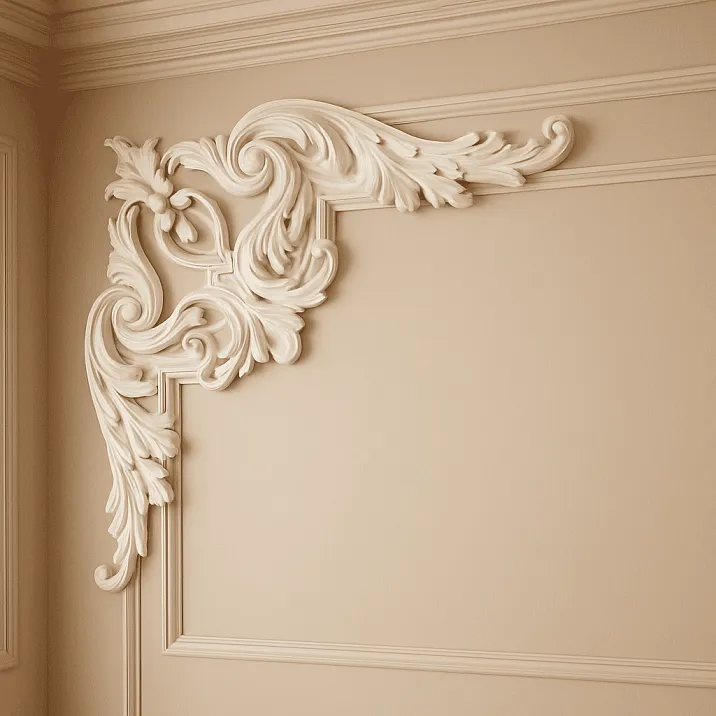
Look at the ceiling of your home — do you see something more than just a plain white surface? Corner Ceiling Element Can dramatically change the perception of space, transforming an ordinary room into an exquisite interior worthy of palace apartments. In an era when every square meter of housing costs exorbitant sums, it is precisely the details of architectural decoration that allow one to create a sense of luxury and status without massive financial investments.
Modern interior design is experiencing a true renaissance of classical forms, and corner ceiling elements play a key role in this process. They do not merely conceal junctions between walls and ceilings — they create the architectural logic of space, define its character and mood. A properly selected and professionally installed corner element can visually increase ceiling height, add grandeur to a room, or, conversely, create an atmosphere of cozy intimacy.
But how to navigate the diversity of modern market offerings? Which materials and technologies guarantee longevity and aesthetic perfection? And most importantly — how to choose exactly the right corner ceiling element that will perfectly fit the concept of your home and delight the eye for decades?


Architectural philosophy of corner solutions




Historical heritage in modern interpretation
The art of processing angles between horizontal and vertical surfaces originated in ancient times, when architects realized: it is precisely these transitional zones that define the perception of interior space. Roman architects were the first to systematically codify the principles of creating cornices and moldings, laying the foundations that designers still use today.
Byzantine tradition enriched the palette of decorative solutions with complex profiled transitions, where each curve carried not only aesthetic but also symbolic significance. Gothic masters took the art of corner junctions to mathematical perfection, creating a system of ribs and archivolts that simultaneously solved both structural and artistic challenges.
The Renaissance systematized classical principles into a coherent order system, where Sandrok cornice became an indispensable part of architectural grammar. It was precisely then that canonical proportions and profiles were established, which remain relevant in modern interior design.
Our factory also produces:


Psychology of Perceiving Ceiling Transitions
Modern neuroarchitecture explains why properly finished corners are so important for comfortable spatial perception. The human brain subconsciously seeks clear boundaries and transitions — this is an evolutionary mechanism that helped our ancestors orient themselves in three-dimensional spaces of caves and natural shelters.
A sharp transition from wall to ceiling creates a sense of incompleteness and discomfort at a subconscious level. Corner Ceiling Element Solves this problem by creating a smooth transition that is perceived as natural and harmonious.
The size and profile of corner elements directly affect the perception of room height. Large, substantial cornices visually "lower" the ceiling, creating a sense of coziness and protection. Conversely, slender, elegant profiles emphasize the verticality of the space, making it feel more airy and spacious.
Get Consultation
Material Expertise of Modern Solutions
Natural wood: classic, time-tested
Wooden corner elements remain the benchmark of quality and prestige in interior design. Solid oak, beech, or ash has a unique ability to "breathe" with the house, adapting to changes in humidity and temperature without losing shape or beauty.
Modern wood processing technologies allow creating Paintable Molding in any color while preserving the natural texture of the material. Kiln-dried wood to a moisture content of 8-10% ensures dimensional stability throughout the entire service life.
Protective coatings of the new generation transform wood into a material resistant to any climatic influences. Deep-penetrating primers protect against moisture and biological damage, while UV-filtered finishes prevent fading and cracking.
Exotic species occupy a special place — teak, redwood, rosewood. Their natural oiliness provides inherent protection against moisture, while their unique texture creates distinctive decorative effects. Such materials require special processing technologies, but the result justifies all investments.
High-density polyurethane: a technological revolution
Polyurethane of the latest generation has fundamentally changed the perception of architectural decoration possibilities. The density of modern compositions reaches 600-700 kg/m³, comparable to hardwoods, yet the material is completely stable to humidity and immune to biological damage.
Injection molding technology allows creating Corner decorative elements with a level of detail unattainable with other materials. The finest nuances of carving, the most subtle gradations of relief — all are reproduced with jewel-like precision in every piece.
Modern polyurethane compositions contain special additives — flame retardants, UV stabilizers, anti-static agents. This makes them suitable for use in the most demanding conditions, from humid rooms to facilities with heightened fire safety requirements.
Polyurethane's color possibilities are virtually limitless. The material can mimic any natural textures — from noble wood to marble and metal. At the same time, it easily takes on any color, allowing for both classic monochromatic solutions and vibrant avant-garde compositions.
MDF: optimal price-to-quality ratio
High-density MDF (750-850 kg/m³) has become a popular material for manufacturing ceiling corner elements due to the combination of affordability and good performance characteristics. Modern MDF production technologies eliminate the use of formaldehyde resins, making the material environmentally safe.
MDF's perfectly smooth surface requires no additional preparation before painting. and frames create a home atmosphere, making it truly cozy and individual. This is an investment in beauty, which pays off every day through aesthetic pleasure from admiring the beautiful. MDF elements can have complex geometries thanks to the precision of CNC milling.
Moisture-resistant MDF grades with paraffin additives are suitable for use in humid rooms. They do not swell from condensation and do not deform under humidity fluctuations, which is especially important for bathrooms and kitchens.
New-generation composite materials
Advances in materials science have led to the development of composites combining the best properties of various components. Wood-polymer composites (WPC) combine the beauty of wood with the practicality of polymers — they are not afraid of moisture, do not crack, and do not attract insects.
Mineral composites based on modified gypsum have high strength at low weight. They are easy to process, hold fasteners well, do not burn, and do not emit harmful substances even when heated.
Fiberglass composites are distinguished by exceptional strength and durability. They are resistant to corrosion, UV-resistant, and can be used over a wide temperature range without losing properties.
Stylistic Classification of Ceiling Solutions
Classicism: the mathematics of beauty
Classic ceiling corner elements are constructed according to the laws of classical architecture, where each detail has strictly defined proportions. Ceiling molding In the classical style, it is based on a modular system, where all dimensions are multiples of a basic module.
Doric style is characterized by strictness and simplicity of forms. Profiles are simple, without excess, with clear geometric divisions. Characteristic are straight-edged breaks — shelves, quarters, simple moldings. The color palette is restrained — white, cream, gray, sometimes with a light tint to resemble natural stone.
The Ionic style allows greater decorative richness and elegance of forms. Profiles become more complex, curved breaks — cabs, gussets, volutes — appear. Characteristic motifs — ionic capitals, palmettes, interlaced patterns. Proportions are more refined, transitions between elements are smooth.
The Corinthian style is the most decorative of the classical styles. Rich vegetal ornamentation, complex profiling, abundance of small details create an impression of luxury and abundance. Ceiling molding elements require the highest level of craftsmanship in the Corinthian style.
Baroque and Rococo: Theater of Architectural Forms
Baroque corner elements are an architectural spectacle, where every detail is intended to captivate the imagination. Curved, dynamic lines create a sense of movement and life. Characteristic are broken cornices, detached profiles, abundance of sculptural decoration.
Typical Baroque motifs — cartouches, garlands, mascarons, putti — transform ceiling transitions into true works of art. Color solutions can be very rich: gilding, multi-colored painting, imitation of precious materials.
Rococo is characterized by even greater decorative richness and elegance. Asymmetric compositions, pastel colors, abundance of vegetal and marine motifs create an atmosphere of refined intimacy. ceiling molding rosette often complements corner elements in the Rococo style.
Modern: nature as a source of inspiration
The Modern style radically reinterpreted traditional approaches to ceiling decoration. Rejection of classical canons, use of natural motifs, asymmetric compositions created a completely new aesthetic.
Vegetal ornamentation — irises, lilies, grapevines — became the basis of the decorative language of Modern. Lines are fluid, transitions are smooth, forms are organic. Corner Ceiling Element in the Modern style can imitate the growth of plants, the movement of water, the flight of birds.
Modern materials are often combined in unexpected ways — wood with metal, stone with ceramic, glass with textiles. The color palette is built on natural tones with bright accents.
Art Deco: Geometry of luxury
The Art Deco style of the 1920s-30s created a new language of decorative forms based on geometric stylization. Corner elements in the Art Deco style are characterized by clear graphicness, use of stepped profiles, contrasting combinations.
Characteristic motifs — sun rays, zigzags, concentric circles, stylized plants and animals. Materials are luxurious — polished metal, colored glass, rare wood species. The color palette is built on contrasts — black with gold, silver with blue, bronze with green.
Modern trends
Minimalism reduces ceiling elements to the simplest geometric forms. Here, decorativeness is not important, but perfection of proportions and quality of execution. Simple rectangular or triangular profiles create clear shadows, structuring space without excess.
High-tech introduced an industrial aesthetic into ceiling design. Metal profiles with complex cross-sections, technological coatings, integration with engineering systems transform ceiling elements into part of a high-tech environment.
Loft style deliberately appears rough and industrial. Ceiling elements may imitate beams, pipes, metal structures. Surfaces are often artificially aged, showing signs of corrosion or wear.
Technological aspects of production and installation
High-precision manufacturing methods
Modern production of corner ceiling elements uses the most advanced technologies. CNC milling machines ensure perfect repeatability of profiles with deviations no more than ±0.05 mm. This is critically important for quality jointing of elements on site.
Laser cutting allows creating complex decorative perforations and delicate patterns with jewel-like precision. The technology is especially effective for creating modern interpretations of classical ornamentation.
3D milling opens up possibilities for creating volumetric decorative elements based on digital models. Complex sculptural forms, previously created only manually, can now be reproduced with perfect accuracy.
Additive technologies (3D printing) are beginning to find application in producing master models for casting molds. This significantly accelerates the development of new designs and reduces the cost of small-batch production.
Quality control at all stages
Multi-stage quality control system ensures stability of characteristics of finished products. Incoming raw material control includes checking the moisture content of wood, density of MDF, chemical composition of polyurethane components.
Intermediate control during production allows timely detection of deviations from technological parameters. Modern measuring systems automatically control profile dimensions, surface quality, and conformity to geometric standards.
Final acceptance of finished products includes visual inspection, dimensional control, functional tests. Only products fully meeting technical specifications are allowed for shipment to customers.
Professional installation technologies
The quality of installation of corner ceiling elements determines the durability and aesthetic effect of the entire system. Surface preparation includes leveling, cleaning, priming the base. Irregularities exceeding 2 mm per linear meter are not permitted.
Marking is performed using laser levels and precise measuring tools. Horizontal alignment is controlled at every stage of installation. Deviations from horizontal exceeding 1 mm per linear meter are noticeable to the naked eye.
Elements are fastened using a combined method — adhesive bonding is supplemented with mechanical fastening. Modern polyurethane adhesives provide bond strength up to 5 MPa, exceeding the strength of the materials themselves.
Jointing elements requires high precision of end surface processing. Use of saws with fine teeth and dust extraction systems. Joint quality is checked with gauges — gaps exceeding 0.2 mm are not permitted.
Functional value in interior architecture
Spatial organization
Corner Ceiling Element It performs the most important function of spatial organization of the interior. It creates a clear boundary between the wall and the ceiling, which is psychologically perceived as completeness and harmony of space.
The horizontal cornice line serves as a reference for placing furniture, pictures, and lighting fixtures. It creates a visual support for all vertically oriented interior elements, unifying them into a single composition.
The scale of corner elements affects the perception of room dimensions. Large profiles are suitable for high ceilings and large rooms, while small ones are for compact spaces. Incorrectly chosen scale may visually distort the proportions of the room.
Lighting effects and their use
Profiled corner elements create a complex play of light and shadow, which changes throughout the day depending on the direction and intensity of lighting. This adds dynamism and liveliness to the interior, preventing monotony in perception.
Hidden lighting placed behind the cornice creates a "floating" ceiling effect. LED strips evenly distribute light around the perimeter of the room, creating soft, comfortable lighting without harsh shadows.
Directional lighting highlights the relief of decorative elements, revealing their sculptural qualities. Properly placed lighting transforms a simple cornice into an expressive architectural accent.
Acoustic properties
Profiled corner elements affect the acoustic characteristics of a room. The complex surface shape disperses sound waves, reducing reverberation and echo. This is especially important in large rooms with high ceilings.
The material of the elements also plays a role in sound absorption. Porous materials — wood, MDF — absorb sound better than dense ones — polyurethane, plastic. Combining materials allows optimizing the acoustic characteristics of the room.
Economic justification of investments
Analysis of price-to-quality ratio
The cost of corner ceiling elements varies widely depending on the material, profile complexity, and manufacturing quality. Cheap plastic profiles may cost tens of times less than exclusive carved items made from expensive wood.
However, economic efficiency is determined not by the initial cost, but by the total cost over the product's life cycle. Cheap materials quickly lose their appearance, requiring frequent repairs or replacement. Quality items serve for decades without losing their aesthetic or functional properties.
Installation labor costs also depend on the quality of the items. Precisely manufactured elements are installed quickly and without adjustments. Low-quality items require fitting and additional processing, which increases labor costs.
Impact on property value
Quality interior finishing, including professionally installed ceiling elements, significantly increases the market value of real estate. According to realtors, the price difference between apartments with quality finishing and standard renovation can reach 20-30%.
The aesthetic appeal of the interior affects the speed of sale or rental. Well-finished properties find buyers faster and at higher prices. Rental rates are also higher for spaces with professional design.
The prestige of the address and the level of finishing are interrelated. Quality corner elements create an impression of expensive renovation, enhancing the status of the property and its investment attractiveness.
Long-term Economic Efficiency
The service life of quality corner ceiling elements is 15-25 years depending on the material and operating conditions. Wooden items with quality protective coatings may last up to 30 years with proper care.
Operating expenses are minimal — periodic cleaning with mild agents, possibly renewing the coating every 10-15 years for wooden elements. Polyurethane items require virtually no maintenance.
Moral obsolescence for classic profiles is practically nonexistent — they remain relevant for decades. Modern minimalist forms also exhibit stable perception.
Trends and Innovations
Digital Technologies in Design
Parametric design allows creating individual profiles adapted to specific object conditions. Specialized programs automatically calculate optimal sizes and proportions of elements.
Virtual and augmented reality allow the client to see the future interior before work begins. This eliminates misunderstandings and allows making changes during the design phase.
Cloud technologies provide access to extensive libraries of profiles and ornaments. Designers can use historical samples, adapting them to modern requirements.
Smart Materials and Finishes
Self-healing coatings based on microcapsules automatically repair minor scratches upon heating. Photocatalytic coatings break down contaminants under light, providing self-cleaning surfaces.
Thermochromic pigments change color depending on temperature, creating dynamic decorative effects. Luminescent additives provide soft glow in darkness.
Antibacterial coatings with silver or copper ions ensure surface hygiene. This is especially important for medical facilities and children's rooms.
Ecological Innovations
Biodegradable polymers based on plant raw materials solve the problem of waste disposal. Modern bioplastics do not fall short of traditional materials in properties.
Secondary recycling allows creating quality items from production waste and demolition debris of old elements. Closed production cycles reduce environmental impact.
Carbon-neutral production offsets CO2 emissions through the use of renewable energy sources and reforestation.
Regional application specifics
Climate factors
Russia's harsh climate imposes special requirements on the materials of corner ceiling elements. Large temperature fluctuations, high humidity during transitional periods, and a long heating season create extreme operating conditions.
Wooden elements must be made from kiln-dried wood with residual moisture not exceeding 8%. Protective coatings must contain frost-resistant components and UV filters to prevent cracking.
Polyurethane products must contain special additives ensuring elasticity at low temperatures. Standard compositions may become brittle at temperatures below -15°C.
Construction Traditions
Russian construction traditions have left their mark on interior architecture. High ceilings (2.7–3.0 m) in standard housing allow the use of massive corner elements without compromising room proportions.
Building structural features — thick walls, reinforced concrete slabs — ensure secure mounting of heavy elements. This expands the possibilities for using natural stone and massive wooden structures.
Cultural Preferences
Russian consumers traditionally value durability and solidity in interior finishes. Preference is given to natural materials and classic forms, proven by time.
The influence of European traditions is evident in the popularity of molded decoration, complex profiled forms, and rich ornamental detailing. Especially prized are handcrafted items with unique characteristics.
Conclusion: Investment in Architectural Excellence
Corner Ceiling Element — this is not merely a decorative interior detail. It is an investment in quality of life, daily aesthetic pleasure, and increased status and comfort of your home. Properly selected and professionally installed elements serve for decades, becoming an inseparable part of the architectural image of your residence.
In an era of mass production and standardization, it is especially important to preserve the individuality and uniqueness of living space. High-quality ceiling elements allow creating a unique interior that reflects the taste and culture of the owner.
Modern technologies open up boundless opportunities for realizing the boldest design ideas. But technology is merely a tool. The key is understanding the principles of beauty, a sense of proportion, and respect for craftsmanship traditions.
When choosing corner ceiling elements, remember: you are creating a space in which you will live for many years. Every detail should bring joy, inspire, and create an atmosphere of harmony and beauty. Do not compromise on quality — investments in true craftsmanship pay off many times over.
Quality materials, professional manufacturing, and proper installation — these three pillars support the success of any project. Trust only proven manufacturers with a reputation and experience in the architectural decor market.
For over two decades, STAVROS has been a recognized leader in the Russian architectural decor market. Combining rich craftsmanship traditions with advanced production technologies, STAVROS specialists create products that adorn the most discerning interiors throughout Russia.
An extensive range of corner ceiling elements — from classic wooden profiles to modern polyurethane compositions — allows finding a solution for any style and budget. Individual approach to each project, possibility of manufacturing exclusive items based on original sketches, professional consulting support at all stages of project implementation — these are the principles that have made STAVROS a choice of thousands of satisfied clients.
Own modern production, equipped with high-precision CNC machinery, strict quality control system, qualified team of designers and technologists guarantee results surpassing even the most ambitious expectations. Choosing STAVROS means choosing reliability, quality, and beauty, proven by time.