












































































Article Contents:
- Philosophy of corner elements: why they are needed
- Types of corner elements: classification by purpose
- Internal corner elements: for joining walls
- External corner elements: for protruding corners
- Corner elements for panels: frames and trimmings
- Ceiling corner elements: cornices and coffered ceilings
- Materials of corner elements: from polyurethane to wood
- Polyurethane corner elements: market leader
- Wooden corner elements: classicism and elegance
- Gypsum corner elements: traditional moldings
- Duroplastic and other composites: premium segment
- Advantages of using corner elements
- Flawless joints: the main advantage
- Time-saving: simplified installation
- Decorative function: additional embellishment
- Universality: solving non-standard tasks
- Choosing corner elements: criteria and recommendations
- Profile matching: key requirement
- Material: compatibility with molding
- Style and decor: alignment with interior concept
- Size: proportions and scale
- Installing corner elements: technology for flawless mounting
- Preparation: marking and fitting
- Mounting polyurethane elements: adhesive technology
- Mounting wooden elements: mechanical fastening
- Joining with straight sections: finishing stage
- Final finishing: painting and patination
- Priming and painting: creating unity
- Patina and Gilding: Noble Luxury
- Stylistic solutions: From classic to modern
- Classic Corner Elements: Ornament and Opulence
- Neoclassical Elements: Reserved Elegance
- Minimalist Elements: Function Without Decoration
- Frequently Asked Questions
- Are Corner Elements Mandatory to Use?
- How to Choose a Corner Element to Match Existing Molding?
- Can Corner Elements Be Installed by Yourself?
- How Much Do Corner Elements Cost?
- How to Care for Corner Elements?
- Conclusion: Mastery in Details
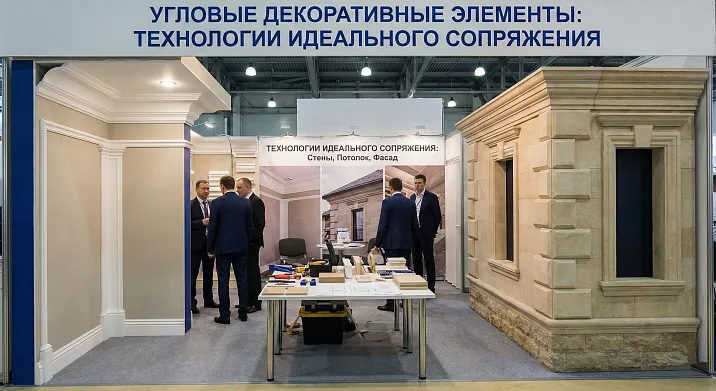
In interior decoration art, there are details that distinguish a hobbyist approach from professional craftsmanship.Corner Element for Molding— one of such details. When moldings meet at room corners, it is precisely the way they are joined that reveals the quality of work. Roughly sawn corners with gaps, mismatched profiles, visible seams instantly destroy the impression of the most refined decor. In 2026, when attention to details becomes a marker of quality design, using special corner elements transforms from an option into a necessity.



Philosophy of the Corner Element: Why Is It Needed?
Moldings are decorative strips framing walls, ceilings, doors, creating panels and frames. When a molding runs straight along a wall, there is no issue. But walls meet at corners, and here arises a technical and aesthetic problem: how to join two moldings at a 90-degree angle so that the joint is flawless?
The traditional method — saw both moldings at a 45-degree angle and join them at the corner. This works if the molding is simple and flat, and the craftsman has high skill. But if the molding is profiled, with relief or ornament, a 45-degree cut often results in mismatched profiles, gaps, and visual breaks in the ornament.
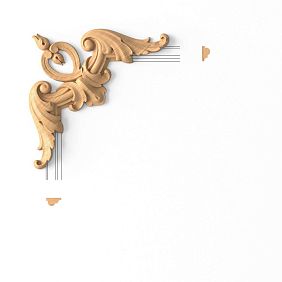
Corner Element for MoldingSolves this problem radically. It is a ready-made detail with the shape of an angle (internal or external) and a profile identical to the molding’s profile. Straight sections of the molding meet the corner element at a right angle, resulting in a perfect joint — the profile matches, the ornament remains continuous, and gaps are absent.
Corner Polyurethane Element— whether metal or wood — is not merely an auxiliary detail but a full-fledged architectural element, often additionally decorated. A corner element may be adorned with a rosette enhancing the ornament or remain neutral, ensuring a smooth transition. In classical interiorsMold Corner Element— becomes an accent drawing attention to architectural detailing.




Types of Corner Elements: Classification by Purpose
Our factory also produces:


Internal Corner Elements: For Joining Walls
An internal angle is the point where two walls meet at a 90-degree angle inward from the room. There are four such angles in any room (if it is rectangular).Corner Element for MoldingAn internal corner element has a concave shape, filling the angle.
Internal corner elements come in simple forms — repeating the molding’s profile without additional decoration — and decorative forms — with added rosettes, relief ornament, or carving. Simple forms suit minimalist and neoclassical interiors; decorative forms suit classical, baroque, and rococo styles.
For ceiling cornices, internal corner elements are a mandatory component.Buy polyurethane wall moldingsWithout corner elements — it means complicating installation and risking the quality of joints.installing polyurethane moldingWith ready-made corner elements, installation is vastly simpler and faster.
Get Consultation
External Corner Elements: For Projecting Corners
An external angle is a projecting angle formed by two walls diverging at a 90-degree angle outward. Such angles occur on columns, pilasters, protruding wall sections, decorative boxes.Corner Polyurethane ElementAn external corner element has a convex shape, covering the angle.
External corner elements are often more decorated than internal ones, since they are more visible. They may feature carved rosettes enhancing the molding’s ornament or sculptural elements — leaves, flowers, geometric motifs.Decorative corner elementsExternal corner elements become accents drawing attention.
For columns and pilasters, special external corner elements are used, forming capitals (top parts) and bases (bottom parts). They match the column shaft profile, creating a classic architectural composition.Wooden Corner ElementsFor columns, often carved by hand.
Corner elements for panels: frames and moldings
Wall panels — rectangles made of moldings on walls — require four corner elements for each panel.Mold Corner ElementFor panels, it can be neutral (simple molding junction) or decorative (with a rosette in the center).
Decorative corner elements for panels are often square or round, with relief ornamentation — plant motifs, geometric patterns, rosettes. They are placed at the four corners of the panel, creating visual accents.decorative rose outletsThey perform exactly this function.
For creating complex compositions — polygonal panels, arched panels — special corner elements for non-standard angles (not 90 degrees) are used. They are custom-made or assembled from universal parts.— everything must correspond to the chosen era.For panels, they create richness of detail.
Ceiling corner elements: cornices and coffered ceilings
Ceiling cornices (copes) — the most common type of molding requiring corner elements. In every rectangular room, there are four internal corners where the cornice must join seamlessly.Corner Element for MoldingCeiling-type elements ensure this.
Ceiling corner elements are available for internal corners (four corners of the room) and for external corners (if the ceiling is multi-level with protrusions).Polyurethane Ceiling MoldingsUsually sold in sets — straight sections of cornice plus corner elements.
For coffered ceilings — systems of square or rectangular recesses framed by moldings — corner elements are used at each intersection of moldings. This can be dozens of elements per ceiling.You can buy ready-made stucco matching the Baroque style. Calculate the quantity: linear meters of cornices and moldings, number of rosettes, pilasters, consoles, corner elements. Add a ten to fifteen percent allowance for trimming.For coffered ceilings, careful calculation of quantity is required.
Materials for corner elements: from polyurethane to wood
Polyurethane corner elements: market leader
Corner Polyurethane Element— the most popular type on today's market. Polyurethane is lightweight, strong, moisture-resistant, temperature-resistant, easily mounted with adhesive, and can be painted any color.polyurethane moldings— reproduces the finest details of ornamentation.
PolyurethaneDecorative corner elements— presented in a vast variety — from simple geometric joints to complex carved compositions. Manufacturers offer collections where each molding profile comes with corresponding corner elements — this guarantees perfect alignment.
An important advantage of polyurethane — affordable price.Buy corner molding— can be 3–5 times cheaper than wooden or plaster analogs. Visually, a polyurethane element is often indistinguishable from traditional materials.installing polyurethane molding— with corner elements, even a non-professional can use it.
Wooden corner elements: classic and elegance
Wooden Corner Elements— traditional choice for classic interiors and wooden houses. Oak, ash, beech, pine — each species creates its own aesthetic. Wooden elements can be smooth, profiled, carved, stained, or painted.
For wooden moldings, it is logical to use wooden corner elements — this creates material unity and emphasizes the natural beauty of the texture.wooden cornice— with wooden corner elements, it forms a harmonious system.Moldings made of polyurethane— can be combined with wooden elements painted to match.
Wood requires protection — varnishing, oiling, waxing. Without protection, it is susceptible to moisture, pests, and deformation. Well-treated wooden corner elements last for decades, acquiring a noble patina.Buy decorative elementsfrom the tree array — an investment in longevity.
Gypsum corner elements: traditional moldings
Gypsum molding — a classic material for creating corner elements in palace and museum interiors. Gypsum has a unique matte texture that conveys the finest details of carving.Mold Corner Elementmade of gypsum — heavy, brittle, requires professional installation, but creates an atmosphere of authenticity.
Gypsum corner elements are often custom-made from casts of historical samples. This allows for recreating lost details during the restoration of historical interiors. For modern projects, gypsum is used less frequently — it has been replaced by the more practical polyurethane.
Duro-polymer and other composites: premium segment
Duro-polymer (high-density polymer) — a premium material for moldings and corner elements. It is denser and stronger than ordinary polyurethane, has a sharper relief, and is resistant to mechanical damage.Decorative corner elementsmade of duro-polymer are often used in commercial interiors with high traffic.
Fiber-reinforced composite, polymer concrete, and other composite materials are used for facade corner elements where high weather resistance is required. They withstand temperature fluctuations, moisture, and ultraviolet radiation without losing their appearance.Facade Corner Elementsmade of composites serve for decades.
Advantages of using corner elements
Perfect joints: the main advantage
Main advantagecorner element for molding— an ideal joint without gaps, profile misalignment, or visual breaks. Straight molding sections are simply brought up to the corner element at a right angle, resulting in a flawless joint. This is especially important for profiled moldings with complex relief.
Traditional beveling at 45 degrees means that any inaccuracy — even half a degree — creates a noticeable defect. A corner element eliminates this problem — it already has the correct geometry, leaving only the need to carefully fit the straight sections.Corner Polyurethane Elementguarantees a professional result even with non-professional installation.
Time-saving: simplified installation
Beveling moldings at a 45-degree angle requires precision, special tools (a miter saw), and experience. Even an experienced craftsman spends 15–30 minutes on each corner. Using pre-made corner elements reduces installation time by 3–5 times — straight sections are simply cut at a right angle and joined to the element.
installing polyurethane molding— means simplifying the work and speeding it up.Buy corner molding— meaning to simplify and speed up the work.
Decorative function: additional embellishment
Many corner elements not only provide a joint but also additionally decorate it.Mold Corner ElementWith a rose center, it creates a visual accent, drawing attention to architectural detailing. In classical interiors, such elements become full-fledged decorative accents.
Corner elements can be larger than the molding profile, protruding beyond its limits and creating additional volume. They may have an enhanced ornamentation, continuing the molding’s pattern but in a more expressive form.Decorative corner elementsThey function as jewelry inlays within the overall composition.
Universality: solving non-standard tasks
Corner elements allow solving non-standard tasks — finishing angles not at 90 degrees, creating complex polygonal structures, connecting moldings of different heights. Some manufacturers offer universal corner elements adjustable for any angle from 60 to 120 degrees.
For arched openings, round rooms, and bay windows, special flexible moldings and corresponding corner elements are used, ensuring a smooth transition from a straight line to an arc.Buy polyurethane wall moldingsFlexible types can be adapted with a set of corresponding corner details.
Choosing corner elements: criteria and recommendations
Profile matching: key requirement
Corner Element for MoldingIt must exactly match the molding profile — have identical height, width, relief, ornament. Even a small mismatch will create a visual dissonance. Manufacturers usually indicate which molding profile a specific corner element is compatible with.
The most reliable method is to purchase moldings and corner elements from the same collection of one manufacturer. This guarantees perfect compatibility.Corner Polyurethane ElementElements from the collection are always compatible with moldings from the same collection.polyurethane moldingsIt is sold in sets.
If the molding is already installed and corner elements need to be selected separately, bring a sample of the molding with you when purchasing. Attach the corner element to the molding and visually assess the profile match.Buy corner moldingIt is better in specialized showrooms, where consultants will help you select the appropriate match.
Material: coordination with molding
For wooden moldings, it is logical to use wooden corner elements, for polyurethane — polyurethane. However, combinations are possible — polyurethane moldings with wooden corner elements (to create accents) or vice versa. The main thing is color and style coordination.
Wooden Corner ElementsThey are heavier than polyurethane, which is important to consider during installation. They require mechanical fastening — screws or nails, whereas polyurethane elements are glued.You can buy ready-made stucco matching the Baroque style. Calculate the quantity: linear meters of cornices and moldings, number of rosettes, pilasters, consoles, corner elements. Add a ten to fifteen percent allowance for trimming.It is simpler and cheaper, but wood is more noble.
Style and decoration: alignment with interior concept
Stylecorner element moldingIt must match the overall interior style. For classical interiors — richly decorated elements with rosettes, for neoclassicism — restrained profiled, for minimalism — smooth geometric.
The decorative level of the corner element may match the molding (creating uniform saturation) or exceed it (creating accents). In classical interiors, corner elements are often more decorated than moldings — they become visual accents.Decorative corner elementsThey are selected according to the overall concept.
Size: proportions and scale
The size of the corner element should be proportional to the size of the room and the molding. For small rooms with narrow moldings — compact corner elements that do not overload the space. For spacious halls with wide cornices — monumental elements matching the scale.
The corner element may be level with the molding (creating a smooth transition) or extend beyond its limits (creating an accent). In classical interiors, corner rosettes are often larger than the molding, in modern interiors — level or even smaller.Corner Polyurethane ElementIt is available in various sizes.
Installing corner elements: flawless installation technology
Preparation: marking and fitting
Before installation, carefully mark the positions of the moldings and corner elements. Start with the corners — temporarily fix the corner elements (with double-sided tape or pins) and assess the overall composition. Check that all corners are on the same level, symmetrical, and correctly positioned.
installing polyurethane moldingInstallation begins with the corners. First, all corner elements are fixed, then straight sections of the molding are fitted and secured to them. This ensures that the corners will be perfect — they define the geometry of the entire composition.
Try fitting the straight sections of the molding to the corner elements without fastening. Check for profile alignment and absence of gaps. If there are mismatches, trim the molding or select another corner element.Buy corner moldingIt must be purchasable with a return option if it doesn't fit.
Polyurethane elements are attached using adhesive technology: they are bonded with special polyurethane adhesive or high-quality liquid nails. The surface must be flat, clean, dry, and primed. Adhesive is applied to the back of the element in dots or zigzag pattern, and the element is pressed against the surface for 30–60 seconds.
Corner Polyurethane ElementIt is important to ensure tight contact across the entire surface of the element. If the surface is uneven, use more adhesive to fill gaps. Immediately wipe away any excess adhesive that protrudes at the edges with a damp cloth; it will be harder to remove once cured.
Allow the adhesive to fully dry (usually 24 hours) before attaching straight molding sections. This ensures that the corner element does not shift when joined with the molding.
It is installed quickly but requires care.polyurethane moldingsAttachment of wooden elements: mechanical fastening
They are secured using headless finishing nails or screws that are driven flush into the solid wood and covered with putty. For added security, wood glue is applied to the back of the element before fastening.
Wooden Corner ElementsNails or screws are driven/ screwed in at an angle to ensure secure fastening. The fastening points are filled with wood putty to match the wood tone, then sanded after drying. If the element will be painted or varnished, the fastening marks are completely concealed.
Heavy wooden elements are additionally secured with metal brackets on the reverse side. This ensures long-term durability, especially for large corner outlets.
The solid wood must be secured with a safety margin.Buy decorative elementsJoining with straight sections: final stage
After securing all corner elements, measure the distances between them and trim the straight molding sections precisely to size. The cut must be exactly at a right angle (90 degrees) so that the molding end fits tightly against the corner element.
Apply adhesive to the end of the molding and to its back side, press it onto the corner element, and firmly press it down. Check that the profiles align — they should form a continuous line. If there is a slight misalignment, trim the molding end at a small angle (1–2 degrees) to compensate.
Fill the joint between the molding and the corner element with acrylic sealant and smooth it with a wet finger. After drying, the joint becomes invisible.
It gives a professional result when combined with corner elements.installing polyurethane moldingwith corner elements gives a professional result.
Final finishing: painting and patination
The corner elements and moldings are painted in a single color. The surface is primed beforehand for better paint adhesion. Primer is applied with a brush, filling all relief grooves.
After installationMold Corner ElementPaint is applied in two to three coats with intermediate drying. For classic interiors, matte or semi-matte paint is used; for modern interiors, it may be glossy. It is important that corner elements and moldings are painted with the same paint in one application — this ensures color uniformity.
To create an antique molding effect, a two-tone painting technique is used — a base tone (white, cream) plus darker shading in the relief details. This emphasizes detail and creates depth.
After such painting, they appear more three-dimensional.— everything must correspond to the chosen era.after such painting, they look more voluminous.
Patination and gilding: noble luxury
Patination — artificial aging — is relevant for classic and palace-style interiors.Decorative corner elementsThey are first coated with a base color (white, cream), then patina — dark or colored paint — is applied into the relief grooves to create an aged effect.
With gilding, they become precious accents. Gilding uses special metallic paints or leaf gold (thin sheets of real gold).decorative rose outletsWax coating gives
to wooden corner elementsa noble matte sheen and protects against moisture. Wax is applied after painting or toning, and rubbed in with a soft cloth. Wax coating enhances the wood texture and creates a tactile pleasantness.Classic corner elements: ornament and opulence
Stylistic Solutions: From Classic to Modern
Classic corner elements: ornament and fullness
Classic style implies richly decoratedCorner moldingsWith plant motifs — acanthus leaves, roses, grapevines, rococo scrolls. Corner rosettes have deep relief, creating a play of light and shadow that enhances expressiveness.
For classic interiors, large corner elements that protrude beyond the molding and become independent decorative accents are relevant. They can be additionally adorned with gilding, patina, or painting.Buy corner moldingClassic style — means choosing maximum decorativeness.
Neoclassical elements: restrained elegance
Neoclassicism simplifies decoration while preserving architectural logic.Corner Element for MoldingHere, the profile is clear without excessive ornamentation. Geometric rosettes, simple medallions, and minimalist scrolls — these are characteristics of neoclassical elements.
The color palette of neoclassicism — neutral, noble. White, beige, light gray.Corner Polyurethane ElementThey are painted in these tones, creating an atmosphere of calm elegance.You can buy ready-made stucco matching the Baroque style. Calculate the quantity: linear meters of cornices and moldings, number of rosettes, pilasters, consoles, corner elements. Add a ten to fifteen percent allowance for trimming.Neoclassical style is simpler than full classicism.
Minimalist elements: function without decoration
Minimalism uses the simplest corner elements — geometric joints without ornamentation. Their function is to ensure flawless molding joints, without drawing attention.Decorative corner elementsIn minimalism, they are maximally laconic.
In minimalist interiors, corner elements are often absent — moldings are mitered at 45 degrees with perfect precision. But if used, they are simple geometric details, painted to match the molding, creating a visually continuous line.polyurethane moldingsFor minimalism, it is extremely simple.
Frequently asked questions
Are corner elements mandatory to use?
No, not necessarily. Moldings can be joined traditionally — mitered at 45 degrees. But corner elements guarantee an ideal result, simplify installation, and add decorative value.Buy corner molding— means choosing quality and convenience.
How to choose a corner element to match existing molding?
Take a molding sample with you to the store. Manufacturers indicate compatibility of corner elements with molding profiles. Visually place the element against the molding and assess the match.Corner Polyurethane ElementFrom the same collection guarantees compatibility.
Can corner elements be installed by oneself?
Yes, especially polyurethane ones.installing polyurethane moldingInstallation with corner elements is accessible to non-professionals. Wooden elements require skills in working with tools.
How much do corner elements cost?
Price depends on material, size, and complexity of decoration. Polyurethane elements — from 150 to 1500 rubles per piece. Wooden — from 500 to 5000 rubles.Molding priceIt varies over a wide range.
How to care for corner elements?
Polyurethane elements are wiped with a damp cloth; wooden ones — with dry or slightly damp cloth. Painted elements can be repainted as needed.Buy moldings— properly installed and painted — guarantee longevity.
Conclusion: Mastery in the Details
Corner Element for Molding— this is the detail that distinguishes professional work from amateur work.Corner Polyurethane Element, Mold Corner Element, Decorative corner elements, Buy corner molding— all these solutions lead to flawless joints that make the interior complete and harmonious.
Modern materials —polyurethane moldings, Wooden cornices— composites make using corner elements accessible for any project.Buy polyurethane wall moldings— with a set of corner elements — guarantee an ideal result.
Company STAVROS offers a full range ofmoldingand corner elements —polyurethane, woodenfor internal and external corners, for panels and ceilings, simple and decorative. Elements are presented in coordinated collections, where each molding profile corresponds to suitable corner details. Experienced consultants will help you select elements for your project, and delivery throughout Moscow, Saint Petersburg, and all of Russia will make purchasing convenient. Create interiors where every joint is a masterpiece — choose STAVROS!


