Article Contents:
- What is impact-resistant polystyrene: materials science of the next generation
- Molecular structure and physical properties
- Production technology
- Comparison with Other Materials
- Advantages of impact-resistant polystyrene: why it is the optimal choice
- Mechanical strength
- Resistance to abrasion
- Moisture Resistance
- Temperature Stability
- Chemical Resistance
- Ecological safety
- Lightweight
- Economic efficiency
- Aesthetic versatility
- Application areas: where impact-resistant profiles are indispensable
- Living Spaces
- Commercial spaces
- Public institutions
- Industrial and warehouse spaces
- Transport Infrastructure
- Choosing impact-resistant profiles: criteria and recommendations
- Determining the required strength level
- Geometric parameters
- Surface Quality
- Manufacturer's Reputation
- Certification
- Color solutions
- Installing impact-resistant profiles: technology and nuances
- Preparatory work
- Marking and cutting
- Mounting with adhesive
- Reinforced Mounting
- Joint sealing
- Painting
- Operation and maintenance: preserving quality for decades
- Regular maintenance
- Protection from Mechanical Damage
- Repairing minor damage
- Recoating
- Special operating conditions
- Innovative solutions from leading manufacturers
- Multi-layer profiles
- Profiles with integrated channels
- Antibacterial coatings
- Flexible profiles
- Profiles with shape memory effect
- Ecological biopolymers
- STAVROS and Hi Wood partnership: quality guarantee
- About Hi Wood manufacturer
- Advantages of cooperation
- Economic feasibility: payback calculation
- FAQ: answers to common questions
- Conclusion

In modern construction and finishing, materials combining aesthetics with practicality occupy a special place. When it comes to decorative elements for spaces with intensive use, the focus is onimpact-resistant polystyrene baseboards— a material that revolutionized the finishing industry. This is not just a beautiful floor or ceiling trim, but an engineering solution capable of resisting mechanical impacts while maintaining an impeccable appearance for years.
Traditional materials - gypsum, wood, MDF - are vulnerable to impacts, abrasion, and moisture. One careless bump from a cart, a random jolt from furniture - and scratches, cracks, or deformation occur. In public spaces, commercial areas, homes with children and pets, this becomes a critical issue. Impact-resistant polystyrene solves this problem, offering a combination of strength, durability, and attractive price.


What is impact-resistant polystyrene: materials science of the new generation
Impact-resistant polystyrene (HIPS - High Impact Polystyrene) is a modified version of regular polystyrene, with elastomeric components, most often polybutadiene, added. This addition fundamentally changes the material's properties, making it resistant to mechanical damage.




Molecular structure and physical characteristics
At the molecular level, impact-resistant polystyrene is a two-phase system. The rigid polystyrene matrix provides shape and structural integrity, while elastomer inclusions absorb impact energy, preventing the material from cracking. This is like a vehicle's suspension system - external impacts are absorbed by the internal structure.
The material's density is 1040-1050 kg/m³, which is slightly higher than regular polystyrene. The increased density provides additional strength without a significant increase in weight.Polystyrene impact-resistant wall moldingIt weighs 15-20% more than standard material, but remains significantly lighter than wood or polyurethane.
Impact resistance - a key parameter. Standard polystyrene withstands an impact energy of 15-20 J/m, while impact-resistant version withstands up to 100-150 J/m. This is a fivefold increase, which places the material in the category of high-load structural elements.
The elastic modulus is 1800-2500 MPa. The material is sufficiently rigid to maintain its shape, yet it possesses a certain degree of flexibility without breaking under deformation.
Temperature stability is extended to a range from -40°C to +80°C. The material does not become brittle in cold and does not soften when heated by radiators or warm floors.
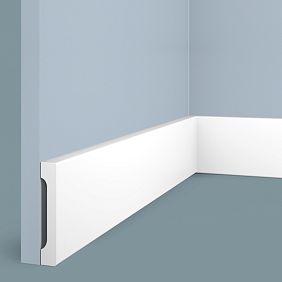
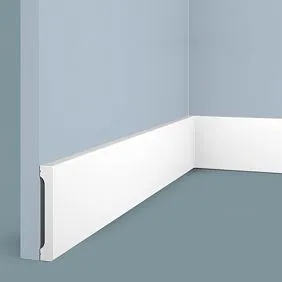
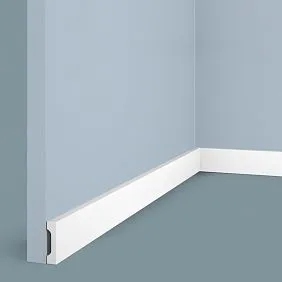
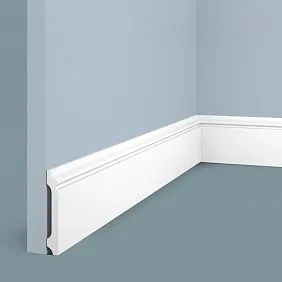
Our factory also produces:


Production technology
Modernimpact-resistant ceiling polystyrene skirting boardThey are produced by extrusion followed by molding. Polystyrene granules with modifiers are melted at a temperature of 200-220°C, extruded through a die of the desired profile, cooled, and cut into elements of standard length.
Advanced manufacturers, such as Hi Wood (HiWood, High Wood), apply multi-stage quality control. Each batch undergoes tests for impact resistance, geometric accuracy, and absence of internal stresses. This guarantees thatFloor molding polystyreneit will serve the stated period without deformation or loss of properties.
Get Consultation
Comparison with Other Materials
Polystyrene vs Polyurethane
Polyurethane is stronger and heavier. It withstands extreme loads, but costs 3-4 times more. For most rooms, the excessive strength of polyurethane is unnecessary, while impact-resistant polystyrene provides sufficient protection at a reasonable price.
Polystyrene vs MDF
MDF is sensitive to moisture, heavier, requires complex processing. When struck, MDF crumbles, and repairing damaged sections is difficult. Polystyrene is moisture-resistant, lightweight, and a damaged section is easily replaced.
Polystyrene vs PVC
PVC skirting boards are strong, but have a specific plastic appearance. They are difficult to paint, and the color palette is limited. Impact-resistant polystyrene paints excellently and can imitate any material - from plaster to natural stone.
Polystyrene vs Plaster
Plaster is brittle, heavy, and afraid of moisture. Installation requires professional skills, and repairing damaged sections is labor-intensive. Polystyrene elements are installed with adhesive within hours, and a damaged section is simply replaced with a new one.
Advantages of impact-resistant polystyrene: why it is the optimal choice
Mechanical strength
The main advantage is the ability to withstand impacts without destruction. A random impact from a shopping cart in a supermarket, a suitcase bump in a hotel corridor, or a child's ball in an apartment - all of these leave only minor dents or pass without a trace.Impact-resistant polystyrene wall moldingIt retains integrity where plaster or MDF would be covered in chips.
The material withstands point loads up to 200 N without residual deformation. This is equivalent to a pressure of 20 kg on an area of 1 cm². For comparison: plaster molding begins to break down already at 50-70 N.
Resistance to Abrasion
In areas of intensive movement - corridors, halls, stair landings - skirting boards constantly come into contact with shoes, bags, equipment. Impact-resistant polystyrene has high resistance to abrasive wear. Even after decades of use, the surface retains smoothness, paint does not wear off, and the profile does not lose sharpness.
The abrasion coefficient is less than 0.05 g per 1000 friction cycles. For practical understanding: a skirting board in an office corridor with a daily flow of 100 people will retain an ideal appearance for at least 15-20 years.
Moisture Resistance
Polystyrene does not absorb water. Even with prolonged contact with moisture, the material does not swell, deform, or lose strength. This is critical for bathrooms, kitchens, pools, saunas, and basements.
Water absorption is less than 0.1% of volume after 24 hours of full immersion. In practice, the material can be considered waterproof. Mold and mildew do not develop on polystyrene - there is no nutrient medium.
Temperature stability
The material retains its properties over a wide temperature range. In unheated rooms during winter, it does not become brittle. In summer, on sunny sides or near radiators, it does not soften or deform.
The linear expansion coefficient is minimal—only 0.06–0.08 mm per meter for a 10°C temperature change. With proper installation including compensatory gaps, thermal deformations are imperceptible.
Chemical Resistance
Polystyrene is resistant to most household chemicals—alkalis, weak acids, salt solutions, and alcohols. Cleaning agents, disinfectants, even chlorine-containing compounds do not damage the material.
Important limitation—aggressive solvents (acetone, gasoline, toluene) destroy polystyrene. However, in normal use, contact with such substances is excluded.
Ecological safety
Impact-resistant polystyrene is inert. It does not emit volatile compounds, has no odor, and does not cause allergies. Safe for childcare facilities, medical facilities, and food production.
The material does not support combustion under normal conditions. When exposed to open flame, it melts and self-extinguishes after the flame source is removed. Fire rating—G2 (moderately flammable materials), allowing use in most building types.
Lightweight
A standard skirting board meter weighs 150–300 grams. This is 5–10 times lighter than wooden or polyurethane analogs. Lightweight properties simplify transportation, installation, and reduce structural load.
One person can deliver material for finishing an entire apartment using a standard passenger car. Installation requires no helpers—elements are easily held by one hand while the other applies adhesive or screws fasteners.
Economic Efficiency
At comparable performance characteristics, impact-resistant polystyrene is 40–60% cheaper than polyurethane, 70–80% cheaper than plaster or natural wood. Low price does not mean low quality—it is the result of efficient modern production.
STAVROS, collaborating with leading manufacturers such as Hi Wood, offers products with optimal price-to-quality ratio. Partnership allows maintaining competitive prices without compromising material characteristics.
Aesthetic versatility
Impact-resistant polystyrene can be molded into profiles of any complexity—from simple skirting boards with straight edges to intricate cornices with multi-level relief imitating classical moldings. The surface is smooth, free of imperfections, and ideal for painting.
After applying quality paint, it is visually impossible to distinguish polystyrene from plaster. It can achieve patina, gold leaf, marble, or wood effects—material accepts any finish.
Application areas: where impact-resistant profiles are indispensable
Residential spaces
Apartments with children. Children are active, unpredictable, often play with balls, toys, bicycles indoors.Floor molding polystyreneWithstands all children’s mischief without damage. Parents gain peace of mind, and the interior retains its appearance.
Homes with pets. Dogs and cats are sources of mechanical damage. Claws, teeth, active play—all this tests finishes. Impact-resistant material does not fear such impacts.
Kitchens and bathrooms. High humidity, temperature fluctuations, contact with water and cleaning agents—standard conditions for these rooms. Polystyrene does not deform, swell, or require special cleaning.
Hallways and corridors. Zones with maximum load. Shoes, bags, umbrellas, bicycles—all these contact skirting boards. Impact resistance here is not luxury, but necessity.
Commercial Spaces
Offices. High foot traffic, furniture and equipment movement, cleaning with machinery—offices require durable materials. Impact-resistant profiles retain their elegant appearance for years, minimizing repair costs.
Shops and shopping centers. Shopping carts, heavy loads, constant movement—extreme conditions for finishes.impact-resistant polystyrene baseboardsWithstand this load while maintaining the attractiveness of retail spaces.
Restaurants and cafes. Movement of tables and chairs, staff using carts, intensive wet cleaning—all this creates increased load. Polystyrene elements handle it without problems.
Salons and fitness clubs. High humidity, frequent disinfectant cleaning, equipment movement—standard environment requiring durability and moisture resistance.
Public institutions
Kindergartens and schools. Children are especially active and inattentive to surrounding finishes. Impact-resistant materials are the only sensible choice for such institutions.
Hospitals and clinics. Carts, wheelchairs, medical equipment constantly contact walls and skirting boards. The material must withstand this and be easily disinfectable.
Hotels. Luggage, guest bags, staff carts—sources of damage. Impact-resistant polystyrene maintains room and corridor aesthetics between renovations.
Sports facilities. Humidity, temperature fluctuations, mechanical loads from equipment—all this requires durable materials.
Industrial and warehouse spaces
Warehouses. Forklifts, carts, falling loads - an extreme environment. Even here, impact-resistant polystyrene finds application for protecting corners and creating visual markings.
Production workshops. Vibrations, chemical exposure, temperature fluctuations - the material withstands these conditions.
Auto service and garages. Oils, solvents (in small concentrations), mechanical impacts -Polystyrene impact-resistant wall moldinghandle the task of protection and decoration.
Transport infrastructure
Airports and train stations. Thousands of passengers with luggage daily create massive loads. Impact-resistant profiles here are not just decoration, but functional protection of structures.
Metro and electric trains. Intense movement, humidity, temperature fluctuations - standard conditions where polystyrene demonstrates advantages.
Choosing impact-resistant profiles: criteria and recommendations
Determining the required level of strength
Not all rooms require maximum impact resistance. A reasonable approach is to assess real loads and select the appropriate material.
Low load (bedrooms, offices in private homes) - standard high-density polystyrene is suitable. It is cheaper, yet sufficiently strong for such conditions.
Medium load (living rooms, kitchens, offices) - impact-resistant polystyrene of standard modification is recommended. Optimal price-to-protection ratio.
High load (hallways, stores, public facilities) - reinforced impact-resistant polystyrene of increased density is required. A small additional cost is offset by longevity.
Extreme load (warehouses, production facilities, transport hubs) - here, consider the most robust versions or even polyurethane alternatives.
Geometric Parameters
Pile height. For rooms with low ceilings (2.4–2.6 m) choose 50–80 mm piles. Standard height (2.7–3.0 m) - 80–120 mm. High ceilings (3.2+ m) - 120–200 mm and more.
Thickness. The thicker the profile, the stronger it is. For impact-resistant versions, the minimum wall thickness is 8 mm. Reinforced variants have a thickness of 10–15 mm.
Profile shape. Simple rectangular profiles are stronger than complex relief profiles. If maximum resistance to damage is needed, choose minimalist shapes.
Surface Quality
Inspect the profile before purchase. The surface should be smooth, without bubbles, bulges, or scratches. The color should be uniform along the entire length. The geometry should be clear, without distortions.
Check the joints: place two elements end-to-end - the gap should be minimal. Quality products from reputable manufacturers, such as HiWood, always meet these criteria.
Manufacturer Reputation
Choose materials from well-known brands with a positive reputation. STAVROS cooperates with reliable suppliers, guaranteeing product quality. Partnership with Hi Wood ensures access to modern production technologies and strict quality control.
Beware of cheap non-name products. Saving 10–15% may result in purchasing brittle material that will require replacement within one to two years.
Certification
Quality products have certificates of conformity, fire safety, and sanitary-epidemiological conclusions. Request these documents - a conscientious seller will provide them promptly.
Color Solutions
Most profiles are supplied in white for painting. This is a universal solution - you can paint the elements in any shade matching the interior.
Some manufacturers offer pre-colored variants or profiles with wood, stone, or metal textures. This is convenient, but limits color choices.
Installing impact-resistant profiles: technology and nuances
Preparation Work
Material calculation. Measure the room's perimeter. For baseboards, subtract the width of doorways. Add 10–15% for trimming and possible defects. Standard profile length is 2 or 2.5 meters.
Quality installation requires professional tools: a fine-toothed circular saw, miter gauges for precise angle cuts, and a drill with torque adjustment.
-
Metal hacksaw with fine teeth or circular saw
-
Miter gauge for precise corner cutting
-
Construction level and tape measure
-
Polystyrene mounting adhesive
-
Acrylic sealant
-
Trowels, sponges, painter's tape
-
Drill and screws (for reinforced mounting)
Surface preparation. Walls and floor (or ceiling) must be clean, dry, and smooth. Remove old finishes, dust, and grease stains. Prime the surface — this improves adhesive bonding.
Significant unevenness (more than 3-5 mm) must be leveled with putty. Baseboard will replicate all irregularities of the surface, which looks unprofessional.
Acclimatization. Bring material into the room one day before installation. Profiles must adjust to room temperature and humidity. This prevents deformation after installation.
Marking and cutting
Marking. For floor baseboards, mark a horizontal line 2-3 cm above the floor along the entire perimeter. Use a laser or water level. For ceiling elements, marking is done from the ceiling downward.
Cutting straight sections. Measure the wall length, transfer the dimension to the profile accounting for mitered corners. Cut slowly with a hacksaw, without jerking. A miter saw gives a perfectly straight cut in seconds.
Cutting corners. For standard right angles (90°), use a miter gauge. Place the profile in the miter gauge, secure it, and cut at a 45° angle. Important: the cutting direction differs for internal and external corners.
Internal corner: both profiles are cut so that the front side is longer than the back. External corner: the back side is longer than the front.
For non-standard angles (not 90°), measure the actual angle with a protractor, divide it in half — this is the cutting angle for each profile.
Joint fitting. After cutting, lay the elements dry and check the fit. Trim as needed. An ideal joint has no gaps or misalignment.
Mounting with adhesive
Choosing adhesive. Forimpact-resistant ceiling polystyrene skirting boardsuitable:
-
Special polystyrene adhesives (e.g., 'Titan', 'Europlast')
-
Polymer mounting adhesives like 'liquid nails'
-
Acrylic sealant-adhesives
Main condition — absence of solvents. Check the label: 'does not contain toluene, acetone, xylene'.
Applying adhesive. Apply adhesive to the back of the profile in a dashed line or zigzag pattern. Consumption — approximately 300-400 grams per 10 linear meters.
For heavy, wide profiles, apply adhesive to both the profile and the wall — this is a two-sided method ensuring maximum strength.
Installation. Place the profile at the mounting location, aligning with the marking. Press firmly along the entire length. Pressure must be even — do not press too hard at one point.
Hold for 30-60 seconds until initial setting. Immediately wipe away any excess adhesive with a damp sponge. For long profiles, use an assistant or temporary supports.
Fixation. While the adhesive dries, secure the profile with painter's tape or tacks (inserted into the wall through the profile). Temporary fasteners are removed after 24 hours.
Reinforced fastening
For high-load rooms, it is recommended to reinforce the adhesive joint with mechanical fasteners.
Screws. Drill holes in the profile at 40-50 cm intervals. Drill bit diameter should be 1 mm smaller than the screw diameter. Screw in the screws, driving the heads 2-3 mm below the surface.
Fill the holes above the screw heads with acrylic putty. After drying, sand smooth — mounting points will become invisible.
Dowel nails. For concrete and brick walls, use dowels. Drill through the profile into the wall, install the dowels, and hammer in the nails. Screw heads are also filled with putty.
Joint sealing
Sealing. Fill all joints — between profiles, at corners, where they meet walls, floors, or ceilings — with acrylic sealant. Choose a white formula that can be tinted.
Apply sealant in a thin bead, then smooth with a wet finger or rubber spatula. Goal: create a seamless transition without visible lines. Wipe away excess immediately.
Sanding. After drying (usually 6–12 hours), sand with fine-grit sandpaper (180–220 grit). This removes sealant irregularities and prepares the surface for painting.
Painting
Priming. Even white profiles must be primed before painting. Acrylic primer improves paint adhesion, evens out absorption, and protects the material. Apply with a brush or roller in one coat.
Painting. Use acrylic or latex paints. They are safe, odorless, dry quickly, and form a durable finish.
First coat — base coat, applied with a brush or roller along the profile. After drying (2–4 hours), apply the second coat. For deep, dark colors, a third coat may be needed.
Decorative finishing. For classic interiors, use patina: apply gold or silver paint to raised areas, then wipe off excess. This creates an aged molding effect.
Lacquering (semi-transparent colored finish) adds depth to color. Stippling (painting with a sponge) creates a textured surface.
Operation and maintenance: preserving quality for decades
Regular Maintenance
Dry cleaning. Remove dust with a soft brush, microfiber cloth, or vacuum with a soft attachment. Frequency — once every 1–2 weeks for residential spaces, several times per week for public areas.
Raised profiles with recesses require more thorough cleaning. Use a fine paintbrush to reach dust in hard-to-access areas.
Wet cleaning. Once a month, wipe profiles with a damp microfiber cloth and neutral cleaner. Avoid abrasive powders, stiff brushes, or melamine sponges — they scratch painted surfaces.
Dilute mild dish soap in warm water (1 tablespoon per liter). Wipe profiles, then use a clean damp cloth to remove soap residue and dry thoroughly.
Disinfection. In medical facilities, daycare centers, and food production areas, periodic disinfection is required. Use disinfectants compatible with painted surfaces.
Avoid high-concentration chlorine bleach — it may fade paint. Hydrogen peroxide, alcohol-based solutions, and quaternary ammonium compounds are safe.
Protection from mechanical damage
Despite impact resistance, it’s prudent to minimize risks.
In hallways and entryways, install protective mats to reduce shoe contact with baseboards. Move furniture carefully — use felt pads on legs.
In stores and warehouses, mark vehicle and equipment pathways. If possible, install additional protective bumpers at wheel height.
In childcare facilities, explain to staff the importance of careful handling. Even impact-resistant material is not indestructible under systematic, targeted stress.
Repairing minor damage
Scratches. Shallow scratches are filled with matching paint. Use a fine brush, apply 1–2 coats. After drying, polish with a soft cloth.
Dents. Small dents are filled with acrylic putty. Apply generously, let dry, sand flush with the surface, then touch up.
Chips. If a profile piece breaks off, fill the void with two-component epoxy putty. It’s stronger than acrylic and withstands further loads. After curing, sand and touch up.
Severe damage. For significant damage (cracks, holes, deformations), it’s simpler to replace the damaged section. Cut out the defective part, install a new one, seal joints with sealant, and repaint.
Recoating
When needed. Painted surfaces last 5–10 years depending on usage. Signs of needing refreshment: fading color, yellowing (on white), wear at contact points.
Preparation. Clean profiles with a degreaser, then dry. Sand with fine-grit sandpaper (220–320 grit) — this creates texture for better adhesion of new paint.
Fill minor defects with putty. Prime the surface. After the primer dries, apply new paint in two coats.
Changing color. If you want to change the interior color, profiles are easy to repaint. White can be covered with any color. Dark profiles must first be primed with white covering primer, then the desired shade is applied.
Special operating conditions
High-humidity areas. In bathrooms, saunas, and pools, ensure good ventilation. Although polystyrene is moisture-resistant, persistent condensation may damage paint. Use moisture-resistant paints and primers.
Rooms with temperature fluctuations. Do not use rigid adhesive mounting in unheated warehouses, basements, garages. Use elastic adhesives and leave compensatory gaps of 2-3 mm every 3-4 meters.
Rooms with UV radiation. Direct sunlight over time may yellow white polystyrene. Use paints with UV filters or plan window shading in the profile installation area.
Chemically aggressive environments. In laboratories and chemical production facilities, ensure that the substances used are compatible with polystyrene. If necessary, create additional protection using special coatings.
Innovative solutions from leading manufacturers
The modern industry does not stand still. Manufacturers such as HiWood (HiWood) continuously improve technologies, offering innovative solutions.
Multi-layer profiles
Composite structures where the outer layer is impact-resistant polystyrene and the inner layer is extruded polystyrene foam. This reduces weight without losing strength and improves thermal insulation properties.
Profiles with integrated channels
Impact-resistant polystyrene wall moldingwith built-in cable channels. Convenient for laying electrical wiring, internet cables, LED strips. No need to notch walls or use external conduits.
Antibacterial coatings
Special compositions with silver ions or titanium nanoparticles make the surface bactericidal. Microorganisms do not multiply, which is critical for medical facilities, kindergartens, food production.
Flexible profiles
Designed for curved surfaces, columns, arches. The material bends without heating while retaining its strength characteristics.
Profiles with shape memory effect
Innovative polymer additives allow the material to restore its shape after deformation. Even after a strong impact, the profile gradually returns to its original geometry.
Ecological biopolymers
Developments in biodegradable polymers have led to the creation of "green" versions of impact-resistant polystyrene. The material retains all advantages but biodegrades during disposal without polluting the environment.
STAVROS and Hi Wood partnership: quality guarantee
STAVROS has been working in the decorative materials market for more than 15 years. Partnership with leading manufacturers such as Hi Wood (HiWood, Hi Wood) allows us to offer clients high-quality products at reasonable prices.
About Hi Wood manufacturer
Hi Wood is a modern enterprise specializing in the production of decorative polymer elements. Equipped with advanced equipment, the company produces profiles meeting the strictest quality standards.
Multi-stage control at all production stages—from raw material inspection to final inspection of finished products—ensures stability of characteristics. Each batch undergoes tests for impact resistance, geometric accuracy, and absence of defects.
Advantages of cooperation
Direct deliveries. Absence of intermediaries reduces price without compromising quality. STAVROS clients receive factory products at optimal prices.
Wide assortment. Hundreds of profiles of various heights, shapes, and designs. From minimalist modern to luxurious classic.impact-resistant polystyrene baseboardsfor any interior and budget.
Technical support. STAVROS specialists advise on material selection, quantity calculation, and installation technology. You receive not just a product, but a comprehensive solution.
Warranties. All products come with a quality warranty. If factory defects are found, the product is replaced at the supplier's expense.
Prompt delivery. Availability of warehouse stock ensures fast dispatch. Most items are available from stock without advance order.
Economic efficiency: payback calculation
Let's consider a practical example. An office space of 100 m² with a perimeter of 40 m. The baseboard height is 100 mm.
Option 1: Standard MDF skirting board
-
Material cost: 250 rub/m × 40 m = 10,000 rub
-
Service life: 5 years
-
Replacement after 5 years: 10,000 rub
-
Over 15 years: 30,000 rub
Option 2: Impact-resistant polystyrene
-
Material cost: 400 rub/m × 40 m = 16,000 rub
-
Service life: 20 years
-
No replacement needed over 15 years
-
Total: 16,000 rub
Savings amount to 14,000 rubles only on material. If installation cost (removal of old, preparation, installation of new - about 300 rub/m) is taken into account, savings double to 28,000 rubles.
For public spaces with high traffic, the difference is even greater. A shopping center of 1000 m² (perimeter around 130 m) will save more than 100,000 rubles over 10 years of operation.
FAQ: answers to frequently asked questions
How does impact-resistant polystyrene differ from standard?
Addition of elastomeric components increases resistance to impact loads by 5-7 times. The material does not crack under mechanical stress and retains integrity under deformation.
Can it be used in a child's room?
Yes, the material is completely safe. It does not emit harmful substances and does not cause allergies. Impact resistance is especially important for children's rooms.
How long do such skirting boards last?
With proper installation and maintenance — 20-30 years. The material does not rot, does not degrade, and retains its shape for decades.
Are special tools needed for installation?
No, a standard set is sufficient: saw, miter box, level, adhesive. Installation is accessible even for a non-professional.
Can it be painted in dark colors?
Yes, polystyrene paints excellently with acrylic paints of any shade. Apply 2-3 coats for a rich color.
Do the profiles withstand bathroom humidity?
Yes, polystyrene is moisture-resistant. Use moisture-resistant adhesive and paint — the profiles will last in the bathroom as long as in dry areas.
How to replace a damaged section?
Cut out the defective section, install the new element with adhesive, seal the joints with sealant, repaint. The operation takes 1-2 hours.
Does the material fear sunlight?
Prolonged direct UV radiation may cause yellowing of white polystyrene. Use paints with UV filters or shade windows.
What adhesive to use for installation?
Special polystyrene adhesives, polymer "liquid nails", acrylic sealant-adhesives. The key — solvent-free.
Can it be installed on a suspended ceiling?
Yes, but mounting is only to the wall. The top edge of the skirting board covers the gap between the wall and the suspended ceiling fabric.
Conclusion
Impact-resistant polystyrene profiles — a synthesis of technology, aesthetics, and economic efficiency.Floor molding polystyrene, impact-resistant ceiling polystyrene skirting boardandPolystyrene impact-resistant wall moldingfrom leading manufacturers provide long-lasting protection and flawless appearance for spaces of any purpose.
For high-traffic areas — offices, shops, public institutions, industrial spaces — this is not just optimal, but the only sensible choice. The material withstands daily wear, maintaining its appearance for years, minimizing maintenance and repair costs.
STAVROS Company, in partnership with reliable manufacturers such as Hi Wood (HiWood, Hi Wood, Hiwood), provides access to quality products at fair prices. Wide assortment, professional consultations, quality guarantees, prompt delivery — all conditions for successfully implementing projects of any complexity.
Choosing impact-resistant polystyrene profiles is an investment in durability, practicality, and aesthetics. This solution pays for itself through reduced operational costs, maintaining interior appeal, and eliminating the need for frequent repairs. Modern manufacturing technologies, strict quality control, and innovative developments make these materials the standard for interior finishing in the 21st century.