Article Contents:
- Economics of quality: what determines the cost per square meter
- Hierarchy of pricing in the premium materials segment
- Technological cost factors
- Regional pricing characteristics
- Moscow pricing model
- Saint Petersburg balanced pricing model
- Regional differences and their causes
- Anatomy of cost: breakdown by components
- Material Component
- Production costs
- Logistical component
- Comparative Analysis of Price Categories
- Economy segment: accessibility without compromises
- Mid-range segment: balance of quality and cost
- Premium segment: investments in perfection
- Finishes and their impact on pricing
- Premium natural finishes
- Modern Coating Systems
- Economic efficiency: payback calculation
- Long-Term Investment Perspective
- Impact on property value
- Seasonal Fluctuations and Market Conditions
- Impact of Construction Cycles
- Macroeconomic Factors
- Technological Innovations and Their Impact on Cost
- Production Automation
- New Materials and Processing Technologies
- Alternative materials and their economic comparison
- MDF and veneered products
- Plastic and composite materials
- Regional suppliers and their pricing policy
- Federal-level manufacturers
- Local manufacturers
- Logistical pricing factors
- Transportation costs
- Warehouse logistics
- Services and support as cost factors
- Pre-Sales Preparation
- Warranty service
- Ecological aspects and their economic evaluation
- Certified wood
- Ecologically clean coatings
- Innovative solutions and their impact on price
- Integrated Systems
- Design solutions
- Frequently Asked Questions
- What affects the price of wooden skirting board per meter?
- What is the average price per linear meter of wooden skirting board?
- Is it worthwhile to buy expensive wooden skirting boards?
- When is the best time to buy wooden skirting boards at a price?
- Does the region affect the price of wooden skirting boards?
- How to save money when buying wooden skirting boards?
- Is it worth paying extra for pre-finished coating?
- What hidden costs may arise?
- Conclusion

In the world of building materials, few decorative elements provoke as much debate about cost-effectiveness as wooden skirting boards. When discussing how muchPrice of wooden skirting per metermany buyers face a dilemma: is it worth paying extra for natural wood, or can they do with cheaper alternatives? This question requires a deep understanding not only of immediate costs, but also of the long-term economic efficiency of investing in quality finishing materials.
A wooden skirting board is an investment that pays off over years of flawless service, aesthetic appeal, and the possibility of multiple restorations. Unlike synthetic materials, natural wood does not lose its value over time; instead, it develops a noble patina, becoming even more attractive. Understanding pricing principles will help make a well-considered decision and get maximum return on every ruble spent.


Economics of quality: what determines the cost per square meter




Hierarchy of pricing in the premium materials segment
Pricing for wooden skirting boards is a complex multi-level system, where each factor affects the final cost per linear meter. At the base of the pyramid lies the cost of raw material — wood species, its quality, method of harvesting and processing.Wooden skirting boardsWood from different species may differ in price by 3-5 times, and this difference is due not to marketing considerations, but to real material characteristics.
Oak — the king of wood species — forms the top price segment due to its unique properties. Slow growth of the tree (60-80 years until technical maturity), high wood density 600-800 kg/m³, tannin content up to 10% — all this makes oak skirting boards premium-class material. Processing dense oak wood requires special equipment and high-skilled craftsmen, which also affects the cost.
Beech occupies the middle price segment, offering excellent performance characteristics at a more affordable cost. Uniform density 650-750 kg/m³, beautiful light tone with a pinkish undertone, excellent workability — all this makes beech skirting boards a popular choice among demanding buyers.
Coniferous species — pine and larch — represent an accessible market segment, but this does not mean a compromise in quality. Modern processing technologies allow creating skirting boards from coniferous wood that do not fall short of hardwoods in performance characteristics.
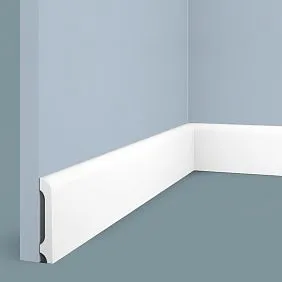
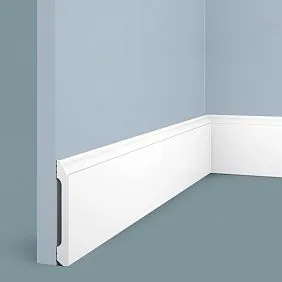
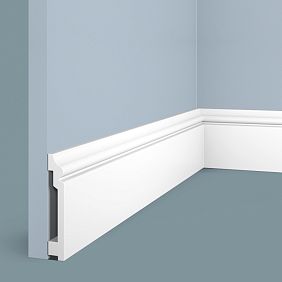
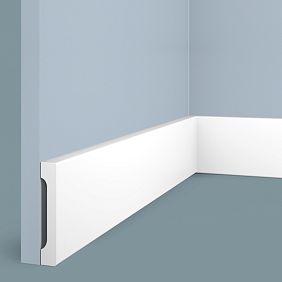
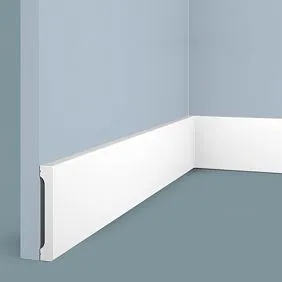
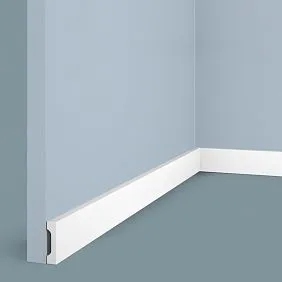
Our factory also produces:

Technological cost factors
The manufacturing process of high-quality wooden skirting boards includes numerous technological operations, each of which affects the final product cost. Kiln drying of wood to a moisture content of 8±2% — this is an energy-intensive process requiring special equipment and precise adherence to temperature and humidity regimes. Violation of the drying technology leads to internal stresses, which manifest as cracking and deformation even during use.
Skirting board manufacturingOn modern CNC equipment, profile geometry is ensured with precision up to 0.1 mm. Such equipment costs millions of rubles, but allows achieving quality unattainable with manual processing. Special cutting heads are manufactured individually for each profile, which also increases cost, but guarantees repeatable dimensions and surface quality.
Final finishing includes multi-stage sanding with different grits, application of primer compositions, intermediate sanding, and final coating. Each stage requires time, materials, and skilled labor. Quality coatings — oils, waxes, varnishes — constitute a significant part of the cost, but ensure longevity and aesthetic appeal of the products.
Get Consultation
Regional pricing features
Moscow pricing model
The capital's market for wooden skirting boards is characterized by the highest price level, which is due to several factors. High cost of commercial real estate, logistics costs, higher requirements for service quality — all this forms a unique pricing environment.Wooden skirting MoscowIt may cost 20-30% more than similar products in other regions.
However, high prices are compensated by product quality and service level. Moscow suppliers work with the most demanding clients and cannot afford compromises in quality. Competition forces them to constantly improve their product range, introduce new technologies, and enhance staff qualifications.
Logistical peculiarities of the capital also affect pricing. Restrictions on freight vehicle movement, complex road conditions, the need to deliver to the historic center with its narrow streets — all this increases transportation costs.
Saint Petersburg's balanced pricing model
Saint Petersburg demonstrates a more balanced approach to pricing wooden skirting boards. Proximity to the forest-industrial regions of Northwest Russia allows reducing logistics costs for raw materials. The developed woodworking industry in the region creates a competitive environment among manufacturers.
Saint Petersburg traditions of quality finishing form a stable demand for premium materials at a reasonable price level. Buyers in the northern capital value the price-quality ratio and are willing to invest in long-lasting solutions.
Cultural peculiarities of the city also affect the market. Abundance of historical buildings creates demand for classic solutions and restoration materials, stimulating the development of corresponding market segments.
Regional differences and their causes
In regions of RussiaPrice per meter of wooden skirting boardmay differ significantly from those in the capital. Forest-industrial regions — Arkhangelsk Oblast, Karelia, Komi — offer the most competitive prices due to proximity to raw material sources.
Southern regions, conversely, show higher prices due to the need to transport high-quality northern timber over long distances. Siberian regions occupy an intermediate position — proximity to larch forests allows them to offer competitive prices on products made from this valuable species.
The standard of living in the region also affects pricing. High household incomes allow for the formation of a premium market segment, while low incomes limit its development.
Anatomy of Cost: Breakdown by Components
Material Component
Raw material accounts for 40-60% of the final cost of wooden skirting boards, depending on the species and quality of the wood. Premium species — oak, beech, walnut — require long harvesting periods, special storage conditions, and careful sorting. Each board is checked for the absence of knots, cracks, sap stains, and other wood defects.
Coniferous species are more affordable, but require equally careful preparation. The resinous nature of pine and larch provides natural protection against moisture and biological damage, but complicates processing and finishing.
Imported exotic wood can account for up to 80% of the final product cost. Teak, merbau, wenge — these species are valued for their unique decorative and functional properties, but their high cost makes such skirting boards luxury items.
Production Costs
Wood processing requires complex and expensive equipment. Modern four-sided planers costing several million rubles can process all surfaces of a skirting board with high precision in a single pass. Changing cutting heads for different profiles, adjusting equipment, quality control — all of this requires highly skilled personnel.
Energy consumption constitutes a significant portion of production costs. Drying chambers, woodworking machines, dust extraction systems — all of these consume large amounts of electricity. Rising electricity tariffs directly affect product cost.
Equipment depreciation is also included in product cost. The payback period for expensive machines is 5-7 years, requiring corresponding production and sales volumes.
Logistical Component
Transporting long items requires special rolling stock and creates additional logistical challenges. Special trailers for transporting skirting boards 3-4 meters long, cargo securing systems, protective packaging — all of this increases transportation costs.
Storage logistics for wooden items require special storage conditions. Climate control, moisture protection, proper stacking to prevent deformation — all of this creates additional costs.
Insurance of cargo during transport also affects cost. Wooden skirting boards are classified as fragile cargo requiring special care during loading and unloading.
Comparative analysis of price categories
Economic Segment: Accessibility Without Compromise
Skirting boards made from pine and spruce represent the most accessible market segment, priced from 150 to 400 rubles per linear meter. This category does not mean low quality — modern technologies allow creating products from coniferous species with excellent performance characteristics.
The natural resinous nature of coniferous species provides additional protection against moisture and biological damage. The pleasant pine aroma creates a healthy microclimate in the room. The distinct texture with clear annual rings gives products an attractive appearance.
Simple profiles without complex decorative elements allow minimizing production costs. Rectangular cross-section with beveled edges or rounded corners — optimal solution for most interiors.
Mid-Segment: Balance of Quality and Cost
Skirting boards made from beech, oak, and quality pine with professional finishing form the core of the mid-price segment, priced from 400 to 800 rubles per linear meter. This segment offers the optimal price-to-quality ratio for most projects.
Beech skirting boards are characterized by uniform dense structure, beautiful light tone, and excellent workability. The ability to stain in various colors expands design possibilities.
Beech products attract with contrasting texture and high strength. Light tone is ideal for modern Scandinavian-style interiors.
moldings, cornices, skirting boardsMid-segment solutions allow creating a comprehensive interior design solution in a unified style.
Premium Segment: Investments in Perfection
Oak skirting boards and products made from other premium species form the premium segment, priced from 800 to 2000 rubles per linear meter and above. This category targets demanding customers who value exceptional quality and are willing to invest in long-lasting solutions.
Oak wood, with its unique properties — high density, natural moisture resistance, noble texture — represents premium-grade material. Tannin content provides natural antiseptic protection.
Complex multi-level profiles with elegant chamfers, decorative grooves, carved elements require the highest level of craftsmanship. Each detail is executed with jewel-like precision, making such skirting boards masterpieces of carpentry art.
Exclusive species — walnut, wenge, teak — offer unique decorative possibilities. Rich color palette ranging from light walnut to black wenge allows creating unique interior solutions.
Finishes and Their Impact on Pricing
Premium natural finishes
Oils based on linseed or tung oil represent the highest level of wood skirting board finishing. These compositions deeply penetrate the wood structure, highlighting its natural beauty and providing long-lasting protection. The cost of quality natural oils is 3-5 times higher than synthetic analogs, but the result fully justifies the expense.
Linseed oil cold-pressed provides deep wood penetration, creating a breathable coating that allows the material to regulate humidity in the room. Tung oil differs with better protective properties and greater durability.
Wax finishes create unique tactile sensations and a noble silk-like sheen. Natural waxes — carnauba, beeswax — are significantly more expensive than synthetic ones, but they ensure ecological purity and a unique appearance.
Modern coating systems
Two-component polyurethane varnishes provide maximum protection against mechanical damage, moisture, and ultraviolet radiation. The high cost of such compositions (2-3 times more expensive than single-component ones) is offset by exceptional coating longevity.
Water-based varnishes of the new generation combine eco-friendliness with high performance. The absence of solvents makes them safe for health, and modern formulas ensure coating strength and durability.
Economic efficiency: payback calculation
High-quality materials practically do not lose their consumer properties over time. On the contrary, natural wood develops a noble patina, becoming even more attractive.
Long-term investment perspective
The possibility of multiple restorations is an important advantage of wooden skirting boards. Minor damages are eliminated by local sanding and repainting. Severe coating wear requires full re-finishing, which restores the item to its original appearance.
High-quality materials practically do not lose consumer properties over time. On the contrary, natural wood acquires a noble patina, becoming even more attractive.
wood trim itemsHigh-quality materials practically do not lose their consumer properties over time. On the contrary, natural wood develops a noble patina, becoming even more attractive.
Impact on property value
Quality finishing with natural materials significantly increases property attractiveness on the market. Potential buyers are willing to pay 5-10% more than the apartment's price for quality finishing with wooden skirting boards and other decorative elements.
The speed of property sales with quality finishing is also higher. Buyers prefer properties ready for occupancy without additional investment in repairs.
Properties with quality finishes sell faster. Buyers prefer ready-to-move-in properties without additional investment in renovation.
Seasonal Fluctuations and Market Conditions
Impact of construction cycles
The seasonality of the construction industry directly affects the pricing of wooden skirting boards. The spring-summer period is characterized by maximum demand and, accordingly, higher prices. During this time, construction and repair activities intensify, creating a shortage of quality materials.
The autumn-winter period brings price stabilization or even reductions. Manufacturers are interested in maintaining turnover and are willing to offer discounts to wholesale buyers. Planning purchases during the off-season allows saving 10-15% of material costs.
Currency rates affect the cost of imported equipment, components, and consumables for production. Sharp fluctuations in the dollar and euro exchange rates may lead to price adjustments of 5-10%.
Macroeconomic factors
Inflationary processes affect all cost components — from worker wages to energy carrier prices. Manufacturers are forced to adjust prices in accordance with rising costs.
The state's monetary and credit policy also affects the market. Changes in the Central Bank's key interest rate affect the cost of financing for manufacturers and buyers, which may alter demand structure.
The state's monetary and credit policy also affects the market. Changes in the Central Bank's key interest rate influence the cost of credit for producers and buyers, which may alter the demand structure.
Technological innovations and their impact on cost
Production automation
Introducing robotic systems into wooden skirting board production allows increasing processing accuracy and reducing the influence of human factors on product quality. However, the high cost of such equipment requires significant investments, which are incorporated into the product price.
Quality control systems using laser measuring devices and computer vision allow identifying defects at early production stages, reducing scrap rates and improving overall product quality.
Integrated production systems with unified software control optimize the entire technological process from raw material cutting to packaging of finished products.
New materials and processing technologies
Developing new types of protective coatings with improved performance characteristics allows extending the service life of wooden skirting boards. Nanotechnology in lacquer and oil production opens new possibilities for wood protection.
Thermal modification of wood — a new technology allowing to improve dimensional stability and biostability of the material without using chemical impregnation. Thermally modified wood is more expensive than regular wood, but it has unique properties.
Laser engraving opens new possibilities for decorating wooden skirting boards. The precision of laser processing allows creating delicate ornaments and patterns inaccessible by traditional methods.
Alternative materials and their economic comparison
MDF and veneered products
MDF skirting boards covered with natural veneer represent a compromise between the appearance of natural wood and affordable cost. The price of such products is 2-3 times lower than solid wood, but durability and restoration possibilities are limited.
High-quality veneer from valuable species allows imitating expensive materials at significantly lower costs. However, a thin veneer layer (0.6-3 mm) does not allow for serious restoration or sanding.
MDF's ecological characteristics are inferior to natural wood due to the use of formaldehyde-based binders. Modern formaldehyde-free panels are more expensive but ensure ecological safety.
Plastic and composite materials
PVC skirting boards with wood texture imitation cost 5-10 times less than natural counterparts, but completely lack the advantages of natural material. Low repairability, limited service life, and non-ecological nature make such products a temporary solution.
Wood-polymer composites (WPC) combine some properties of wood with the practicality of synthetic materials. Increased water resistance and biostability make them attractive for humid areas, but their price approaches that of natural materials.
Composite materials cannot be restored and have limited mechanical processing capabilities. When damaged, the entire element must be replaced.
Regional suppliers and their pricing policy
Federal-level manufacturers
Large manufacturers with a federal dealer network offer stable prices and guaranteed product quality. Their own raw material base, modern equipment, and streamlined logistics allow them to maintain competitive prices while ensuring high quality.
Standardized technological processes ensure product characteristics stability regardless of production location. Unified quality standards, product certification, and warranty obligations create additional value for the buyer.
Local manufacturers
Local manufacturers often offer more flexible working conditions and the ability to produce non-standard items. The absence of federal distribution and marketing costs allows them to maintain lower prices.
However, product quality may vary depending on the technical equipment of the facility and staff qualifications. Limited production volumes may create difficulties in supplying large batches.
Logistical factors in pricing
Transportation costs
Transporting long wooden items requires special transport and creates additional logistical challenges. Delivery costs may amount to 10-20% of the product price for remote regions.
Special trailers for transporting skirting boards up to 6 meters long are expensive and require experienced drivers. Restrictions on dimensions and weight on roads create additional routing difficulties.
Cargo protection during transportation requires special packaging and securing systems. Wooden skirting boards are fragile cargo requiring careful handling.
Warehouse Logistics
Storing wooden items requires special conditions — temperature, humidity, ventilation. Improper storage leads to deformation, mold growth, and cracking.
Inventory turnover affects pricing structure. Fast-turning items may be sold with lower markup, while slow-moving items require compensation for storage costs.
Services and support as cost factors
Pre-sales preparation
Consultation services for selecting appropriate materials, calculating requirements, and developing layout schemes — all this creates additional value for the buyer. Qualified consultants help avoid mistakes and optimize costs.
Room measurement and material specification services save the client’s time and guarantee accurate calculations. Measurement errors may lead to material shortages or excess.
Pre-cutting skirting boards to the exact dimensions of a specific room speeds up installation and reduces waste. Precise corner cutting requires special equipment and experience.
Warranty Service
Manufacturer warranty obligations create confidence in product quality, but their fulfillment requires appropriate reserves and organizational measures. Extended warranties may be included in the product cost.
Service maintenance during the warranty period, replacement of defective items, care and operation consultations — all this affects the final cost.
Ecological aspects and their economic evaluation
Certified Wood
Using wood from sustainably managed forests with FSC or PEFC certificates guarantees responsible forestry, but increases raw material cost. Environmentally conscious buyers are willing to pay extra for such products.
The supply chain of certified wood requires additional control and documentation, creating extra costs. Audits by certifying organizations also require expenses.
Ecologically Safe Coatings
VOC-free coatings cost more than traditional ones but provide a healthy indoor microclimate. This is especially important for children’s rooms and bedrooms.
Natural oils and waxes are completely safe for health, but require more frequent renewal compared to synthetic coatings. Additional maintenance costs should be considered when calculating total ownership cost.
Innovative solutions and their impact on price
Integrated systems
Baseboards with built-in cable channels for concealed wiring installation cost more than standard ones, but solve an important practical problem. Precise processing of internal cavities requires special equipment.
Systems for integration with "warm floors" include special ventilation channels and temperature gaps. Such technical solutions complicate the structure and increase the cost.
Design solutions
Custom profiles based on individual sketches require manufacturing special tools and adjusting equipment. The development cost is distributed across the entire batch, making small series very expensive.
Exclusive decorative elements — carving, inlay, gilding — are handcrafted and require high skill from artisans. Such items belong to luxury goods.
Frequently asked questions
What factors determine the price of a wooden baseboard per meter?
Main pricing factors: wood species, profile complexity, surface finish quality, coating type, product dimensions, order volume. Oak baseboards may cost 5-7 times more than pine ones at the same dimensions.
What is the average price per linear meter for wooden baseboards?
The price range is very wide: economy segment (pine) — 150-400 rubles/m, mid-range segment (beech, ash) — 400-800 rubles/m, premium (oak) — 800-2000 rubles/m and higher for exclusive items.
Is it worthwhile to buy expensive wooden baseboards?
When calculating long-term ownership costs, high-quality baseboards often turn out to be more economical than cheaper alternatives. Durability, restorability, and increased property value offset high initial costs.
When is the best time to buy wooden baseboards at a good price?
The most favorable prices are usually during the autumn-winter period, when construction industry activity decreases. Manufacturers are interested in maintaining turnover and offer discounts.
Does the region affect the price of wooden baseboards?
Yes, regional differences can reach 30-50%. Prices are lower in forestry regions due to proximity to raw materials. In megacities, prices are higher due to logistics and operational costs.
How to save money when buying wooden baseboards?
Main ways to save: purchasing during off-season, bulk discounts for large orders, choosing local manufacturers, opting for simple profiles instead of complex ones.
Is it worth paying extra for pre-finished coating?
Factory-applied coatings are usually superior in quality and durability compared to DIY finishes. Considering material, tool, and labor costs, pre-finished items are often more economical.
What hidden costs may arise?
Additional costs: delivery (especially to regions), fasteners and accessories, installation tools, installation services, surface preparation, protective coatings.
Conclusion
Understanding the principles of pricing formationprice of wooden baseboard price per meterhelps make a balanced decision when selecting finishing materials. Natural wood remains unmatched in combining aesthetic, ecological, and functional characteristics.
Investments in high-quality wooden baseboards pay off through their longevity, multiple restoration opportunities, and increased property value. With proper selection and professional installation, such items serve for decades, retaining their original appeal.
The modern market offers a wide range of solutions for any budget. The key is to find the optimal balance between cost, quality, and aesthetic requirements of a specific project. Cutting corners on material quality or installation may lead to additional expenses in the future.
Production of trim elementsrequires high production standards and continuous quality control. Choosing a reliable supplier is the guarantee of receiving products fully meeting expectations.
For more than two decades, STAVROS has set quality standards in the production of elite wooden baseboards. The combination of traditional carpentry craftsmanship with modern high-tech equipment allows STAVROS to create products that serve as industry benchmarks. Using premium wood from ecologically clean northern regions of Russia, strict multi-stage quality control at every production stage, and individualized approach to each order — all this makes STAVROS products synonymous with reliability and perfection. The company offers not just baseboards, but comprehensive solutions for creating harmonious interiors, including professional consultations, individual production of unique profiles, and full technical support. STAVROS’s honest pricing policy ensures optimal price-to-quality ratio, making premium products accessible to a wide range of discerning customers. Choosing STAVROS means investing in beauty, quality, and longevity, with the guarantee that your investment will pay off through years of flawless service.