Article Contents:
- Philosophy of Transformation: Why Staticness No Longer Works
- Modularity as Freedom
- Slatted Partitions: Lightweight Zoning for Flexible Spaces
- Construction and Types
- Slat Material and Dimensions
- Functionality of Slatted Partitions
- Wooden Slats on Wall: Decoration and Function in One
- Orientation and Rhythm
- Functionality of Slatted Wall
- Furniture Handles in Transformable Systems: Changing the Identity of the Item
- Detachable and Replaceable Handles
- Universal Mounting Holes
- Integrated Handles: When They Are Not There, But They Are
- Furniture Supports: Adjustable Height and Mobility
- Adjustable Height Supports
- Mobile Supports on Casters
- Folding Supports
- Modular Storage Systems: Constructor for Adults
- Principle of Modularity
- Types of Modules
- Module Mounting
- Transformable Furniture: Tables, Sofas, Beds
- Transformable Tables
- Sofas and Beds
- Materials of Transformable Furniture: Lightness and Strength
- Fiberboard and MDF
- Aluminum and Steel
- Textile and Leather
- Color and style of transformable furniture
- Neutral palette
- Natural Wood
- Minimalist styles
- Practical aspects: selection, installation, use
- How to choose transformable furniture
- Installation of slat partitions and walls
- Care for transformable furniture
- Common mistakes when creating a transformable interior
- Frequently Asked Questions
- Conclusion: flexibility as a new luxury

Pause for a moment and think: how many functions does your living room perform in a day? In the morning, it’s a workspace with a computer on the desk. During the day, it’s a child’s play area with scattered toys. In the evening, it’s a place for family gatherings with a sofa and TV. At night, if guests arrive, it becomes a bedroom with a foldable sofa. One space, four life scenarios. Traditional static furniture cannot cope with this fluidity, this variability of modern life. The year 2026 offers a solution: transformable furniture, where every element — from slat partitions to furniture handles — participates in the constant transformation of space. A slat partition can divide a room into zones in seconds or disappear, freeing up the entire volume. Furniture handles change depending on the function of the item — today a heavy bracket on a cabinet, tomorrow a minimalist button. Furniture supports are adjustable in height, transforming a coffee table into a desk. Wooden slats on the wall serve simultaneously as decoration, storage system, base for mounting shelves and lights. This is not just furniture — it’s a construction kit, where the owner defines the configuration according to the task at hand.


Philosophy of transformation: why staticness no longer works
Our grandparents lived in a world of predictability. The living room was the living room. The bedroom was the bedroom. The office was the office. Each room had one function, furniture stood in its place for decades. A heavy sideboard, a heavy sofa, a chest of drawers — all of this was purchased once in a lifetime and never moved.
Modern life has shattered this predictability. Apartments have become smaller — a typical one-room 38 sq. m apartment must accommodate a bedroom, living room, office, sometimes a child’s room. The daily routine has changed — remote work has blurred the boundary between home and office. Families have become more mobile — moves every 3-5 years instead of once in a lifetime. And the old model of static furniture no longer corresponds to new realities.
Transformable furniture is not a compromise, but a new paradigm. It is an acknowledgment that space must be flexible, adaptive, changeable. That one room can and should perform multiple functions. That furniture is not a static object, but a dynamic system that can be reconfigured to suit current tasks.




Modularity as freedom
Modularity means that an item consists of separate elements that can be combined differently. A modular sofa is not a single construction, but a set of sections: straight, corner, with armrests, without. Today you assemble a G-shaped configuration for watching TV. Tomorrow — a straight one for a party with guests. The day after — two separate parts to create two resting zones.
A modular storage system — not a ready-made cabinet, but a set of drawers, shelves, sections that can be mounted on the wall or to each other in any sequence. Moved into a new apartment with a different layout? Reassemble the modules into a new configuration. Needs changed — add new modules or remove unnecessary ones.
Modularity provides freedom from rigid attachment to the original configuration. Furniture grows with the family, adapts to new tasks, does not require replacement when circumstances change.
Our factory also produces:


Slat partitions: light zoning of movable space
A slat partition is a key element of a transformable interior. It is not a solid wall that cannot be moved without remodeling. It is a lightweight structure made of vertical or horizontal wooden slats mounted on a frame, which visually divides space but does not fully isolate it.
Get Consultation
Construction and types
A stationary slat partition — fixed from floor to ceiling at a specific location. It does not move, but allows light and air to pass, creating visual zoning without a sense of enclosure. The gaps between slats are 30-80 mm — you can see what is happening on the other side, but the zones are clearly separated.
A stationary partition is suitable for permanent zoning: separating the kitchen from the living room in a studio, defining a sleeping area in a one-room apartment, creating a wardrobe zone. It remains in place, but thanks to its transparency, it does not fragment the space or make it feel cramped.
A sliding slat partition — moves along guides like a sliding door, but consists of slats. You can slide it to combine space or slide it out to divide it. Maximum flexibility — one movement, and the room’s configuration changes.
During the day, the sliding partition is open, the living room and bedroom are one — spacious and bright. In the evening, the partition is closed, the bedroom is isolated — privacy for sleeping. In the morning, it is open again. Transformation takes seconds.
A mobile partition on wheels — freely moves around the room. Not fixed to guides, can be placed anywhere. Today it separates a workspace from a resting zone. Tomorrow it is pushed against the wall, freeing up all space. The day after tomorrow it stands across the room, creating two isolated zones.
Mobile partitions are often double-sided — equally decorated on both sides, can be viewed from either side. Sometimes functional — slats on one side, shelves for books or decor on the other.
Material and dimensions of slats
Wooden slats on walls or in partitions — classic. Wood is warm, pleasant, eco-friendly. Slats are usually made of oak, ash, pine. Cross-section 20x40 mm, 30x40 mm, 40x60 mm — depending on desired thickness.
Thin slats 20x40 mm create lightness, graphic quality, modern lightness. Thick 40x60 mm — weight, rusticness, connection to nature. The distance between slats varies: 30-50 mm — dense structure, almost opaque. 60-100 mm — transparent, letting in a lot of light.
The color of the slats determines the character: natural light wood — Scandinavian freshness. Dark stained — solidity, contrast. Painted white — airy lightness, visual expansion of space. Black — graphic modernity, industrial chic.
Metallic slats — an alternative for industrial, high-tech interiors. Steel tubes with round or square cross-sections, painted matte black or left with natural patina. Colder than wood visually and tactilely, but they create clear geometry and constructive expressiveness.
Functional partition slats
A slat partition not only divides space. It is multifunctional:
Light transmission — unlike a solid wall, slats allow light from the window to penetrate into interior zones of the apartment. If the window is in the bedroom area and the hallway is behind the partition, light passes through the slats, making the hallway brighter.
Storage base — hooks for clothes, shelves, baskets can be installed between the slats. The slat partition becomes a storage system. On one side, coats are hung; on the other — bags. Or bookshelves — the partition becomes a shelving unit.
Plant support — vertical greening. Pots with climbing plants are attached to the slats, plants wrap around the structure, creating a living green wall. This is biophilic design — a connection with nature in the interior.
Decorative backlighting — LED strips behind the slats create soft, diffused lighting. In the evening, the partition becomes a glowing object, creating an atmosphere.
Wooden slats on the wall: decoration and function in one
If a slat partition stands in space, then wooden slats on the wall are mounted to the wall, creating a textured surface. This is one of the main trends of 2026 — accent wall made of slats.
Orientation and rhythm
Vertical slats — visually increase the height of the room. The gaze slides upward along vertical lines, making the ceiling appear higher. Verticality creates dynamism, a sense of upward movement, lightness.
Vertical slats are good for rooms with low ceilings (2.5–2.7 m) — they compensate for the lack of height. Also for narrow spaces — verticality distracts from the lack of width.
Horizontal slats — visually expand the wall. The gaze moves along horizontals, making the wall appear wider. Horizontal lines create calmness, stability, groundedness.
Horizontal slats are suitable for narrow rooms — they visually expand the space. Also for rooms with very high ceilings (over 3 m) — horizontal lines reduce the visual height, making the space more intimate.
Diagonal slats — create dynamism, uniqueness, visual tension. Diagonal lines break the predictability of vertical and horizontal lines, making the wall an accent, a focal point.
Diagonal slats are suitable for modern, eclectic, creative interiors. They require boldness — not everyone feels comfortable living with an active diagonal rhythm. But the effect is impressive.
Rhythm and density — the distance between slats determines the character of the wall. Frequent rhythm (slats every 30–40 mm) creates almost a solid surface with light gaps — textured, dense wall. Sparse rhythm (slats every 80–120 mm) — graphic lines on the background of the main wall, airy.
Irregular rhythm — slats at different distances — creates visual intrigue, breaks predictability. But requires careful planning; otherwise, instead of intrigue, chaos results.
Functional wall slats
Hidden storage — shelves, niches, cabinets can be hidden behind the slats. Only the textured wall of slats is visible from the outside, while behind it lies functional storage. Some slats are removable or hinged — access to contents is available behind them.
Acoustics — wooden slats on the wall improve room acoustics. Wood absorbs sound, disperses echoes. In large rooms with bare walls, sound is loud and unpleasant. A slat wall softens acoustics, making the sound environment more comfortable.
Mounting objects — between the slats or on the slats, you can mount a TV (on a hidden bracket), shelves, pictures, lights. The slat wall becomes a universal base for placing any objects without drilling into the main wall.
Defect masking — uneven walls, cracks, old finishes are hidden behind the slats. No need to level or plaster — simply mount the slats on a frame in front of the defective wall.
Transformable system handles: changing the identity of the item
In traditional furniture, the handle is a permanently installed element. Bought a chest with classic brass handles — they remain as they are until the end of the furniture’s service life. But transformable furniture requires flexibility in everything, including hardware.
Removable and interchangeable handles
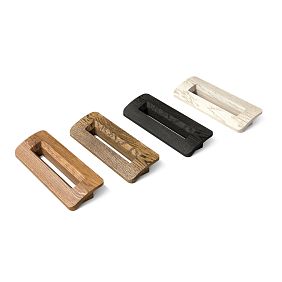
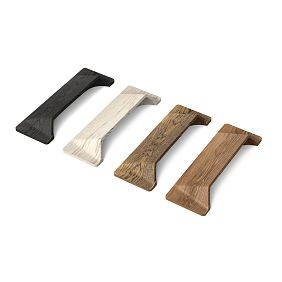
Handles on magnets or quick-release mounts allow changing the character of the furniture in minutes. Today, large wooden handles on kitchen facades create a rustic coziness. Tomorrow, they are removed and replaced with minimalist black metal handles — the kitchen becomes modern and graphic.
Why is this needed? To change the mood, adapt to the season, update the interior without replacing furniture. In winter, warmth is desired — wooden handles. In summer — freshness — white or metallic. Tired of the style — changed the handles, and the item acquired a new face.
Removable handles are also practical for transportation. When moving furniture — remove the handles, they do not interfere, do not break. At the destination, install them back in a minute.
Universal mounting holes
Transformable furniture has universal hole spacing for handles — standard center-to-center distances of 96, 128, 160, 192 mm. This allows installing any handles of these sizes without additional drilling.
Bought furniture with 128 mm handles. After a year, wanted to change to others — any handles with 128 mm center-to-center spacing will fit. Or if multiple sizes are pre-drilled — you can install 96 mm, 128 mm, or 160 mm handles using different holes.
Integrated handles: when they’re not there, but they are
Alternative to removable handles — integrated profiles. The top or bottom edge of the facade is milled to create a recess that fingers grip. No protruding elements — the facade is smooth and minimalist.
Integrated handles are suitable for transformable furniture that should be as neutral and inconspicuous as possible. A cabinet with integrated handles blends into the wall, drawing no attention — ideal for minimalist interiors.
But integrated handles are less tactilely comfortable — no substantial, comfortably resting handle. This is a compromise between aesthetics and ergonomics.
Furniture legs: adjustable height and mobility
Furniture legs in transformable systems — not just legs supporting an item. These are active elements that change the furniture’s function.
Adjustable-height legs
A table with adjustable-height legs transforms from a coffee table (height 40–50 cm) to a dining table (75 cm) or a standing work table (100–110 cm). A gas lift, electric drive, or mechanical screw mechanism allows changing the height in seconds.
In the morning, raised the table to 105 cm — work standing, beneficial for health, no backache. In the afternoon, lowered it to 75 cm — dine seated. In the evening, lowered it to 45 cm — a coffee table for tea before TV.
Adjustable-height legs are relevant for small apartments where one item performs multiple functions. Instead of three tables (coffee, dining, work), one transformable table.
Mobile legs on casters
Legs with swivel casters and brakes allow easy movement of heavy furniture. A cabinet on casters — not fixed to the wall, can be rolled to any location. Today it divides the room into zones, standing in the middle. Tomorrow, rolled up against the wall, freeing the center for yoga or children’s play.
A sofa on casters — a mobile relaxation zone. Turned toward the TV — watch a movie. Turned toward the window — read in daylight. Rolled into a corner — freed space for guests.
Casters must be quality — rubberized, silent, with reliable brakes. Cheap casters squeak, scratch the floor, brake poorly — convenience turns into annoyance.
Foldable legs
A table with foldable legs transforms into a tabletop that can be tucked behind a cabinet or under a bed. When unfolded — a full-sized table. When folded — a flat panel 5–10 cm thick, taking up no space.
Foldable legs are relevant for furniture used periodically: a folding dining table for guests (unfolded for holidays, folded the next day), an additional work table (unfolded during a project, folded afterward).
Modular storage systems: an adult’s construction kit
Modular storage system — a set of individual elements (drawers, shelves, cabinet sections with doors, open niches) that can be combined in any configuration.
Principle of modularity
Each module is a self-contained unit of standard size (e.g., 40x40 cm, 40x80 cm, 80x80 cm). Modules attach to each other, to walls, or to floors — creating infinite configurations.
Started with three modules — a basic shelving unit. A year later, bought two more — expanded. Another year later, replaced one module with another (open shelf to closed drawer) — changed functionality without replacing the entire system.
Modularity provides growth freedom. The system grows with needs: a young couple starts with minimalism, adds modules for toys and clothes upon having children, and when children grow up — reconfigures for new tasks.
Types of modules
Open shelves — for books, decor, plants. Visually light, show contents, add liveliness to the interior.
Closed sections with doors — for items that need to be hidden. Clothes, documents, household items. Create visual order.
Pull-out drawers — for small items, linens, accessories. Convenient access, clear organization.
Sections with rods — for hanging clothes. The module turns the shelf into an open wardrobe.
Specialized modules — for electronics (a niche for TVs with cable channels), for wine (compartments for bottles), for shoes (inclined shelves).
By combining different types, you create a system tailored to your needs. Two-thirds of open shelves for books and decor, one-third of closed sections for storage — a balance between display and concealment.
Module mounting
To the wall — modules hang on hidden brackets (like kitchen cabinets). The floor is free, easy to clean. Visually lighter — the furniture seems to float.
Floor-standing — stand on the floor, more stable, support greater weight. Can be moved without disassembly.
Combined — lower modules are floor-standing, upper ones are wall-mounted. Optimal combination of stability and lightness.
Modules connect to each other with straps, locks, or magnets — quickly and securely. Disassembling takes minutes, reassembling into a new configuration is also possible.
Transformable furniture: tables, sofas, beds
Transformable tables
Foldable dining table — folded, 80x80 cm for two people. Unfolded — 160x80 cm for six people. The unfolding mechanism is simple: the tabletop slides apart, and an additional section is inserted.
For small kitchens, this is a lifesaver. Compact daily use doesn’t take up space. Guests arrive — unfold, seat everyone. After dinner, fold back up.
Table with adjustable height — already mentioned. Electric drive (button — table rises or lowers) or gas lift (lever — height adjustment). From coffee table to standing work surface.
Wall-mounted folding table — folded, it’s a flat panel on the wall, doesn’t take up space. Fold it out — it becomes a full tabletop on brackets. After lunch — fold it back up.
For very small kitchens (5-6 sq.m), a folding table frees up precious square meters. Also useful for workspaces in niches or on balconies — unfold, work, fold back.
Sofas and beds
Sofa-bed — classic transformation. During the day, seating; at night — sleeping space. Different mechanisms: book-style (backrest folds backward), euro-book (seat slides forward, backrest lowers), accordion (three sections unfold), click-clack.
The quality of the mechanism and mattress is important. A cheap sofa-bed with a thin mattress and flimsy mechanism will collapse after half a year of daily use. A quality one lasts for years.
Bed-cabinet (cabinet-bed) — vertical transformation. During the day, the bed is raised vertically and hidden inside the cabinet — the wall looks like a regular cabinet. In the evening, lower it — full bed with mattress.
For one-room apartments, this is maximum space-saving. During the day, the room is a spacious living area without a bed. At night — a bedroom. In the morning, fold the bed back into the cabinet.
The bed-cabinet mechanism must be reliable — there’s significant weight (50-100 kg bed + mattress). Gas lifts or spring mechanisms compensate for weight, making lifting and lowering easy.
Modular sofa — sections can be rearranged. Today, an L-shaped configuration (corner sofa). Tomorrow, divided into a straight section and a chair. The day after, assembled into a U-shaped configuration around a coffee table.
Sections connect with locks or simply placed side by side. New sections can be added, unnecessary ones removed. Full freedom of configuration.
Materials for transformable furniture: lightness and strength
Transformable furniture must be light enough to move, unfold, and reconfigure. But also strong enough to withstand loads and transformations.
Fiberboard and MDF
Fiberboard (multi-layer glued wood) — light, strong, flexible. Used to make modular furniture frames, folding table tops, shelf sections.
Birch fiberboard 15-18 mm thick is strong enough for shelves, sections, tabletops. Moderate weight — a 120x60 cm sheet weighs 8-12 kg, easily carried by an adult.
MDF (pressed wood fibers) — denser than fiberboard, heavier, but flatter and easier to process. Used for fronts, panels, and milled elements.
Painted or laminated fiberboard and MDF — practical surface, easy to clean, resistant to household dirt.
Aluminum and steel
Metal frame — strength with minimal weight. Aluminum profile is lightweight (aluminum is three times lighter than steel), does not rust, is easy to process. Aluminum is used for shelf frames, table legs, partition frames.
Steel is stronger than aluminum but heavier. Steel pipes are used where maximum load is required — bed-cabinet supports, sofa transformation mechanisms.
Metal is painted with powder coating (durable, long-lasting finish) or left with natural patina (industrial aesthetic).
Textile and leather
Covering for transformable furniture — practical, wear-resistant. A sofa that unfolds daily experiences load — the fabric must withstand it.
Wear-resistant fabrics category 4-5 (by Martindale test withstand 30,000–50,000 abrasion cycles) — optimal choice. High-quality velvet, rush, microfiber.
Removable covers on sofa sections — practicality and washability. Spilled? Remove the cover, wash it, put it back on. Tired of the color? Buy new covers, refresh the look.
Color and style of transformable furniture
Transformable furniture tends toward neutrality. Since it changes configuration and function, it must fit various scenarios; bright, specific colors limit flexibility.
Neutral palette
White expands space, creates freshness, and is versatile. White shelving modules, white fronts of transformable wardrobes—visually light, they blend with light walls.
Gray — modern neutrality. Light gray, medium gray, dark gray — shades for different moods. Gray is not easily stained (practical), stylish, matches any colors.
Beige, cream — warm neutrality. Softer than white, warmer than gray. Suitable for interiors where coziness and softness are needed.
Black — graphic clarity. Black shelf frames, black table legs create contrast, structure space. But black furniture visually feels heavier and may feel oppressive in small spaces.
Natural wood
Wooden elements — rails, countertops, facades — create warmth, connection to nature. Light wood (birch, beech) — Scandinavian freshness. Medium (oak) — universal warmth. Dark (walnut, wenge) — solidity, contrast.
Wooden rails on a wall made of natural wood with transparent finish highlight texture, create tactile appeal. This is a counterbalance to cold functionality — warmth, organic feel.
Minimalist styles
Transformable furniture naturally leans toward minimalism, Scandinavian, Japanese styles — styles valuing functionality, flexibility, absence of excessive decoration.
Clean lines, simple forms, quality materials without ornamentation. Furniture as a tool of life, not a status symbol. This is the philosophy of transformable systems.
Practical aspects: selection, installation, use
How to choose transformable furniture
Define usage scenarios. How will the space be used? How many functions should one item perform? Is the sofa needed only for sitting or also for sleeping? Is the table only for eating or also for working?
The more scenarios, the more transformations needed. But excessive complexity is also a problem. A sofa with 10 transformation modes is hard to use and easily breaks.
Check the quality of mechanisms. The transformation mechanism is a vulnerable point. Fold and unfold the furniture in the store multiple times. It should be easy, smooth, without sticking. A flimsy mechanism breaks quickly.
Gas lifts for tables and beds should be from reliable manufacturers (German, Italian). Cheap Chinese ones lose pressure within half a year.
Assess weight and mobility. If the furniture must move, it should not be too heavy. A modular section weighing 40 kg is hard for one person to move. 15–20 kg is optimal.
Wheels must be quality with reliable brakes. Furniture on poor wheels rolls by itself, scratches the floor, does not stay in place.
Installation of slat partitions and walls
A stationary slat partition is mounted on a metal profile or wooden beam frame. The frame is secured to the floor and ceiling with anchors, and slats are screwed onto the frame with self-tapping screws.
It is important to accurately calculate the rhythm of the rails — mark distances so that all rails are parallel and at the same distance. An error of 2-3 mm per meter accumulates, and the rails begin to diverge — unsightly.
Wooden rails are mounted on a grid (wooden beams screwed horizontally to the wall for vertical rails or vertically for horizontal rails). Rails are screwed to the grid with concealed screws (in grooves so they are not visible from outside) or with adhesive.
Sliding partitions require installation of guides — a rail on the floor and/or ceiling. The partition moves on rollers along the rail. A perfectly flat surface is needed; otherwise, the partition will jam.
Care for transformable furniture
Transformation mechanisms require maintenance. Hinges, locks, and guides should be lubricated periodically (every half-year to a year) — silicone lubricant or special furniture mechanism oil.
Gas struts do not require lubrication, but they fear dust and dirt. Wipe the gas strut shaft with a damp cloth to prevent dirt from entering the seal.
Check modular connections for strength. Straps between modules may loosen — tighten them periodically.
Wipe wooden rails with a dry or slightly damp cloth to remove dust. If the rails are coated with oil, renew the coating every 2-3 years — the surface is lightly sanded, and a fresh layer of oil is applied.
Common mistakes when creating a transformable interior
Error 1: Excessive transformation. When everything in the interior transforms, folds, slides apart — it becomes tiring. The constant need to reconfigure something creates fatigue.
Solution: Balance static and transformable elements. Main elements (closet, bed, if separate bedroom exists) can be static. Make transformable only those items that truly need frequent changes — table, sofa, partitions.
Error 2: Cheap mechanisms. Saving on mechanism quality leads to quick failure. A sofa-bed with a poor mechanism will collapse within a year of daily use.
Solution: Invest in quality mechanisms. German, Italian, Austrian mechanisms cost more, but last for decades.
Error 3: Ignoring ergonomics. A beautiful modular system that is inconvenient to use — a poor solution. Shelves are too high, drawers don’t extend fully, handles are poorly positioned.
Solution: Design with real usage in mind. Test accessibility and comfort before final installation.
Error 4: Overloading with details. Recessed walls on all surfaces, numerous small modules, chaos of removable elements — visual overload.
Solution: Accent recessed wall on one surface, others simple. Use larger modules to avoid visual fragmentation.
Error 5: Lack of storage system for removable elements. Removable handles, additional modules, sections — where to store them when not in use?
Solution: Provide enclosed storage for unused transformable elements. Otherwise, they will be lying around, creating clutter.
Frequently asked questions
Is transformable furniture more expensive than regular furniture?
Usually yes. Quality mechanisms, universal fasteners, modular construction increase cost by 30-50% compared to static furniture. But transformable furniture replaces several items — one transformable table instead of three different tables. In the end, it may be more economical.
How long do transformation mechanisms last?
Quality mechanisms last 10-15 years of active use (daily unfolding). Cheap ones break within 1-2 years. Gas struts are designed for 30,000-50,000 cycles — with daily use, this equals 10-15 years.
Can you install recessed partitions yourself?
Yes, if you have basic skills with tools (drill, screwdriver, level, tape measure). The key is accurate marking and careful installation. Incorrectly installed rails cannot be fixed without dismantling.
How often should removable handles be replaced?
You don’t need to replace them in the sense of replacing worn-out ones — quality handles last for decades. Replace them in the sense of changing style — as desired. Some change every few years to refresh the interior, others keep them forever.
Is transformable furniture suitable for families with children?
Yes, especially suitable. Children grow, needs change quickly. Modular storage system grows with the child — new sections are added. Transformable table adjusts height according to the child’s height.
But: mechanisms must be safe. Protection against finger pinching, locks so a child cannot accidentally fold a bed or table.
It's difficult but possible. Choose transformable furniture with classic materials and finishes — wooden fronts, brass handles. Conceal mechanisms. Make modularity subtle — not an obvious constructor, but an elegant system.
How much does it cost to create a transformable interior for a 40 sq.m. one-room apartment?
Sliding panel partition — 40,000–80,000 rub. Modular storage system (10–15 modules) — 80,000–150,000 rub. Quality sofa-bed — 60,000–120,000 rub. Transformable table — 30,000–60,000 rub. Total minimum 210,000–410,000 rub. But this replaces many static furniture items that would have cost comparably.
Sliding partition — 40,000–80,000 rub. Modular storage system (10–15 modules) — 80,000–150,000 rub. Quality sofa-bed — 60,000–120,000 rub. Transformable table — 30,000–60,000 rub. Total minimum 210,000–410,000 rub. But this replaces multiple items of static furniture that would cost comparably.
Can you gradually create a transformable interior, or must you do it all at once?
Yes, and you should. Start with the most critical item — for example, a sofa-bed or a transformable table. Then add modular storage. Next, install a sliding panel partition. Modularity allows you to grow gradually, as your budget and needs evolve.
Conclusion: Flexibility as a new luxury
Luxury of the 20th century — it was space. Large apartments, separate rooms for each function, bulky furniture occupying much space. Luxury of the 21st century — it is flexibility. The ability to adapt space to current tasks, quickly and easily change configuration, live comfortably in limited square meters.
Transformable furniture is the tool for this new luxury. A sliding panel partition transforms one room into two or two into one in seconds. Furniture handles change the character of an item, allowing you to refresh the interior without replacing furniture. Adjustable furniture legs transform one item into three different functions. Wooden wall rails create texture, conceal storage, and serve as a base for attaching multiple objects.
This is not a compromise for the poor, forced to live in small spaces. It is a conscious choice of a modern person who values freedom, flexibility, and the ability to adapt the environment to themselves. A transformable interior is an interior that lives with you, adapts to your changes, and grows with your family.
By 2026, transformable furniture will no longer be a niche solution but a mainstream option. Manufacturers offer more modular, foldable, and adjustable solutions. Technologies are improving — mechanisms become more reliable, easier to use, and more affordable.
Creating a transformable interior means investing not just in furniture, but in a system that will serve you for a long time, adapting to changing circumstances. Moved to a new apartment — rearranged modules into a new configuration. A child was born — added sections for children’s items. The child grew up — removed children’s sections, added adolescent sections. Children left for school — reconfigured the space for a couple.
Flexibility, adaptability, longevity through transformation — these are the values of furniture in 2026. Key elements of this system are sliding panel partitions, creating zoning without isolation; removable furniture handles, allowing you to change the character of items; adjustable furniture legs, changing function; wooden wall rails, multifunctional and decorative at the same time.
Create spaces that live with you. Not static museums where everything is arranged once and for all, but dynamic environments that adapt to your needs. This is freedom, this is comfort, this is new luxury — flexibility as the foundation of modern life. And transformable furniture — the tool that makes this flexibility a reality every day.