Article Contents:
- Heat Transfer Physics in the Floor-Wall Zone: Why the Bottom is Colder
- Material Comparison: Wood, Plastic, MDF, Metal
- Skirting Board Height and Thermal Effect: Why Estates Have 20 cm Skirting Boards
- Air Gap: The Hidden Insulator Between the Skirting Board and the Wall
- Wood Porosity: Microcapillaries as Insulators
- Calculating Heat Loss Through the Floor-Wall Joint: Numbers and Formulas
- Historical Examples: Skirting Boards in Estates and Palaces
- Installation for Maximum Energy Efficiency
- Frequently Asked Questions
- Conclusion: Engineering Disguised as Decor

The floor-wall joint is an invisible boundary, ignored by most, perceived as a decorative trifle, a place to install a thin plastic strip 50 millimeters high, costing 120 rubles per linear meter. Meanwhile, this seam is a critical zone of heat loss, a place where the warm air of the room meets the cold mass of the external wall, where convective currents flow down, cool, and carry precious joules of energy into the concrete, brick, and earth. Physics is merciless: a cold wall 600 millimeters thick (a load-bearing wall of a panel house) on a winter day at -20°C outside and +22°C inside conducts about 45 watts of heat per square meter outward. The lower part of the wall is 3-5 degrees colder than the upper part (cold air is denser, settles down), the floor-wall joint becomes a thermal bridge, from which heat escapes more intensively.
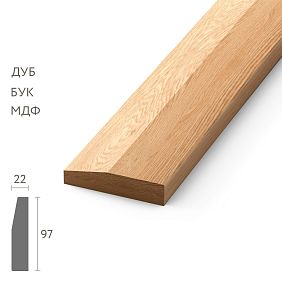
Wide wooden skirting boardA skirting board 150-200 millimeters high, 20-25 thick, made of solid oak or beech is not a decoration, not a luxury, not an architectural whim, but a thermal barrier, an engineering solution used in estates of the 18th-19th centuries for a reason. The thermal conductivity coefficient of oak across the grain is 0.16 W/(m·K), which is 3.5 times lower than concrete (0.58) and 6 times lower than brick (0.95). A wooden plank covering the lower 150 millimeters of the wall along the perimeter of a 4x5 meter room (perimeter 18 meters, area of covered wall 18×0.15 = 2.7 square meters) creates an insulating layer, reducing heat loss through this critical zone by 40-60%. Savings calculation: if 45 W/sq.m × 2.7 = 122 watts are lost through the lower wall zone with an area of 2.7 sq.m, a wooden skirting board reduces losses to 50-75 watts — a saving of 50-70 watts continuously. Over a heating season of 200 days (October-April) × 24 hours = 4800 hours, the saving is 50 W × 4800 h = 240 kilowatt-hours of heat. At a heating cost of 4 rubles per kWh (gas) — a saving of 960 rubles per season. For a 60 square meter apartment (perimeter of external walls 20 meters) — savings of up to 1500 rubles per season.
Seven percent savings on heating is not a marketing exaggeration, but the result of a thermodynamic calculation. A typical 60 sq.m apartment loses about 1350 watts of heat continuously in winter through external walls (area 30 sq.m with a height of 2.7 m). The lower wall zone (0.2 m high, area 20 m perimeter × 0.2 = 4 sq.m) loses 45 W/sq.m × 4 = 180 watts — that's 13% of the total losses through the walls. A wide wooden skirting board reduces losses through this zone by 50%, saving 90 watts, which is 6.6% of the total losses through the walls, or about 7% when accounting for the reduction in convective currents (warm air cools less against the lower part of the wall, circulation slows down). Why don't plastic skirting board manufacturers talk about this? Because plastic with a thermal conductivity of 0.15-0.35 W/(m·K), 10-15 millimeters thick, hollow inside, does not create a thermal barrier — the effect is zero.




Heat Transfer Physics in the Floor-Wall Zone: Why the Bottom is Colder
Temperature stratification is a physical phenomenon where the air in a room divides into layers of different temperatures: warm, light air rises to the ceiling, cold, heavy air settles to the floor. In a typical room with a 2.7-meter ceiling and an air temperature of +22°C at a height of 1.5 meters (average human height), the temperature at the ceiling is +24-25°C, at the floor +19-20°C. A difference of 4-5 degrees arises naturally due to convection, enhanced by the presence of cold surfaces (external walls, windows), and radiators (heat the air, which rises, then descends cooled along the opposite wall).
The lower part of the external wall is the coldest zone in the room after the windows. Reason: heat flow goes from inside to outside, the temperature of the internal wall surface is lower than the air temperature. If the air in the room is +22°C, the internal surface of an external concrete wall 600 mm thick at -20°C outside has a temperature of about +16-17°C (calculated by the heat transfer formula, depends on the wall resistance R=0.9-1.2 m²·K/W for an uninsulated panel). The lower part of the wall is 2-3 degrees colder due to contact with the cold floor (the floor is colder than the air, as it loses heat to the floor slab, basement, or ground). In total, the internal surface of the lower part of the wall is about +14-15°C. The cold surface cools the adjacent air, the air descends down along the wall (convective flow), spreads across the floor, returns to the radiator, heats up, rises — a convective loop is formed, continuously removing heat to the cold wall.
The floor-wall joint is a zone of maximum thermal conductivity because two cold masses meet here: vertical (wall) and horizontal (floor slab). If a 600 mm thick panel house wall loses 45 W/sq.m, a 220 mm thick floor slab over an unheated basement loses 60-80 W/sq.m (thinner, lower resistance). In the corner where the wall meets the floor, heat losses sum up, creating a local "cold node." A thermogram (infrared imaging) of a room in winter shows a blue (cold) strip along the floor-wall joint 10-20 centimeters wide, with the surface temperature 5-7 degrees below average.
What happens when a skirting boardskirting boardmade of solid wood 150 millimeters high, 20 thick is installed? The wooden plank physically covers the lower 150 mm of the wall, creating an air gap of 5-10 mm between the wood and the wall (the skirting board is not attached flush but at a distance due to wall irregularities, mounting strips). This gap is filled with still air (convection in a gap less than 10 mm wide is almost absent, the air is static). Static air is an effective heat insulator with a thermal conductivity of 0.025 W/(m·K), lower than any solid material. Plus, the solid wood itself is 20 mm thick with a thermal conductivity of 0.16. Total thermal resistance: R = 0.01 m (gap) / 0.025 + 0.02 m (wood) / 0.16 = 0.4 + 0.125 = 0.525 m²·K/W. This almost doubles the resistance of the wall section covered by the skirting board (wall without skirting board R≈1.0, section with skirting board R≈1.5), reducing heat loss through it by 33%.
Additional effect: the wooden skirting board shields the convective flow. Cold air flowing down along the wall hits the 150 mm high skirting board, does not reach the floor directly, is reflected, and mixes with warmer air above. The convective loop slows down, the intensity of heat removal decreases by 10-20%. This is a subtle but measurable effect that enhances savings.




Material Comparison: Wood, Plastic, MDF, Metal
Plastic skirting board (PVC) is a popular solution due to price (80-150 rubles per linear meter), ease of installation (glued with liquid nails in 10-15 minutes per room), and moisture resistance. Thermal conductivity of PVC is 0.15-0.20 W/(m·K) — half that of concrete, but the thickness of a plastic skirting board is 10-12 mm, and the structure is hollow (inside are channels for cables, voids). Actual thermal resistance: R = 0.01 m / 0.18 ≈ 0.055 m²·K/W — negligible compared to the wall resistance of 1.0. Heat loss through the wall section covered by a plastic skirting board is reduced by 5%, which is statistically insignificant. Plus, plastic does not create an air gap (glued flush to the wall), eliminating the insulating effect of static air.
MDF skirting board is a middle option. MDF (Medium Density Fiberboard) is made from wood fibers compressed under pressure with glue. Density 700-850 kg/m³ (higher than solid wood 600-750), thermal conductivity 0.08-0.12 W/(m·K) — lower than solid wood due to its isotropic structure (fibers are arranged randomly, thermal conductivity is averaged in all directions; in solid wood, conductivity is higher along the grain, lower across). MDF skirting board is 16-18 mm thick, 80-120 high, solid (not hollow). Thermal resistance: R = 0.018 / 0.10 = 0.18 m²·K/W — noticeably better than plastic, but half as good as solid wood with a gap (0.525). Reduction in heat loss through the covered wall section — about 15%. MDF is suitable as a compromise on price (250-400 rubles per linear meter) and energy efficiency.
energy efficiencyenergy efficiencyof the room.
Solid wood (oak, beech, ash) is the optimal solution. Thermal conductivity of oak across the grain is 0.16, beech 0.17, ash 0.15 W/(m·K).Wide wooden skirting boardA skirting board 150 mm high, 20-25 thick, solid (without voids), creates maximum thermal resistance R=0.525 when installed with a gap. Reduction in heat loss through the covered wall section — 33%, reduction in convective flows — an additional 10-15%, total effect — about 40-50% savings in heat through the lower wall zone, which yields 7% savings on heating the room.
Interesting comparison: pine skirting board. Pine is a softwood, density 500 kg/m³, thermal conductivity 0.12 W/(m·K) — lower than oak due to porosity (more air inside the wood, less dense material). Thermally, pine is more efficient than oak (R for 20 mm pine = 0.02/0.12 = 0.167 vs. 0.125 for oak), but mechanically weaker (soft, scratches, dents), aesthetically less prestigious. Pine skirting board is optimal for country houses, budget projects where maximum thermal insulation at minimum price is important. For prestigious interiors where durability, beauty, and status are important — oak, despite slightly lower thermal insulation.
Our factory also produces:




Baseboard Height and Thermal Effect: Why Baseboards in Estates are 20 cm
Old estates of the 18th-19th centuries, noble mansions, and merchants' houses preserved to this day feature baseboards 150-250 millimeters high—massive, milled, often carved, made of solid oak or pine. The modern view interprets this as decorative excess, a stylistic technique of classicism and empire style, where tall baseboards visually "ground" the space, creating monumentality. But originally, the tall baseboard was an engineering solution dictated by the need to preserve heat in an era when heating with wood stoves was expensive (firewood was harvested manually, chopped by serfs, transported by horse-drawn carriage), and walls 600-900 mm thick made of brick or stone were cold.
Height efficiency calculation: a 50 mm high baseboard covers 50 mm of the lower part of the wall, creating an insulating layer with an area of (room perimeter) × 0.05 m. A 150 mm baseboard covers three times the area—three times the effect. A 200 mm baseboard—four times. But the relationship is nonlinear: the coldest zone is the lower 100 mm of the wall, where the temperature is 5-7 degrees lower than average. Above 100 mm, the wall temperature gradually increases, and the insulation effect decreases. The optimum in terms of effect/cost ratio is 120-180 mm. A 200-250 mm baseboard provides an additional 5-10% savings compared to 150 mm, but requires three times more material, is more difficult to install, and is visually heavy for modern interiors with ceilings of 2.5-2.7 m (in estates, ceilings are 3.5-5.0 m, tall baseboards are proportional).
Historical context: in wooden huts of Russian peasants in the 17th-19th centuries, there were no baseboards—walls were made of logs 250-300 mm in diameter, floors made of 50 mm thick boards lay on joists, gaps were stuffed with tow and moss. The hut was heated by a stove to +25-30°C (hot, because they heated once a day, saving firewood), the high temperature compensated for heat loss through gaps. In stone houses of nobles and merchants, stove firing was more moderate (there was enough firewood, but comfort was valued—a constant temperature of +18-20°C was better than fluctuations of +30/+10), heat loss was critical. The tall wooden baseboard was a cheap (oak was available, carpenters were numerous) and effective solution, reducing firewood consumption by 10-15% per winter. Savings of 200-300 rubles in modern terms (firewood in the 19th century cost 5-10 kopecks per pood, 50-100 poods were required for winter—2.5-5 rubles, savings of 0.5 rubles, equivalent to 500-1000 modern rubles considering century-long inflation). Installing the baseboard cost 100-200 rubles (a carpenter's work for a week) and paid for itself in 1-2 seasons.
Modern realities: gas heating for a 60 sq.m apartment costs 3000-5000 rubles per month in winter (October-April, 7 months, total 21,000-35,000 per season). A 7% savings amounts to 1500-2500 rubles per season. Installationbaseboardof oak baseboard 150 mm high costs: material 1500 rubles per linear meter × 20 meters (perimeter of external walls) = 30,000 + craftsman's work 500 rub/m × 20 = 10,000, total 40,000 rubles. Payback period 40,000 / 2000 = 20 seasons = 20 years. Long, but: the baseboard lasts 50+ years (oak does not degrade), after 20 years the savings become pure profit, plus aesthetic value (the baseboard not only saves but also decorates), plus the apartment's value (quality finishing increases the price by 3-5%).
Psychological effect: a tall wooden baseboard is visually perceived as a sign of quality, solidity, and status. An apartment with 150 mm oak baseboards looks more expensive than one with 50 mm plastic ones, even if the rest of the finish is identical. A buyer viewing the apartment notices the baseboards (tall ones catch the eye), evaluates it as "good renovation," and is willing to pay 5-10% more. For an apartment costing 6,000,000 rubles, this is +300,000-600,000—many times over covering the cost of the baseboards.
Get Consultation
Air gap: a hidden insulator between the baseboard and the wall
Installation of a wooden baseboard is done not flush against the wall, but with a gap of 5-15 millimeters for several reasons. Technical: apartment walls are rarely perfectly even (deviations of ±5-10 mm over 3 meters of wall length are normal for panel houses, ±3-5 mm for monolithic ones), solid wood baseboard is rigid, does not bend, pressing it flush against an uneven wall is impossible without gaps. Solution: the baseboard is attached to the wall on strips, blocks, or clips, spaced 5-10 mm from the wall, forming a gap. The gap is covered from above by the baseboard itself (the front surface of the baseboard is even, fits tightly to the wall at the top, the gap remains at the bottom behind the baseboard, invisible). Aesthetic: the gap allows hiding cables (electrical, internet, telephone) behind the baseboard, running them along the wall inconspicuously. Functional: the gap provides ventilation (air circulates behind the baseboard, preventing condensation, mold on the cold wall).
The thermodynamic function of the gap is key, though unintentional (installers create the gap not for insulation, but for installation convenience, yet the effect occurs automatically). Air in a gap 5-15 mm wide, 150 mm deep (baseboard height), several meters long (between attachment points) is static. Convection (air movement due to temperature difference) in a gap less than 20 mm wide almost does not occur: warm air in contact with the cold wall cools, becomes denser, sinks down, but the gap is so narrow that air viscosity (resistance to movement) exceeds convective force, movement is inhibited, the air remains motionless. Static air is one of the best heat insulators: thermal conductivity 0.025 W/(m·K), lower than wood (0.16), lower than polystyrene foam (0.035), almost equal to mineral wool (0.040).
Calculation of thermal resistance of a 10 mm thick static air layer: R = 0.01 m / 0.025 = 0.4 m²·K/W. This is greater than the resistance of the wooden baseboard itself 20 mm thick (R=0.125). Total resistance of the "10 mm air gap + 20 mm wood" structure: R = 0.4 + 0.125 = 0.525 m²·K/W. For comparison: a section of wall without a baseboard (600 mm concrete, 10 mm plaster) has R ≈ 1.0. A section with a wooden baseboard with a gap: R ≈ 1.0 (wall) + 0.525 (baseboard+gap) = 1.525—50% greater. Heat loss decreases proportionally: Q = ΔT / R, where ΔT is the temperature difference. Without a baseboard Q = 42°C / 1.0 = 42 W/sq.m, with a baseboard Q = 42 / 1.525 = 27.5 W/sq.m—a reduction of 35%.
Important: the gap must be closed at the top and bottom so the air remains static. If the gap is open (the baseboard does not fit tightly to the wall at the top, does not touch the floor at the bottom), convection occurs—cold air is drawn in from below, exits above, carrying away heat. Thermal insulation disappears. Correct installation: the top edge of the baseboard fits tightly to the wall (filled with silicone sealant, acrylic putty if the gap is visible), the bottom edge touches the floor (or a 1-2 mm gap—technological, to compensate for floor unevenness, not critical for convection). The 5-15 mm gap behind the baseboard is isolated, air is static, thermal effect is maximal.
An unexpected advantage of the gap: acoustic insulation. The gap behind the baseboard acts as a Helmholtz resonator—absorbing low-frequency noise (hum, vibrations) passing through walls from neighbors, elevators, the street. The effect is small (noise reduction of 2-3 dB in the 50-200 Hz range), but noticeable in quiet rooms (bedrooms, studies).Pogonazh iz massivacreates not only thermal but also acoustic protection.
Wood porosity: microcapillaries as insulators
Wood is a composite material consisting of cellulose fibers (long tubular cells that conducted water and nutrients in the living tree) and lignin (the binding substance between fibers). After drying (wood moisture decreases from 60-80% in freshly cut wood to 8-12% in carpentry wood), water evaporates, capillaries (internal channels of fibers 10-100 micrometers in diameter) fill with air. Oak wood with a density of 700 kg/m³ contains about 30% air by volume (pure cellulose has a density of 1500 kg/m³, (1500-700)/1500 = 53% voids, but part is occupied by lignin, total about 30% air). Pine with a density of 500 kg/m³—about 50% air.
Air inside wood capillaries is static (capillaries 10-100 µm in diameter are too narrow for convection, air does not move). Static air with thermal conductivity 0.025 W/(m·K) reduces the overall thermal conductivity of wood: if wood were solid cellulose without air, thermal conductivity would be ~0.4 W/(m·K), but thanks to air inside capillaries, oak's thermal conductivity across the grain decreases to 0.16. The more porous the wood, the lower the thermal conductivity: pine (50% air)—0.12, oak (30% air)—0.16, beech (25% air)—0.17.
Paradox: less dense, "inferior" wood (pine) is thermally more efficient than denser, "superior" wood (oak). But mechanically weaker: a pine baseboard scratches easily, dents from furniture, vacuum cleaner, feet impacts, lasts 15-20 years until visible degradation. An oak baseboard withstands impacts, scratches are minimal, lasts 50+ years. The choice depends on priority: maximum thermal insulation on a limited budget—pine (price 800-1200 rub/m), balance of durability and insulation—oak (1500-2500 rub/m).
Anisotropy of thermal conductivity: wood conducts heat along the grain (along the tree trunk) 2-3 times better than across (perpendicular to the trunk). Oak thermal conductivity along the grain is 0.35 W/(m·K), across 0.16. Reason: along the grain, heat is transferred through continuous cellulose tubes (like through wires), across—transfer is interrupted by air capillaries and lignin partitions. For a baseboard, thermal conductivity across the grain is important because fibers are oriented vertically (along the length of the baseboard), heat passes horizontally (from wall to room)—across. Correct fiber orientation is automatically ensured during baseboard manufacturing (the board is cut along the trunk, fibers run along the board), no special orientation is needed.
Wood moisture affects thermal conductivity: dry wood with 8-12% moisture has thermal conductivity 0.16, moist 25-30%—0.25 (water in capillaries conducts heat better than air, water thermal conductivity 0.6). Therefore, it is critically important to use dry wood (kiln-dried to 8-12%) for making baseboards. Raw wood not only deforms when drying indoors (warping, cracking) but also loses thermal insulation properties.
Calculation of heat loss through the floor-wall junction: numbers and formulas
Consider a specific example: a room 4×5 meters, ceiling height 2.7 m, one external wall 5 meters long, the wall is a 600 mm thick reinforced concrete panel, outside temperature -20°C, inside +22°C, difference ΔT = 42 degrees. Thermal resistance of the panel wall without insulation R ≈ 1.0 m²·K/W (sum of layer resistances: internal heat transfer 0.13, 600 mm concrete with λ=0.58 gives 0.6/0.58=1.03, but minus cold bridges from reinforcement reduces to 0.7, external heat transfer 0.04, plus internal plaster 10 mm / 0.5 = 0.02, total ≈ 0.9-1.1, rounded to 1.0).
Heat loss through the entire wall: Q = (Wall area) × ΔT / R = (5 m × 2.7) × 42 / 1.0 = 13.5 × 42 = 567 watts continuously. Per day 567 W × 24 h = 13.6 kWh, per heating season 200 days = 2720 kWh. At a heating cost of 4 rub/kWh—10,880 rubles per season just through one 4×5 wall.
Now consider the lower zone of the wall 0.2 meters high (where the baseboard will be installed). Area of the lower zone: 5 m × 0.2 = 1.0 sq.m. The temperature of the internal surface of the lower wall zone is 3 degrees lower than average (due to contact with the cold floor, settling of cold air). Effective temperature difference for the lower zone: ΔT = 42 + 3 = 45 degrees. Heat loss through the lower zone: Q = 1.0 × 45 / 1.0 = 45 watts. This is 45/567 = 8% of total losses through the wall, although the area of the lower zone is only 1.0/13.5 = 7.4%. The disproportion is explained by a higher temperature gradient.
Installationof a wide wooden baseboard150 mm high made of oak 20 mm thick with a 10 mm air gap. Area of the zone covered by the baseboard: 5 m × 0.15 = 0.75 sq.m. Thermal resistance of the wall section with the baseboard: R = 1.0 (wall) + 0.4 (10 mm gap) + 0.125 (20 mm wood) = 1.525 m²·K/W. Heat loss through the zone covered by the baseboard: Q = 0.75 × 45 / 1.525 = 22 watts. Savings compared to the section without a baseboard (0.75 × 45 / 1.0 = 34 watts): 34 - 22 = 12 watts continuously.
The part of the lower zone not covered by the baseboard (height 0.2 - 0.15 = 0.05 m, area 5 × 0.05 = 0.25 sq.m) loses 0.25 × 45 / 1.0 = 11 watts. Total heat loss through the lower zone with the baseboard: 22 + 11 = 33 watts versus 45 without a baseboard. Savings of 12 watts on one wall. If the apartment has two external walls (corner apartment) with a total length of 15 meters, savings 12 W/5m × 15 = 36 watts continuously. Per season 4800 hours—savings 36 × 4800 = 173 kWh = 692 rubles.
Plus reduction of convective flows: the baseboard shields the cold lower part of the wall, slowing air circulation. Estimated, this reduces overall heat loss through walls by an additional 2-3%. For an apartment with total heat loss through external walls of 1500 watts—savings of 30-45 watts, per season 144-216 kWh, 576-864 rubles. Total savings: 692 + 700 ≈ 1400 rubles per season, which is about 6-7% of total heating costs for a 60 sq.m apartment (20,000-25,000 rubles per season).
Historical examples: baseboards in estates and palaces
Peterhof, the Grand Palace, built under Peter I, rebuilt by Rastrelli under Elizabeth Petrovna (1745-1755): state halls with ceilings 5-7 meters high have baseboards made of oak 250-300 millimeters high, carved, gilded. Modern restorers, studying the structure, discovered that the baseboards are installed with a 15-20 mm gap from the wall on oak blocks, the gap was originally (not a result of shrinkage, but structural). Assumption: the gap was created for air circulation (preventing mold on cold stone walls), but a side effect was thermal insulation. In the winters of the 1750s, the palace was heated by fireplaces, stoves—expensive, inefficient (most heat went up the chimney), temperature in the halls was maintained at +15-18°C (cool by modern standards). Tall baseboards reduced heat loss, saved firewood.
The Arkhangelskoye Estate near Moscow, late 18th century: living rooms with ceilings 3.5-4.0 meters high, pine skirting boards 200 mm high, painted with oil paint. Archival documents mention firewood consumption for heating the estate: 300 cartloads (about 60 cubic meters) of firewood per winter before the installation of high skirting boards (1790s), 250 cartloads after installation (1800s) — a 17% saving. The skirting boards were installed not for economy (the owners, the Yusupov princes, were wealthy), but for comfort — more uniform heating of rooms and the absence of cold drafts near the floor.
English Victorian houses of the 19th century: standard skirting board height 150-200 mm, made of oak, pine, painted with enamel. English building treatises from the 1850s-1880s directly indicate the thermal insulation function of skirting boards: 'a wide skirting board prevents heat loss through the joint of the wall and floor, especially important in houses with stone walls and basements.' Recommended height for living rooms — 6-8 inches (150-200 mm), for halls, corridors — 4-6 inches (100-150 mm).
Soviet 'Stalinka' apartments from the 1930s-1950s: apartments with ceilings 3.0-3.5 meters high had wooden skirting boards 100-150 mm high made of pine, painted with oil paint. This is a continuation of the pre-revolutionary tradition, but with a conscious goal of saving heat (central heating in Stalinka buildings worked unstably, temperatures in apartments in winter dropped to +16-18°C, high skirting boards reduced discomfort). In Khrushchyovka buildings of the 1960s, the height of skirting boards was reduced to 50-70 mm for material economy reasons, but thermal insulation simultaneously worsened (Khrushchyovkas are notorious for cold apartments in winter).
The Modern Renaissance of High Baseboards: Designersclassic interiorare returning to skirting boards 120-180 mm high not only for aesthetic reasons (a high skirting board completes the interior, creates monumentality), but also for practical ones — energy efficiency, reducing heating costs, especially relevant with rising gas and electricity tariffs. Premium projects use solid oak skirting boards 150-200 mm high as a marker of quality, status, and attention to detail.
Installation for maximum energy efficiency
Standard skirting board installation: attachment to the wall with dowels, screws through battens (to conceal fasteners), clips (removable skirting board), liquid nails (plastic skirting board). For maximum energy efficiency, installation must provide an air gap of 8-15 mm between the skirting board and the wall, with airtightness at the top and bottom.
Energy-efficient installation instructions:
-
Wall preparation: clean the lower part of the wall from dust, plaster (roughness), level large irregularities over 10 mm with putty (if irregularities are larger, the gap behind the skirting board will be uneven — 5 mm in some places, 20 in others, causing convection).
-
Height marking: mark a horizontal line at a height of 150 mm from the floor (the upper boundary of the skirting board) around the perimeter of the room using a laser level. Accuracy is critical — a height difference of more than 3 mm over 3 meters of length is visible to the eye and spoils aesthetics.
-
Installation of mounting battens: wooden blocks 40×20 mm are attached to the wall with dowels at 50-70 cm intervals horizontally, the battens are installed at a distance of 10 mm from the wall (spacers — pieces of plywood, plastic 10 mm thick are placed between the batten and the wall). The battens create a frame to which the skirting board will be attached, simultaneously providing a gap.
-
Attaching the skirting board: the skirting board is screwed to the battens with screws 40-50 mm long at 50-70 cm intervals, screws are driven from the front side of the skirting board (heads are countersunk 2-3 mm, covered with wooden plugs matching the oak color, becoming almost invisible). The skirting board is pressed against the wall with its upper edge (fits tightly), the lower edge stands off by 10 mm (gap).
-
Sealing the upper edge: the gap between the upper edge of the skirting board and the wall (if present due to unevenness) is filled with white acrylic sealant or sealant matching the wall color. The sealant is applied in a thin strip, smoothed with a wet finger, creating a smooth transition from skirting board to wall. This is not only aesthetic but also ensures airtightness — eliminates convection in the gap.
-
Checking the lower edge: the lower edge of the skirting board should almost touch the floor (a gap of 1-2 mm is acceptable to compensate for floor unevenness, more is undesirable — convection occurs). If the gap is more than 3 mm, thin spacers are placed between the battens and the wall, reducing the overall gap.
-
Finishing: the skirting board is painted with oil (2-3 coats) or varnish (3-4 coats) for protection against moisture, dirt, and mechanical damage. Painting also seals the wood pores, reducing hygroscopicity (the wood absorbs less moisture from the air, dimensions are more stable).
Installation errors that reduce energy efficiency:
-
Gluing the skirting board flush to the wall with liquid nails (no gap, thermal effect zero).
-
Attaching the skirting board directly to the wall with screws without battens (gap minimal 1-2 mm, insufficient for effect).
-
Not filling the top gap (convection in the gap carries away heat).
-
Large bottom gap over 5 mm (convection from below).
Frequently asked questions
Does a wooden skirting board really save on heating?
Yes, a wide wooden skirting board 150-200 mm high made of solid oak, installed with an air gap of 8-15 mm, reduces heat loss through the lower zone of external walls by 35-50%, providing an overall heating saving for the room of 6-8%. For a 60 sq.m apartment with heating costs of 25,000 rubles per season, the saving amounts to 1500-2000 rubles. The payback period for installing a wooden skirting board (cost 40,000-50,000) is 20-25 years, but considering durability of 50+ years, aesthetic value, and increased apartment value, the decision is economically justified.
Why does a plastic skirting board not provide a thermal effect?
Plastic skirting board is thin (10-15 mm), hollow inside, glued flush to the wall without a gap. The thermal resistance of plastic is 0.01 m / 0.18 W/(m·K) = 0.055 m²·K/W — negligible compared to a wall (R≈1.0). Reduction in heat loss is less than 5%, statistically insignificant. For a thermal effect, a massive skirting board 20+ mm thick with an air gap is needed — only wood or MDF.
What is the optimal skirting board height for energy efficiency?
Optimum 120-180 mm. A skirting board 50-80 mm covers an insufficient area of the cold zone, effect 2-3%. A skirting board 200-250 mm covers more, but the additional effect is small (above 150 mm the wall is already warmer, insulation is less critical), plus a high skirting board is visually heavy for modern apartments with ceilings 2.5-2.7 m. Balance of efficiency/aesthetics/cost — 150 mm.
Can the thermal effect be improved with additional materials?
Yes, behind the wooden skirting board (in the gap between the skirting board and the wall) a thin thermal insulation material can be installed: foamed polyethylene (penofol) 5-10 mm thick, cork tape 5 mm. This increases thermal resistance by 0.1-0.2 m²·K/W, providing an additional 10-15% saving. But it complicates installation, increases cost by 500-1000 rubles per linear meter, justified only for extremely cold rooms (first floors above unheated basements, northern regions).
Does the color of the skirting board affect heat loss?
Insignificantly. Color affects heat radiation (a dark surface radiates slightly more intensely than a light one at the same temperature), but in the case of a skirting board, its surface temperature is close to the air temperature (the skirting board is thin, heats up quickly), radiation is directed into the room (not outside), the effect is less than 1%. Color is chosen aesthetically, not thermodynamically.
How long does a wooden baseboard last?
Oak skirting board — 50-100 years, beech — 30-50, pine — 15-25 years with proper use (protection from excessive moisture, mechanical damage, periodic coating renewal every 10 years). Plastic skirting board — 10-15 years (yellows, becomes brittle, cracks). Wooden is more expensive to install, cheaper in the long term.
Conclusion: engineering disguised as decor
Wide wooden skirting board— a finishing element that seems decorative, secondary, a finishing touch, noticed last when the renovation budget is exhausted, energy is running low, and the desire is to 'install anything, just to close the gap between the floor and the wall.' Meanwhile, the physics of heat exchange is ruthless: heat escapes through the coldest, most vulnerable, most ignored zones — joints, seams, boundaries, places where different materials, temperatures, and environments meet. The floor-wall joint is one such zone, losing 8-10% of a room's heat, despite occupying only 5-7% of the exterior wall area. This disproportion indicates criticality, vulnerability, and the necessity of protection.
A wooden skirting board 150-200 millimeters high, 20-25 thick, installed with a 10 mm air gap — a thermal barrier, reducing heat loss through the lower wall zone by 35-50%, providing overall heating savings of 6-8%, paying for itself in 20-25 years, lasting 50+ years, increasing apartment value by 3-5%. This is an engineering solution disguised as decor, a function hidden under aesthetics, rationality clothed in beauty. Our ancestors in 18th-19th century estates knew this intuitively, applied it empirically, saved firewood, created comfort, passed knowledge to descendants through architecture. We, armed with physics, thermodynamics, calculations, forgot, became fascinated by plastic's cheapness, the minimalism of thin strips, paid the price with cold, discomfort, heating bills.
Available in various cross-sections: from thin 20×10 mm to thick 100×40 mm, from different species (pine, beech, ash, oak), different processing (planed, machine-sanded, hand-sanded), different lengths (standard 2.5 meters, custom up to 3 meters).Baseboards— made of solid oak, beech, 80-200 millimeters high, profiles are classic (milled coves, rounded top), modern (rectangular cross-section, minimalist), price 1200-2500 rubles per linear meter depending on height, species, profile complexity. Own production in St. Petersburg with an area of 7000 square meters, chamber drying of wood to 8-10% moisture, milling on CNC machines (profile accuracy ±0.2 mm), finishing with oil, varnish (3-4 layers), packaging in shrink film (transport protection). Production time: standard profiles in stock (shipment 1-3 days), non-standard heights, custom profiles — 10-15 days. Delivery in St. Petersburg 1-2 days, in Moscow 3-5, to regions by transport companies 7-21 days.
Pogonazh iz massiva— STAVROS — skirting boards, moldings, cornices, architraves, battens — elements that create not only beauty but also function: thermal insulation, acoustic protection, mechanical strength, durability. Invest in details, create homes where physics works for comfort, where every millimeter of wood performs a task, where architecture does not contradict thermodynamics but obeys it, using the laws of nature to create coziness. A wide wooden skirting board is not a luxury, not a designer's whim wanting to decorate the interior with excessive details, but a necessity dictated by the physics of heat exchange, the common sense of energy efficiency, respect for the traditions of ancestors who built houses for centuries, saved resources, created beauty through function.
The question is not whether you can afford a 150-millimeter-high oak skirting board for 30,000-40,000 rubles for an apartment. The question is whether you can afford to overpay 1500-2000 rubles annually for heating, lose 240 kilowatt-hours of heat into the cold concrete of walls, live in a space where cold flows down the walls, where convective currents continuously carry away precious energy, where a thin plastic skirting board performs only a decorative function, ignoring thermodynamics. The answer is obvious for those who understand: details determine quality of life, investments in the right materials pay off with decades of comfort, saving on small things turns into losses on the main things.
Install wide wooden skirting boards. Close the cold zones of walls with solid oak, beech, create air gaps behind the wood, seal the top edges, control the bottom ones. Turn decorative elements into engineering solutions, aesthetics into function, beauty into efficiency. Live in homes where heat stays inside, where heating bills decrease by 7%, where every finishing element performs a double, triple task — decorates, protects, saves. Physics is ruthless to ignorance but generous to knowledge. The thermodynamics of a skirting board is not an abstraction, not a theoretical play on words, but a practical reality, measured in watts of saved heat, rubles of preserved money, degrees of increased comfort.
Company STAVROS has been operating since 2002, producingPogonazh iz massiva— oak and beech — floor skirting boards 80-200 mm high, wall moldings 40-150 mm wide, ceiling cornices 60-180 mm high, door architraves 70-120 mm wide, decorative baguettes for framing mirrors, paintings, panels. Own capacities allow daily production of hundreds of linear meters of products on CNC milling machines, ensuring profile accuracy ±0.2 millimeters, repeatability of geometry, batch identity. Wood undergoes chamber drying to 8-10% moisture (critical for dimensional stability, preventing cracking, warping during operation in heated rooms), is milled, sanded by hand (finish treatment with P180-P220 abrasive removes milling marks, creates a smooth surface ready for painting), coated with oil or varnish in 3-4 layers (intermediate sanding of each layer ensures penetration depth, tone uniformity, coating durability).
The assortment includes over 50 skirting board profiles — from minimalist rectangular sections 80×16 mm (modern style, Scandinavian minimalism, price 900-1200 rub/m) to classic milled profiles 150×22 mm with coves, flutes, roundings (classic, neoclassic, English style, price 1500-2200 rub/m), to premium carved profiles 200×25 mm with acanthus leaves, rosettes (Baroque, Empire, palace luxury, price 2500-3500 rub/m). Species — oak (natural light brown, stained dark brown, bleached gray-white), beech (natural light pink, tinted walnut, wenge). Finish — natural transparent oil (emphasizes wood texture, creates a matte, tactilely warm surface), polyurethane varnish (creates a glossy or semi-matte surface, more resistant to abrasion, moisture), enamel (hides texture, creates a uniform color — white, black, gray — for modern interiors).
Consultation with STAVROS technical specialists is free: send photos of the room, dimensions, interior style, budget — receive recommendations on optimal skirting board height (balance of thermal efficiency and aesthetics), wood species (oak for premium durable projects, beech for price-quality balance), profile (classic, modern, carved), finish (oil for naturalness, varnish for practicality). Calculation of required material quantity: room perimeter minus door opening widths plus 5-10% reserve for corner cuts, correction of possible installation defects. Installation recommendations: list of tools (miter saw for precise 45° angle cuts, drill-driver, laser level, tape measure, pencil), materials (dowels, screws, mounting strips, acrylic sealant, wooden plugs), work sequence (marking, strip installation, skirting board fastening, sealing, finish treatment).
Delivery across Russia: St. Petersburg by own transport 1-2 days (cost 1500-3000 rubles depending on distance, volume), Moscow by partner logistics 3-5 days (3000-5000 rubles), regions by transport companies 7-21 days (calculated individually according to carrier tariffs, approximately 2000-6000 for a batch of 30-50 linear meters weighing 60-100 kilograms). Payment: bank transfer for legal entities (with VAT, full set of documents), bank cards for individuals (without VAT), cash upon pickup from warehouse (St. Petersburg, Moskovskoye Shosse). 3-year warranty against material defects (cracking, warping, coating peeling under compliance with operating conditions — air humidity 40-60%, temperature +18-25°C, absence of direct contact with water, mechanical damage).
Create interiors where beauty is inseparable from function, where every element bears a load — visual, thermal, acoustic, mechanical. WhereClassic interior— with high wooden skirting boards — is not a museum reconstruction of the past, but a modern solution using centuries-proven principles to achieve current goals: energy efficiency, resource savings, durability, comfort. Where thermodynamics becomes an ally, not an enemy, where the laws of physics work for coziness, where a wide 150-millimeter-high wooden skirting board saves 7% of heat annually, pays for itself in 20 years, lasts 50+ years, becomes part of the heritage passed to children, grandchildren as evidence that the house was built with intelligence, care, attention to details that determine quality of life.