












































































Article Contents:
- The Neuroscience of Touch: What Happens in the Brain
- The Endowment Effect: I Touched It, Therefore It's Mine
- Why Wood Specifically: The Psychology of Natural Materials
- Evolutionary Memory: Wood as a Symbol of Safety
- Texture as Language: Smooth vs. Relief Carving
- Smooth Polished Surface
- Relief Carving: Complexity as Value
- Showroom as a Sensory Laboratory: The STAVROS Strategy
- Zoning by Type of Tactile Experience
- The Psychology of Texture: What the Fingers Feel, the Brain Thinks
- Application to Furniture: A Heavy Leg = Reliable Furniture
- The 'Ownership Before Purchase' Effect: How Touch Changes an Item's Status
- Neuromarketing Research: 67% Increase in Conversion
- How the Tactile Experience is Structured in Production and Showroom
- Sanding: From Rough to Mirror Finish
- Finishing: Oil, Wax, Varnish – Each Creates Its Own Tactility
- The Psychology of Purchase: From Curiosity to Ownership
- The Customer's Journey Through Tactile Stages
- Mistakes That Kill Tactile Marketing
- Mistake 1: Prohibiting Touch
- Mistake 2: Dirty, Dusty Exhibits
- Mistake 3: Unavailable Samples
- Mistake 4: Lack of Details for Inspection
- Frequently Asked Questions About Tactile Marketing
- Does Tactile Marketing Work Online?
- Do All People React the Same Way to Tactile Stimuli?
- Can You Overdo Encouraging People to Touch Products?
- How to Keep Exhibits Clean with Constant Touching?
- Does the temperature of a material affect the desire to touch it?
- Does tactile marketing work for furniture made from other materials?
- Which areas of furniture are most important for tactile contact?
- How much time does a person need to form a tactile impression?
- Answers to frequently asked questions (FAQ)
- Conclusion: touch as a bridge between product and buyer

In the era of online shopping, when millions of products are purchased through smartphone screens, physical stores are looking for ways to retain customers. One of the most powerful but underrated tools is tactile contact. Neuromarketing research proves: when a person picks up an object, touches it, feels its texture, weight, temperature — areas of the brain responsible for emotional attachment, value assessment, and decision-making are activated. Touchingcarved furniture legsmade of solid wood, running fingers over a smooth surface, feeling the relief of carving — this is not just curiosity, but a neurobiological process that increases the likelihood of purchase by an average of 67%. This is why at theSTAVROS showroomvisitors are not just allowed to touch the exhibits — they are encouraged to do so, because the tactile experience turns a potential buyer into a real one.


The neuroscience of touch: what happens in the brain
Human skin is the largest sensory organ, containing millions of tactile receptors. When you touch an object, signals from the receptors are transmitted to the somatosensory cortex of the brain, where tactile perception is formed: smooth or rough, warm or cold, heavy or light, hard or soft.
But touch activates not only sensory areas. Research using functional magnetic resonance imaging has shown that tactile contact with an object triggers a cascade of reactions in the limbic system — the ancient part of the brain responsible for emotions, memory, motivation. The insular cortex, associated with intuition and value assessment, is activated when touching pleasant textures. The amygdala, responsible for emotional reactions, enhances positive feelings if the texture is warm, smooth, pleasant to the touch.




The endowment effect: I touched it, so it's mine
Psychologists call this the ownership effect or endowment effect. When a person holds an object in their hands, the brain begins to perceive it as 'theirs' — even if it is not formally purchased yet. An illusion of possession arises, and parting with the object becomes psychologically uncomfortable. People are willing to pay more for an item they have held in their hands than for an identical one they haven't touched.
Experiments have shown: if a buyer is allowed to hold a product for at least 30 seconds, the likelihood of purchase increases by 40-67% compared to a situation where the product is only shown behind glass. This works for any category — from smartphones to furniture. But it is especially effective for products with pronounced texture and tactile qualities — such as wood.
Our factory also produces:
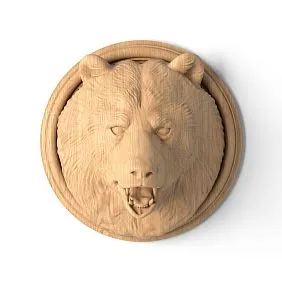



Why wood specifically: the psychology of natural materials
Touching different materials evokes different emotional reactions. Metal is cold, hard, associated with technology, but not with coziness. Plastic is smooth, light, but evokes a subconscious feeling of cheapness and artificiality. Glass is cool, fragile, distancing. Wood is warm, alive, pleasant to the touch.
Wood has a temperature close to that of the human body — about 20-25°C at room temperature. It does not draw away heat instantly like metal and does not feel cold. The texture of wood is diverse: smooth on polished surfaces, relief on carved elements, rhythmic in annual rings. This tactile complexity stimulates the brain, evoking interest and positive emotions.
Get Consultation
Evolutionary memory: wood as a symbol of safety
Humans as a species evolved surrounded by wood — trees provided shelter, food, material for tools and dwellings. For hundreds of thousands of years, contact with wood has been associated with safety, resources, and home. This connection is fixed at the subconscious level.
Modern research confirms: people in rooms with wooden finishes experience less stress, their heart rate is more stable, and cortisol (stress hormone) levels are lower. Touching wood activates the parasympathetic nervous system — the one responsible for relaxation, trust, and a sense of comfort.
In the context of purchase, this is critically important. A person under stress or distrust does not make major purchases. A relaxed person, feeling comfortable — is more inclined to make decisions, especially when it comes to home goods associated with coziness and durability.
Texture as language: smooth versus relief carving
Not all textures are equally effective. Tactile marketing takes into account that different surfaces convey different messages to the brain.
Smooth polished surface
Smooth wood is a signal of completeness, quality of processing, and care. Running fingers over a perfectly smooth surface of a turned leg or polished tabletop brings pleasure — tactile receptors respond to uniformity and the absence of defects. The brain interprets this as high quality, which increases the perceived value of the product.
Smooth surfaces are associated with modernity, minimalism, and strictness. If the target audience is people who value conciseness and technology, smooth texture is preferable.
Relief carving: complexity as value
carved appliquésand legs with ornamentation offer a tactilely complex experience. Fingers slide over convex curls, delve into grooves, feel the rhythm of repeating elements. This stimulates the brain more than a smooth surface — more information, more texture, more engagement.
Carving is subconsciously perceived as labor intensity, craftsmanship, uniqueness. A person understands (even if not verbalizing it) that creating a carved element requires time, skill, attention to detail. This automatically increases the perceived value of the product.
Research shows that products with tactilely complex surfaces are rated by buyers as more expensive and higher quality compared to smooth ones, even at the same price and material. Carvedfurniture legis perceived as more valuable than turned wood without carving, precisely because of tactile complexity.
Showroom as a sensory laboratory: The STAVROS strategy
Most furniture showrooms treat products like museum exhibits: "Do not touch," "Caution, do not sit," "This is a sample." This approach kills tactile marketing. The buyer sees the furniture but does not feel it—and no emotional connection is formed.
inSTAVROS showroomphilosophy is the opposite: visitors are not just allowed near the exhibits but are actively encouraged to interact. "Touch the carving," "Sit on the chair," "Open the cabinet drawer," "Run your hand over the tabletop"—consultants voice these invitations, removing the psychological barrier of the "museum."
Zoning by type of tactile experience
The showroom is designed so that the visitor passes through several zones of tactile experience:
-
Material samples zone—small fragments of wood of different species, processed in different ways (oil, wax, varnish, carving, polishing). The visitor can pick them up, compare texture, temperature, weight.
-
Details and elements zone—carved legs, balusters, overlays, moldings, rosettes are laid out on tables, available for inspection and touch without restrictions.
-
Finished furniture zone—tables, chairs, cabinets that you can sit on, open doors, pull out drawers, feel the weight and smoothness of the mechanisms.
-
Personalization zone—a configurator where the client can choose elements for future furniture, holding samples in their hands, combining textures, creating a unique product through tactile interaction.
Each zone works to form an emotional connection through touch. By the time the visitor reaches the purchase discussion, they already mentally own the product—because they held it in their hands, felt the texture, imagined it in their home.
Psychology of texture: what the fingers feel, the brain thinks
Tactile sensations influence abstract judgments and decisions. A series of experiments by psychologists from MIT and Harvard showed surprising results:
-
People holding a heavy clipboard rated job candidates as more serious and weighty than those holding a light clipboard.
-
People sitting on hard chairs demonstrated a tougher stance in negotiations than those sitting on soft ones.
-
People touching rough surfaces perceived social interactions as more complex and ambiguous.
Tactile metaphors ("heavy decision," "smooth negotiations," "rough relationships") are not just figures of speech. The brain literally links physical sensations with abstract concepts.
Application to furniture: heavy leg = reliable furniture
When a buyer lifts acarved legmade of solid oak and feels its weight (a kilogram or more), the brain automatically translates this into the category of "solid, sturdy, reliable, durable." A light hollow leg, even if it looks similar, creates the opposite impression: "light = fragile = short-lived."
A smooth, perfectly sanded surface conveys: "attention to detail, high quality of processing, professionalism of the manufacturer." Roughness, unevenness, tool marks (if not an intentional decorative effect) speak to the opposite.
Warm wood, which quickly takes on the temperature of the hand, creates a feeling of closeness, accessibility. Cold material creates distance, a barrier.
The "ownership before purchase" effect: how touch changes the status of a product
Marketers know: if a person imagines themselves as the owner of a product, the likelihood of purchase increases sharply. Visualization techniques ("Imagine how this table will look in your dining room") work, but tactile contact works stronger.
When you hold a carved leg in your hands, examine it from all sides, run your fingers over the curls of the ornament—the brain simulates ownership. The prefrontal cortex, responsible for planning and future projection, is activated. You already see this leg as part of a table in your home. You already mentally own it.
Neuromarketing research: 67% increase in conversion
The Neuromarketing Science & Business Association conducted research in furniture showrooms. Two groups of buyers:
Group A (control): The consultant showed furniture, described features, provided catalogs, but physical contact with the product was limited — "This table, no need to sit, it's for demonstration."
Group B (experimental): The consultant actively encouraged touching, sitting, opening, holding parts in hands — "Here's a carved leg, take it, feel the weight, run your hand over the carving."
Result: In group B, conversion (percentage of visitors who made a purchase) was 67% higher. The average check was also 23% higher — people who touched the product more often chose more expensive models with carvings and complex finishes.
How tactile experience is structured in production and showroom
Quality of STAVROS productsbegins with understanding that furniture will not only be seen but also touched. Every detail — fromcarved appliquésto moldings — undergoes multi-stage processing aimed at creating the perfect tactile impression.
Sanding: from coarse to mirror-like
Wood after milling has a rough surface with tool marks. The first sanding stage — with 80-100 grit abrasive — removes coarse defects. The second stage — 120-150 — levels the surface. The third — 180-220 — creates smoothness. Final sanding — 320-400 — brings it to a state where the wood is silky to the touch, without the slightest snags.
Carved elements are sanded by hand — with an abrasive sponge or fine sandpaper folded in several layers to penetrate every groove of the ornament. This is labor-intensive but necessary: if roughness remains deep in the carving, a finger will feel it, and the impression of the product will be ruined.
Finishing: oil, wax, varnish — each creates its own tactility
Oil penetrates the wood, emphasizes the grain, leaves the surface matte, warm, pleasant to the touch. Wood coated with oil feels "alive" — pores are open, the material breathes.
Wax creates a light satin sheen, the surface becomes slightly smoother but retains tactile connection with the wood. Wax has a pleasant smell, adding a sensory layer to the tactile experience.
Varnish forms a film — smooth, hard, shiny. Tactilely this feels like the material is "sealed," but varnish protects better and is suitable for surfaces subject to intensive use (tabletops, armrests).
In the showroomSTAVROSsamples of all finishing options are presented so the client can choose not only visually but also tactilely — by touching each and feeling the difference.
Psychology of purchase: from curiosity to ownership
Psychology of purchaseof furniture differs from buying everyday goods. Furniture is an investment, a long-term decision, an element of home identity. The buyer does not act impulsively — they hesitate, compare, weigh.
Tactile marketing shortens the decision-making cycle. When a person holds a carved leg, feels its weight, warmth, texture — the abstract idea of "buying a table" turns into a concrete desire of "buying exactly this table, with these legs, because I already feel what it's like."
Buyer's journey through tactile stages
-
Curiosity — "I wonder what it feels like?"
-
Exploration — "Smooth, heavy, carving is deep, pleasant to hold in hands"
-
Comparison — "But this leg is lighter, carving is finer, less expressive"
-
Attachment — "I liked the first one more, I imagine it in my dining room"
-
Ownership — "I want exactly this, it's mine"
-
Purchase — "I'm ordering a table with such legs"
Without tactile contact, this journey breaks at the first stage. The client remains in the zone of abstract interest, not transitioning to emotional involvement.
Mistakes that kill tactile marketing
Error 1: No-touch policy
"Do not touch" is a death sentence for selling premium furniture. The customer feels like a violator if they do touch it, or leaves without a purchase because they couldn't create an emotional connection.
Error 2: Dirty, dusty exhibits
If there is dust on the furniture, fingerprints on polished surfaces, or dirt accumulated in carvings, touching evokes disgust rather than pleasure. The tactile experience becomes negative.
Error 3: Inaccessible samples
Furniture is placed on a podium, fenced off with barriers, requiring customers to reach over obstacles. Physical inaccessibility translates into mental inaccessibility—'this is not for me.'
Error 4: Lack of details for inspection
You show a finished table, but the customer has no opportunity to hold a separate leg, overlay, examine the joints, or assess material thickness. Lack of tactile information reduces trust.
Frequently asked questions about tactile marketing
Does tactile marketing work online?
Partially. Online, you can use visual metaphors of tactility—close-ups of textures, videos of a hand running over a surface, descriptions of sensations. However, a full tactile experience is only possible offline. Therefore, hybrid models (online ordering after visiting a showroom) are most effective.
Do all people react the same way to tactile stimuli?
No. There are individual differences—tactile-sensitive people (usually women, people in creative professions) react more strongly to textures. But the basic effect works for everyone: touching increases the likelihood of purchase.
Can you overdo calls to touch the product?
Yes. If a consultant too persistently suggests 'touch it, pick it up,' it may be perceived as pressure. It's better to create an atmosphere of free access and unobtrusively voice permission: 'All samples can be touched, feel free.'
How to keep exhibits clean with constant touching?
Regular cleaning (daily wet wiping), use of protective coatings (wax, varnish), rotation of exhibits (replacing worn samples with fresh ones), placement of antibacterial wipes or sanitizer near samples.
Does the temperature of the material affect the desire to touch?
Yes. Warm materials (wood) invite touch. Cold ones (metal, glass, stone) repel. In a showroom, you can use slight heating of wooden samples in winter to make them feel even more pleasant.
Does tactile marketing work for furniture made of other materials?
Partially. For leather furniture—yes, leather is tactilely pleasant. For metal and glass—weaker, these materials are cold and hard. For textiles (upholstery)—yes, the softness and texture of the fabric are important. But wood is the champion of tactile appeal.
Which furniture zones are most important for tactile contact?
Those that will be frequently used: armrests (held by hands), tabletops (leaned on), drawer and door handles (pulled), legs (noticed when assessing quality). These zones must be perfectly finished.
How much time does a person need to form a tactile impression?
30-60 seconds of active interaction is enough to form an emotional assessment. Longer—reinforces the impression. Shorter—superficial contact without deep engagement.
Answers to frequently asked questions (FAQ)
What is neuromarketing?
The study of brain reactions to marketing stimuli using neuroimaging (MRI, EEG), eye-tracking, and measurement of physiological parameters. Allows understanding how buyers make decisions at a subconscious level.
Why does touching wood evoke trust?
Because wood is a natural material associated with nature, eco-friendliness, and durability. Evolutionarily, humans have interacted with wood as a resource for millennia. This is ingrained at a subconscious level.
Can tactile sensitivity be developed?
Yes. Regular conscious contact with different textures trains tactile receptors and the somatosensory cortex. People who work with wood (carpenters, carvers) discern the finest nuances of texture that are inaccessible to an ordinary person.
How does temperature affect tactile perception?
Warm surfaces are perceived as more pleasant, friendly, inviting contact. Cold ones - as detached, technological, less emotional. Wood has an intermediate temperature and quickly takes on the warmth of the hand.
Why is carving perceived as more valuable?
Because a tactually complex surface signals labor costs, skill, uniqueness. The brain understands: a smooth leg can be turned on a machine in minutes, a carved one needs to be carved by hand for hours. This automatically increases the perceived value.
Does the smell of wood affect the purchase decision?
Yes. Smell is closely linked to emotions and memory. The smell of natural wood, especially with oil or wax finish, evokes associations with nature, quality, tradition. This enhances the overall sensory impression.
How long does the effect of tactile contact last?
The emotional impression lasts for several hours or days. If a customer returns home after visiting a showroom and still remembers how pleasant it was to hold a carved leg in their hands, the likelihood that they will return to make a purchase is high.
Can tactile perception be deceived?
Partially. Skillful imitation (plastic under wood with texture) can deceive vision, but not tactile receptors. The temperature, weight, and elasticity of the material give away the fake. Experienced buyers recognize imitation instantly.
Conclusion: Touch as a bridge between product and buyer
In a world overloaded with visual information, where thousands of product images flash on screens daily, tactile experience becomes a rarity and a value. Touch is a communication channel that cannot be reproduced online; it is an intimate contact between a person and an object that forms an emotional bond stronger than any advertisement.
carved furniture legsandApplied carved elementsmade from solid wood are not just functional elements of construction. They are carriers of tactile information that the brain reads and interprets as quality, craftsmanship, value, durability. When a person picks up a carved part, feels its weight, runs their fingers over the smooth surface and the relief of the ornament, they receive an experience that cannot be conveyed in words or pictures.
Company STAVROS buildspurchase psychologyon understanding the power of tactile contact. In theshowroomthere are no prohibitions or barriers - only an invitation to interact. Visitors touch wood samples, hold carved legs and overlays in their hands, sit on chairs, open cabinet doors, run their palms over countertops. This tactile experience turns abstract interest into concrete desire, a potential buyer into a real owner.
The quality of STAVROS productsbegins with the understanding that every detail will not only be seen but also felt. Multi-stage sanding to a silky smoothness, careful processing of every curve of the carving, perfect geometry of joints, finishing with oil or wax that emphasizes the natural wood grain - all this creates tactile perfection that the brain instantly recognizes as the highest quality.
By choosing furniture and decor from STAVROS, you get not just interior items, but works that invite touch, evoke a desire to interact, and create an emotional connection. This is furniture that sells itself - through the warmth of wood, the weight of solid wood, the relief of carving, the smoothness of polish. Because touch is not just tactile contact, it is a language in which the brain and matter converse, and in this language, wood says: "I am real, I am quality, I am yours."


