Article Contents:
- How the Profile Shapes the Perception of Space
- Profile Geometry: From Simple to Complex
- Profile Height and Spatial Scale
- Influence of Relief on Lighting Environment
- Contrast of White MDF and Natural Wood
- White: Expansion and Light
- Natural Wood: Warmth and Depth
- Combination of White and Wood
- Influence of Line Direction on Room Proportions
- Horizontal Lines: Expansion and Stability
- Vertical Lines: Increase in Height
- Diagonal Lines: Dynamics and Movement
- Color Solutions and Accent Combinations
- Monochromatic solutions
- Contrasting combinations
- Accent colors
- Interior design solutions by STAVROS
- Scandinavian minimalism
- Modern classicism
- Loft with Wooden Accents
- Baseboard as an Architectural Tool
- From Utility to Architectural Significance
- Baseboard in the Language of Proportions
- The Future of Architectural Lines
- Frequently Asked Questions
- Conclusion

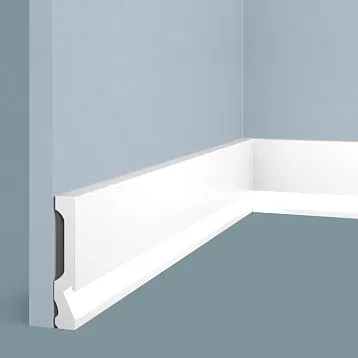
Architectural lines define the perception of space more strongly than wall color or furniture choice.White Baseboardcreates a clear horizontal boundary that organizes the chaos of vertical and horizontal planes.Decorative Railforms rhythmic structures that control the movement of the eye.Wooden moldingadds visual complexity through shadows and profile relief.Ceiling baseboard woodencompletes the vertical composition, creating a transition from wall to ceiling.Wooden plankVertical orientation visually increases the height of the room, creating an illusion of higher ceilings.




How the Profile Shapes the Perception of Space




Profile Geometry: From Simple to Complex
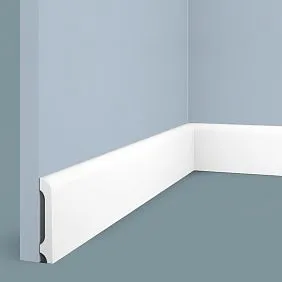
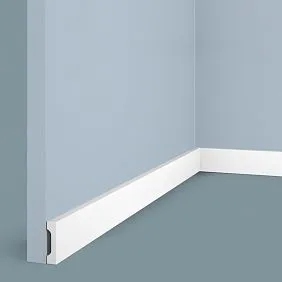
A rectangular profile with sharp edges creates modern graphic aesthetics.White BaseboardA 70x15 mm cross-section profile forms a thin horizontal line that organizes the transition between wall and floor without drawing excessive attention. Clean geometry aligns with minimalist aesthetics, where each element is reduced to its essence. The absence of decorative moldings and grooves creates a calm, neutral line.
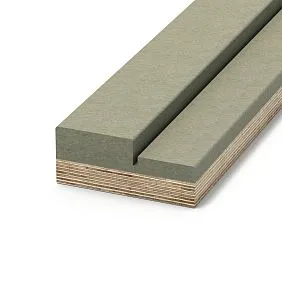
A profile with one bevel adds visual complexity with minimal means. A small 45-degree bevel on the upper edge creates an additional reflective plane. Light falling on the bevel reflects at a different angle, creating a thin glowing line. This technique adds depth to the simple profile without compromising minimalist philosophy.Decorative RailWith bevels, it creates a more expressive play of light.
A classic profile with moldings and bulges creates a complex shadow pattern. The concave molding at the bottom of the baseboard forms a dark shadow band. The convex bulge in the middle reflects light, creating a bright line. The shelf at the top creates a horizontal shadow on the wall. Three profile elements form an alternating pattern of light and shadow, emphasizing relief and creating visual complexity.
A multi-tiered profile with several alternating elements achieves maximum decorative effect.Ceiling baseboard woodenA classic-style profile 150-200 mm high has four to five tiers with alternating convex and concave elements. Each tier creates its own shadow pattern. The cumulative effect forms sculptural expressiveness, transforming a utilitarian element into a work of decorative art.
Our factory also produces:
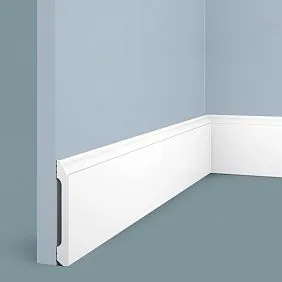
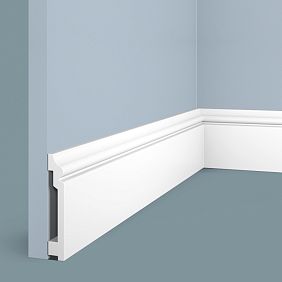
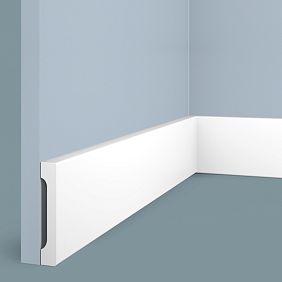
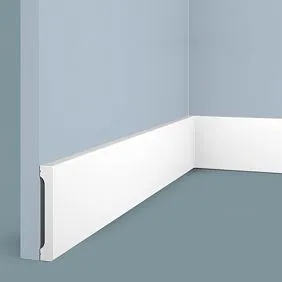
Profile height and space scale
A low baseboard 50-60 mm high creates lightness and airiness. The thin line at the base of the wall is almost imperceptible, not creating visual weight at the lower part of the room. Such a baseboard suits small rooms of 12-18 square meters, where every visual trick to expand space matters.White BaseboardA 60 mm high baseboard blends with white walls, creating a sense of vertical continuity.
A medium-height baseboard 80-100 mm high is universal for most residential spaces. This height corresponds to the classic proportional ratio of 1:27-1:30 to ceiling heights of 2.7-3.0 meters. A baseboard of this height creates a visual foundation without excessive massiveness. It is sufficiently noticeable to organize transitions between planes but does not dominate the perception of space.
A high baseboard 120-150 mm high creates a sense of grandeur and scale. This height is typical for historical interiors with ceilings 3.5-4.5 meters high. In modern rooms with standard 2.7-meter ceilings, a high baseboard is used as a design element to create visual interest.Wooden moldingA 140 mm high baseboard creates a sense of respectability and status.
Get Consultation
Influence of relief on lighting environment
A smooth profile without relief reflects light evenly, creating a uniform light or dark band depending on color. A matte surface diffuses light softly, without glare. A glossy surface creates mirror-like reflections that vary depending on viewing angle.White BaseboardWith a matte finish, it creates a calm, neutral line.
A relief profile creates a complex interplay of light and shadow that changes throughout the day. Morning side lighting from the right creates shadows on the left side of convex elements. Daylight from above evenly illuminates horizontal surfaces, casting shadows on vertical edges. Evening artificial lighting from ceiling fixtures directs light downward at a steep angle, creating deep contrasting shadows.
The direction of relief determines the character of the shadow pattern. Vertical grooves on the molding create frequent vertical shadows under side lighting. Horizontal shelves and bulges form horizontal shadow lines under top or bottom lighting.Ceiling baseboard woodenA profile with a complex shape creates a unique shadow pattern for each time of day and type of lighting.
Contrast of white MDF and natural wood
White: expansion and light
White color reflects 80-90 percent of incident light, creating maximum surface brightness.White BaseboardIt lightens the lower part of the wall, visually expanding the space. The physics of reflection explains the expansion effect — reflected light creates an illusion of greater distance, the brain interprets bright surfaces as more distant.
A white baseboard on white walls creates a sense of vertical continuity. The absence of a color boundary between the wall and baseboard visually increases wall height. The wall is perceived as a single plane from floor to ceiling without horizontal division. This technique is especially effective in rooms with low ceilings 2.5-2.6 meters, where every 10 cm of height is critical for visual comfort.
A white baseboard on colored walls creates a clear horizontal boundary. The contrast of white with gray, blue, green emphasizes the geometry of the room, making architectural lines graphic and expressive.Decorative RailA white baseboard on a dark gray wall creates a rhythmic structure of light vertical lines organizing space.
Different shades of white create subtle perceptual nuances. Cool white with a slight bluish undertone forms a sense of coolness, freshness, northern light. Warm white with cream or yellowish tone adds coziness, softness, southern light. Pure neutral white without additives creates a modern, technological atmosphere. Choosing the shade of white for the baseboard affects the emotional perception of the entire interior.
Natural wood: warmth and depth
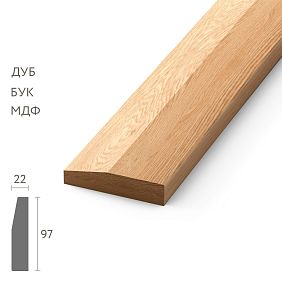
Wooden plankA solid oak profile creates visual complexity through natural texture. The characteristic pattern of annual rings with alternating light and dark bands creates a visual vibration that attracts the eye without fatigue. Heartwood rays — radial lines radiating from the center of the trunk — add an additional layer of texture, creating an effect of internal wood glow.
The color of natural oak varies from light straw to medium brown with a golden tone. The bark — outer layers of the trunk — is 2-3 tones lighter than the core. The combination of light and dark wood in one element creates a natural gradient perceived as harmonious. Staining with dye enhances texture contrast, making annual rings more pronounced.
The tactile warmth of wood creates a special sense of comfort. Touching theWooden molding with oil finish provides pleasant sensations - the surface is warm, slightly textured, and alive. The low thermal conductivity of wood (0.15–0.20 W/(m·K)) does not draw heat away from the hand, creating a subjective feeling of warmth. This is important for elements accessible to tactile contact.The combination of white and wood
Combination of white and wood
strategic combination of white MDF and natural wood creates a visual hierarchy of spaces. Common areas — corridors, entryways, technical rooms — receiveWhite Baseboardoptimized budget with quality aesthetics. Grand areas — living room, office, bedroom — are finished with wooden skirting boards, demonstrating status and premium quality. Material change at zone boundaries marks the transition between spaces of different significance.
Vertical combination uses white MDF at the bottom and natural wood at the middle height of the wall. The white baseboard creates a neutral foundation that does not compete for attention.Wooden moldingAt a height of 90–100 centimeters, it forms an accent horizontal line made of noble solid wood. The white ceiling cornice completes the composition, creating a neutral frame above.
Accent wall with wooden strips contrasts with white moldings on the other walls.Wooden plankVertical strips of solid oak create an expressive textured surface on one wall. The other three walls remain smooth with white skirting boards and cornices. The contrast between the natural complexity of wood and the technological simplicity of white creates visual tension, making the interior memorable.
Influence of line direction on room proportions
Horizontal lines: expansion and stability
Horizontal lines create an illusion of space expansion by directing the gaze along the long wall.White BaseboardThey form a continuous horizontal line around the perimeter of the room. The gaze involuntarily follows this line, perceiving the wall’s length as the primary characteristic of the space. A narrow room with horizontal lines appears wider due to the guiding effect.
Multiple horizontal lines at different levels enhance the expansion effect. The baseboard at 80 millimeters height creates the first horizontal line.Wooden moldingAt 90 centimeters — the second. The frieze molding at 210 centimeters — the third. The ceiling cornice completes the system. Four horizontals divide the wall into five zones, each perceived as a separate horizontal plane.
Contrasting horizontal lines create a graphic effect of stripes. A dark baseboard on a light wall forms a dark horizontal stripe at the base. A light molding at mid-height — a light stripe. A dark ceiling cornice — a dark stripe above. Alternating dark and light horizontals creates a rhythmic structure that visually expands the room through repetition of guiding lines.
Vertical lines: increase in height
Vertical lines create an illusion of increased room height by directing the gaze upward.Decorative RailVertical strips from floor to ceiling form a continuous vertical line. The gaze moves along the strip from bottom to top, perceiving height as the primary characteristic. A room with a 2.5-meter ceiling and vertical strips appears 10–15% higher.
The frequency of vertical lines determines the intensity of the height-increasing effect. A dense rhythm with 20–30 millimeter intervals creates many vertical guides, each pulling the gaze upward. The cumulative effect is maximal — the room appears significantly taller than its actual height. A sparse rhythm with 80–100 millimeter intervals creates fewer guiding lines, a weaker height-increasing effect, but it still exists.
Wooden plankContrasting colors enhance the vertical effect. Dark strips on a light wall create clear vertical lines that visually divide the wall into narrow vertical stripes. Each stripe is perceived as taller than wide. Light strips on a dark wall create glowing verticals that draw the gaze upward, creating a sense of aspiration.
Diagonal lines: dynamics and movement
Diagonal lines create maximum dynamism and visual movement. Diagonals are longer than verticals and horizontals at the same room size, creating an illusion of greater space.Decorative RailDiagonals at 45 degrees form a diagonal structure perceived as dynamic and active.
The direction of the diagonal determines the perception. Diagonals rising from left to right create a sense of ascent, growth, positive movement — text is read this way, the gaze moves this way. Diagonals descending from left to right create a sense of descent, reduction — this contradicts the natural eye movement, creating visual discomfort. Rising diagonals are preferable for residential interiors.
Diagonal elements are used sparingly — on one accent wall or fragment. Excess diagonal lines create visual chaos, unease, disorientation.Wooden moldingWith diagonal inserts within a rectangular frame, it creates visual interest without overload. The main structure remains orthogonal, diagonals add emphasis.
Monochromatic scheme uses various shades of one color to create a calm, harmonious atmosphere.
Monochromatic Solutions
On light-gray walls with a white ceiling, it creates a monochromatic composition ranging from white to light-gray. The absence of color contrast forms visual unity, calmness, meditativeness. Differences in shades create subtle visual structure without sharp boundaries.White BaseboardOn light-gray walls with a white ceiling, it creates a monochromatic composition ranging from white to light-gray. The absence of color contrast forms visual unity, calmness, meditativeness. Differences in shades create subtle visual structure without sharp boundaries.
The gray monochromatic palette, ranging from light gray to dark gray, creates refined elegance. Light gray walls with medium gray skirting and dark gray ceiling cornice form a gradient from light at the bottom to dark at the top. This gradient corresponds to the natural distribution of light in the room — the floor appears lighter than the ceiling due to light reflection from below. The monochromatic gray palette is popular in Scandinavian interiors.
Beige monochromatic palette creates a warm, cozy atmosphere. Light beige walls with white skirting and medium beigewooden ceiling skirtingform a warm, harmonious composition. Beige is associated with natural materials — sand, linen, untreated wood — creating a connection with nature without bright colors.
Contrasting Combinations
Contrasting scheme uses opposite colors from the color wheel to create visual tension and expressiveness. Black skirting on white walls creates maximum achromatic contrast. A clear black horizontal line at the base of the white wall forms a graphic effect, emphasizing the geometry of the room.Wooden plankBlack color creates expressive vertical accents.
Dark blue skirting on light beige walls creates an elegant color contrast. Blue and beige are complementary colors according to color theory, creating a harmonious contrast. The depth of dark blue accentuates the warmth of beige. The combination is perceived as elegant, refined, aristocratic. Suitable for classical and neoclassical interiors.
Dark wood on light walls creates a natural contrast.Wooden moldingof dark walnut or weathered oak on white or light gray walls forms an expressive line of noble material. The natural wood texture adds visual complexity to the color contrast. The combination is both modern and timeless.
Accent colors
Accent colored skirting becomes an expressive element of the interior.White Baseboardis painted in a bright color — blue, green, terracotta, burgundy. A bright horizontal line at the base of neutral walls attracts attention, creates a visual accent, adds dynamism. Accent skirting requires restraint in the rest of the interior — a bright color on the skirting is sufficient to create character.
Gradient skirting coloring creates a modern effect of color blending. Skirting starts dark blue in one corner of the room, gradually lightens, ends in light blue in the opposite corner. The gradient creates visual movement along the perimeter of the room, directing the gaze. Technically achieved by airbrushing with a smooth change in pigment concentration.
Metallic accents add luxury and modernity.Decorative Railwith gold, silver, or copper finish creates a luxurious effect. Metallic sheen contrasts with matte walls, drawing attention. Gold rails suit classical interiors, copper — for loft and industrial styles, silver — for high-tech.
Examples of interior solutions STAVROS
Scandinavian minimalism
A bright spacious apartment of 65 square meters with ceiling height of 2.8 meters is styled in Scandinavian style. Walls are painted in warm white. Floor — light oak in natural tone.White Baseboardof 70 millimeters simple rectangular profile creates a delicate line that blends with walls. Visually, walls continue to the floor without a clear boundary, creating a sense of greater space.
Accent wall behind the sofa in the living room is decorated with vertical rails of light ash.Wooden plankwith a cross-section of 40x40 millimeters at 60 millimeter intervals creates a rhythmic structure. The natural light texture of ash adds warmth to the white space without disrupting the overall light palette. Rails from floor to ceiling visually increase the height of the room.
Ceiling cornices are absent — the ceiling meets the walls at a right angle without architectural detailing. This is a characteristic feature of Scandinavian minimalism, where the absence of decoration becomes a philosophy.White Baseboard— the only architectural element functionally required to cover the junction between floor and wall.
Modern classic
A three-room apartment of 110 square meters with ceiling height of 3.2 meters is styled in modern classic style. Walls are painted in light gray.Ceiling baseboard woodenmade of solid oak, 120 millimeters high with a classic profile, creates a grand ceiling trim. The natural color of oak contrasts with gray walls and white ceiling.
FloorWooden molding100 millimeters high from the same oak creates a visual base. Unity of material and color of the baseboard and ceiling cornice frames the walls from top and bottom, creating an architectural frame. Gray walls are perceived as panels within a wooden frame.
Panel system on the walls of the living room is created with oak moldings 50 millimeters wide. Rectangular frames of 900x1400 millimeters form a classic composition. Walls inside the frames are painted in a darker gray shade, creating a sense of depth.Wooden moldingunifies floor, walls, and ceiling into a single architectural composition.
Loft with wooden accents
A two-level apartment of 85 square meters with ceiling height of 3.5 meters on the first level is styled in loft style. Walls — concrete with deliberately rough texture. Floor — dark oak, treated with oil.White Baseboardis not used — the style implies minimal architectural decoration. Instead of skirting, a 10-millimeter shadow gap between floor and wall.
Accent wall in the kitchen is decorated with horizontal rails of untreated oak.Decorative Railwith a cross-section of 50x25 millimeters at 40 millimeter intervals creates an expressive textured surface. The natural texture of oak without finish emphasizes the industrial character of the space. Horizontal orientation of rails visually expands the narrow kitchen zone.
The staircase to the second level is framed bya wooden moldingof a simple rectangular profile made of dark oak. The molding serves a functional role as a handrail and simultaneously creates an architectural line organizing the transition between levels. The dark wood contrasts with concrete walls, emphasizing the geometry of the stairwell opening.
Baseboard as an Architectural Tool
From Utility to Architectural Significance
Historically, the baseboard performed a purely utilitarian function — it covered the technological gap between the wall and the floor, protecting the lower part of the wall from mechanical damage. A wooden strip along the base of the wall solved practical problems without any decorative pretensions. Simple rectangular baseboards 50x20 millimeters made of untreated wood were installed in peasant houses.
The development of architecture transformed the utilitarian element into an important part of the architectural composition.Ceiling baseboard woodenIn palace interiors of the 17th-18th centuries, it reached a height of 200-250 millimeters, had a complex multi-tiered profile with carved elements. The baseboard became an architectural masterpiece, demonstrating the skill of carvers and the status of the owner.
Modern architecture returned the baseboard to architectural significance through the minimalism of form.White BaseboardA simple profile became a tool for organizing space. A clear horizontal line creates visual order, structuring the chaos of verticals and horizontals. The absence of decoration does not mean the absence of significance — a clean line possesses maximum architectural power.
Baseboard in the Language of Proportions
Classical architecture is based on proportional relationships inherited from ancient orders. The height of the baseboard relates to the height of the room as 1:25 - 1:30. For a standard ceiling height of 2.7 meters, the optimal baseboard height is 90-108 millimeters. These proportions ensure visual harmony, which is subconsciously perceived as correct and comfortable.
The golden ratio 1:1.618 is applied to the relationship between the height of the baseboard and the height of the ceiling cornice. If the baseboard has a height of 80 millimeters, the cornice should have a height of 130 millimeters to create a harmonious relationship.Wooden moldingAt mid-height of the wall, it should have a height intermediate between the baseboard and the cornice, creating a smooth gradation of dimensions.
Violation of classical proportions creates visual discomfort. A too-high baseboard of 150 millimeters in a room 2.5 meters high is perceived as excessively massive and oppressive. A too-low baseboard of 40 millimeters in a room 3.5 meters high disappears, failing to create sufficient visual weight to frame the high wall. Adherence to proportions is critical for visual harmony.
The Future of Architectural Lines
Interior design development moves in two opposite directions. The first — minimalization of architectural elements until they disappear. A shadow baseboard — a 10-15 millimeter gap between the floor and the wall without a physical element — creates the effect of floating walls.White BaseboardIt is replaced by void, which becomes an architectural element.
The second direction — returning decorative elements through modern technologies.Decorative RailWith integrated LED lighting, it creates glowing lines. Baseboards with built-in wireless charging devices combine decorative and functional roles. Smart architectural elements with adjustable lighting adapt to the time of day and mood.
STAVROS combines traditional carpentry craftsmanship with modern technologies.Wooden moldingClassic profiles coexist with minimalist solutions.Ceiling baseboard woodenIt embodies centuries-old traditions.Wooden plankIt creates modern architectural compositions. A full spectrum of solutions for any style and concept.
Frequently asked questions
What color baseboard visually increases the height of the room?
A baseboard in the color of the walls visually increases the height of the room most effectively.White BaseboardOn white walls, it creates an effect of vertical continuity — the wall is perceived as a single plane from floor to ceiling. The absence of a horizontal color boundary does not break the vertical, creating an illusion of greater height. The effect is enhanced at a baseboard height of 60-70 millimeters — a thin line is less noticeable than a bulky baseboard of 100-120 millimeters.
How to choose the height of the baseboard for a room with a low ceiling?
For rooms with low ceilings of 2.4-2.6 meters, a baseboard height of 60-70 millimeters is recommended. A low baseboard does not create visual weight at the lower part of the room, does not emphasize attention to the horizontal line near the floor.Wooden moldingA simple rectangular profile without decorative elements is optimal. Complex profiles with moldings visually weigh down the baseboard. A baseboard color matching the walls further minimizes visual presence, focusing attention on the verticality of the walls.
Horizontal plank orientation visually expands a narrow room.
Horizontal installation on long walls creates guiding lines that lead the eye along the length of the room. The perception of length is enhanced, and width appears greater. A 50-80 mm gap between planks creates sufficiently frequent horizontal lines for the expansion effect. Contrasting plank color — light on dark walls or dark on light walls — enhances the effect by emphasizing horizontal lines.Decorative RailHorizontal installation on long walls creates guiding lines that lead the eye along the length of the room. The perception of length is enhanced, and the width appears greater. The 50-80 millimeter spacing between the boards creates sufficiently frequent horizontal lines for the expansion effect. The contrasting color of the boards—light on dark walls or dark on light walls—enhances the effect by emphasizing the horizontal lines.
Can a white MDF skirting board be combined with wooden planks?
Combinationwhite skirting boardwithwooden plankIt creates a striking contrast between the technological simplicity of MDF and the natural complexity of solid wood. The white skirting board forms a neutral base around the entire perimeter of the room. Wooden planks on one accent wall create a focal point with natural texture. The remaining walls remain smooth with white skirting boards. The material contrast works as a zoning technique — the wooden accent zone stands out against the neutral white perimeter.
Which skirting board profile suits a minimalist interior?
A minimalist interior requires a simple rectangular profile skirting board without decorative elements.White BaseboardA 70x15 mm cross-section with sharp edges creates a clean geometric line. The absence of moldings, grooves, or coves aligns with the philosophy of minimalism — reduction to essence. A small bevel on the top edge is permissible as a minimal decorative element, adding a subtle light line. A height of 60-80 mm creates a delicate line without excessive visual weight.
How does the color of the skirting board affect the perception of room size?
A light-colored skirting board visually expands space through light reflection.White BaseboardIt reflects 80-90% of incident light, creating a bright line at the base of the wall. The brain interprets bright surfaces as more distant, creating an illusion of greater distance. A dark skirting board visually reduces space but adds graphic contrast. A black skirting board on light walls creates a clear horizontal boundary, emphasizing geometry. The choice depends on the goal — expanding or structuring space.
Is a ceiling cornice needed in a modern interior?
In minimalist modern interiors, a ceiling cornice is often absent — the ceiling meets the walls at a right angle without architectural detailing. This is characteristic of Scandinavian style, minimalism, and high-tech. However,Ceiling baseboard woodenit is used in modern classicism, neoclassicism, and contemporary styles to create architectural completeness. A simple-profile cornice 80-100 mm high creates a delicate framing without historical ornamentation. The choice depends on the style — absolute minimalism excludes cornices, while a soft modern style allows them.
What is the optimal spacing between decorative planks?
Optimal spacing betweendecorative planksdepends on the desired structural density. A 20-30 mm spacing creates a dense, active texture — planks dominate, gaps are minimal. A 50-70 mm spacing creates a balanced structure — planks and gaps are perceived equally. An 80-100 mm spacing creates a sparse structure — gaps dominate, planks are read as individual lines. For acoustic panels, 30-50 mm spacing is optimal, ensuring sound absorption. For decorative purposes — 60-80 mm, creating rhythm without excessive density.
How do planks affect room lighting?
Wooden plankDense rhythmic spacing reduces room lighting by 15-25% due to light absorption by the plank structure. Light hitting a plank wall is partially absorbed in the gaps between planks and partially reflected off the side surfaces of the planks at various angles. Light-colored planks made of ash or white oak minimize light loss. Dark planks made of walnut or stained oak significantly darken the room. Installing plank structures on walls opposite windows minimizes their impact on overall lighting.
Can a wooden skirting board be used in the kitchen?
Wooden moldingIn the kitchen, it requires a quality protective coating. Applying three to four layers of polyurethane varnish creates a moisture-resistant film protecting the wood from water and grease splashes. Oil-based finish is less resistant to stains and requires more frequent renewal. An alternative is using moisture-resistant MDF skirting boards for painting or polyurethane skirting boards that mimic wood. A wooden skirting board in the kitchen is aesthetically pleasing but requires more careful maintenance compared to moisture-resistant materials.
Conclusion
Architectural lines of skirting boards, cornices, and planks create an invisible structure that organizes the perception of space at a subconscious level.White BaseboardIt forms the basic horizontal line from which the entire interior composition is built.Decorative RailIt creates rhythmic structures that control the direction of gaze and visual perception of proportions.
Wooden moldingIt adds natural warmth and visual complexity through solid wood texture.Ceiling baseboard woodenIt completes the vertical composition, creating architectural framing of space.Wooden plankIt forms modern architectural solutions where simplicity of lines generates complexity of perception.
18.52 $