Article Contents:
- Why Wooden Staircase Elements Require an Individual Approach
- Architectural Uniqueness of Each Staircase
- Stylistic consistency
- Material Quality and Finishing
- Functional adaptation
- Wood Species: Choosing Wisely
- Oak: Eternal Classic
- Ash: Strength with Delicacy
- Beech: The Golden Middle
- Larch: Moisture Resistance
- Pine: budget option
- Types of Staircase Elements: From Balusters to Finishing Details
- Balusters: The Key Decorative Element
- Newel Posts: Supporting and Accent Role
- Handrails: Functionality and Ergonomics
- Sub-Baluster Rail: The Foundation of the Structure
- Decorative Overlays and Rosettes
- Manufacturing Process: From Sketch to Installation
- Consultation and Measurement
- Design and visualization
- Material selection
- Production of Elements
- Finishing
- Delivery and Installation
- Styles and design solutions
- Classic: timeless elegance
- Baroque and Empire: Luxury and Theatricality
- Art Nouveau: Flowing Lines and Asymmetry
- Scandinavian Style: Light and Conciseness
- Loft: industrial aesthetics
- High-Tech and Minimalism: Function as Form
- Answers to Key Questions
- How Long Does It Take to Manufacture Custom Staircase Elements?
- Can I Order Elements If the Staircase Is Already Built?
- How to Care for Wooden Staircase Elements?
- Which Wood Species Is Best for Families with Children?
- Are Custom Elements More Expensive Than Ready-Made Store-Bought Ones?
- Is Delivery to Regions Possible?
- Can the Color of Elements Be Changed After Manufacturing?
- How Important Is Geometric Precision in Manufacturing?
- How to Choose a Contractor for Ordering Staircase Elements?
- Conclusion: STAVROS — Where Details of Perfection Are Born

What transforms an ordinary house into a space filled with character? What makes a staircase not just a functional structure, but a central accent of the interior? The answer is simple — details. They shape the atmosphere, set the tone, and tell a story. And when it comes to wooden staircase elements, the importance of each detail increases manifold.
Interior Decor Studio— is not just a place where balusters and handrails are manufactured. It is a creative workshop that understands the language of space, feels the material, respects traditions, and boldly experiments with forms. Here, every element is created with consideration for how it will fit into the overall picture, how it will be perceived from different viewpoints, and how it will become part of your daily life.
A wooden staircase lives by its own laws. It breathes, changes over time, and reacts to temperature and humidity. It requires knowledge, experience, and respect for the material. Mass production does not account for these nuances.Interior decor workshop works differently—each project is individual, each product is unique, and every detail is carefully considered.


Why Wooden Staircase Elements Require an Individual Approach
Can you buy a ready-made baluster at a construction hypermarket and consider the task solved? Formally, yes. But the result will be mediocre. Standard elements are designed for the mass consumer, without considering the specifics of the particular space, interior style, or the owner's personal preferences.




Architectural Uniqueness of Each Staircase
No two staircases are identical. Even if the structures are similar, the details always differ: the angle of inclination, the width of the flight, the height of the steps, the turning radius. A standard baluster may not fit in height—requiring trimming, which disrupts the proportions. Or it may be too thin for a wide flight—visually, the structure will lose harmony.
wood baluster manufacturing for a specific project eliminates such problems. Height is calculated with millimeter precision. Thickness is selected proportionally to the staircase width. The installation spacing is determined based on safety and aesthetics. The result is a cohesive, well-thought-out composition.
Our factory also produces:


Stylistic Consistency
Interior design is a dialogue of elements. Furniture, finishes, decor, lighting—everything should speak the same language. The staircase occupies a significant volume of space and is visible from various points. If its elements clash with the overall concept, harmony is destroyed.
A classic interior requires balusters with turned relief, possibly with carved details. Scandinavian style leans towards laconic forms, light wood species, and minimalist lines. Loft style involves a combination of wood with metal, rough textures, and industrial accents. Standard products rarely hit the exact style—they are average, compromise solutions.
Factory of interior decor, working on commission, creates elements in precise accordance with the style. The designer studies the project, analyzes the color palette, textures, and forms of other items. The result is staircase elements that look like an organic part of the space, not a random addition.
Get Consultation
Material quality and processing
Mass-market focuses on quantity, reducing costs by any means. Cheap wood with defects is used, which are masked with putty and tinting. Drying is accelerated, without adhering to technology—within a year, the products deform. Surface treatment is superficial—burrs and roughness remain, simply hidden under a thick layer of varnish.
Custom production prioritizes quality over speed. Wood is selected meticulously—without large knots, cracks, or rot. Drying is chamber-based, with gradual reduction of moisture to the optimal 8-12%. Processing is multi-stage—rough turning, sanding with several types of abrasives, final polishing. The result is a surface pleasant to the touch, without defects, with the wood grain revealed.
Functional adaptation
Wooden balusters made to order can be adapted to specific tasks. Reinforced fastenings for homes with children—safety above all. Modified geometry for non-standard turning angles. Integrated lighting in handrails—functionality plus visual appeal. Special treatment for rooms with high humidity.
Standard products are universal, but that is precisely why they are not optimal for any specific situation. Custom manufacturing solves the problem precisely, considering all operational nuances.
Wood Species: Choosing Wisely
Wood is a living material with character. Each species has its own color, grain, density, and behavior when humidity changes. Choosing a species is not a matter of fashion but an engineering and design decision.
Oak: Eternal Classic
Oak—the king among hardwoods. Density is high—700-750 kg/m³. Brinell hardness 3.7-3.9. This means exceptional resistance to wear, impact, and dents. An oak staircase will outlast generations, preserving its original appearance.
Color range of oak is wide—from light straw (bleached oak) to dark brown (stained oak). Grain is expressive—large pores, clear annual rings create a pattern recognizable even under coating. Oak is noble, solid, it sets a serious tone for the interior.
Carved wooden balusters made of oak hold fine carving details thanks to their density. The ornament remains clear for decades. Oak does not crumble or chip when turning complex shapes.
One drawback—price. Oak is expensive, but it is an investment in durability and prestige. For representative interiors, classical and neoclassical styles, oak is optimal.
Ash: Strength with Delicacy
Ash is close to oak in density, but the grain is different—lighter, with thin, winding lines. Color ranges from light gray to yellowish-white. Ash is visually lighter and more delicate than oak but does not yield in strength.
Ash's flexibility is higher than oak's. This is important for manufacturing curved elements—curvilinear handrails, curved balusters. Ash responds well to steam bending, retaining its shape after cooling.
Ash suits modern interiors—Scandinavian, minimalist, contemporary. Light wood visually lightens the structure, creating a sense of airiness.
Beech: the golden middle
Beech—a compromise between price and quality. Density 650-680 kg/m³—sufficient for staircase elements. Grain is fine, uniform, without a pronounced pattern. Color ranges from pinkish to reddish-brown.
Beech processes well—turns, mills, sands. The surface becomes smooth, without pores. This is convenient for painting—paint applies evenly, without blotches.
Beech's drawback—sensitivity to humidity. In dry rooms, it lasts for decades, but in humid conditions, it can deform. For living rooms, living rooms, bedrooms, beech is suitable. For staircases in baths, pools, damp basements, it is better to choose another species.
Larch: Resistance to Moisture
Larch—the only coniferous species that can be considered for staircase elements without reservations. Density 650-700 kg/m³, hardness comparable to hardwoods. The main advantage—natural resistance to moisture and rot.
The resinous nature of larch protects it from biological damage. It is not afraid of contact with water, does not rot, and is not affected by fungus. For stairs in saunas, baths, and outdoors under a canopy, larch is ideal.
The color of larch is warm—ranging from honey to reddish-brown. The texture features distinct annual rings. Over time, the wood darkens, acquiring a noble hue.
Processing larch requires experience—resin complicates the work, and tools quickly become clogged. But a professional workshop handles this, producing items of exceptional durability.
Pine: budget option
Pine is the most affordable species. Its density is low—450-500 kg/m³, and it is soft. It is easy to work with but also easily damaged. For intensively used stairs, pine is not optimal—marks from impacts and dents will appear quickly.
The application area for pine includes temporary structures, stairs in rarely visited rooms, and cottage options. Or elements painted with opaque paint—under the paint, the species is not important; the shape is.
For representative interiors where durability and prestige are important, it is better not to use pine. The savings are illusory—replacement will be needed in a few years.
Types of stair elements: from balusters to finishing details
A staircase is a system consisting of many components. Each performs its function, and each influences the overall appearance.
Balusters: the key decorative element
A baluster is a vertical railing post, the main decorative element of a staircase. Their number is large—a medium-sized staircase requires 30-60 pieces. It is the balusters that shape the rhythm, style, and character of the structure.
Types of balusters by manufacturing technology. Turned—created on a lathe, they have a cylindrical base with rotational relief. The most common type—the variety of forms is enormous with relatively simple technology. Milled—processed on a CNC milling machine, they can have flat faces, grooves, and channels. Carved—decorated with three-dimensional carving, creating complex patterns. The most expensive and impressive. Combined—combine different techniques, for example, a turned base with carved inserts.
The proportions of balusters are critical. Height is determined by safety requirements—from the floor of the step to the top of the handrail, at least 900 mm according to standards. Typically, a baluster is 800-850 mm, the rest is the thickness of the handrail. Thickness depends on style and installation spacing. For classic interiors—60-80 mm. For modern ones—40-60 mm. Thin balusters are installed more frequently—2-3 per step. Thick ones—less frequently, 1-2 per step.
The shape of a baluster tells about the style. Classic shape—expanded base (base), middle with relief (body), upper part expanded or conical (capital). Baroque balusters—complex relief, numerous turnings, curves, imitation of architectural columns. Minimalist—simple geometry, often square or rectangular in cross-section, without decoration. Modern—smooth curved lines, asymmetry, organic forms.
Posts: supporting and accent role
Posts (or newels) are more massive vertical elements installed at key points: the beginning and end of a flight, at turning points. They serve a supporting function—handrails are attached to them. But they are also accent details that attract attention.
The dimensions of posts are larger than balusters—typically 100-120 mm in cross-section, height can exceed baluster height by 100-200 mm. This creates a visual hierarchy—posts dominate, balusters are subordinate.
Decoration of posts is varied. Finials—decorative elements crowning the post. Can be turned (ball, cone, vase), carved (rosette, pinnacle), figurative (animals, symbols). Carving on the post body—ornaments, geometric patterns, plant motifs. Inserts—combining wood species of different colors, creating inlays, mosaics.
Posts set the tone for the entire staircase. Their design must be especially carefully thought out—they are the first thing seen by someone ascending.
Handrails: functionality and ergonomics
Buy round wooden handrailYou can use a ready-made one if the staircase is simple. But for curved structures, custom manufacturing is required.
The handrail is the most 'tactile' element of a staircase. It is grasped by hand with every ascent and descent. Ergonomics are critical. The shape must fit comfortably in the palm. The optimal diameter for a round handrail is 45-50 mm. Thicker—uncomfortable to grip. Thinner—feels fragile.
Handrail cross-sections. Round—classic, convenient for gripping. Oval—more ergonomic than round, distributes load evenly. Rectangular with rounded edges—a modern option, allows creating wide shelf-like handrails. Shaped—complex profile with grooves, protrusions—for historical styles.
Bent handrails are a separate story. For spiral staircases, staircases with turns, a curved handrail is required. Its creation is the highest mastery of woodworking.Custom round moldingIt is bent using the steam method or glued from thin lamellas. The second method is more reliable—a laminated handrail does not deform over time and maintains its shape for decades.
Joining handrails at corners and turns is done with special connecting elements—corner plates, turning inserts. They are individually fitted, ensuring smooth lines and strong connections.
Baluster rail: the foundation of the structure
The baluster rail (or handrail base) is a horizontal element to which balusters are attached from below. It is not always visible—often hidden by the stringer or carriage. But its role is important—it unites the balusters into a single structure and distributes the load.
For open staircases, the baluster rail is visible from the lower level. It is finished—edges are profiled, painted to match the other elements, sometimes decorated with carving.
Decorative overlays and rosettes
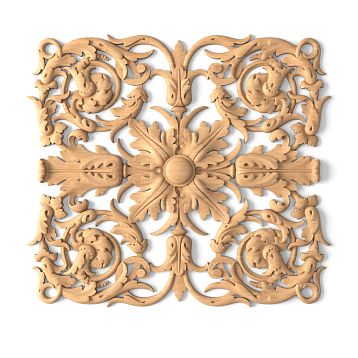
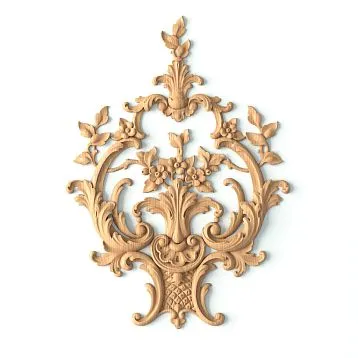
Additional decorative elements enrich the staircase, giving it a finished look. Rosettes are flat or three-dimensional round or oval elements decorated with carving. They are placed on posts, underbalusters, and stringers. Overlays are decorative strips that cover joints and fastening points. Consoles are supporting elements under the treads, extending beyond the structure. They are often richly decorated with carvings.
All this creates a richness of detail characteristic of classical and historical interiors.
Manufacturing process: from sketch to installation
How are custom wooden staircase elements created? The process is multi-stage, requiring the participation of various specialists.
Consultation and measurement
It all starts with communication. A designer or engineer visits the site, inspects the premises, and takes measurements. The client's wishes are discussed—style, color, budget, timeline.
Measurements must be precise—an error of even a few millimeters can lead to problems during installation. Laser rangefinders, levels, and protractors are used. All features are recorded—wall irregularities, floor slab inclinations, utility locations.
Photographing the premises helps in further work—the designer sees the context and can propose solutions that harmonize with the existing interior.
Design and visualization
Based on the measurements, a project is created. The engineering part includes strength calculations, determining element sizes, and fastening points. The design part involves choosing the shape of balusters, posts, decor, and color schemes.
Modern studios create 3D visualizations. The client sees how the staircase will look in the interior. Proportions, combination with other elements can be assessed, and adjustments can be made.
The design stage can take from several days to several weeks—depending on complexity. But there's no need to rush—correcting design errors later is expensive.
Material selection
After project approval, the wood is selected. The species is determined, but specific boards need to be chosen. Color, texture, and the presence of defects are evaluated.
For critical visible elements (balusters, posts, handrails), top-grade wood is selected—without knots, cracks, or blue stain. For hidden elements (underbalusters, frame parts), second-grade material is acceptable—minor defects do not affect strength.
The wood must be properly dried—moisture content of 8-12%. Too dry becomes brittle. Too moist will shrink after manufacturing—elements will deform, joints will separate.
Production of decorative elements
Manufacturing begins with cutting the wood into blanks. Then rough processing—giving an approximate shape. For balusters, this is turning on a lathe. For handrails—profiling on a milling machine.
CNC milling allows creating complex shapes with high precision. The program is loaded into the machine, and the cutter automatically cuts the specified relief. Repeatability is absolute—all balusters are identical down to fractions of a millimeter.
Hand carving is used for unique exclusive elements. A master woodcarver creates the ornament by hand, using chisels, knives, and cutters. This is time-consuming, expensive, but the result is unique—each piece is one of a kind.
Sanding is multi-stage. It starts with coarse abrasive (grit 80-120), gradually moving to fine (320-400). Final sanding creates a surface smooth as silk.
Final finishing
Finished elements are coated with protective and decorative compounds. There are many options.
Oil—penetrates the wood, protects from within, preserves the natural look and texture. The surface is pleasant to the touch, non-slip. Requires periodic renewal—every 1-2 years.
Wax—creates a matte silky surface, emphasizes texture. Protects well against moisture. Applied over oil or on bare wood. Polished to a soft sheen.
Varnish—forms a hard film on the surface. Maximum protection—resistance to abrasion, moisture, and dirt. Gloss level is adjustable—from matte to mirror. Disadvantage—hides texture, wood loses tactility.
Stain and tinting—change the color of the wood while preserving texture. Expensive species can be imitated—pine tinted to look like oak, beech like walnut. Or unusual colors can be created—gray, whitewashed, black.
Opaque paint—completely hides the wood. Used when color is important, not texture. For painted elements, the wood species is less important—budget pine or birch can be used.
Delivery and installation
Finished elements are packaged for transport. Fragile parts (carvings, thin balusters) are protected especially carefully—wrapped in soft material, placed in individual boxes.
Delivery is coordinated with the client. For large batches, cargo trucks are used. Small orders are delivered by courier.
Installation is a critical stage. Improper installation will negate all manufacturing quality. Professional crews use precise tools and know the nuances of fastening different elements.
Balusters are fastened to treads and handrails in different ways—dowels (wooden pins), studs (metal threaded rods), wood glue. The choice depends on the staircase design and strength requirements.
Handrails are joined into a single line and fastened to posts. Joints are sanded and touched up—the connection point should not be noticeable.
Final inspection — geometry, fastening strength, absence of defects. The staircase is ready for use.
Styles and Design Solutions
The staircase should match the interior style. Let's consider popular trends and their features.
Classic: timeless elegance
Classical style requires adherence to proportions, symmetry, and the use of time-tested forms. Balusters are turned, with clear profiles — bases, bodies with turnings, capitals. Posts are massive, often with carved finials.
Wood species — oak, beech, less commonly ash. Color is natural, emphasized by varnish or tinted in dark shades — walnut, wenge. Glossy finish adds solemnity.
Carving is used moderately — on posts, rosettes. Ornaments are floral — laurel wreaths, acanthus leaves, grapevines. Geometric — meanders, egg-and-dart.
Classical style suits spacious rooms with high ceilings. In small spaces, massive elements feel oppressive.
Baroque and Empire: luxury and theatricality
For those unafraid of brightness and excess decor. Balusters of complex shape, with numerous curves, carved inserts. Posts are richly adorned — carving covers the entire surface.
Gilding, patination, multi-color painting — characteristic techniques. Handrails are wide, often with carved ornament on the top edge.
A Baroque staircase is a sculpture, a work of art. It dominates the interior, setting the tone for luxury.
Art Nouveau: flowing lines and asymmetry
Art Nouveau rejects the strict symmetry of classicism. Lines are smooth, curving, reminiscent of natural forms — plant stems, waves, tongues of flame.
Art Nouveau balusters have a unique shape — often asymmetrical, with a curved axis. Carving is stylized — floral motifs, but simplified, decorative. Depictions of irises, lilies, climbing herbs are popular.
Handrails are bent, following the curves of the staircase, but with exaggerated smoothness. Colors are muted — natural wood, tinted in gray-brown, greenish shades.
Art Nouveau suits creative individuals who value individuality.
Scandinavian style: light and conciseness
Light wood — ash, birch, whitewashed oak. Forms are simple, without excess. Balusters of square or round cross-section, without decoration. Sometimes replaced with horizontal slats, ropes, glass.
Handrails are round, 45-50 mm in diameter, treated with oil — tactilely pleasant, warm. Color is natural or white.
Scandinavian style loves combinations — wood with metal (black metal posts, wooden handrail), wood with glass (glass guard panels, wooden frame).
Minimalism of forms is compensated by quality of execution — perfect sanding, impeccable joint fitting.
Loft: industrial aesthetics
Loft combines rough textures and modern materials. The staircase is often on a metal frame, but with wooden treads and a handrail.
Wood is deliberately rough — saw texture, cracks, knots may be preserved. Treatment is minimal — oil or wax, emphasizing naturalness.
Balusters are replaced with steel rods, cables, metal mesh. If balusters are wooden — thick, simple in shape, resembling a beam.
Colors are dark — brown, gray, black. Contrast with white or brick walls creates the characteristic atmosphere of an industrial space.
High-tech and minimalism: function as form
Absolute simplicity of lines. No decoration. Balusters — straight posts of square cross-section made of metal or glass. If wood — then painted in monochrome colors (white, black, gray), hiding the grain.
Handrails are metal or wooden with strict geometry. Integrated lighting — LED strips under the handrail, in the treads.
A high-tech staircase is an engineering solution where every element is justified functionally. Beauty lies in the purity of lines, precision of execution.
Answers to key questions
How long does it take to manufacture custom staircase elements?
Timing depends on complexity. A simple set (balusters, posts, handrail) for a straight staircase — 2-3 weeks. A complex design with carving, bent elements, exclusive design — 1.5-2 months. Factor in time for design (1-2 weeks) and approval.
Can I order elements if the staircase is already built?
Of course. Often, people order replacement of old worn-out balusters, railing upgrades, or handrail installation. The key is precise measurement of the existing structure. Specialists visit, take measurements, and manufacture elements to fit the specific geometry.
How to care for wooden staircase elements?
Regular dry cleaning — wipe off dust with a soft cloth weekly. Wet cleaning — once a month, with a slightly damp (not wet!) cloth and neutral detergent. Avoid abrasives and harsh chemicals.
For elements coated with oil or wax — periodic renewal of the coating. Apply a thin layer of oil once a year or two, rub it in, and polish. This restores protection and refreshes the appearance.
For varnished surfaces — be cautious with contact from hard objects. A scratch on the varnish is visible and requires professional repair.
What type of wood is best for families with children?
Oak or ash — hardwoods withstand intensive use. Children run on the staircase, may drop toys, hit balusters — hard wood resists damage.
Coating — varnish or oil-wax. Varnish creates a hard protective film. Oil-wax is easier to renew locally when wear appears.
Baluster shape — without sharp corners and small protruding details that could catch on. Distance between balusters — no more than 100-120 mm, so a child cannot fit their head through.
Are custom elements more expensive than ready-made ones from a store?
Piece-by-piece comparison — yes, more expensive. But the final assessment is different. Ready-made elements often don't fit perfectly — adjustments are needed, which can worsen the appearance. Or additional parts are needed that aren't in a standard set — you'll have to buy extra, increasing the budget.
Custom elements are manufactured precisely to the project. No extra costs for rework. Quality is higher — they last longer, don't require quick replacement. Long-term, custom manufacturing can be more cost-effective.
Additionally, aesthetic value — a harmonious staircase adds value to the entire interior, enhances the home's prestige.
Is delivery to regions possible?
Professional manufacturers work nationwide. Packaging ensures safety during transport. Specialized transport companies with experience in fragile cargo are used.
Delivery cost depends on distance and volume. Usually calculated individually. Delivery times — from 1-2 days for nearby regions to 1-2 weeks for remote ones.
Can the color of elements be changed after manufacturing?
If the initial coating is transparent (oil, varnish, tint) — yes, it can be repainted. The surface is sanded, and a new coating is applied. The process is labor-intensive but feasible.
If elements are painted with opaque paint — repainting to another color is simpler. Light sanding, primer, new paint.
But it's better to decide on the color at the design stage — this saves time and money.
How important is geometric precision in manufacturing?
Critically important. A staircase is a structure where all elements are interconnected. An error of 2-3 mm in a baluster size will cause the handrail not to sit flat — there will be steps at joints, wobbling.
Professional production uses precise tools, multiple checks. Tolerances — tenths of a millimeter. Only this ensures perfect fitting during installation.
How to choose a contractor for ordering staircase elements?
Look at the portfolio — real completed projects. Pay attention to details: quality of sanding, precision of joints, symmetry of elements. If possible, visit the production facility — see the equipment, working conditions, wood storage.
Read reviews from real clients. Find out how long the company has been on the market — experience is critical in woodworking.
Discuss guarantees. A serious manufacturer provides a warranty on their products — usually 1-2 years. This is an indicator of confidence in quality.
Communicate with the designer or engineer. A professional will ask many questions — about interior style, operating conditions, preferences. This means they are thinking about the result, not just selling a standard set.
Conclusion: STAVROS — where details of perfection are born
A wooden staircase is more than just a path between floors. It is an architectural element that shapes the character of a space. It is a daily companion you interact with dozens of times. It is an investment for decades, outlasting changes in wallpaper and furniture.
Such significance demands serious consideration. You cannot entrust the manufacture of staircase components to a random contractor or buy the first thing you see in a home improvement superstore. You need a partner who understands your task, masters the technology, respects the material, and values their reputation.
STAVROS has over two decades of experience in manufacturing wooden interior products. Twenty-three years is a period during which invaluable expertise is accumulated. Thousands of completed projects, hundreds of satisfied clients, and a reputation built not on advertising, but on the quality of every single item.
STAVROS is not a mass-production conveyor belt. It is a studio where every order is treated individually. Where a designer delves into the concept of your interior, an engineer calculates every detail, a craftsman pours experience and soul into the manufacturing. Where they understand the difference between 'making' and 'creating'.
STAVROS's own production facility is equipped with modern equipment from leading global brands. CNC machines for precise milling. Lathes for creating perfectly symmetrical balusters. Sanding equipment for achieving flawless smoothness. Wood drying chambers ensuring proper moisture content.
But machinery is just a tool. The main thing is people. STAVROS employs craftsmen with many years of experience. Carpenters mastering the ancient craft of woodworking. Carvers turning a blank into a work of art. Technologists controlling every stage of production. Designers with a feel for style and harmony.
STAVROS sources materials from trusted suppliers. The wood is select — oak from the Krasnodar region, ash from Altai, Siberian larch. Every batch is checked — moisture is measured with a moisture meter, visual inspection reveals defects. Only what meets quality standards goes into production.
STAVROS's range is extensive. Balusters — from simple turned ones to exclusive carved ones. Newel posts with classic and modern finials. Handrails, straight and curved, round and profiled. Decorative elements — rosettes, overlays, corbels. Everything needed to create a complete staircase.
But even more important is the possibility of custom design. You are not limited to a catalog. Have an idea? STAVROS will bring it to life. A sketch drawn by an architect? STAVROS will manufacture it. Want to replicate an element from a historic mansion? STAVROS will create an analogue down to the finest detail.
The process of working with STAVROS is transparent and comfortable. Consultation — free, detailed, no pressure. Project — with 3D visualization, where you see the future result. Manufacturing — with intermediate control, you can visit the production facility, see the process. Delivery — careful, on time, with packaging guaranteeing safe arrival. Installation — by professional crews who know the nuances of working with wood.
STAVROS's guarantee is not a formality. It is real responsibility for every product. If something is wrong — they will fix it, replace it, finish it. But over the years, the percentage of claims has been minimal — when you do quality work, problems don't arise.
STAVROS's geography — all of Russia. Offices in Moscow and St. Petersburg, stock programs, logistics partners. Are you in Simferopol, Vladivostok, Murmansk? STAVROS will deliver. Working conditions, product quality are the same for everyone — regardless of region and order volume.
STAVROS's prices are honest. Not the cheapest — quality is never cheap. But corresponding to the level of execution. You pay for experience, materials, precision, durability. You get staircase components that will last for decades, preserving their appearance and strength. This is not an expense — it's an investment.
The trust of STAVROS's clients is the best confirmation of quality. Private clients creating dream homes. Interior designers implementing projects for demanding clients. Construction companies building luxury housing. Restaurateurs, hoteliers, owners of commercial real estate. They all choose STAVROS because they know — here they won't let you down.
STAVROS is not just a manufacturer. It is a partner in creating an interior. A partner who shares your concern for quality, understands the importance of details, strives for perfection. A partner with whom it is comfortable, reliable, and effective to work.
A wooden staircase is the heart of a home. Let its elements be perfect. Let every baluster, every handrail, every detail speak of taste, quality, respect for craftsmanship.
Choose STAVROS. Choose craftsmanship tested by time. Choose wood processed with love. Choose details that create perfection.