












































































Article Contents:
- Philosophy of choice: why natural wood beats artificiality
- Emotional connection with the material
- Wood species: character in every fiber
- Oak: aristocracy in the world of wood
- Ash: elegance and strength
- Beech: reliability and warmth
- Processing technologies: from wood to masterpiece
- Drying: The Basis of Longevity
- Gluing: creating a single whole
- Final finishing: protection and beauty
- Design solutions: countertop as a style element
- Minimalism: beauty of simplicity
- Loft: industrial romance
- Scandinavian style: northern elegance
- Operational characteristics: practicality of natural material
- Water resistance: protection from the main enemy
- Thermal resistance: withstanding temperature loads
- Mechanical strength: resistance to damage
- Sizes and shapes: individuality in every order
- Standard sizes: optimal solutions
- Non-standard solutions: creative approach
- Installation and mounting: professional approach to details
- Foundation preparation: foundation of reliability
- Mounting: reliability without damage
- Joint sealing: protection against moisture
- Care and maintenance: preserving beauty for years
- Daily Care: Simple Rules
- Periodic maintenance: restoring protection
- Repair of damage: restoring original appearance
- Ecological safety: care for health and planet
- Material naturalness: what could be purer?
- Resource renewability: responsible consumption
- Recycling and disposal: closed cycle
- Cost and economic efficiency
- Pricing factors: what makes up the cost
- Comparison with alternatives: sensible choice
- Investment in Quality: Long-Term Perspective
- Trends and Innovations: The Future of Wooden Countertops
- Thermo-modification: Improving Wood Properties
- Stabilization: Maximum Durability
- Digital Technologies: Precision and Individuality
- Material Psychology: Impact on Spatial Perception
- Color Impact: Palette of Moods
- Tactile Sensations: Importance of Touch
- Aromatherapy: Natural Scents
- Regional Characteristics: Climate and Traditions
- Northern Regions: Coniferous Species
- Middle Belt: Deciduous Species
- Southern Regions: Exotic Species
- Conclusion: A Choice for a Lifetime
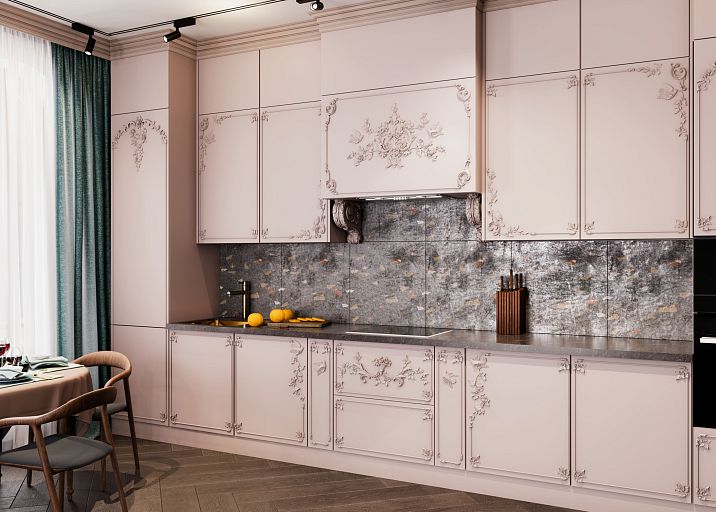
What transforms an ordinary kitchen into a place of power, where culinary masterpieces are born? What makes a workspace not just functional, but inspiring? The answer lies in the materials we choose. And among the vast array of modern solutions buy a wooden countertop — it’s the choice of those who understand the true value of natural perfection.
Wood lives its own special life. It breathes, changes, ages gracefully, becoming more beautiful with each passing year. In an age of artificial materials and synthetic coatings, a wooden countertop remains an island of authenticity, where every fiber tells a story of time.
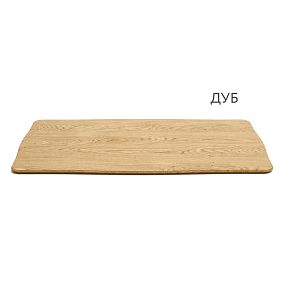

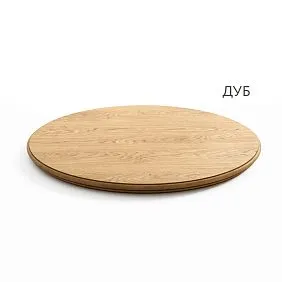


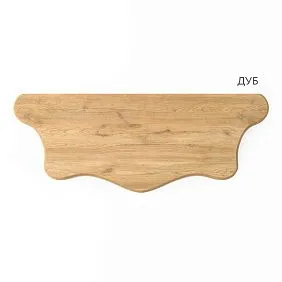
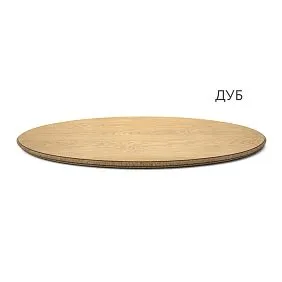
Philosophy of Choice: Why Natural Wood Beats Artificiality
The modern world is overflowing with imitations. Plastic mimicking wood, laminate mimicking stone, films mimicking any texture. But is there anything capable of replacing the living touch of a real material? The warmth of wood, its unique grain, the subtle scent of resins or tannins?
Solid wood countertops create a special atmosphere. They don’t just decorate a space — they animate it. Every growth ring, every knot, every color variation turns the surface into a work of art, created by nature itself.




Emotional Connection with the Material
Imagine morning. You’re making coffee, and your hands glide over the smooth surface of the wood. It’s warm, alive, responsive. It’s not cold stone or impersonal plastic. It’s a material that has served humanity for centuries, holding within it the energy of growth, the strength of roots, memories of sun and rain.
People who choose solid wood for countertops value authenticity. They understand: beauty isn’t in the perfect smoothness of machine processing, but in the natural imperfection that makes each piece unique.
Our factory also produces:


Wood Species: Character in Every Fiber
Choosing a wood species is choosing the character of the future countertop. Each species has its own temperament, its own characteristics, its own aesthetics.
Get Consultation
Oak: Aristocracy in the World of Wood
Oak is the king among trees. Its wood is dense, hard, with a distinctive texture. Oak countertops serve for decades, becoming better with age. Tannins contained in oak wood provide natural protection against moisture and bacteria.
Oak’s color palette is stunningly diverse: from light yellow to dark brown. Oak easily accepts staining, allowing countertops to be made in any shade — from Scandinavian white to rich wenge.
Ash: Elegance and Strength
Ash is a species for those who appreciate elegant simplicity. Its wood is light, with a beautiful wavy grain. Ash countertops are distinguished by high strength relative to their relatively low weight.
The characteristic of ash is its ability to bend well without damaging the fibers. This allows creating countertops with complex shapes, elegant curves, and rounded edges.
Oak: reliability and warmth
Oak is a species adapted to moderate climates, accustomed to variable weather. Its wood has a pinkish hue, dense and uniform. Oak countertops are especially popular in Scandinavian interior design.
The advantage of oak is its stability. It is less prone to warping and cracking compared to other species, making it an ideal choice for kitchen countertops.
Processing technologies: from wood to masterpiece
Transforming wood into a countertop is a complex technological process requiring skill and understanding of the material. Modern technologies allow preserving the natural beauty of wood while enhancing its performance characteristics.
Drying: the foundation of durability
The quality of the future countertop is established during the wood drying stage. Chamber drying brings the wood moisture content to the optimal 8-12%. This is critically important for the dimensional stability of the finished product.
The drying process may take from several days to several weeks, depending on the species and thickness of the material. Rushing this stage will inevitably affect quality: the countertop may warp, crack, or change dimensions.
Gluing: creating a single whole
Modern solid wood countertops are rarely made from a single piece of wood. More often, the technology of gluing individual laminates is used. This is not a disadvantage but an advantage: glued countertops are more stable and less prone to warping.
Quality countertops are glued with water-resistant D4 grade adhesives. Such a connection is stronger than the wood itself — the countertop is more likely to split along the fibers than to separate at the glue joint.
Finish Processing: Protection and Beauty
The choice of finish determines not only the appearance of the countertop but also its performance characteristics. There are several main types of finishes:
Oil finishes penetrate into the wood structure, highlighting its natural beauty. They do not form a film on the surface, allowing the wood to "breathe". Such finishes are easy to renew — simply sand the surface and apply a new layer of oil.
Lacquer finishes create a strong protective film. They provide high resistance to moisture and mechanical damage, but require professional repair if damaged.
Wax finishes give wood a soft matte sheen. They are eco-friendly, pleasant to the touch, but require regular renewal.
Design solutions: countertop as a style element
Buying a countertop made of natural wood means obtaining not just a functional surface, but a full-fledged design element. Wood is versatile: it looks equally well in classic and modern interiors, in city apartments and country homes.
Minimalism: the beauty of simplicity
In minimalist interiors, a wooden countertop becomes the main accent. Simple shapes, clean lines, natural texture — all this creates a sense of calm and harmony.
Light-colored wood species are suitable for minimalist style: birch, maple, light oak. Finish — oil or matte lacquer, emphasizing the natural beauty of the material.
Loft: industrial romance
In loft-style interiors, a wooden countertop creates contrast with metal and concrete. It softens industrial rigidity, adding warmth and coziness.
Loft-style interiors feature weathered, brushed surfaces. A brushed countertop has a textured surface where hard wood fibers protrude above softer ones. This creates an interesting play of light and shadow, emphasizing the material's texture.
Scandinavian style: northern elegance
Scandinavian style is unthinkable without natural wood. Here, naturalness, functionality, and eco-friendliness are valued. Scandinavian countertops are usually made from light-colored species: pine, spruce, birch.
A characteristic feature of Scandinavian style is whitewashed surfaces. This treatment preserves the wood's texture but lightens it, creating a sense of spaciousness and freshness.
Performance characteristics: practicality of natural material
Many believe that natural wood is a capricious material requiring complex care. This is a misconception. With proper processing and reasonable use, a wooden countertop can serve for decades, retaining its beauty and functionality.
Moisture resistance: protection from the main enemy
Moisture is the main enemy of wood. But modern processing technologies allow making wooden countertops moisture-resistant. A quality finish creates a reliable barrier protecting the wood from moisture penetration.
Wooden countertops with moisture resistance can be used even in rooms with high humidity. The key is to regularly renew the protective finish and avoid water pooling on the surface.
Heat resistance: withstanding temperature loads
Wood is a good insulator. It heats up less than stone or metal, but also does not dissipate heat as effectively. Heat-resistant wooden countertops can withstand brief exposure to high temperatures, but require the use of trivets under hot dishes.
Some wood species are more heat-resistant. Oak, beech, and ash withstand temperature loads better than coniferous species.
Mechanical strength: resistance to damage
Durable wooden countertops are made from hardwoods. Oak, beech, ash, walnut — these species are characterized by high density and resistance to mechanical damage.
Softwoods (pine, spruce) are more prone to dents and scratches, but they can also be successfully used for countertops with proper processing and careful use.
Dimensions and shapes: individuality in every order
One of the main advantages of wooden countertops is the ability to manufacture them to custom sizes. Countertops made from solid wood can have any shape and dimensions, limited only by production capabilities and the customer's imagination.
Standard sizes: optimal solutions
Most manufacturers offer countertops in standard sizes:
- Thickness: 20-50 mm
- Width: 300-1200 mm
- Length: up to 4000 mm
These sizes cover the needs of most projects. Standard wooden countertops are cheaper than custom ones, as they are produced in series.
Non-standard solutions: creative approach
Custom projects require non-standard solutions. Countertops with complex shapes can replicate room contours, wrap around columns, and include cutouts for appliances.
Modern technologies allow creating countertops of practically any shape: round, oval, triangular, irregular geometry. The only limitations are the size of the original material and the capabilities of the equipment.
Installation and mounting: professional approach to details
The quality of installation directly affects the durability and appearance of the countertop. Installing wooden countertops requires professional skills and special tools.
Foundation preparation: foundation of reliability
A wooden countertop requires a flat, rigid base. The frame must provide even support across the entire surface. Unevenness in the base can lead to warping of the countertop and cracking in adhesive joints.
Frames for wooden countertops are made from various materials: wood, metal, MDF. It is important to ensure sufficient rigidity of the structure and proper load distribution.
Mounting: reliability without damage
Wood is a living material that changes dimensions with changes in humidity. Mounting wooden countertops must take these characteristics into account. Rigid mounting may lead to cracking when the wood expands.
Various mounting systems are used: sliding fasteners, elastic gaskets, compensating gaps. The choice of system depends on the countertop size, wood species, and operating conditions.
Joint sealing: protection against moisture
Joints are the most vulnerable areas of a wooden countertop. Sealing joints prevents moisture from penetrating into the wood, protecting against swelling and rot.
Various sealants are used: silicone, acrylic, polyurethane. The choice depends on the countertop finish type and operating conditions.
Care and maintenance: preserving beauty for years
Caring for wooden countertops is not as complicated as it seems. Proper maintenance extends service life and preserves an attractive appearance.
Daily Care: Simple Rules
Daily care of a wooden countertop consists of several simple rules:
- Wipe up spills immediately
- Use soft cloths for cleaning
- Avoid abrasive cleaners
- Do not leave wet dishes on surfaces
Wood countertop care products must be specifically designed for treated wood. Ordinary household cleaners may damage the protective coating.
Periodic maintenance: restoring protection
Protective coating wears out over time and requires renewal. Restoring wooden countertops includes sanding the surface and applying a new coating.
The frequency of renewal depends on the intensity of use and the type of coating:
- Oil-based coatings — every 6–12 months
- Lacquer coatings — every 2–3 years
- Wax coatings — every 3–6 months
Repairing damage: restoring original appearance
Minor damage to wooden countertops can be fixed yourself. Repairing scratches on wooden countertops is done using special wax pencils or touch-up markers.
Deep damage requires professional repair. Local sanding and reapplication of coating allow restoring the countertop's original appearance.
Ecological: care for health and the planet
In the era of ecological awareness, choosing natural materials becomes especially relevant. Eco-friendly wooden countertops do not emit harmful substances, do not cause allergies, and create a healthy microclimate in the room.
Natural material: what could be cleaner?
Wood is an absolutely natural material. It contains no synthetic additives, artificial resins, or toxic substances. Natural wooden countertops are safe for health and suitable for people with heightened sensitivity to chemicals.
Even the adhesives used to bond laminates meet the strictest ecological standards. Modern water-based adhesives contain no formaldehyde or other harmful substances.
Renewable resources: responsible consumption
Wood is a renewable resource. With proper forest management, trees regenerate and absorb carbon dioxide from the atmosphere. Ecologically responsible manufacturers use wood from certified forests where sustainable forestry practices are conducted.
Choosing a wooden countertop supports eco-friendly production and contributes to preserving forests for future generations.
Recycling and disposal: closed-loop cycle
At the end of its service life, a wooden countertop can be recycled or disposed of without harming the environment. Biodegradable materials do not contaminate soil and water, and do not produce toxic waste.
Many elements of a wooden countertop can be reused: for making other products, as fuel, or for paper production.
Cost and economic efficiency
The price of natural wood countertops depends on many factors: wood species, dimensions, processing complexity, and coating type. At first glance, wooden countertops may seem expensive, but their durability and restorability make them economically advantageous in the long term.
Pricing factors: what makes up the cost
The cost of a wooden countertop is composed of several components:
Material — the main cost component. Rare exotic species cost more than local ones. Premium wood grades with distinctive grain patterns carry a premium price.
Processing — manufacturing complexity affects the cost. Simple rectangular countertops are cheaper than those with complex shapes. Additional operations (brushing, toning, patination) increase the price.
Coating — the type of finish coating affects the cost. Simple oil-based coatings are cheaper than multi-layer lacquer systems.
Comparison with alternatives: a sensible choice
When comparing the cost of wooden countertops with alternative materials, it is important to consider not only initial expenses but also long-term costs:
Artificial stone may be cheaper to purchase, but it cannot be restored. In case of serious damage, it requires complete replacement.
Natural stone is long-lasting but significantly more expensive than wood. Additionally, stone countertops feel cold to the touch and create a rigid atmosphere.
Laminated materials are the cheapest, but also the least durable. Their lifespan rarely exceeds 10-15 years, and restoration is impossible.
Investment in quality: long-term perspective
buy a wooden countertop — is an investment in quality of life. With proper care, a wooden countertop serves for decades, becoming even better with age.
Durable wooden countertops pay for themselves through their long service life. The possibility of restoration allows updating the appearance without replacing the entire item.
Trends and innovations: the future of wooden countertops
The woodworking industry is not standing still. New technologies allow creating countertops with improved characteristics, opening up new design possibilities.
Thermo-modification: improving wood properties
Thermo-modified wood is processed at high temperature in a steam environment. This alters the wood structure, improving its properties:
- Improved dimensional stability
- Increased biostability
- Reduced hygroscopicity
- Color changes — the wood darkens
Thermo-modification allows using wood species that were previously considered unsuitable due to low durability.
Stabilization: maximum durability
Stabilized wood is impregnated with special polymers that fill pores and strengthen the structure. This treatment significantly enhances operational characteristics:
- Full water resistance
- High mechanical strength
- Dimensional stability
- Resistance to biological damage
Stabilized countertops can be used even in aggressive conditions — in humid areas, outdoors.
Digital technologies: precision and individuality
Modern production uses digital technologies to improve precision and expand capabilities:
CNC processing allows creating countertops of complex shapes with millimeter precision. Computer control eliminates human error, ensuring consistent results.
3D modeling helps visualize the future product, make adjustments before production begins. The client can see how the countertop will look in their interior.
Laser engraving allows applying any images, ornaments, or text onto the countertop surface. This opens up limitless possibilities for personalization.
Psychology of material: influence on perception of space
Wooden countertops in interior design affect not only the appearance of the space but also the psychological state of people. Natural wood creates a sense of warmth, coziness, and connection to nature.
Color impact: mood palette
The color of wood affects the perception of space and people's mood:
Light shades (birch, maple, light oak) create a sense of spaciousness, purity, and freshness. They are suitable for small rooms and northern rooms with insufficient natural light.
Dark tones (walnut, wenge, dark oak) give the interior a sense of solidity and elegance. They are appropriate for spacious rooms, creating an atmosphere of luxury and stability.
Reddish shades (cherry, mahogany) add warmth to the interior, creating a cozy, homey atmosphere. They are especially suitable for living rooms and dining rooms.
Tactile sensations: the importance of touch
Touching natural wood evokes positive emotions. The tactile properties of wooden countertops play an important role in creating a comfortable atmosphere:
- Pleasant surface temperature
- Softness and flexibility of the material
- Natural texture
- Absence of static electricity
These properties are especially important in the kitchen, where the countertop is used intensively, and contact is inevitable.
Aromatherapy: natural scents
Natural wood has a subtle pleasant aroma. The aromatic properties of wooden countertops create an additional level of comfort:
- Coniferous species emit a fresh resinous aroma
- Oak has a mild, noble aroma
- Cedar has antiseptic properties
These scents are barely perceptible, but subconsciously influence the perception of space, creating a sense of naturalness and harmony.
Regional characteristics: climate and traditions
Choosing a wood species for a countertop should take into account the regional climatic characteristics. Countertops made from local wood species are better adapted to the local climate, cheaper to produce, and support the regional economy.
Northern regions: coniferous species
In northern regions, coniferous species are traditionally used:
Spruce — the most accessible species, easy to process, has a beautiful texture. Resin provides natural protection against moisture and pests.
Fir — light, uniform wood with minimal knots. Suitable for countertops in Scandinavian style.
Larch — a unique coniferous species with high density and moisture resistance. It does not fall short in strength compared to many hardwood species.
Middle belt: hardwood species
In the middle belt, hardwood species predominate:
Oak — the king among hardwood species. High strength, beautiful texture, and moisture resistance make it an ideal material for countertops.
Ash — strong, light-colored wood with a distinctive texture. Easy to process, dimensionally stable.
Birch — light, dense wood. Easily stains, allows imitation of valuable species.
Southern regions: exotic species
In southern regions, exotic wood species are available:
Walnut — an elite wood species with a beautiful grain and noble color. Highly valued by fine woodworkers.
Cherry — a fruit wood species with pinkish wood. Over time, it darkens, acquiring a beautiful reddish hue.
Acacia — very hard and dense wood. It is distinguished by high resistance to moisture and mechanical damage.
Conclusion: a choice for life
buy a wooden countertop — this is a decision made not for one or two years, but for decades. It is the choice of those who value authenticity, beauty, functionality. It is an investment in quality of life, in creating a home where it is pleasant to be, where every detail delights the eye and sets the mood.
Wooden countertop — this is not just a working surface. It is the center of the kitchen, a place where the family gathers, a space for creativity. It participates in creating culinary masterpieces, becomes a witness to family holidays, and preserves memories of important life moments.
Choosing Buy a wooden countertopBy choosing it, you select a material with history, character, soul. Each annual ring tells of years of growth, each change in tone — of the sun and rain that nourished the tree. This is a connection with nature in a world of artificial materials, an island of authenticity in the ocean of imitations.
Modern technologies allow preserving the entire beauty of natural wood while simultaneously enhancing its performance characteristics. Quality processing, proper coating, professional installation — all of this guarantees a long and flawless service life for the wooden countertop.
Care for a wooden countertop does not require special effort or knowledge. Simple usage rules, regular renewal of the coating — and your countertop will delight you with beauty and functionality for many years. The possibility of restoration allows you to restore its original appearance even after decades of use.
The ecological nature of natural wood is especially important in the modern world. Choosing a wooden countertop means caring not only for your health but also for the health of the planet. This is a responsible choice that supports sustainable development and conservation of natural resources.
Buying a solid wood countertop today means making the right choice for many years. This decision is one you will never regret, because the beauty of natural wood is timeless. It never goes out of fashion, never gets boring, and does not require replacement after a few years.
In a world where everything becomes disposable, a wooden countertop is a symbol of constancy, quality, and tradition. It unites generations, is passed down as heritage, and becomes part of family history. This is not just a purchase — it is an investment in the future, in your home, in your family.
STAVROS Company understands the importance of making the right choice. Decades of experience working with natural wood, use of modern technologies, attention to every detail — all of this guarantees the highest quality of products. Choosing STAVROS means choosing reliability, professionalism, and an individual approach to every project.


