Article Contents:
- Anatomy of Price: What Makes Up the Cost
- Raw Materials: Polyurethane Varies in Quality
- Molds: Investment in Detail
- Production: Automation vs Manual Labor
- Logistics: Distance Adds Cost
- Price Segments: From Affordable to Exclusive
- Budget Segment: One Hundred Fifty to Four Hundred Rubles per Meter
- Standard segment: four hundred — one thousand two hundred rubles per meter
- Premium Segment: One Thousand Two Hundred to Three Thousand Rubles per Meter and Above
- Pricing by Element Types
- Ceiling Cornices: From One Hundred Fifty to Two Thousand per Meter
- Wall Moldings: From One Hundred to One Thousand Three Hundred per Meter
- Ceiling Rosettes: From Eight Hundred to Twenty Thousand per Piece
- Columns and Pilasters: From Five to Eighty Thousand per Set
- Factors Driving Price
- Size: More Material, Higher Price
- Complexity of Ornament: Detailing Requires Skill
- Brand: Reputation Costs Money
- How to Determine How Much Polyurethane Decor Costs for a Project
- Step One: List of Elements
- Step Two: Choosing a Price Segment
- Step Three: Calculating Material Costs
- Step Four: Additional Expenses
- Where to Buy More Advantageously: Sales Channels and Their Margins
- Direct Supplies from Manufacturer: Minimum Intermediaries
- Construction Hypermarkets: Convenience, but Markup
- Specialized Online Stores: Balance of Price and Service
- Frequently Asked Questions About the Cost of Polyurethane Molding
- Conclusion: Investing in Aesthetics with a Focus on Return on Investment

How much does it cost to turn a standard apartment into a character-filled residence? The price depends not on the square meters of living space, but on the linear meters—cornices, moldings, and baseboards that outline the space, creating rhythm, verticals, and horizontals of a classic interior.Cost of polyurethane moldingranges from one hundred fifty to three thousand rubles per linear meter (a twentyfold difference explained by factors: element width from three to twenty-five centimeters increases the price proportionally to material consumption, ornament complexity from a smooth profile to multi-tiered carving with acanthus leaves triples the cost of the mold and casting, polyurethane density from two hundred to four hundred kilograms per cubic meter doubles the raw material price, manufacturer brand from a local factory to a European conglomerate adds thirty to fifty percent premium for reputation). The market is segmented: budget collections (one hundred fifty to four hundred rubles per meter of cornice, eight hundred to two thousand for a rosette, five to eight thousand for a pilaster) are accessible to the mass buyer, standard (four hundred to one thousand two hundred rubles, three to six thousand, eight to fifteen thousand) satisfy most projects, premium (one thousand two hundred to three thousand, six to twenty thousand, fifteen to fifty thousand) are aimed at connoisseurs of maximum detailing, exclusive designs, and European quality.
Why do visually identical cornices cost three hundred and nine hundred rubles per meter? Visual similarity is deceptive—differences are hidden in the details: a cheap cornice is lightweight (density two hundred kilograms per cubic meter, porous structure, blurred relief), an expensive one is heavy (density three hundred fifty, dense structure, relief sharp to the millimeter), a cheap one requires additional priming (grainy surface, absorbs paint unevenly), an expensive one is ready for final painting (smooth surface, factory-primed), a cheap one is deformed (geometry with deviations up to three to five millimeters, plank joining creates steps, gaps), an expensive one is geometrically precise (deviations less than a millimeter, joints invisible after putty). Saving on purchase turns into installation costs (additional priming, puttying, sanding take time, increase the cost of the master's work), operation (cheap molding yellows in three to five years, requires repainting, expensive molding retains color for decades).

Anatomy of Price: What Makes Up the Cost
The final price of molding is the sum of several components, each influencing the outcome.




Raw materials: polyurethane varies in quality
Polyurethane is produced from polyols and isocyanates—chemical components whose price depends on the manufacturer, purity, and stability of properties. European raw materials (BASF, Bayer, Dow—conglomerates with a century-old reputation) cost one thousand eight hundred to two and a half thousand dollars per ton, Chinese (Wanhua, Yantai—large factories, but quality control is weaker) one thousand to one thousand four hundred dollars, Russian (Kazanorgsintez, Nizhnekamskneftekhim—industrial raw materials, not always adapted for fine casting) one thousand two hundred to one thousand six hundred dollars. A difference of one and a half to two times is passed on to the cost of the finished molding.
Raw material quality affects properties. European polyurethane: density is stable (each batch is identical to the previous one—element geometry is unchanged, molds do not require adjustments), detailing is maximum (relief up to three centimeters deep is reproduced with accuracy to tenths of a millimeter), aging is minimal (does not yellow from ultraviolet light, does not crack from temperature fluctuations for decades). Chinese raw materials: density varies (batches differ by five to ten percent—geometry fluctuates, molds wear unevenly), detailing is average (small elements blur, edges round), aging is noticeable (yellowing after three to five years, cracking at extreme temperatures). Russian: intermediate position (stability higher than Chinese, detailing sufficient for standard profiles, aging moderate).
Our factory also produces:


Molds: investment in detailing
Molding is produced by casting into silicone molds. A mold is made from a master model (a plaster or wax prototype created by a sculptor-modeler), costs fifty to one hundred fifty thousand rubles for a complex element (rosette with multi-tiered ornament, Corinthian capital with acanthus leaves), ten to twenty thousand for a simple one (smooth cornice, geometric molding). The mold pays off with the print run: ten thousand castings—mold cost five to fifteen rubles per element (negligible in price), one thousand castings—fifty to one hundred fifty rubles (noticeable but acceptable for premium collections), one hundred castings—five hundred to one thousand five hundred rubles (adds significantly to cost, used only for exclusive custom elements).
Mold durability. A silicone mold wears out (each casting microscopically erodes the walls, small details gradually blur). Simple profiles (cornices without ornament, baseboards) withstand ten to fifteen thousand castings, complex ones (rosettes, capitals) two to five thousand. After the resource is exhausted, the mold is renewed (remade from the same master model or from a reference element of the first castings). Manufacturers who renew molds regularly maintain high quality (detailing does not degrade), those who save on renewal reduce quality (later castings are blurrier than earlier ones).
Get Consultation
Production: automation vs manual labor
Large factories are automated (mixing components, pouring molds, extracting elements are robotic—speed is high, cost is low, quality is stable). Small productions are semi-manual (components are dosed manually, pouring is manual, extraction is manual—speed is low, cost is higher, quality depends on the master's skill). The difference in cost is twenty to thirty percent (automation saves on salaries, minimizes defects), passed on to the retail price.
Quality control. Large factories check each batch (dimensions with calipers, density by weighing, detailing visually—elements with deviations are rejected, do not reach the customer). Small productions selectively (every tenth to twentieth element is checked—defective ones may slip into sale). Defects in packaging are a source of claims, returns, additional costs for the buyer (time for exchange, installation is delayed).
Logistics: distance adds cost
Polyurethane molding is lightweight (a box with twenty meters of cornice weighs ten to fifteen kilograms), but bulky (plank length two meters, element width up to twenty-five centimeters—takes up space in transport). Delivery from factory to warehouse, from warehouse to customer—a component of price.
Geography of production. European manufacturers (Germany, Italy, Spain): quality highest (raw materials best, technologies refined, control strict), price maximum (labor cost in Europe high, delivery to Russia expensive—logistics adds thirty to fifty percent to factory price). Russian manufacturers: quality from medium to high (depends on the factory—large ones use European technologies, raw materials, equipment, small ones save), price thirty to forty percent lower than European (labor cheaper, logistics shorter). Chinese: quality medium (mass production, saving on everything—raw materials, molds, control), price low (forty to sixty percent lower than Russian), but delivery long (sea transport two to three months, customs, clearance add risks of delays).
Price segments: from affordable to exclusive
The polyurethane molding market is divided into categories, each aimed at its own buyer.
Budget segment: one hundred fifty to four hundred rubles per meter
Products of Chinese factories (Perfect, Orac Decor budget lines), small Russian productions (local factories serving local markets). Polyurethane density two hundred to two hundred fifty kilograms per cubic meter (maximum material saving), relief simple (geometric profiles, minimal ornament), detailing average (relief depth up to one centimeter, small elements blurred), geometry with deviations (up to three millimeters in width, height—plank joining requires fitting, putty), surface grainy (requires priming, two to three coats of paint for a smooth finish).
Application of budget molding. Temporary housing (rented apartments, student dormitories, worker hostels—where service life is two to three years, visual effect more important than durability). Auxiliary rooms (storage rooms, wardrobes, technical rooms—where decor is secondary, minimum cost is important). Background zones (corridors, stairs, high ceilings—where elements are visible from afar, low detailing is not noticeable). Budget projects (renovations with strict budget constraints—better budget molding than none).
Price examples. Smooth cornice width five centimeters: one hundred fifty to two hundred rubles per meter (room twenty square meters, perimeter eighteen meters, cornices cost two thousand seven hundred to three thousand six hundred rubles). Simple molding width three centimeters: one hundred to one hundred fifty rubles per meter. Rosette diameter forty centimeters: eight hundred to one thousand two hundred rubles. Pilaster height two meters (shaft plus base plus simplified capital): five to seven thousand rubles.
Standard segment: four hundred to one thousand two hundred rubles per meter
The bulk of products, ninety percent of sales. Russian manufacturers medium and large (use European or quality Russian raw materials, modern equipment, established quality control), European manufacturers standard lines. Polyurethane density two hundred seventy to three hundred twenty kilograms per cubic meter (balance of weight and strength), relief diverse (from smooth profiles to complex ornaments—acanthus leaves, rosettes, modillions, dentils), detailing good (relief depth up to two centimeters, small elements reproduced clearly), geometry precise (deviations less than a millimeter—plank joining without fitting, seams invisible after putty), surface smooth (factory-primed, ready for final painting with one to two coats).
Application of standard molding. Residential interiors (apartments, houses, townhouses—living rooms, bedrooms, studies, dining rooms, where molding creates style, atmosphere of classic, neoclassical, art deco). Commercial interiors (offices, salons, boutiques, restaurants, hotels—where representative appearance, style compliance, durability are important). Restorations (historical buildings, where polyurethane replaces lost plaster elements—visually indistinguishable, practically superior). Facades (provided painting with facade paints protecting from ultraviolet light, precipitation—durability twenty to thirty years).
Price examples. Cornice with ornament width ten centimeters: five hundred to seven hundred rubles per meter (room twenty square meters, cornices nine to twelve thousand rubles). Relief molding width six centimeters: three hundred fifty to five hundred rubles per meter. Rosette diameter sixty centimeters: three to five thousand rubles. Pilaster height two and a half meters with Ionic capital: ten to fifteen thousand rubles. Full set for living room twenty-five square meters (cornices, moldings, rosette, corner elements): twenty-five to forty thousand rubles.
Premium segment: one thousand two hundred to three thousand rubles per meter and above
Top-tier products from European brands (Orac Decor premium Luxxus line, Decomaster premium, European boutique manufacturers), Russian manufacturers of the highest level (factories using European raw materials, equipment, and adhering to European standards). Polyurethane density of three hundred fifty to four hundred kilograms per cubic meter (maximum strength, detailing), the most complex relief (multi-tiered compositions, deep ornaments — acanthus with the finest veins, faces with pronounced features, flower garlands with each petal), photographic detailing (relief depth up to three to four centimeters, elements sized one millimeter are reproduced), perfect geometry (deviations less than half a millimeter — seamless joining, moldings appear monolithic), flawless surface (primed with special compounds, ready for gilding, decorative effects — patina, crackle, glazing).
Application of premium molding. Elite interiors (apartments, penthouses, country residences — where price is not a constraint, maximum aesthetics and exclusivity are important). Representative spaces (reception areas, meeting rooms, grand halls — where decor demonstrates status, owner's taste). Museums, theaters, concert halls (where molding is part of the artistic image, requires historical accuracy, durability). Restoration of architectural monuments (where polyurethane recreates lost elements with museum precision).
Price examples. Multi-tiered cornice with modillions, width fifteen centimeters: one thousand four hundred to two thousand rubles per meter. Molding with deep relief, width ten centimeters: eight hundred to one thousand three hundred rubles per meter. Rosette diameter one hundred centimeters with multi-figure composition: ten to twenty thousand rubles. Pilaster height three meters with Corinthian capital (acanthus leaves in three tiers, scrolls, rosettes): twenty-five to fifty thousand rubles. Full set for a living room thirty-five square meters: seventy to one hundred thirty thousand rubles.
Pricing by element types
Polyurethane molding costwhich depends on the element type — linear items are sold per meter, piece items per unit, set items per kit.
Ceiling cornices: from one hundred fifty to two thousand per meter
Cornice — a basic element framing the ceiling, concealing the wall-ceiling joint. Width from four to twenty-five centimeters (narrow four-eight centimeters for low ceilings, medium ten-fifteen for standard, wide eighteen-twenty-five for high ceilings).
Price ranges. Smooth cornices (simple geometric profile — one or two curves, no ornament): width four to five centimeters one hundred fifty to two hundred fifty rubles per meter, eight to ten centimeters three hundred to five hundred rubles, fifteen to eighteen centimeters six hundred to nine hundred rubles. Cornices with ornament (regular relief — dentils, egg-and-dart, bead-and-reel, laurel ribbons): width eight centimeters four hundred to six hundred rubles, twelve centimeters seven hundred to one thousand rubles, twenty centimeters one thousand two hundred to one thousand eight hundred rubles. Cornices with modillions (projecting brackets, imitating load-bearing elements of classical entablatures): width fifteen centimeters one thousand to one thousand five hundred rubles, twenty-five centimeters one thousand six hundred to two and a half thousand rubles.
Cost calculation for a room. Room twenty square meters (conventionally square, side four and a half meters), perimeter eighteen meters. Smooth cornice ten centimeters at four hundred rubles: eighteen multiplied by four hundred equals seven thousand two hundred rubles. Cornice with ornament twelve centimeters at eight hundred rubles: fourteen thousand four hundred rubles. Cornice with modillions twenty centimeters at one thousand three hundred rubles: twenty-three thousand four hundred rubles. Threefold difference.
Wall moldings: from one hundred to one thousand three hundred per meter
Molding — a strip installed on a wall (horizontally at dado level, vertically as framing for panels, doorways, mirrors). Width from two to fifteen centimeters.
Price ranges. Smooth moldings (minimalist profile — one curve or straight): width two to three centimeters one hundred to one hundred fifty rubles per meter, five to six centimeters two hundred to three hundred rubles, ten centimeters four hundred to five hundred fifty rubles. Relief moldings (regular ornament — plant motifs, geometric patterns): width four centimeters two hundred fifty to four hundred rubles, eight centimeters five hundred to seven hundred rubles, twelve centimeters eight hundred to one thousand two hundred rubles. Complex moldings (deep relief, multi-tiering): width ten centimeters nine hundred to one thousand three hundred rubles, fifteen centimeters one thousand three hundred to two thousand rubles.
Application of moldings. Wall panels (moldings create frames — rectangles framing wall sections painted in a contrasting color or wallpapered): room with panels height one hundred twenty centimeters, molding around perimeter plus vertical dividers — requires forty to fifty meters of molding, cost eight to twenty-five thousand rubles. Door framing (molding around door opening instead of architraves — opening width ninety centimeters, height two meters, perimeter five and a half meters, cost one thousand to three thousand five hundred rubles per opening). Mirror, picture framing (molding around mirror perimeter — decorative frame integrated into wall).
Ceiling rosettes: from eight hundred to twenty thousand per piece
Rosette — a round or oval element installed in the center of the ceiling under a chandelier, light fixture. Diameter from thirty to one hundred fifty centimeters.
Price ranges. Simple rosettes (regular ring ornament — circles, rays, simple leaves): diameter thirty to forty centimeters eight hundred to one thousand five hundred rubles, fifty to sixty centimeters two to four thousand, seventy to eighty centimeters four to seven thousand. Ornamental rosettes (complex relief — acanthus scrolls, floral compositions, geometric patterns): diameter forty to fifty centimeters two and a half to five thousand, sixty to seventy centimeters five to ten thousand, eighty to one hundred centimeters ten to fifteen thousand. Exclusive rosettes (multi-tiered compositions, sculptural elements — putti, garlands, medallions with figures): diameter one hundred to one hundred twenty centimeters fifteen to twenty-five thousand, one hundred thirty to one hundred fifty centimeters twenty-five to forty thousand.
Size selection. Ceiling height two sixty to two seventy: rosette diameter forty to sixty centimeters (larger visually overloads, smaller gets lost). Height three to three and a half meters: diameter seventy to ninety centimeters. Height over four meters: diameter one hundred to one hundred fifty centimeters. Price increases with diameter faster than area (rosette diameter eighty centimeters costs not four times more than forty-centimeter one, but five to seven times — casting complexity, material consumption, mold size increase non-linearly).
Columns and pilasters: from five to eighty thousand per set
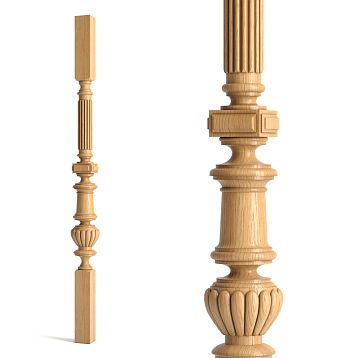
Column (freestanding cylindrical support) and pilaster (flat projection on wall, imitating column) — large-scale elements, consisting of base (lower profiled part), shaft (central cylindrical or conical part, smooth or with fluting), capital (upper decorative part — Doric simple, Ionic with scrolls, Corinthian with acanthus leaves).
Price ranges. Simple pilasters (smooth shaft, simplified capital, height two to two and a half meters): five to eight thousand rubles per set. Standard pilasters (shaft with fluting, detailed Ionic or Doric capital, height two and a half to three meters): ten to eighteen thousand rubles. Premium pilasters (decorated shaft, multi-tiered Corinthian capital, height three to four meters): twenty to forty thousand rubles. Hollow columns (diameter twenty to thirty centimeters, height two and a half to three meters): fifteen to thirty thousand rubles. Load-bearing columns (with internal metal frame, diameter thirty to forty centimeters, height three to five meters): forty to eighty thousand rubles.
Quantity for interior. Living room with pilasters at corners (four pilasters): forty to one hundred sixty thousand rubles. Fireplace portal (two pilasters flank fireplace): twenty to eighty thousand. Colonnade (four to six columns divide space into zones): one hundred twenty to four hundred eighty thousand.
Factors driving price
Which parameters increase or decreaseprices for polyurethane decor?
Size: more material, higher price
Direct dependency: cornice width doubles, price increases one and a half to two times (not linearly, because material consumption increases not only in width but also in thickness — wide element requires thicker walls to maintain rigidity). Cornice five centimeters two hundred rubles per meter, ten centimeters four hundred (twice as wide, twice as expensive), twenty centimeters one thousand (twice as wide as ten-centimeter, two and a half times more expensive).
Strip length. Standard strip length two meters (convenient for transport, installation, minimizes joints). Extended length strips (two and a half, three meters) cost five to ten percent more (longer mold, casting more complex, transport more expensive), but save installation time (fewer joints), labor cost (less cutting, seam puttying).
Ornament complexity: detailing requires skill
Smooth cornice (one or two profile curves, no ornament) produced quickly (mold filling thirty seconds, polymerization five minutes, extraction ten seconds — cycle six minutes, one hundred elements per hour, low cost). Cornice with ornament (regular relief — repeating motifs) more complex (polyurethane must fill every mold cavity, air bubbles removed, otherwise details blur — requires precise dosing, mold vibration, increases cycle to ten minutes, sixty elements per hour). Cornice with deep relief (multi-tiered, with projecting elements — modillions, brackets) requires complex mold (multi-part split mold, increases mold cost three to five times), increases cycle to fifteen to twenty minutes (forty elements per hour).
Cost of developing a unique ornament. Serial elements use ready-made master models (the manufacturer invested in creating the mold, recoups the cost through volume — the model cost does not affect the retail price of the element). Custom elements require creating a new master model (a sculptor creates a prototype based on the customer's sketch — the work takes from one week to one month and costs fifty to two hundred thousand rubles for a complex element). The model cost is recouped through volume: an order for one hundred meters of cornice, the model costs one hundred thousand, adds one thousand rubles to the price per meter (final price: standard cornice eight hundred plus one thousand for uniqueness equals one thousand eight hundred rubles per meter — premium segment). An order for one thousand meters, the model adds one hundred rubles to the price per meter (eight hundred plus one hundred equals nine hundred — standard segment, but with unique design).
Brand: reputation costs money
European brands with centuries-old history (Orac Decor founded in nineteen seventy, Decomaster operating since the eighties) are rewarded by the market (the buyer pays for quality guarantee, supply stability, breadth of assortment, technical support). The brand premium is twenty to forty percent (an Orac Decor cornice costs nine hundred rubles, a Russian analog of identical profile six hundred fifty — a difference of thirty-eight percent, explained by brand, not material quality).
Is the overpayment justified? For projects where guarantee is important (commercial interiors, where renovation cannot be repeated after three years, budget allows for premium) — justified. For budget projects (residential interiors, where visual effect is more important than durability, budget is limited) — not necessary (Russian molding from quality producers is visually identical to European, lasts for decades, costs less).
How to determinehow much polyurethane decor costsfor a project
Budget calculation requires inventory of needs, understanding of prices, accounting for additional expenses.
Step one: list of elements
A list of rooms is compiled, for each a set of elements is determined. Living room twenty-five square meters: ceiling cornice around the perimeter (twenty meters), wall panel moldings (forty meters), ceiling rosette (one piece), corner elements (four pieces). Bedroom fifteen square meters: cornice (sixteen meters), molding framing the bed headboard (six meters), rosette (one). Corridor five square meters: floor skirting board (twelve meters), molding under the ceiling (twelve meters).
Step two: choice of price segment
Budget determines the segment. Strict limitation (fifty thousand rubles for the entire apartment) — budget segment (smooth cornices, simple moldings, small rosettes, minimum elements). Medium budget (one hundred to one hundred fifty thousand) — standard segment (ornamental cornices, relief moldings, medium rosettes, full set of elements). Flexible budget (over two hundred thousand) — premium segment (cornices with modillions, deep-relief moldings, large rosettes, pilasters, exclusive elements).
Step three: calculation of material cost
For each element, the quantity (meters, pieces) is multiplied by the price (per meter, per piece). Living room budget: smooth cornice ten centimeters two hundred fifty rubles per meter, twenty meters — five thousand rubles, simple molding one hundred twenty rubles per meter, forty meters — four thousand eight hundred, rosette forty centimeters one thousand rubles — one thousand, corner elements two hundred rubles each — eight hundred. Total: ten thousand eight hundred rubles. Living room standard: cornice with ornament twelve centimeters eight hundred rubles, twenty meters — sixteen thousand, relief molding four hundred rubles, forty meters — sixteen thousand, rosette sixty centimeters four thousand — four thousand, corner elements six hundred each — two thousand four hundred. Total: thirty-eight thousand four hundred rubles. Living room premium: cornice with modillions fifteen centimeters one thousand five hundred rubles, twenty meters — thirty thousand, complex molding nine hundred rubles, forty meters — thirty-six thousand, rosette eighty centimeters twelve thousand — twelve thousand, corner elements one thousand two hundred each — four thousand eight hundred. Total: eighty-two thousand eight hundred rubles.
Step four: additional expenses
Glue (acrylic mounting three hundred-five hundred rubles per kilogram, consumption two hundred grams per linear meter — for eighty meters of elements sixteen kilograms are required, five-eight thousand rubles). Paint (acrylic interior two hundred-four hundred rubles per liter, consumption one hundred milliliters per square meter of element surface — for eighty meters of cornices ten centimeters wide the area is eight square meters, one liter of paint is required, two hundred-four hundred rubles). Primer (if elements are not factory-primed — acrylic primer one hundred fifty-three hundred rubles per liter, consumption similar to paint). Putty (acrylic for joints one hundred-two hundred rubles per kilogram, consumption fifty grams per joint, eighty meters of elements in two-meter planks — forty joints, two kilograms, two hundred-four hundred rubles). Total consumables: six-ten thousand rubles (ten-fifteen percent of the molding cost).
Where to buy more profitably: sales channels and their margins
The price of a single element varies depending on the purchase channel.
Direct supplies from the manufacturer: minimum intermediaries
Purchasing directly from the factory (through the manufacturer's online store, showroom at the factory, sales department managers) eliminates intermediary markups. Factory price (cost plus manufacturer's margin twenty-thirty percent — final price is thirty-fifty percent lower than retail in stores).
Purchase conditions from the manufacturer. Minimum order amount (some factories ship from ten-twenty thousand rubles — a non-essential limitation for decorating even one room). Delivery (paid separately — by transport company or manufacturer's courier, cost depends on region, volume). Consultation (the manufacturer is interested in sales — consults for free, helps choose elements, calculate quantity, select glue, paint). Warranty (the manufacturer is responsible for quality — defective elements are replaced free of charge).
Construction hypermarkets: convenience, but markup
Chains (Leroy Merlin, Castorama, OBI) sell polyurethane molding in decor departments. Assortment is limited (popular models, bestsellers are presented — simple cornices, standard moldings, medium rosettes, no exclusive elements). Price is inflated (hypermarket markup twenty-forty percent — covers area rent, staff salaries, logistics, advertising).
Advantages of hypermarkets. Accessibility (stores in every city, open seven days a week, you can come, see elements in person, buy immediately). Self-pickup (no delivery needed — elements are taken away in the buyer's car). Return (consumer protection law — goods can be returned within fourteen days without explanation, if you change your mind).
Disadvantages. Limited choice (fifty-one hundred SKUs presented, manufacturer offers thousands). Inflated price (a cornice costing five hundred rubles from the manufacturer is seven hundred-eight hundred in a hypermarket). Weak consultation (sales consultants are often incompetent — do not know model differences, do not help calculate quantity).
Specialized online stores: balance of price and service
Online platforms specializing in molding, decor (manufacturer websites, multi-brand aggregators). Assortment is complete (thousands of SKUs, filters by style, size, price — easy to find what you need). Price is intermediate (markup ten-twenty percent above factory — cheaper than hypermarkets, slightly more expensive than direct purchase from the manufacturer, if the manufacturer does not sell directly to individuals). Delivery (organized by the store — by transport companies, couriers, cost calculated automatically when placing an order). Consultation (online chat, phone, email — managers are competent, respond quickly, help choose).
Online promotions and discounts. Seasonal sales (summer, winter — discounts ten-thirty percent on selected collections). Promo codes (mailings, partner programs — additional five-ten percent discount). Bulk discounts (purchase over fifty-one hundred thousand rubles — five-fifteen percent discount automatically).
Frequently asked questions about the cost of polyurethane molding
Why do cornices that look identical differ in price threefold?
External resemblance is deceptive. A cheap cornice (two hundred rubles per meter): low density (two hundred kilograms per cubic meter — lightweight but not durable), blurred relief (details less than three millimeters deep are not reproduced clearly — the form is worn or cheap), unstable geometry (width varies by two to three millimeters along the length of the strip — joining creates steps), porous surface (requires primer, three coats of paint). An expensive cornice (six hundred rubles): high density (three hundred twenty kilograms — durable, heavy), clear relief (millimeter details are reproduced — the form is fresh, high-quality), precise geometry (deviations less than a millimeter — joining without adjustment), smooth surface (factory-primed, requires one to two coats of paint). Visually after painting, the differences are minimal (from a distance, the elements appear identical), but during installation and operation, the cheap one reveals shortcomings (harder to glue, yellows after three years, sags under weight).
Is it worth buying used molding on Avito to save money?
The risks outweigh the savings. Used molding is removed during demolition (renovation, reconstruction — elements are peeled off, often damaged during removal — cracks, chips, deformations). Adhesive residue on the back (difficult to remove — requires sanding, solvents, increases preparation time for new installation). Geometry is compromised (elements are bent from careless storage — straightening polyurethane is difficult, requires heating with a hairdryer, risk of overheating, melting). Old paint (not necessary to remove, but repainting is needed — adds costs for paint, time). Savings of thirty to fifty percent (a used cornice sells for two hundred rubles, a new one costs four to five hundred), but risks (defects not noticed at purchase, appear during installation, shortage of elements, impossible to buy a matching one — model discontinued) result in losses of time and money. Justified for temporary solutions (rented housing, minimal budget), unjustified for major renovation.
Does the price of molding include installation?
No, the price of elements and the price of installation are separate. Installation cost: four hundred to seven hundred rubles per linear meter for cornices, moldings (depends on width, profile complexity, installation height, region — Moscow is more expensive, provinces are cheaper). Rosettes: one thousand to two and a half thousand rubles per piece (depends on diameter, weight, ceiling height). Pilasters: five hundred to one thousand five hundred rubles per piece. For a room of twenty square meters (twenty meters of cornices, forty meters of moldings, one rosette): cornice installation twenty multiplied by five hundred equals ten thousand, moldings forty multiplied by four hundred equals sixteen thousand, rosette one and a half thousand, total twenty-seven and a half thousand rubles. Materials (molding of the standard segment) thirty-eight thousand, installation twenty-seven and a half, total sixty-five and a half thousand turnkey. Self-installation saves twenty-seven and a half thousand, but requires time (weekends, skills in working with glue, paint, tools).
Compare with the market. Find a similar element (same profile, size, ornament) from three to five sellers (manufacturers, online stores, hypermarkets), compare prices. A spread is normal: plus or minus twenty percent from the average (cornice average price five hundred rubles, range four hundred to six hundred acceptable). Price thirty to fifty percent below the range (cornice three hundred rubles with an average of five hundred) — suspicious (possibly low quality, used, defective, sale of discontinued collection leftovers — clarify the reason for the low price). Price thirty to fifty percent above the range (cornice seven hundred fifty with an average of five hundred) — inflated (brand premium, intermediary markup, exclusivity — assess if the overpayment is justified).
Compare with the market. Find a similar element (same profile, size, ornament) from three to five sellers (manufacturers, online stores, hypermarkets), compare prices. Normal spread: plus-minus twenty percent from the average (cornice average price five hundred rubles, range four hundred-six hundred acceptable). Price thirty-fifty percent below the range (cornice three hundred rubles with average five hundred) — suspicious (possibly low quality, used, defective, clearance sale of discontinued collection — clarify the reason for the low price). Price thirty-fifty percent above the range (cornice seven hundred fifty with average five hundred) — inflated (brand premium, intermediary markup, exclusivity — assess whether the overpayment is justified).
When are there discounts on polyurethane molding?
Sales seasonality creates discount cycles. Winter (January-February): demand is low (renovations are rare in winter — cold, holidays, vacations), manufacturers, stores reduce prices by ten to twenty percent, stimulating sales. Summer (July-August): demand is average (renovations are ongoing, but many are on vacation), discounts of five to fifteen percent on select collections. Autumn (September-November): demand peaks (renovations before winter, for the New Year), discounts are minimal or absent. Spring (March-May): demand is high (start of the renovation season), discounts are rare. Buying in winter saves money but requires storing materials until the start of the renovation (polyurethane stores for years without degradation — not critical).
Conclusion: an investment in aesthetics with a return on investment calculation
Cost of polyurethane molding— not an expense, but an investment in aesthetics, comfort, property value. An apartment with molding sells for five to ten percent more than a similar one without decoration (the buyer pays for visual value, status, readiness of the interior — no renovation needed, can move in and live). Molding costing fifty to one hundred thousand rubles in an apartment priced at five million adds two hundred fifty to five hundred thousand to the selling price (a three to fivefold return on investment).
The price range from one hundred fifty to three thousand rubles per linear meter for cornices, from eight hundred to twenty thousand for rosettes, from five to eighty thousand for pilasters reflects market segmentation: budget solutions are accessible to the mass buyer (decorating a twenty-square-meter room ten to fifteen thousand rubles for materials), standard ones satisfy most projects (thirty to forty thousand), premium ones are aimed at connoisseurs of maximum quality, exclusivity (eighty to one hundred fifty thousand). Pricing factors are transparent: element size, ornament complexity, polyurethane density, manufacturer brand explain price differences, allowing for a conscious choice of the balance between quality and cost.
Buying directly from the manufacturer saves thirty to fifty percent compared to retail stores, hypermarkets (intermediary markups are eliminated). Promotions, discounts, seasonal sales reduce the price by an additional ten to thirty percent (buying in winter, off-season is more profitable). Self-installation saves forty to fifty percent of the total budget (materials thirty-eight thousand, professional installation twenty-seven and a half, self-installation zero — savings are substantial but require time, skills).
The company STAVROS offers polyurethane molding at manufacturer prices — direct supplies without intermediary markups, transparent pricing, guarantee of price and quality correspondence. The catalog includes over one thousand items in all price segments: budget collections (cornices from one hundred eighty rubles per meter, moldings from one hundred twenty, rosettes from eight hundred, pilasters from five thousand — accessibility without compromising basic quality), standard (cornices three hundred fifty to one thousand two hundred rubles, moldings two hundred fifty to eight hundred, rosettes two and a half to eight thousand, pilasters ten to twenty thousand — balance of price, quality, detailing for most projects), premium (cornices one thousand three hundred to three thousand, moldings nine hundred to two and a half thousand, rosettes ten to twenty-five thousand, pilasters twenty-five to seventy thousand — maximum detailing, European raw materials, exclusive designs for elite interiors).
The online calculator on the STAVROS website calculates the budget automatically (room dimensions are entered, styles, element categories are selected — the system selects optimal items, calculates quantity, sums up the cost of materials, glue, paint, outputs the total considering current discounts, promotions). Manager consultations are free (help clarify the choice, adjust the configuration, optimize the budget without losing aesthetics). Samples are sent by mail (fragments of elements that the buyer wants to see in person before ordering — assess detailing, density, color — sample cost is symbolic, three to five hundred rubles, credited towards the main order).
Regular promotions additionally reduce the price. Winter sale (January-February): discounts fifteen to twenty-five percent on the entire budget and part of the standard collection. Summer (July-August): discounts ten to twenty percent on premium collections (low season for premium demand — manufacturer stimulates sales). Wholesale discounts (order over fifty thousand rubles): five percent automatically, over one hundred thousand — ten percent, over two hundred thousand — fifteen percent (a large order for decorating an entire apartment, house pays off with additional savings).
Delivery is organized by STAVROS throughout Russia (by transport companies — PEK, Delovye Linii, SDEK, courier services in major cities). Delivery cost is calculated automatically when placing an order (depends on region, weight, volume — transparently, without hidden markups). Free delivery for orders over a certain amount (threshold depends on region — Moscow, St. Petersburg over fifty thousand rubles, regions over eighty thousand). Pickup from STAVROS warehouse (Moscow, other cities of presence) saves the entire delivery cost.
Material warranty for two years (elements do not deform, yellow, crack, or lose strength under normal use — if a material defect is identified, replacement is free with delivery compensation). Return within fourteen days (consumer protection law — if elements do not fit, changed mind, ordered extra — returned without explanation, money fully refunded if packaging is intact).
By choosing polyurethane molding from STAVROS, you get transparent pricing (the price of each element is justified by size, complexity, material quality — no hidden markups, unexpected surcharges), maximum savings (direct supplies from the manufacturer, regular promotions, wholesale discounts reduce costs by thirty to fifty percent compared to retail stores), quality guarantee (European raw materials, modern equipment, strict control at all production stages ensure stability of properties, durability, aesthetics). You receive professional service (consultations help choose optimal elements for budget, style, tasks, calculator calculates accurately, samples allow assessment before purchase, delivery is organized hassle-free, warranty protects against risks). Investing in polyurethane molding from STAVROS is a decision that pays off with aesthetic pleasure, comfort of living in a beautiful interior, increase in property value, and savings in time and nerves thanks to process transparency, partner reliability, and result durability.